22 December 2024: The three latest written interviews of me are here, here and here.
Showing posts with label Counterpart. Show all posts

Saturday, March 12, 2022

Severance 1.5: Second Lives


So, I said in my review of Severance 1.4 last week that, in the metaphysics of life and death in television series, if you don't see a character's head literally severed or blown to bits, that character might survive whatever the grievous injury.  And--

[Spoilers ahead ...]

Sure, enough, in episode 1.5 of Severance on Apple TV+ yesterday, Mark comes to the rescue and takes Helly down from that noose before it kills her.   We later learn that when she came to, she was in her outie form, an interesting detail that may have some significance sometime later in this unusual narrative.  At very least, it confirmed what we already knew, that her outie form was the entity that she really is.  I'll also say I'm glad that Helly survived, she's an important, pivotal character -- both in her own right, and as the innie Mark is the closest to, has the most commitment to.

Otherwise, there was not much of transcendent importance that happened in this episode.  It ends with Irving's team meeting Burt's team, which is supposed to be a big deal, but I'm not 100% sure why.  Are the innies on the way to organizing some kind of union?   That would indeed be interesting and important.

Meanwhile, I'd like to see more about Harmony and her relationship with the higher-ups at Lumon.  She's clearly beholden to the "board," but she also clearly has a certain independence of mind and action -- certainly a lot more than the innies on Mark's and slightly higher levels.  Dylan also has a lot more story in him.  It occurred to me that his obvious constant sarcasm and rebelliousness could be a mask for him really being a company operative.  That would explain why he seems to be getting away with his comments and attitude.

As I keep saying, Severance is one of most unusual and therefore memorable science fiction series to get on the screen in years -- the very different Counterpart would be the most recent example that comes to mind -- and I'm looking forward to more.


See also Severance 1.1-1.2:  Erving Goffman Meets The Prisoner ... Severance 1.3: The History and the Neighbor ... Severance 1.4: Deadly Ambiguity

Wednesday, October 23, 2019

Watchmen 1.1: Promising Alternate History


I guess I'm either the best or worst kind of person to watch and review Watchmen on HBO:  I've of course heard of the iconic comic book story and its adaptations over the years, but I never read or saw any of it, and really know nothing about it.  But with a cast consisting of Regina King and Don Johnson, and the creator being Lost's Damon Lindelof, how could I resist?

Here's what I now know after watching the first episode:  This is an alternate history or reality in which, by 2019, Vietnam is a state in the United States, which must mean we won that war (undeclared and therefore illegal, and badly lost in our reality).  Police wear masks so they don't risk killers in the public, well, killing them.  So far, this is taking place mostly in Oklahoma, to the point where the Rodgers and Hammerstein musical plays a big role.

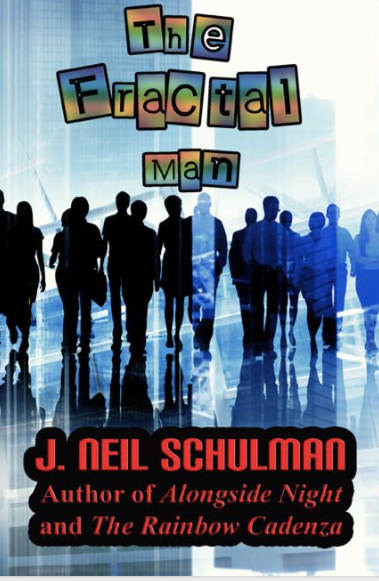
Now, I'm a sucker for alternate realities - I have a song, Samantha, on my new album coming out early next year, which I'll no doubt tell you about later on in these weekly reviews, but for now I'll just mention that that song is about star-crossed love across alternate realities (ok, here's a rough mix of it).  And I thought Counterpoint, now sadly departed, was one of the best shows on television in the past few years (not to mention The Man in the High Castle, which with one more season left is almost sadly departed, and is flat out one of the best shows ever on television, period).  So, yeah, I'm a fan of alternate reality TV and novels (here's what I said about the late J. Neil Schulman's The Fractal Man), and I very much like the set-up so far of Watchmen.

I also liked the narrative.  Don Johnson's character is killed at the end if the episode (sorry, that's a spoiler in this reality), but the laws of television say that a star that big won't play a character who gets killed after one episode, so that means Judd (Johnson's character) either isn't really dead, even though we saw him hanging there, or he'll come back to life, which amounts to the same thing.

I also liked the music, not only because I always liked "Oklahoma" - my wife may have played a part in some summer camp production (I'm not sure, and she's sleeping, so I'll ask her tomorrow*) - but all the music is original (i.e., meaning, you don't usually hear it in a television series, even one on HBO), with, for example, a powerful rendition of a song that accompanied Judd's hanging body.  (By the way, Trump, if you're reading this, that's what a lynching is, not the justified investigation that you're now undergoing).

*Note added next morning: She did!

So, yeah, I'm liking this a lot, and expect I'll be reviewing Watchmen once a week.


more alternate reality - "flat-out fantastic" - Scifi and Scary

Monday, July 29, 2019

The Rook 1.5: The Home Secretary


The Home Secretary came into focus in The Rook 1.5 last night.  No figure head, she, but a crucial player, who's been having an affair with Conrad, and wants to be Prime Minister.  And she's well played by Gina McKee, whom I first noticed in The Borgias.

But the big news is Farrier, who's not only fired by the Home Secretary, but displays some powerful super powers of her own.  Unless I haven't been paying attention, this is the first time we've seen them.   As this series progresses, it's apparent that there are more EVAs than first met the eye.

I've said the show reminds me of Heroes.  It also has threads of Sense8.  The Gestalts, indeed, are closely related Sense8 clusters - born on the same day, in powerful telepathic connection, the only difference being the Sense8 cluster members are not physical twins.  But the cluster members come from all around the world, and the back story of Nazim brings home the global distribution of EVAs.

The resonances of The Rook with other series - in reviewing it in the past weeks, I've mentioned Heroes, Counterpart, and Sense8 - is actually its great strength.   Because although it bears resemblances to these and other shows, there's something about The Rook that's all its own.  Something in the pacing, or the characters, or both.  Take the Home Secretary, for instance.

She's having an affair with Conrad, and the rules say they either now must break it off or go public with it.   Jennifer (that's her name) breaks it off, because she thinks the Prime Minister is vulnerable and thus open to Jennifer becoming the PM.  So, I'm wondering - is she also an EVA of some sort, and if she becomes PM, wouldn't that be a provocative development?  (Hey, the current Prime Minister in our real world is ... well, let's not go there.)

See also:  The Rook 1.1: Dickian Pastiche ... The Rook 1.2: Live Details ... The Rook 1.3: Gestalts ... The Rook 1.4: The Bristol Stomp


They're coming out into the open, for the first time in centuries ....

Sunday, July 7, 2019

The Rook 1.2: Live Details


The July 4th weekend is over, episode 1.2 of The Rook was just on Starz, no more lazing around by me with leisurely reviews.

This new episode contained a bunch of important new details.   The two most important were:

1.  EVAs - people with Extreme Variant Abilities - are not limited to the British Checquy.  EVAs are known worldwide (less than one-percent of the population) and at least two other top-secret government organizations have them.  These would be American (from which presumably Monica hails) and Russian, at least thus far in the story.  Each organization has a suitably recondite name, and (unsurprisingly) the Russian is at odds if not war with the British and likely the American.   I said last week that The Rook was reminiscent of Counterpart, and it still is.  But this international scope is something that Counterpart never got around to.   Also, it's worth mentioning something that was just hinted at last week: EVAs have different super-talents.  That's what makes Myfanwy (I keep wanting to spell that My Fanny) so important.

2. Apparently one of the talents is coming back from the dead, apropos the last scene of a guy in the morgue rising.  Now that's a theme that runs all the way from Frankenstein to The Walking Dead.  But in The Rook, it holds all kinds of new possibilities.   In a sense, Myfanwy has come back from the dead, at least the dead zone of her memory.  It was nice to see this metaphor turn into a reality with the guy on the table getting up and walking out.   Presumably his memory is still intact.  Is he always invulnerable to death, or just the way it was meted out in his case?

Lots of interesting questions and areas for exploration in this compelling new series.  I'd like to learn more about the blond Gestalts.  I'll see you here next week with reflections on what I learn from the next episode.

See also:  The Rook 1.1: Dickian Pastiche


"As a genre-bending blend of police procedural and science fiction,
The Silk Code delivers on its promises." - The New York Times Book Review

Tuesday, July 2, 2019

The Rook: Dickian Pastiche


The Rook on Starz starts off with a bunch of familiar premises - someone (in this case, a young woman) wakes up in a dangerous situation with no knowledge of who she is.  She gradually learns about her past and situation from a series of helpful messages from her younger self, who knows she's in danger of having her memory wiped.  We and she learn that she (Myfanwy is her name) is part of an MI6-type British secret service group.  And soon another very different, but also very familiar, trope is revealed:  Myfanwy has some kind of super powers - the ability to inflict physical damage on people via her mind - and the MI6 group (Checguy) is somehow all about this.

Now, I'm a sucker for all of that stuff - I stayed with Heroes until the very end, including its sequel - so I'm open to seeing another rendition of it.  And I liked what I saw in the first episode, which, for a variety of reasons including the pacing and cinematography, actually reminded me more of the late, departed, superb Counterpart, also on Starz, than anything else.

The ambience and story-line is of course also very much in the Philip K. Dick mode, which is also always welcome.  Dick was a master of exploring people not knowing who they are, and the voyage of discovery uncovering all kinds of wrinkles and black holes, figurative and literal, in the universe.  The Rook looks to be more down-to-Earth, and that's ok, too.

There's also, apropos Heroes, an almost Japanese flavor to this narrative.   Although the locale is London, lots of the scenes felt like they were somewhere in Tokyo.  But this also loops back to Dick and the Bladerunner movies.

All in all, then, The Rook is intriguing, colorful, and I'll stick around at least a little while to see how it plays out.


"As a genre-bending blend of police procedural and science fiction,
The Silk Code delivers on its promises." - The New York Times Book Review

Sunday, June 9, 2019

Review of J. Neil Schulman's The Fractal Man: Alternate Reality Autobiographies


Alternate realities have become something of a vogue in science fiction, especially on television with Fringe and Counterpart.  I've even tried my hand at it in a few short stories such as The Other Car.  But J. Neil Schulman has outdone all of this with his novel The Fractal Man, which for most of its 160 some odd pages - meant literally as well as a figure of speech here - is not only a masterpiece of alternate reality, but one of the best science fiction novels I've ever read, literally.

It's also a tour de force of meta-fiction and autobiography.  What do I mean by that?  Well, the main character - the narrator - is David Albaugh, a character in Schulman's 1979 novel Alongside Night, played by Schulman in the 2014 movie that Schulman wrote and directed.  In The Fractal Man, we meet Schulman - one of Albaugh's fractals, i.e., existences in an alternate reality - to the point of the character Schulman warning Albaugh about a danger that lies ahead, because, after all, Schulman wrote Albaugh's account of Albaugh's  alternate reality adventures which is the novel The Fractal Man.   I'd say I'm a sucker for that kind of science fiction, but if a I'm a sucker for delighting in that, then anyone with any appreciation for the finer tropes of science fiction, carried to their logical extents and well beyond, should be a sucker, too.

And the novel is chocked full of tidbits to delight the science fiction devotee and anyone with a taste for new ways of thinking about old things.   Distant galaxies that we see in our reality may be alternate timelines.   Arguments that a couple may have over whether an event unfolded this way or that way may reflect an alternate reality that one of the couple for some reason came from or has access to.   Everything from timeless music to time travel is woven into the undulating fabric.  It's all served up so well that I don't even mind that Schulman and most of his alternates are thorough-going libertarians, in contrast to me (I'm an absolutist only about the government keeping its hands off of all media and communication, i.e., the First Amendment)

Schulman sprinkles in some of his real libertarian friends as greater and lesser characters in this novel.   We know each other and have worked together, but I can't hold it too much against him that I didn't make the grade, because I'm not a close friend of his, and, as I said, I'm not an across-the-board libertarian.   And he makes up for this with some derring-do espionage escapades across realities, and a galactic scope that reminds of both Asimov and Heinlein, which is no mean feat  (Schulman, at least in this reality, did an important interview with Heinlein in 1973).

What I do hold against the novel is a long play within the novel, near the end, that has lots of relevance to the novel's philosophy and was excellent in and of itself, but comes out of left field, so much so that the reader is offered the option of skipping ahead.  This doesn't exonerate the play's inclusion.

But, hey, the rest of the novel is so bright and wonderful - such an intellectually exciting and satisfying ride - that I put it up there with David S. Michaels and Daniel Brenton's Red Moon and David Walton's Three Laws Lethal (to be published in two days, look for my review) as one of the best standalone science fiction novels I've ever had the pleasure of reading.   Is it a contradiction to describe The Fractal Man and its immersion in alternate realities as a standalone novel?  There's a sequel afoot - "The Metronome Misnomer - the title comes from a fractal version of the author in The Fractal Man, who wrote a book of that title in an alternate timeline" (this quote from Schulman's biography at the end of The Fractal Man) - so you may not need to answer that.


more alternate reality - "flat-out fantastic" - Scifi and Scary

Monday, April 22, 2019

Killing Eve 2.3: Lipstick


Well, the best scene in Killing Eve 2.3 is clearly Eve putting on the lipstick Villanelle slipped her, finding it has a blade when it cuts her lip, and, rather than recoiling in horror, brushes the blood across her lip so it mixes with the lipstick.

That scene about the mouth says it all.   Villanelle loves Eve, this we already know.  It's the weakness that makes Eve so dangerous to Villanelle, who is the superior agent, or at least a more cunning killing machine, sharp as Eve is.   But Villanelle's attraction to Eve mades Villanelle vulnerable, and, as we've already seen, it was almost a fatal attraction - fatal to Villanelle.

But Eve is deeply attracted to Villanelle, also.  If not precisely in the same way, something that both helps Eve understand Villanelle, but makes Eve more vulnerable, too.   The question for both of them, as they hunt and crave each other, is which impulse will prevail.   Libido or thanatos?

It's good to see Konstantin back in action.   He's an excellent counterpart to Carolyn.   And, in many ways, more of an asset to Villanelle than Carolyn is to Eve.  The essence of this story, indeed, is (or are) counterparts.   They might have even entitled this series Counterpart, had there not already been a series by that name, which, alas, was cancelled, but I'm still hoping comes back on some other network, wiser than Starz.

But back to Killing Eve, as exciting and daring as the first season was, I'm beginning to like this second even more.  It has all the style and quirky texture of the first season, with symbolism simmering perfectly under the surface.

See also Killing Eve 2.1: Libido and Thanatos ... Killing Eve 2.2: Villanelle as Victim

And see also Killing Eve: Highly Recommended (Season 1)


Sunday, February 17, 2019

Counterpart 2.10: Relative Better Selves


An excellent Season 2 finale of Counterpart tonight - which is the series finale as far as Starz is concerned -  but I'm expecting it won't be that because Counterpart will show up and continue on another venue, but more of that at the end of this review.

My favorite scene tonight was between Howard and Howard Prime.  Howard has his counterpart on his knees, and a gun to his head.  But rather than killing him - which is what Prime said he would do - Howard gives Prime the gun and tells him to take care of business, i.e., act on the information that dying Emily placed in Howard's hand.  That info called for Howard to wipe out all the carriers of the virus at the train station, before they deliberately spread the virus across our Europe, in a scene that harkened back to 12 Monkeys.  Our Howard knew that although Emily gave him the location of these terrorists, Howard Prime was the better person to do this.   The better self.

A lot of was said about better selves tonight - "Better Angels" is the title of the episode - and the Howard and Howard Prime scene shows that the notion of "better" in this series is context-dependent, as it is, for the most part, in life. And, in this case, relative - in both senses of the word.  Bad Howard - Howard Prime - might be not as good as our Howard, but he's better when it comes to carrying out a mission in which a bunch of people have to be quickly killed. A basic, inexorable moral arithmetic.

Meanwhile, good riddance Mira Prime - thank you Emily Prime - but I was sad to see her father die from her poison or whatever it was.  And, actually, if what Yanek died from was that virus ... well, that means our world is not out of the woods yet, not by a long shot.  We'll find out about this and much more next season--

But not on Starz.   Why they cancelled the series is beyond me.  True, its audience of half a million was small, but, like me, deeply devoted to this rarity of a science fiction and espionage mix.  One good thing about the cancellation, if it leads to Counterpart on some streaming service, is that we'll be able to see it all at once.  See you here next year or whenever and wherever that happens with a review or reviews.


a song about love and alternate realities

See also:  Counterpart 2.1: "Strange" and "Lucky" ... Counterpart 2.2: The Emilys ... Counterpart 2.3: Echo ... Counterpart 2.4: Three Emilys and Yanek ... Counterpart 2.5: The World-Splitter ... Counterpart 2.6: Young Yaneks  ... Counterpart 2.7: Good Metaphors ... Counterpart 2.8: The Metaphysics of Marriage Across Alternate Realities ... Counterpart 2.9: Emily and Mira

And see also  Counterpart 1.1: Fringe on Espionage ... Counterpart 1.2: Two Different Worlds ... Counterpart 1.3: Identification and Pandemic ... Counterpart 1.4: The Switch ... Counterpart 1.5: Ménage à Alternates ... Counterpart 1.6: Alternate Prince, Funeral, and Clear Clare ... Counterpart 1.7: Spying Across Dimensions ... Counterpart 1.8: Conversations ... Counterpart 2.9: The Spy Who Came Into the Fold ...Counterpart Season 1 Finale: Stuck in the Middle


alternate Orson Welles in here

Sunday, February 10, 2019

Counterpart 2.9: Emily and Mira


The two - Emily Prime and Mira Prime - really had little to do with each other in Counterpart 2.9. But they symbolize what was best about this outstanding episode.

I've been saying that Counterpart is at least as much about the impact of the two realities on family relationships as it is about the taut espionage that courses between them.  Emily and Emily Prime have a great coming-to-terms conversation, in which, for the first time, Emily almost seems superior to Emily Prime.  But the scene with Howard in the middle of the crossing, looking back at Emily Prime one more time, after he kissed her, and walking to Emily, whom he hugs, was really something.   In a way that surpasses mere words, that scene symbolized the impossible complexity of family relationships across dimensions.

And Mira Prime with Yanek Prime epitomized the enormous power and appeal of espionage across dimensions.   Ian is no match for Mira, and neither is Yanek.   Her massacre of everyone left on Yanek's team shows her devotion to her plan over human life, an unfortunate but necessary characteristic for any spy bent on nothing but success.  And then the payoff: there's a Mira in our world, with children, which Grandpa Yanek can go "home" to.

The unmovable logic of even the most sophisticated television series dictates that Mira and her plan cannot succeed completely - unless next week's finale is the finale of the series not the season.  Because if the crossing is permanently closed, and our side decimated by the deadly flu, that would make Counterpart almost unrecognizable as the narrative we know.

But ,,, there's not yet word, at the moment, of whether there'll be a Season 3 of Counterpart.  Two is a nice round and logical number for a series named Counterpart.  But I'm hoping, betting that Mira will not succeed and we'll see more of Counterpart with its two realities some time in the future.  I'll be back here next week.


a song about love and alternate realities

See also:  Counterpart 2.1: "Strange" and "Lucky" ... Counterpart 2.2: The Emilys ... Counterpart 2.3: Echo ... Counterpart 2.4: Three Emilys and Yanek ... Counterpart 2.5: The World-Splitter ... Counterpart 2.6: Young Yaneks  ... Counterpart 2.7: Good Metaphors ... Counterpart 2.8: The Metaphysics of Marriage Across Alternate Realities

And see also  Counterpart 1.1: Fringe on Espionage ... Counterpart 1.2: Two Different Worlds ... Counterpart 1.3: Identification and Pandemic ... Counterpart 1.4: The Switch ... Counterpart 1.5: Ménage à Alternates ... Counterpart 1.6: Alternate Prince, Funeral, and Clear Clare ... Counterpart 1.7: Spying Across Dimensions ... Counterpart 1.8: Conversations ... Counterpart 2.9: The Spy Who Came Into the Fold ...Counterpart Season 1 Finale: Stuck in the Middle


alternate Orson Welles in here

Tuesday, February 5, 2019

Russian Doll: Time Loops à Deux


Russian Doll is billed in some places as a comedy, but it's better than that.  Ok, maybe that's a bit unfair.  Comedies can be great, and profound.   But Russian Doll is something else.

Its basic template is Groundhog Day: Nadia is caught up in a recurring loop which obliges her to live part of a day or longer over and over, until, as she comes to learn, she corrects something in her past.  The spice is that the trigger of each loop is death - hers.  The breakthrough into new and rich narrative is she discovers, about half-way through the eight 30-minute episodes, that she's not the only one who's dying into recursive loops - so is Alan, whom she meets in an elevator, on its way to crashing and killing its passengers, but Alan, like her, knows what's coming.

This sets in motion a folie à deux between the two, actually a reality, as Nadia and Alan begin to realize, the hard way, that by working together they can stop their recurring deaths, by coming to terms with the destructive issues in their lives which somehow started all of this in the first place.  For Nadia, it's the guilt she feels about her mother's death after Nadia as a child left her.  For Alan, it's understanding why his girlfriend of nine years left him.  But those specifics hardly matter.  It's the way these two work things out, and the impact that has on those around them, that is the meat of this narrative.

And, indeed, the one reservation I have about calling Russian Doll a complete success is that I liked that process, beginning with the introduction of Alan, better than the resolution.  Without giving everything away, that ending entails reality itself splitting in two (calling Counterpart), with a knowledgeable Nadia and an unknowing in Alan in one, and a knowledgeable Alan and an unknowing Nadia in the other.  This facilitates each one educating the other. Well, I guess that does give a lot away, but at least I haven't told you how it all turns out.

But pulling that ending out of some metaphysician's hat weakens, I think, an otherwise brilliant and original composition on time loops.   Still worth watching, and eminently recommended, with fine acting by Natasha Lyonne as Nadia (one of the creators, along with Leslye Headland and the Amy Poehler) and Charlie Barnett (Chicago Fire) as Alan, and great New York locales.


Sunday, February 3, 2019

Counterpart 2.8: The Metaphysics of Marriage Across Alternate Realities


The Howard and Emily stories were the main focus of tonight's Counterpart 2.8, and they both achieved, if not a climax, some of kind of surge to a higher ground of clarity.

The set-up is as it's been all season:  Howard and Emily Prime in prime world, Howard Prime and Emily in ours.   Howard was shot pretty badly last week.  Emily Prime gets her daughter (Emily Prime and Howard Prime's daughter) who is a doctor, and she saves Howard.  She also comes to make peace with him (thinking, of course, that he's her father).  Emily Prime is determined to work out some deal with Management - who tried to kill them - to let Harold go back to his wife in our world.  A part of her cannot feel great about that, because she's coming to really love this Howard, and he is feeling the same about her.

At the same time, back in our world, Emily is really all but recovered from her rendezvous with a car.  She takes great pleasure in breaking a code with Howard Prime.  They tell each other they love each other, and mean it, and then go off to the bedroom to carnally express that.  A little later, Howard Prime gets up, hears some intruders, and kills all three (nice Counterpart counterpoint: Howard is almost killed, Howard Prime kills three).  They have come to kill Emily.  But she, seeing his martial prowess - in addition to presumably also earlier seeing his marital process - realizes that this Howard is, after all, not hers.  She tells Howard Prime to leave.

So ... as I've said about Counterpart before, the course of true love never did run smooth, especially when that course entails switching partners across dimensions.  Only two episodes left this season.  Here's what I'm hoping:  that none of the four get killed, and that each will be able to stay with the one they truly love.

But I'm a hopeless romantic, so that's not likely to happen.  Not to mention that the other side has a nefarious plan to release the flu on our side, and that needs to be stopped (hey, I'm loyal to our side, because that's my side, isn't it?).  I'll be back here next week to tell you how at least the first part of that goes.


a song about love and alternate realities

See also:  Counterpart 2.1: "Strange" and "Lucky" ... Counterpart 2.2: The Emilys ... Counterpart 2.3: Echo ... Counterpart 2.4: Three Emilys and Yanek ... Counterpart 2.5: The World-Splitter ... Counterpart 2.6: Young Yaneks  ... Counterpart 2.7: Good Metaphors

And see also  Counterpart 1.1: Fringe on Espionage ... Counterpart 1.2: Two Different Worlds ... Counterpart 1.3: Identification and Pandemic ... Counterpart 1.4: The Switch ... Counterpart 1.5: Ménage à Alternates ... Counterpart 1.6: Alternate Prince, Funeral, and Clear Clare ... Counterpart 1.7: Spying Across Dimensions ... Counterpart 1.8: Conversations ... Counterpart 2.9: The Spy Who Came Into the Fold ...Counterpart Season 1 Finale: Stuck in the Middle


alternate Orson Welles in here

Monday, January 28, 2019

Counterpart 2.7: Good Metaphors


Not much forward momentum tonight in Counterpart 2.7 after last week's revelatory double-young Yanek episode, but there were lots of heated conversations and one good shoot-out.

The most striking conversation was  Fancher telling off Peter and his "daughter" Clare.   He doesn't like the way she's changed, and he blames Peter and his ineptitude.  Little does he know that the change he's seeing in her comes from her being not his daughter but her counterpart.   The scene epitomizes what Counterpart, especially in this its second season, does best: showing the absurdities in human relationships wrought by counterparts taking over each others' lives.  A good metaphor for our off-screen reality.

Over on the other side, our Howard pretending to be Howard Prime actually brings out the best in him.   His devotion to Emily Prime, who is giving him what his/our Emily did not, moves him to action and gunplay.  The two survive but not before both are shot.   They'll both survive, and now more bonded than ever.  This, too - pretense leading to uncovering truths about ourselves - is a good metaphor for our real lives.

As for the central plot, it moved a micrometer along with the call for a general meeting of both sides as the first step in implementing Yanek's daughter's desire on the other side to shut the door between the worlds for good (in both senses of the word).  I'm pretty sure some of the people  wesaw shortly after this opening were the current older versions of young Yaneks' teams in evidence last week, and that was a good touch.

See youse next week.


Monday, January 21, 2019

Counterpart 2.6: Young Yaneks


Well, I was right when I said in my review of Counterpart 2.5 that there was only one Yanek in the present, because he had killed his counterpart. I was wrong that Emily was/is his daughter - though Mira, especially older, does look a lot like Emily.  All of this in tonight's Counterpart 2.6, plus at last a back story that tell us how the two worlds got here, and how the flu arose that wiped out so much of prime.

Parts of this looked like a 1950s movie, especially the moments when the two worlds came into being in that lab.  This happened in East Berlin in 1987, and I guess that did have a look in common with the 1950s.  But the 1950s had some joy, and there was little of that tonight, as Yanek and Yanek learn the hard way that two worlds are no bed of roses.

Yanek was indeed responsible for the split, as he left the "synchotron" unattended at a crucial time.  He - they - were also responsible for the divergence of the two worlds, and for the development of the deadly flu virus.  Significantly, we still don't know if the outbreak was by accident or intended.  In a crucial sense, that hardly matters.  The lesson here is don't create a deadly virus, because even if you don't deliberately deploy it, it could still wreak havoc by accident.

If I'm not mistaken, no one from the previous episodes - except the current, older Yanek, and his daughter Mira (or his double's daughter) - was in evidence tonight.  That in itself is a pretty daring move in a television series.

And I liked the ending in which Mira tells her father's double that they will try to end all of this by permanently closing the bridge.  It's only right that, having created the two worlds, Yanek figures out a way to end the war between them.   Of course, that won't end the two worlds.  My prediction: the closing will come close to happening, but will fail.

See you next week(s).


Monday, January 7, 2019

Counterpart 2.5: The World-Splitter


An excellent Counterpart 2.5 tonight on many fronts, but the one that most caught my attention, got me to sit straight up, was Yanek's revelation to Howard Alpha that Yanek was the one who made our single world split in two - or whose work caused that to happen.   We don't yet know if that was intended or an accident, and indeed don't know anything more than Yanek said that.  We can assume he's telling the truth.

We also learned something not as fundamental to the two worlds, but fundamental to the lives of our main characters.   This came from Yanek's revelation to us all that he is Emily's father.  Now how's that for a pivotal character. 

So here's what we now know:  Yanek was responsible for the split, which caused his daughter Emily to split in two, caused him to split in two, indeed caused everyone to divide like an amoeba.  But which Yanek have we been seeing?  Alpha or Prime?  He's of course in Prime-world now, but with every episode, we find that there are more and more crossovers, people from one world living in the other.   And whichever Yanek this is, where is his other now?

We saw in the coming attractions that we're going to learn much more about Yanek back then, when he was much younger and somehow causes the world to split. Good!  And I have a feeling - no evidence, just a feeling - that the other Yanek is no longer with us, not in either world.  Maybe the Yanek we're seeing killed him.

Meanwhile, it was quite a night for Peter Alpha.  Clare sleeps with her boyfriend - literally, since the two have known each other since they were kids in that terrorist training school.  Then he comes this close to taking his own life - thanks, Howard Prime for telling Peter about the gun - but fate has another idea.  I'm glad - Peter's an interesting not to mention crucially important character.

Counterpart is off next week.  I'll see you back here in two with a review of the next episode.

Monday, December 31, 2018

Counterpart 2.4: Three Emilys and Yanek


The best part of the excellent Counterpart 2.4 last night, I thought, were the two Emilys.  Actually, three Emilys, which is what made this hour different and so revealing.

The third Emily is Emily as a little a girl, in 1984, before the split into two worlds.   She has a nickname - Belinda, taken from the Go-Gos.  The proves significant later on. When Emily Prime shows up at - I don't, at something between a resort and a bungalow colony - she's greeted as "Belinda" by the proprietor.  She remembers the name, but apparently hasn't used it since she was a kid.  This means that Emily Alpha, in one or more of her visits to the other side, came to this very place, and likely more than once, given how well the gent in charge seems to know her.  This is confirmed when Alpha goes to the brick wall where she hid a ring behind a loose brick as a child, and finds something very different.  Proof in hand that Alpha has been there.   Lord of the Rings meets Counterpart.

This kind of in-depth presentation of before the split, and the two versions after the split, puts Counterpart in a more explicable light.   Yanek the kindly shrink complements this process for us with his line of investigation - specifically, in this episode, making it clear that he wants to know why the two Howards turned out so different, which relates to exactly when the two Howards split and began to diverge.  Yanek is in effect not only working for the other side, but for us in the audience, by pursuing exactly the line of inquiry which will give us answers to the most crucial questions.

That, in a nutshell, is why I think this season of Counterpart is better than the first, which I much enjoyed.  But after we get over the shock and wonder of two different worlds in Germany, I like the puzzle solving - by the Emilys and Yanek - better than the murders.

Happy New Year, and see you here next week/year.


a song about love and alternate realities


See also:  Counterpart 2.1: "Strange" and "Lucky" ... Counterpart 2.2: The Emilys ... Counterpart 2.3: Echo

And see also  Counterpart 1.1: Fringe on Espionage ... Counterpart 1.2: Two Different Worlds ... Counterpart 1.3: Identification and Pandemic ... Counterpart 1.4: The Switch ... Counterpart 1.5: Ménage à Alternates ... Counterpart 1.6: Alternate Prince, Funeral, and Clear Clare ... Counterpart 1.7: Spying Across Dimensions ... Counterpart 1.8: Conversations ... Counterpart 2.9: The Spy Who Came Into the Fold ...Counterpart Season 1 Finale: Stuck in the Middle


alternate Orson Welles in here

Sunday, December 23, 2018

Counterpart 2.3: Echo


Another sharp episode of Counterpart tonight - 2.3 - actually, they've all been sharp this season, more clear and precise than last season, which works for me.

Among the most instructive developments: our Howard is taken to the "Echo" facility on the other side.   First of all, Echo is a good name for this, and could've even been a name for the series, given that counterparts are in effect echoes of their originals.   And the facility is a logical place for the other side - a place where the memories of people are "mined" (Peter Prime's apt word), with a view to getting insights into the people on the other (our) side, so the "bad" side can more effectively undermine them, play them, whatever in the cold war they're waging on us.  In addition to it being good to meet Peter Prime, he's a well of important information for our Howard.

The other big deal in tonight's episode is our Emily telling Naya that the "Shadow" was not Aldrich (who Emily doesn't know is dead, since she had just emerged from her coma the night he was killed).  Emily thinks the "Shadow" is a woman - assuming she's right, could she be thinking of herself, and not realize it?  (I can't recall if we have any other reliable knowledge about the Shadow - if only Orson Welles were alive, he'd make a perfect person to play this character in Counterpart.)

Meanwhile, Peter on our side, no longer the dupe he was last year, continues to get tough with his wife Clare and everyone.  But he'll likely be no match for Howard Prime, who comes to pay them a visit at a propitious moment.

Last thought in this review:  when Emily Prime was talking about the fact that there is no evidence that our side was responsible for the flu that wiped out so much of the other side, I couldn't help thinking, so who is?  Maybe the other side?

Looking forward to more alternate realities.  In the meantime, there's Samantha ...


See alsoCounterpart 2.1: "Strange" and "Lucky" ... Counterpart 2.2: The Emilys

And see also  Counterpart 1.1: Fringe on Espionage ... Counterpart 1.2: Two Different Worlds ... Counterpart 1.3: Identification and Pandemic ... Counterpart 1.4: The Switch ... Counterpart 1.5: Ménage à Alternates ... Counterpart 1.6: Alternate Prince, Funeral, and Clear Clare ... Counterpart 1.7: Spying Across Dimensions ... Counterpart 1.8: Conversations ... Counterpart 2.9: The Spy Who Came Into the Fold ... Counterpart Season 1 Finale: Stuck in the Middle


alternate Orson Welles in here
InfiniteRegress.tv