22 December 2024: The three latest written interviews of me are here, here and here.
Showing posts with label documentary. Show all posts

Saturday, July 26, 2025

And So It Goes: The Extraordinary Billy Joel Documentary


My wife and I saw the second part of the extraordinary Billy Joel documentary last night, after seeing the first part last week.  I've been a big fan of Billy Joel since "Piano Man".  I thought and still think "Only the Good Die Young" was a masterpiece song, same for "Say Goodbye to Hollywood," and same for "Uptown Girl" which also has a masterpiece video.  In fact, I can't really think of any Billy Joel recording I don't like, and the same only applies only to a dozen or so other artists beginning with The Beatles.

But as to his life, the person who wrote and recorded all those great songs, I never knew too much.  I knew of course he'd been married to Christie Brinkley.  I knew he'd been touring for a while with Elton John -- another piano man -- but that ended on an acrimonious note (they later reconciled).  I heard him a few times on The Beatles Channel on Sirius/XM Radio -- talking about The Beatles and playing their records -- and I knew about his recent long run in Madison Square Garden.  My wife and I were going to a lot of concerts prior to COVID, and I had in my mind that we should go so see Billy Joel, but that didn't (yet) happen.

But I didn't know much about his personal life, and how that related to his music, and And So It Goes -- directed by Susan Lacy and Jessica Levin -- does a brilliant job of telling that true story.  Here are some of my takeaways (in no order of importance, because all are important):

  • Billy Joel found writing lyrics somewhat of a burden.  Given that his lyrics were uniquely descriptive, setting scenes and telling stories that seemed to splash out as naturally as the rain, I (as a songwriter as well as a fan) found that especially interesting.
  • Billy Joel's manager, his one-time brother-in-law, robbed him of millions of dollars.  As is clear in this documentary, Joel, in addition to being incredibly talented, is also highly intelligent, so I found that surprising as well.  It's well known that doo-wop groups were regularly robbed of their royalties by record companies in the 1950s, but Joel's misfortunates happened 50 years later.
  • Billy Joel always loved classical music. (His father, who abandoned his family when Billy was a boy, was a classically trained pianist.)  I knew, of course, that Jeff Lynne and ELO did/do, but Billy Joel always seemed firmly rooted in rock 'n' roll.
  • Billy Joel has always been quick to denounce his tone-deaf critics in the media.  Good for him.
  • Billy Joel was spoken for in the documentary by a cavalcade of musical stars that lit up the screen:  Paul McCartney (who said Billy's "I Love You Just the Way You Are" was his answer when he was asked which song did he wish that he had written), Bruce Springsteen, Jackson Browne, Don Henley, Garth Brooks, Nas,  Sting, and Pink)
  • Billy Joel has been beset by demons all of his life -- which makes his extraordinary accomplishments even more impressive.
All too often, these kinds of eye-opening, definitive documentaries happen after the subject is no longer with us.  Good for Billy Joel for giving that to us now.  His active participation in And So It Goes is itself a testament to what mind-blowing talent he has.

Creds to HBO for putting this on!  As I my wife mentioned, this is the second great documentary on HBO this summer, after My Mom Jayne.


Saturday, December 17, 2022

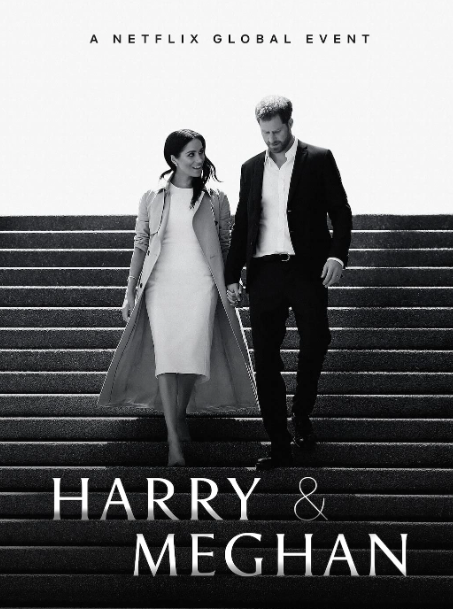
Harry & Meghan 4-6: Fame and its Consequences

I said in my review of the first three episodes of Harry & Meghan, the documentary by Liz Garbus on Netflix, that I was more interested in the media aspects of their story than the royalty, though the two are of course intertwined.  The same is true of the final three episodes -- 4-6 -- which I just saw on Thursday.

But the media play a different role in this part of their story.  In the first part, we see Meghan in control and on top of the media, able to use them to her and Harry's advantage, and good for her.  Now we see her become the victim of their incessant intrusion into their lives, to the point that she and Harry and their son and the daughter need to go into a kind of hiding. Tyler Perry, the rich American actor who gave them shelter and peace in his beautiful home in California, deserves a lot of credit and becomes a real hero in this story. And shout-out for Chris Bouzy, for providing some savvy research which shows that the avalanche of vicious tweets aimed at Meghan were the work of a small group of well-organized racists.

Both Harry and Meghan, of course, are understably focused on what happened to Harry's mother Diana, and making sure Meghan doesn't suffer the same fate.  I would say that the ultimate culprit, in both cases, is fame itself.  When you don't have it, you pursue it, often desire it above all else.  But when you attain it, especially if it's a lot of fame, it suddenly is pursuing you, and your task changes from seeking it to avoiding it. The problem is that fame unleashed becomes incompatible with basic human privacy.

And here the royals do come into play.  Whatever we may think of them, they have figured out a way of dealing with the flames of fame, including keeping it at bay when necessary.  Although their corporate-like decisions may rankle -- and certain did bother both Harry and Meghan -- the "firm's" endless decisions on what information to dole out, precisely where and when, were and are designed to give the media what they want in a way that doesn't burn or singe any member of the royal family, or the concept of royalty itself.

Ironically, the forces that drove Harry and Meghan to leave the royals -- the decision being more Harry''s, and being made to protect Meghan -- left them even more vulnerable to the media sharks.  Why the royals didn't do more to protect them, even then, after they had left the royals, remains an indictment of the royal family.  After all, Harry and Meghan are members of their family, literally.  Prince William's responses, in particular, don't show him in a very good light in this documentary, though in all fairness, this documentary doesn't show, or purport to show, his side of this complex story.

But life goes on, and now that Charles is King and William is next in line to be King, there could well be time and occasion for a rapprochement between the brothers and the family.  None of that is talked about in the documentary, because its story concludes with Elizabeth II still on the throne.  But it does lead us to believe -- or, at least, it does me -- that Harry and Meghan are good, thoughtful people, wonderful parents, and they and their children deserve a happy life.

See also Harry & Meghan 1-3: The Media


Tuesday, December 13, 2022

Harry & Meghan 1-3: The Media


I'm not so much a royal watcher as a lifelong student of media (and professor of media studies at Fordham University), so it was through that lense that I watched and really enjoyed the first three of six episodes of the Harry & Meghan documentary on Netflix.

Meghan is unique among the royals for several reasons.  The most interesting and important, I'd say, in the long run, is that she was already a success in the media before she met Harry.  Although Suits on the USA Network isn't quite up there with LA Law or Petrocelli, the legal drama ran for nine seasons, and Meghan played a major role as Rachel in seven of them.  This means that Meghan has a comfort with media, an understanding of its levers, challenges, and opportunities, that few people on the face of the Earth have, including the Royals.

It shows in Liz Garbus' excellent documentary.  Meghan is sparklingly articulate, in control of every scene -- except when she wants to appear not so -- and knows just how to catch and look at the camera, and us her audience.  This is not say she's feigning emotions.  She was convincing to me -- though, then again, I of course don't really know her.

Prince Harry no doubt benefits from his wife's media insight.  He also comes across as real and relaxed, and when he's upset and not relaxed at all, that seems thoroughly justified.  Again, I don't know Harry, so I can't say what he's like off-camera, but certainly his concern for Meghan's well-being and very life, in view of what happened to Harry's mother Diana, seems 100% warranted.

So the documentary brings home Harry and Meghan as a refreshingly real and therefore relatable couple.  As a significant comparison, Harry's older brother and heir to the throne Prince William and his wife Kate are also shown from time to time in the first three hours.  They seem nice and friendly enough, but on a different planet compared to Harry and Meghan in the way they relate to the world.  I suppose part of this is understandable, given the weight on William's shoulders as future King.  But part of this also comes from their personalities, and neither having anything like Meghan's facility with the media.

Other than Harry and Meghan per se, I thought the most commanding part of the documentary came from historian David Olusoga, whose critical take on the British commonwealth was a splash of icy salt water for any who romanticize the biggest empire that ever existed in our world.  The underside of bringing civilization to so many diverse places is the price that people of color are still paying for this achievement.

But there's a lot more to Harry and Meghan's story.  We're advised at the beginning of the documentary that the filming concluded in August 2022, or prior to the end of Queen Elizabeth II's long reign in September.  There was a walkabout in Windsor in September, with William and Kate, and Harry and Meghan, greeting the people.  For whatever reason, the two couples spoke to the people separately, on opposing sides of the street, and there was not much interaction between them.  Harry and Meghan of course were fully aware of the documentary, and the story it would tell.  William and Kate must have known about it, but it's not clear if they'd seen it. Probably not.

But I'm definitely looking forward to seeing the concluding three episodes of the documentary on Thursday.

See also Harry & Meghan 1-3: The Media


Sunday, November 6, 2022

Spector: Incomplete


I watched all four episodes of Spector on Showtime last night, and there were things I didn't like in this documentary portrayal of both Phil Spector's career as a rock music producer and more so his trials for the murder of Lana Clarkson, but before I tell you about that, let me offer this disclosure of my relationship to Phil Spector, and what I thought of his music.

I didn't actually know Phil Spector, but Ellie Greenwich -- who co-wrote (with Spector and Jeff Barry) such great Phil Spector produced hits as "Da Doo Ron Ron," "Then He Kissed Me," and "Be My Baby" -- co-produced (with Mike Rashkow) two singles with my group The Other Voices (aka The New Outlook) for Atlantic Records in the late 1960s.  When she spoke of Phil back then, it was with a tone akin to reverence, as it she were talking about a god.

I loved Spector's music before I had any idea who he was, when he sang with and wrote The Teddy Bears' "To Know Him Is to Love Him" in 1958, and proceeded with producing the Paris Sisters's "I Love How You Love Me" and Curtis Lee's "Pretty Little Angel Eyes" in 1961.  Back then, I didn't know or pay any attention to what record producers did, but as his masterworks by The Crystals, The Ronettes, and The Righteous Brothers hit big in the years that followed, I became increasingly aware and a fan of Spector's Wall of Sound and what it brought to music.

Ellie told me about Phil's threat to leave the music business if "River Deep -- Mountain High" (another song co-written with Spector and Barry) by Ike and Tina Turner didn't reach the top of the charts.  I wasn't surprised when she told me this in 1968, after the record had flopped in the U.S. and Phil had made good on his promise to give up record producing, because I didn't like that record much back then and still haven't warmed up to it.  Also, like just about everyone else with a pair of ears, I didn't like what Spector did with The Beatles Let It Be album at all.  But I did like the music he produced for John Lennon after the Beatles had broken up, and I loved "Black Pearl," a song Spector produced and co-wrote for Sonny Charles and the Checkmates in 1969.

So now let's get to this brand new documentary.  This was nothing incorrect in what it told us and showed us about Phil Spector's music, but it left out some significant components.  No mention of "Pretty Little Angel Eyes" on one end of the continuum of Spector's productive time and "Black Pearl" on the other.  And though Spector's leaving his productive production life after "River Deep" got nowhere near number 1 in the United States was discussed, there was no explicit mention of the threat to leave if "River Deep" didn't succeed, even though this threat and Spector's following through on it was arguably the most important part of that story.

But the problems with the portrayal of the trials of Phil Spector for the murder of actress Lana Clarkson in 2003 were far worse, in my opinion.  The first trial ended with a hung jury (10 for conviction, 2 for acquittal) in 2007, and the second trial ended with a conviction of second degree murder for Spector in 2008.  The defense offered three main arguments on behalf of their client: Clarkson took her own life, Spector's driver who called the police and told them "My boss said he thinks he killed somebody" misheard Spector, and Spector did not have any of the blood splatter or gun residue which would have resulted had he leaned over Clarkson and shot her in the mouth.  The first two arguments are easily dismissable.  Clarkson had no history whatsoever of mental depression or wanting to take her own life.  And Spector's driver, a Brazilian, clearly spoke and understood English well enough to hear that statement by Spector and report it to the police.

But the blood splatter and gun residue are something else. All the documentary did to counter that is offer a brief prosecution opinion that such splatter and residue doesn't always result from such shootings.  In contrast, the forensic testimony shown in the documentary that Clarkson's killer should have had the splatter was impressive.  Indeed, so much so, that one of the jurors who voted to convict in the first trial told the camera that the splatter defense gave him some pause.

The net result is that the documentary leaves the legitimacy of Spector's conviction in more doubt than likely is necessary.  I say "likely" because I wasn't in the courtroom for either trial, and so don't know the full extent of the prosecution's attempt to refute that defense splatter argument.  Also, in addition to the too brief coverage of the prosecution's response to the splatter issue, the documentary left out any discussion of the three appeals put forth by Spector's defense in 2011, 2012, and 2016, all of which failed.

Four hours is short, anyway, for a documentary on such an important biography.  Given the life and death issues that Spector covered, at least another hour would have well served the documentary, its viewers, and ongoing history.


Thursday, November 26, 2020

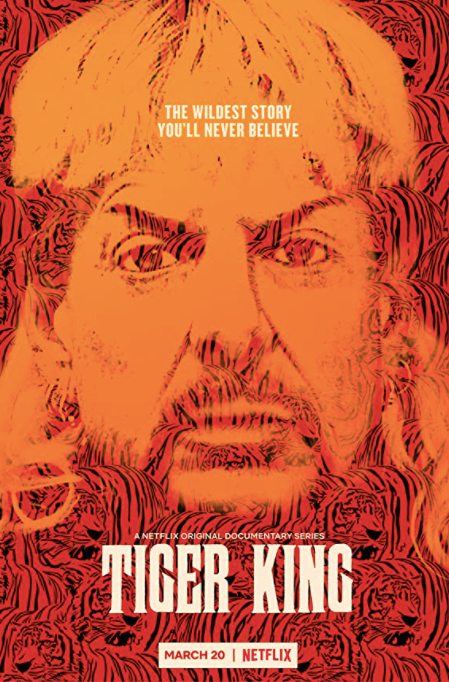
Tiger King: A McLuhanesque Perspective


“The 'content' of a medium is like the juicy piece of meat carried by the burglar to distract the watchdog of the mind,” Marshall McLuhan famously declared in Understanding Media (1964, p. 32).   The content of Tiger King, the runaway global hit documentary on Netflix, are the tigers and other animals in Joe Exotic's Oklahoma zoo, thrown pieces of meat, juicy and otherwise (some is expired meat from supermarkets).  But the deeper story, underlying the meat, is Joe Exotic's unquenchable thirst for fame, relentlessly pursued through social media.  And in the irony of ironies, he eventually obtained that fame, along with a prison sentence of 22 years for attempted homicide of an animal activist and mistreatment of animals.

My late editor at Tor Books, David Hartwell, once told me never to kill a pet cat or dog in my science fiction novels.  "Some readers will never forgive you," he said.  I didn't heed his advice in one of my novels, and its sales indeed were markedly off.  I have no idea what Joe Exotic actually did and didn't do to his animals.  I wasn't there.  But I was impressed, near the end of the docu-series, to hear someone remark that mistreatment of animals, including killing tigers, was likely to be far more effective in turning the jury against him, then his planned murder of animal-rights activist Carole Baskin in Florida.  One of his ultimately not-so-loyal staff, Kelci "Saff" Saffery, told Joel McHale in the postscript interview that the thing that got him the most angry at Joe was taking in an old horse from a grieving owner, and chopping it up for meat to feed the tigers after assuring the owner that he'd take good care of the horse.

The things he did to the animals apparently really happened, though we mostly only know this through the words of his staff.  In contrast, the threats against Carole Baskin were not only later reported by his workers and associates, but conveyed to the world via videos that Joe relished making and posting, in which he shot and otherwise assaulted dummies of Baskin.  Since his feud with Baskin fueled his pursuit of fame, he at very least had to have had some misgivings about getting her permanently out of the picture.  He fancied himself a country singer and posted music videos, with someone else's voice overdubbed.   He ran for President in 2016 and governor of Oklahoma in 2018 and, obviously, lost both times.  If you think about wrestler Jesse Ventura's successful run for governor of Minnesota in 1999, Joe's run in Oklahoma wasn't so crazy.  The only thing Ventura really had over Joe was more fame to begin with (in addition to Ventura being mayor of a medium-sized city in Minnesota, but without the pro-wrestling fame, that mayor position would likely not have been enough to propel Ventura into the governorship; here, by the way, is an interview Ventura did with me after he left the state house).

Joe Exotic, now in prison, has a lot more fame than Ventura had in 1999.  Can someone in prison run for Governor?  I don't know, that's up to state law.  Let's say he's released?  That depends, again, on the state law in Oklahoma.  But there's nothing in the U. S. Constitution that would prevent him from running -- again -- for President.

Given what we've had in the White House the past four years, stay tuned.  Fame is a fungible commodity that can easily be transferred from anything to politics.  Nothing would surprise me.


Monday, October 19, 2020

The Trial of the Chicago Seven: A Little Too Much Fiction in this Docudrama


My wife and I saw The Trial of the Chicago Seven on Netflix on Saturday. Having lived through the real trial of the Chicago Seven (originally Eight) in 1969-1970, we thought there was a little too much fiction in this docu-drama to be 100% successful and effective.  Nonetheless, it was powerful viewing.

To back up a little, as I alway tell my classes, docu-dramas are by definition never 100% truth or exactly as the events in the movie actually happened.  Hey, even straight-up documentaries are never 100% true, because the film-maker inevitably has to leave some events, one hopes inconsequential, out of the film.  Real life is too sloppy and inexact to fit in just as it is or was in a documentary.

But docu-dramas go a big step further away from truth.  At the very least, they rewrite or make-up dialogue.   Worse, they often make up characters and/or endow characters who existed in real life with deeds they never did.   This works best the further back in history the docu-drama goes.  I couldn't possibly have any personal recollection of what Lincoln said and did.  So I was able to enjoy Spielberg's Lincoln with zero quibbles.   But 1969-1970 is a lot closer than are the early 1860s to our time.

So, lots of people noticed that Tom Hayden's closing statement in the Aaron Sorkin docu-drama wasn't made by Hayden in reality, and was not a closing statement.  Or that the pacifist Dellinger -- who did in fact earlier read the names of some of the American fallen in Vietnam during the trial-- never hauled off and punched a guard who was trying to escort Dellinger out of the courtroom, as so dramatically depicted in the movie.  To be honest with you, neither my wife or I jumped up and shouted during the movie that those events never happened.  But my wife had a vague sense of irritation throughout the film, and I was annoyed after the movie to have been brought to tears by that closing scene, so effective, that didn't happen in real life.

I suppose Sorkin might say that such a reaction is my problem, not his, and if I was brought  to tears by the ending that didn't happen in reality that shows that Sorkin succeeded, doesn't it.  I'm not so sure.  I think that, even in a docu-drama, or maybe especially in a docu-drama, the film maker has an obligation to present a greater quotient of truth.  Again, especially if the docu-drama is so close to home in time.  I'm sure Marc Anthony never said "Friends, Romans, countrymen, lend me your ears;  I come to bury Caesar, not to praise him," but that didn't in the least get in my way of really enjoying Shakespeare's Julius Caesar, from the moment I first read it, so many decades ago, and for that matter thinking about that play right now.

Maybe the answer is Sorkin's movie is meant for a younger generation than mine.  It has lots of assets, including boiling down the differences between the protestors on trial to Hayden vs. Abby Hoffman.  I don't know if that's true, either.  But since I don't know for sure that it isn't, I'm ok with thinking back on that crucial aspect of The Trial of the Chicago Seven, and enjoying the recollection and contemplation of that fundamental conflict between political revolution (Hayden) and cultural revolution (Abby Hoffman). And I should say the acting in this movie, including Eddie Redmayne as Hayden and Sacha Baron Cohen as Abby Hoffman, was just superb.   Regarding those two, special kudos to two Englishmen talking at each at some length in passable American accents.

So, see the docu-drama - with no reservations if you weren't around the first time this trial happened, back in the 1969-1970.  And see Medium Cool made in 1969 if you'd like to see a documentary about the protests around the Democratic National Convention which ignited the trial.


Saturday, May 30, 2020

Spaceship Earth: The Misunderstood Success


I don't often watch documentaries, and review them even less often, but Spaceship Earth is an exception, because it tells at least two highly significant stories: (1) the attempt to construct a totally self-contained environment or biosphere (Biosphere 2) on Earth, with human inhabitants, as a template for what could be sent out to our solar system and beyond in the future; and (2) the media misreporting of what Biosphere 2 accomplished.

The truth is that Biosphere 2 was unable to maintain total self-sufficiency.  At seventeen months into its two year 1991-1993 mission, oxygen was imported from the outside into the biosphere to combat the sharp reduction in oxygen from 20.9 to 14.2 percent of the biosphere atmosphere.  Obviously, this is not something that could have been done in the middle of a mission to Mars or anyplace off the Earth.  But the media were wrong to report this as evidence that the Biosphere 2 mission failed, or was some kind of publicity stunt rather than a scientific experience.  Apparently no one in the media read British philosopher Karl R. Popper (for example, The Logic of Scientific Discovery), and his widely accepted view that mistakes are the way that science learns and progresses.

The Hulu documentary, named after Buckminster Fuller's apt characterization of our planet as "spaceship Earth," does a fairly good job of reporting and assessing the above, relying on extensive current and historical in-situ interviews with most of the central players in the Biosphere project, including the Biosphereans themselves.   I know at least two people who provided support for Biosphere 2, Carl N. Hodges, an atmospheric physicist at the University of Arizona, who was not in the documentary, and Kathy Dyhr, Director of Public Affairs for Biosphere 2, who had a major role in the documentary.   I had long and riveting conversations with each of them in the mid-1980s, when Biosphere 2 was under planning and construction, and both were students at the Western Behavioral Sciences Institute pioneering online education program, where I was a faculty member and was first introduced to online education, which gave me the idea for Connected Education and which has become so important during our current Coronaviris pandemic.  These conversations, as well as my knowledge of how science works, and plain common sense, are what led me to conclude that the media assessment of Biosphere 2 was so wrong.

But why, then, did the media jump on the bandwagon of Biosphere 2 failure?  The documentary provides one of the two answers.  Steve Bannon - yes, that Steve Bannon - was brought in by financer Ed Bass to run the Biosphere managing company (Space Biosphere Ventures).  Apparently Bannon sought to make a name for himself by publicly and repeated denouncing the project (including destroying some of the crucially valuable data it had collected, according to the documentary).

The second reason is more endemic and intrinsic to the media and to us, its public.  As Phil Ochs pointed out so well in his song "The Crucifixion" (1966), we love to tear down, or see torn down, that which we have built up for adulation.  The idea that we could build here on Earth a habitat which with proper propulsion could take us to the stars was heady, intoxicating stuff.  When it failed to achieve that goal in at least one critically important way, the disappointment that resulted was enough for the media and many viewers to discard the entire project as an ambitious entertainment gambit that flopped.

But facts are stubborn things, and I expect the documentary to continue to bring the truth of Biosphere 2 out to the world and the future, which is that it was an important and major first step that taught us a lot about how we can get beyond this planet to the cosmo beyond.


Monday, July 22, 2019

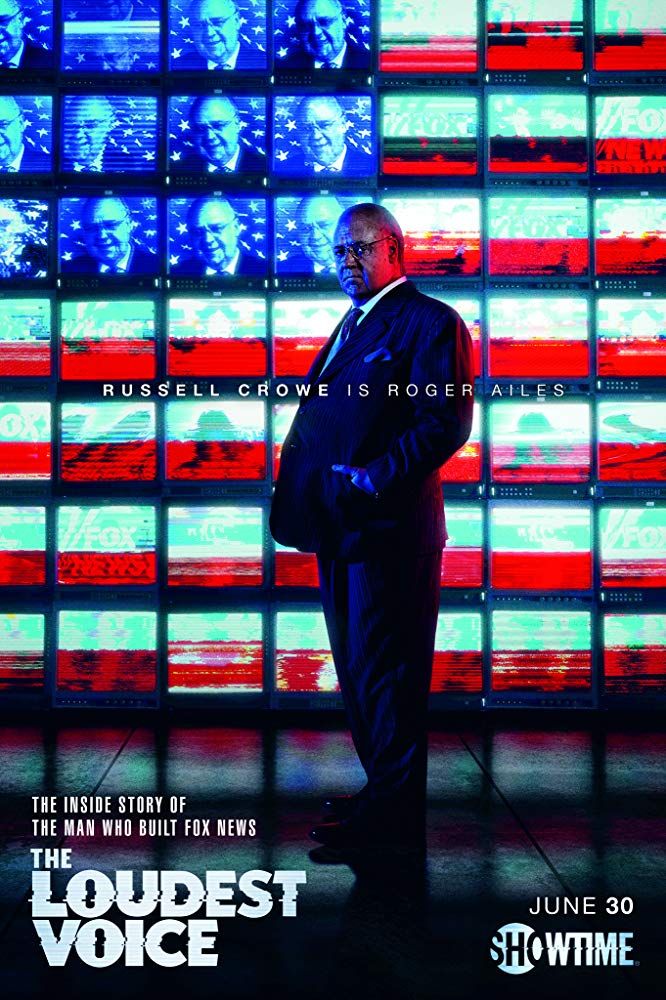
The Loudest Voice 1.4: "We Create the News"


Another powerful episode of The Loudest Voice tonight - 1.4 - in which Roger Ailes lays bare the basis of fake news: "we create the news'.  I should say, the basis of real fake news - that is, news that is fake.  We need to make this distinction because Trump now daily bashes our legitimate news media as fake news - which would be fake fake news -  a tactic that comes right out of Hitler's denunciation of the press in 1930s Germany as the Lügenpresse (the lying press).  When you're trying to replace democracy with a totalitarian regime, it's wise to discredit and get rid of the people who can call you out on that and let the rest of the country know - the press.  (See my short book, Fake News in Real Context, for more.)

Speaking of Trump, we also hear on The Loudest Voice tonight that it was Aisles and Fox who gave the Trump the idea that Obama was not really born in America.  I have no idea if Trump got that paranoid right-wing notion from Fox or not.  And here it might be a good idea to mention, as I always do, that there's a big difference between documentaries and docu-dramas.   Even documentaries are not necessarily entirely truthful - they may leave out important facts.  But docu-dramas go even further - they actually make conversations up, conflate events, etc, to tell a more effective narrative.  (The excellent docu-drama Chernobyl, which I reviewed here in May-June, did a lot of that.)

The Loudest Voice certainly focuses only on selected Fox News luminaries - selected for whatever reason.   Tonight we saw a lot of attention to Glenn Beck.  A few weeks ago, it was Sean Hannity.  Both of these Fox News hosts are portrayed in detail by actors.  In contrast, Bill O'Reilly, who had Fox New's leading show for years, is mentioned as such, and shown (the real O'Reilly) briefly on the The Loudest Voice, but no actor portrays him and we see nothing of his back story.  Why not?

I guess all of this adds up to taking The Loudest Voice with a grain of salt, as we should with any docu-drama.  It tells a crucially important story, and is therefore worth watching, even if something less than the complete truth and only the truth shows up on our screens.

See also:  The Loudest Voice 1.1: Fox Launch ... The Loudest Voice 1.2: September 11 and After ... The Loudest Voice 1.3: Prelude to Trump


Wednesday, February 1, 2012

Cowardly Republicans Order Reporter Arrested in House

The assault on the First Amendment reached new lows today, as Republicans in the House of Representatives ordered the arrest of an Academy-Award nominated filmmaker, seeking to make a follow-up documentary to his Gasland movie about hydraulic fracturing and its environmental dangers (also known as "fracking," but don't confuse it with Battlestar Galactica). The documentary journalist was attempting to film hearings in the House about this serious problem.  Apparently the Republicans were ashamed of their position on this issue, and didn't want the public to see it.

Josh Fox was taken off in handcuffs on Republican orders - they have a majority in the House.

First - once again, police need to stop acting like robots and show a little understanding of the law.  Is there no law enforcement officer in these United States who understands the First Amendment?

Second - no, this is also first - the Republicans in the House of Representatives who ordered this arrest broke a tradition at the very basis of our democracy: hearings are open to the public.   Even if they wanted to stop the filming, there was no need to arrest Fox.  He has the right as does any law-abiding American to witness and report upon an open House hearing.

I would like to see Barack Obama order his Attorney General to look into this - but I don't expect this to happen any time soon, any more than Obama has done anything about the violations of the public's and press's First Amendment rights in the continuing Occupy Wall Street protests.

It's too bad Ron Paul was in Nevada today, campaigning for this Saturday's GOP caucus.  Would he have spoken out against these arrests, gone up to the Capitol Hill police, spoken truth to them about the wrong that they we're doing to our country and our freedom?

At this point, the best we can do is all speak out against this.


Friday, December 30, 2011

Four Important Documentaries in 2011

Looking back at 2011, I would say that it was a great year for documentaries.  Here are four that I had the pleasure to see, learned a lot from, and reviewed.  They are listed in date order, because ranking them would be apples and oranges.  The dates and links are those of my reviews, which could be earlier than official release dates, in cases in which I was able to see a preview.

  • January 6, 2011:  There But for Fortune, Kenneth Bowser's vivid, incisive movie about Phil Ochs, second only to Bob Dylan in the opinion of many, certainly above Dylan in some ways ... more relevant than ever in view of Occupy Wall Street and the Arab Spring ... look for it on PBS in 2012 ... details on the movie's Facebook page
  • September 2, 2011: Connected, Tiffany Shlain's triple threat movie, one part bio-doc about her father Leonard, one part history of media ala Marshall McLuhan, one-part about the growing interconnectedness of our world now expressed in Occupy Wall Street and the Arab Spring ... details on the movie's Facebook page


Sunday, August 14, 2011

Sholem Aleichem and Marshall McLuhan

I saw Joseph Dorman's 2011 documentary, Sholem Aleichem: Laughing in the Darkness, with Tina last night.  Superb footage and sage commentary about the man born Sholem Rabinovich in Russia in 1859, who died world-renown under his pen name Sholem Aleichem in New York City in 1916 (a year after my father was born here in 1915, four years after Marshall McLuhan was born in Edmonton in 1911).  Sholem Aleichem was known as the Yiddish Mark Twain.   Given one of his specialties in ironic endings of short stories, he also could have been known as the Yiddish O'Henry or De Maupassant.

But the Twain reference speaks most to Sholem Aleichem's relevance to Marshall McLuhan.  Mark Twain's ear for American vernacular, and capacity to put it on the written page, fired up his master works Tom Sawyer and Huckleberry Finn.  Aleichem did the same for Yiddish.  McLuhan provided tools for explaining this genius of both writers - hybrid energy, their capturing of one mode, the acoustic, and rendering it convincingly in another mode, the visual.

As Dorman's movie makes clear, Sholem Aleichem might have written in Russian, his native written language, or in Hebrew, the formal, sacred language of his people.  Instead, he chose to write in the shtetel slang he heard all around him.  This made him cooler than Tolstoy and the Talmud, a written rapper of his time.

McLuhan understood and wrote about the power of slang, including its transformation into cliche and in turn into archetype (see my Digital McLuhan and its discussion of McLuhan's tetrad for more).  Sholem Aleichem, alas, died a decade before his work would achieve its full archetype status - in the Soviet Union, Palestine, and America, in different ways, as the movie shows.

Laughing in the Darkness now buttresses that enduring status.   I had one quibble with the documentary - it made no mention of Joe Stein, who wrote the play, Fiddler on the Roof,  which catapulted Aleichem's Tevye the Milkman stories into theatrical and then cinematic prominence in the 1960s and 70s.  Although I studied Sholem Aleichem in the Workmen's Circle Yiddisheh shuleh in the late 1950s, and heard about him from my parents and grandparents, for many people Fiddler was their introduction to Sholem.

From the ear to the page to the screen, a McLuhanesque story of media evolution right there.

Tuesday, January 18, 2011

Preview Review of Default: the Student Loan Documentary

There is an illness afflicting our country.  It hits one of the most valuable and significant segments our populace, our intellectual seed crop - our students in colleges and universities, undergraduate and graduate, law and medical schools.  It punishes the students it hits with back-breaking financial obligations, which can and do afflict them for the rest of their lives.   I'm talking about student loans, and the way some of them are administered - the subject of this crucially important, new documentary, Default: the Student Loan Documentary, which will soon be shown on television.

As a Professor (of Communication and Media Studies) at Fordham University in New York City, I'm naturally always concerned about students and their future well being.   But this documentary makes vivid an abuse which, while tragically all too commonplace, is way out of the ordinary in its destructive effects.   Did you know, for example, 
  • that going into "forebearance" - getting a delay on when you as a student who has graduated must start repaying your loan - can result in astronomical increases in what you ultimately owe, to the tune of $20,000 borrowed requiring more than a $60,000 repayment?
  • that even a lawyer who landed a job in the Brooklyn DA's office has been driven to financial collapse because of usurious "forebearance" charges?
  • that even bankruptcy will not save you from loan repayment collectors?
That's right, even though these charges can drive the afflicted to bankruptcy, that will not get them off the hook.   Student loans can be recouped even from your Social Security payments, if you make it that far.   And the culprits are not just banks - according to this movie, Sallie Mae, the nation's biggest originator of student loans insured by our own Federal government, is a big part of this problem.

To be clear - of course loans should be repaid, if at all possible.  But life-destroying rates and the policies of some of the lenders to students are unconscionable, as well as deeply damaging of the future of our society.

I learned most of this in Default: the Student Loan Documentary.  Its air dates have not yet been established.   Keep your eyes out for it.   In the meantime, check the documentary's Facebook page.

Thursday, January 6, 2011

There But for Fortune: Gift of Phil Ochs to the Future

Tina, Simon, and I saw There But for Fortune last night at the IFC Center - formerly the Waverly Theater - in the heart of Greenwich Village in NYC.  It was the second time for Tina and Simon - they were at a a preview screening in December (Simon reviewed it for Entertainment Weekly; Tina has been one of the lead editors of Phil Ochs' Wikipedia page since 2006).   This documentary about the life and times of Phil Ochs merits repeated viewing.

If you don't know who Phil Ochs was, here's what you missed: a folk singer who wrote and sang topical songs - one of his albums was entitled "All the News that's Fit to Sing" - with a warmly evocative voice, a trenchant logic and commentary, and a zest and precision in lyrics that rivals Bob Dylan and Cole Porter.   Ochs' songs critiquing the Vietnam War ("White Boots Marching in a Yellow Land"), war in general ("I Ain't a Marchin' Anymore"), the wishy-washy "liberal" political philosophy of the 1960s (that is, Hubert Humphrey rather than Eugene McCarthy, in his song "Love Me, I'm a Liberal") and many more are still among the best "protest" - political commentary - ever written in any medium.   And when you add to this "The Crucification" (the public's thirst for the fall of heroes they create, ranging from Christ to John F. Kennedy), "The Floods of Florence" (artists struggling to communicate through own their media), "Flower Lady" (the eternal witness to cultural decline), and more like that, you get some of the best songs and cultural commentary ever written, period.

Ochs was loved and admired, but he got nothing like the recognition he deserved in his own time.  Robert Christgau, long the dyspeptic music critic of The Village Voice, complained about Ochs' guitar strumming in a concert in which Ochs' words, melodies, and voice were heart-rending and extraordinary (Tina and I were likely in that audience -  we heard Ochs at concerts and rallies at least a dozen times).  Dylan dissed Ochs, didn't include him in his Rolling Thunder tour, though the two had often performed together, including just the two of them for Broadside Magazine with Pete Seeger listening at the beginning of their careers (Pete talks about this in the movie).    In 1976, Ochs took his own life - succumbing to the pits of a manic depression that had also helped propel him to greatness.

So There But for Fortume - written and directed by Kenneth Bowser, produced by Michael Cole, Bowser, and Ochs' brother Michael - had a lot to take care of, a steep road to climb, and it did this just masterfully, with clips and photos of Ochs and friends seldom if ever seen before,  and sage and instructive interviews with people in a position to know, from Joan Baez to Abby Hoffman to Sean Penn and Christopher Hitchens.  Some of these interviews were clearly done years ago (as Kenneth Bowser and Michael Ochs discussed in their q&a after the movie - a perfect cap for a splendid night - There But for Fortune was 19 years in the making).

Among my favorite parts (in no particular order, because it was all great) was Ochs explaining why he went to orchestration rather than folk rock with his Pleasures of the Harbor album,  the revelation that Ochs saw himself as a John Wayne patriot (the Vietnam War that Ochs so implacably and aptly opposed was, after all, unconstitutional, as has been every war since World War II, the last time Congress adhered to the Constitutional requirement of a declaration of war by both houses of Congress), photos of "Bobby" Dylan at Ochs' place in the Village in the early days,  Dylan and Ochs performing at the concert on behalf of Chilean refugees in the 1970s, and much, much more.

I think everyone whose souls were captured, ratified, and lifted by Phil Ochs wanted to do something to keep his words and music alive when we learned of his death back in 1976.  I was teaching at Fairleigh Dickinson University in Teaneck, NJ, then, and did a radio show for the campus station - broadcast and heard all over the New York area - called "Seminar on the Air".  I asked the program director if I could do a special on Ochs.  He said ok, but keep it to an hour.  I invited my friend and fellow-Ochs lover Josh Meywrowitz to join me, but by the time we were finished talking about Ochs and playing his records, the clock said our taping had gone three hours.   I called the program director - he said, hey, I know it will be hard, but kindly cut the tape down to the one hour.  I had a decision to make ...  I was sending a press release about our show to the New York Times, and my hand must have "slipped" when I put in the length of the show, because it said three hours ...  On the Saturday the show was to air, I got a call from the program director early in the morning, telling me the Times had listed our show - great news - but by mistake or misprint [smile] indicated its length as three hours.  He asked me if there was any chance I still had the three-hour version of the show on hand.  Of course I did.  I went out to Teaneck, put the three hour tape in the queue, and it was indeed played in its entirety that night.  Hey, even three hours of radio doesn't do Ochs justice.  You gotta do what you can ...

But Ken Bowser, Michael Ochs, and Michael Cole have done with There But for Fortune more than any who loved Ochs could have asked for.   The documentary is a gift to the future, and I'm guessing it will finally put the works of Phil Ochs in the eternal hall of great works, right along with Dylan's, that will be listened to for centuries or longer to come.

Further listeningDennis Elsas recently interviewed Ken Bowser on WFUV-FM Radio, with fine Ochs songs as accompaniment ... One of the songs Elsas and Bowser discuss is Ochs' "Small Circle of Friends," which, as Elsas notes, "almost became a hit record".

I've long been vexed by perhaps the main reason this song did not become a hit.  Shortly after it was released in 1967, the FCC issued a warning to radio stations, that their licenses could be in jeopardy when they came up for renewal if they played songs that endorsed drug use.   "Small Circle of Friends," which is about public apathy, has a verse about "smoking marijuana" and getting high detaching people from their responsibilities as citizens and human beings.  It is obviously an attack on drug use, not an endorsement, but that distinction was lost on radio stations afraid of the FCC.   Many of them promptly dropped "Small Circle of Friends" from their play lists.  Just one of many reasons I'd like to see the FCC declared unconstitutional - put out of its miserable, censorious business - as a blatant violation of the First Amendment.
InfiniteRegress.tv