22 December 2024: The three latest written interviews of me are here, here and here.

Saturday, May 16, 2026

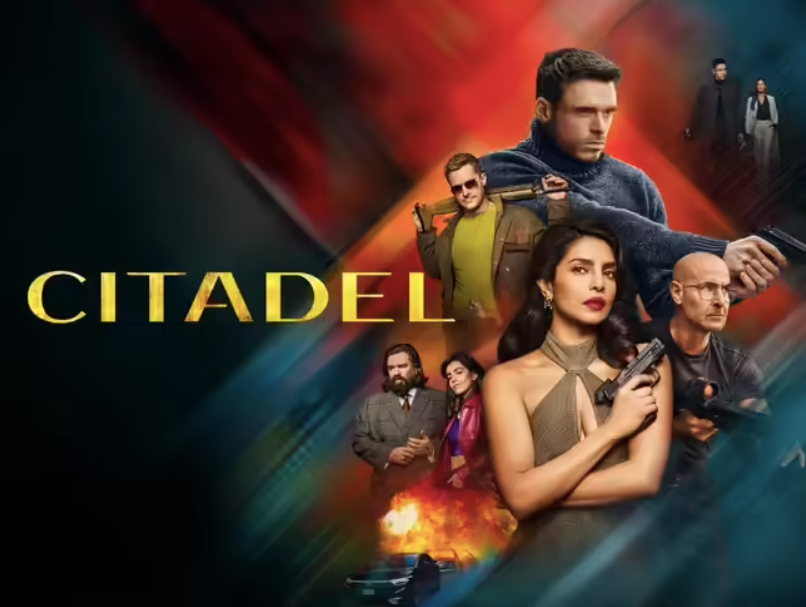
Citadel, Season 2: Here's What You Might Want to Know I Think About It


The wife and I binged Season 2 of Citadel the past few nights.  I think it's a great scalding piece of science fiction spycraft with somehow some nearly slapstick comedy woven in via a new rogue CIA operative.  As I was watching it, I thought that if Alfred Hitchcock were alive and kicking today, Citadel might well be the kind of streaming TV series he would make.  

Citadel -- both seasons -- is also a special kind of love story, chocked full of insights into the way love plays in all of our lives, off-screen.  There's a conversation in almost every episode in which Nadia or an equivalent character says to Mason or an equivalent character, you don't really love me, "you loved the thought that I loved you."  That's pretty astute stuff, in a spy or any narrative, because it comes straight out of real lives.

Because of what we found out at the end of season 1 -- I'm trying to avoid spoilers here -- there's also a lot compelling and provocative family drama, probing the relationship between parents and their adult children.   Since we're dealing with daily life-and-death relationships, the regular pressure points that we find in everyday life take on cutting-edge importance.

The importance of chips in the brain -- the key science fictional lever in season one -- is expanded in season two into a capacity to remotely turn anyone with an implanted chip into a murder machine.   If this sounds like an update of The Manchurian Candidate, you'd be right, and that's indeed what one of the characters says in Citadel season 2.

Lots of people get killed, including some major characters, including one I'm whose death I'm very unhappy about -- but hey, this is science fiction, maybe a soul can be embedded in a chip, and I hope there's a third season in which some version of that happens.

See also:  Citadel 1.1-1.2: Memories and Questions ... 1.3: Jedi ... 1.4-1.6: The Arch Anti-Hero

lots of chips in this novel

Friday, May 15, 2026

For All Mankind 5.8: Firing on All Cylinders

Ines Asserson


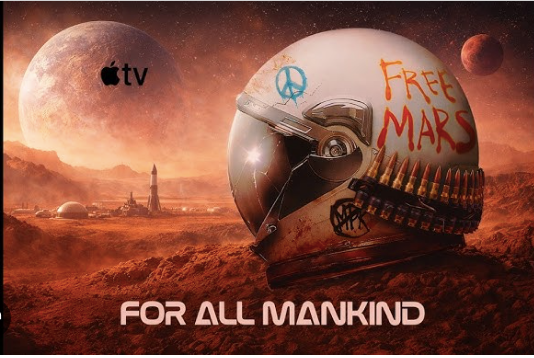
For All Mankind was firing on all cylinders -- literally and figuratively -- in episode 5.8, up on Apple TV today.

The main action was the approaching attack on Mars by the Earthly multi-national alliance, and the defense that our Martian heroes mounted.  Celia (Mireille Enos) and Leonid (Costa Ronin) were a good duo to mount the defense, and we get a better understanding of Leonid, his ethics and prowess, in this dangerous undertaking.

On board in the attack from Earth is A. J. Jarrett, granddaughter of the world-famous Tracy and Gordo Stevens, characters that I really miss in this multi-generational story (there is no else in the current story who have their unique mix of outrageousness, heroism, and sheer style).  Jarett (Ines Asserson) is a complex character to begin with, and what happens to her when she gets to the Goldilocks asteroid will make her far more complex and conflicted.

Meanwhile, there's also a classic drama brewing with the crew that has landed on Titan.  As we saw last week, Kelly Baldwin defied Captain Griebel's command that the Sojourner turn around and go back to Mars, rather than make the perilous landing on Titan. But Griebel doesn't yet know that Kelly did this -- he thinks the failure of the Sojourner to turn around was his fault, some mistake he made in the programming.   He's determined to find out what he did wrong, but you and I both know that it's just a matter of time until he realizes what Kelly did.   I like these kinds of powder kegs in narratives.

And just to end on a musical note: I really like Ollie's song, "A New Life," played twice in this episode.  As soon as I can find a video of it up on YouTube, I'll post it here.

See also For All Mankind 5.1: On the Intersection of Alternate and Real Histories ... 5.2: Actor Reunions ... 5.3: The Newton, the First Amendment, and ... Last Breath ... 5.4: Robots Replacing Us In Space? ... 5.5: ICE on Mars ... 5.6: Earth vs. Mars ... 5.7: Titan!

And see also For All Mankind 4.1: Back in Business and Alternate Reality ... 4.2: The Fate of Gorbachev ... 4.3-4.4: The Soviet Union in the 21st Century, On Earth and Mars ... 4.5: Al Gore as President and AI ... 4.6: Aleida and Margot ... 4.7: Dev on Mars ... 4.8: Sergei and Margot ... 4.9: Progress ... 4.10: Earth vs. Mars

And see also For All Mankind 3.1: The Alternate Reality Progresses ... 3.2: D-Mail ... 3.3-3.4: The Race

And see also For All Mankind, Season 1 and Episode 2.1: Alternate Space Race Reality ... For All Mankind 2.2: The Peanut Butter Sandwich ... For All Mankind 2.3: "Guns to the Moon" ... For All Mankind 2.4: Close to Reality ... For All Mankind 2.5: Johnny and the Wrath of Kahn ... For All Mankind 2.6: Couplings ... For All Mankind 2.7: Alternate History Surges ... For All Mankind 2.8: Really Lost in Translation ... For All Mankind 2.9: Relationships ... For All Mankind 2.10: Definitely Not the End

in Kindle, paperback, and hardcover


Saturday, May 9, 2026

For All Mankind 5.7: Titan!


Finally, an inspiring episode this season -- 5.7 -- of For All Mankind.   An episode that captures the essential quality of what we humans need to do to push the limits our existence, and through science and spirit get ever further out into this infinite universe.

[And there will be spoilers ahead ... ]

The set-up was perfect.   The Mars settlement is continuing to destroy itself.  Earth is no help at all, and indeed is making life on Mars worse.  One of the two missions to Titan -- the largest moon around Saturn, replete with an atmosphere, and therefore a possibility of life -- has failed and taken with it its crew. The captain of the other mission, with Kelly Baldwin on board, wants to turn back.  But Kelly has other ideas.  And ...

The mission lands on Titan!  The final scene of the crew standing on Titan, looking at the darkly clouded sky, was wonderful.   We may call it a moon, because Titan revolves around a planet, Saturn, not the sun. But we're walking on another world, the furthest away from our homeworld of Earth that we've traveled so far.  That's an epitome of progress.

I will say, though, that I wish For All Mankind would stop presenting communication from Titan to Mars as instantaneous.   The same for communication between Earth and Mars.   Since the show isn't postulating that in this alternate history in the 2010s we humans figured out a way to send messages across these enormous distances at a faster-than-light speed, there would be an inevitable lag in the communication.   I understand that For All Mankind is ignoring the lag for dramatic effect, but I think these scenes would be more effective if they respected the laws of physics.

Back to the narrative:  Dev may not have intended to hurt let alone kill anybody, but launching that attack against the Martian greenhouses was still unconscionable.  I've been pretty much a fan of Dev up until episode 5.7, but I have to now classify him as a demented maniac with a god-complex.  Given what happened, Lily did have a great idea for a birthday present for Alex, but the two would have been better off celebrating Alex's birthday is his room.

And back to Titan: I hope our team discovers some kind of life there.  And if it's intelligent life, that it doesn't have it in for us.

And I'll be back here next week with a review of the next episode.

See also For All Mankind 5.1: On the Intersection of Alternate and Real Histories ... 5.2: Actor Reunions ... 5.3: The Newton, the First Amendment, and ... Last Breath ... 5.4: Robots Replacing Us In Space? ... 5.5: ICE on Mars ... 5.6: Earth vs. Mars

And see also For All Mankind 4.1: Back in Business and Alternate Reality ... 4.2: The Fate of Gorbachev ... 4.3-4.4: The Soviet Union in the 21st Century, On Earth and Mars ... 4.5: Al Gore as President and AI ... 4.6: Aleida and Margot ... 4.7: Dev on Mars ... 4.8: Sergei and Margot ... 4.9: Progress ... 4.10: Earth vs. Mars

And see also For All Mankind 3.1: The Alternate Reality Progresses ... 3.2: D-Mail ... 3.3-3.4: The Race

And see also For All Mankind, Season 1 and Episode 2.1: Alternate Space Race Reality ... For All Mankind 2.2: The Peanut Butter Sandwich ... For All Mankind 2.3: "Guns to the Moon" ... For All Mankind 2.4: Close to Reality ... For All Mankind 2.5: Johnny and the Wrath of Kahn ... For All Mankind 2.6: Couplings ... For All Mankind 2.7: Alternate History Surges ... For All Mankind 2.8: Really Lost in Translation ... For All Mankind 2.9: Relationships ... For All Mankind 2.10: Definitely Not the End

in Kindle, paperback, and hardcover


Friday, May 8, 2026

Just in Time: Just Wonderful


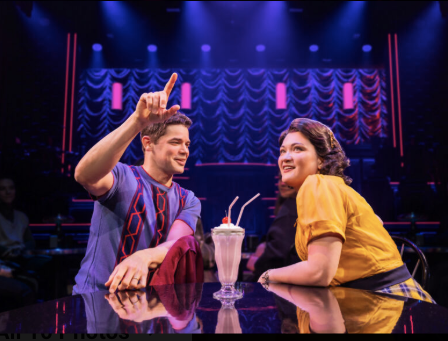
I rarely review Broadway plays because, sadly, I rarely go to them. But my wife thought going to see Just in Time -- a musical about Bobby Darin at the Circle in the Square theatre -- would be a great way to help celebrate our 50th wedding anniversary, and she was 100% right.  The play is a tour-de-force -- a wonderful and meaningful bio-story, with superb singing, acting, and staging.

I was two degrees of separation, in two different ways, in the 1960s and 1970s, from Bobby Darin.  In the late 1960s, I sold a song I wrote to Irwin Schuster at TM Music, a company owned by Bobby Darin in the Brill Building.  The song, "Unbelievable, Inconceivable You," was recorded by The Vogues, but never released.  (You can hear it here.)  Then, in 1972, I sold an article to The Village Voice about the return of  New York DJ Murray the K to New York.  Murray read it and hired me to assist him with his new show on WNBC Radio.   Murray and I talked a lot while the music was playing, and he told me every time he played a Bobby Darin record -- which was often --  that Murray's mother had said that "Splish Splash" would be an impossible title for a song, Murray had passed this challenge along to Bobby Darin, and that's how the path to his first hit record began.

Murray the K was in Just in Time (played by Lance Roberts, who also plays Ahmet Ertegun, co-owner of Atlantic Records), Irwin Schuster was not, but everyone in the play gave sterling, memorable performances, chocked full of vitality and passion, and, when called for, humor and tugging on the heart strings.  Jeremy Jordan as Bobby Darin is a dynamo with a powerful voice.  Darin's repertoire went from rock 'n' roll ("Splish Splash" and "Queen of the Hop") to pop ("Dream Lover" and "Just in Time") to jazz ("Mack the Knife" and "Beyond the Sea"), and folk ("If I Were a Carpenter"), and Jordan does them all with a sparkling zest.   Isa Briones (yes, she's doing a fine job as Dr. Santos in The Pitt on HBO Max) has a remarkable voice and all the power and Italian gravy of Connie Francis.  Carrie St. Louis conveys a Sandra Dee with perfect spunk and sensitivity.  And the band and the background singers were just right, a real pleasure to hear and see.

We also loved the way the "stage" is set, with seats all around cafe tables with patrons (who are theatre patrons not actors), two stages, and a band on two parts of the main stage.  At times, Jordan asks a lucky lady patron at one or two of the tables to dance.  Jordan, by the way, at the beginning and at times in the show, talks to the audience as himself, Jordan.  Warren Leight (Law and Order!) and Isaac Oliver (a Fordham University grad, I'm a prof there, but, alas, never had him in a class) wrote the book for the musical. If you enjoyed Bobby Darin's music and personna -- whose style and multi-genre approach were a precursor of Billy Joel -- you'll find Just in Time irresistible and unforgettable.

And here's a song I wrote about and for Murray the K when I was working for him at WNBC Radio in 1972.

See also Jersey Boys: A Transcending Musical

Tuesday, May 5, 2026

For All Mankind 5.6: Earth vs. Mars


Episode 5.6 of For All Mankind, up on Apple TV since late last week, was a middling good episode depicting the rising tensions verging on war between Earth and the human settlement on Mars..

First, Earth vs. Mars is a well-trodden topic.  On TV, it was well explored in The Expanse.  In books, Kim Stanley Robinson's Mars trilogy did an excellent job of it.  The best part of this episode, for me, was seeing the role of the Soviet Union, still in existence and thriving in this alternate history.  The kiss between Lily and Alex was also nice to see.

The ending of the episode promises an interesting stream with Dev now determined and on-track to doing something big to stop and/or surmount the escalating conflict between Mars and Earth.  Bringing Dev into For All Mankind in the first place was a good dramatical move -- he's a wildcard, like Musk and Bezos in our own reality.   All have billions of dollars, rankle under the yoke of governments, and have the power to march to some extent to their own drums.   In Dev's case, he may not only have this power, but the wherewithal to impose it on the US, the Soviet Union, and the countries on Planet Earth.  We'll see.

Actingwise,  Edi Gathegi as Dev is a good choice to deliver the goods.  And speaking of acting, Mireille Enos's Celia is by far the best of the military on Mars.   There's also a lot of potential in the Titan mission, and what it might discover there.  I don't know if we'll get a chance to see that this season, but I'm looking forward to more -- more profound developments, more eye-opening, brain-teasing wonders in our solar system, more than the ICE-like agents on Mars, which (as I've said in my review of episode 5.5) I've already seen more than enough of in our real world these days down here in the United States.

See also For All Mankind 5.1: On the Intersection of Alternate and Real Histories ... 5.2: Actor Reunions ... 5.3: The Newton, the First Amendment, and ... Last Breath ... 5.4: Robots Replacing Us In Space? ... 5.5: ICE on Mars

And see also For All Mankind 4.1: Back in Business and Alternate Reality ... 4.2: The Fate of Gorbachev ... 4.3-4.4: The Soviet Union in the 21st Century, On Earth and Mars ... 4.5: Al Gore as President and AI ... 4.6: Aleida and Margot ... 4.7: Dev on Mars ... 4.8: Sergei and Margot ... 4.9: Progress ... 4.10: Earth vs. Mars

And see also For All Mankind 3.1: The Alternate Reality Progresses ... 3.2: D-Mail ... 3.3-3.4: The Race

And see also For All Mankind, Season 1 and Episode 2.1: Alternate Space Race Reality ... For All Mankind 2.2: The Peanut Butter Sandwich ... For All Mankind 2.3: "Guns to the Moon" ... For All Mankind 2.4: Close to Reality ... For All Mankind 2.5: Johnny and the Wrath of Kahn ... For All Mankind 2.6: Couplings ... For All Mankind 2.7: Alternate History Surges ... For All Mankind 2.8: Really Lost in Translation ... For All Mankind 2.9: Relationships ... For All Mankind 2.10: Definitely Not the End

in Kindle, paperback, and hardcover


Monday, May 4, 2026

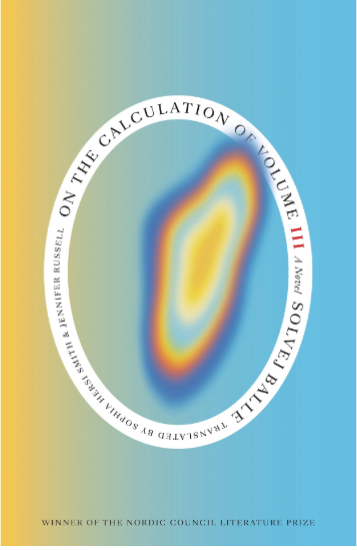
On the Calculation of Volume (Book III): Multiplication


Well, I told you at the end of my review of On the Calculation of Volume (Vol II) that I'd be back with a review of Vol III very soon, and here I am.  Volume III, unlike Volume II, changed everything in this mega-story, and was every bit as powerful as Volume I.

The key new ingredients were fellow travelers/inmates of November 18.   Henry joining Tara was signaled in the teaser at the end of Volume II, and before Volume III is over, the two are joined by Olga and Ralf, and a new teaser at the end alerts us to more people who live over and over in November 18.

Henry, Olga, and Ralf arrive in the story at different times.  Ralf's introduction is the most packed with possibilities.  Tara learns about him in the first place from Olga, who is desperate to find him -- he went missing after he and Olga connected.   I initially thought Ralf was missing from November 18 because he had found a way out, which I assumed made him unavailable for some reason in the November 18ths Olga -- joined later by Tara and Henry -- was searching.   But he turns up, and the voices of Henry, Olga, and then Ralf give author Solvej Balle the opportunity to explore the metaphysics of loopism more widely than she did with just Tara. 

Ralf sees his and the other three's endless presence on November 18 as a way they "can alert people on the brink of disaster".  It's a logical and lofty goal -- if you know a car is going to crash in a particular place on November 18, you can prevent the crash by arranging for a road block on a subsequent November 18, or better, if the crash is due to something wrong with the car, by fixing it (assuming those kind of changes stick with November 18).  Further, to do this on as massive a scale as possible, Ralf wants "to develop an interspace: a kind of high-speed bridge between the analog and digital worlds, capable of converting vast volumes of data back and forth with minimal effort, with no information loss and fast enough to save lives."  A time-looped man with a plan indeed!   We could use a "bridge" like that in our off-page real life world.

There are lots of other goodies in this third volume of Tara's adventure, including books by fictitious authors, focus on the city of Bremen where the four come to live (Cora Buhlert, a Hugo Award winner, lives there, too, and that's not fiction), and Raphael’s famous "School of Athens" fresco, which always reminded me of the cover of The Beatles' Sgt. Pepper.  And I'll be back here with more as soon as I finish Vol IV in this magical mystery tour through revolving time.

See also On the Calculation of Volume (Book I): The Irreducible Metaphysics of Time Loops ... (Book II): Life in the Loop Lane


in Kindlepaperback, and hardcover


Friday, May 1, 2026

On the Calculation of Volume (Book II): Life in the Loop Lane


I just finished the second volume of Solvej Balle's seven-volume On the Calculation of Volume time loop series (translated into English by Barbara J. Haveland).   It picked up where the first volume left off, but was noticeably different in its pace, emotional valence, and mode of story telling.

The first half was reminiscent of Canterbury Tales, as Tara travels around Europe, in pursuit of weather conditions and climates that mirror the seasons.  This is a good idea for someone who is trapped on a single single day, November 18, happening over and over.  But with the exception of a visit to her parents and a harrowing car ride in Finland, the stories Tara encounters and constructs are less than enthralling.

To be clear, the writing is sharp and evocative.  Tara on her travels meets someone named Jeanette. "I told her my name was Tara. She didn’t think that sounded French or Belgian.... I didn’t think her name sounded particularly Norwegian either, but I didn’t say that." It's fun to read piquant little observations like that amidst the huge distortion of time, but I yearned to see more of the constesting of those distortions we saw so vividly in the Book 1.

Tara settles down in the second part of the book, but with the exception of the theft of her bag, we get long internal disquisitions from Tara on the hopelessness of her situation -- at times, I thought I was reading Thomas Hardy's Jude the Obscure -- relieved at least partially by the realization the she has not been "betrayed, rejected, forsaken", she can go back to her husband Thomas any time, albeit on the time encased on November 18.

The final part of Book II finds Tara in pursuit of all the knowledge she can find about the Roman Empire and its decline.  In that pursuit, Balle has something in common with Asimov, who's Foundation series was jump-started by Edward Gibbon's The History of the Decline and Fall of the Roman Empire.

There are five more novels in this series.  I would be reading them anyway, but the totally out of left-field development at the end of Book II makes it sure a sure thing I'll dive into Book III very soon. 

See also On the Calculation of Volume (Book I): The Irreducible Metaphysics of Time Loops

InfiniteRegress.tv