22 December 2024: The three latest written interviews of me are here, here and here.
Showing posts with label androids. Show all posts

Friday, September 5, 2025

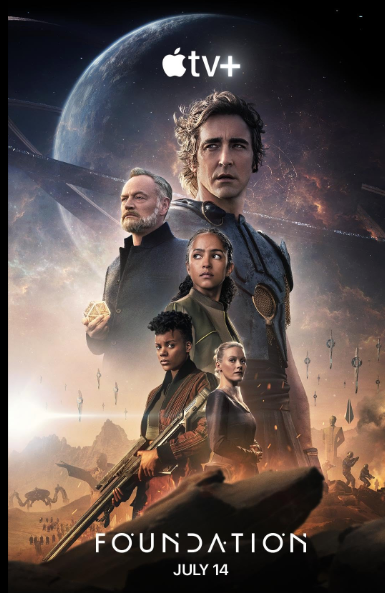
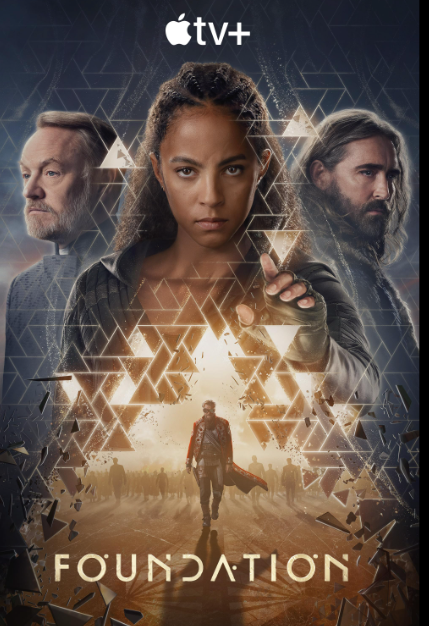
Foundation 3.9: Mann tracht un Gott lacht


Well, there are two things I really liked in Foundation 3.9:

[And there are spoilers ahead ... ]

1. There's a Yiddish saying my grandmother used to tell me:  "Mann tracht un Gott lacht".  The usual English translation is "Man plans and God laughs," though the literal translation is ""Man tries and God laughs".  And we're treated to a rendering of this, when Quent lambasts Dusk for his "math" of destroying planets and billions of people, saying "that's your math, it's not the math I believe in," and Dusk responds, "Your math?  Or do you mean Hari Seldon's Plan, at which God is currently laughing." Now, Dusk might be a horrible human being, but he deserves credit for apparently knowing and riffing on this old Yiddish proverb (or, ok, actually the Foundation show's writers do), as well as having a pretty keen understanding of the peril that The laughing Mule (God) is currently posing to Seldon and humanity.

2. Speaking of which -- Hari and The Mule -- that was quite a conversation Hari and Gaal had about The Mule near the end, in which Hari wound up sounding like Data in Star Trek: The Next Generation, wanting a fully human body.  This Hari -- whom lots of viewers are sure is a hologram, but I think is indeed more like Data, an android (or for that matter, Demerzel/Daneel) -- says to Gaal two very important things: (a) "don't call me that" (i.e., don't call me Hari), and (b) "I want what he has".  So, the first likely means, don't call me Hari, because I'm not Hari (I'm some kind of android), and the second means, I want what The Mule has.  (I thought, maybe the "he" in the "I want what he has" was the original Hari, who did have a flesh-and-blood human body -- but the Hari talking to Gaal says "he mysteriously got a body", and as far as we know, there's nothing mysterious in the way the flesh-and-blood Hari Seldon got a body, right?)

We have some inching progress in comprehending what's going on.  And next week is this season's finale.

Enjoy Yiddish culture?  Check out this short story, just published.


See also
 Foundation 3.1: Now We're Talkin'! ... 3.2: "The Fault, Dear Brutus, Is Not in Our Stars" ... 3.3: Dawn and The Mule ... 3.4: Cleon Knows His PKD ... 3.5: Cleaving Closer to Asimov's Trilogy ... 3.6: Finally! But ... 3.7: The Origin of The Mule ... 3.8: Deconstructing Concepts

And see also Foundation 2.1: Once Again, A Tale of Two Stories ... 2.2: Major Players ... 2.3: Bel Riose and Hari ... 2.5: The Original Cleon and the Robot ... 2.6: Hari and Evita ... 2.7: Is Demerzel Telling the Truth? ... 2.8: Major Revelations ... 2.9: Exceptional Alterations ... Season 2 Finale: Pros and Cons

And see also Foundation 1.1-2: Mathematician, Man of the People, and Cleon's Clones ... Foundation 1.3: Clonal Science Fiction, Hari Seldon as V. I. Lenin ... Foundation 1.4: Slow Hand, Long Half-Life, Flipped Coin ... Foundation 1.5: What We Learned in that Final Scene ... Foundation 1.6: Folded Variations ... Foundation 1.7: Alternate History/Future ... Foundation 1.8: Divergences and Convergences ... Foundation 1.9: Vindication and Questions ... Foundation Season 1 Finale: Right Up There


Tuesday, December 10, 2024

Subservience: Mounting the Paradox


Well, we've all seen movies and TV series like Subservience before, in which a beautiful female android ingratiates herself with a human family, and some kind of terror ensues.  I'm sure there were plot lines like that in Humans and lots of other films and series.  But I have to say, Subservience kept me interested, because I really wasn't sure just how it would end.

What it is has going for it, in addition to a somewhat original plot, was good acting by Madeline Zima as the human wife.  I've seen her before in Californication, Twin Peaks, You, and Bombshell.   Subservience is the biggest role I've seen her in so far, and she's up for the part.

Megan Fox plays the female android.  She's been in lots of movies that I haven't seen, and she does a good job in Subservience, too.  But she runs into a paradox of sorts, or something like a paradox, any time a human being plays an android -- she's very convincing in her mix of robotic stiffness and human emotions because, of course, she the actress is a human being herself.  I first actually noticed this decades ago with Brent Spiner's performance as Data in Star Trek: The Next Generation.  His character is an android who more than anything else yearns to be human, and in that yearning certainly seems human, precisely because Brent Spiner is also a human being himself.  I suppose the only way movie-makers will ever totally surmount this paradox is when we already have androids in our midst and some of them are actors.  The principle here would be: it takes a real android to really convincingly play an android -- and the reason why Brent Spiner and Megan Fox work so well in my estimation as androids is we don't yet have anything approaching real androids outside of science fiction and in our midst.  At least, as far as we know.

Back to Subservience, it's well situated in some Nordic, cold future, whether because of climate change or it's just winter, who knows.  (I guess not climate change because that would make things warmer.)  Little kids in the human family play a good role -- actually, a little girl, and a younger little boy who's a toddler -- and there are some nice touches of human laborers being put out of work and androids being helpful in hospitals.  Both of these we've seen before, too, but they're well done in Subservience.

There may be a sequel.  If so, I'll watch and review it.  In the meantime, it's a movie that also connects, at least now in North America, because it's getting pretty cold outside for real.

***

Hey, here's a little poem I just had poem I just had published: "I Fell in Love with a Robot"

***

Friday, September 15, 2023

Foundation Season 2 Finale: Pros and Cons


Well, you probably won't be surprised that I have mixed feelings about the Foundation Season 2 finale, just up on Apple TV+ tonight.   And, if you've been reading my reviews of this second season, you probably won't be surprised that, although there were things I really didn't like in this episode, the things I did like were in the majority, if not in number then in intensity.

[And you definitely shouldn't be surprised that there will be spoilers ahead in this review ... ]

Here's what I liked:

1. Everything on Trantor, and concerning the Cleonic clonal triumvirate, Dawn, Day, and Dusk on and off that planet.

1a -- I especially liked the life-and-death battle between Day and Riose, and the way it was resolved. I liked this even though it had cloudy connection to the story of Bel Riose that Asimov told in Foundation and Empire, the second novel in the original trilogy.

1b -- I also liked everything Demerzel said and did on Trantor, which was every scene she was in.  What we saw not only clarified and strengthened her character, but it set up a provocative foundation, if I can use that word without it being capitalized, for what we will likely see in Season 3.  Demerzel is both very much in control but keenly vulnerable.  That's a provocative combination for such an intelligent, sophisticated android.

Here's what I didn't much like:

2.  Almost everything other than what I said in #s1, 1a, and 1b.

2a -- Although The Mule isn't much like what he was like in Asimov's trilogy (where he appeared in Foundation and Empire and Second Foundation), that's not what really bothered me about our knowledge of him that's been doled out in this second season.  What bothers me is the way we become aware of him, in a series of nightmare flashes that Gaal endures.  What this does is rob the television series of one of the prime thrills in the trilogy, the way the Mule continually surprises us.  Instead, we a get a vision that Gaal is urging the living Hari to prepare for.

2b -- I don't see the purpose in killing Salvor.  And, frankly, that whole extended scene felt like it was included because the producers thought it was necessary to at least have a very major good-guy hero character die, especially since Hari himself, as I predicted when it seemed he had drowned, actually survived.

***

So, these are big negatives, but the superb story of the Empire clones and Demerzel is more than enough to make me eager to see the next season of Foundation.

See also Foundation 2.1: Once Again, A Tale of Two Stories ... 2.2: Major Players ... 2.3: Bel Riose and Hari ... 2.5: The Original Cleon and the Robot ... 2.6: Hari and Evita ... 2.7: Is Demerzel Telling the Truth? ... 2.8: Major Revelations ... 2.9: Exceptional Alterations

And see also Foundation 1.1-2: Mathematician, Man of the People, and Cleon's Clones ... Foundation 1.3: Clonal Science Fiction, Hari Seldon as V. I. Lenin ... Foundation 1.4: Slow Hand, Long Half-Life, Flipped Coin ... Foundation 1.5: What We Learned in that Final Scene ... Foundation 1.6: Folded Variations ... Foundation 1.7: Alternate History/Future ... Foundation 1.8: Divergences and Convergences ... Foundation 1.9: Vindication and Questions ... Foundation Season 1 Finale: Right Up There


Thursday, September 7, 2023

Foundation 2.9: Exceptional Alterations


The next-to-last episode of season 2 of Foundation on Apple TV+ -- episode 2.9 -- was riveting and brilliant.  I couldn't take my eyes off the screen.  Even though the story it told diverged from the equivalent time in Asimov's second Foundation novel -- Foundation and Empire -- in crucial ways that indeed were among the best parts of the original trilogy in the 1950s and the subsequent sequels and prequels in the 1980s and early 1990s.

Here are my thoughts on some of the major developments in episode 2.9:

[Spoilers of course are ahead ... ]

1.  We get more of Demerzel's story in the powerful opening scene.  We don't hear the name R. Daneel Olivaw, but what Demerzel tells us is not inconsistent with R. Daneel's origins on Earth, and Demerzel does speak the name of our planet.  As far as what is new in the TV series, and what I still do think is the best part, we learn something very important:  it was the first Cleon, not Demerzel, who came up with the Cleon clonal triumvirate.  This suggests that the relationship between the clones and the android are closer to equal than we may have thought before.  

2.  The action around Terminus was thrilling, and surprising in the way it diverged from Asimov's accounting.  Hari's hologram is impressive, but it fails to convince Day of anything.  And indeed, Bel Riose, ordered by Day, all but destroys the Foundation outpost on Terminus at the end.  At that moment, can we say that psychohistory has failed or succeeded?  I don't see how can it be the latter.

3. Meanwhile, we get the satisfaction -- maybe not the best word -- of Hari beating Tellem to death, in a scene that was so strong it was almost physically revolting even as it was ethically welcome.   And unless I radically missed something in my understanding of holograms, the Hari who killed Tellem was corporal, physical, not a hologram.  Which means, either the physical Hari was indeed not dead (as I said in my review of episode 2.7), because Tellem didn't kill him in the first place, or Hari's physical being was reconstituted off-screen (as I suggested in my review of episode 2.8).  Either way, I count the continuation of the physical Hari, along with the holograms, as a good thing for the television series.

4.  We get another glimpse of the Mule.  I'm thinking now that in the third season, we'll see a three-way fight between Hari, Empire, and the Mule.  And Demerzel's allegiance won't be as clear as it's been up until episode 2.9.

We'll just have to see.  And I'll see you here next week with my review of the Season 2 finale.

See also Foundation 2.1: Once Again, A Tale of Two Stories ... 2.2: Major Players ... 2.3: Bel Riose and Hari ... 2.5: The Original Cleon and the Robot ... 2.6: Hari and Evita ... 2.7: Is Demerzel Telling the Truth? ... 2.8: Major Revelations

And see also Foundation 1.1-2: Mathematician, Man of the People, and Cleon's Clones ... Foundation 1.3: Clonal Science Fiction, Hari Seldon as V. I. Lenin ... Foundation 1.4: Slow Hand, Long Half-Life, Flipped Coin ... Foundation 1.5: What We Learned in that Final Scene ... Foundation 1.6: Folded Variations ... Foundation 1.7: Alternate History/Future ... Foundation 1.8: Divergences and Convergences ... Foundation 1.9: Vindication and Questions ... Foundation Season 1 Finale: Right Up There


Thursday, August 31, 2023

Foundation 2.8: Major Revelations!


Well, finally an episode of Foundation -- 2.8 -- that's really firing on all cylinders.  By which I mean, the Trantor parts and the other parts were nearly equal in power, and that power was impressive, answered all kinds of questions, and stood on the verge of answering more.  So, good thing that two more episodes await us this season.

Here are some of the major revelations, as I see them:

[Spoilers of course are ahead ... ]

1. The opening conversation between Dusk and Rue gives us some essential info about Demerzel and her origin, but not yet the complete story.  By the end of the episode, Dusk tells Rue that Empire is doing Demerzel's bidding rather than vice versa.  Yes indeed.

2. Hober's attack on Trantor, and his rescue of Constant, was literally a much welcome merger of the Foundation and Empire stories -- and indeed, we heard that phrase later in the episode -- and it was good to see Hober and Constant carnally together after they were off the planet.  Lots of good sex in general in this episode, including Dawn and Sareth.  Will be interesting to see the impact of the child they engendered.

3.  We learned more about the Second Foundation, most importantly from the conversation between Salvor and one of the digital Haris.  And the most important takeaway from that conversation is that Hari's idea is that both Foundations were intended to be mutually ignorant of each other.  This is a divergence from Asimov's trilogy, in which the First Foundation was ignorant of the Second, but the Second knew just about everything about the First.  Which is ok by me, at this point,

4. I remain in strong dislike of Tellem, which of course we're supposed to be.  She seems on the verge of inhabiting Gaal, which is repulsive.  And apparently she did kill the corporeal Hari -- though if new flesh-and-blood Haris can be created, that may not matter.

So, good job, and I'm looking forward even more than usual to the resumption of this riveting story next week.

See also Foundation 2.1: Once Again, A Tale of Two Stories ... 2.2: Major Players ... 2.3: Bel Riose and Hari ... 2.5: The Original Cleon and the Robot ... 2.6: Hari and Evita ... 2.7: Is Demerzel Telling the Truth?

And see also Foundation 1.1-2: Mathematician, Man of the People, and Cleon's Clones ... Foundation 1.3: Clonal Science Fiction, Hari Seldon as V. I. Lenin ... Foundation 1.4: Slow Hand, Long Half-Life, Flipped Coin ... Foundation 1.5: What We Learned in that Final Scene ... Foundation 1.6: Folded Variations ... Foundation 1.7: Alternate History/Future ... Foundation 1.8: Divergences and Convergences ... Foundation 1.9: Vindication and Questions ... Foundation Season 1 Finale: Right Up There


Tuesday, May 16, 2023

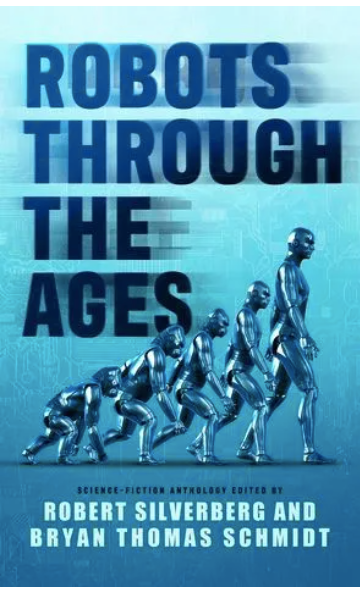
"Robinson Calculator" in Robots Through the Ages


available for pre-order here

Beyond honored and delighted to announce that my 2019 novelette, "Robinson Calculator," will be in Robots Through the Ages, an anthology with stories by Ambrose Bierce, Philip K, Dick, and other past masters of the genre, to be published by Blackstone Press on July 25, 2023.

Here's the Table of Contents.  More details including blurbs, reviews, etc over here.

DEDICATION
INTRODUCTION by Robert Silverberg
PERFECTION by Seanan McGuire
MOXON’S MASTER by Ambrose Bierce
WITH FOLDED HANDS by Jack Williamson
GOOD NIGHT, MR. JAMES by Clifford D. Simak
INSTINCT by Lester del Rey
A BAD DAY FOR SALES by Fritz Leiber
SECOND VARIETY by Philip K. Dick
THE GOLEM by Avram Davidson
FOR A BREATH I TARRY by Roger Zelazny
GOOD NEWS FROM THE VATICAN by Robert Silverberg
DILEMMA by Connie Willis
THE ROBOT’S GIRL by Brenda Cooper
THAT MUST BE THEM NOW by Karen Haber
R.U.R.-8? by Suzanne Palmer
ROBINSON CALCULATOR by Paul Levinson
OF HOMEWARD DREAMS AND FALLEN SEEDS AND MELODIES BY MOONLIGHT by Ken Scholes
TODAY, I KNOW by Martin L. Shoemaker
AFTERWARD & RECOMMENDED READING by Bryan Thomas Schmidt
ACKNOWLEDGEMENTS

Saturday, November 5, 2022

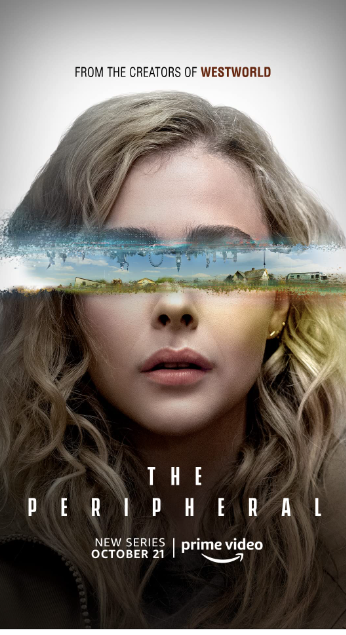
The Peripheral 1.4: Who Took Lev's Tea?


Who took Lev's tea? The disappearance of his tea in episode 1.4 of The Peripheral up on Amazon Prime Video since yesterday was an another signalic moment, just like the coffee container materializing in thin air in what now seems like a much earlier episode.  The tea gone and the coffee appearing just like that symbolize the immense forces at play in this so far delicately powerfully rendered series, which as far as I can tell so far hasn't missed a step.  (Reminder: I haven't read the book.)

Everyone, certainly in the near future, is struggling to understand what's going on.  "It's not time travel, it's data transfer," Flynne says, after Burton tells her traveling to the future caused her seizure.  But Burton is more right than his sister here, since the transfer of data from the future to the present (or past, depending on how you look at it) is indeed a kind of time travel.  (See Gregory Benford's 1980 Timescape if you don't believe it -- that's a book, by the way, that I did read.)

Also in the near future, Connor wants to know if the data visits to the future come with real bodies?  This is another key to what's really going on.  As we well know, the bodies in the future are both real and not.  As in countless science fiction stories about cyberspace, the original flesh-and-blood bodies can be seriously injured if not killed when their avatars in the future are hurt or killed.  That in itself makes those entities real enough.

Speaking of science fiction entities, I liked that android that Cherise is starting to school in the distant future, especially how he's able to moderate the percentage of sarcasm in his attitude.  That one, brief scene struck me as one of the best I've seen or read in any android story, starting with Isaac Asimov's stories back in the 1950s.

And last but not least -- last is an apt word for for this -- I thought the end of our civilization sequence was top-notch, too.  Given the deadly perils we're currently encountering -- pandemics, climate change, the resurgence of fascism in the U.S. and all over the world -- I found that very appropriate to be watching tonight, too.

Don't forget to turn your clocks back tonight if you live in the U.S.

See also The Peripheral 1.1-1.2: Cyberpunk, Time Travel, and Alternate Reality ... 1.3: John Snow


It's Real Life

alternate reality about The Beatles on Amazon, and  FREE on Vocal


Friday, February 18, 2022

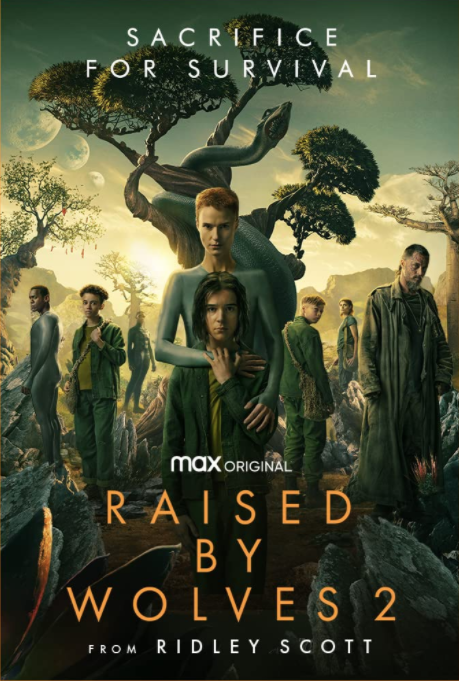
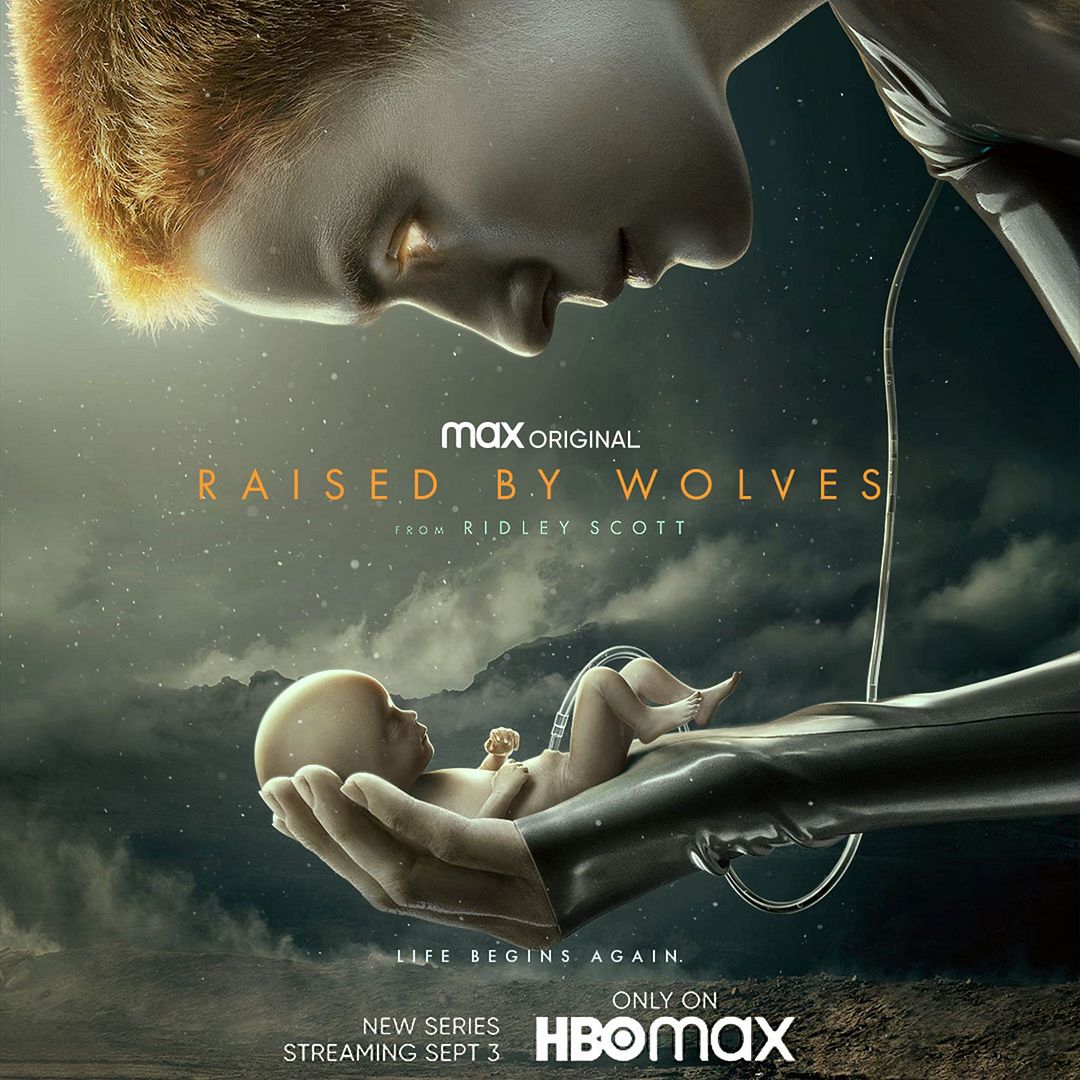
Raised by Wolves 2.4: Kinds of Sentience and Conflicts


A really superb and pivotal Raised by Wolves 2.4, in which every kind of sentience is pitted against one another.  Since most of the sentience is one kind or another of artificial intelligence, usually embodied in some kind of android, the contests and their outcomes provide one of the best explorations of the power and limitations of programmed android intelligence in any television series.  Isaac Asimov would have loved this.   I wonder if he would have agreed that this was a far better example of such exploration of android intelligence than we've at least seen so far in the Foundation series on Apple TV+.

[Spoilers follow ... ]

Mother is the victor in every contest.   She triumphs over Marcus, whose superhuman powers come from Mother's eyes.  Mother easily repossesses them, and reclaims the awesome power that lets her then triumph over the Trust.  It will be instructive to see how Mother's devotion to care for her children compares with the Trust's professed devotion to serve humanity.

But Mother may have a rival.  The Frankenstein-like android brought back to life by Father may well have powers comparable to Mother's.  How will Father's "creation" use them?  Which side will she choose, or will she comprise her own side, and how will she then fare in implementing her choice?

Meanwhile. there's a beautiful and instructive more minor android vs human story with Vrille, though it's not really minor.  The mentality of even a child android is impossible to predict and therefore effectively program.

I'll miss her character and I'll be back here next week with more.


See also Raised by Wolves 2.1-2: A Viking Out in Space, with Androids ... Raised by Wolves 2.3: Marcus and the Android Skeleton

And see also Raised by Wolves 1.1: Fast Action and Deep Philosophy  ... Raised by Wolves 1.2-3: More than Meets the Eye ... Raised by Wolves 1.4-5: Halfway to Dune ...Raised by Wolves 1.6-7: The Look on Mother's Face ... Raised by Wolves 1.8-1.9: Frankenstein and Motherhood ... Raised by Wolves Season One Finale: The Serpent


Friday, December 4, 2020

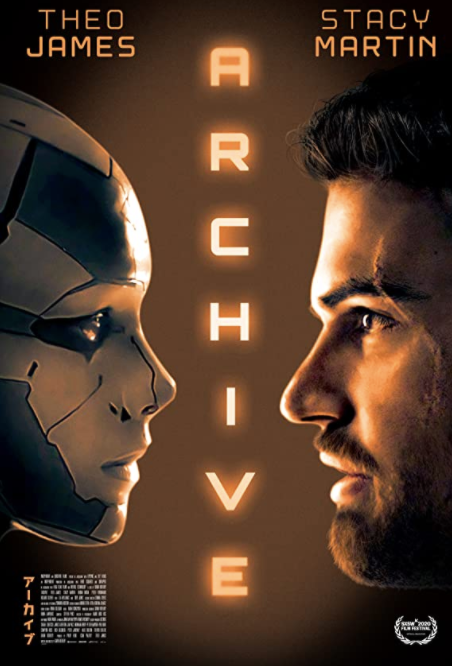
Archive: Androids with Twists


They've been at least three excellent, sometimes outstanding, TV series that probe the philosophic and emotional complexities of androids in the past few years, Westworld, Humans, and recently Raised by Wolves.  But I can't think of an equivalent movie.  Or couldn't think of one.  Until Archive, which has been streaming on Amazon Prime Video since the summer, but I just got around to seeing earlier tonight,

The set-up we've seen in all manner of science fiction and horror movies in the past century: a bereaved husband, who is a genius in AI or other suitable science, determined to use his genius to bring back his deceased wife.  What makes Archive worthy, even great, then, is not in this common set-up.  It's its execution.

Theo's the genius who's lost his wife Stacy in a car crash.  Fortunately, he got a bit of her self (or mind, soul, personality, take your pick), encoded in some kind of digital drive while she was well and alive --- aka the "archive".   Being the genius that he is, and the time about 20 years in our future, Theo is able to build this bit of self into a complete digital persona.  Next step is to put her into an android who looks, talks, thinks, feels like Stacy because, in a very real sense, she actually is.

The stage or story is thus set in two important dramatic ways.  Theo didn't build and therefore doesn't own the archive technology.  So we have corporate conflict.  And Theo can't build a new Stacy first crack out of the box.  On the way to Stacy, Theo builds an android with the mental age of a young child, and another with the age of a young teenager.  The sibling jealousy and rivalry between the teenaged android and the emerging Stacy, along with Theo's patermal discipline and toleration of the teenager are done just right, and would've been worth the price of admission had Archive been shown as intended in theaters.

There are, in effect, two surprises near and at the end of this fine movie.  I'll tell you some about the first but not the second, just in case you haven't seen Archive prior to reading this.  The "Stacy" that Theo is constructing has a personality at least a little different from the original.  Turns out that this new she -- the personality -- was a test-run that Theo got going to make sure the digital entity in the archive could meld well in the bio-digital android he was constructing.   But the new "she" is not exactly the same as Stacy.  So Theo's plan is to swap Stacy's mind into the android, which would mean the new "she" would cease to exist.  The ever-courteous Theo apologizes to the new "she" right before he initiates the transfer and--

Ok, that's where I'll stop in the recounting.  I will say that there is an even  bigger surprise at the very end, and that's the part I liked least in this otherwise outstanding movie (written and directed by Gavin Rothery, in his feature length debut).  Bur see it yourself, and let me know if you agree.


They're coming out into the open, for the first time in centuries ....


Friday, September 25, 2020

Raised by Wolves 1.8-9: Frankenstein and Motherhood

The story brought vividly home in Raised by Wolves 1.8 and 1.9, that androids can bear biological children, a hybrid of some sort of android and human, lifts this series into territory not even explored in a series as sophisticated as Westworld.   Of course, Westworld takes place on Earth, with a science a lot earlier in its development than what we see in Raised by Wolves, so I'm not criticizing Westworld on this account as much as noting the difference.  And that difference is about as profound as it gets.

A question I started addressing in the 1980s when I first began considering artificial intelligence was the connection between artificial intelligence and life.   Since the only intelligence that we know arose in living beings -- i.e.,  us, we humans - it struck me that an attempt to develop artificial intelligence truly worthy of the name without first understanding how intelligence arose out of our own DNA was "putting Descartes before the horse" (Mind at Large: Knowing in the Technological Age, 1988, p. 180; or see this if you don't want to read the book).   Yet most artificial intelligence, in science fiction as well as our real world laboratories, has proceeded on the basis of non-living circuitry.

In fiction, the monster created by Dr. Frankenstein -- colloquially known as Frankenstein, in Mary Shelley's 1818 novel of the same name -- can be considered the first modern android.  It is made of flesh and blood, and has a DNA-developed brain, so there is no reason he and his eventual almost-bride could not have had children -- indeed, it is Dr. Frankenstein fear of creating a species of monsters that gets him to abandon his project of giving the monster a mate.   Even in the Boris Karloff movies made over a century later, in which a bride of the monster is created, one catastrophe or another that befalls the "monsters" always preclude them from reproducing.  Which makes what was is happening in Raised by Wolves all the more remarkable.   

How exactly Mother, now on the way to being a completely biologically apt name for her, came to be impregnated is not completely clear, and she doesn't completely or even mostly understand herself.  She had virtual sex with her male human creator in a simulation.  Presumably this triggered a fetus that developed from what already was inside her, in contrast to the embryos that were implanted in her and we met in the first episode.

With only one more episode left this season, it will be fascinating to see where this -- "the future of humanity" -- goes.  It was good to see Father back to his senses, and all the children together, and Marcus get his comeuppance, though I hope he's not dead, he's too important and well-acted a character.  (It occurred to me as an outside possibly that possibly Marcus had sex with Mother at some point after he so nearly kissed her, that we didn't see.  Maybe that relates to that look on Mother's face that I talked about in my review last week.)   Not likely, I'll be definitely back here next week with some thoughts on the season finale.


See also Raised by Wolves 1.1: Fast Action and Deep Philosophy  ... Raised by Wolves 1.2-3: More than Meets the Eye ... Raised by Wolves 1.4-5: Halfway to Dune ...Raised by Wolves 1.6-7: The Look on Mother's Face


Tuesday, September 8, 2020

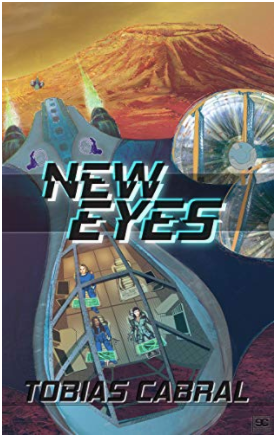
Review of Tobias Cabral's New Eyes: Newer Worlds

Tobias Cabral picked a good time to send me his 2018 novel New Eyes for review.   Mars is in the air.  Actually, it's always been in the air, or at least, at the top of the air, in the sky.  But NASA's Perseverance is on its way to Mars, with a landing date in February of next year.  Elon Musk wants to colonize the Red Planet (I'm 100% on board, here's a talk I gave at the 19th Annual International Mars Society Convention at The Catholic University in Washington, DC on 23 September 2016):

And I just saw, loved, and reviewed the first season of Away on Netflix.

Cabral's novel starts in February 2047.  Trips to Mars take just four days.  There's a space station named "Jeff Bezos," a ship named the "Elon Musk," and androids are "equipped with ‘minds’ that could not just pass but proctor the Turing Test" (italic and quotes around 'minds' in the novel).  And, at least one is capable of murder.  With the result that New Eyes is just as much in the tradition of Westworld and the new Raised by Wolves (see my reviews) as it is a descendant of The Martian Chronicles and The Martian.

But as the title suggests, the fulcrum of this narrative are eyes, in particular Gaspar's "Martian eyes".  The character's a "bio-cyberneticist," women desire his body, and his new eyes in effect make him a human on the way to becoming an android, in the time-honored Six Million Dollar Man way.

The novel also has resonance to the work of Orson Scott Card (sims play an important role, as in, you often can't tell what's really really real) and, to my eyes, at least, the novel reads a lot like Isaac Asimov (a big compliment in my book).   But as to the plot, well, Mars is "a mostly-unpopulated planet" at this point,  and this "young Martian society" is populated by humans and increasingly by androids.  Could this actually happen by 2047?  Probably not (more because of the androids than living on Mars).  But my late editor at Tor, David Hartwell, always told me that readers are willing to grant you at least one big part of a story they find unbelievable, and I'm happy to grant Cabral that.   I should also mention that Cabral throws in a bit more repartee humor than does Asimov -- someone comments that someone has a "nice assonance... that sounded naughty" -- and there's even some rapping in this story.

But that still doesn't tell you much about the nuts and bolts of the plot, does it?   You'll need to set your eyes on the novel to find that out.  Ok, I'm in a good mood.  Here's a quote from the novel: - think "alternate branches in a Many Worlds Hypothesis time travel story".  And enjoy.


first starship to Alpha Centauri leaves from Mars Vestibule ...


Tuesday, September 1, 2020

Raised by Wolves 1.1: Fast Action and Deep Philosophy


I just saw Raised by Wolves 1.1, courtesy of HBO Max, where the series is set to debut this Thursday, September 3.  In a sentence, it's a big concept, altogether excellent combination of fast action and deep philosophy, as befits Executive Producer Ridley Scott, and especially well-suited to our pandemic ridden time, when the very fate of humanity could well be at stake if things get much worse.

The narrative features androids and space travel (the action) and a conflict between true believers and atheists (the philosophy) who have left a dying Earth.  As such, the series is one big step more promising than the excellent Westworld, at least to my science fictional tastes, because it tells a story not only of humans and androids, but sets it way out in space, on a planet around another star.   The flavor is therefore closest to 2001 than anything else, even though Raised by Wolves has not much else in common with Clarke's story and Kubrick's movie.

The special effects and overall cinematography are top-notch to the point of breathtaking at times.  The acting is also fine, and it was good to see Travis Fimmel from Vikings back on the screen.   Amanda Collin is fine as Mother the android, and her character comes with the awesome power of killing everything around her with a scream (reminds me, in an odd way, of the episode "Sound that Kills" in the ancient Science Fiction Theater television show).  Munro Lennon-Ritchie and Jadon Holdsworth as Campion put in good performances, and it will be fun to see how this crucial character - a young boy whose allegiances to belief have not been settled as yet - develops.

I'd add that if ever there was a series I wanted to binge-watch to the end - at least, of this first season - Raised by Wolves appears to be that.   But I'll take it the way it's being presented, and will be back here with subsequent reviews.


Monday, May 4, 2020

Babylon Berlin 3: Complex Pleasures and Inescapable Conclusions


I binged the third season of Babylon Berlin on Netflix the past few nights, having seen and immensely enjoyed the first two seasons two years ago, in May 2018.  Enjoyed doesn't do the series justice, because it taps all manner of emotions, including dread and disgust at the growing Nazi shadow on late-1920s Berlin, where the new reeds of democracy still held tenuous sway.  I felt the same way about the third season.  Enjoyed doesn't do it justice.  What I've been able to take away from this remarkable narrative is far more complex and valuable than mere enjoyment.

Babylon Berlin is really a variety of genres, rivetingly rolled into one.  It's historical drama, with pinpoint accuracy and all kinds of revelations, ranging from the brass dials of an instrument used to administer shock therapy to a device that records an in-person conversation, without one of the parties being aware.   It's a top-notch whodunnit homicide detective story, with all kinds surprises and unexpected turns.  It's in German, which offers a special pleasure for my Yiddish ears to hear (Yiddish is middle-German).  And it's pretty good romance, as well, with Volker Bruch and Liv Lisa Fries doing a fine job as detectives Gereon Rath and Charlotte Ritter.

But my two favorite threads in Babylon Berlin Season 3 are the focus on the making of a film, an early talkie, in 1929, and the political context, which I'll tell you about after the film.  The film intersects with the murder story, as the lead actress and her replacement get killed by a masked intruder ("If only she'd stuck with silent films," someone comments about one of the actresses, and her inability to hit the high notes).  Not only that, but the film mutates into a blend of science fiction and horror - science fiction about androids, and the human-machine interaction, making Babylon Berlin just ideal to watch before the Sunday-night conclusion of the third season of Westworld.  (The Weimar Republic made a great contribution to early science fiction movies in our reality, as Fritz Lang's silent movie Metropolis amply attests.) You can't ask for more than that.

But Babylon Berlin does deliver more, in the subtle way, with occasional bursts of raw violence, that the Nazi menace is intruding ever more prominently into life in Berlin, from lead detective Rath's son reading Mein Kampf and joining the Hitler Youth to Nazis blowing up buildings. I said in my review of the first two seasons that comparisons between what happened to the democracy of the Weimar Republic in the late 1920s and early 1930s, and Trump and his followers in America right now, is inescapable.  The third season of BB introduces yet another element in the decline and fall of the Republic: the stock market crash in New York City, which will ripple across the Atlantic and shake Germany, and therein provide another reason for German citizens to lose confidence in their democracy.

This is a crucial and sobering lesson.  Stay tuned.

See also Babylon Berlin (1 and 2): Eye-Opening History


They're coming out into the open, for the first time in centuries ....

Monday, March 30, 2020

Westworld 3.3: Cyberpunk World


As I said in a previous review of this third season of Westworld, the series' move out of the park(s) into the world at large has made it as much a cyberpunk as an android story, though two genres are related.  The cyberpunk ambience - the colors, the ambience, the cinematography - was even more in evidence in episode 3.3 last night, and I'm really liking it.

Dolores figures in two, thus far almost separate, stories.  One is about Charlotte Hale, who was killed at the end of the last season, and replaced by a host that looks like her with Dolores' mentality inside, but now has another host's AI mind.  She's a crucially important get for Dolores - Charlotte was/is Exec Director of Delos - and Dolores is therefore on hand in episode 3.3 to see that whoever it is inside Charlotte the host is having as smooth a transition as possible.  It's not easy.  Her son, named Nathan Hale (will he go on to have only one life to give for his country?) doesn't completely buy her as his mom.  And neither, quite, does her husband (played by Michael Ealy, who's done a good job in every series in which I've seen him, since Sleeper Cell).

To make Charlotte even more intriguing, we have no idea what host's AI is now driving her.  I've seen suggestions that it could be the Man in Black, since he had a habit of cutting himself, which the new Charlotte has, too.  I suppose there's no reason that a male AI can't be put inside a female host's body, but I don't recall this happening before.  And I'm also wondering: is there any reason a host's AI can't be in two bodies at the same time?  And, if so, why didn't Dolores just stay in Charlotte's body, after getting back into her own?

Meanwhile, a tad earlier than Dolores mentoring/nurturing Charlotte, we pick up the story of Caleb rescuing Dolores.  If Charlotte was an AI story, Caleb and Dolores are pure cyberpunk.  Their relationship is pivotal in all kinds of ways.  It shows that Dolores can have a constructive partnership with a human being, and maybe more than that.  I'll tell you one thing: if Caleb gets killed at the end of this season, and is replaced by a host, I'll be disappointed.  I'd like to see their host-human partnership develop full-throttle in this and subsequent seasons.


InfiniteRegress.tv