22 December 2024: The three latest written interviews of me are here, here and here.

Monday, March 23, 2026

The AI in Scarpetta: In Defense of the Cardinal Sin of Science Fiction


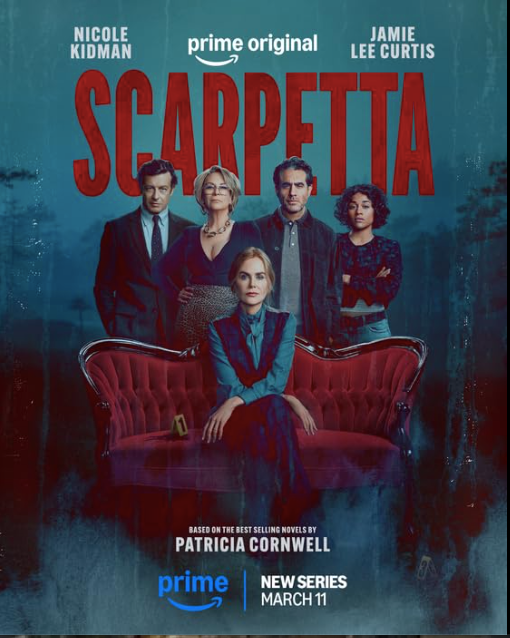
The wife and I binged Scarpetta, an adaptation of two of Patricia Cornwall's novels, on Amazon Prime. It started off slowly, but was top-notch forensic thriller by the time it got to its 8th and final episode of its first season.

I'm a big fan of forensic scientists in fiction -- as a viewer, a reader, and an author (see my Phil D'Amato series) -- and Nicole Kidman in the lead role, and a wild cast of characters, did the narrative justice.   But what interested me most, and has attracted a lot of attention, is the subplot of Scarpetta's niece, Lucy, continuing her relationship with her beloved deceased wife Janet via an AI of Janet.

This AI has received some criticism, because it committed the cardinal sin of science fiction.   Cathal Gunning in Screen Rant offered the outraged assessment that Janet in Scarpetta is akin to "You’s Joe Goldberg inventing a teleportation machine, or True Detective’s Rust Cohle using time travel to revive his dead daughter." And, even worse, the sentient AI in the TV series was not even in the original novel (Autopsy, 2021, which I haven't read).  My response would be a combination of: "And?" and/or "So?".

I might be prejudiced, because I encountered some of this response to my Phil D'Amato stories.  Bookstores didn't know whether to shelve The Silk Code (1999) -- which won the Locus Award for Best First Novel in 2000 -- in the science fiction or mystery section.  I get that labels are important.  If I'm in the mood for sushi, I don't want to find after I'm seated in a restaurant advertising itself as serving Japanese cuisine that the only seafood on the menu is calamari or shrimp scampi, much as I love that, too.  But surely reading and watching fictional stories is different.  Isaac Asimov's robot detective R. Daneel Olivaw is aptly regarded (at least by me) as one of the best characters in literature  (speaking of which, see Alexander Zelenyj's "These Streets Are Bruised" and "Shells", both recently published in Amazing Stories).

The only problem I can think of regarding AI Janet is that some viewers may get the incorrect impression that current AI can actually be like "her" -- getting jealous and petulant -- but we're really not there yet, and may never be.   In the meantime, my unasked for advice would be enjoy Scarpetta as the provocative hybrid of mystery and science fiction that it is.


Friday, March 20, 2026

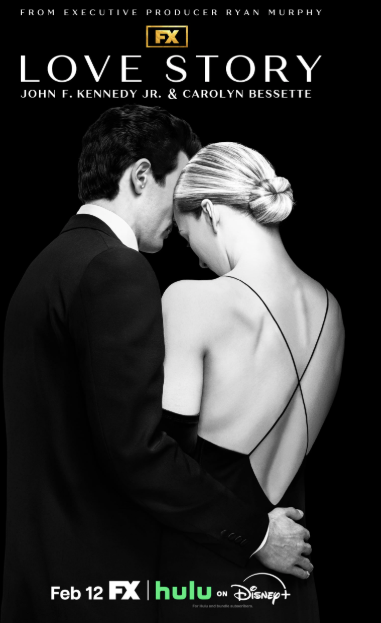
Love Story: A Deeply Moving Docudrama


My wife and I have watched all but the final, 9th episode of Love Story -- the romance of JFK Jr. and Carolyn Bessette -- on Hulu.  I decided to review it now.

First of all, I've felt for a long time that the assassinations of John F. Kennedy, Martin Luther King, Robert F. Kennedy, and John Lennon were the most significant public events in my lifetime  -- other than landing on the Moon --not to mention heartbreaking, in different ways.  And given that JFK Jr was the son of JFK, and the nephew of RFK, I was bound to be very interested in any television series about him.

At the same time, I've been telling my students and writing for years that docudramas are inevitably very different from the realities they retell in their stories.  I realized that many years ago, when my wife and I were watching Ike, a docudrama about Dwight Eisenhower starring Robert Duvall in the title role.  As we were watching it, I began thinking, and said to my wife, that, you know, maybe Eisenhower had more charisma than I'd realized, watching his boring public statements and speeches when I was a kid.  And then I realized that of course I was thinking that, watching Duvall's performance as Ike, because of Duvall's charisma not the real Ike's.

The fact of the matter is that even a documentary inevitably commits lies of omission.  You can't put everything, not even every significant thing, in a movie, or even a TV series.  But the docudrama takes this to an extreme, inventing not only conversations but often even characters to tell its story.   And knowing that as I watched Love Story, I was nonetheless moved to tears, because it accurately portrayed the burden that JFK Jr, along with Carolyn Bessette, bore.   And though I get that Daryl Hannah was very upset with the way she was portrayed -- and I wish her well -- that didn't affect the impact Love Story has had on me.  Because it reminded me how much we lost with the assassinations of JFK and RFK, and might well have lost with the tragic deaths of JFK Jr and Carolyn Bessette Kennedy.

Paul Anthony Kelly as JFK Jr, Sarah Pidgeon as Carolyn Bessette, and Grace Gummer as Caroline Kennedy brought these real-life characters admirably to life, as did Naomi Watts as Jackie Kennedy and Jessica Harper as Ethel Kennedy.  And the writing was sharp, funny and tragic when it needed to be. And if many conversations were products of the writers -- Episode 8 (co-written by Juli Weiner and series creator Connor Hines) was 100% John and Carolyn talking, with no one else in their Tribeca apartment -- well, I don't care, that's more than fine with me.  Because those conversations provide a reasonable enough take on what those conversations most likely were.  I'm not saying Love Story is Shakespearean -- though it does have elements and echoes of that -- but I don't recall anyone attacking his ten history plays because he made up conversations among his characters.

So thank you Hulu and everyone involved for giving us a plausible not literally factual story of one of America's and the world's tragedies, for giving us a convincing glimpse through tear-drenched windows.  And as for reality -- well, if I lived in his district, I'd 100% vote for Jack Schlossberg (who criticized this docudrama as "a grotesque display") in the upcoming Democratic primary.


Saturday, March 14, 2026

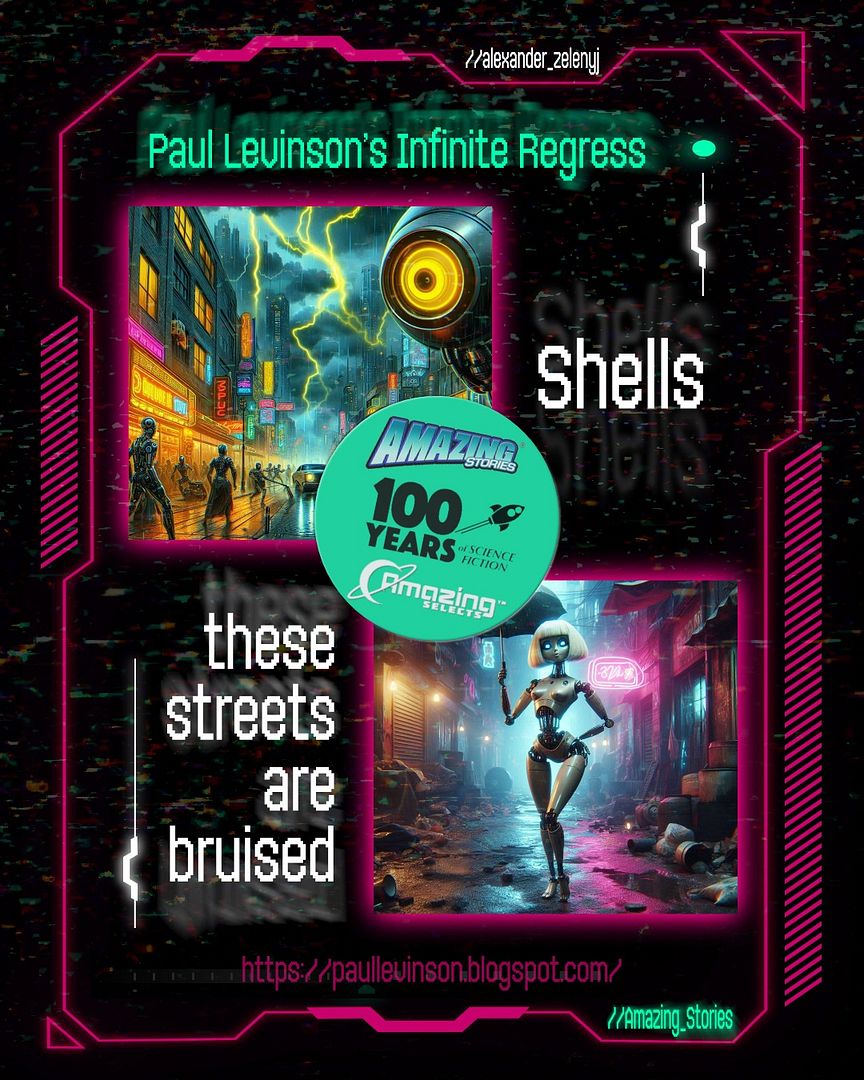
"These Streets Are Bruised" & "Shells": Flesh and Silicon, North of the Border


I don't usually review short stories -- I read them a lot, but life's too short to review short fiction, when there are so many novels not to mention movies and TV series out there -- but every once in a while I make an exception.

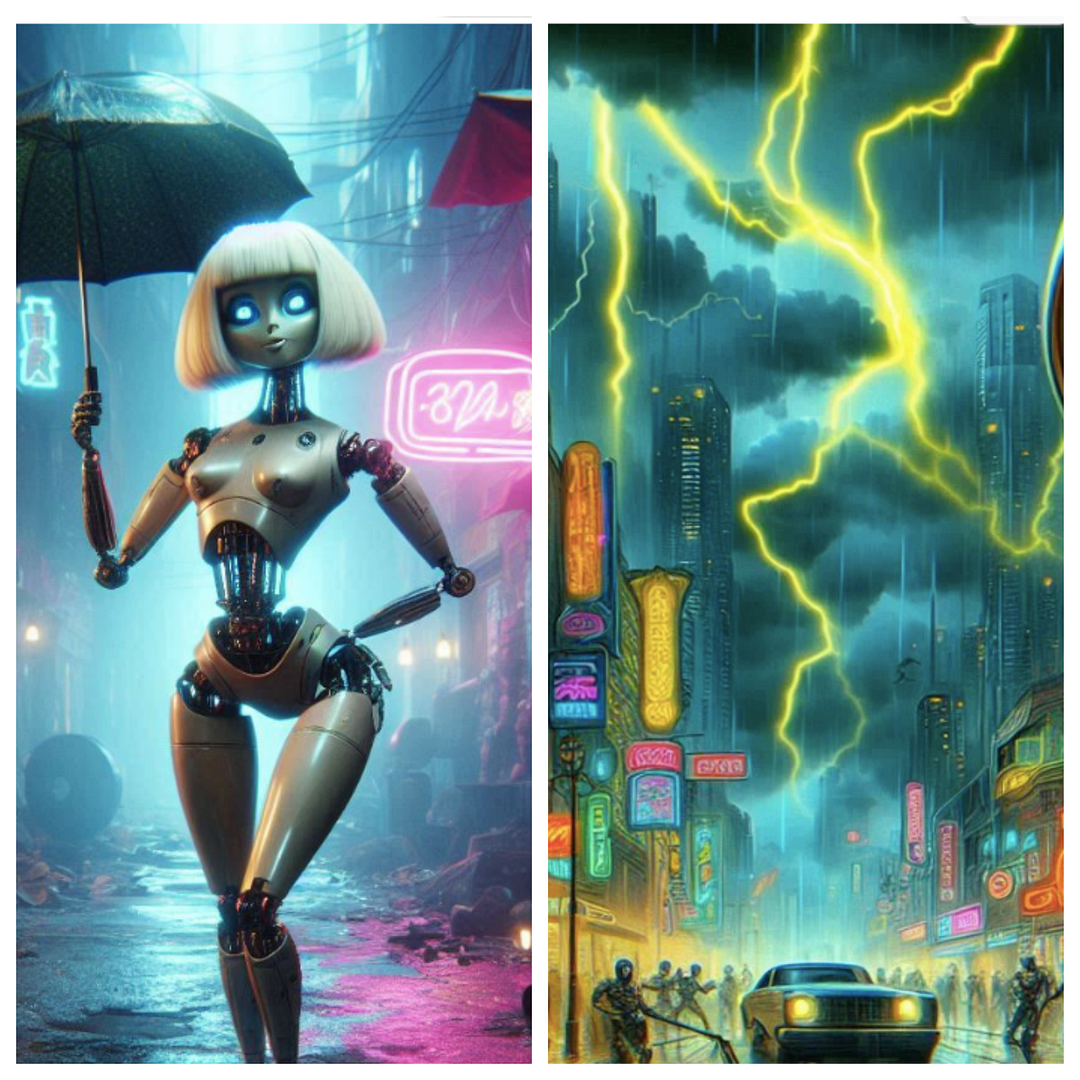
And, indeed, Alexander Zelenyj's "These Streets Are Bruised" and "Shells", both published in Amazing Stories in the past couple of years, are eminently exceptional.  Indeed, their story about robots, androids, or, as they are called in these two tales, "More-than-Men" and "fakemen" and worse things by some folks we encounter, fit well in the lineage started by Ambrose Bierce and Karel Čapek, hoisted into pre-eminence by Isaac Asimov, and continued by a handful in the ensuing decades.

Asimov's R. (for Robot) Daneel Olivaw, who started as a police detective, is closest to the protagonists in Zelenyj's stories, Clark and Kessel, a pair of detectives who both have some "mech" in their bodies, as they investigate the evolving group of fakemen in Windsor, Canada -- aka "Cancer City" across the river from Detroit -- in Zelenyj's post-apocalyptic locale.  Indeed, a human being with no mech parts is a character you're least likely to meet in these literally riveting stories.

And Zelenyj delivers these tales with memorable poetry.  "He left the window gaping with darkness, like a black eye sullying the dilapidated building a little more, and another bruise on the city that he loved and hated with all of his breaking heart", and in "Shells" we learn of "ashen remains ...  scorched into the sidewalks and streets, into the grass of unhealthy, balding fields".  And the author has a knack for minutia in popular culture.  I was glad to see "the artefact of the Neil Diamond LP", especially given that my wife and I had just seen and really enjoyed Song Sung Blue.

But I won't say anything more -- lest I give away anything in these stories that are chocked full of surprises -- other than you can read them for free on the Amazing Stories website here and here, and "Shells" in the weeks ahead in the printed magazine that commemorates the 100th anniversary of that pathbreaking publication.  

========

my own excursion into androids...


"Robinson Calculator" and lots of other stories in this anthology


Slipping Time

Slipping_Time_story_cover

FREE on Vocal: "Slipping Time" and Substack: "Slipping Time"

  • Illustration from painting by Gustave Caillebotte, 1877
  • Earlier version of story published in Amazing Stories, 2018
  • Get the story for your Kindle 


Thursday, March 12, 2026

The Man in the High Castle Now Up on Netflix: My 2021 Interview with Rufus Sewell


Couldn’t be a better time for The Man in the High Castle to show up on Netflix — here’s the 90-minute conversation I had with Rufus Sewell about his deeply thought-out performance in the lead role, in July 2021, shortly after the conclusion of the pathbreaking series on Amazon.

And ... if you're a fan of alternate history, you might enjoy It's Real Life: An Alternate History of The Beatles.


more about the novel here


Monday, March 9, 2026

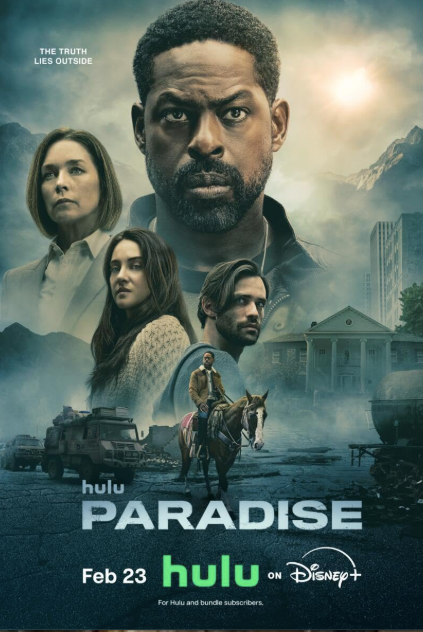
Paradise Season 1 and Season 2.1-2.5: A Story about Anything But ... and More


My wife and I binged Season One and the first five episodes of Paradise 2.1-2.5, and we loved it.  So much so, I decided to post this review, and come back after Season Two ends in the weeks ahead with another review.

You know, it's no easy thing to pull off a science fiction / who-done-it mystery hybrid -- I've tried it myself in my Phil D'Amato series -- and the first season of Paradise does it splendidly.  It kept the ultimate villain hiding in plain sight until the end, as it told its post-apocalyptic story hurtling along with surprises in every episode.

And in addition to all this, Paradise in both seasons treats us to a potent true-love story, with all the trimmings.  Human relationships are always put to the test when humanity is hit with an extinction-level event, but the love explored in Paradise is so deep and real it would've worked splendidly even if the background was just another Pleasant Valley Sunday.

Speaking of which, the songs in the series are as good as those in Lost, with a special emphasis on Elvis.  In an attractive twist, which adds to the surreality of the narrative, we get covers of some great songs, spun out in slow tempos which hang seductively in the air and paint the walls and the meadows of the scenes.  And the acting is just superb.  Sterling K. Brown, who was so memorable in Dan Fogelman's other masterpiece, This Is Us, is just perfect as a man thrust into ... well, I've resisted talking about the specifics of the plot so far, so I won't start now.  But I will say that Shailene Woodley, Julianne Nicholson, Jon Beavers, and James Marsden also put in powerhouse performances.

And I'll also say that I was glad to hear quantum entanglement mentioned in the second season (see, again, Phil D'Amato), and Episode 7 in the first season was so punch-in-the-stomach heart-in-your-mouth compelling I'm feeling it's one of the best episodes of anything ever on television, period.


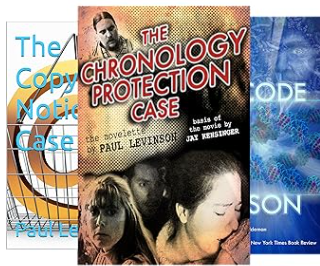
Phil D'Amato series ... radio play and movie  "The Chronology Protection Case"

Saturday, March 7, 2026

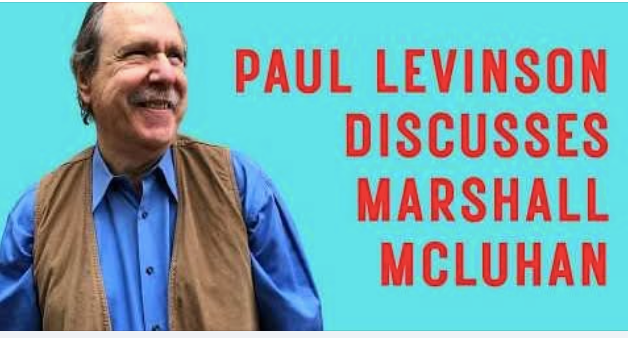
Sample from One of My Three Audiobooks about McLuhan


talking about the medium is the message ... more details about this and other McLuhan audiobooks here 


Podcast: Paul Levinson interviews Dan Abella about Philip K. Dick Film Festival 2026


Welcome to Light On Light Through episode 418, in which I interview Dan Abella about The Philip K. Dick Film Festival to take place in New York City, March 13-14, 2026.

Relevant links:


Check out this episode!

Tuesday, March 3, 2026

Tehran: Did the TV Series Trigger Trump To Do the Bombing?

In a feat of perfect timing, I finished watching the third season of Tehran the night before Trump announced the joint Israeli-US attack on Iran.   We know that Trump watches a lot of TV, and is very much influenced by it, choosing cabinet members based on their performances on cable news shows.  I wonder to what extent his ultimate decision to attack Iran was based on his viewing of the series named Tehran?

First, let me say that I saw all three seasons of the series in the past few weeks, and talked my wife into watching it, too.  It's an excellent series, which started out very well, and just got better and better. Apple TV+ and the Israeli TV broadcaster KAN 11 are part of the production team, and Tehran indeed has a lot of the flavor, power, and feel of Fauda, which is also an Israeli production.  It was also good to see Sasson Gabai back in action in Tehran, after his success in a very different kind of role in Shtisel.

The essence of Tehran is what kind of military back-up will Israel give its Mossad agents who are already widely embedded in Iran.  In the third season, in particular, we find agent Tamar Rabinyan (very well played by Niv Sultan) struggling to stop Iran from finally creating a nuclear weapon -- struggling to do this before Israel bombs the site, which would release damaging radiation (not as bad as a nuclear explosion, of course, but the "dirty" explosion would engender serious health risks).  All of this occurs as Iran is literally on the edge of developing nuclear weapons.

Was Trump watching this thrilling series, and that's what led him to make the decision to bomb Iran?  Well, the edge-of-your-seat season 3 finale of Tehran the series was aired on February 27, and the US started bombing Tehran the city on February 28.


InfiniteRegress.tv