reviewing Black Doves; Dark Matter; Dept. Q; Detective Hole; Dexter: Resurrection; Fauda; For All Mankind; Foundation; Hijack; Memory of a Killer; MobLand; Outlander; Paradise; Presumed Innocent; Reacher; Severance; Silo; Slow Horses; Smoke; Star City; Star Trek: Strange New Worlds; Tehran;The: Day of the Jackal, Diplomat, Night Agent; Your Friends & Neighbors +books, films, music, podcasts, politics
George Santayana had irrational faith in reason - I have irrational faith in TV.
Chuck Todd interviews me about alternate histories
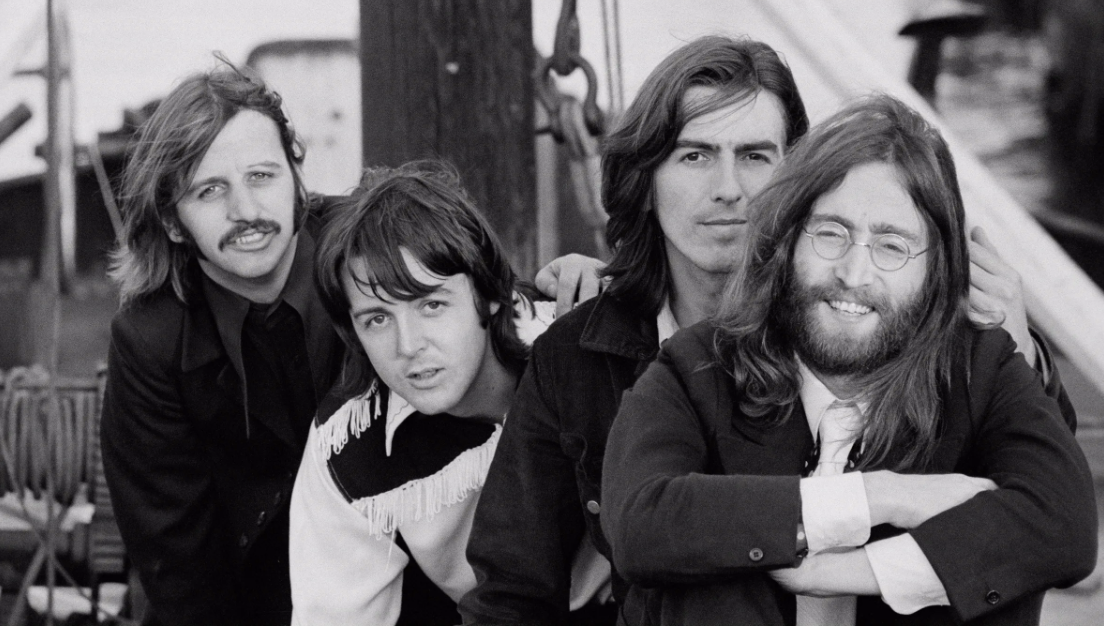
My wife and I watched the renewed and expanded Beatles' Anthology on Disney+ the past three nights. I'd seen and heard bits and pieces of various lengths of the original eight episodes -- on YouTube, The Beatles Channel on Sirius XM, and everything in between -- which originally aired on ABC-TV in 1995, but we somehow had managed not to have seen that original on the unsmart TV in our family room. It was more than wonderful to see and hear what 2025 director Oliver Murray did with the 1995 eight episodes -- uncovering/discovering new footage as well as calling upon Peter Jackson and his elves to bring to current vibrant life what was done in 1995 (just as Jackson had done so miraculously with The Beatles: Get Back in 2021) -- but the real treat for me (treat is too weak a word) was seeing the new ninth episode.
I'll go over some of highlights of the first eight episodes, and then delve into the wonders of ninth episode, and the one problem I had with it.
About the first eight episodes:
It was great to see Murray the K get his due (just as he had in Martin Scorsese's Beatles '64 last year). I worked with Murray the K when he was at WNBC Radio in New York City in 1970s. He hired me after he read my article "Murray the K in Nostalgia's Noose" in The Village Voice in 1972 (my second-ever published work -- my first was "A Vote for McCartney" a year earlier, my response to dyspeptic critic Robert Christgau's attack on Paul and his early post-Beatles work). Murray never got the credit he deserved back then in ushering in The Beatles, and before then on WINS with Alan Freed, and after when he was on WOR-FM helping to invent the FM radio format. I had such a good time working with him on NBC, I even wrote and recorded a song about him -- "Murray the K's Back in Town" -- which he played on the air. (The late Pete Fornatale -- protagonist of my It's Real Life: An Alternate History of The Beatles -- played that song on his Mixed Bag on WFUV Radio in the early 2010s.)
Great shots that I hadn't seen before of The Beatles in their 1964 Washington, DC concert!
There was a spectre, a foreshading, of what would happen to John at the end of 1980. George worries throughout about the exposure of The Beatles in a country in which John F. Kennedy had just been assassinated. (The sick devotion to guns in this country is still claiming lives.) John himself notes after the DC concert that "some bloody animal cut Ringo's hair".
I was reminded again what a uniquely almost extraterrestrial person Ed Sullivan was. I mean, no one here on Earth had his accent or his delivery. Even in Japan, the Beatles are introduced in Japanese (of course), and the host concludes in English with "Ladies and Gentlemen, The Beatles!" -- delivered in a pretty good mimic of Ed.
I find it hard to believe that "Pennylane" didn't go to #1 in the UK. Beaten out by Engelbert Humperdinck's "Release Me"? Maybe if it was "Les Bicyclettes de Belsize" ...
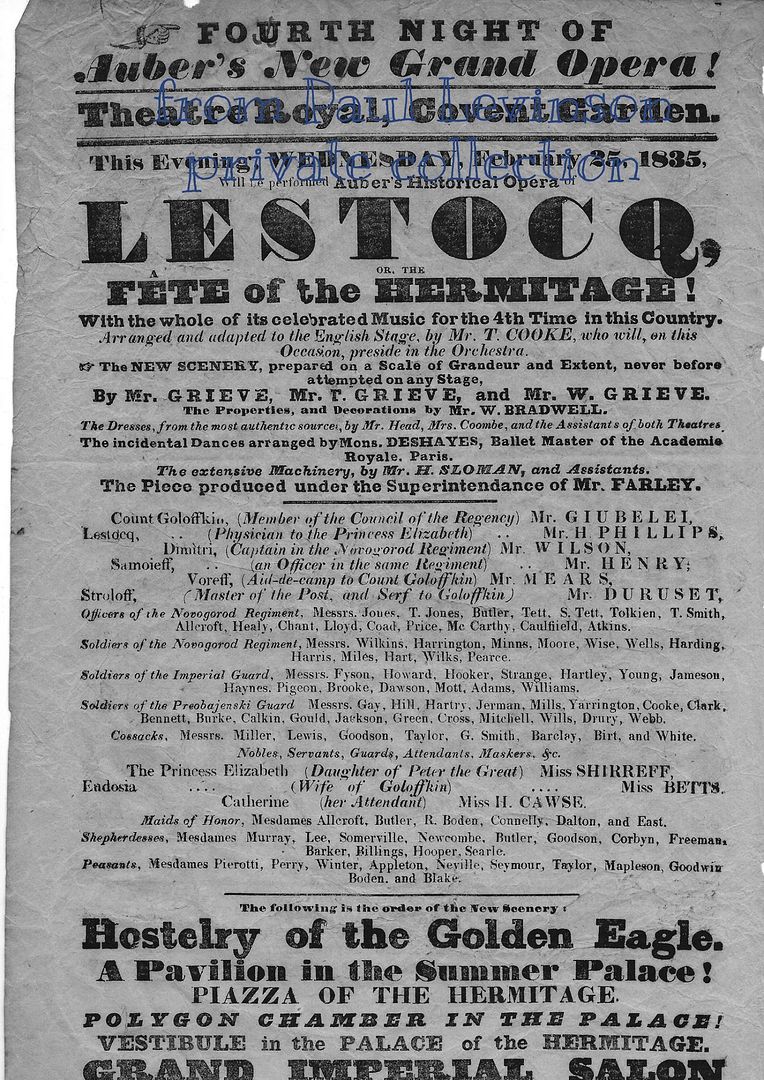
John -- after The Beatles had broken up and at odds with Paul -- objects to Sgt Pepper being called a "concept" album, saying "Mr. Kite" and all the songs on the album other than the Peppers could easily have been on any other Beatles' LP. (George also critiques Sgt Pepper.) As far as I'm concerned, I think Sgt Pepper is indeed a concept album and what John says is also true. There's really no contradiction here, both are true. And I'll also say how happy I was to find the following poster in an antique shop my wife and I were in, must've been, the late 1970s. It's hanging on a wall outside our bedroom. Every time I walk by it, I smile. It reminds me of Sgt Pepper.
Now, about the new ninth episode:
It was not only heartwarming (to see the three surviving Beatles still making such superb music) and heartbreaking (because now George is gone), it was chock full of fascinating and important information. My favorite example: I had always heard, regarding the genesis of "Free As A Bird", "Real Love", and "Now and Then", that the transformation projects began when Yoko Ono gave Paul a tape with some of John's demo recordings from the 1970s. But in episode 9 of Anthology, George tells us about a crucial preface: When Roy Orbison died, The Traveling Wilburys were thinking of taking some of Elvis's demos and bringing them to life with the inimitable Wilbury voices. But they decided not to go in that direction, because (in George's words), it was "too gimmicky". (George didn't say, but rumor has it that the Wilburys were thinking of inducting Del Shannon into the group, but he took his life in 1990.)
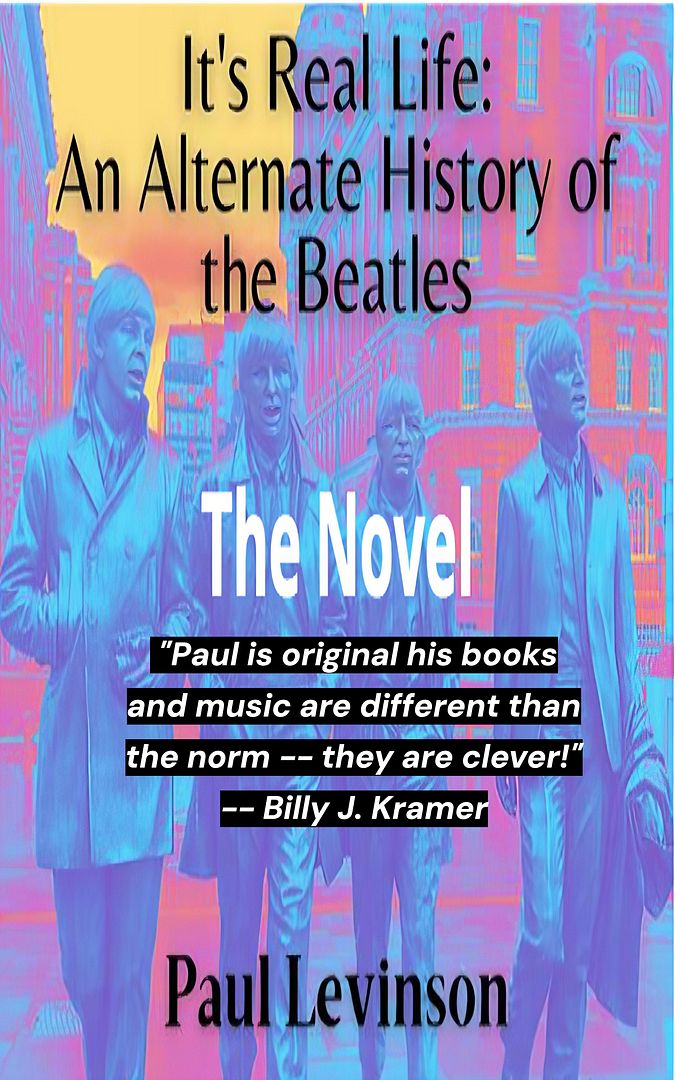
But if I had to pick my favorite moment in the ninth episode, and therefore all nine episodes of this beautifully burnished Anthology, it would be Paul and George completing their incomparable three-part Beatles harmony with John's voice in the chorus of "Real Love". It's been one of my favorite Beatles songs since I first heard it in the mid-1990s. The song inspired me to write It's Real Life: An Alternate History of The Beatles (the video of Anne Reburn's cover of the song follows below -- she performed this in the radio play broadcast on Killerwatt Radio, adapted from the first chapter of my novel; "Real Life", by the way, was John's title for the song before he changed it to "Real Love"). Paul and George's voices being in such synch with John's recording, the harmony snapping into place, snapping into life, is a deeply acoustic proof to me that this uniquely satisfying sound will never die. At that instant, the former Beatles became The Beatles again, and gave evidence that The Beatles will always be with us.
Powers that be often miss the immortality of what is all around them. After Marshall McLuhan died in December 1980 (same year and month as John: their lives were intertwined: they both hit America big in 1964), I proposed a book about him to an editor at St. Martin's Press. He laughed and told me no one cared about McLuhan any more. That book became my Digital McLuhan, which Routledge published in 1999. I still receive royalties checks for sales of that book every year. In the 1970s, I told my doctoral thesis advisor Neil Postman that I thought The Beatles, like Shakespeare, would be known and enjoyed for as long as there were human beings. He laughed too.
Which brings me to the one criticism I have about episode 9. Paul and Ringo are still alive. Yes,The Beatles music including their harmonies will live forever. But not the mortals who made it. Wouldn't it have been wonderful to have another hour, or even just a few minutes, to have Paul and Ringo look back at 1995 from their vantage point right now? Oliver Murray of course interviewed Paul and Ringo in the short film he made, Now and Then: The Last Beatles Song, that accompanied release of the single in 2023. I guess that could be considered a coda to Anthology 2025, but wouldn't a few additional or more words from Paul and Ringo looking back at what they accomplished in 1994 (when "Free As A Bird" was made) and 1995 (when "Real Love" was made) have been just the perfect cup of sencha tea after the marvel we just took in?
Chris Willman asks Oliver Murray in an excellent interview in Variety why there are no contemporary 2025 voices in Episode 9. Murray replies: "I didn’t really like the idea of Ringo [and Paul] in 2025 talking about an interview that he gave in 1995 about something that happened in 1965. It was all too nebulous to do that." I'm not sure I know what "too nebulous" means, in this context. "That is, I think I disagree".
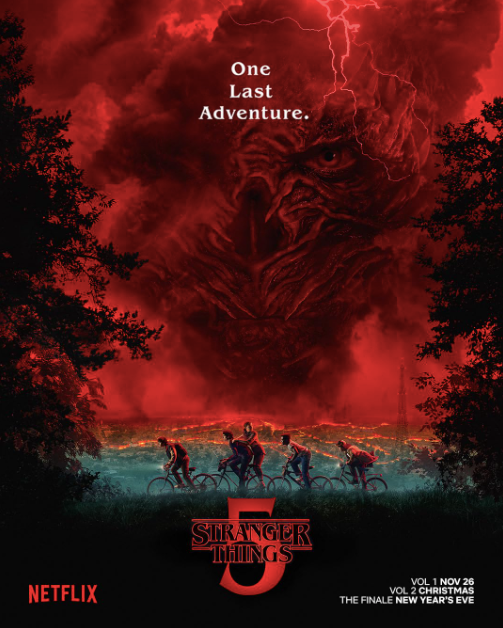
I binged the first four episodes of the fifth season of Stranger Things up this week on Netflix -- we'll have to wait until Christmas Eve and New Years Eve to see the rest -- and these four were by far my favorite so far.
Here are the reasons (with no spoilers):
The action is nearly non-stop. Although I've enjoyed the previous seasons, I thought all of them, in comparison to these final episodes, developed the story two slowly, and had too much talking. I suppose this might have been a necessary build-up to this final season, but the action and pace of development in 5.1-5.4 was often breathtaking.
And these four episodes -- also billed as Season Five, Volume One -- also managed to fit in some standalone stories, which were captivating. My favorite was Max's, which brings in a touch of time travel, including a mention of Madeleine L'Engle's now classic A Wrinkle In Time.
It makes sense that A Wrinkle in Time, published in 1962, would be known by Max and anyone with a vibrant mind in the 1980s, when Stranger Things takes place. Having characters spouting popular culture from the 1980s has always been one of the charms of the series, and it was also good to hear Bond and Magnum mentioned again in this finale season. I miss them both (well, maybe James Bond a little more).
Speaking of Max again, she also delivers my favorite line in this set of four episodes: "music has a way of finding you, even in the darkest places". True then, and so true in this world we're in today. (I say this as I'm beginning to binge the Beatles nine-episode Anthology. Review coming soon.)
It was good to see Linda Hamilton is this first volume of the final season. There always has been a Terminator flavor to Stranger Things, and it becomes especially prevalent in this rousing conclusion.
As a closing point -- and the closest I'll come to giving you spoiler -- the best action dramas, in science fiction and non-science fiction -- always feature ultimate heroes and villains of equal power. The first four episodes aka volume one of the fifth season of Stranger Things also does a great job of setting this up.
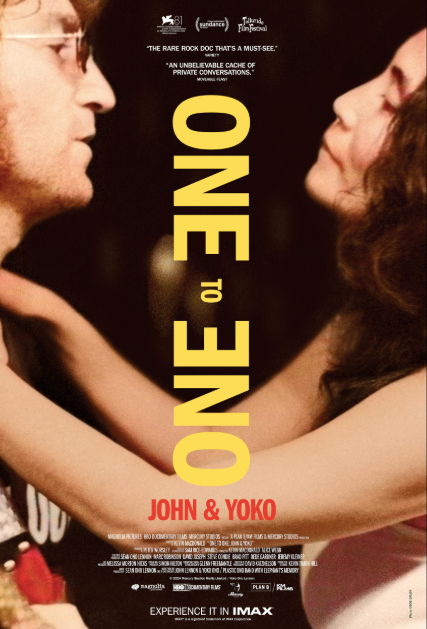
My wife and I just finished watching One to One: John and Yoko, the 2024 documentary, 141 minutes, comprised of never-seen-before and newly restored footage, of John and Yoko and others, singing and talking, now on HBO. It takes place mostly in New York City, in the early 1970s. For all kinds of reasons, I thought it was one of most powerful, effective documentaries I've ever seen.
Here are some of the reasons, in no particular order:
Yoko has a beautiful singing voice. I don't know why, but just about everything I've heard her sing up until One to One has Yoko wailing, often off-key. But that obviously was a deliberate performance. In fact, she was a fine, sensitive singer.
Speaking of performances, I always thought John and Yoko's interlacing campaigns for peace, justice, women's rights, and just plain decency were some combination of real commitment and performative art. I thought the real commitment was most of it, but after seeing One to One, I think it was all of it. John Lennon may have wanted to have hit records in the 1970s, but they were all on behalf of deeply worthy causes.
And Lennon's singing sounded better than ever. His performance at the One to One Concert put on to help kids at Willowbrook and kids with other disabilities was dynamite magic, at least as good as what he sounded like with The Beatles, with songs ranging from "Mother" to "Give Peace a Chance" and of course "Imagine" with lyrics that were more profound and important than anything The Beatles sang (as brilliant as so many of their songs are).
The documentary makes John and Yoko's love for New York palpable. It pulsates through the screen.
But that brings me to the end of the movie, which rolls with the joy that Lennon felt when he beat the deportation charges that Nixon brought against him (Nixon, the worst American President until he was usurped by the current holder of that office). But we who lived past the end of 1980 know that this celebration of a happy ending was tragically premature. The bullets that One to One showed crippling George Wallace in his Presidential campaign in 1972 would go on in 1980 to take the life of John Lennon. The same bullets, in as much as they shouldn't have gotten into the guns that got in the hands of the sicko psychos who pulled the triggers. This was America. It still is.
But that's another true story. For tonight, my advice is see this documentary, and learn who John Lennon and Yoko Ono really were.
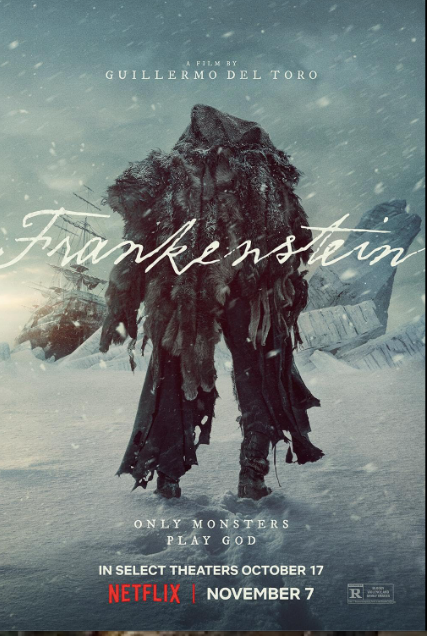
I just watched Guillermo del Toro's 2025 two-and-a-half hour take on Mary Shelley's 1818 Frankenstein on Netflix. This year has been a great one for movies, and del Toro's Frankenstein continues that trend.
Just about everyone knows something about this story, even if their main source of reference are the series of movies and remakes that were made in the 20th and 21st centuries, beginning in 1910 with Thomas Edison's 16-minute silent film . Movie-making, of course, was primitive then, even in the one-hour talkie that really got the ball rolling in 1931, and these early Frankenstein movies almost seem cartoonish and comical. (There even was a 1948 Abbott and Costello Meet Frankenstein movie.) After the first two talkies -- Frankenstein (1931) and The Bride of Frankenstein (1935) -- there was a very mixed resemblance to Shelley's novel in the thousand or so feature films, shorts, and TV appearances of Frankenstein's creation that followed, and to add insult to injury Mary Shelley's 75,000-word narrative has often been called a novella. (I was President of the Science Fiction Writers of America 1998-2001, and SFWA has long defined a novella as 17,500-40,000 words).
The 2025 movie is masterfully filmed, making the movie both far more frightening and tender, at the same and different times, than any of the predecessors I've seen. At times, the so-called monster seems more intensely human than most of the people around him, including the man who created him, and that makes his (the monster's) tale all the more memorable. Although del Toro's movie has some differences with Shelley's novel, most notably in the ending, it feels as if Shelley was a consultant in the making of this movie.
One of the most impressive and important characteristics of Frankenstein's creation in Shelley's novel are the creation's nearly superpowers. The exact reason for this is never quite explained, and the same is the case for the 2025 movie. I'd always assumed it was the lightning, which not only jolted the stitched-together body parts into life, but literally energized the cells in the creation's body (actually, I really don't like calling him a monster) into a kind of durability verging on indestructibility. I'm not sure if anyone else has made this point, but looked at in this way, Frankenstein's creation may well have inspired the creation of Superman. Chances are the Jewish Golem inspired both.
The other aspect I really liked about the movie was the way it depicted the kindness and affinity Frankenstein's creation had for animals. In Mary Shelley's novel he's an avowed vegetarian, and in del Toro's movie he's gentle with the creatures around him (unless they're wolves who are attacking him or the blind man). The lesson here is that although he was created artificially (though the body parts and the lightning are certainly natural) he is indisputably a bonafide part of the greater natural world, maybe more so than his creator and his creator's (our) ilk. We humans have to work hard at being a reliable citizen of the natural world.
And that may be the ultimate upshot of the novel and this movie, consistent with what has been remarked upon by readers and viewers for two centuries: the monster in this story -- if there is a monster -- is the creator not the creation.
===
Dedicated to the late Lisa Nocks, my student in the MA in Media Studies program at the New School for Social Research, then my teaching assistant at Fordham University, who wrote her Master's thesis on Frankenstein and a variety of articles on the subject including Frankenstein: in a Better Light.
The novel is an expansion of the short story that won the Mary Shelley Award for Outstanding Fiction, 2023. Get the novel here. Read the short story here, FREE.
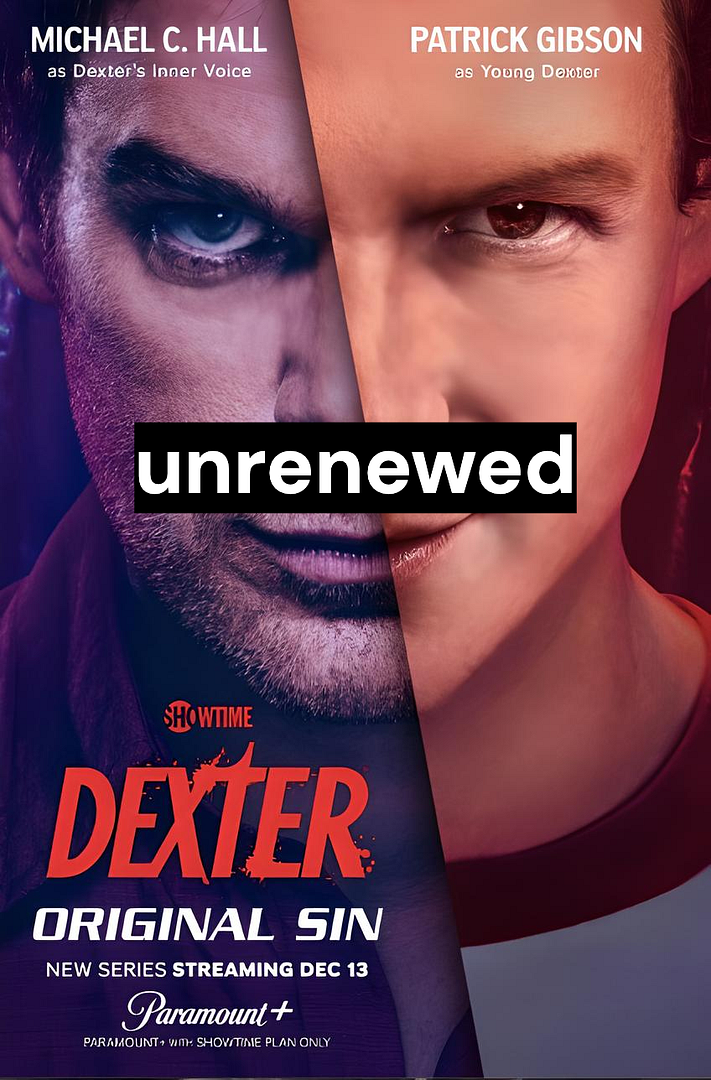
I've been a devoted fan of Dexter since it debuted on Showtime in 2006. My very first review of a TV show on this blog in December 2006 was a rave review of the first season of Dexter 20 years ago on Showtime. The review is entitled First Place to Dexter.
I've reviewed in this blog every episode of every season of Dexter since then. And of course I reviewed every episode of Dexter: Original Sin last summer. I was sad when the original run of Dexter ended in 2013, thrilled when Dexter returned in New Blood in 2021, disappointed when Dexter Morgan apparently died at the end of that one season in 2022, delighted with the prequel Original Sin,glad that it was renewed earlier this year, and I think Dexter: Resurrection this year was masterful.
So you can imagine how stunned I was about the announcement that the renewal of Original Sin for a second season had been reversed, the prequel series cancelled, this past August. As Alisha Grauso pointed out in her Screen Rant article four days ago, Original Sin "immediately became Showtime's most-watched premiere ever, with 2.1 million viewers". She then says its about-face cancellation by Paramount four months after Original Sin had been renewed "was seemingly a casualty of the Skydance-Paramount merger," and goes on to explain that after the merger, Paramount reviewed all of its programming (ok, that makes sense) and she further suggests Paramount may have to decided to revoke its renewal because prequels are narratively difficult and even when successful often satisfy their viewing audience with just a single season. And that makes no sense to me at all. Even if that characteristic of prequels is true, there was no way Paramount would not go for a second season of Original Sin, given how successful -- immediately becoming "Showtime's most-watched premiere ever" -- Original Sin on Showtime was.
My wife, also an avid fan of Dexter on television, didn't get a chance to watch Original Sin until this past week. I was half-watching it with her and enjoying it immensely. And I starting wondering, again, why had Paramount reversed itself? Why cancel at a time when the Dexter franchise was taking the screen by the storm? Yes, that decision was indeed a result of the Skydance merger. And what else had happened with Paramount and CBS after that merger? Well, The Late Show with Stephen Colbert had been unceremoniously cancelled (effective May 2026) after Skydance got in the driver's seat. And why was that? The billionaire who owns and runs Skydance is a big Trump supporter, and Colbert's sarcastic comedy has been at its sharpest when it came to Trump.
But Dexter: Original Sin had no political comedy, right? Ok, but maybe one of its lead actors, or writers, or directors, had spoken out against Trump and the march towards fascism in America he's engendering and leading. I did a search on Christian Slater (who brilliantly plays Dexter's father Harry in Original Sin) and Trump. And bingo! Back in 2018, Slater called Trump an "asshole". Breitbart, a right-wing publication, was so upset about that, they devoted a whole article about it. Surely Trump, who keeps track of every insult, real and imagined, was bearing one of his myriad continuing grudges, and desire for revenge, against Christian Slater.
Of course, I have no proof of this. But I wanted to put this hypothesis out there. Was Christian Slater and thereby Original Sin another victim of Trump's rampage against free expression, abetted by the billionaires who support him, in this case, a billionaire whose company now in effect owns Paramount, and thereby has easy control over its programming? Maybe, given the damage Trump has already done to the arts and culture in this country, I'm being too quick to see him as the villain behind Paramount's illogical reversal on its renewal of Dexter: Original Sin. But the other explanations just don't add up, given Original Sin's enormous success, and I really can't think of a more convincing explanation of why it was cancelled after it had been renewed.
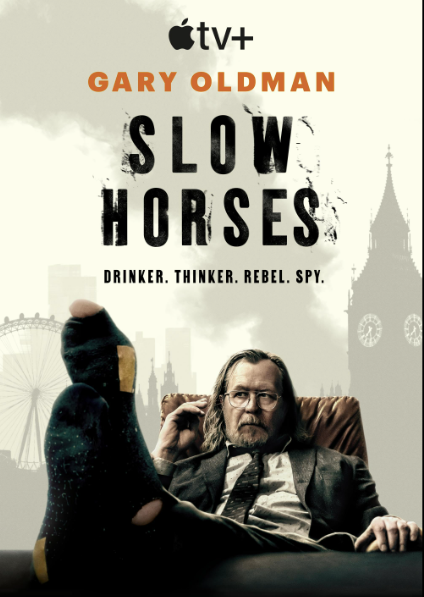
Just a brief note about what I loved in the Season 5 finale of Slow Horses, up on Apple TV+ this past Wednesday.
The answer is well, everything. But here are some specifics (with slight spoilers):
River's grandfather comes through! His rambling about bees in episode 5.5 was an alert to how the terrorists besetting London had a final, potentially deadly sting in the tail-end of their attack, and Slough House and MI5 had to be careful not to overlook that.
It was also really good to see River end up truly to form. His grandfather's counsel gets River to be able to save MI5 Director Whelan at the last minute. River wants out of Slough House and back with "the big boys again" (quote from Mick Jagger). And you know what? River's right. He's 100% correct that he's every bit as good as, in fact better than, the other agents in "The Park" (quote not from Jagger). But of course what he misses -- as does everyone else in Slough House, other than Lamb, who's well aware of this -- is that all the Slough House agents are better than the "big boys". (And that includes Rodney Ho.)
And so it comes to pass -- as it does in every season-- that nothing ever really changes at Slough House. Even when its agents are killed (which happened in Seasons 2 and 4) This lends credence to the interpretation that Slough House is really a purgatory. Which maybe it is.
And I'll see you back here as soon as Season Six is up.