22 December 2024: The three latest written interviews of me are here, here and here.
Showing posts with label FDR. Show all posts

Thursday, September 18, 2025

The Firing of Jimmy Kimmel: The Latest Step on the Road to Fascism


The firing of Jimmy Kimmel by ABC -- which is exactly what his "suspension" is -- is the latest step in the road to fascism being paved by the current President of the United States and his allies.  It began with the hounding out of their jobs of  FBI and other people who lawfully investigated Trump's instigation of the January 2021 attack on the Capitol, the pressure on universities to end DEI and other policies distasteful to MAGA Americans and their theorists, and of course the firing of another late-night host, Stephen Colbert, by another cowardly media operation, CBS.  (William Paley must still be turning over in his grave.)

In the case of Kimmel, rumblings were being made about the FCC doing something about him.  I've thought the FCC was blatantly unconstitutional as soon as I was old enough to think.  It violated the First Amendment's clear proscription on the government "abridging the freedom of speech or of the press" -- what else would any honest person say a late-night comedian, ridiculing Trump and his policies, was doing?  The only crime in that would be how easy it was to make those jokes, because the threat to our democratic way of life was so obviously no joke indeed.

FDR, certainly one of our greatest Presidents, jeopardized our democracy when he signed the Communications Act of 1934 into law.  So did Felix Frankfurter in the 1943 Supreme Court decision "NBC v the US," which he wrote, which ratified the FCC's power to regulate broadcasting.  Ironically, that was in the middle of our war with Nazi Germany which FDR was so instrumental in winning, not to mention that Frankfurter was a founder of the American Civil Liberties Union in 1920.

I started teaching at universities in the 1970s, and the danger of the FCC has always been a part of my courses about the media and their impact.  My main point has always been: imagine the FCC under the control of a President bent on willfully superseding our democracy and its protections from dictatorship (see, for example, my 2005 Media Ecology conference Keynote address transcript and video The Flouting of the First Amendment).  I take no satisfaction and indeed am saddened and deeply concerned to see this patent threat to our democracy so vividly realized by this President and the many people who support him.

Note added September 24, 2025:  Last night: Jimmy Kimmel's sage, hilarious opening monologue


To the fascist enablers that prevented this show from being aired in 20% of its markets, I hope you go out of business soon; to fascist enabler Paramount/CBS: reverse your decision to end The Late Show w/ Stephen Colbert]; to everyone: I'll be recording a conversation w/ Frank LoBuono about this in a few hours for his Being Frank podcast


Friday, June 28, 2024

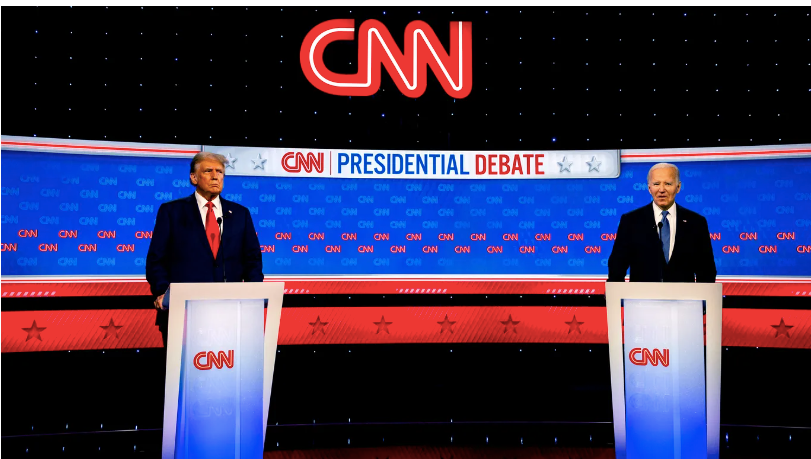
It's the Debate that Failed Last Night, Not Biden


Biden tried to say decent, ethical things but delivered most of his words poorly in last night's Presidential debate; Trump spoke much more clearly but said vile things and lied just about every time he opened his mouth (lies which the CNN moderators failed to call out).

What are we to think about this?

I would say it's that debates shouldn't matter as much as they seem to.  JFK looked better on TV than did Nixon, and a majority of people who saw the two on TV thought Kennedy won.  A much smaller number of people heard the same debate on radio, and thought Nixon won.  That event certainly demonstrated the importance of debates.  But though JFK proved to be an excellent President, the fact that he won the debate was really no indication that JFK would do so well in office.   The debates, in other words, were very valuable windows into the effects of media in politics, not indicators of the political character and acumen of the candidates.

It's plain logic that what a President does in office has nothing to do with the President's voice quality or appearance.  FDR was in a wheelchair throughout his presidency.  He connected to the American people in an age before television via his fireside chats on radios.  Few people knew he was in a wheelchair.  Most historians agree he was our very best President, getting the United States out of the Great Depression, and guiding us and our allies to victory in the Second World War.

I've spent my professional life as a professor of media and an author talking about the importance of televised debates, how candidates look and sound on television. JFK won the debate with Nixon because because by 1960 more than 90-percent of Americans had television in their homes. Reagan prevailed over Mondale by making a savvy joke about not making the younger age of his opponent an issue. Obama faltered in his first debate with Romney but came back strong in their second nationally televized conversation. But maybe it's time to focus on what debates really are: a 90-minute performance that has little to do with what the candidate did, is doing, or will do in office.   The truth is that the skills needed to be an effective debater have nothing to do with the skills needed to be an effective President.  Never did, never will.  Maybe it's long since time that we recognized that.

Marshall McLuhan was the first to point out that JFK won the 1960 debates and then the election because he performed so well on television, in contrast to Nixon who was judged as winning the debates on their radio broadcasts that so few people listened to. McLuhan made this observation in Understanding Media (1964), whose breakthrough message was "the medium is the message". The view that Biden's poor performance in Thursday's debate means he's no longer fit to be President strikes me as an egregious case of mistaking the medium (the debate) for the message (Biden's been doing a superb job as President).

Or, to paraphrase Shelley, maybe it's the debate that failed last night, not Biden.

***

Note added Friday, June 28th, afternoon:  And Biden amply demonstrated his power to effectively communicate in a rip-roaring speech in North Carolina.  Again, a debate is a unique mode of communication, which not only has nothing to do with Presidential decision-making and other Presidential activity, but not much in common with speech-making, interviews, and other kinds of communication, either. 

Note added Saturday, June 29The New York Times' editorial board called on Joe Biden to leave the race. They didn't say a word about Biden's speech in North Carolina. What are we to make about such an unprecedented call from the editors of what used to be known as the newspaper of record? I would say this is just more evidence of the decline of a once-great newspaper.  See my What's Wrong with The New York Times for an example this past Fall of what I'm talking about.


Monday, May 24, 2021

Atlantic Crossing: FDR Bursts Through the Faded News Clips


My wife and I finished watching Atlantic Crossing on PBS last night -- episode by episode, week after week, the old-fashioned non-streaming way.  We both really enjoyed it, and, I have to say, it was one of the most fascinating, appealing, informative historical dramas I've ever seen.

The main story is the role Crown Princess Märtha and her husband Crown Prince Olav played in the  Norwegian struggle to keep the country and concept of Norway alive during the Nazi onslaught and occupation of Norway in World War II.  And the heart of that story, as beautifully portrayed in Atlantic Crossing, is how Märtha's relationship with American President Franklin Delano Roosevelt figured in her efforts to keep Norway afloat.

We're told at the beginning of each episode that the narrative on the screen, somewhere between Platonic, flirtatious, and deep romantic attraction, is based on "true events".  But, of course, what events and how true remains unknown.  In Atlantic Crossing, FDR takes Märtha on car rides.  They kiss, not quite on the lips.   When, in the next-to-last episode, FDR asks Märtha if all the affection and attention she has been giving him was all to coax him into giving Norway a battleship to fight the Germans, Märtha says yes, but FDR, with a twinkle in his eye, says he doesn't believe her.

Speaking of that twinkle, we all know Kyle MacLachlan from Blue Velvet and Twin Peaks, but I found his portrayal of FDR charismatically original and exciting.  Roosevelt died a few years before I was born, but my parents and grandparents spoke of him as they would a beloved member of our family.  They said that when he died in 1945, they suddenly felt lost and without anchor in the world, even though the Nazis were already well beaten.   As a media theorist, I always attributed FDR's relationship with the American people, in at least large part, to his fireside chats via radio, which literally brought Roosevelt into America's homes.  I've listened to many of those radio addresses -- you can find them online -- so I've come to appreciate the power and impact of his voice.   But as for the visual -- what Roosevelt looked like when he talked -- the faded newsclips do not offer very much.

Kyle MacLachlan thus had something of a blank slate to fill, and he did that with memorable sensitivity and panache.   I've seen at least half a dozen portrayals of FDR over the years, but none compare to MacLachlan's, and I like thinking that was the man my parents and grandparents loved so much, who got them through the monstrous war literally and figuratively, in every way.*

I'm glad FDR helped save Norway, too, whatever his reasons and whatever Märtha's true role.  The Vikings were the first Europeans to arrive in the New World -- as I explain in The Soft Edge, that contact had no effect on the world because there was no printing press to spread the news, as it did for Columbus -- but the Vikings and in turn the Norwegians have always had a very special place in the USA.

Atlantic Crossing is a celebration of that place, an astonishing and satisfying portrait of FDR, and Crown Princess Märtha (wonderfully played by Sofia Helin), created and written by Alexander Eik with moving music by Raymond Enoksen, and I'm glad and grateful to have seen it.

*I should mention that I found the portrayal of Eleanor Roosevelt, also a revered person in American history, somewhat problematic.  The part was very well acted by Harriet Sansom Harris, but the Eleanor in Atlantic Crossing staunchly opposes FDR getting America involved in the war in the early days, which may be true, but was news to me, and disconcerting.

Monday, August 17, 2020

Written Report on 1st Day of 2020 Democratic National Convention

I thought the first night of the 2020 Democratic National Convention, the first virtual convention ever held, was truly effective.   Not only because of what the well-known speakers said, which was passionate and true and highly effective, but also because of several speakers I don't recall seeing before at any national political convention.

Probably the best of these not-yet-famous people, certainly what moved me the most, was what Kristin Urquiza said.  Her father, a Trump supporter, died of COVID.  His only pre-condition, Ms. Urquiza said, "was that he trusted Donald Trump".  That statement not only rings true to the soul, but shows that Ms. Urquiza has a future in the political world, if she wants it.

Now to some of the people we already knew.  I thought Bernie Sanders gave the best speech of his life tonight.  He spoke plain truth to his millions of supporters, which didn't include me.  But every word he said made eminent sense.  His confessions of a progressive -- his confessions about why he was supporting Joe Biden for President -- should be a handbook for every rational person.  In a phrase, they explained the dangers of Trump (which we already know), but also how Biden's positions take important steps towards what Sanders wants, most importantly universal health care.  I hope those points become known and are believed by every progressive.

I thought the Republicans supporting Trump were convincing, and, for some reason, even more so Biden's rivals in the Democratic Primary, like Bernie.  In addition, the more moderate Amy Klobuchar continues to impress as one of the most sensible thinkers and speakers in America.   Andrew Cuomo didn't run for President this year.  But his dealing with the COVID pandemic in New York -- we now have just a one-percent infection rate in this state, after starting out as the most infected state in country -- was masterful, including his daily briefings (which I said at the time were akin to FDR's fireside chats during the Great Depression).  His speech tonight followed in that tradition.

And then there's Michelle Obama.  She already ascended to being far more than a former First Lady.  But tonight she hit new heights, of passion, compassion, and just clear common sense.  Her speech was a pleasure and an inspiration to hear, and I hope that it gets everyone who voted for Barack to vote for Biden this time around.   Her plea that we should vote as if our lives depended on it was never more true.

And I'll be back here tomorrow with thoughts on what tomorrow's segment of the 2020 Democratic National Convention brings.


See also Report on the 2020 Democratic National Convention, Day 2 ... Report on the 2020 Democratic National Convention, Day 3

Wednesday, August 12, 2020

Blog Post: Kamala Harris: The First Step Back from the Precipice


I wrote a few days ago (and also posted a podcast) about why I strongly disagreed with Wade Davis's conclusion, in "The Unraveling of America" in Rolling Stone, that America was so far gone, in ways that the abysmal treatment of the COVID-19 pandemic epitomizes but didn't initiate, that nothing could reverse that decline.  Nothing, including and especially, the upcoming Presidential election.  I explained why I thought such a conclusion was not only dangerous but wrong, and cited FDR's election in 1932 as a ringing example of how a Presidential election can indeed make a difference, in that case, lifting us out of Great Depression, and enabling us to the lead the free world to defeat the Nazis.

I offered that argument two days before Joe Biden selected Kamala Harris to be his VP running mate.  I see that selection as America, via Joe Biden's wise decision, taking the first step back from the precipice.  In an ideal world, a person's ethnicity and gender wouldn't matter.  All that would count in anyone's being a candidate for any job, would be the candidate's talent and capacity to do the job as effectively and as excellently as the job could be done.  But we don't yet live in such an ideal world, and, in order to get there, we need people in public positions who come from ethnicities and genders (i.e., women) who have been shut out from such public positions, because of the racism and sexism from which our free society emerged, and which is still very much with us.  In such a world - which is this, our world, our country - Kamala Harris breaks an wide array of barriers, an array amazing for one person.  She is an African-American woman, with an Indian (Asian Indian) heritage.

But Kamala Harris would be an impressive candidate even if she were a white man.  She is articulate, sharp as whip, reflective, passionate, and strategic in her thinking.  She is an ideal balance for the more deliberative Biden, and will make an ideal governing partner when they both get into office.   (Note added: If you want an idea of how Harris stands up to the current Vice President, compare her heartwarming speech of a fighter, just delivered in Wilmington, Delaware after Joe Biden introduced her, to the unctuous pap that daily comes out of Pence's mouth.)

So, to return to Davis, elections do make a difference.  A Democrat in the White House, with a black woman as his Vice President, and a Senate and House of Representatives in Democratic control, can and will turn this country around.   But to make that happen, we have to get out and vote.


Tuesday, April 21, 2020

The Plot Against America Finale: Reality


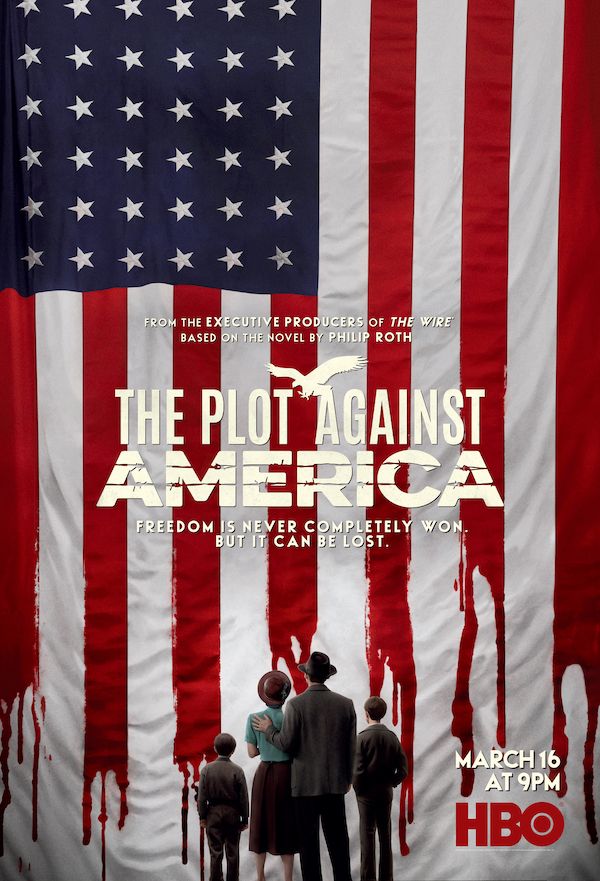
As brilliant and memorable as The Man in the High Castle (in print and on the screen) was, it was a comic book adventure.  Complex, as alternate histories are bound to be, but still something in the world of fantasy not reality.  Though The Plot Against America may not be quite as memorable, it is just as brilliant in its own way.  And it is about reality.  Way too close to reality be just enjoyable.  It ends up being frightening, as even the most grim fantasy cannot really be.

Let's just look at the very ending.   There's a special election for President being held in 1942.  Mrs. Lindbergh has called upon Congress to authorize it, after her husband, the President, has disappeared.  There's hope, expectations, that FDR might reclaim the White House (earlier, Walter Winchell is assassinated).  But we see in the South, where African Americans are no doubt voting for Roosevelt, that ballots are being burned rather than counted.  There's word that FDR is also doing well in some northern states.  Will that be enough to restore decency and democracy to the USA?  That's where the mini-series ends.  Before a ballot is actually counted.  Just like where we are today, regarding our Presidential election scheduled for this coming November.

Philip Roth's book, upon which the mini-series was based, was written before Trump became President in our reality.  The mini-series wasn't.  Clearly David Simon, who has Homicide, The Wire, and Treme to his earlier illustrious credit, knew all about Trump in the White House, certainly when the ending of the mini-series was finalized.  Good for Simon for making this powerful statement.

Earlier in this finale, it gets about as ugly as an alternate history in which bigotry comes to power can be.  The Klan is running high.  The FBI is competing with the Gestapo.  All of that is all too reminiscent of our reality, too.

So, see The Plot Against America.  You'll be entertained by the Yiddish.  But you'll be horrified with how much of that alternate reality is not far from where America is today.

See also The Plot Against America 1.1: Yet Another Alternate Nazi History, with Forshpeis ... The Plot Against 1.2: The 33rd President ... The Plot Against America 1.3: Corrosive Anti-Semitism ... The Plot Against America 1.4: Close to Home ... The Plot Against America 1.5: Involuntary Transfer


Tuesday, March 24, 2020

The Plot Against America 1.2: The 33rd President


A powerful second episode of The Plot Against America, with its now patented mix of sharp historical details and disturbing alternate history.

The details again range from rarely heard Yiddish, like bahaimhe for cow, to those light green semi-translucent dishes on the table.  And the delicatessen looked so good I could taste it.

The alternate reality was equally, if verging on tragically, convincing.  Lindbergh, running on a me vs. war platform, beats Roosevelt in his quest for a third term in 1940.  We learn this by witnessing the Levins learning of this via the radio in their living room.  Though I knew this was going to happen in this story, it was a blow, anyway, offered at almost the same time as Herman Levin ducks into his Newark moviehouse to see the Nazis taking over Europe.  The mix of movies and radio indeed typified this time - nothing alternate about their role in history - and The Plot Against America's employment of newsreels and radio to convey its narrative makes its alternate history all the more real.

The other smack-in-your-face element is Rabbi Lionel Bengelsdorf's support of Lindbergh in his campaign for President.  The character is all the more horrifying because he's played the charismatic John Tuturro.  Bengelsdorf is so charismatic, so sure of his beliefs and so well spoken, that he even attracts Evelyn Finkel played by Winona Ryder.   Is he based on a real person?  Not that I know of, and I suppose that's one optimistic aspect of this frightening story.

Lindbergh's election as the 33rd American President means the pace of this short series will be quickening.  Alvin Levin has gone to Canada to enlist in their armed forces because he want to "kill Nazis".  Will America with Lindbergh in the White House offer Britain and Churchill no help in their heroic attempt to stave off Hitler?

I'll be back here with my report next week.

See also The Plot Against America 1.1: Yet Another Alternate Nazi History, with Forshpeis


Monday, January 29, 2018

Patti LuPone at 2018 Grammys: The Dark Message of this Incandescent Performance


[Note added 31 January 2018: YouTube has removed all the full-length (5mins+) videos of Patti LuPone's performance at the request of the Grammy people (The Recording Academy), ever on the edge of kicking public discourse in face.   You can find some shorter clips still on YouTube, and if I can find the complete performance on video anywhere online, I'll post it here.  In the meantime, here's a video of Patti singing "Don't Cry for Me Argentina" a few years ago.]

That's Patti LuPone singing "Don't Cry for Me Argentina" a few hours ago at 2018 Grammy Awards.  Tina and I missed her when we went to see Evita on Broadway in 1979 - she was off that night, though we did see Mandy Patinkin as Che - but we've always loved her performance as the very peak of peak in this musical, and, for that matter, in any other.

And here she was tonight, somehow, magically, better than ever.   Not only in the finest voice, pleading, tender, powerful - but acting to the hilt.   Look at what she does at the very end of the performance - at 4:27 into the song.   Evita beseeches the audience, sees she has them, raises her arms and flings back her head in vulnerable thanks and triumph, then puts her head down, possibly spent, modest, but raises it one more time in cool, powerful conquest, defiant and satisfied.  Soaking in the cheers and applause from the audience, both in Madison Square Garden tonight, and in Buenos Aeros, when the crowd was Evita's shirtless ones, all those years ago.   LuPone manages to convey all of this after singing her heart out and bringing herself - and anyone listening with a soul - to tears.

But there's a darker side to this - not in LuPone's incandescent performance and in Andrew Lloyd Webber and Tim Rice's incomparable song.  But in the message it conveys about propaganda, or deceitful appeals to the emotions that masquerade as logic.

I teach my classes at Fordham about this, and use this song as a searing example, every time I talk about propaganda.  The Institute for Propaganda Analysis, striving many years ago to understand how Hitler and the Nazis gained power in Germany, still then a democracy, called it "just plain folks".  Though the dictators have all the money and power, they tell their powerless subjects that they, the dictators, are just like the people - one of them.  Hitler was "the Leader" - der Führer - not the King.   Don't be jealous of me, Evita sings in "Don't Cry for Me Argentina" - I'm just like you.  I came from you, I am you, standing up here in my gleaming gown and jewels.  I'm you who has succeeded, so love me, as you should love yourselves.

This "just plain folks" is one of the prime ingredients of fascism.   It shouldn't matter, in a democracy, where the elected official came from in life.  FDR and JFK were both great Presidents, and swimming in wealth.  And maybe one of the reasons they were so good for our country is they didn't pretend to be something they weren't, someone just like us.

That's an important lesson to keep in mind, especially these days, with the President who tweets to be closer his supporters, as we're moved to tears along with Patti LuPone in her extraordinary performance.


Tuesday, October 18, 2016

Steve Schmidt Moved To Tears on the 11th Hour on MSNBC

I don't think I've ever seen anything quite as moving and profound from a Republican commentator on television.

I first became aware of Steve Schmidt when he was campaign manager for John McCain's unsuccessful 2008 Republican campaign the U.S. Presidency. I didn't much care for Schmidt or his candidate, and even less for Sarah Palin, who would have become Vice President had Schmidt succeeded in his campaign.

Perhaps Schmidt has grown wiser.  It happens.  Perhaps Schmidt correctly sees that as, dangerous and out-of-her mind as Sarah Palin was, Donald Trump is 10 times or whatever big multiplier worse.

Schimdt recounted on the 11th Hour with Brian Williams the dignity of FDR on the White House lawn after Pearl Harbor.  He reminded us that Hitler didn't take power by force, but because democracy in Germany was weak.

Schmidt could barely contain himself, and neither could I.   His voice and the tears in eyes conveyed the threat that Donald Trump poses to our democratic process, conveyed the disgust and despair Schmidt feels when he compares Trump to any former American President.   The obscenity of his election would trash what not only FDR but every American President has struggled to uphold and preserve our democracy, and the respect upon which it is predicated, respect for the choice of the people as reflected in the votes they cast on Election Day.

One of the silver linings of Trump may the unity he has unintentionally brought forth among all Americans of rationality and good will, Republicans as well as Democrats.

I'm looking forward to seeing them work together together to build a better America, after the political illness that is Trump is defeated.

Sunday, October 26, 2014

The End of Boardwalk Empire

I was sorry to see Boardwalk Empire end tonight, not only because I generally really enjoyed the series, but because the ending was so obvious and, sad to say, shabby.

The series has always been fast and loose with history.  But the finale did that with a vengeance, in little and major ways.  Joe Kennedy, one of the best historical characters in the series, just introduced this season, knows that the polls that show Hoover beating Roosevelt are wrong, because only the very rich were polled.  Actually, the polls which were notoriously wrong would be conducted four years later, when FDR was shown losing to his Republican challenger big time.   It was realized only years later, in astute historical analysis, that the Literary Digest poll made the mistake of conducting itself via telephone, which of course only the very rich had in their homes at that time.  (I have a 1931 New York City phone book which is thinner than today's New York Times.) No way Joe Kennedy could have realized this four years earlier, as smart as he was.

But the big historical discrepancy was the killing of Nucky at the end.  In our history, the real Nucky Johnson (that was his name, not Thompson) died decades later, in 1968.   Yeah, I know this story from the very beginning was fictionalized - including the change in last name - but to differ so drastically on such a major point undermines the story.  Maybe it's just me, but I always like my historical dramas to stick to the major facts.   Show Marc Antony with as many women on the side as you like, but don't leave out that he was with Cleopatra, or that he lost the Battle of Actium.   Rome, still one of the best historical dramas ever on television - also on HBO - walked that line beautifully. Boardwalk Empire looked like it was doing that for much of the series, but fell out of step in the end.

Still, if the ending of Boardwalk Empire was disappointing and even trite, that was only because so much of the show previously was so good.  The series gave us riveting story lines,  brilliant acting, and brought a somewhat unexplored part of history to life.   I've seen dramas about Lucky Luciano and Meyer Lansky lots of times.  Boardwalk Empire was one of the very best.  R. I. P.

See also Boardwalk Empire 5.1: Lucky Rising ... Boardwalk Empire 5.2: Joe Kennedy ... Boardwalk Empire 5.3: Veal Parmagian and Family ...Boardwalk Empire 5.4: Margaret and Nucky ... Boardwalk Empire 5.6: The Skipping Record ... Boardwalk Empire Penultimate: Taking Care of Business

And see also Boardwalk Empire 4.1: Sneak Preview Review ... Boardwalk Empire 4.2: Sneak Preview Review ... Boardwalk Empire 4.2: J. Edgar ...Boardwalk Empire Sneak Preview Review 4.3: Honey, Sunny ...Boardwalk Empire 4.3: Nucky, Sunshine, and Heroin ... Boardwalk Empire Sneak Preview Review 4.4: Downfalls ... Boardwalk Empire 4.4: Bullies and Betrayals ... Boardwalk Empire Sneak Preview 4.5: The Gift of Rage ... Boardwalk 4.5: Two Deaths ... Boardwalk Empire Sneak Preview 4.6: Good Lovin' ... Boardwalk Empire 4.6: Sally and Margaret ... Boardwalk Empire Sneak Preview 4.7: Beds, Promotions, Surprises ... Boardwalk Empire 4.7: Family and History ... Boardwalk Empire Sneak Preview 4.8: The Blues ... Boardwalk Empire 4.8: Knives in the Back ... Boardwalk Empire 4.9: The Imbecile ...Boardwalk Empire 4.10 Sneak Preview Review: Unholy Alliances ...Boardwalk Empire 4.10: Family Treachery ... Boardwalk Empire 4.11: Nucky on the Beach

And see also Boardwalk Empire 3.1: Happy News Year 1923  ... Boardwalk Empire 3.2: Gasoline and the White Rock Girl ... Boardwalk Empire 3.3: The Showgirl and The Psycho ... Boardwalk Empire 3.5: "10 L'Chaim" ... Boardwalk Empire 3.7: Deadly Gillian ... Boardwalk Empire 3.8: Andrew Mellon ... Boardwalk Empire 3.9: Impaired Nucky

And see also Boardwalk Empire 2.1: Politics in an Age Before YouTube  ... Boardwalk Empire 2.2: The Woman Behind the Throne ... Boardwalk Empire 2.3: Frankenstein and Victrola ... Boardwalk Empire 2.4: Nearly Flagrante Delicto ... Boardwalk Empire 2.5: Richard's Story ... Boardwalk Empire 2.6: Owen and Other Bad News for Nucky ... Boardwalk Empire 2.7: Shot in the Hand  ...Boardwalk Empire 2.8: Pups with Fangs ... Boardwalk Empire 2.9: Ireland, Radio, Polio ...Boardwalk Empire 2.10: Double Shot ... Boardwalk Empire 2.11: Gillian and Jimmy  ... Boardwalk Empire Season 2 Finale: Stunner!


And see also Boardwalk Emipre on HBO ... Boardwalk Empire 1.2: Lines and Centers Power ...Boardwalk Empire 1.10: Arnold Rothstein, Media Theorist  ... Season One Finale of Boardwalk Empire


Monday, November 21, 2011

Boardwalk Empire 2.9: Ireland, Radio, Polio

Another powerful, wrenching, historically brilliant Boardwalk Empire last night - 2.9 - in which Nucky Thompson goes to Ireland to seek a booze supply in return for his Thompson guns (the name is pure coincidence, as Nucky says).

The Irish part of this story is straight-up fine and tough international intrigue. When John McGarrigle refuses to make the deal with Nucky - even after Nucky impresses the rest of the Irish rebellion leaders with the power of his guns - and McGarrigle tells Owen he must stay in Ireland, rather than return to America with Nucky (and return to Margaret, which Nucky doesn't yet know), the result is somewhat predictable but still satisfying.  Owen, also without Nucky's knowledge, arranges for McGarrigle's assassination.  His successor will make the deal.

But the most punch-in-gut development happens back in Atlantic City ("AC," as Jimmy at one point calls it).  Margaret's  daughter is striken with polio.  Like many of the historical touches in Boardwalk Empire, this shows us how very far we've come from that time, which is so much like ours in many other ways.  But imagine what it must have been like to live in a world, before polio vaccine rid us of this disease, where you get a little flu-like fever, but end up paralyzed for life.  Americans of all classes were hit by this virus, including Franklyn Delano Roosevelt, who mostly kept his paralysis from public view during his four terms as US President.

FDR addressed and unified the nation via his "fireside" chats on radio, a medium which again makes a major appearance on Boardwalk Empire, even bigger than a few weeks ago.  We now actually hear the radio broadcast of the Jack Dempsey fight.  Jimmy listens to and enjoys it - after Al Capone, no student of the media, says listening to radio is like "reading a book," and goes to the fight in person.   Radio also attracts the medical staff away from Margaret's daughter, which allows Margaret to cuddle in bed with her, against the doctor's strong orders.  Polio is highly contagious (but, fortunately, as the doctor didn't say or didn't know, more than 95% of the people who contract the illness suffer no debilitating consequences).  Margaret's action is both a commendable act of love and courage but a bit reckless in that she could be endangering her son.

The radio broadcast of the Dempsey fight also closes out the episode, a very nice touch.  And, apropos of Yiddish culture not radio, I was very glad to see that Manny Horvitz aka Munya survived the attempt to take him out in Philadelphia.  This will spell trouble for Jimmy, but Munya has the best pronunciation of "toochis" these days on television (kudos to actor William Forsythe).


                 Special Discount Coupons for Angie's List, Avis, Budget Car, Garden.com, eMusic


The Plot to Save Socrates


"challenging fun" - Entertainment Weekly

"a Da Vinci-esque thriller" - New York Daily News

"Sierra Waters is sexy as hell" - curled up with a good book


Enjoy listening to audio books? Get a free audio book copy of The Plot to Save Socrates - or any one of 85,000 other titles - with a 14-day trial membership at Audible.com ...

Tuesday, March 24, 2009

Obama's Press Conference: Speaking When He Knows What He's Talking About

I thought the high point - in terms of communication policy - of President Obama's press conference, just concluded, was his response to a jibe from CNN's Ed Henry about why Obama took a few days to express his outrage over the AIG bonuses. Obama's response: "It took us a couple of days because I like to know what I'm talking about before I speak."

Good for Obama - refreshing in a President and a politician.

Obama also showed an admirable sensitivity in his answer about adult vs embryonic stem cell research: he takes no pleasure in stirring up controversy. If and when science can provide through adult stem cells, what it currently can through embryonic, then Obama would be happy to go the adult stem cell route - as would everyone.

As for the economy, Obama stood his ground about not sacrificing health care, new energy sources, and other key steps to a better America, on behalf of keeping spending down.

And, although Obama didn't explicitly say this, I will: balancing the budget is not the most important goal of the Federal government. Instead, as FDR and John Maynard Keynes realized, and Nobel laureate Paul Krugman has been repeatedly urging, the goal should be to spend as much money as needed to reboot the economy. Once that happens - as Obama did say - then all the other financial problems, including the budget deficit, will be more easily resolved.

The United States of America, after all, is neither an individual nor a company. Not even a municipality. We have never gone bankrupt, nor will we - unless we allow the country to get browbeaten by pursuit of balanced budgets.

Thursday, February 5, 2009

Why Are Republicans So Mean?

I often wonder, why are Republicans so mean?

Yesterday, Barack Obama signed the S-chip bill into law, extending health care to millions of children. Previous Congresses had passed the legislation, only to have it vetoed by George W. Bush.

Why are Republicans so mean? Don't they care about the health of our children? They talk a lot about family values - are not children having access to doctors and medical treatment an important family value?

Right now, Republicans are trying to slash Obama's stimulus package, removing programs that would both help Americans and put people back to work - cyber security, contraceptives, infrastructure, space exploration. Republicans want, what, unwanted pregnancies, our computers vulnerable to cyber attacks, our roadways and bridges to decay even further? How is the country, how is anyone, helped by that? (I'll grant that space exploration is less immediately essential - but, in the long haul, getting out into space will be essential to our survival, too.)

When was the United States ever hurt by too much spending? To the contrary, it was FDR's increases in Federal spending that helped us out of the Great Depression, which was made much worse at first by Herbert Hoover's tightening of the Federal budget.

Herbert Hoover ... the Republicans now in the Senate ... What, exactly, is their problem?

They say they don't like spending our money - but we elected Obama and the Democrats by a pretty healthy margin. So what are they trying to protect?

Why are so many Republicans on the wrong side of this and so many other issues?

Monday, January 19, 2009

Concert for Obama at Lincoln Memorial: Highlights

As good as Obama's speech was at the Lincoln Memorial Concert for him this afternoon, for once it was perhaps not the most inspiring part of the event.

Here are some contenders -

.Pete Seeger, 89, leading a performance of "This Land is Your Land," belted out by his grandson Tao (powerful voice, sounding just like Seeger in his prime), and Bruce Springsteen.

.The Boss's "The Rising," which started the concert, was also exceptional.

.There were some great clips from the past - FDR and JFK's inaugurals were inspiring to see. But most inspiring of all was Marian Anderson's 1939 performance at the Lincoln Memorial, after being banned from another Washington concert by the racist, regressive Daughters of the American Revolution. Eleanor Roosevelt, First Lady, arranged for Anderson's performance.

.James Taylor's "Shower the People" with John Legend and Jennifer Nettles was just outstanding.

.So was John Mellencammp's "Pink Houses".

.And Beyonce's "America the Beautiful".

.And Herbie Hancock, Will.i.am, and Sheryl Crow's "One Love" would have made Bob Marley proud.

It was hard not to have a lump in your throat and a tear in your eye during this extraordinary event, and I did. We're close to completing what Abraham Lincoln started and Martin Luther King, Jr. furthered, and that feels good and right indeed.

Saturday, November 15, 2008

Obama and FDR : Not Just New New Deal, New New Media

As many of you know, I'm finishing my New New Media book, due at my publisher, Allyn & Bacon, in January. I thought you might enjoy a little preview - something I just wrote this morning...

The November 24, 2008 cover of Time Magazine depicting Barack Obama as the new FDR – the President-elect in specs, gray suit and hat, sitting in car, cigarette jutting optimistically upward – has the caption, "The New New Deal".

The comparison, of course, is to FDR and Obama both first taking office in the throes of financial crises and catastrophe, and to Obama’s plans for public work projects, to help Americans get back to work, just as FDR did in the Great Depression of the 1930s.

But the announcement - a day after the Time Magazine cover became public on November 13, 2008 – that Obama’s radio address on November 15, 2008 would also be made available on YouTube, showed that Obama would be the new FDR not only in New Deal economic, but in the employment of new new media to communicate to the American people.

Roosevelt’s "fireside chats" - 30 of them from 1933-1944 - had used the new medium of his day, radio, to communicate directly to the American people, as no President had ever done before. Roosevelt and his advisers understood how to employ the advantages of new radio, which allowed anyone talking through it, including the President, to sound and seem as if he was talking directly to Americans, in their living rooms, bedrooms, of whatever room their radio happened to be situated in their homes. The effect was powerful, unprecedented, profound. My parents, who grew up in the Great Depression, often told me how they felt Roosevelt was almost a kind of father or parent – which makes sense, for whose voice would otherwise be talking to you in the inner sanctums of your home. When World War II came, my parents felt comforted by Roosevelt’s voice. They felt that as long as FDR was talking to them and all Americans, the country would be ok. (See my 1997 The Soft Edge: A Natural History and Future of the Information Revolution for more on radio and FDR.)

Americans stopped listening to radio that way in the 1950s, when television became the predominant political broadcast medium, and radio became a vehicle of rock ‘n’ roll. By 1960, people who saw the Kennedy-Nixon debates on television thought Kennedy won, in contrast to those who heard the debates on radio and gave the victory to Nixon – unfortunately for Nixon, some 90% of Americans had televisions in their homes by 1960. And in the election of 2008 and its aftermath, YouTube began to replace television as the predominant political audio-visual medium.

Obama’s YouTube addresses take advantage of all the characteristics of this new new medium, just as FDR’s fireside chats did with radio in the 1930s and 40s. In place of the voice in the home, the fatherly reassurance, that radio conveyed for FDR, Obama on YouTube suits the world of 2008, in which people want to be in touch with their President, or at least hear and see him, at times of their rather than his choosing. Like a President on radio, a President on YouTube is still conveying reassurance – but it’s a reassurance for people on the move, accustomed to being in the driver’s seat about when and how they receive their information, including Presidential addresses. In the fast-changing 21st century, the biggest reassurance about information is knowing that it's there.

For example, if you'd like to listen to Obama's first YouTube address as President-elect on November 15, 2008, you can do that right here ...


See also Obama's Speeches and FDR's Fireside Chats

Friday, October 3, 2008

Field Guide to Republican Tics

Not to worry, I'm not going to burden you with a complete or even partial Field Guide to Republican Tics here. But I thought I would shine a light on a few of them - and from time to time add more - and perhaps, someday, I'll put all of these together in a proper published Field Guide.

Just to be clear, these are not just points of disagreement I have with Republicans. Rather, they are errors of fact, or syntax, which I and no doubt you have been hearing for years.

Let's start, in this post, with three of them:

1. Any governmental involvement in the economy, health care system, what have you, is "socialist". Republicans have been saying this recently about Obama's health care plan, for example, and some Republicans indicated the bailout plan, just passed today, is "socialism".

And that's just wrong, and therefore a tic, because:

Socialism is the doing away of private enterprise, and the taking of all it over, by government.

Pumping money into the economy, offering universal health care paid for by government to all who want it, is nothing of the sort. Rather, it is an attempt to help private enterprise (in the case of the bailout), or provide an alternative to private enterprise (in the case of health care). Thus, these positions seek to help, and work with, not abolish, private enterprise. They are examples not of socialism, but of Keynesian economics. (Much the same incorrect claims of socialism were made about FDR, by the way.)

2. We live in a republic, not a democracy. Republicans like to say this, I guess, because they think it favorably contrasts their party with the Democratic Party.

But it's plain and simply wrong, and therefore a tic, because:

A republic is a form of democracy - a republic is a kind of representative democracy. That's what my Funk and Wagnalls' Dictionary right here on my desk says, and what any good dictionary should tell you.

3. And saving the cherished chestnut for last: Republicans like to talk about the "Democrat" Party. I guess this is because Republicans don't like identification of the Democrats as democratic, even though that spelling would be Democratic.

But that's ungrammatical, and therefore a tic, because:

Using a noun (Democrat) as a adjective (Democrat Party) is incorrect usage - look in any grammar book.

=====

So, that's a start. There are dozens of others, and I'll try post them here from time to time. I may even include a Democratic tic or two, if I can find any...

Added 17 October 2008
: See also New Republican Tic: "Spreading the Wealth"

Added 4 February 2009: Even before Barack Obama assumed office, Republicans were already pounding out a revisionist history of the New Deal - that FDR's policies prolonged the Great Depression. In reality, as these Gross Domestic Product and other statistics in Charles McMillion's informative The "FDR Failed" Myth show, FDR's policies had returned the economy by 1936 to its position in 1929, before the crash. Look for Republicans to keep beating the drum on this one, in a desperate rear-guard action along the lines of freedom is slavery, and peace is war in George Orwell's 1984.

Tuesday, September 30, 2008

Bloomberg Wants Third Term: Good, Term Limits Are Anti-Democratic

The New York Times reports that Mike Bloomberg may run for a third term as Mayor of New York City, thereby ending the current two-term limit. The Daily News and The New York Post support this (see links in the Times artice). I say: good. Term limits are undemocratic and insulting - designed, in effect, to keep people from making choices they think best, if their choice is to have a Mayor or President continue in office beyond the term limits.

I have mixed feelings about Bloomberg as a Mayor, and don't know if I would vote for him for a third or any term - but the principle that term limits are bad for democracy takes precedence.

Franklyn Delano Roosevelt served four terms as President - shortly after which, term limits for President, two terms, were put into our Constitution. I've long thought that that anti-democratic 22nd Amendment should be repealed.

The essence of the democracy is the citizens decide. Protecting people from their desires and analyses about who should be office, if that person has already served x number of terms, is counter-productive to having the best person in office, and, from the point of view of democracy, self defeating and not sane.

Bloomberg will need to get the City Council to do away with the term limits for Mayor. I hope they do the right, democratic thing.

Sunday, September 28, 2008

Critics of Joe Biden's FDR-TV Gaffe Are Ignorant of History Themselves

Republicans, the media, and John Stewart have been yukking it up about what Joe Biden said to Katie Couric, "When the stock market crashed, Franklin D. Roosevelt got on the television and didn't just talk about the, you know, the princes of greed. He said, 'Look, here's what happened.'"

John Stewart sagely informs us that (1) "Roosevelt wasn't President when the stock market crashed" (in 1929), and (2) "no one had televisions". And The New York Times helpfully offers that "Herbert Hoover was president when the stock market crashed, in 1929. Roosevelt did not take office until March of 1933. When he did, Roosevelt communicated to the people over radio — not television."

Well ... apparently neither Stewart nor the Editorial Board of The New York Times are media historians.

Here's a little history for them:

1. Herbert Hoover (then Secretary of Commerce) and Walter S. Gifford (President of AT&T) participated in a conversation via television hook-up between Washington and New York in .... tada tada ... 1927!

2. FDR gave a televised address from the 1939 World's Fair in New York ... thereby becoming the first U.S. President to be televised.

3. FDR was televised from a Democratic Rally in Madison Square Garden in October, 1940.

So, here is what is TRUE about what Stewart, the New York Times, et al have been saying about Biden's gaffe: (1) FDR was indeed not President when the stock market crashed in 1929.

And, here is what is FALSE about what Stewart, the New York Times, et al have been saying about Biden's gaffe: (1) Contrary to what Stewart said, there was indeed television in 1927. (2) Contrary to what The New York Times said, although FDR was known for his fireside radio chats (see my The Soft Edge: A Natural History and Future of the Information Revolution for details), he indeed also communicated to Americans via television.

Now, television service was indeed much less common in the late 20s and the 30s and early 40s than it would soon after become, and Biden indeed was mostly in error in his statement to Couric ... But, media, next time you publicly take potshots at a VP candidate, open a book, look around a little on the Web, get your facts right ... It's not that hard.

Sunday, August 31, 2008

Obama's Speeches and FDR's Fireside Chats

I was quoted as follows in the Baltimore Sun this morning -

"I think what we have been seeing on TV is very similar to what took place on radio during the Depression, in that both are about reassurance," says Paul Levinson, professor of popular culture and media studies at Fordham University. "Just as hearing Roosevelt's words reassured Americans that things were going to get better, so does seeing Barack Obama's nomination this week offer reassurance to many of us that the best hopes and aspirations of the 1960s have not been lost. What we have been seeing the past weeks reassures us that America has not been hopelessly diminished."


Obama's age, young family, and capacity to inspire clearly hit the same powerful chords in our culture as JFK. But if we're talking about galvanizing the nation with speech through the media, Obama may have even more in common with FDR. Kennedy's wonderful inaugural address was delivered on television at a time when the country was already hopeful. Franklin Delano Roosevelt's fireside chats were delivered on radio with the U.S. in the desperate days of the Great Depression in the 1930s. Which condition more aptly fits the U.S. now?

"We are the party of Roosevelt. We are the party of Kennedy," Obama said in his acceptance speech at the Democratic National Convention last Thursday. Three orators who spoke to our better angels. Two great Presidents and one, if fortune shines of this country, to becoming one.

=====

For more on the impact of FDR's fireside chats, see The Soft Edge: A Natural History and Future of the Information Revolution.
InfiniteRegress.tv