Chuck Todd interviews me about alternate histories
Showing posts with label Ronald D. Moore. Show all posts

Friday, April 3, 2026

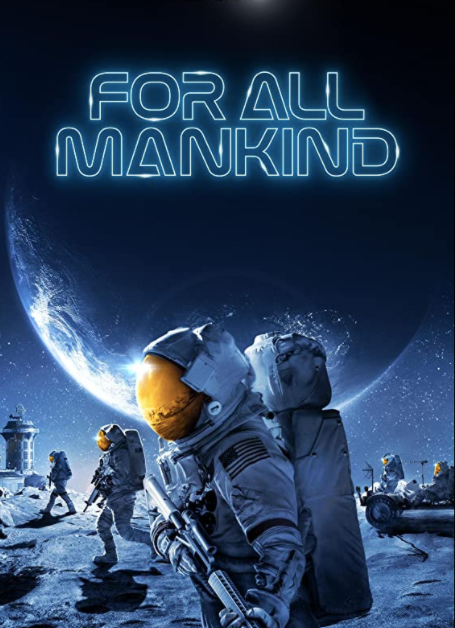
For All Mankind 5.2: Actor Reunions


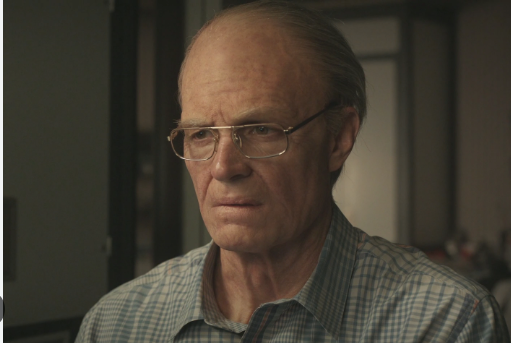
It's great to see Joel Kinnaman as Admiral Baldwin in For All Mankind Season 5 still flying morally high, still shaking things up, defying authority to do the right thing, still causing good trouble (as John Lewis put it so well down here on Earth in our off-screen reality), in his advanced age.   Kinnaman is especially impressive in the role, given that he's now also playing a character much closer to his real age in Imperfect Women, which I'll review as soon as its first season is over.

[And there will be spoilers ahead ... ]

Baldwin in Season 5 of For All Mankind has stage-three cancer, and is not supposed to fly.   All the more the impressive that he risks his life in this condition to save Lee Jung-Gil (played by C. S. Lee -- Vince Masuka from Dexter old and new!).  And episode 5.2 concludes with Baldwin's plan to save Lee on the way to working, though as that happens, Mireille Enos's character Celia Boyd -- Enos starred with Joel Kinnaman in The Killing around the same time the original Dexter was concluding -- finds Baldwin unconscious at the controls.

Now if For All Mankind were made by Taylor Sheridan, this might be the end of Baldwin.  But given that Ronald D. Moore is its creator, I'd be stunned if Baldwin didn't survive until at least the end of this season.  In fact, given that Joel Kinnaman has been reported to return as Baldwin in the final season 6 of the series, and though, again, apropos of Sheridan, this could be in flashbacks, I'm thinking we'll see Baldwin in real current time in the final season.  (And while we're at it, in the alternate history spin-off Star City to debut in May, though probably at a younger age.)

Anyway, Celia Boyd is a great new character, so is Leonid played Costa Ronan (from Homeland and The Americans), and all the continuing characters are good to see in this 5th season of For All Mankind. And I'll see you back next week with my review of the next episode.

See also For All Mankind 5.1: On the Intersection of Alternate and Real Histories

And see also For All Mankind 4.1: Back in Business and Alternate Reality ... 4.2: The Fate of Gorbachev ... 4.3-4.4: The Soviet Union in the 21st Century, On Earth and Mars ... 4.5: Al Gore as President and AI ... 4.6: Aleida and Margot ... 4.7: Dev on Mars ... 4.8: Sergei and Margot ... 4.9: Progress ... 4.10: Earth vs. Mars

And see also For All Mankind 3.1: The Alternate Reality Progresses ... 3.2: D-Mail ... 3.3-3.4: The Race

And see also For All Mankind, Season 1 and Episode 2.1: Alternate Space Race Reality ... For All Mankind 2.2: The Peanut Butter Sandwich ... For All Mankind 2.3: "Guns to the Moon" ... For All Mankind 2.4: Close to Reality ... For All Mankind 2.5: Johnny and the Wrath of Kahn ... For All Mankind 2.6: Couplings ... For All Mankind 2.7: Alternate History Surges ... For All Mankind 2.8: Really Lost in Translation ... For All Mankind 2.9: Relationships ... For All Mankind 2.10: Definitely Not the End

in Kindle, paperback, and hardcover


Saturday, February 20, 2021

For All Mankind: Season 1 and Episode 2.1: Alternate Space Race Reality


Ronald D. Moore is best known for his creation of the Battlestar Galactica reboot and Outlander, two very different TV series which were (BSG) and are (Outlander) justly lauded masterpieces of science fiction (maybe Outlander is science fantasy, but the point still holds).  Moore had a lot riding on For All Mankind, another, very different kind of science fiction series.  I just saw the entire first season (which began to air on Apple TV in November 2019) and the first episode of the second season (which started airing yesterday).   It's at least as good as Battlestar Galactica and a little better than Outlander.  In my never humble opinion.

The series rests on a bold premise:  had the Soviets beaten the US to the Moon by just a slight margin in 1969 -- one month -- the result would have been much better for getting humans out into space because the competition between the two superpowers would have continued and intensified.  In literary terms, it would have set in motion an alternate reality in which the two superpowers continued vying to be the lead and dominant humans beyond our planet.

As far as our reality or real history, it's entirely plausible that the Soviet Union could have pulled a fast one and beaten us to the Moon by a month.  It's not really clear, to this day, why the Soviets after the mid-1960s fell so far behind the US, after being first to get a satellite (Sputnik), then a satellite with a dog (Laika), and then a satellite with a human being (Yuri Gagarin) off of this planet into space.  Indeed, the best explanation I've read of why the Soviet Union fell behind the U.S. in the space race comes from a little-known science fiction novel published in 2000, Red Moon, which was also the title of the first episode of For All Mankind.

The alternate history and the real history in For All Mankind was handled plausibly and provocatively, no easy task to pull off smoothly, as the first season and the beginning of the second season did.  My favorite alternate history gambit in the first season is Ted Kennedy cancels his trip to Chappaquiddick, to focus on why the US space program fell behind the Soviets, and is elected President in 1972.  Walter Cronkite and Barbara Walters deliver the news without being named via actors who look and sound like them.  Nixon, Teddy, and (at the end of Season 1 and the beginning of Season 2) Reagan are presented in real footage and photographs, via voices that deliver alternate-history speech via impersonators or who knows how they got those voices, but it worked. The second season starts with a nice handful of alternate history touches, including John Lennon surviving the attempt on his life but the Pope not.

Other major changes in the history of For All Mankind include women achieving importance as astronauts and in flight control long before they did in our reality.  Permanent bases are established on the Moon by the U.S. and the Soviets in the 1970s.  By the 1980s, the science of space travel has led to electric cars on Planet Earth.   But the human success in space has by no means wiped away all the inequities we have suffered from in this reality.   Prejudice against gays warp the personal life of at least one astronaut, and immigrants are treated badly by the FBI obsessed with rooting out Soviet spies.

The personal lives of the astronauts of course play a major and tempestuous role in the narrative.   Ed Baldwin (played by Joel Kinnaman who never misses), Tracy Stevens (Sarah Jones), and Molly Cobb (Sonya Walger) are my favorites, but all the characters are memorable and well acted.   And the lives portrayed are realistic.   Death always lurks near life, ready to rear its head, and this is more so when that life is in space.  Just as in our own reality, not everything goes right or as expected in the grand endeavor to get us off this planet, and you'll be on the edge of your seat for just about every episode in this remarkable series.

For All Mankind picked a good time to debut its second season, the day after the NASA Rover landed on Mars in our reality.  I'm hoping that the series continues long enough to show us astronauts arriving on Mars -- I'll be reviewing every episode from now on -- and that this alternate reality converges with our reality, in which we send people to Mars, too.

Further on why our own space program stalled after Moon landingThe Missing Orientation

And here's an alternate-history space-race novel:


*** Note added 27 October 2023:  Check out my review of Jack Dann's new book, The Fiction Writer's Guide to Alternate History

Saturday, January 13, 2018

Philip K. Dick's Electric Dreams 1.1 Real Life: Mutually Alternate Realities


I started watching Philip K. Dick's Electric Dreams - a 10-episode anthology of separate stories, all based on the work of Philip K. Dick - on Amazon Prime tonight.  Here's what you can expect by way of reviews:
  • I'm likely going to review the episodes one at a time.  Likely right after I've seen each episode.  And likely all in the next few days.
  • I've read many of Dick's stories (and enjoyed to loved all of them).  But I generally find reviews that prattle on about how the movie or TV show compared to the novel or story boring or irritating - not to mention that words on pages and spoken on screens are always apples and oranges - so I'll likely refrain from doing that here.
  • I'll try very hard not to deliver any crucial spoilers (like how the story ends, if there is a resolution), but there inevitably will be some spoilers, so, proceed at your own risk if you haven't seen an episode yet.
Now to Real Life:  It engages, as most of Dick's works do, the question of what is real and what is a dream, or fantasy, or alternate in contrast to primary reality.   But Real Life takes this in an exquisite direction, giving us two realities, each with devices that allow their protagonist to have a great vacation in an alternate reality based on what they need, and we soon learn that each protagonist's presumably primary reality is the other's vacation or alternate reality.  So what we get are mirroring alternate realities.

This, of course, raises the question of which of these mutually dependent realities is the real one?  Since neither character is very happy, we have to search deeper to find an answer.  And as this episode progresses, each protagonist not only begins to question if her or his reality is real or the mental vacation, but finds the other reality spilling into their own.

You'll have a tough time figuring our which is which - which means this is a good story - and there is a conclusive answer given at the end.  Fine acting by Anna Paquin and Terrence Howard as the interdependent leads, and good "written for television" by Battlestar Galactica's and Outlander's
Ronald D. Moore.

See also Philip K. Dick's Electric Dreams 1.2 Autofac: Human v Machine ... 1.3 Human Is: Compassionate or Alien? ... 1.4 Crazy Diamond: DNA Batteries ... 1.5 The Hood Maker: Telepathy and Police ... 1.6 Safe & Sound: This Isn't A Drill ... 1.7 The Father Thing: Dick from Space ... 1.8 Impossible Planet: Eye of the Beholder ... 1.9 The Commuter: Submitted for Your Approval ... 1.10: Kill All Others: Too Close for Comfort


more alternate realities ...

Wednesday, August 27, 2014

Outlander 1.1-3: The Hope of Time Travel

I was drawn to the Outlander series on Starz, because, as all of you devoted and casual readers of this blog well know, time travel is one of my passions, as a viewer, reader, and author.  In addition, the retooled Battlestar Galactica on the SyFy Channel a few years, by Ronald D. Moore, is one of my favorite series ever on television, period, and Outlander, based on the novels by Diana Gabaldon, is Moore's baby on television.

The story certainly is firmly situated in time travel.  Claire, a newly married nurse in Britain in 1945, somehow slips through time and finds herself in the tumultuous Scotland of 1747.   But, so far, in the first three episodes at least, there's little more than a dash of time travel in this excellent historical narrative.

Indeed, we actually get a double historical narrative in Outlander, because 1945 is after all history to us, too.   But almost all the action after the first episode has been in 1747, where we meet a bow-legged Laird, and all kinds of colorful characters.   Claire's being a nurse makes her a good character for a time travel scenario, given that she brings to 1747 the greatly evolved medical knowledge of 1945.  But the main time travel in the story so far, other than her falling through time, is her interior monologues, interestingly consisting of her musing about how she can apply her future medical knowledge without arousing too much suspicion.

Instead of time travel, we get an immersion in the politics of the time, and a brewing flirtation between Claire and a handsome Scot soldier.  This creates a significant tension, since Claire's happily married in 1945 - but it's worth pointing out that someone who looks just like her husband is a no-good Brit in 1747, played by Tobias Menzies of Rome and all kinds of other fame.  If all of this were Claire's dream, her husband being a bad guy in 1747 would say something about her marriage in 1945 - but presumably, this is real not a dream.   So, what's someone who looks exactly like her husband doing back in 1747?   Surely not coincidence.  Did he time travel, too?   But, if so, how come he didn't recognize Claire?

I'll keep watching Outlander, but more for the historical romance than the time travel, which at this point is more of a hope than a reality.


podcast review of the first half season

 
Sierra Waters series, #1, time travel

#SFWApro

Saturday, January 11, 2014

Helix 1.1-1.3: Zombies with Biology

I saw the first three episodes of Helix last - the first two on SyFy's premiere of the series, the third on Syfy's On Demand (a nice move by Syfy, much appreciated) - and thought it was pretty good.

The series comes highly recommended.  Although Battlestar Galactica's Ronald D. Moore isn't the showrunner, he's an executive producer and one of the writers for Helix, in which I thought I even heard one "frackin'" euphemism.  Billy Campbell, who was superb in The Killing, plays the lead scientist from the CDC who comes to the arctic base to investigate the viral outbreak.  Hiroyuki Sanada, who put in a couple of good appearances on Lost, is the lead scientist at the base who knows more than he reveals.

And what about the story?  Well, it's another zombie tale, which, due to the enormous and deserved success of The Walking Dead, is animating all kinds of popular culture including movies with World War Z and even speculative reality TV with Zombie Earth on NatGeo.  Helix, however, differs from all of these in starting at very beginning of the plague, and, at this point, looking as if it will stay there, at least for a while.  There is also excellent genetic and epidemiological science in this series.

And the science, I think, is what will lift and carry the series.  Much of the plot turns on how quickly the scientists can figure out what's really going on, which entails not only getting people who know to tell the truth, but also getting a handle on what's causing the symptoms.  Identifying who has been infected but is not yet showing symptoms is the first step, and there are lots of pitfalls on the road from that to developing a vaccine.

Indeed, the best plot twists so far involve the accidents and wrong turns in the science, which makes Helix a candidate for something we don't see much of on television:  good biological science fiction. This may makes Helix more a potentially worthy successor to Fringe than Battlestar Galactica or The Walking Dead.


Like biological science fiction? Try The Silk Code

Note added 25 February 2022: Check out this free Intro to Biology course.

InfiniteRegress.tv