Chuck Todd interviews me about alternate histories
Showing posts with label Socrates. Show all posts

Friday, July 24, 2026

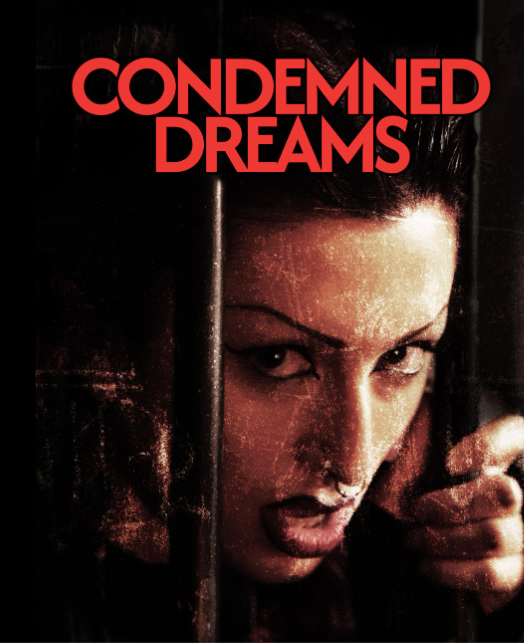
Condemned Dreams: Compellingly Relevant Truths

I just saw George Tsouris's Condemned Dreams.  The feature-length movie, now streaming on Amazon and Tubi, is billed as a philosophical horror movie.   And it's not that horror films cannot have philosophic depth -- see Frankenstein and Dracula -- but Condemned Dreams has and is much more.

It's the story of a woman, Shy, arrested and sentenced to death, because the government doesn't like her ideas.  As such, it's a needed and much welcome attack on the fascism that's currently in power in the United States (and in Russia, etc.).  And its story of the condemned Shy interviewed in her cell by a reporter as she awaits her sentence, has much in common with 1984, Waiting for Godot, and Plato's dialogue Crito about Socrates in his cell, awaiting his deadly punishment and visited by his friend Crito.

Now, as is well known even by a student who took an introduction to philosophy course, Socrates refuses Crito's offer of escape, explaining that he (Socrates) might criticise the state, but would never put himself above it and evade its sentence.  I've actually been disbelieving that that's what actually happened, ever since I first read Crito in my Intro to Philosophy course with Prof. Henry Magid at CCNY in the 1960s -- not believing that really happened, because I know had I been in Socrates's shoes, I would have taken Crito's avenue of escape in  a New York minute.  (I was so vexed by the decision Socrates made, I eventually wrote The Plot to Save Socrates.)

Shy (Soft Abilez) in Condemned Dreams gets no visit from an old friend.  Instead, Lauren (Catherine Parish), a reporter whose career is tanking, pays Shy a series of visits, and their discussion, along with Lauren's conversations with Detective Marshall (Brady Moldrup), one of the cops who arrested Shy, are the beating heart of this riveting movie.  We're treated to a discussion of how we evaluate the life we've lived (Shy laments "all the time I wasted -- I could have accomplished so much more"), the meaning and limits of freedom (I always liked the Millian libertarian view that everyone should be free to swing their arms as far and wide as they please -- as long as they don't hit someone else's nose), and the proper role of police in a democratic society (distressingly relevant, as I indicated above, to what ICE is continuing to do in our country).

If this sounds like a lot of conversation, there is, and as such Condemned Dreams would make a highly compelling, relevant play.  In the meantime, check out the movie, and if you're in the mood for more talk, come to the free online conversation that will occur on StreamYard tomorrow (July 25) at 11am (New York time), featuring George Tsouris, Catherine Parish, Rew Starr (Lauren's editor), as well as panelists Nick Zaino, Ken Holmes, Caleigh LeGrand, and Yours Truly, hosted by Samita Nandy.


Sunday, December 4, 2016

Westworld Season 1 Finale: Answers and Questions

Here's what we learned in the excellent season 1 finale of Westworld, and the possible questions raised:

1. The Man in Black is the new majority owner of Westworld.

2. The Man in Black is William, much older.  This is one of the first fine twists - a sequence of turns and revelations of events that cut deep.   What we've been seeing of Dolores during these ten episodes are not just skips and jumps and loops in her mind, but time itself chopped up, that is, earlier and more recent events in her life.   Meaning, regarding William, that every scene we've seen with him happened in the pretty distant past - i.e., decades ago.  Nice touch.

3. Dolores dying in Teddy's arms by the sea is actually the entree to the new narrative Ford has been promising.  I actually realized this a few moments before it was revealed, but it was still memorable to see.

4. Maeve, despite her best efforts, was never going to leave Westworld.  I was actually thinking this, too - the essence of Westworld is that, like the Hotel California, you can check in if you're a host (be created), but you can never leave.  But the pursuit of her daughter being the reason is an effective touch - because, after all, not only does love conquer all, but it's an all powerful component of what makes us human.

5. The path towards consciousness is knowing thyself.  In the Jaynesian bicameral mind - at least, as portrayed in Westworld - this means one half of your brain listening to the other.   Two millennia prior to Jaynes, Socrates urged the same thing: know thyself.   This makes Westworld not only Jaynesian but Socratic, a very good thing in my book.

6. I never bought that Socrates drank the hemlock, though (and my best-known novel tries  to explain what may really have happened back then) - but, with that in mind, I wasn't happy to see Dolores blow out Ford's brains at the end, just as she had done years earlier with Arnold (even though suffering that real-guilt pain is said to be only way she can achieve true consciousness).

And here's is where some questions for the next season come in.  Will Anthony Hopkins return next year as a Ford-host by whatever name, just as Arnold did with Bernard?  Hard to say, since Ford is not around any more to build a new version of him, just as Ford did with Bernard - and Arnold.  On the other hand, Bernard is no slouch, and he may indeed have the capability (and his success in recreating Ford would also be another testament to Ford's as well as Arnold's genius, since Ford built Bernard).  I certainly hope we see Ford again in some form, given the tour-de-force just wonderful performance this year by Hopkins (one of the best of his long and superb career, I'd say).

Also not 100% clear is what happened to the Man in Black aka old-William at the end.  Was that attacking force of (presumably) hosts armed with weapons that could kill him?  Maybe, probably, since it takes real death for the hosts to learn ... but you never know.

Anyway, this was the best television series ever about androids, and one of the best ever of science fiction, periods.  Kudos to all the writers, producers, actors and actresses, and HBO.  I learned a lot as well as enjoyed this series - and the only deaths I had to deal with regarding Westworld were those on the screen.

See also Westworld 1.1: Isaac Asimov and Philip K. Dick Served Up by Jonathan Nolan, Lisa Joy, and J. J. Abrams ... Westworld 1.2: Who Is the Man in Black? ... Westworld 1.3: Julian Jaynes and Arnold ... Westworld 1.4: Vacation, Connie Francis, and Kurt Vonnegut ... Westworld 1.5: The Voice Inside Dolores ... Westworld 1.6: Programmed Unprogramming ... Westworld 1.7: The Story of the Story ... Westworld 1.8: Memories ... Westworld 1.9: Half-Truths and Old Friends

 
another kind of capital punishment

#SFWApro


Thursday, August 7, 2014

The Medium of the Book: Fifty Years After Understanding Media

In case you're in Waco, Texas on September 25, 2014, come see my Keynote Address at Baylor University's symposium, to mark the 50th anniversary of the publication of Marshall McLuhan's Understanding Media.

An abstract of my Keynote follows.   My lecture will be recorded, and up on YouTube and other venues sometime after.

The Medium of the Book: Fifty Years after Understanding Media


A half century after the publication of McLuhan’s Understanding Media seems like a good time to examine the recent evolution of the book itself as a medium.   In Understanding Media, McLuhan quotes the French poet Alphonse de Lamartine’s circa 1830 observation that “the book arrives too late”.  Today, in a revolution as important as the introduction of Gutenberg’s press, books can arrive instantly anywhere in the world, via Kindles and other ebooks. But the most significant part of this development may pertain not to readers but authors, who can now can publish books without a publisher and within an hour or less after the book has been written.  The advantages and disadvantages of this bypassing of the traditional gatekeeper for authors and the world at large will be explored -- they are mostly advantages -- as well as the decline of gatekeeping in other media. Current conflicts, such as the dispute between Amazon and the traditional publisher Hachette will be examined. Connections between the evolution of the book and other facets of writing on the Web will be traced, including the capacity of readers to communicate directly and easily with authors, in modes akin to the “intelligent writing” that Socrates yearned for in the Phaedrus.

Tuesday, April 8, 2014

Bones 9.20: Above the Law

A philosophically profound Bones 9.20 tonight, which tackles the issue of whether there's a more ethical course of action possible than just following the law.  The occasion is Wendell's use of marijuana as part of his cancer treatment, and the reaction of our major characters is instructive.

First, to give some  historical context, Socrates famously drank the hemlock and died, accepting the death sentence of the Athenian court, when given a chance to escape by his old friend Crito. According to Plato's account, Socrates said that although he may relentlessly criticize the state, he would never put himself above it, which is what evading its death sentence would do.

Now, as much as I admire Socrates, I always disagreed with him on this.  An unjust decision should not be followed, even if lawful.   There was once a law in the United States, for example, which said racial discrimination was permissible.  States made laws which enforced segregation.   Eventually, that law was overturned.  But was it moral to follow the state laws before the Supreme Court finally got around in 1954 to ruling segregation in education was unconstitutional?  I don't think so.  The better course of action was for people to violate the immoral state laws and defy segregation.

On Bones tonight, Bones, Hodgins, and Angela - that is, the smartest people on the show - both support Wendell's decision to use marijuana, and continue on the Federal job at the Jeffersonian as an intern, even though marijuana is still illegal by Federal law.  In other words, they think there is higher calling and code of conduct than just following the law.   Booth and Cam think otherwise.

To Booth's credit, he eventually comes around, because he has a depth of character and Bones is a good influence.  Cam, unsurprisingly, does not - she fires Wendell, and only lets him come back to work when Caroline figures out a way that he can be hired as an independent contractor rather than an employee of the Jeffersonian.

Cam, in other words and I'm sorry to say, represents the worst kind of shallow bureaucrat in our society: the person who follows the law, blindly, and in the face of a clear ethical imperative to the contrary.   She's done this before, and the way her character has been behaving this season makes me wish Dr. Goodman from the first was brought back to head this wing of the Jeffersonian.

See also Bones 9.1: The Sweet Misery of Love ... Bones 9.2: Bobcat, Identity Theft, and Sweets ... Bones 9.3 and NCIS 11.2: Sweets and Ziva ... Bones 9.4: Metaphysics of Death in a Television Series ... Bones 9.5: Val and Deep Blue ... Bones 9.6: The Wedding ... Bones 9.7: Watch Out, Buenos Aires ...Bones 9.8: The Bug in the Neck ... Bones 9.9: Friday Night Bones in the Courtroom ... Bones 9.10: Horse Pucky ... Bones 9.11: Angels in Equations ... Bones 9.12: Fingernails ... Bones 9.13: Meets Nashville, and Wendell ... Bones 9.14: "You Cannot Drink Your Glass Away" ... Bones 9.15: Hodgins' Brother and the Ripped Off Toe ... Bones 9.16: Lampreys, Professors, and Insurance Companies ... Bones 9.17: Spartacus in the Kitchen ... Bones 9.18: Meets Day of the Triffids ... Bones 9.19: The Cornucopic Urn

And see also Bones 8.1: Walk Like an Egyptian ... Bones 8.2 of Contention ... Bones 8.3: Not Rotting Behind a Desk  ... Bones 8.4: Slashing Tiger and Donald Trump ... Bones 8.5: Applesauce on Election Eve ... Bones 8.6: Election Day ... Bones 8.7: Dollops in the Sky with Diamonds ...Bones 8.8: The Talking Remains ... Bones 8.9: I Am A Camera ... Bones 8.10-11: Double Bones ...Bones 8.12: Face of Enigmatic Evil ... Bones 8.13: Two for the Price of One ... Bones 8.14: Real Life ... Bones 8.15: The Magic Bullet and the Be-Spontaneous Paradox ... Bones 8.16: Bitter-Sweet Sweets and Honest Finn ... Bones 8.17: "Not Time Share, Time Travel" ... Bones 8.18: Couples ... Bones 8.19: The Head in the Toilet ... Bones 8.20: On Camera ... Bones 8.21: Christine, Hot Sauce, and the Judge ... Bones 8.22: Musical-Chair Parents ... Bones 8.23: The Bluff ... Bones Season 8 Finale: Can't Buy the Last Few Minutes

And see also Bones 7.1: Almost Home Sweet Home ... Bones 7.2: The New Kid and the Fluke ...Bones 7.3: Lance Bond and Prince Charmington ... Bones 7.4: The Tush on the Xerox ... Bones 7.5: Sexy Vehicle ... Bones 7.6: The Reassembler ... Bones 7.7: Baby! ... Bones 7.8: Parents ...Bones 7.9: Tabitha's Salon ... Bones 7.10: Mobile ... Bones 7.11: Truffles and Max ... Bones 7.12: The Corpse is Hanson ... Bones Season 7 Finale: Suspect Bones

And see also Bones 6.1: The Linchpin ... Bones 6.2: Hannah and her Prospects ... Bones 6.3 at the Jersey Shore, Yo, and Plymouth Rock ... Bones 6.4 Sans Hannah ... Bones 6.5: Shot and Pretty ... Bones 6.6: Accidental Relations ... Bones 6.7:  Newman and "Death by Chocolate" ...Bones 6.8: Melted Bones ... Bones 6.9: Adelbert Ames, Jr. ... Bones 6.10: Reflections ... Bones 6.11: The End and the Beginning of a Mystery ... Bones 6.12 Meets Big Love ... Bones 6.13: The Marrying Kind ... Bones 6.14: Bones' Acting Ability ... Bones 6.15: "Lunch for the Palin Family" ...Bones 6.16: Stuck in an Elevator, Stuck in Times ... Bones 6.17: The 8th Pair of Feet ... Bones 6.18: The Wile E. Chupacabra ... Bones 6.19 Test Runs The Finder ... Bones 6.20: This Very Statement is a Lie ... Bones 6.21: Sensitive Bones ... Bones 6.22: Phoenix Love ... Bones Season 6 Finale: Beautiful

And see also Bones: Hilarity and Crime and Bones is Back For Season 5: What Is Love? and 5.2: Anonymous Donors and Pipes and 5.3: Bones in Amish Country and 5.4: Bones Meets Peyton Place and Desperate Housewives and Ancient Bones 5.5 and Bones 5.6: A Chicken in Every Viewer's Pot and Psychological Bones 5.7 and Bones 5.8: Booth's "Pops" and Bones 5.9 Meets Avatar and Videogamers ... Bad Santa, Heart-Warming Bones 5.10 ... Bones 5.11: Of UFOs, Bloggers, and Triangles ... Bones 5.12: A Famous Skeleton and Angela's Baby ... Love with Teeth on Bones 5.13 ... Faith vs. Science vs. Psychology in Bones 5.14 ... Page 187 in Bones 5.15 ...Bones 100: Two Deep Kisses and One Wild Relationship ... Bones 5.17: The Deadly Stars ...Bones Under Water in 5.18 ... Bones 5.19: Ergo Together ...  Bones 5.20: Ergo Together ... Bones 5.21: The Rarity of Happy Endings ... Bones Season 5 Finale: Eye and Evolution

 
more about Socrates in ... The Plot to Save Socrates

Monday, March 3, 2014

True Detective: Socrates in Louisiana

This season of True Detective concludes on HBO next Sunday, so I thought it was time to say a few words about it.   Started a little slow - I guess I was expecting something more along the lines of Criminal Minds and its pacing - but True Detective has become one of my favorite shows in the history of television, with an indelibly philosophic and anguished detective we've never seen the likes of before on TV and likely never will again.

Matthew McConaughey won the Oscar last night for Dallas Buyers Club last night, and he deserves an Emmy and more for his portrayal of Rust Cohle, in 1995 and 2012, and a little in 2002 as well.  Make-up does part of the job, but McConaughey's rendition of an aging character is right up there with the best of them.   The truly searing persona, the detective whose depth of analysis and grasp of human existence would have done Socrates proud, is the Rust of 1995.   The combination of McConaughey's voice - almost mesmerizing - and the literacy of what he says is something I don't recall ever seeing or hearing on television or in the movies.

Woody Harrelson does a fine job as Marty Hart, Rust's partner.  If Rust has the intensity and out-of-world spirituality of a Jesuit, Marty is a man of the world.   Although both are usually able to keep their emotions in check, Marty is the more likely to let his frustrations boil over and out into the world and those around him.   Harrelson, in fact, delivers a characterization of a partner as powerful as McConaughey's of the protagonist detective, and just as memorable in this only slightly secondary position.

The plot ain't bad, either.   Rust is so intense that, in the first part of the season, I was thinking he might well be serial killer he and his partner were hunting in Louisiana.   But once the new detectives investigating the case in 2012 made clear that this was indeed their view, it became pretty clear that Rust is not the killer. There's also a rewarding attention to detail in the story.  Although Marty tells everyone that he's sure Rust is not the killer, Marty packs a gun when he goes to Rust's place in 2012.

Women do not play major roles in this first season of True Detective, though Lili Simmons (Banshee's Rebecca) provides a bit of eye-candy, and Michelle Monaghan puts in a good performance as Marty's wife, who seduces a reluctant Rust after she learns of Marty's indiscretions.   Rust's guilt over this, and his not wanting to look at Marty every day in the aftermath, is likely the real reason he left law enforcement.

But he didn't leave the investigation.   And although his and Marty's reunion for one last time in last night's episode is a fitting conclusion to this story, it will be satisfying to see if the two can finally get their killer next week, and Rust's last words about it, whether they do or don't.

 
Like Socrates?   Try The Plot to Save Socrates ...

#SFWApro

Tuesday, January 28, 2014

The Following 2.2: Rediscovering Oneself

The thing about The Following is that when it works best, Hardy gets a least a few victories.   Joe and his Following still get most of them, but for the story to work, Hardy has to at least save a life, rescue a victim, once in a while.  Tonight's episode 2.2 gives us that.  Although the Following in New York City - that is, the evil identical twins - kill a couple and then have dinner with their dead bodies at a well set table (killing and then pseudo-living with the victims is the twins' motif), they don't manage to dispatch Lily Grey (good to see Connie Nielsen back on the screen last week and this after Boss).   Lily is clearly Ryan's new love interest, and the question with The Following always is whether, when the intended victim survives, if that was the intention of the killers all along?  My wife even thinks it's possible that Lily may be part of the Following, and while I wouldn't rule that out, my sense at this is point is that she's who she seems to be. Still ...

Meanwhile, it's worth noting how fractured the Following itself seems to be. Most of them including Emma are out of touch with Joe - Emma apparently thought he was dead - and they're in constant low-key war with one another, or in groups versus groups.  In a way, this mirrors what we're seeing in law enforcement on The Following, where Hardy's at odds with the FBI, especially Mike, and with the NYPD, too.  Presumably this won't last as long - certainly not between Hardy and Mike - as the battles among Joe's adherents.

Meanwhile, Joe's story is, unsurprisingly, the most chilling tonight.  He rediscovers his killer instinct - obsession is the better word - when he kills the Reverend who is sleeping with his woman, herself a part of the Following who had been corresponding with Joe when he was in prison.  But Joe's reasons for the killing are rational, as they usually are - the Rev has realized that the Southern cracker with a beard and a half-baked accent is actually Joe Carroll.  So what did choice did Joe have?

Before the killing, we're treated to a dueling Socrates debate between Joe and Rev, which Joe - again, unsurprisingly - gets better, when he quotes Socrates about the benefits of death.   The Following is off to a very good - that is to say, disconcerting emotionally and philosophically - start.

See also The Following Is Back for Its Second Season

And see also The Following Begins ... The Following 1.2: Joe, Poe, and the Plan ... The Following 1.3: Bug in the Sun ... The Following 1.4: Off the Leash ... The Following 1.5:  The Lawyer and the Swap ... The Following 1.7: At Large ... The Following 1.9: All in a Name, Or, Metaphor in the Service of Murder ... The Following 1.13: At Last Something of a Day for the Good Guys ... The Following Season 1 Finale: Doing Dead


Like Socrates woven into modern conflict?  Try The Plot to Save Socrates

#SFWApro

Wednesday, December 12, 2012

"Author's Cut" Kindle edition of The Plot to Save Socrates with Extended Ending Published by JoSara MeDia

I'm delighted to announce that JoSara MeDia has just published a Kindle edition of my novel, The Plot to Save Socrates.

The Plot to Save Socrates was originally published by Tor Books in 2006, and was praised by The New York Daily News (" Da Vinci-esque thriller"), Entertainment Weekly ("challenging fun"), and reviews in dozens of other places.

This author’s cut of The Plot to Save Socrates not only restores a lot of my original wording, but an entire chapter near the end of the novel that features Hypatia of Alexandria.  The novel has a new, specially commissioned cover by Joel Iskowitz, who designed the cover for The Silk Code ebook, and whose designs have appeared on stamps around the world, US coins, and NASA murals.

I chose JoSara MeDia because this small, savvy publisher did such a good job with The Silk Code author's cut ebook brought out this past August. JoSara MeDia has published award-winning authors in multiple formats, including print, eBook, and enhanced eBooks in the form of iPad and Android applications. JoSara MeDia also works with non-profit organizations, such as the Texas State Historical Association, assisting them with strategies and solutions to get their content available in these multiple formats.


Praise for the novel...

"...challenging fun" - Entertainment Weekly

"Da Vinci-esque thriller" - New York Daily News

"...a fun book to read" - Dallas Morning News

"resonates with the current political climate . . . . heroine Sierra Waters is sexy as hell . . . . there's a bite to Levinson's wit" - Brian Charles Clark, Curled Up With A Good Book at curledup.com 

"a journey through time that'll make you think as it thrills ... so accessible, even those generally put off by sci-fi should enjoy the trip." - Rod Lott, bookgasm.com

"Levinson spins a fascinating tale ... An intriguing premise with believable characters and attention to period detail make this an outstanding choice... Highly recommended." - Library Journal,*starred review

"Light, engaging time-travel yarn . . . neatly satisfies the circularity inherent in time travel, whose paradoxes Levinson links to Greek philosophy." - Publishers Weekly

"A thinking person's time travel story... I felt like I was there." - SF Signal

 "This is a dazzling performance. . . .History as science fiction; science fiction as history." - Barry N. Malzberg 

"... quick-to-read, entertaining treatment of the problems inherent in time travel with style and flair" - Booklist

"There's a delightfully old-fashioned feel to The Plot to Save Socrates. . . . Levinson's cool, spare style reminded me of the writing of Isaac Asimov. . ." - Colin Harvey, Strange Horizons

"Paul Levinson's new novel is both very different from anything he has done before and very satisfying. . . . This, I think, is the first of Levinson's novels to deserve to be called a tour de force. Watch for it on award ballots." - Tom Easton, Analog: Science Fiction and Fact

"it's exciting to see a book as daring with both its ideas and its approach to narrative structure as this one hit the shelves . . . It's an absolute treat to sit back and be wrapped up in a story that gives a retro SF premise like time travel such a brilliant new kick, and it's doubly delightful to find the story as fun and entertaining as it is thought-provoking." - SF Reviews.net 

"proves that excellent entertainment can and ought to be intellectually respectable -- a glorious example to us all." - Brian Stableford

"...readers are sure to enjoy his take on the paradoxes of time travel" - BookPage 

"Intricately and intriguingly woven, lots of fun, and extremely thought provoking." - Stanley Schmidt 

"Paul Levinson has outdone himself: The Plot to Save Socrates is a philosophically rich gem full of big ideas and wonderful time-travel tricks." - Robert J. Sawyer

"as happens with Kurt Vonnegut's Billy Pilgrim . . . . the reader soon becomes unstuck in time . . . . Levinson presents one of the most unique books I've ever encountered. A highly recommended read." - Matt St. Amand 

"Paul Levinson brings both intellectual heft and affection for his delightfully depicted characters to this highly original story of time travel . . . bringing all of its threads together in an ending that is emotionally satisfying and extremely moving. The Plot to Save Socrates will provoke thought long after readers have finished the book, at which point many may want to pick it up and read it again, to savor its twists and turns." - Pamela Sargent, SFWeekly

"Fast-paced and full of plot twists." - Davis Enterprise (California)

"an elaborately-reasoned temporal tale - a novelized thought experiment whose logic and ideas Socrates would have approved of" - John Joseph Adams, intergalacticmedicineshow.com

"a philosophically rich, engaging time travel story . . . a charming portrayal of Socrates" - Fantasybookspot.com 

"a fun romp through 2500 years of Western history" - freshfiction.com

"I've never read anything like this before . . . The Plot to Save Socrates is highly, original, creative, and engaging. I enjoyed it from the first page." - Book.of.the.moment. at myspace.com/book_of_the_moment.com

"revels in the possibilities for paradoxes . . . . fresh and welcome" - Steven Silver's Reviews at sfsite

"frankly, he [Levinson] is one of my 'read on sight' authors . . . The Plot to Save Socrates is a tapestry of times and characters and philosophies, with an excellent look at history. . . ." - Jerry Wright, Bewildering Stories at bewilderingstories.com

"a very intelligently written novel . . . ." - GF Willmetts, at SFcrowsnest.com

"Paul Levinson handles a complicated plot and a multitude of characters in a manner that can only be described as masterful. . . . I highly recommend this book, and I won't be surprised if it wins several awards." - Scott M. Sandridge, specmusicmuse

"This book was a lot of fun, and surprisingly poignant at the end. (Yes, I'll admit I cried a little.) . . . I was worried this would be a fairly cold sci-fi book, where I never got to like any of the characters, but somehow by halfway through I found I really cared about them. I'm not sure how Levinson managed that . . . but somehow they all just got inside me." - Lady Amalthea, eharlequin.com

". . . a new metaphor for the literary tradition of time travel." - Robert Blechman, blogcritics.org

"Socrates has always seemed a rather dour and dull figure to me but Paul Levinson breathes new life into this time." - Debbie, ck2skwipsandkritiques.com

"an extremely engaging, entertaining story. . ." - Laurie Thayer, Rambles.net

"truly a thought-provoking, breathtaking, and highly entertaining novel." - Lysette Brodey, PerpetualProse.com

"The Plot to Save Socrates turns on its head Plato's report of Socrates' poisoning ..." - Gerry Elman, Esq., Stanford Alumni Blog

"Doppelgangers, deception, and the sheer amount of historical reference alone make this novel magnificant, but that is not all!... Paul Levinson has created a historical text for all ages, making the plot flow like wine and pleasing to even the most hesitant of readers." - Jenna A, luxuryreading.com 

"I was hooked by the second page." - Kanti Burns, Book Reviews and more

"A lively cast of historical figures populates this epoch-bending adventure, highly recommended especially for fans of alternate history novels!" - Midwest Bookreview


Enjoy listening to audio books? Get a free audio book copy of The Plot to Save Socrates - or any one of 85,000 other titles - with a 14-day trial membership at Audible.com ...


words by Paul Levinson, music by John Anealio, demo by John Anealio
InfiniteRegress.tv