Chuck Todd interviews me about alternate histories
Showing posts with label Isaac Asimov. Show all posts

Friday, May 1, 2026

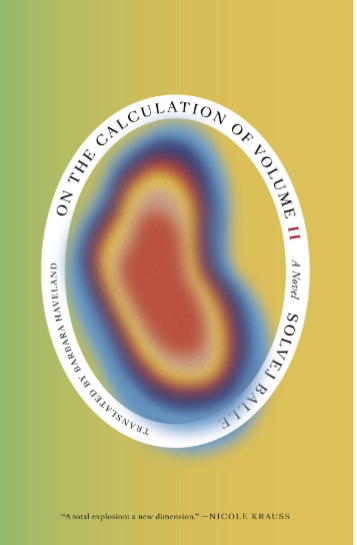
On the Calculation of Volume (Book II): Life in the Loop Lane


I just finished the second volume of Solvej Balle's seven-volume On the Calculation of Volume time loop series (translated into English by Barbara J. Haveland).   It picked up where the first volume left off, but was noticeably different in its pace, emotional valence, and mode of story telling.

The first half was reminiscent of Canterbury Tales, as Tara travels around Europe, in pursuit of weather conditions and climates that mirror the seasons.  This is a good idea for someone who is trapped on a single single day, November 18, happening over and over.  But with the exception of a visit to her parents and a harrowing car ride in Finland, the stories Tara encounters and constructs are less than enthralling.

To be clear, the writing is sharp and evocative.  Tara on her travels meets someone named Jeanette. "I told her my name was Tara. She didn’t think that sounded French or Belgian.... I didn’t think her name sounded particularly Norwegian either, but I didn’t say that." It's fun to read piquant little observations like that amidst the huge distortion of time, but I yearned to see more of the constesting of those distortions we saw so vividly in the Book 1.

Tara settles down in the second part of the book, but with the exception of the theft of her bag, we get long internal disquisitions from Tara on the hopelessness of her situation -- at times, I thought I was reading Thomas Hardy's Jude the Obscure -- relieved at least partially by the realization the she has not been "betrayed, rejected, forsaken", she can go back to her husband Thomas any time, albeit on the time encased on November 18.

The final part of Book II finds Tara in pursuit of all the knowledge she can find about the Roman Empire and its decline.  In that pursuit, Balle has something in common with Asimov, who's Foundation series was jump-started by Edward Gibbon's The History of the Decline and Fall of the Roman Empire.

There are five more novels in this series.  I would be reading them anyway, but the totally out of left-field development at the end of Book II makes it sure a sure thing I'll dive into Book III very soon. 

See also On the Calculation of Volume (Book I): The Irreducible Metaphysics of Time Loops

Monday, March 23, 2026

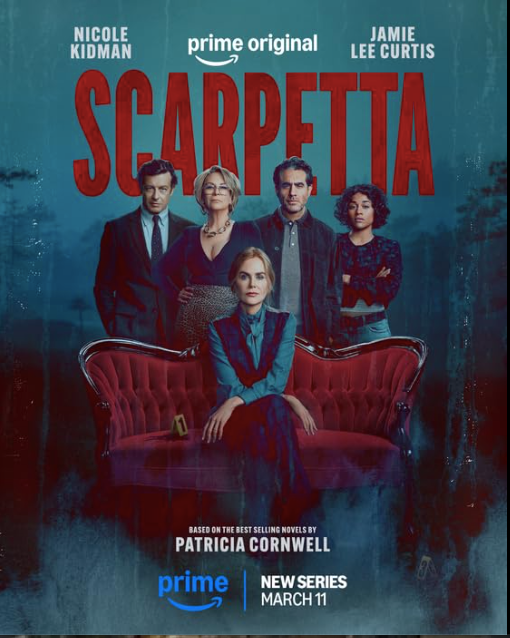
The AI in Scarpetta: In Defense of the Cardinal Sin of Science Fiction


The wife and I binged Scarpetta, an adaptation of two of Patricia Cornwall's novels, on Amazon Prime. It started off slowly, but was top-notch forensic thriller by the time it got to its 8th and final episode of its first season.

I'm a big fan of forensic scientists in fiction -- as a viewer, a reader, and an author (see my Phil D'Amato series) -- and Nicole Kidman in the lead role, and a wild cast of characters, did the narrative justice.   But what interested me most, and has attracted a lot of attention, is the subplot of Scarpetta's niece, Lucy, continuing her relationship with her beloved deceased wife Janet via an AI of Janet.

This AI has received some criticism, because it committed the cardinal sin of science fiction.   Cathal Gunning in Screen Rant offered the outraged assessment that Janet in Scarpetta is akin to "You’s Joe Goldberg inventing a teleportation machine, or True Detective’s Rust Cohle using time travel to revive his dead daughter." And, even worse, the sentient AI in the TV series was not even in the original novel (Autopsy, 2021, which I haven't read).  My response would be a combination of: "And?" and/or "So?".

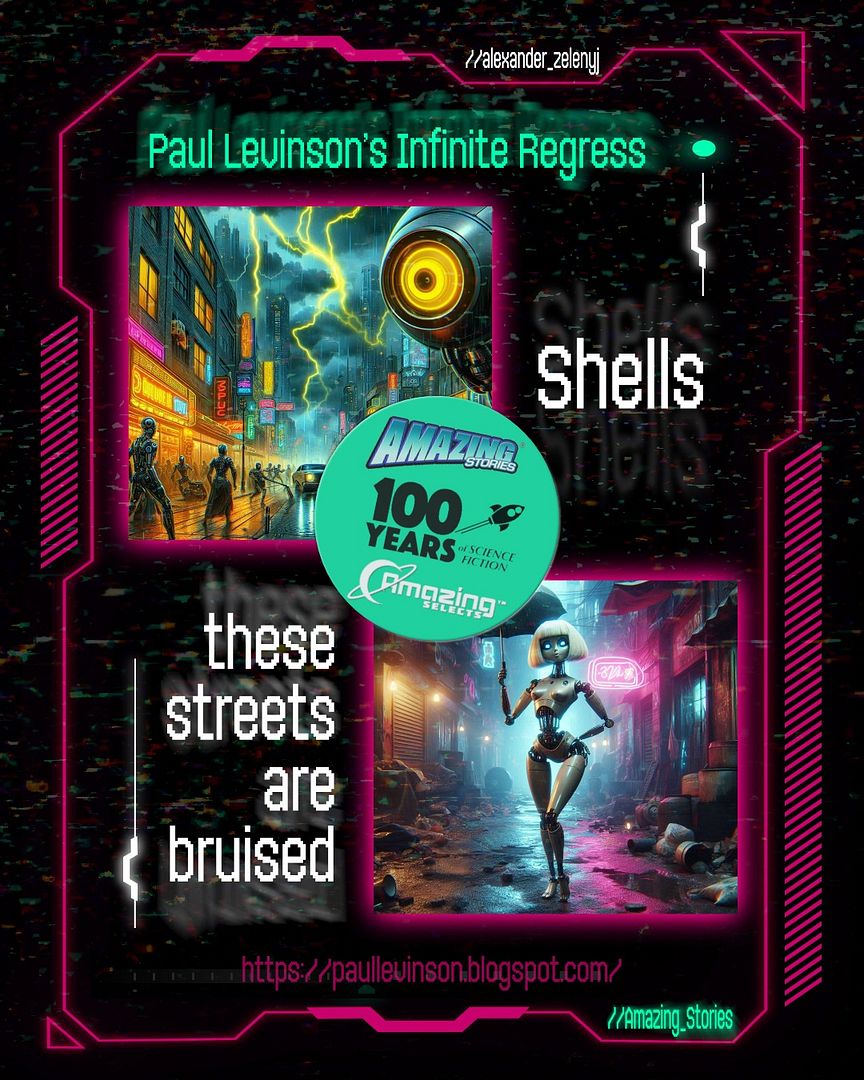
I might be prejudiced, because I encountered some of this response to my Phil D'Amato stories.  Bookstores didn't know whether to shelve The Silk Code (1999) -- which won the Locus Award for Best First Novel in 2000 -- in the science fiction or mystery section.  I get that labels are important.  If I'm in the mood for sushi, I don't want to find after I'm seated in a restaurant advertising itself as serving Japanese cuisine that the only seafood on the menu is calamari or shrimp scampi, much as I love that, too.  But surely reading and watching fictional stories is different.  Isaac Asimov's robot detective R. Daneel Olivaw is aptly regarded (at least by me) as one of the best characters in literature  (speaking of which, see Alexander Zelenyj's "These Streets Are Bruised" and "Shells", both recently published in Amazing Stories).

The only problem I can think of regarding AI Janet is that some viewers may get the incorrect impression that current AI can actually be like "her" -- getting jealous and petulant -- but we're really not there yet, and may never be.   In the meantime, my unasked for advice would be enjoy Scarpetta as the provocative hybrid of mystery and science fiction that it is.


Saturday, March 14, 2026

"These Streets Are Bruised" & "Shells": Flesh and Silicon, North of the Border


I don't usually review short stories -- I read them a lot, but life's too short to review short fiction, when there are so many novels not to mention movies and TV series out there -- but every once in a while I make an exception.

And, indeed, Alexander Zelenyj's "These Streets Are Bruised" and "Shells", both published in Amazing Stories in the past couple of years, are eminently exceptional.  Indeed, their story about robots, androids, or, as they are called in these two tales, "More-than-Men" and "fakemen" and worse things by some folks we encounter, fit well in the lineage started by Ambrose Bierce and Karel Čapek, hoisted into pre-eminence by Isaac Asimov, and continued by a handful in the ensuing decades.

Asimov's R. (for Robot) Daneel Olivaw, who started as a police detective, is closest to the protagonists in Zelenyj's stories, Clark and Kessel, a pair of detectives who both have some "mech" in their bodies, as they investigate the evolving group of fakemen in Windsor, Canada -- aka "Cancer City" across the river from Detroit -- in Zelenyj's post-apocalyptic locale.  Indeed, a human being with no mech parts is a character you're least likely to meet in these literally riveting stories.

And Zelenyj delivers these tales with memorable poetry.  "He left the window gaping with darkness, like a black eye sullying the dilapidated building a little more, and another bruise on the city that he loved and hated with all of his breaking heart", and in "Shells" we learn of "ashen remains ...  scorched into the sidewalks and streets, into the grass of unhealthy, balding fields".  And the author has a knack for minutia in popular culture.  I was glad to see "the artefact of the Neil Diamond LP", especially given that my wife and I had just seen and really enjoyed Song Sung Blue.

But I won't say anything more -- lest I give away anything in these stories that are chocked full of surprises -- other than you can read them for free on the Amazing Stories website here and here, and "Shells" in the weeks ahead in the printed magazine that commemorates the 100th anniversary of that pathbreaking publication.  

========

my own excursion into androids...


"Robinson Calculator" and lots of other stories in this anthology


Slipping Time

Slipping_Time_story_cover

FREE on Vocal: "Slipping Time" and Substack: "Slipping Time"

  • Illustration from painting by Gustave Caillebotte, 1877
  • Earlier version of story published in Amazing Stories, 2018
  • Get the story for your Kindle 


Friday, August 22, 2025

Foundation 3.7: The Origin of The Mule


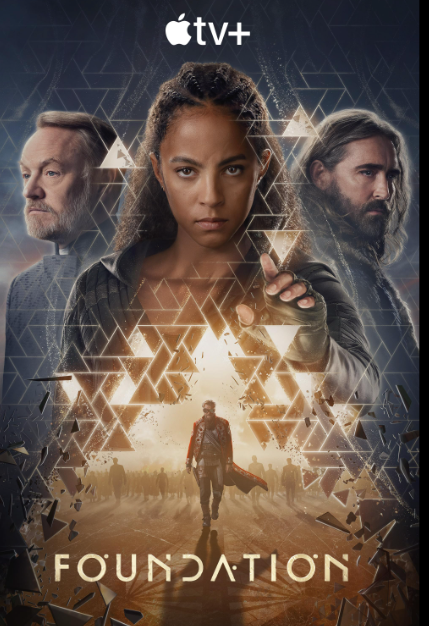
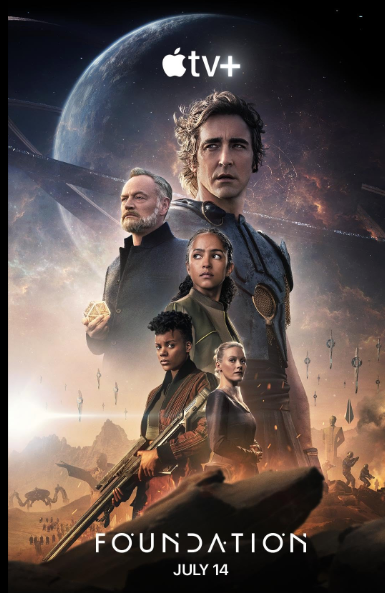
Well, until the ending of Foundation 3.7 -- up on Apple TV+ today -- I was going to say it was a horrible episode, or maybe an episode about horrible things.   And it was.  Until it revealed to us the origin of a maniacal character, the arch enemy in Asimov's Foundation trilogy, and in this the third season of its adaptation on streaming television,

As I've been saying in all of my reviews of this season so far, it adheres to enough essential elements of Asimov's trilogy, and its sequels and prequels, to be immensely enjoyable, at least to me.  And it's been doing this while deepening and broadening the original story, as it's been doing and did again in 3.7 to our understanding of Demerzel.

[Spoilers ahead ... ]

But 3.7 did something that Asimov never did.  In his narrative, The Mule was a power-hungry mutant, who had the power to literally change people's minds.  We readers were supposed to assume, I guess, that the Mule was just born that way.  But episode 3.7 has finally given us a much narratively better explanation, by telling us The Mule's backstory.

The Foundation preyed upon The Mule's parents, by allowing them just one child.  The Mule's parents had two, and the Foundation representative gave them until its next soon-to-come visit to divest themselves of one of their children.  The father decided to save their baby and kill their son, I guess about 11 or 12 years old.  As the father was attempting to drown him, the boy discovered that he had the power to mentally direct his parents to drown themselves.

The whole scene was revolting to see. (Seeing or reading a  science fiction story in which children are hurt, or worse, is something I never want to do.*)  But the whole scene did raise the profound ethical quandary: if you could travel back in time, and eliminate Hitler as a baby, would you do it?

And now, after all these years, we have an answer as to how The Mule arose.  Had he not been nearly a victim of the worst kind of violence as a boy, perhaps his mental power would not have arisen.  Or, if it had, perhaps he would have used it for good, not evil.

And one last spoiler: the brief conversation The Mule has with Hari in the last moments of the episode -- that's with live Hari not his hologram, since we saw last week that the hologram has no knowledge of The Mule.  In a way, that's a happy ending.  It's good to see Hari Seldon alive.

*I guess a partial exception is the movie adaptation of Ray Bradbury's "The Last Night of the World" in The Illustrated Man.

Note added August 26, 2025:  I discussed this episode in depth the other evening on the Stars End Podcast:


See also
 Foundation 3.1: Now We're Talkin'! ... 3.2: "The Fault, Dear Brutus, Is Not in Our Stars" ... 3.3: Dawn and The Mule ... 3.4: Cleon Knows His PKD ... 3.5: Cleaving Closer to Asimov's Trilogy ... 3.6: Finally! But ... 

And see also Foundation 2.1: Once Again, A Tale of Two Stories ... 2.2: Major Players ... 2.3: Bel Riose and Hari ... 2.5: The Original Cleon and the Robot ... 2.6: Hari and Evita ... 2.7: Is Demerzel Telling the Truth? ... 2.8: Major Revelations ... 2.9: Exceptional Alterations ... Season 2 Finale: Pros and Cons

And see also Foundation 1.1-2: Mathematician, Man of the People, and Cleon's Clones ... Foundation 1.3: Clonal Science Fiction, Hari Seldon as V. I. Lenin ... Foundation 1.4: Slow Hand, Long Half-Life, Flipped Coin ... Foundation 1.5: What We Learned in that Final Scene ... Foundation 1.6: Folded Variations ... Foundation 1.7: Alternate History/Future ... Foundation 1.8: Divergences and Convergences ... Foundation 1.9: Vindication and Questions ... Foundation Season 1 Finale: Right Up There


Friday, August 15, 2025

Foundation 3.6: Finally! But ...

Well, we finally got to see my favorite scene in the whole Foundation saga by Asimov, the three Bs, and others -- the scene that made me a fan of science fiction for life -- we finally got to see, in Foundation 3.6 on Apple TV+, Hari's hologram talking to the First Foundation about some crisis involving the Traders or whomever, with no mention of The Mule, when The Mule's armada appears in the sky.

It's a brilliant pivotal quintessential scene, as only Asimov could write it.  Seldon's Plan earlier proved to be right when, in the face of the overwhelming forces of General Bel Riose, the First Foundation survives and succeeds when the General is called back to Trantor by an insecure Emperor.   So we readers of course expected this to happen again, and Asimov fooled us.  Exactly the kind of surprise you relish in a novel.

So why didn't it work as well on streaming TV?  Several reasons:

1. The Empire, though struggling, is not in such deep disrepair.  That's in part because of Demerzel, and in part because the clonal triumvirate, despite their internecine squabbling, are impressive.

2. The Second Foundation is already a major player.  So much so, that the destruction of the First Foundation doesn't seem so serious.  I mean, I wasn't happy to see Bayta knocked unconscious but it wasn't a major blow, because the First Foundation has already seen its much better days.

3. I think the writers of this episode overplayed their hand when they had Hari's hologram explicitly voice his ignorance of The Mule.  Asimov's scene was much stronger with Hari's hologram not speaking of The Mule at all.

But I'm very glad to see the story moving along, and I'll be back with more next week.

See also Foundation 3.1: Now We're Talkin'! ... 3.2: "The Fault, Dear Brutus, Is Not in Our Stars" ... 3.3: Dawn and The Mule ... 3.4: Cleon Knows His PKD ... 3.5: Cleaving Closer to Asimov's Trilogy

And see also Foundation 2.1: Once Again, A Tale of Two Stories ... 2.2: Major Players ... 2.3: Bel Riose and Hari ... 2.5: The Original Cleon and the Robot ... 2.6: Hari and Evita ... 2.7: Is Demerzel Telling the Truth? ... 2.8: Major Revelations ... 2.9: Exceptional Alterations ... Season 2 Finale: Pros and Cons

And see also Foundation 1.1-2: Mathematician, Man of the People, and Cleon's Clones ... Foundation 1.3: Clonal Science Fiction, Hari Seldon as V. I. Lenin ... Foundation 1.4: Slow Hand, Long Half-Life, Flipped Coin ... Foundation 1.5: What We Learned in that Final Scene ... Foundation 1.6: Folded Variations ... Foundation 1.7: Alternate History/Future ... Foundation 1.8: Divergences and Convergences ... Foundation 1.9: Vindication and Questions ... Foundation Season 1 Finale: Right Up There


Friday, August 8, 2025

Foundation 3.5: Cleaving Closer to Asimov's Trilogy

Gaal's words to Dawn near the end of Foundation 3.5 say it all:

[Spoilers ahead ... ]

Hari Seldon's Plan did not account for such a strong Empire at this stage of Galactic evolution.  Meta-note: Of course it didn't.  There was no Cleonic triumvirate DNA-enabled clonal rule of the Empire in Asmov's trilogy or its sequels.  So, in effect, Gaal is speaking for Asimov here.

And we can see at this point of the third season of this television adaptation of Asimov's masterwork now playing out on Apple TV+,  that the forces of television, Asimov, and narrative logic are giving the clonal triumvirate quite a beating at this point: Dawn has been cast out in a space suit into outer space, unkempt Day who has already all but abdicated has fled the Trantor scene, and back home on Tranter, Dusk is just about set to move into death to keep the Empiric rotation going.

Now, of course, not only is none of this written in Seldon's Plan, none of it is written in stone.  As I often say in my reviews, unless you see a character's head blown off or body blasted to smithereens, there's a chance he or she is still alive (see 24 for many examples).  Someone or some force could rescue Dawn from deep space; Day could get homesick and come home; Demerzel could decide to give the current Dusk more time for existence.   But the movement towards a weakened Empire, as called for in Seldon's Plan, is undeniable.

Meanwhile ...  in episode 3.5 we learn that Magnifico's music may be a weapon used in the Mule's capturing and control of people's emotions.   My friend Joel McKinnon thinks Magnifico may actually be The Mule, and Magnifico is controlling the cardboard villain who has announced himself as The Mule.  This is an interesting theory, but it would have to account for what we saw when the villainess Mule -- that is, The Mule with hair -- actually did his palpably fatal damage on Kalgan.

One thing is sure:  there'll be some powerful, game-changing events ahead in this third season of Foundation.

See also Foundation 3.1: Now We're Talkin'! ... 3.2: "The Fault, Dear Brutus, Is Not in Our Stars" ... 3.3: Dawn and The Mule ... 3.4: Cleon Knows His PKD

And see also Foundation 2.1: Once Again, A Tale of Two Stories ... 2.2: Major Players ... 2.3: Bel Riose and Hari ... 2.5: The Original Cleon and the Robot ... 2.6: Hari and Evita ... 2.7: Is Demerzel Telling the Truth? ... 2.8: Major Revelations ... 2.9: Exceptional Alterations ... Season 2 Finale: Pros and Cons

And see also Foundation 1.1-2: Mathematician, Man of the People, and Cleon's Clones ... Foundation 1.3: Clonal Science Fiction, Hari Seldon as V. I. Lenin ... Foundation 1.4: Slow Hand, Long Half-Life, Flipped Coin ... Foundation 1.5: What We Learned in that Final Scene ... Foundation 1.6: Folded Variations ... Foundation 1.7: Alternate History/Future ... Foundation 1.8: Divergences and Convergences ... Foundation 1.9: Vindication and Questions ... Foundation Season 1 Finale: Right Up There


Sunday, March 31, 2024

3 Body Problem: The Joke Was Great, and the Last Few Episodes Were Even Better


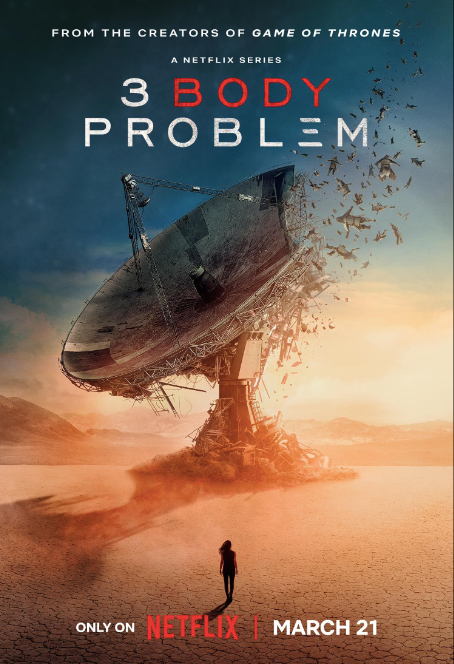
I haven't read the novel by Liu Cixin and its sequels, and I didn't read much about the series because I wanted to be surprised.  I'd say the first season of 3 Body Problem was superb -- a powerful mix of thought-provoking, stunning action, and heartbreaking human stories, all in support of a story of a life-threatening interstellar intelligent species, the San-Ti, who have been in contact with our planet for more than 50 years and now are approaching us, some 400 years away from arriving, which may mean the end of our species.  And there was a wise and funny joke about Einstein and God which I hadn't heard before.

But almost all of that happened in the last few episodes, and the beginning and middle of the eight-episode first season was bogged down with a computer game the interstellar beings are doling out to various people on Earth for various reasons.   I've always enjoyed science fiction about computer games interacting with reality, beginning with Orson Scott Card's path-breaking and brainy Ender's Game, but its situation in 3 Body Problem was needlessly repetitive.  The heart of 3 Body was closer to Arthur C. Clarke's Childhood's End and Damon Knight's "To Serve Man" (see this collection of Knight's stories), and the first season of the 3 Body television series, whatever may have been done in the novel, should have spent more time on that.  (This slow start is reminiscent of another iconic novel in science fiction, Frank Herbert's Dune, that also took a long time to get going, but once it did was fabulous, and led to not just a trilogy but a whole series, exceeded in excellence only by Isaac Asimov's Foundation novels, in my opinion.)

But speaking of hearts and brains, biology was actually far more the star of the first season than was space travel.  This puts 3 Body Problem in a league with Andrew Niccol's debut motion picture Gattaca.  If I'm making 3 Body sound derivative, that's because it is, but that's ok, because the first season puts all of these perennial elements of science fiction together in an original, compelling way.  It's not every day you see a science fiction series starting in Mao's China and its emphasis on ideology over truth (a problem unfortunately arising now in the United States and other parts of the world, off the fiction screen and for real), moving into a life-and-death James Bondian present fighting for the survival in the future of our very species.  

Ironically, the unflattering depiction of intellectual life in Mao's China at the beginning of the 3 Body Problem television series contradicts the warning that five Republican US Senators sent to Netflix in 2020 that the TV series would just be spreading Chinese propaganda. Of course, those Senators and no one other than the creators of the TV series had any idea what would actually be depicted in the TV series, and thus those Senators based their concerns on the novel. The original Chinese publication of the novel indeed did not begin with the jolting scene of a physicist brutally killed in the throes of the cultural revolution -- because he believes in truth over ideology -- but that scene did appear in the middle of the original Chinese novel, and at the beginning of the English translation (Liu Cixin confirms that he wrote the novel with that scene at the beginning). Apparently those US Senators didn't take the time to read the novel before offering their ill-founded concerns about the TV series.

In any case, I don't recall seeing anything quite like this TV series at all, and I'm eagerly awaiting the second season and more.  The dialog, by the way, was excellent, as was the acting.  Nearly everyone was new to me, other than Game of Thrones' Liam Cunningham, and it was good to see him on the screen again. Kudos to David Benioff, D.B. Weiss, and Alexander Woo for creating the series, and kudos to me for not having to warn you about spoilers in this review, because they really aren't any, are there?


Friday, September 15, 2023

Foundation Season 2 Finale: Pros and Cons


Well, you probably won't be surprised that I have mixed feelings about the Foundation Season 2 finale, just up on Apple TV+ tonight.   And, if you've been reading my reviews of this second season, you probably won't be surprised that, although there were things I really didn't like in this episode, the things I did like were in the majority, if not in number then in intensity.

[And you definitely shouldn't be surprised that there will be spoilers ahead in this review ... ]

Here's what I liked:

1. Everything on Trantor, and concerning the Cleonic clonal triumvirate, Dawn, Day, and Dusk on and off that planet.

1a -- I especially liked the life-and-death battle between Day and Riose, and the way it was resolved. I liked this even though it had cloudy connection to the story of Bel Riose that Asimov told in Foundation and Empire, the second novel in the original trilogy.

1b -- I also liked everything Demerzel said and did on Trantor, which was every scene she was in.  What we saw not only clarified and strengthened her character, but it set up a provocative foundation, if I can use that word without it being capitalized, for what we will likely see in Season 3.  Demerzel is both very much in control but keenly vulnerable.  That's a provocative combination for such an intelligent, sophisticated android.

Here's what I didn't much like:

2.  Almost everything other than what I said in #s1, 1a, and 1b.

2a -- Although The Mule isn't much like what he was like in Asimov's trilogy (where he appeared in Foundation and Empire and Second Foundation), that's not what really bothered me about our knowledge of him that's been doled out in this second season.  What bothers me is the way we become aware of him, in a series of nightmare flashes that Gaal endures.  What this does is rob the television series of one of the prime thrills in the trilogy, the way the Mule continually surprises us.  Instead, we a get a vision that Gaal is urging the living Hari to prepare for.

2b -- I don't see the purpose in killing Salvor.  And, frankly, that whole extended scene felt like it was included because the producers thought it was necessary to at least have a very major good-guy hero character die, especially since Hari himself, as I predicted when it seemed he had drowned, actually survived.

***

So, these are big negatives, but the superb story of the Empire clones and Demerzel is more than enough to make me eager to see the next season of Foundation.

See also Foundation 2.1: Once Again, A Tale of Two Stories ... 2.2: Major Players ... 2.3: Bel Riose and Hari ... 2.5: The Original Cleon and the Robot ... 2.6: Hari and Evita ... 2.7: Is Demerzel Telling the Truth? ... 2.8: Major Revelations ... 2.9: Exceptional Alterations

And see also Foundation 1.1-2: Mathematician, Man of the People, and Cleon's Clones ... Foundation 1.3: Clonal Science Fiction, Hari Seldon as V. I. Lenin ... Foundation 1.4: Slow Hand, Long Half-Life, Flipped Coin ... Foundation 1.5: What We Learned in that Final Scene ... Foundation 1.6: Folded Variations ... Foundation 1.7: Alternate History/Future ... Foundation 1.8: Divergences and Convergences ... Foundation 1.9: Vindication and Questions ... Foundation Season 1 Finale: Right Up There


Friday, August 25, 2023

Foundation 2.7: Is Demerzel Telling the Truth?


Another excellent episode of Foundation -- 2.7 -- which may be the best episode so far this second season, which means maybe the best episode so far in the series.

I'll address three issues here:

[Spoilers follow ... ]

1. Demerzel tells Sareth she's the last surviving robot, that once upon a time robots were bound to follow three laws which makes them bound to prevent any harm from befalling a human, by action or inaction (actually, just the first law of Asimov's Three Laws) but that changed and now she's bound by only one law, to "serve Empire".

Ok, but is Demerzel telling Sareth the truth?  Is she bound by any robotic law to never lie to any human?  Or never lie to Day's betrothed?  Not likely.  And why did she mention the three laws to Sareth, and then only recite to her the first law?  Was that just inexact writing, or is there some meaning in that omission?  And is Demerzel telling the truth about being the last surviving humanoid robot, aka android? How exactly could she know such a thing across the vast expanses of the galaxy? Are robots in some sort of telepathic touch across the galaxy? (And, while we're at it, what happened to Asimov's Zeroth Law, which says that more important than never letting any harm to befall a human, a robot should give priority to humanity as a whole? A nice enactment of the utilitarian principle of the greatest good for greatest number.)

2.  The Cleons had quite a night.  Day had Demerzel kill Sareth's family. (a stark example of the overthrow of Asimov's first law). She understandably hates him.  Day and Demerzel know this, so why are they going ahead with the marriage?  And Sareth beginning to seduce Dawn is a risky and exciting venture indeed.  I don't see how they'll be able to hide that from Demerzel.  Also notable is Brother Constant conveying the holographic Hari in the meeting with the Cleonic clones and Demerzel in a very strong scene -- actually, any scene with the Cleonic clonic triumvirate and Demerzel is good to see, let alone one with any version of Hari.

3. But speaking of Hari -- it looks like he's also alive in the flesh, with his head above water, just as I said I thought was likely the case last week.  And now Salvor has joined him?  Well, not exactly, her face is down in the water, but if Hari survived why can't she?   On the other hand, this episode is entitled "A Necessary Death," and whose death is that?  Sareth's family? Not likely, especially since that happened off-camera. 

Tellem Bond does say something about a "little death" being necessary, so what does she mean by that? Optimist that I am, I'd say that that could mean that maybe Salvor and Hari are in some sort of coma, deep-sleep state -- which would be in accord with Hari's head above water -- and Tellem might be thinking and plotting it might be a good or necessary idea to revive them someday.

Lots of information and lots of questions, which is why I much enjoyed this episode.

See also Foundation 2.1: Once Again, A Tale of Two Stories ... 2.2: Major Players ... 2.3: Bel Riose and Hari ... 2.5: The Original Cleon and the Robot ... 2.6: Hari and Evita

And see also Foundation 1.1-2: Mathematician, Man of the People, and Cleon's Clones ... Foundation 1.3: Clonal Science Fiction, Hari Seldon as V. I. Lenin ... Foundation 1.4: Slow Hand, Long Half-Life, Flipped Coin ... Foundation 1.5: What We Learned in that Final Scene ... Foundation 1.6: Folded Variations ... Foundation 1.7: Alternate History/Future ... Foundation 1.8: Divergences and Convergences ... Foundation 1.9: Vindication and Questions ... Foundation Season 1 Finale: Right Up There


Friday, July 28, 2023

Foundation 2.3: Bel Riose and Hari

Bel Riose and Hari Seldon don't meet in Foundation 2.3, but they are accorded the most compelling treatment in the latest episode up on Apple TV+, so I thought I'd focus on them in this review.

[Spoilers ahead ... ]

Let's start with Bel Riose.  In Asimov's trilogy, he was a Belisarius of his future time, that is, the last great Roman general, who in our reality under Justinian's rule reconquered a lot of Roman territory lost to the Vandals and other barbarians.  He hasn't yet done the equivalent of that in the TV series, but in episode 2.3 we get a powerful backstory, including an agreement to help Empire in return for being reunited with his husband, the love of Bel Riose's life.  In addition to that, the character benefits from being played by Ben Daniels, a perfect actor for this role.

Meanwhile, here's the story with Hari:  Instead of appearing after his death in pre-recorded holograms -- a pretty bold move when Asimov was writing this in the 1940s -- he instead appears in digital form after he orchestrates his own murder and Gaal locks his mind and his essence in the Prime Radiant, which contains in both Asimov's novels and its adaptation on television all of Hari's equations.  I was beginning to think, before tonight's episode, that maybe substituting the digitality of the radiant for the holographic recording was a good move, after all, since the digitally living Hari provided more possibilities for the character than the pre-recorded holographs.

But now at the end of episode 2.3, we get Hari literally turned back into a living presumably flesh-and-blood being by some apparently hocus pocus..  Certainly a surprise.  And this feels like an improvement over imprisonment in the radiant, which has more possibilities (maybe he'll replace Ebling Mis?) but we'll just have to see.

And I'll conclude with with one more character who shows up from the novels as a very different person.  Hober Mallow.  I didn't put his name in the title of this review because I by and large didn't like him in this episode.  Foundation doesn't need a Han Solo character.  But, again, we'll just have to wait and see, and one out of three for a great development (Bel Riose) and one out of three as a very likely good development (Hari), makes two, and two out of three ain't bad,

See also Foundation 2.1: Once Again, A Tale of Two Stories ... 2.2: Major Players

And see also Foundation 1.1-2: Mathematician, Man of the People, and Cleon's Clones ... Foundation 1.3: Clonal Science Fiction, Hari Seldon as V. I. Lenin ... Foundation 1.4: Slow Hand, Long Half-Life, Flipped Coin ... Foundation 1.5: What We Learned in that Final Scene ... Foundation 1.6: Folded Variations ... Foundation 1.7: Alternate History/Future ... Foundation 1.8: Divergences and Convergences ... Foundation 1.9: Vindication and Questions ... Foundation Season 1 Finale: Right Up There


Thursday, July 13, 2023

Foundation 2.1: Once Again, a Tale of Two Stories


Foundation is back on Apple TV+ with the first episode of its second season.  Here's a review, with no big spoilers.

Here's what this first episode of the second season is most like: the first season of Foundation on Apple TV+.  Here's what it's significantly not much like: Isaac Asimov's novels, upon which this series is supposed to be based.  But you knew that, and I said that, already.  In fact, I just did, when I said the first episode of the second season is most like the first season.

And, to be clear. as I said in my reviews of the first season back in 2021, the dissimilarity of this TV series to Asimov's novels doesn't mean that it's all bad.  But nor can I help not being disappointed, not missing the trilogy that I read and loved three times, and the sequels which I read once and loved not as much but well enough.

Once again, my favorite part of the TV series are the Cleon clones and Demerzel -- Cleon wasn't cloned in the novels and Demerzel was very different, but their rendition in the TV series is often superb.  This continues in episode 2.1.  Lee Pace as Brother Day is once again a powerhouse.  Same for Laura Birn as Demerzel.  And Terrence Mann as Brother Dusk is simmering and outstanding, and Cassian Bilton as Brother Dawn is memorable.  All told, they tell an exciting, high intellect, high octane story vividly.  And, yeah, they're the bad guys (I guess).

The good guys, who are supposed to be Hari Seldon and the Foundation, are not nearly as impressive. Jared Harris is a great actor, but he's been put in a box in this TV series, and even when he screams and yells he barely breaks through.  And as for the rest ... Gaal and Salvor, well, I don't think I'd mind at all if they were almost unrecognizable from the characters with their name in the novels, if they'd been given a riveting story.  Instead, we get mental gymnastics and proclamations of profundity with not much substance or appeal.

But I'll keep watching, because I enjoy the clone story, and I still have some hope somewhere that the TV series will deliver some of what I most enjoyed in the novels.


See also Foundation 1.1-2: Mathematician, Man of the People, and Cleon's Clones ... Foundation 1.3: Clonal Science Fiction, Hari Seldon as V. I. Lenin ... Foundation 1.4: Slow Hand, Long Half-Life, Flipped Coin ... Foundation 1.5: What We Learned in that Final Scene ... Foundation 1.6: Folded Variations ... Foundation 1.7: Alternate History/Future ... Foundation 1.8: Divergences and Convergences ... Foundation 1.9: Vindication and Questions ... Foundation Season 1 Finale: Right Up There


Friday, December 23, 2022

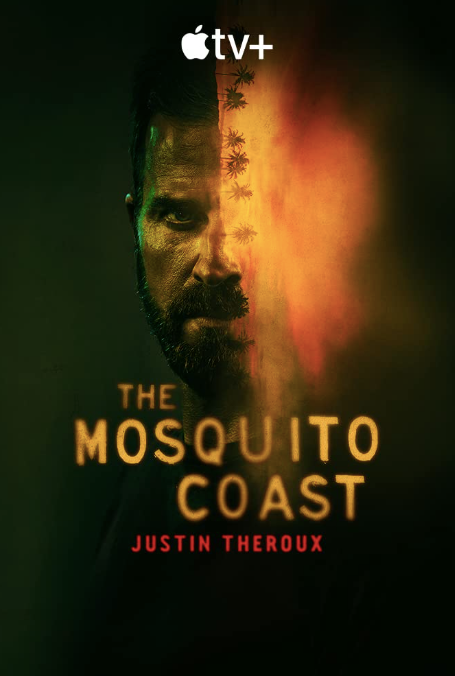
The Mosquito Coast 2.8: Hari Seldon in Mexico


Those of you who have been reading this blog, even for just the past year, will know who Hari Seldon is. In case you don't, he's the protagonist in Isaac Asimov's Foundation series (I think his original trilogy is the best science fiction ever written), who is able to statistically predict the future.  He invents a method called "psychohistory," which comes from LaPlace's Demon in philosophy (though LaPlace is not mentioned): if you were able to know everything about human behavior, capture it and put it all in mathematical form, you could see what people will be doing tomorrow or even a century from now.

[Spoilers ahead ... ]

So watching today's episode 2.8 of The Mosquito Coast, you can imagine how happy I was to hear Allie explain to Charlie that psychohistory (without naming it) was how Allie's Sandpiper program worked.  (I would have been even happier had Allie -- that is, the makers of this episode -- given Asimov a shout-out, but ok.)  It was a sterling moment to see Allie point out a bird to Charlie in the Mexican jungle, and explain that if we knew every single thing the bird had done in the past -- every single scene of its behavior -- we could reliably predict what it would do in the future.  

That's far better than recent election polling, which often fails to give accurate predictions because people could lie when asked whom they will be voting for, or just change their minds -- the problem being that what people say they are going to do is vastly different from their actually doing it.

And I also think Allie's explanation was at least as good as Hari Seldon's in the Apple TV+ rendition of the Foundation series, the first season of which left a lot to be desired.  But that's a story for another day. (If you're interested, see Nobel laureate Paul Krugman's disappointment with the Foundation TV series -- Krugman has long cited Asimov's Foundation trilogy and psychohistory as inspiration for Krugman's work in economics -- and also the podcast discussion I had with two lifelong fans of Asimov's Foundation stories.)

Come to think of it, The Mosquito Coast, now nearing the end of its second season, really is a kind of science fiction, and it was firing on all cylinders, including in the beat-up pick-up truck that Dina steals from her almost boyfriend in an attempt to get away. I keep thinking that Dina is going to wake up one morning and realize she likes the partial paradise where she and her family now live, but it looks like that's not going to happen.

Here's one thing about my behavior that I can indeed accurately predict for you -- I'll be back here next week with my review of the next episode. And I doubt that I'll ever find a science fiction saga I love more than Asimov's Foundation series. It actually started as a series of short stories in Astounding Stories in the 1940s (Astounding Stories changed its name to Analog in 1960 -- 15 of my own science fiction stories have been published in Analog). But think about it. Some eighty years ago, before statistical projections came to play such a major role in our lives, Asimov wrote some riveting narratives in which those kinds of projections were center stage. Good for The Mosquito Coast for putting this into the spotlight.

See also The Mosquito Coast 2.1: Thirteen Years Ago ... The Mosquito Coast 2.4: Motion Pictures on the Cave Wall ... The Mosquito Coast 2.5: Hitting the Fan ... The Mosquito Coast 2.6: Close Calls ... The Mosquito Coast 2.7: Sandpiper

And see also The Mosquito Coast 1.1-2: Edgy, Attractive, Enlightened, and Important ... The Mosquito Coast 1.3: Broadening Horizons ... The Mosquito Coast 1.4: Charlie and the Gun ... The Mosquito Coast 1.5: Charlie and the Gun, Part II ... The Mosquito Coast 1.6: What Kind of Brother? ... The Mosquito Coast season 1 finale: I'm Well Bitten

See also my essay, Foundation, Dune, and LaPlace's Demon

Sunday, November 20, 2022

Greg Bear, RIP: Three Ways In Which He Bettered My Life


                          Greg Bear -- File 770

Greg Bear, author of more than 50 science fiction books, left us yesterday at the too-young age of 71.  I'll leave it to others to detail the superb, riveting stories he told us in those books, and tell you instead about three significant ways he had a personal impact on my life.  I was always happy to run into him at a science fiction convention, but these three encounters were more than that.

1.  I wrote a review somewhere of the Foundation prequel trilogy Gregory Benford (Foundation's Fear), Greg Bear (Foundation and Chaos), and David Brin (Foundation's Triumph) -- or maybe it was just a comment on some board -- at the end of the 1990s, a few years after Isaac Asimov's death.   I said that I enjoyed all three novels, but, surprisingly, Greg Bear's was the best.  (I guess I was surprised because I expected that all three would be so good it wouldn't be so easy to rank them.) Greg and I had already been in occasional touch -- he had been President of the Science Fiction Writers of America from 1988-1990, and I was President of SFWA from 1998-2001 -- and I got a genial email response from Greg almost immediately after my review/comment was published.  "Why are you surprised?"

There was something refreshing and reassuring about those four words that immediately struck me.  I was already egotistical -- most writers are -- but Greg's response, in addition to making me laugh, showed me how right and important it was to stand up for yourself when circumstances called for that.  Modesty isn't all it's cracked up to be.

2. In February 2002, I received a package in the mail.  It contained a videotape made by Jay Kensinger, of a short movie he had made of my 1995 novelette, "The Chronology Protection Case," first published in Analog Magazine, already reprinted then in several places, and a finalist for the Nebula and Sturgeon Awards.  Jay apologized in the letter for not letting me know he was making this movie, not seeing if he needed some contract with me, etc.  He included his phone number, and when I called him, eager to talk to this guy who had made a movie from my story, he again profusely apologized and told me he had walked up to Greg Bear at a book signing, said how worried he was that I was going to be upset that he had made the movie without my permission, but he wanted to contact me and what did Greg think he should do?  He told me Greg gave him a big smiled and assured him, "I know Paul Levinson and he'll be nothing but thrilled."  Greg knew me well.  (And he knew himself  -- he had the heart and soul of a writer.)   You can watch the movie here, on Amazon Prime Video.

3. As I mentioned, Greg and I first got to know each other when I was President of SFWA, 1998-2001, and I sought his advice on a variety of issues, as a former President.  Greg and I agreed on just about everything, including that it was no fun at all being president of a writer's organization -- certainly a small fraction of the fun of being a writer.  I learned then a lesson that I learned once again when I was Chair of my Department of Communication and Media Studies at Fordham University shortly after, from 2002-2008.   Don't do it.  Administration doesn't combine well with the creative process.

There are few people in my life from whom I learned so much, and was so fortunate to have known, than Greg Bear.  Rest in peace, my friend.


Friday, October 29, 2021

Foundation 1.7: Alternate History/Future


I'm going to tell you two things about episode 1.7 of Foundation (which I just saw, riveted to the screen of Apple TV+), before I warn you about the bombshell spoilers that will follow in this review:

1. This episode 1.7 is by far the best episode in the television series, so far, and the first to truly live up to and in some ways exceed where the story was at this point in Isaac Asimov's writing.   I now understand why Isaac's daughter Robin is such a strong supporter of this television series.

2. Yes, the TV narrative differs from the Astounding stories that Asimov wrote in the 1940s, and the way he put them together in the original Foundation trilogy in the early 1950s, and the sequels and prequels he wrote and had published in the 1980s.  Those written works start in a place not too far from the beginning of the TV series, but the TV series proceeds to a place very different from but still related to the written stories and novels, and this different TV path is on the deepest level true to its source.  The TV series is, in effect, an alternate history/future of what Asimov wrote.

[Here's the spoiler warning ....]

3.  We learn tonight (in episode 1.7) why Hari was killed, and what he was doing years later on that ship with Gaal.  Most devotees of the Foundation saga have already guessed why Hari was killed -- it was part of his plan, in effect an early expression of the Seldon Plan.  In episode 1.7 we find out that although Hari's physical body (including his brain) died in that stabbing, his mind/psyche/soul (take your pick or go with all three) was transferred/uploaded/downloaded (same advice: take your pick or take all three) to that ship on which Gaal discovers Hari.  So, Hari's mentality lives.  In a hologram or whatever exactly that was. This likely/no doubt will be the expression of the hologram we've been awaiting from Asimov's writings.

4. The scene with Brother Dawn was even better than last week's, which was excellent.  The clone story continues to be both a keen piece of science fiction on its own, and one which fits in well with the alternate Foundation story that is the television series.  We learn Dawn is more than a little different from Day and Dusk.  With his many mutations/differences, he in effect is really their brother, not their clone.  This has to have importance in the future of the TV story.

5.  Demerzel had her best night, too -- in particular, her conversation with Day in which she explains why she bowed, apparently a profound violation of her programming.  In a way, Demerzel may be the equivalent of Dawn -- for some reason, behaving not the way she is supposed to to behave.

6. The reasons for Dawn's and Demerzel's  divergences will be crucial parts of the ongoing story, either this season or next.

7.  And in some respects, the most momentous for last: What Gaal realizes about herself at the end of the episode, that she can feel the future ahead of her?  Welcome to the Second Foundation.   She's Preem Palver.   I expect will see her next season vis-a-vis ... the Mule.

And I'll be back next week with my review of Foundation 1.8!


See also Foundation 1.1-2: Mathematician, Man of the People, and Cleon's Clones ... Foundation 1.3: Clonal Science Fiction, Hari Seldon as V. I. Lenin ... Foundation 1.4: Slow Hand, Long Half-Life, Flipped Coin ... Foundation 1.5: What We Learned in that Final Scene ... Foundation 1.6: Folded Variations ... Foundation 1.8: Divergences and Convergences ... Foundation 1.9: Vindication and Questions ... Foundation Season 1 Finale: Right Up There


InfiniteRegress.tv