Chuck Todd interviews me about alternate histories
Showing posts with label Murray the K. Show all posts

Friday, May 8, 2026

Just in Time: Just Wonderful


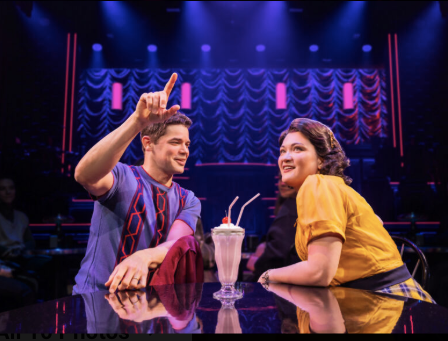
I rarely review Broadway plays because, sadly, I rarely go to them. But my wife thought going to see Just in Time -- a musical about Bobby Darin at the Circle in the Square theatre -- would be a great way to help celebrate our 50th wedding anniversary, and she was 100% right.  The play is a tour-de-force -- a wonderful and meaningful bio-story, with superb singing, acting, and staging.

I was two degrees of separation, in two different ways, in the 1960s and 1970s, from Bobby Darin.  In the late 1960s, I sold a song I wrote to Irwin Schuster at TM Music, a company owned by Bobby Darin in the Brill Building.  The song, "Unbelievable, Inconceivable You," was recorded by The Vogues, but never released.  (You can hear it here.)  Then, in 1972, I sold an article to The Village Voice about the return of  New York DJ Murray the K to New York.  Murray read it and hired me to assist him with his new show on WNBC Radio.   Murray and I talked a lot while the music was playing, and he told me every time he played a Bobby Darin record -- which was often --  that Murray's mother had said that "Splish Splash" would be an impossible title for a song, Murray had passed this challenge along to Bobby Darin, and that's how the path to his first hit record began.

Murray the K was in Just in Time (played by Lance Roberts, who also plays Ahmet Ertegun, co-owner of Atlantic Records), Irwin Schuster was not, but everyone in the play gave sterling, memorable performances, chocked full of vitality and passion, and, when called for, humor and tugging on the heart strings.  Jeremy Jordan as Bobby Darin is a dynamo with a powerful voice.  Darin's repertoire went from rock 'n' roll ("Splish Splash" and "Queen of the Hop") to pop ("Dream Lover" and "Just in Time") to jazz ("Mack the Knife" and "Beyond the Sea"), and folk ("If I Were a Carpenter"), and Jordan does them all with a sparkling zest.   Isa Briones (yes, she's doing a fine job as Dr. Santos in The Pitt on HBO Max) has a remarkable voice and all the power and Italian gravy of Connie Francis.  Carrie St. Louis conveys a Sandra Dee with perfect spunk and sensitivity.  And the band and the background singers were just right, a real pleasure to hear and see.

We also loved the way the "stage" is set, with seats all around cafe tables with patrons (who are theatre patrons not actors), two stages, and a band on two parts of the main stage.  At times, Jordan asks a lucky lady patron at one or two of the tables to dance.  Jordan, by the way, at the beginning and at times in the show, talks to the audience as himself, Jordan.  Warren Leight (Law and Order!) and Isaac Oliver (a Fordham University grad, I'm a prof there, but, alas, never had him in a class) wrote the book for the musical. If you enjoyed Bobby Darin's music and personna -- whose style and multi-genre approach were a precursor of Billy Joel -- you'll find Just in Time irresistible and unforgettable.

And here's a song I wrote about and for Murray the K when I was working for him at WNBC Radio in 1972.

See also Jersey Boys: A Transcending Musical

Saturday, November 29, 2025

(Beatles) Anthology 2025: The Highs and the Highs (and the One Low)


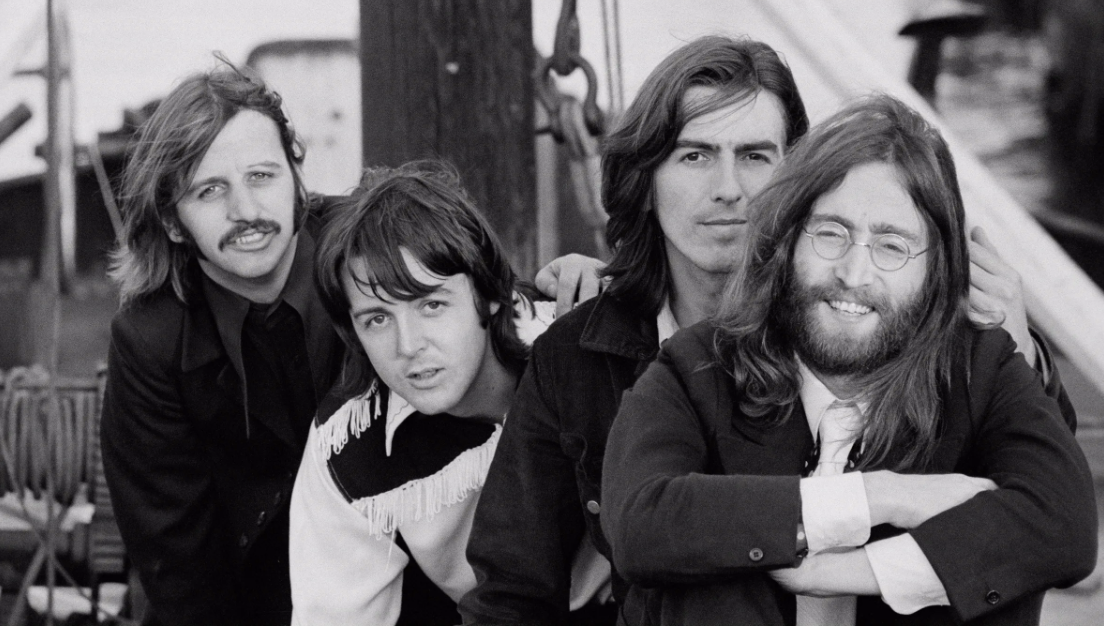
My wife and I watched the renewed and expanded Beatles' Anthology on Disney+ the past three nights. I'd seen and heard bits and pieces of various lengths of the original eight episodes -- on YouTube, The Beatles Channel on Sirius XM, and everything in between -- which originally aired on ABC-TV in 1995, but we somehow had managed not to have seen that original on the unsmart TV in our family room.  It was more than wonderful to see and hear what 2025 director Oliver Murray did with the 1995 eight episodes -- uncovering/discovering new footage as well as calling upon Peter Jackson and his elves to bring to current vibrant life what was done in 1995 (just as Jackson had done so miraculously with The Beatles: Get Back in 2021) -- but the real treat for me (treat is too weak a word) was seeing the new ninth episode.

I'll go over some of highlights of the first eight episodes, and then delve into the wonders of ninth episode, and the one problem I had with it.

About the first eight episodes:

  • It was great to see Murray the K get his due (just as he had in Martin Scorsese's Beatles '64 last year).  I worked with Murray the K when he was at WNBC Radio in New York City in 1970s.  He hired me after he read my article "Murray the K in Nostalgia's Noose" in The Village Voice in 1972 (my second-ever published work -- my first was "A Vote for McCartney" a year earlier, my response to dyspeptic critic Robert Christgau's attack on Paul and his early post-Beatles work).  Murray never got the credit he deserved back then in ushering in The Beatles, and before then on WINS with Alan Freed, and after when he was on WOR-FM helping to invent the FM radio format. I had such a good time working with him on NBC, I even wrote and recorded a song about him -- "Murray the K's Back in Town" -- which he played on the air.  (The late Pete Fornatale -- protagonist of my It's Real Life: An Alternate History of The Beatles -- played that song on his Mixed Bag on WFUV Radio in the early 2010s.)
  • Great shots that I hadn't seen before of The Beatles in their 1964 Washington, DC concert!
  • There was a spectre, a foreshading, of what would happen to John at the end of 1980. George worries throughout about the exposure of The Beatles in a country in which John F. Kennedy had just been assassinated.  (The sick devotion to guns in this country is still claiming lives.)  John himself notes after the DC concert that "some bloody animal cut Ringo's hair".
  • I was reminded again what a uniquely almost  extraterrestrial person Ed Sullivan was.  I mean, no one here on Earth had his accent or his delivery.  Even in Japan, the Beatles are introduced in Japanese (of course), and the host concludes in English with "Ladies and Gentlemen, The Beatles!" -- delivered in a pretty good mimic of Ed.
  • I find it hard to believe that "Pennylane" didn't go to #1 in the UK. Beaten out by Engelbert Humperdinck's "Release Me"? Maybe if it was "Les Bicyclettes de Belsize" ...
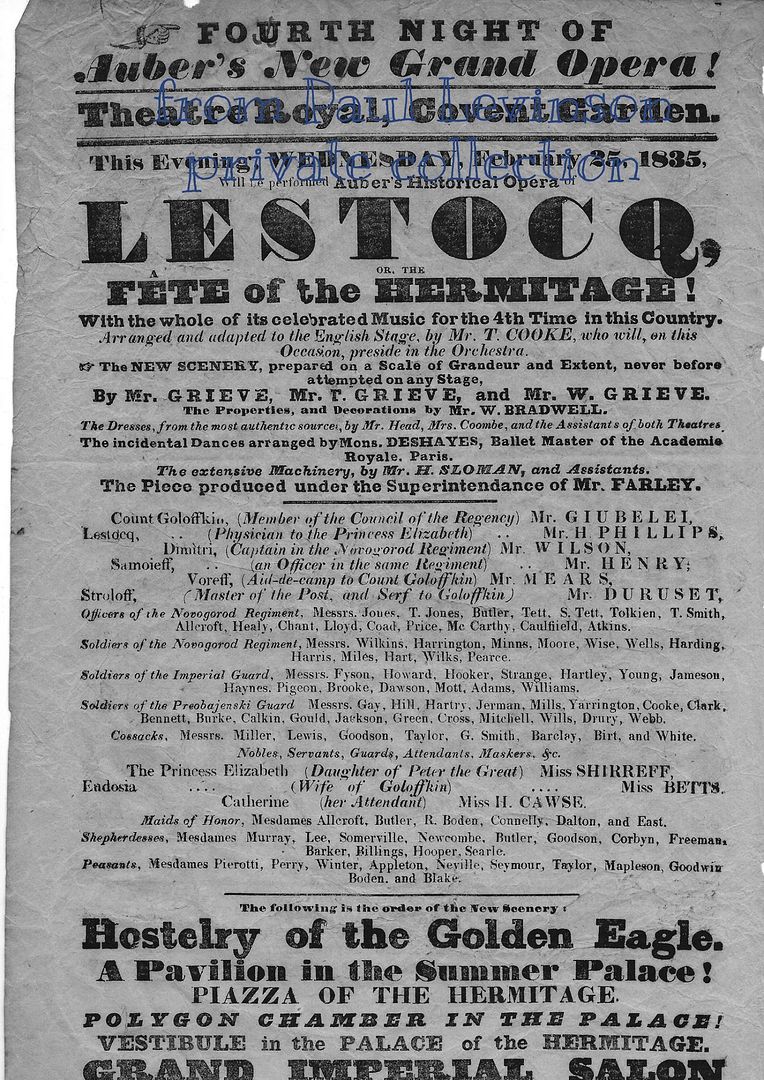
  • John -- after The Beatles had broken up and at odds with Paul -- objects to Sgt Pepper being called a "concept" album, saying "Mr. Kite" and all the songs on the album other than the Peppers could easily have been on any other Beatles' LP.   (George also critiques Sgt Pepper.)  As far as I'm concerned, I think Sgt Pepper is indeed a concept album and what John says is also true.  There's really no contradiction here, both are true.  And I'll also say how happy I was to find the following poster in an antique shop my wife and I were in, must've been, the late 1970s.  It's hanging on a wall outside our bedroom.  Every time I walk by it, I smile.  It reminds me of Sgt Pepper.


Now, about the new ninth episode:

It was not only heartwarming (to see the three surviving Beatles still making such superb music) and heartbreaking (because now George is gone), it was chock full of fascinating and important information.  My favorite example: I had always heard, regarding the genesis of "Free As A Bird", "Real Love", and "Now and Then", that the transformation projects began when Yoko Ono gave Paul a tape with some of John's demo recordings from the 1970s.  But in episode 9 of Anthology, George tells us about a crucial preface: When Roy Orbison died, The Traveling Wilburys were thinking of taking some of Elvis's demos and bringing them to life with the inimitable Wilbury voices.  But they decided not to go in that direction, because (in George's words), it was "too gimmicky".  (George didn't say, but rumor has it that the Wilburys were thinking of inducting Del Shannon into the group, but he took his life in 1990.)

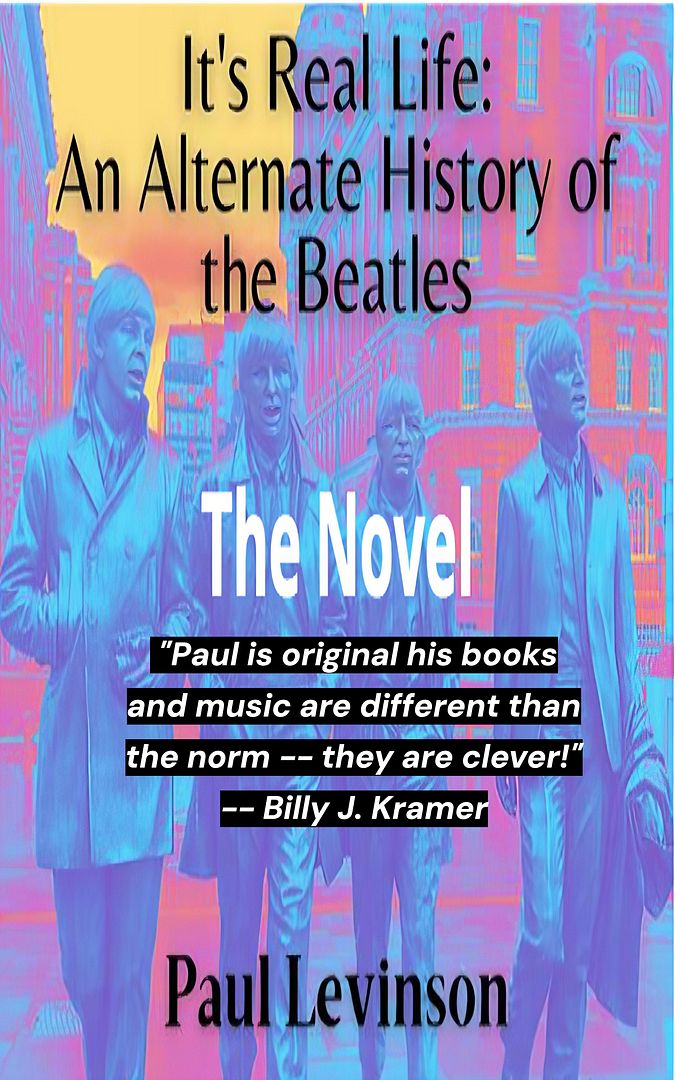
But if I had to pick my favorite moment in the ninth episode, and therefore all nine episodes of this beautifully burnished Anthology, it would be Paul and George completing their incomparable three-part Beatles harmony with John's voice in the chorus of "Real Love".  It's been one of my favorite Beatles songs since I first heard it in the mid-1990s.  The song inspired me to write It's Real Life: An Alternate History of The Beatles (the video of Anne Reburn's cover of the song follows below -- she performed this in the radio play broadcast on Killerwatt Radio, adapted from the first chapter of my novel; "Real Life", by the way, was John's title for the song before he changed it to "Real Love").  Paul and George's voices being in such synch with John's recording, the harmony snapping into place, snapping into life, is a deeply acoustic proof to me that this uniquely satisfying sound will never die.  At that instant, the former Beatles became The Beatles again, and gave evidence that The Beatles will always be with us.


Powers that be often miss the immortality of what is all around them.  After Marshall McLuhan died in December 1980 (same year and month as John: their lives were intertwined: they both hit America big in 1964), I proposed a book about him to an editor at St. Martin's Press.  He laughed and told me no one cared about McLuhan any more. That book became my Digital McLuhan, which Routledge published in 1999.  I still receive royalties checks for sales of that book every year.   In the 1970s, I told my doctoral thesis advisor Neil Postman that I thought The Beatles, like Shakespeare, would be known and enjoyed for as long as there were human beings.  He laughed too.

Which brings me to the one criticism I have about episode 9.  Paul and Ringo are still alive.  Yes,The Beatles music including their harmonies will live forever.  But not the mortals who made it.  Wouldn't it have been wonderful to have another hour, or even just a few minutes, to have Paul and Ringo look back at 1995 from their vantage point right now?  Oliver Murray of course interviewed Paul and Ringo in the short film he made, Now and Then: The Last Beatles Song, that accompanied release of the single in 2023.  I guess that could be considered a coda to Anthology 2025, but wouldn't a few additional or more words from Paul and Ringo looking back at what they accomplished in 1994 (when "Free As A Bird" was made) and 1995 (when "Real Love" was made) have been just the perfect cup of sencha tea after the marvel we just took in?

Chris Willman asks Oliver Murray in an excellent interview in Variety why there are no contemporary 2025 voices in Episode 9.   Murray replies: "I didn’t really like the idea of Ringo [and Paul] in 2025 talking about an interview that he gave in 1995 about something that happened in 1965. It was all too nebulous to do that." I'm not sure I know what "too nebulous" means, in this context. "That is, I think I disagree".


in Kindlepaperback, and hardcover

Added February 10, 2026: Check out this new episode of Rock Talk Studio

Friday, November 29, 2024

Beatles '64: The Real Thing


Just saw Martin Scorsese's Beatles '64, up today on Disney+.  It's everything you would expect from a master like Scorsese and his masterful 1978 The Last Waltz, but much more, given what the Beatles were and are to so many millions of people on this planet.  As I began saying in the 1970s, that impact will last for thousands of years, right up there with Socrates and Shakespeare, even though at one point in the documentary, a young Paul scoffs at The Beatles having anything to do with "culture," preferring instead to say that what The Beatles are about are "laughs".

Here are some of the highlights of Beatles '64, made possible by some of the footage the late Albert and David Maysles brothers took of The Beatles first trip to America -- for their first appearance on the Ed Sullivan Show, concert in Washington DC, and concert back in New York in Carnegie Hall -- that had special resonance with me.  I present them in more or less chronological order in the movie:

  • A girl fan in New York City tells about the gifts she brought for each Beatle.  For Ringo, it's two "science fiction books".  She doesn't say which ones, but even so, it's good to hear.
  • Another girl says Elvis "is old anyway".  I think Elvis was great, but I get what she means.
  • Yet another girl, who goes to Julliard, explains that "we don't usually like rock 'n' roll ... [but] The Beatles are the greatest".  See below about Leonard Bernstein and his CBS special and his daughter Jamie for more on this point.
  • Ronnie Spector, interviewed probably ten or so years ago, says "Murray the K was downstairs [saying] you gotta get me upstairs to meet The Beatles." My second published article was about Murray the K (in The Village Voice in 1972 -- my first was about Paul McCartney in the same weekly newspaper a year earlier in 1971), and I even wrote a song about Murray the K that he played on his WNBC-AM radio show.  Beatles '64 had a lot more to say about Murray, which I'll discuss below.
  • I loved seeing the Ronettes hold the Phil Spector Christmas Album, which has two recordings by the Ronettes -- "I Saw Mommy Kissing Santa Claus" and "Frosty the Snowman" -- that I still play on YouTube all time.
  • A nasty NYPD cop tells two girls to get off the floor The Beatles were on, in their hotel, to walk down the stairs "before I throw you down the stairs".  An unfortunate parallel to the London bobbies who go up to the roof to break up The Beatles last concert that we see in Peter Jackson's The Beatles: Get Back, also on Disney+, and now a perfect pair with Beatles '64.
  • Black teenage girls love The Beatles; black teenage boys do not, one of them saying, "I think they're [The Beatles are] disgusting."  (But see Smokey Robinson, whom I'll discuss below.)
  • Murray the K appears throughout the movie.  The Beatles tend to think he's too "loud," John mocks him in the movie, and George Harrison remarks in an interview probably conducted in the mid-1980s that Murray, in effect, just glommed on to The Beatles and their first visit to New York. I actually worked with Murray in the early 1970s -- he invited me to come work with him after he read my 1972 article about him -- and I didn't find him too loud at all.  He likely had mellowed by then.
  • Smokey Robinson does an endearing performance of McCartney's "Yesterday" in the 1960s, and in a very recent interview explains that The Beatles had a tender, feminine way of expressing their emotions, which Smokey found very admirable.  Jamie Bernstein (Leonard's daughter) and Betty Friedan echo and elaborate on this perceptive view.  Clips from Leonard Bernstein's pathbreaking 1967 CBS show on The Beatles and the "rock revolution" appear throughout Scorsese's film (here's my review of Maestro which, amazingly, said nothing about that TV show).
  • Back to Murray the K: he gets George in 1964 to introduce James Ray's "Got My Mind Set on You".  Unsaid in the movie is that of course George would have a big hit singing the song in 1987.  Hey, Murray at least deserves credit for helping keep the song in George's head (he had first heard the song in an earlier trip to the U.S.).
  • Marshall McLuhan appears a lot in the second half of the movie, saying things like "JFK was the first TV President" and interviewing John and Yoko in Toronto at the end of 1969.  I worked with McLuhan at the end of the following decade -- he was also the real thing, the most perceptive scholar I've ever had the chance and pleasure to work with (more on McLuhan in my just updated McLuhan in an Age of Social Media). Beatles '64 sets up The Beatles coming to America as the immediate sequence and desperately needed healing musical salve to the crushing depression caused by JFK's assassination, which indeed it was.  McLuhan's breakthrough book, Understanding Media, arrived at same time.  The Beatles helped heal America, McLuhan helped us understand what was happening.
  • Harry Benson, a now 94-year-old photographer, tells us that Lennon "used to speak, of all things, about Lee Harvey Oswald ... he was worried about violence" directed against him and The Beatles in America.  That brought me to tears.  (I say more about Lennon's assassination, and how it brought me to write It's Real Life: An Alternate History of The Beatles, in this interview conducted just last week.)
  • But on a lighter note, speaking of tears, I had to laugh when I heard that "George Harrison was near tears" when he and The Beatles were dissed at a reception for them at the British Embassy after their Washington DC concert. McCartney had a much better response.
  • Also on a lighter note, and putting on my media theorist hat, I was pleased to hear the word "cassette," long before there were little tape recordings, back in 1964, used to describe a place that cans of soda inhabited, when someone said, "draw it [the soda can] out of the cassette".
  • But the documentary returns to the assassination of JFK, which, along with the assassination of John Lennon, were the worst public events in my life.  At the end of the movie, satirist and critic Joe Queenan, who appears throughout the film, tells us that his "father never recovered from Kennedy's assassination but we did".  And that of course was because we had The Beatles.  The "we" is my generation, and what Queenan says is all the more trenchant, since he earlier tells us that his father beat him, and also decreed that Queenan couldn't watch The Beatles on Ed Sullivan, which Queenan said was worse. But he managed to watch at his uncle's place.
I could say more about this documentary, but you get the picture, and if you loved or love The Beatles, and feel the same about Peter Jackson's The Beatles: Get Back, see this movie, Beatles '64, at least once.


in Kindle, paperback, and hardcover


More books about McLuhan the media at Connected Editions

Thursday, September 24, 2020

Spun Dreams on Bandcamp

Before Twice Upon A Rhyme and Welcome Up: Songs of Space and Time, there were Spun Dreams: studio and home demos, most from mid to late 60s, sunshine pop with a bit of an edge and a psychedelic flavor, especially as you get into the album. My group back then was The New Outlook, a folk-rock trio. Spun Dreams has been streaming for almost a decade on Spotify, Apple Music, and all the usual places. But now it's up on Bandcamp, with all kinds of details on songs and tracks that I haven't mentioned before. Details in the track credits about how the likes of Ellie Greenwich, Mike Rashkow, Tash Howard, and dj Murray the K figured in these songs. And check out the bonus items for at least one special photo I haven't laid eyes on since 1966.


Tuesday, March 24, 2020

Paul Levinson Talks about Welcome Up on Bear Tone Podcast


Among the many people and media in music and science fiction I talk about in this podcast, recorded the day I finished recording Welcome Up: Songs of Space and Time in Old Bear Studios in Batavia, NY in November, 2018: Alan Freed, Murray the K, Stu Nitekman, The New Outlook, Ellie Greenwich, Herb Abramson, Twice Upon A Rhyme, Boris Midney, Nikita Khrushchev, Paul McCartney, Robert Christgau, The Village Voice, Tina Vozick, Record Collectors Magazine, Big Pink Records, Anthony Nyland, Chris Hoisington, Phil D'Amato, "The Chronology Protection Case", David Hartwell, Borrowed Tides, Peter Brown Called, Steve Padin, Vincent van Gogh, Jeremy Thompson, Electric Lady Studios, Egypt Station, Bill O'Reilly

Sunday, September 2, 2018

The Village Voice Goes Silent


Last night brought the news that The Village Voice, once the hottest, coolest, in synch weekly newspaper in town, was ceasing publication.   This was the last act in a decline which saw the Voice being given away for free on the streets of New York (in an attempt to boost circulation to staunch declining ad revenue) to going completely online just last year.  Though I've long read much more online than on paper, I hate to see any newspaper go under.   And the Voice's passing has special meaning for me, since it was the first place to publish anything that I'd written.  Actually, my first three publications were in The Village Voice.

In September 1971, I was putting the finishing touches on my LP Twice Upon A Rhyme in Mario Rossi's recording studio at the end of Brooklyn.   Ed Fox, Peter Rosenthal, and I lived in the Bronx, and on the clacking train ride out to Brooklyn, a copy of the Voice, then in just its 16th year of publication, was usually close at hand.   One night, I read a typically tone-deaf, dyspeptic review by Robert Christgau in the Voice of Paul McCartney's second solo album, Ram.  I was sufficiently infuriated that, next day, I pounded out a lengthy Letter to the Editor on my electric portable Smith Corona, stained with coffee and orange juice but still working, and I sent it off to The Village Voice.  I doubt I even made a copy, and pretty much forgot about it.   I didn't really expect to see it published there in the Letters column.

My expectations were right.   I eagerly grabbed a copy of the Voice the next week.  The first page I turned to was the Letters page.  Nothing whatsoever there by me, or about McCartney.  But a few days later, early in October, I found a letter from the Voice in my mailbox - a letter and a check.  I looked at the check, first.  $65.00.  I looked at the letter.  It was from Diane Fischer, one of the Voice's main editors.  She said she assumed it would be ok with me if the Voice published my letter as an opinion piece, in its "Taking Issue," section, and paid me $65.00 for it, for which a check was enclosed.

I was thrilled.   The release of Twice Upon a Rhyme on HappySad Records (a record company created by Ed Fox and me, after two or three major labels turned our album down, and we were not interested in shopping it around, for what could have been years) was still a year away, and I still thought of myself as a singer and songwriter, not an essay writer.   But in retrospect, the publication of my letter as "A Vote for McCartney" in The Village Voice on October 21, 1971 was a turning point in my life.  I'd imagined that Paul McCartney would contact me after reading the article, and maybe get me signed to Apple Records.  That didn't happen.  But what did is I began getting far more recognition as a Voice "columnist" - on the strength of that one publication - than I'd received, or would receiving be in ensuing years, as a singer and songwriter.

My second essay in The Village Voice, "Murray the K in the Nostalgia's Noose" was published a little over a year later to the day, in the October 26, 1972 issue.   I'd sent that one in as an essay, not letter, to Diane, after Tina and I had heard and loved Murray the K's return to New York's airwaves on the July 4th 1972 weekend.   Diane (or someone at the Voice) had taken that title from a line in my generally very flattering essay, which said Murray needs to be careful that "nostalgia doesn't become a noose around his neck".  Murray managed to track down my phone number - no doubt the Voice gave it to him - and I received a call from him the very evening that that issue of the Voice hit the streets.  He told me how much he appreciated my essay and offered me a job as a producer on his new NBC radio show.  I took it, and even wrote and recorded a song, "Murray the K's Back in Town" which he played on his show.

By the time my third and final article was published in The Village Voice - in its July 4, 1974 issue - I was already back at school, completing my BA in Journalism at New York University after a long break from the classroom.  My article about Murray the K had brought me to NBC where, after Murray left, I began working as a producer for Wolfman Jack.  After he left, I wrote an essay about his departure from New York, and Diane not only published it, but kept my title, "Wolfman Hits the Road, Jack".

I'd go on, academically, to walk up the street to the New School after getting my BA from NYU.  At the New School, I earned an MA and began reading everything I could by and about Marshall McLuhan.  I went back down the street to NYU's Media Ecology program for my PhD, which I earned before the end of the decade.  And the rest, as they say, is (my) history.

I did have two more significant interactions with Christgau in that decade.  One came in the mid-1970s, when he rejected an article I'd submitted about the evolution of "The Wizard of Oz" in rock music, then culminating in Elton John's "Yellow Brick Road".  Christgau had been put in charge of all the music pieces in the Voice, and I received a letter from him saying that my essay was very well written but said nothing of any importance.  No check was included.  Undaunted, I sent the article to The Soho Weekly News, a more local kind of Voice, focusing more on popular culture than politics, just down the street.  They accepted the article, sent me a pen-and-ink drawing to go with the article, but before they'd had a chance to publish and pay me for the article, I received a letter from - believe it or not, Christgau - explaining that he also was a consultant or something for the Weekly News, and was advising them not to publish my article.  So it goes.

The Soho Weekly News was gone by the early 1980s.  But Christgau continued at the Voice, which I continued to read, despite his caustic reviews of music that I loved.  But the Voice also had Nat Hentoff, as passionate a champion of the First Amendment as ever there was, and Ron Rosenbaum, who could write a riveting, lengthy essay that you couldn't put down, about Mayor Abe Beame, who took boring to a whole new level.

I consider myself privileged to have been in the pages of this remarkable publication which captured the times we were in, fanned and extended them, and made me even prouder than I was to be a New Yorker.





Thursday, May 25, 2017

Peter Asher's From Me to You Show on The Beatles Channel: A Hit

I already knew Peter Asher had talent as a singer (Peter and Gordon) and record producer (Linda Ronstadt and many others), but I found out a few hours ago that he has lots of talent as a disc jockey!

I was driving up to Cape Cod, loving the new Beatles Channel on Sirius/XM Radio (Channel 18), when up pops Peter Asher with an hour show called From Me To You.   I've always loved a good dj - I had a fine time years ago when I put together sets of songs for Murray the K and Wolfman Jack in their brief stints on WNBC-AM Radio in the 1970s - but they've been few and far between in recent years.   Dennis Elas and the late Pete Fornatale put on excellent shows on WFUV-FM - I know/knew them both, because I'm a professor at Fordham - and Bob Shannon does a good job on WCBS FM in New York.

Well, Peter Asher is right up there with the best of them.  His "threads" (his name for what Murray the K called segues) were a grab bag of fun.   He played Manfred Mann - their "Do Wah Diddy Diddy" (written by Ellie Greenwich - who produced my group The Other Voices with Mike Rashkow in the late 1960s) - because Peter wanted to play a record he produced with Manfred Mann's lead singer, Paul Jones, which was the first record that Asher ever produced.   On this record was Paul McCartney on drums, which lead to Asher playing "Back in the USSR", which also segued from Linda Ronstadt's "Back in the USA" (a Chuck Berry song) which Asher produced and also played on his show.

The interconnections of records and artists are a vibrant labyrinth begging for explication and demonstration on radio.   Every record and artist has a life story that draws upon and pollinates others.  Manfred Mann, for example, is a band that recorded not only an Ellie Greenwich song, but Dylan and Springsteen songs as well.   Peter Asher has lived through and helped construct some fascinating parts of this - his show is another reason to listen to the Beatles Channel, which may be the best thing on radio since the Swinging Soiree.


Sunday, July 28, 2013

Defiance: Alien DJ, Great Music, Star Wars Bar on Earth

I caught the first season of Defiance over the past few nights.  The new SyFy post-apocalyptic drama joins The Walking Dead, Falling Skies, and more in this now flourishing television genre.   But Defiance has a few special facets going for it:
  • The music is just fantastic, starting with the Johnny Cash - June Carter "We Got Married in a Fever" (aka "Jackson") in the first episode to Raya Yarbrough's outstanding cover of Cindi Lauper's "Time after Time" near the end - and even a fine cover by Yarbrough of The Five Stairsteps' "Ooh Child" somewhere in the middle.   Bear McCreary, of Battlestar Galactica fame, has done his customarily brilliant job with the music throughout.
  • Speaking of BSG, there's a lot of its flavor and feel in Defiance, which I take as a good thing.
  • There's even a kid in a radio station in Defiance - making a pair with the DJ in Under the Dome - but in Defiance the kid is an alien.   Anything that harkens to Alan Freed, Murray the K, and Wolfman Jack is a plus in my book.
But speaking of aliens, there's a tad too many of them - seven different alien species, that is, which came to Earth as part of the Votan collective.   I'd be happy with just the three major brands, Irathient, Castithan, and Imogen.   The additional species, including Earth mutants which add to the seven, give Defiance the ambience of a Star Wars bar scene, and an everything-but-the-kitchen sink effect, which has the unintentional consequence of giving Defiance a slight touch of parody.

The sex, though, is pretty good - between Castithan Datak Tarr and his wife, and Irathient Irisa and Tommy, her human lover.   Thanks to our childish, unconstitutional FCC, we see no real skin - and the Castithan custom of bathing privately in bathing suits is inconsistent with their otherwise hedonistic culture.   But expecting our television networks to stand up to the FCC is a hopeless case, even if the FCC has never tried to exercise power over cable television.

The plot works well, with a good mix of unexpected heroes and villains, and characters you can care about.  I'm looking forward to season 2.


#SFWApro


InfiniteRegress.tv