Chuck Todd interviews me about alternate histories
Showing posts with label Bob Dylan. Show all posts

Sunday, January 18, 2026

About Bob Dylan's Science Fiction Novel


Bob Dylan on Instagram

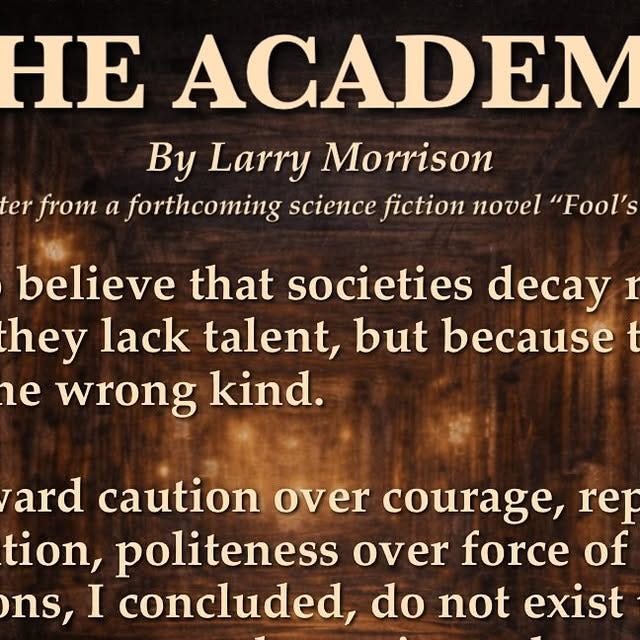
Dylan posted the above on Instagram yesterday (my son Simon Vozick-Levinson alerted me to it this morning). On Instagram and Reddit, and probably in other places, people are speculating that if Dylan did write it, he used AI to write it. I’m no expert on AI, but I’ve been listening to Dylan’s lyrics since the 1960s, and the excerpt he posted certainly seems consonant with the style and content of his lyrics. 

 Lyrics often repeat ideas and feelings — indeed, that’s what choruses explicitly do. And the ideas and emotion presented in this excerpt feel like a lyric — a song without music, lamenting, protesting, objecting to the danger, the destruction of our democracy that we see happening all around us, every day. I’m glad to see a man who actually won the Nobel Peace prize come out and assess this, decry this, in his own inimitable way. 

His novel/lyric aim in particular at universities who acquiesce, crumble under the pressure of the Trump administration and his allies. I’m looking at you, Columbia University. 

And, by the way, Dylan’s no stranger to science fiction. His Frankenstein-like song, "My Own Version of You" in his Rough and Rowdy Ways LP in 2020, is a funny, great little piece of science fiction, in one of his best albums. We the people who believe in freedom and democracy need all the help we can get in these desperate days, and it’s welcome indeed to have Dylan stepping up and in any way he can.

See also Dylan's Murder Most Foul: From Then To Now

Monday, August 4, 2025

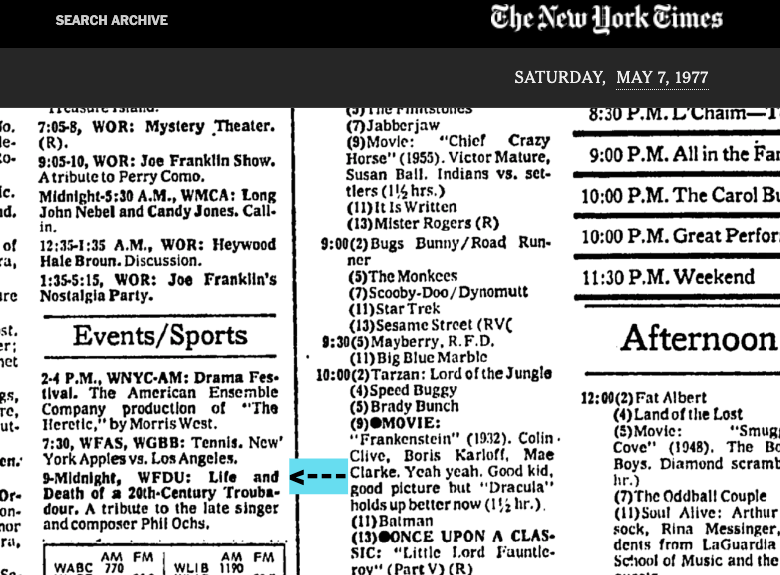
Podcast: Life & Death of a 20th Century Troubadour: Paul Levinson and Josh Meyrowitz about Phil Ochs


Welcome to Light On Light Though episode 414, the complete "radio documentary" on WFDU-FM from 1977 -- "Life & Death of a 20th Century Troubadour" -- in which Josh Meyrowitz and I discuss the life, death, and timeless impact of Phil Ochs and his music.


Check out this episode!

Saturday, May 24, 2025

Dylan Debuts His Cover of Ricky Nelson's "Garden Party"


I just saw Bob Dylan singing Ricky Nelson's "Garden Party" in San Diego (on May 15, 2025) a few hours ago on YouTube.  I posted a link to it on all my social media.  But I had to say more.  In no order of importance (because I think all of these points are important):

  • Dylan's voice is outstanding.  I mean, his voice was already sounding better in his 2020 Rough and Ready LP (with a standout performance in his "Murder Most Foul" lament about the assassination of JFK), but his vocal in "Garden Party" has a real depth and subtlety, hitting some notes with a fluency almost approaching that of "Lay Lady Lay".
  • This cover shows, again, how Dylan is a mentch.  He must have greatly appreciated (1) when Ricky Nelson did a fine cover of Dylan's "She Belongs to Me" and (2) probably even more so when Dylan heard his name in "Garden Party" ("Mr. Hughes hid in Dylan's shoes").   This was, after all, certainly more appealing than what John Lennon said about Dylan explicitly in "God", and a whole lot better than Lennon's put down of Dylan (without mentioning his name) in The Beatles' "I Dig A Pony" (it was no doubt no consolation that Lennon also put down The Rolling Stones in that great song as well).
  • There's something very, I don't know, comforting, in reciprocal covers.  It shows, at least to me, that there's something fair and good about this cultural universe we all inhabit.  That's an important discovery, because the universe as we all know deals out all sorts of disappointments and betrayals (especially in show business, but more recently even more obvious in politics and its tentacles).
Dylan, when he broke through in the 1960s, was an absolute master of lyrics, at the zenith of that craft.  Cole Porter previously held that position, and Lennon, McCartney, and Harrison were often close seconds, but I've always thought that Dylan held and still holds that position alone.  It's good and gratifying to now see him make his mark in the increasingly important micro-genre of covers.


And here are Ricky Nelson's twin sons talking about Dylan's cover of their father's song (begins about 3 mins into the video):


See also It's Real Life: An Alternate History of The Beatles (chapter 8), where Ricky Nelson dies in 1996. ...


Sunday, January 12, 2025

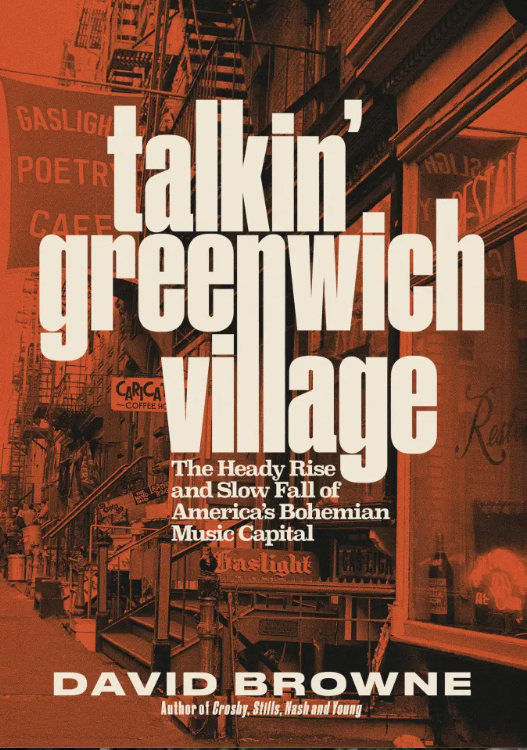
Review of David Browne's Talkin' Greenwich Village: Cornucopic Rainbow Biography


                                    more about the book here

If ever there was a time-travel ticket to a past and a place that you knew so well you could still see the sun glinting through the tree leaves, hear the din of the eateries as you walked by, and, most important, still hear the music that actually defied any given time or place, it would be David Browne's book, Talkin' Greenwich Village: The Heady Rise and Slow Fall of America's Bohemian Music Capital.  That's because Browne has a way of writing, an eye for detail, a penchant for commentary, that draws you in to fill the background you in one way or another actually experienced, or, what Marshall McLuhan called "cool".

Yeah, I sang doo-wop in Washington Square Park with my acapela group The Transits in the early 1960s, and then my folk-rock group The New Outlook a few years later (Ellie Greenwich and Mike Rashkow heard us uptown one Sunday afternoon in Central Park, and signed us to Atlantic Records, after changing our name to The Other Voices), but the way I really got to know the village was finishing up my BA in Journalism at NYU, then going a few blocks up to the New School for an M.A., then back to NYU for my PhD in the 1970s.  (I even managed to write three pieces for The Village Voice just before all that, my sum-total career as a music journalist.)

Turns out David Browne and I could have passed each other in the street -- David arrived to pursue his BA in Journalism at NYU in 1978, and I left, thankfully finished with school, in 1979 -- or bumped into each other going in and out of the diner southeast of the park.  But David stayed focused on the Village and its clubs and their music, to the present day, while I pursued music on the radio, MTV, iTunes, and anyplace I could hear it, and only came to the Village with my wife to eat in a great Italian restaurant near Houston Street, or go shopping at Balducci's.

And Talkin' Greenwich Village is one of the results of Browne's passion -- he's written more than half a dozen other books about popular music, and writes for Rolling Stone -- and delivers a cornucopia of vignettes, insights, and are what in effect mini reviews of dozens of artists.  You know, I always judge a book by how well it treats a subject I know something about.  My wife and I were/are devoted fans of Phil Ochs -- I consider his "The Crucification" right up there with the very best songs that Dylan wrote -- and Browne not only got everything right in his discussion of Ochs and his life in the Village (with an intermission in California) over the 1960s and 70s, until he took his own life the year my wife and I got married (we went to the Memorial Concert for Ochs that Browne also aptly describes), but I also learned something from his description of Ochs.  It's become hard-wired into Ochs's story that he was broken when Dylan did not include him in his Rolling Thunder tour.  But Browne provides a missing piece of the story, telling us how Ochs badgered Dylan, when Dylan was first beginning to put together the group that would tour.   Which means, it's not quite true that a callous or jealous Dylan simply didn't include Ochs on the tour.

But in addition to, I don't know, at least vignettes of 50 artists spread across 8 chapters and an Epilogue teeming with information -- Browne lists every interview he did for the book in its Bibliography -- he focuses on two artists, Dave Van Ronk, and the Roche Sisters (and, also of course, Bob Dylan), and makes them, in effect, centerpieces and guides to what Browne is telling us happened in these magical decades.  I only saw Van Ronk once (at the Phil Ochs 1976 Memorial  Concert at the Felt Forum) and the Roche Sisters only on YouTube.  But Browne's accounts of Van Ronk and of the Roches across the decades amount to mini but in-depth biographies of the two, and make Talkin' Greenwich Village irresistible reading just on their own.

But lest you think everything in this book is as serious as Ochs, or even Dylan, Browne also has a knack for the kind of detail that will make you chuckle, or even laugh out loud.  Seeking the name of a song on one of The Blues Project's just-recorded albums, the response to the person who's writing down the titles is "'What song? You mean Steve’s song?' To [Steve] Katz’s chagrin, 'Steves Song,' complete with a missing apostrophe, became the title."  Or, "when Orbison and Ronstadt huddled in his dressing room, [Jerry] Brown [then Ronstadt's boyfriend], waiting patiently outside, finally began pounding on the door: 'Let me in! I’m the governor of California!'''  Or, "the worst [performers in this Village venue] were booed or heckled. When asked if one contestant should be booted off the stage, [owner] Porco grumbled, 'No, I think we should shoot him.'”

Of course, no volume is perfect, and I'll tell you the one thing I missed in this New York Public Library of a book. I was a big fan of The Blues Project, and to this day I find myself humming or singing to myself "Cheryl's Going Home".  The song was written by Bob Lind (who wrote "Bright Elusive Butterfly of Love"), who does a pretty good job singing it.  But the Blues Project rendition, with those piercing guitar notes, and their interplay with organ, is something else.  Browne tells us almost as much about The Blues Project, Danny Kalb in particular, as he does about Van Ronk, the Roches, and Dylan.  But not a word about that elusive heart-breaker Cheryl.  I guess she was already home and out of sight.

But every page of this pulsating encyclopedia of whirling words is worth reading.  The fall of Greenwich Village and its clubs and taverns and whatever you want to call them brought tears to my eyes, because David Browne had made it seem like a beloved living organism, a mini gaia of music just several blocks long.  My only really lasting regret about this book is that it wasn't ten times longer.  As it was, it's 400 pages went by too quickly, because I just couldn't put the book down.

=========

Check back here at the end of the month for my upcoming interview with David Browne.

=========


                        in Kindle, paperback, and hardcover


Wednesday, December 25, 2024

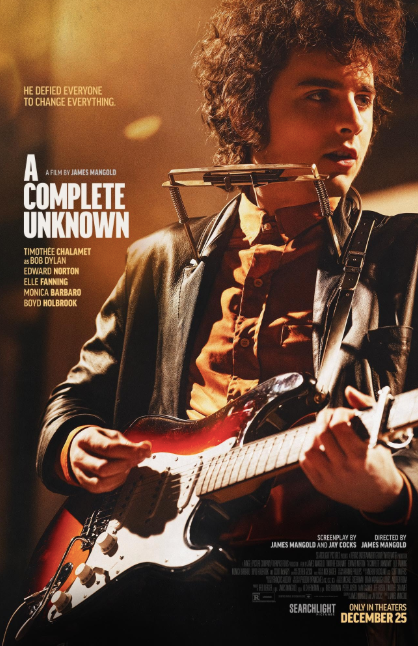
A Complete Unknown: A Nearly Completely Superb Bob Dylan Biopic, Slightly Alternate History


My wife and I just got back from seeing A Complete Unknown, the Bob Dylan biopic.  We both loved it.  The following is my take on the movie.

Dylan recently famously tweeted (on X) that Timothée Chalamet is "a brilliant actor so I’m sure he’s going to be completely believable as me. Or a younger me. Or some other me."  Unsurprisingly, Dylan got it entirely right.  Every biopic ever made is about someone inevitably a little or lot different from the subject of the movie.  Not only can the actor not possibly look 100% like the subject -- unless they are the subject's identical twin, and the producer somehow managed to go back in time and talk the twin into playing the subject's part in the biopic -- but there's inevitably dialogue left out or changed, streets and buildings that don't look the same as the originals, etc, etc.  Look, frankly, even a documentary is never entirely truthful.  It may be more truthful than the biopic, but the director inevitably has to make easy and painful decisions to leave certain things out, etc, etc.   In a phrase, all biopics and docu-dramas are alternate histories (and documentaries, too, just a little less so).

But A Complete Unknown is so good because it managed to get so many things right.  Chalamet as Dylan and Edward Norton as Pete Seeger were letter and note perfect in the words they spoke, the songs they sang, and even what they looked like and how they moved.  Monica Barbaro was not quite there singing as Joan Baez, whose rich mellifluous voice back then is unmatchable, but Barbaro hit all the notes well, and certainly captured Baez's attitude, energy, and intelligence with style.  I don't know what Suze Rotolo at that age was like, even in video. She was inspiration for the part of Sylvie Russo in the movie, because Dylan (to his credit) in our current time didn't feel right about having her character by name in the movie, because she left the world in 2011 and couldn't give her consent to be portrayed in the movie -- but Elle Fanning did a fine job in the part.  (The obvious explanation is Dylan wanted the name changed because some of the interactions with Dylan and Russo in the movie are at variance in some significant way with what really happened between Dylan and Rotolo.)

In addition to Dylan's songs, which were immensely enjoyable to see written, and see and hear performed, there was a symmetry, a kind of rhyme, in the movie, which I expect will stay with me for a long time.  One of my favorite examples is Woody Guthrie's "So Long, It's Been Good to Know You".  It starts off the movie, which begins in 1961, as Dylan comes to New York, and goes to see Woody Guthrie, who was already seriously ill (in reality, he'll live until 1967), and meets Pete Seeger (who had a wonderful cover of the song, solo, and earlier with The Weavers).  At that point, it seems like the song is about Dylan and Seeger saying goodbye to Guthrie.  But when the movie ends, with Dylan going the apostate electric way, the song is played again, and the goodbye is to the Dylan who has forsaken acoustic folk for an electric band with Al Cooper et al. 

The title itself of this cinematic triumph underwent a transformative rhyme.  Dylan is "a complete unknown" when he first crosses the Hudson and arrives in New York City and the movie begins.  And of course the song that plays out the movie as Dylan commits to high voltage is "Like a Rolling Stone," in which "a complete unknown" is one of the many signature phrases.

The implication in the movie -- actually a little more than an implication -- is that Dylan did this because he wanted to be as famous as the Beatles.  I don't know Dylan personally, and have no idea if that's true, but I do know that both kinds of Dylan -- "Blowing in the Wind," "The Times They Are A-Changin'," and "Masters of War" evolving into "Like a Rolling Stone," "Just Like A Woman," and "Positively Fourth Street" (I don't think the last two were in the movie) -- were equally works of genius in their own ways.  And I also know, for whatever it's worth, that the lyrics Dylan wrote are in a class of their own, at the top of the best lyrics ever written, surpassing the timeless word-craft of Cole Porter, John Lennon and Paul McCartney.

There was one scene I found annoying in the movie.  One of the highlights of the momentous Newport Folk Festival scene has Joan Baez singing "There But for Fortune," a huge hit for her, written by Phil Ochs.  Dylan is shown offstage, not looking very happy.  Maybe he's understandably nervous.  Or maybe he's jealous.  But the song isn't identified by Baez.  And in fact there's no mention of Ochs anywhere in the movie.  Whether an accidental oversight or a deliberate cut of something that was filmed ... who knows.  It certainly doesn't make sense given the prominence of the song in that scene, not to tell the movie audience who wrote it.

I'm also sorry we didn't hear any of "God On Our Side" -- especially relevant on this day -- the most irrefutable anti-war song, pinpointing the hypocrisy and insanity of war, ever written.

But I guess that's just personal opinion, and I also think that, just like Dylan's songs, this movie will never grow old.  It will be watched long into the future, after which people might watch Peter Jackson's documentary about The Beatles, and then Martin Scorsese's.  But there's no need to wait for the future.  My recommendation is see A Complete Unknown as soon as you can.

=============

One of the real people left out of the movie is Terri Thal, Dylan's first manager.  Here's an interview Frank LoBuono did with her on his Being Frank podcast on May 30, 2024.

For more on the movie, see David Browne's piece in Rolling Stone.

=============


I haven't written an alternate history as yet about Dylan, but here's one I wrote about The Beatles, in Kindle, paperback, and hardcover

I've always been partial to rhymes.  They're the velcro of the mind.
You can listen to my 1972 album on Bandcamp and Spotify.


The Weavers singing "So Long, It's Been Good to Know You"

Sunday, May 5, 2024

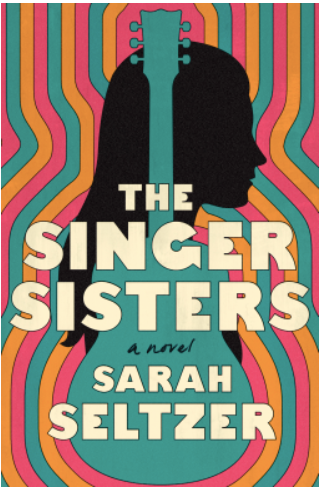
Review of Sarah Seltzer's The Singer Sisters: The Musical Mystique


There's a meta-genre of fiction epitomized in different but overlapping ways by Eddie and the Cruisers, Rob Reiner's This Is Spinal Tap, and Daisy Jones and the Six -- the first and the third adapted to the screen from novels -- that helps us understand what those who make music that lights up our nights are doing when they're off-stage and not in the studio.  Sarah Seltzer's The Singer Singers, a debut novel to be published this August, not only fits well in that narrative family, but in some ways exceeds it.  I'd expect to see it adapted on some kind of screen before too long.

The Singer Sisters actually tells us two stories, deftly interwoven.  One is a moving snapshot of the folk-rock music scene,  and therein the larger music venue in which folk-rock played, in the last third of the 20th century.  The other is a tableau of upper middle class Jewish culture, in New York City, Boston, and beyond, in the same period of time.

The Singers -- aka the Zingleman sisters -- strive to succeed across two tempestuous generations along with other fictional singers and writers, against a backdrop of real superstars that even non-devotees of folk-rock will instantly recognize.  The characters worry about "stealing from Dylan".  One of the singers concludes that "Joan Baez was right and Dylan wrong, that kindness mattered more than genius" (I would say that both are crucial).  There's a quote from Gordon Lightfoot's "Early Morning Rain" -- "see the silver bird on high" -- and a mention of Phil Ochs (not a superstar but shoulda been).  And there are fictitious characters that the cognoscenti will surely know, like the rock critic who uses his way with words to unfairly lambaste brilliant work (as the real rock critic did to Phil Ochs -- not to mention Paul McCartney). Meanwhile, the Singer songs are not only spoken of by the characters, but Seltzer actually delivers more than a dozen sets and snippets of original lyrics, demonstrating a considerable talent not only as a novelist but a lyricist, and leaving the reader yearning to hear them put to music and fulfilled in song.  In addition to a movie or a limited TV series, The Singer Sisters also has the makings of a Broadway musical.

The Zingleman sisters are Jewish, and their Yiddishkeit permeates the novel, not only in cream sodas, but their parents' wise view that they'd rather see their children fed with goishe food than go hungry without it. In this sense, The Singer Sisters has a kinship with Philip Roth's Goodbye Columbus, and I hope the novel is recognized as the compelling portrait of Jewish culture in America that it is.  It's especially important, given the rising wave of anti-Semitism that's afflicting our country and the world.

In case it's not obvious, The Singer Sisters is very much a woman's novel, explored in sisterhood, motherhood, and daughterhood, with love, heartbreak, pain, exultation, and a panoply of uniquely female emotion in every chapter.  But men might well get a necessary education from this novel too, and I heartily recommend it to any human being.

more about The Singer Sisters here.

============


my interview with Sarah Seltzer

============


"Paul Levinson's It's Real Life is a page-turning exploration into that multiverse known as rock and roll. But it is much more than a marvelous adventure narrated by a master storyteller ... it is also an exquisite meditation on the very nature of alternate history." 

-- Jack Dann, Fiction Writer's Guide to Alternate History


Sunday, October 1, 2023

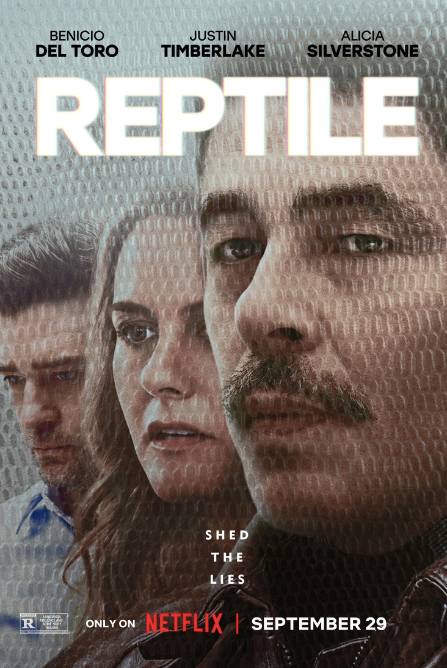
Reptile: Like a Season of True Detective in a Movie


I saw Reptile on Netflix last night, a movie with touches of Body Heat and Blue Velvet.  But it's most like True Detective, the anthology (new characters every season) but brilliant HBO series coming back with a new season in January 2024.

Meanwhile, Reptile has its grit and mix of painfully honest and corrupt detectives, investigating a lurid murder case.  The victim is a real estate agent, in a less than happy relationship with her boyfriend, and--

[Spoilers ahead ... ]

It looks like the boyfriend didn't do it.  But it turns out he did, and with a vicious vengeance.  And when I say corrupt detectives, it turns out just about everyone working above or on the same level as lead detective Tom Nichols is running or turning a blind eye to a drug ring that Summer, a real estate agent and the murder victim, was unknowingly involved in.  If this sounds complicated and little difficult to follow, it is.  But the movie is lifted by some great music -- a new version of "Angel of the Morning" by Evie Sands Courtesy at the beginning and in the middle, and Dylan's "Knocking on Heaven's Door" at the end.  And some superb acting.

Benicio Del Toro is always memorable on the screen, but he's better than ever in Reptile as Tom Nichols. Eric Bogosian, Domenick Lombardozzi, and Mike Pniewski are effective as Tom's varyingly corrupt superiors, Ato Essandoh is good as Nichols' junior and devoted partner Dan Cleary, and so is Alicia Silverstone as Tom's wife.  Meanwhile, Justin Timberlake is just perfect as Summer's boyfriend Will Grady, though for some reason his excellent performances in just about every movie he's in continue to surprise me.

Del Toro, by the way, co-wrote the screenplay for Reptile, which has some fine film noir dialogue, with Grant Singer and Benjamin Brewer, and those two also wrote the story.  Singer directed the movie.  So a lot of talent went in to making this movie, and I'd say the movie amply reflects it.  Indeed, I'll predict that Reptile will become something of a classic in the years to come.


Tuesday, March 15, 2022

Christine Feldman-Barrett interviewed by Paul Levinson about A Women's History of the Beatles


Welcome to Light On Light Through, Episode 262, in which I interview Dr. Christine Feldman-Barrett about her book, A Women's History of the Beatles.


Check out this episode!

Thursday, January 21, 2021

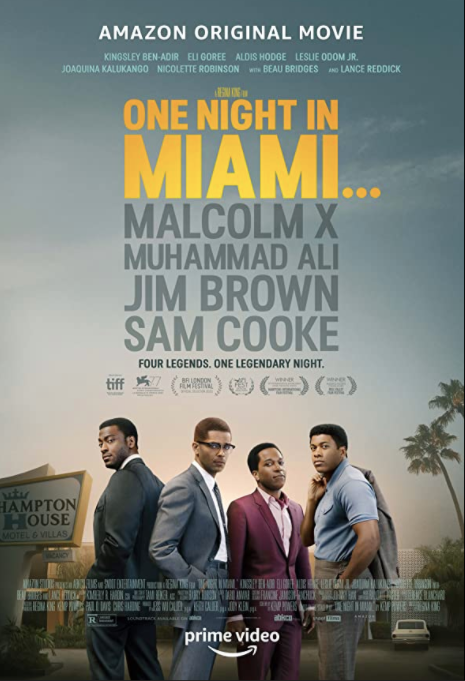
One Night in Miami: A Good Movie for Tonight


This seemed like a good time to review One Night in Miami, which my wife and I saw and loved on Amazon Prime Video the other night -- a good time because Joe Biden is President, a human being back in the White House, and Kamala Harris, in effect his first appointment all those months ago, is Vice President, the first woman and person of color as VP.

One Night in Miami details a long meeting between Cassius Clay (soon Muhammad Ali), Malcolm X, Jim Brown, and Sam Cooke in a hotel room after Clay beat Sonny Liston to win the World Championship in 1964.  The meeting really happened.  The conversations in the movie were scripted (by Kemp Powers) and superb.  Same for the acting (Eli Goree, Kingsley Ben-Adir, Aldis Hodge, and Leslie Odom Jr. in those four roles), and likewise the brilliant directing by Regina King.  And the story told can be a considered a preamble or foundation of Black people in power in America in the 21st century, Barack Obama to Kamala Harris.

Back in 1964, the ways to get that power were far from clear, and highly debatable.  Malcolm wants black people to stand on their own.  His greatest conflict is with Sam Cooke, who sings all kinds of sweet, catchy romantic ballads (which, by the way, I love), leaving it to Bob Dylan, much to Malcolm's consternation, to write and sing "Blowing in the Wind".  Jim Brown knows all about racism, but is in the game (football and soon movies) for personal success, at least to some extent.  The question is how much?  Clay on the verge of becoming Ali is just 22, high on his being "the greatest," but attracted to Malcolm's philosophy.

Pursuit of fame and money back then was and still is a soul-depleting business, unless you can figure out a way to pursue those goals, and keep them if you reach them, with your inner core intact, and devoted at least in part to loftier goals for yourself, your people, and the world.  The path isn't easy, and One Night In Miami portrays four black guys, incredibly talented and bright in different ways, on the edge of that path so well and memorably, it could have been a Socratic dialogue written Plato.   See it and learn and enjoy.


"Sam's Requests" in this anthology is about Sam Cooke!

Saturday, December 12, 2020

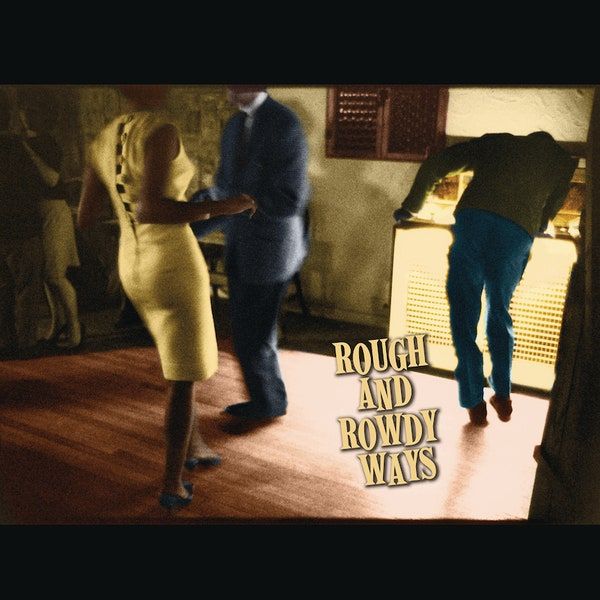
Dylan's Rough and Rowdy Ways: Well Worth the Wait


I reviewed Dylan's "Murder Most Foul" a few weeks ago.  It's a haunting, soul-adjusting masterpiece that's right up there or even better than "A Hard Rain's Gonna Fall" and "Desolation Row" and his very best from the 1960s.  That song, released on its own this past March, is one entire side of Dylan's Rough and Rowdy album released in June.  I thought it time that I listened to the rest, on the other side.

It was time well spent.  All of the songs are bursting with lyrics and allusions we haven't heard from Dylan in years.   Like "Murder Most Foul," they're painted with icons of the past half-century, and Dylan's wry commentary.  Here are my favorites:

"Key West (Philosopher Pirate)": I've long loved Key West, even though I've never been there.  It reminds me, and is probably even better than, Cape Cod, where I've been going with my family since 1982, except this past summer of Covid and its lockdowns.   I thought Bloodlines was excellent, in part because it took place in Key West.  I really like Dylan's rendition of that place in this song.  It's one of the ends of America, and the end of the rainbow.  It's the "place to find immortality".  Dylan already has that, he doesn't need to go to Key West to get it, but it's a tonic and a thrill to hear him sing about it, and tell his gravelly "story".

"My Own Version of You":  Dylan writing and singing science fiction?  Who'd have thunk it?  But that's what this song, Dylan's own Frankenstein story (as in, he's Dr. Frankenstein), is.  I added this to my Science Fiction and Fantasy song playlist, right between "Yoshimi Battles the Pink Robots" and "Monster Mash" (there's also something about a "robot commando" in "My Own Version of You").

"I Contain Multitudes": It's fair to say just about all of Dylan's songs are autobiographical, but this little gem is especially so.  He has something of Poe in him, he paints nudes, has something of "those British bad boys, The Rolling Stones" in him, too, and he makes all of that rhyme.  With dudes, foods, and classical preludes.

"Black Rider":  Ok, one more.  This is the tougher Dylan.  "One of these days, I'll forget to be kind," he says to the rider who's been "visiting" the singer's wife.  And then he becomes much more graphic about what he might do to this masked marauder who's breaking into his life.  Don't mess with this wordsmith who can easily become a swordsmith in his songs.

Dylan took a long time to get back to this level of erudition and power.  Rough and Rowdy Ways was well worth the wait.

Further reading: Simon Vozick-Levinson's review of this album in Rolling Stone's 50 Best Albums of 2020 (Dylan's album is #4).

Monday, November 23, 2020

Dylan's Murder Most Foul: From Then to Now


I didn't think about November 22, 1963 much yesterday, as I usually do on one of the worst anniversaries of my and maybe your lifetime, because I was busy with all kinds of other things, including doing a little virtual concert at Philcon (a science fiction convention) of songs from my new album, Welcome Up: Songs of Space and Time, my first new album in almost 50 years.

But I was on my son Simon's Tumblr page today, scrolling back through his posts, and came upon this one from back in March.  The world has been so crazy since then and now, with Covid and the election, and I've been so immersed teaching online classes, writing, doing podcasts, and the like, that I didn't get a chance to listen to Dylan's "Murder Most Foul" until today.

It's the best Dylan lyric -- as in emotive power, tear up the street and rip up your soul, but maybe you can put it back together -- since, I don't know, "Hurricane"?  -- and, no, actually, "Murder Most Foul" is a lot more than that.  Because of its subject.  The story of our lives, or everyone's who was alive and cognizant in 1963 and all these years since.  The song is almost a couplet with Dylan's 2012 Roll On John, about another unfathomably unacceptable assassination, but a much shorter song, and almost a warm-up for "Murder Most Foul,"  which joins Phil Ochs' masterwork, The Crucifixion, as an extraordinarily insightful song about the event which in a single moment changed the course of history, inextricably and unalterably, for the worst. But "The Crucifixion" was at the moment, written back then.  And "Murder Most Foul" is about then, and now, and all time time in between.  About the end of the joy and innocence and optimism for the future that surged through the early 1960s, an extinction that the world has manifestly still not recovered from.   

I know I haven't.  I think about it often.  Even write about it in my science fiction.  It's reassuring that Dylan hasn't either. "Murder Most Foul" captures all of this and more with a lyric which, if you want to know where I'd place it, it would be among the best lyrics Dylan, the greatest lyricist of the 20th century, ever wrote. Plays upon words about playing songs and playing parts.  I may teach a course about this song someday. It even has a recondite reference to Daniel Keyes' "Flowers for Algernon," one of my all-time favorite science fiction stories.  But the killing of John F. Kennedy was too terrible to be fiction.  And Dylan caught it all.  In a gruff, plaintiff voice that floats halfway between speech and song, over a piano played by Fiona Apple that will pierce your heart.  And here in the 21st century, with a fifth of it almost gone, this song could well be one of the greatest of this century, too.

On a lesser but still significant note -- at least to me -- Dylan's song also scratches an itch I have had about songs about DJs that also goes back to the 1960s.  I even wrote a short story about that -- Sam's Requests -- and just a month or two ago created a Spotify songs-about-DJs playlist with that  theme.  Dylan's song eminently belongs there, containing a series of requests, that in some arcane, nearly endearingly inscrutable way reflect Dylan's commentary on the times, to Wolfman Jack, whom I actually worked with.  I just added Dylan's song to the playlist.  Yeah it belongs there, and in a permanent place in the thoughts of those of us who lived through that era-shattering day.

No, we never made it to the New Frontier, but we'll never stop trying.


                              a happier time

Further reading:


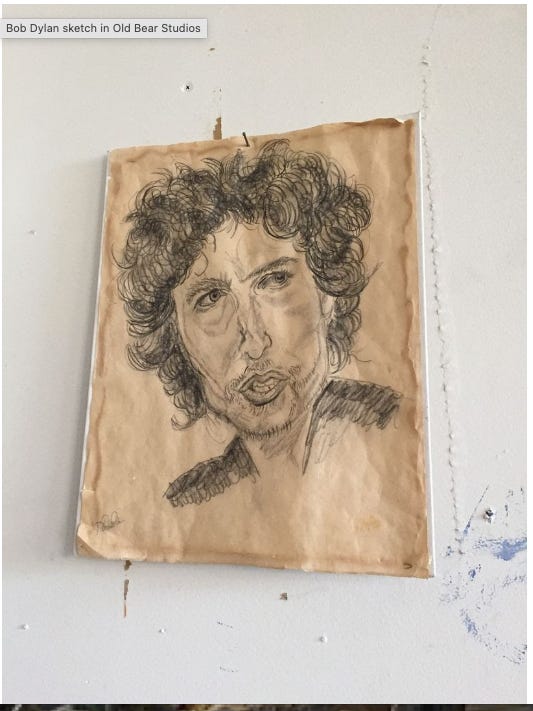
Bob Dylan sketch in Old Bear Studios

Tuesday, November 17, 2020

Joel Iskowitz at the Atlantic Gallery

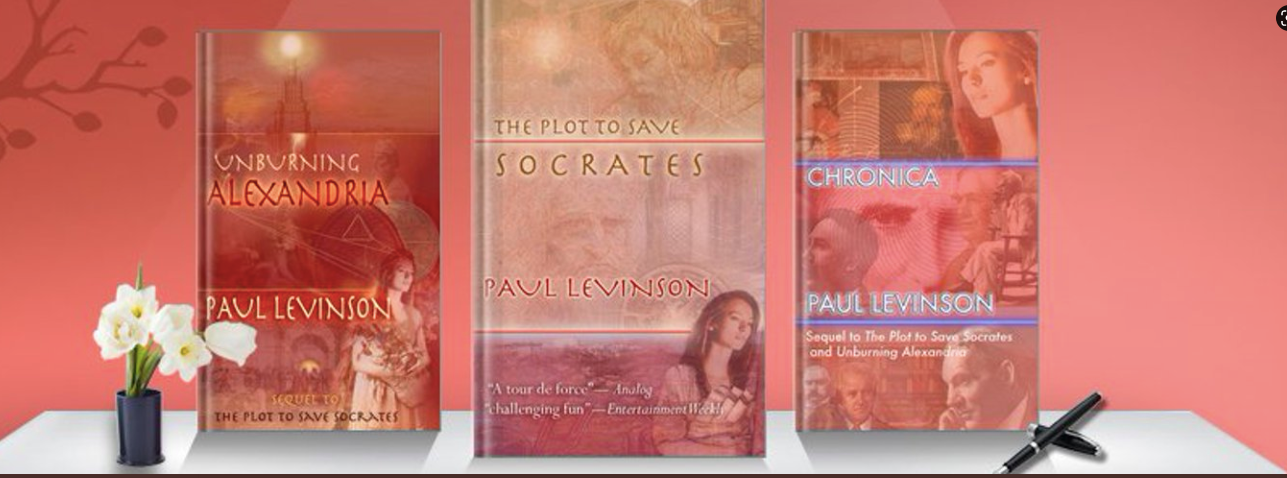
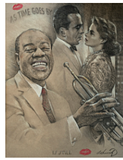
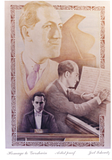
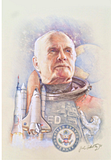
As many of you know, I've had the great fortune of having Joel Iskowitz design the covers for many of my books, ranging from the Sierra Waters time travel trilogy (pictured above -- and note that the third novel, Chronica, written in 2015, makes reference to Joe Biden as President!) to Marilyn and Monet (pictured at the end of this post).  Isky, as I call him, has been my friend since the 5th grade in the Bronx, where we conspired about how to impress girls, and I first became aware of his talent for illustration.   More recently, he has guest lectured in some of my classes at Fordham University, I interviewed him on my Light On Light Through podcast, and he introduced me to John Glenn (subject of several Iskowitz portraits), whom I interviewed just a year before his passing for Touching the Face of the Cosmos: On the Intersection of Space Travel and Religion (for which Isky also did the cover) (here's an audio of the interview).

So, I was truly delighted to learn about Joel Iskowitz's first solo show, Icons of Inspiration, at the Atlantic Gallery in New York City.  Our continuing caution about COVID kept Tina and me from attending in person, but, happily, you can see all of Isky's works online at the virtual show, right over here.  

My favorites are just about all of them, but here are some that really hit the spot for me: Bob Dylan, Edgar Allan Poe, Louis Armstrong (with Bogey and Bacall), George Gershwin, and of course John Glenn.
Prints are available of many of these -- they'd light up any wall, just as they light up the soul.


Tuesday, September 15, 2020

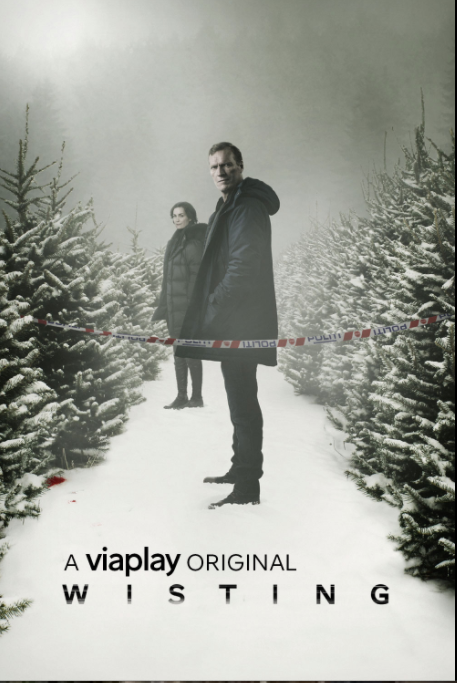
Wisting: Nordic Noir at its Best


When they came up with the name Nordic Noir -- whoever that they was -- they surely had something like Wisting in mind.   Not only does it take place in Norway and feature a seasoned detective and his team hunting not just one but at least two serial killers of beautiful blonde women, but in its single-ten-episode season it manages to weave together two quite separate though connected murder stories, and tell us compelling backstories for at least half a dozen diverse characters.

Many of the characters are of course police.  William Wisting, whose name the series takes, is head of a unit with Nils (a detective Wisting's age who has almost nothing but contempt for the FBI pair who come to assist Wisting in the first half of the season, because the serial killer is likely a transplanted American), a younger male detective earnest but unseasoned, a woman who has to juggle in-vitro fertilization with her work on a breaking murder case, and like that.  Carrie Anne-Moss (The Matrix) plays one half of the FBI team, and I didn't know the rest of the actors, but they are were superb.

The biggest personal story that runs through the season is the relationship between Wisting (a recent widower) and his daughter Line, an investigative reporter with penchant for crime stories, blonde, and you just know she's in danger from at least one of the serial killers, which in fact she is.  She's played by Thea Green Lundberg whom, come to think of it, I did see in another fine Norwegian series, Occupied (with a memorable Dylanesque opening song), and she was excellent in both.  And as long as I'm giving kudos to the actors, let me mention Mads Ousdal as Nils, who almost could be a Norwegian Jean-Paul Belmondo, and Sven Nordin, who does a perfect job as Wistng.

In addition to all that, the scenery is a sight for pandemic-sore eyes.  Characters have homes on, over, or near the water, and the roads and the forestry are lush.  Hey, I'm not a detective, but the environment was so inviting I was tempted to jump through the screen and see if I could be of any help.

I'll have to settle having seen a captivating season, and looking forward to a season two.


Sunday, April 5, 2020

John G. McDaid: Found in Translation


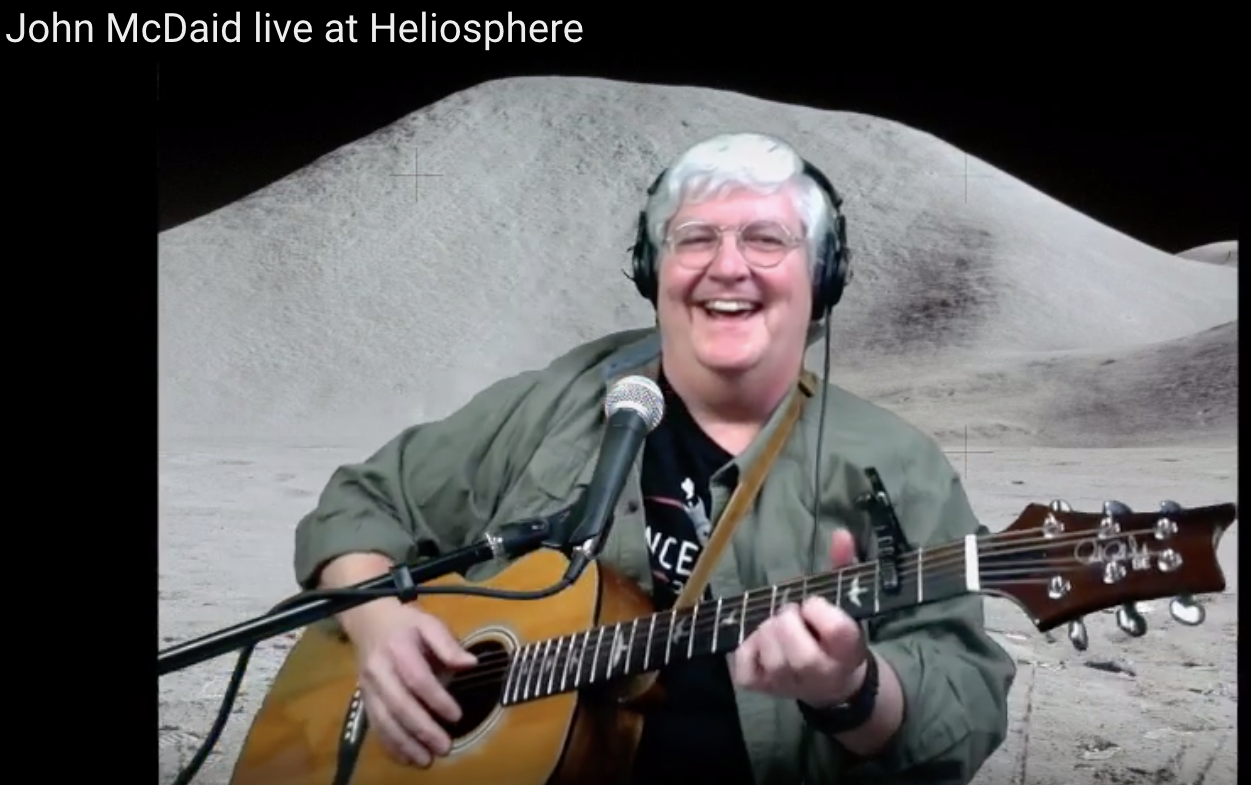
Let me introduce you to John G. McDaid.  He was my student in the MA in Media Studies Program at the New School for Social Research in New York City in the early 1980s.  I was delighted when his first professionally published science fiction story "Jigoku No Mokushiroku" (in Asimov's Science Fiction magazine) won the Sturgeon Award in 1995, right around the time one of my first published stories, "The Chronology Protection Case,"  in Asimov's older sister magazine, Analog, was nominated for the Nebula Award.   I was pleased when I began to see John start showing in Media Ecology Association conferences about a decade later, singing a variety of catchy songs.

But I had no idea, until John's Internet concert at HELIOsphere Beyond the Corona yesterday, about five hours before mine, what a superb songwriter and captivating singer John is.   What do I mean by superb songwriter?  Think Dylan, Phil Ochs, and a little Tom Lehrer humorous topicality thrown in.  His first song, "Lost in Translation" is one of my favorites, filled with Dylanesque rhymes, acerbity, and lines like "Mango Mussolini" (guess who that is).  Same for "Buy the Ticket".

But his next song, "Aaron Swartz," was really something.  Much in the tradition of Phil Ochs' "Joe Hill," McDaid tells the story of the Internet visionary and activist who was persecuted by Federal prosecutors to the point that he took his own life.   McDaid brings to this ballad a memorable mix of savvy, sensitivity, and anger.   His Tom Lehrer came out a song or two later, in "Check Out Time At The Owl Creek Hotel," in some of the lyric juxtapositions, and the song come to think of it also resonates with a combination of the Eagles' "Hotel California" and Netflix's Altered Carbon and its memorable character Poe.

I'm not going to say something about every song, because I want to leave you some surprises for the concert, which you can see and hear in its entirety below.  But I will say that "Love on the Moon" is some kind of masterpiece of angst and imagery, and itself worth the price of admission, which on Bandcamp is as much as you want it be.

Enjoy ...


Sunday, December 9, 2018

David Crosby and Friends: Carrying On and Inspiring


Michael League, Becca Stevens, David Crosby, Michelle Willis (photo Tina Vozick)

Tina and I saw David Crosby and friends at the Capitol Theater in Port Chester, NY, earlier tonight.  A short ride from our home, but we don't get to Port Chester too often.  Last time was when we had dinner with Aleksandar Bogdanic and his wife in Maya, before they returned to Bosnia.  Aleksandar was a visiting scholar studying with me at Fordham University and concluding his visit in May.  We had a great time that evening.  Make that two for two for Port Chester: Tina and I had a great time tonight.

Crosby has had a fabled career.   He first found success as part of The Byrds, a West Coast folk-rock group in the mid-1960s that had a huge hit with Dylan's "Mr. Tambourine Man".   Crosby went on to an even more important role in Crosby, Stills, and Nash - later Crosby, Stills, Nash, and Young - which arguably was the second best supergroup that ever existed (the first would be The Traveling Wilburys some two decades later), and had enormous political impact ("Ohio") as well as cultural and artistic influence.

Like some aging superstars (see my review of Dylan's concert last month), Crosby mostly sang songs that we (Tina and I) didn't know.  Like all aging superstars, Crosby was backed by an outstanding band, playing and singing (Michael League, Becca Stevens, Michelle Willis).  See my reviews of Elton John's, Joan Baez's, Paul Simon's, and Paul McCartney's concerts earlier this year for their superb back-up bands.  Regarding the songs we didn't know, there were some gems in tonight's Crosby concert.  My favorite was "Janet," a song about "jealousy," as introduced by Michelle Willis, who wrote it and sang lead.


David Crosby and Michelle Willis (photo Tina Vozick)

Crosby was in fine voice for harmony, and clear, strong, and sweet when he needed to be for lead.  His repartee with the audience was excellent - in contrast to the taciturn Dylan, though that's part of Dylan's charm - and I especially enjoyed Crosby's account of how he introduced Ravi Shankar and Indian music to George Harrison.  I was also glad to hear him mention that some of his songs are "science fiction" - music to my ears, since my new album for Old Bear records (to be released in 2019) is just that, my science fiction songs (see the song at the top of this blog page for a rough mix example).

But Crosby and friends brought the house down with their last number, "Ohio".  I'd wager there wasn't a dry eye in the house.  The parallels to Trump, who regularly demonizes people and groups not in his favor, to Nixon, who called students protesting the Vietnam War "bums" are impossible to avoid. In Nixon's case, it created the climate in which the Kent State massacre of students occurred in 1970 - the subject of "Ohio".  Let us hope that Trump, who was criticized often and aptly by Crosby tonight, is out of office before anything like Kent State happens.

"Ohio" is an ever-necessary, sobering reminder of what can happen, even in a democracy.  But there was also a lot of beauty in Crosby's concert tonight.  I wholeheartedly recommend it - or the successor concert, because this was end of this tour - for both the politics and the beauty.


Saturday, November 24, 2018

Dylan in Concert at Beacon: Still Recognizable as the Greatest Lyricist of All-Time


Bob Dylan sketch in Old Bear Studios

Well, Dylan tonight at the Beacon in New York City did not look all that much like the sketch above, which hangs in Old Bear Studios in Batavia, New York, where I recorded my first new album in nearly 50 years a few weeks ago (details here).   Nor did he sound all that much like he did in the early-mid sixties, either.  Not even like the Dylan who sang at George Harrison's Bangladesh concert at Madison Square Garden in 1971.  Not even like the Dylan who sang a verse of "My Back Pages" at the 30th anniversary concert in 1993, also at the Garden, with every conceivable Dylan-related singer and guitarist right there on stage with him and loving it.

The difference was that the melodies that Dylan sang of his iconic songs tonight were almost unrecognizable.  And the melodies of the songs I didn't recognize, I couldn't tell you.  But you know what?  I loved it!  (Tina, who was with me, had a somewhat different opinion.)

Of his best-known songs, I enjoyed his renditions of "Like a Rolling Stone" and "Don't Think Twice" the most, with "Blowing in the Wind" a close runner-up.  Of those I didn't know, I thought "Scarlet Town" (2012) and "Gotta Serve Somebody" (1979) were great.  And I really enjoyed lots of the other songs, unknown to me before tonight, too.

Look, Dylan doesn't talk to the audience and didn't introduce his band, which was sharp and excellent.  But he played a strong piano - no guitar - standing and sitting, and his trusty harmonica, too.  And that was enough for me, more than enough.  I've long considered him the greatest lyricist of our or any age - in rock, only John Lennon comes close to Dylan in sheer brilliance and output, but Dylan was so far ahead by the end of the 1960s, that even Lennon with his great work in the 1970s couldn't catch up (maybe if his life hadn't been taken by a lunatic and a gun it would have been different, but we'll never know).  Cole Porter in his own very different way could give Dylan a run for his money, but Porter lacked the anti-war social relevance of early Dylan and late Lennon.

I understand that in concerts some years ago, Dylan carried no tune, and just mumbled  his lyrics, not even in his trademarked cant.  Tonight, he did give us some melody.  If it wasn't the melody we heard back in the 1960s, that's fine with me.  The lyrics, those extraordinary words, were always what made Dylan an unsurpassed genius anyway.

It was all an unforgettable thrill tonight, and when I go to his next concert, and I'll know more of the songs.


Bob Dylan tonight at Beacon; photo by Tina Vozick


Saturday, September 22, 2018

Joan Baez at the Beacon Theater


There are so many ways I could begin my review of Joan Baez's superb concert at the Beacon Theater tonight -
  • This is the second time in less than a week that Tina and I attended a farewell concert - Paul Simon's at the Prudential Center in Newark last week and Joan Baez's tonight.  In both cases, the concerts were so good that it's hard to believe these masters of music, voice, and lyrics are retiring from touring.  
  • Joan Baez, always current and trenchant, sang a powerful Woody Guthrie song about immigrants.   We couldn't help thinking about Joy Reed's interview of Jose Antonio Vargas at the Powerhouse Arena in Brooklyn Wednesday night.
  • One of Joan's last songs was Paul Simon's "The Boxer" - also one of the last encores that Paul Simon sang last week.  "I am leaving but the fighter still remains" was never more apt.
And all of those openers are valid.   And there is much more to be said about Joan Baez's concert tonight.  She said, after one song - a song her sister Mimi sang all the time - that it's hard to sing and cry at the same time.  At several times in the concert, I felt the same way about applauding and crying.  Especially after she sang Zoe Mulford's "The President Sang Amazing Grace".  (Yes, that's exactly what the song's about.)

Baez sang one of her masterpieces early on - "Diamonds and Rust," her parting reflection about Bob Dylan.  This was after opening the concert with a Dylan song.  She followed with a wonderful rendition of Phil Ochs' "There But For Fortune" - a lyricist who never received the recognition he deserved as someone right up there with Dylan.  And she sang several more Dylan songs, including the incomparable "A Hard Rain's A-Gonna Fall," which Baez linked to the state of the nation and world today.   After all these years, Joan Baez remains the best voice Dylan ever had.

And we do live in a world "where souls are forgotten," certainly by the White House and its minions.  Which means we need Joan Baez's voice more than ever.  I remain ever hopeful we can hear it again.

Thursday, February 8, 2018

Knightfall Season 1 Finale: Threading the Needle

The Kightfall Season 1 finale very carefully threaded the needle of miracle or natural event with Joan in the forest, speaking of drinking in the blues of the sky, in Landry's arms.

She's dying - from the sword the King thrust into her - and the doctor tells Landry it's hopeless.  As a last attempt to somehow save her life, when the end of is nigh, he remembers that she has the Grail.  He fills it with water and bids her to drink.  Which she does - but to no apparent avail.  Landry, furious with the Grail which didn't come through for him, throws it against a tree where it smashes.

But the miracle occurs.  Her baby is still alive, and the doctor is able to deliver it - a girl - via caesarean.  Joan dies, but their daughter miraculously lives.  Will this be enough to restore Landry's faith?

Probably.  But where was the miracle in what happened?  We know with our science that it's possible to deliver a live baby from a mother who has died via caesarean section.  So, what seems like a miracle to Landry is just quick thinking and knowledge from "Syria" on the part of the doctor, after Landry felt the baby moving in his deceased Joan.

The Templars and thus Knightfall are all about God and miracles.  Just before Joan's death, De Molay saves the day by riding in with reinforcements and beating back the red knights.  Tancrede, quoting Dylan from more than half a millennium later, says earlier and repeatedly that the Templars fight with God on their side.  But was De Molay's appearance with his men an act of God or the result a guilty conscience, clear thinking, and fast action by De Molay on behalf of his brethren?

We face questions like that today, as the world did in the thirteen-hundreds, and as human beings, trying to understand the word around them, the good and the bad and what may or may not be fate, always will.   Faith and science are always in the eye of the beholder.

***

A final thought about the finale: The death of Joan and the birth of her and Landry's daughter echoes the death of Padme and the birth of Leia, and is consistent with the resonance between the Templars and the Jedi that ran through this season.  Joan and Landry's daughter could almost be Joan of Arc, but she appeared about a century after the time being depicted in Knightfall.

I enjoyed this first season and look forward to beholding more.

See also: Knightfall 1.1: Possibilities ... Knightfall 1.2: Grail and Tinder ... Knightfall 1.3: Baby ... Knightfall 1.4: Parentage ... Knightfall 1.5: Shrewd De Nogaret ... Knightfall 1.6: Turn of Fortunes ... Knightfall 1.7: Landry's Mother ... Knightfall 1.8: Crucial Moves ... Knightfall 1.9: "More Than You Think"


Friday, January 26, 2018

Review of Rob Sheffield's Dreaming the Beatles 21 of X: Resistance

It's been nearly a month since I posted a review of a chapter or two of Rob Sheffield's superb Dreaming the Beatles because, as I've said before, I don't want this book to end.  I want it to last forever, as I do its subject, The Beatles.  And I'm sure they - the book and The Beatles - will.

We're now into the sad and sadder part of the book.  And amidst the gathering ruins of The Beatles, no longer recording together, soon to experience far worse events, Sheffield manages to ingenuously pull together strands that no one else would or could connect, and weave into a riveting now close to heartbreaking chapter.

This time it's a comparison of John Lennon's "Revolution" (of course recorded with the Beatles) and Paul McCartney's "Silly Love Songs" (of course recorded after the Beatles disbanded).  No one but Sheffield could possibly see and convincingly argue that these two songs are really about the same thing, and show that despite the many differences between Lennon and McCartney, they nonetheless were in many ways almost the same person, or brothers.

Both songs, Sheffield explains, are about the The Beatles' resistance to authority.  Lennon's "Revolution" is about not being dictated to by trendy political truth-tellers, of which we now in 2018 obviously have a myriad, on any screen you see.  McCartney's "Silly Love Songs" is about not being told what to do - what to sing about - by self-appointed pop-cultural gurus (of which Robert Christgau was a prime example back then, and which we all suffer a myriad of advice from, nowadays as well).  And like I once read somewhere about Immanuel Kant, a philosopher much harder to understand than is Sheffield, once you consider his hypothesis about these songs, you realize instantly that he is right.

Sheffield couples and discusses other Lennon and McCartney solo recordings, such as Lennon's "Whatever Gets You Through the Night" and McCartney's "What the Man Said".  Here I'll say that I've always liked pop more than (I think) Sheffield does - "Afternoon Delight," for example, by the Starland Vocal Band in 1976, was and always will be one of my favorite recordings.  And I don't know if Lennon's "Whatever Gets You Through the Night" is pop.  How could it be, with a line like "Don't need a watch to waste your time" (my favorite line in the song)  which sounds like it could have come out Dylan's "My Back Pages"?

Sheffield also says that "Whatever Gets You Through the Night" isn't played on radio anymore, because of it's "Don't need a gun to blow you mind" line, but I just heard it on The Beatles Channel on Sirius XM Radio.  The times they are a-changing, including an evolution in our understanding and appreciation of The Beatles, of which The Beatles Channel and Dreaming the Beatles are essential parts.

See also Review of Rob Sheffield's Dreaming the Beatles 1 of X: The Love Affair ... 2 of X: The Heroine with a Thousand Faces ... 3 of X: Dear Beatles ... 4 of X: Paradox George ... 5 of X: The Power of Yeah ... 6 of X: The Case for Ringo ... 7 of X: Anatomy of a Ride ... 8 of X: Rubber Soul on July 4 ... 9 of X: Covers ... 10 of X: I. A. Richards ... 11 of X: Underrated Revolver ... 12 of X: Sgt. Pepper ... 13 of X: Beatles vs. Stones ... 14 of X: Unending 60s ... 15 of x: Voting for McCartney, Again ... 16 of x: "I'm in Love, with Marsha Cup" ... 17 of X: The Split ... 18 of X: "Absolute Elsewhere" ... 19 of X: (Unnecessary but Brilliant) Defense of McCartney ... 20 of X: "All Things Must Pass" ... 22: The 70s Till the End ... 23: Near the Science Fiction Shop ... 24 of 24: The Last Two

And here's "It's Real Life" -- free alternate history short story about The Beatles, made into a radio play and audiobook and winner of The Mary Shelley Award 2023


lots of Beatles in this time travel 
InfiniteRegress.tv