Chuck Todd interviews me about alternate histories
Showing posts with label Anthony Marinelli. Show all posts

Wednesday, July 8, 2026

The Fix: A Short Film with a Crucial Story


I first met Amanda Greer nearly a decade ago, in 2017, after I saw her performance as Marilyn Monroe in Anthony Marinelli's play, Max & Domino, which was playing at The Duke on 42nd Street in Manhattan.  I had first gotten to know Anthony some years before, when he asked me if I thought he got Marshall McLuhan's concept of "acoustic space" right in the play Anthony wrote (later made into a movie) of the same name (Anthony did get it right).  And I first got to see Denise Reed, with Amanda, in Marinelli's production of Sartre's No Exit in 2020, and I saw the two again in Anthony's wise and hilarious Why I Had to Kill You While You Slept in 2023.  Denise also played an important role in an episode of FBI on CBS in 2024, and joined Amanda and Anthony and me in a dramatic reading taken from my 2024 novel It's Real Life: An Alternate History of The Beatles at Big Red Books in Nyack, NY in 2025 (Anthony and Amanda are real-life characters in the novel).

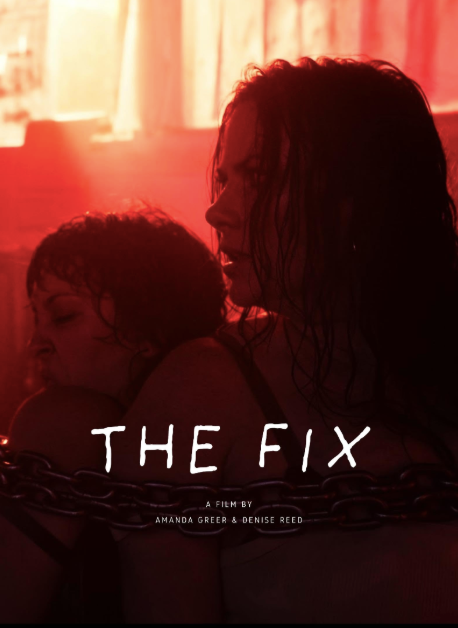
I tell you all this because when I heard that Amanda and Denise had formed a production company -- The Abbey, Stories Worth Telling By Women, For Women -- I couldn't wait to see one of their movies.  And The Fix, an 18-minute short (co-written by Chelsea Hattan and Anthony Marinelli, from a story by Amanda Greer), is one powerhouse of a film -- a brutal,  scathing, heartbreaking, hopeful, all-too-real portrait of what it means to be a woman addicted to heroin.

The heartbreak and horror of heroin addiction has been depicted in feature-length films like Trainspotting (1996) which also tried to leaven its message with dark humor.  The Fix has no time for that.  There's nothing funny about its smiles.   Anyone who thinks there's an easy exit out of this kind of hell will be quickly disabused.  Indeed, the creative work that comes closest to the The Fix in tone and message is something even shorter than this movie, John Lennon's "Cold Turkey", a song 5 minutes and 1 second long.

Speaking of cold turkey, of course in reality there are ways out of heroin addiction.  But all are life shaking.  Is The Fix wrong to vividly portray such a painful situation?  No, because it's also a testament to sheer human willpower, how the part of us that strives to save our lives can triumph over the part that seeks to blissfully self-destruct -- they're two sides of the same human coin.  Anything that shows people this reality is eminently worth seeing.  The Fix been making the film festival rounds -- garnering 16 nominations and 9 wins -- and will be at the 32nd Annual San Antonio Film Festival later this month of July.

Here's the trailer.


Wednesday, February 26, 2025

Video of Unique Dramatic Reading from It's Real Life: An Alternate History of The Beatles at Big Red Books


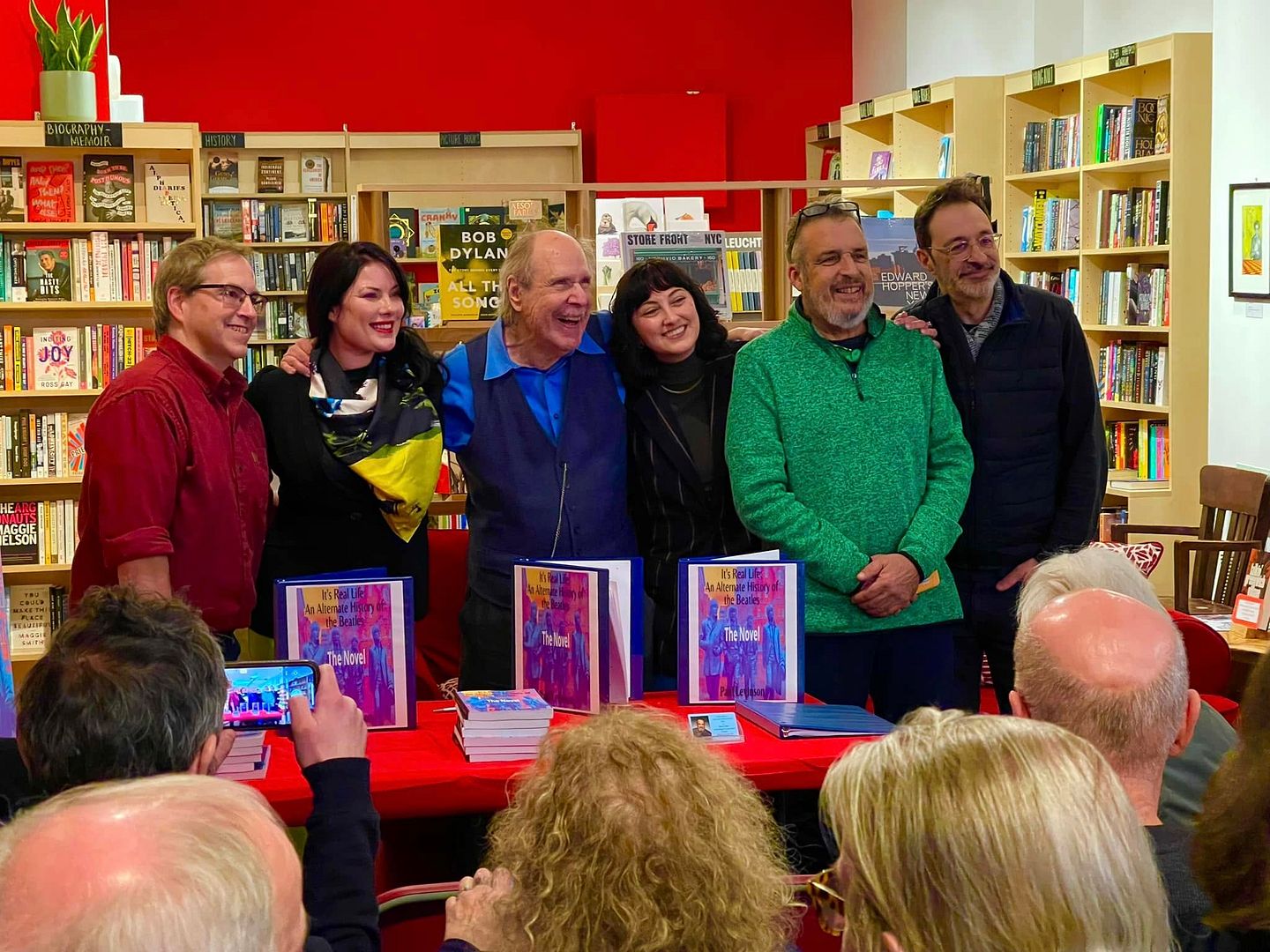
This reading took place on 23 February 2025 at Big Red Books in Nyack, NY, and features Anthony Marinelli and Amanda Greer -- real life characters from the novel who voiced what they say in the novel -- as well Denise Reed, Frank LoBuono, and me.

More about the novel here. 


Anthony Marinelli, Amanda Greer, Paul Levinson, Denise Reed,
Frank LoBuono, and Richie Fulco (owner of Big Red Books)


Monday, June 10, 2024

What They've Been Saying about It's Real Life: An Alternate History of The Beatles (the novel)


"Paul is original his books and music are different than the norm -- they are clever!" -- Billy J. Kramer๐ŸŽถ

"a wild ride" -- Michael McLuhan ๐ŸŽถ

"now I’m desperate to hear songs from the Asimov/McCartney musical" -- Thomas MacFarlane, The Beatles and McLuhan and Lennon and McCartney: Painting with Sound ๐ŸŽถ

""I got so hooked that I stayed up way beyond my bedtime and read it in one go. It was not just extremely entertaining (I started looking forward to the Tom Petty phone calls) but also a nifty take on averting the grandfather paradox." Geoffrey Winthrop-Young, Kittler and the Media๐ŸŽถ

"Paul Levinson's It's Real Life is an incredibly unique and captivating peek behind rock and roll's mysterious curtain. The idea that the story delves into an alternate world adds to its page-turning intrigue. Highly recommended!" -- Steven Manchester, #1 bestselling author, The Menu ๐ŸŽถ

"brilliantly entertaining ... it’s no wonder this novel is such a transportive experience: it does exactly what our favorite songs do. It transports us, makes us remember, and wish ... you couldn’t find a better escape than Paul Levinson’s It’s Real Life." -- Anthony Marinelli, Amazon ๐ŸŽถ

"one of my favourite moments treats us to a Beatles concert in Central Park" -- Keith Soltys, Core Dump ๐ŸŽถ

"a fascinating tale of what could have been had John Lennon not been murdered ... a passionate celebration of a musical genius whose life was prematurely cut short ... a science fictional celebration [by] a master of speculative fiction and alternate reality, Paul Levinson" -- Chris Cosmain, Novikov Windows and The Amazon Anomaly ๐ŸŽถ

"Such a wonderful story! I grew up as a real science fiction fan and time travel and alternative history has always been a favorite SF genre of mine. The story offers such a speculative piece that keeps one thinking. A detective story mixed with all of this. Just a wonderful story. With synchronicity mixed into it and the mention of Roots of Coincidence, one of my favorite books from long ago. In many ways, a story for our times after Covid as many think we are living in some alternate reality or alternative history." -- John Fraim, Amazon ๐ŸŽถ

"What would you do if you came from an alternate reality in which John Lennon was never killed — and you became accidentally aware of our own universe? This excellent, eerie novel explores that question in ingenious style. It’s a page-turner with philosophical heft and a great sense of rock history (not to mention some surprise cameos by Lennon, David Bowie, Leonard Cohen, and other luminaries). Highly recommended for fans of Philip K. Dick and/or the Beatles." -- SVL, Goodreads ๐ŸŽถ

"Paul Levinson's It's Real Life is a page-turning exploration into that multiverse known as rock and roll. But it is much more than a marvelous adventure narrated by a master storyteller...it is also an exquisite (and absolutely non-didactic) meditation on the very nature of alternate history." -- Jack Dann, A Fiction Writer's Guide to Alternate History ๐ŸŽถ

=====================

Get the novel on Kindle, paper, or in hardcover here.

Friday, March 29, 2024

A Night at The Players in New York City


A night in which I read the first chapter of my new novel, It's Real Life: An Alternate History of The Beatles, play a little music, introduce a character who appeared in the novel, who was in the audience, and answered all kinds of questions from the audience. 

You can get the novel here.

  • "Paul Levinson's It's Real Life is a page-turning exploration into that multiverse known as rock and roll. But it is much more than a marvelous adventure narrated by a master storyteller...it is also an exquisite meditation on the very nature of alternate history." -- Jack Dann, The Fiction Writer's Guide to Alternate History

Monday, October 16, 2023

Why I Had to Kill You While You Slept: Husbands -- Make Sure You See It Before You Go To Sleep


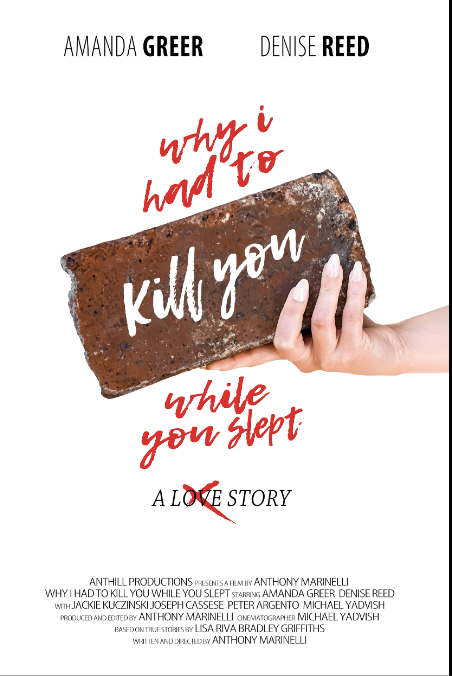
Nah, I think I'm probably kidding.  If you're a husband and you see Anthony Marinelli's hilarious new short, Why I Had to Kill You While You Slept, before you go to sleep, you may not be able to fall asleep.  Ok, I'm probably kidding about that, too.  But you likely will feel a little guilty.  And you'll certainly be laughing.  And note that I'm not saying I'm kidding about that and that.

This 15-minute comedy and tutorial about what not to do if you're a husband provides a vivid little catalogue of what wives get upset about around bedtime -- snoring, not cutting your toenails so you accidentally gash your wife's thigh, going to sleep after you're satisfied but she's not, and you're... well, doing something that requires a powerful air-freshener to at most partially remedy.  And then there's what men shouldn't do before they leave the bathroom -- leaving the seat up and not flushing.

Now, just to be clear, I've been married to the same woman for almost fifty years, and I've done none of that -- I'm innocent, your Honor, innocent!   Ok, maybe I snore a litte, at least according to my wife.

But forget about me, and back to the movie.  Marinelli wrote (with Bradley Griffiths and Lisa Riva) and directed, and the dialogue is barbed and funny.  So is the rendition.  Amanda Greer is perfect as Donna the long-suffering wife, as she's been in everything I've seen her do on stage and screen.  So is Denise Reed as Lisa, Donna's friend, who manages to be both rational and receptive as Donna spills out her story.  And Peter Argento was fine as Jim, the horrible husband, as was Jackie Kuczinski as his sexy sister, Michael Yadvish as her boyfriend, and Joseph Casesse as Lisa's not so horrible husband.

The movie was shown yesterday at the Chelsea Film Festival in Manhattan.  It's 15 minutes you'll no doubt enjoy, unless you're like Matt, in which case you should see the movie and maybe learn a thing or two. 


science fiction/fantasy novelette

Sunday, September 20, 2020

Review of Anthony Marinelli's Virtual Production of Sartre's No Exit


Just saw Anthony Marinelli's virtual production of Jean-Paul Sartre's No Exit.  A scorchingly brilliant two hours.

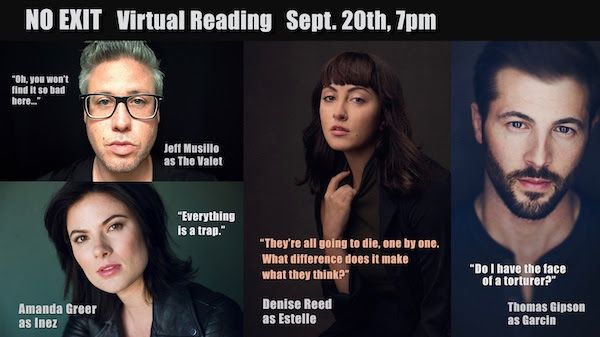
First, seeing this play on a screen was in many ways better than in person.  The close-ups of the faces lent an additional dimension to the performances.  Jeff Musillo's facial expressions in the relatively minor role of The Valet at the beginning of the play, for example, were just perfect, at once powerful and subtle, and would have been not quite as effective when seen from a seat in a physical theater, unless that seat was in a very close front row.  (The virtual rather than physical presentation also made this seem like a full-fledged play, not a "reading," which it is technically billed as being.)

The three performances of the major characters were stellar.  I saw Amanda Greer as a kick-ass Marilyn Monroe a few years ago in a play Marinelli not only directed but wrote,  Max & Domino.   She plays the caustic, vulnerable, gay postal worker Inรจz in No Exit, and her delivery will leave singe marks on your fingers.  Heat of course is a major component of this story, because all three people are not only dead but in some kind of hell.  I suppose this also makes them vulnerable, though being dead could also make them invulnerable, and you never quite know with Sartre.

Thomas Gipson plays Garcin, a pacifist journalist who is shot down by a firing squad for his troubles.  The two other characters call him "garรงon" -- French for waiter -- I have no idea if that's the way you pronounce Garcin, or Marinelli instructed the other two to call Garcin that as a indication of their contempt for him, but either way, it worked.  And Gipson worked very effectively, too, sincere, logical, and highly aggrieved.

Inรจz certainly has contempt for Garcin.  Denise Reed's Estelle mostly wants to seduce him, and though that's not quite an indication of contempt, it's certainly treating Garcin as an object.  Inรจz true to form is infuriated by all that, and Reed does a fine job shuttling between vamping and anger, with the undertone of desperate vulnerability that everyone accept The Valet understandably has, though he has a touch of it too when Garcin says something about his looks.

In case you didn't already know, the essence of this play is "hell is other people".  Marinelli does an especially strong job of conveying this, given that this production is not only virtual but the actors are each in separate rooms in their separate real dwellings.  Marinelli intersperses with appropriate filmic footage, which brings to our eyes the backstories that the characters tell us and one another.

A memorable rendition of an eternally classic play, and never more relevant in its story conveyed via literally separate rooms in these our Covid times.

----------

If you'd like to see this in an in-person theatre, here's where you can make a tax-deductible donation.

-------------


Saturday, October 28, 2017

Bladerunner 2049: The Only Better Movie of this Kind is Bladerunner, and Hey


I loved it.  So did my son Simon, who's now a father of his own.  We loved it almost as much as the original Bladerunner, which we saw more than once on videotape, before there even were DVDs for rent, back in the early 1990s.   That's high praise.  The only reason Bladerunner 2049 wasn't as good as Bladerunner circa 1982 was that the 1982 movie broke so much new ground.  Back in the mid-80s, when I was teaching in the MA in Media Studies Program at the New School, I asked Stephen Jacobs (who then was my student, and has long since become a professor himself, at the Rochester Institute of Technology) to give me an example of cyberpunk.  "Bladerunner" he replied.  It defined the field, at least in the movies.  It was and still is that good.  Not only that, it began Philip K Dick's run of stories made into great movies and TV series, with the current example of The Man in the High Castle on Amazon.  And it inspired me to write The Civil Right of Robots.

But Bladerunner 2049 did as outstanding a job as could be done in a sequel for that kind of movie - moreover, a sequel on the screen some 35 years later.  Rather than reviewing the plot, or even the acting - other than mentioning that both were excellent, and Ryan Gosling as "K" and Harrison Ford reprising his Deckard role were especially excellent - I'll go over certain points and questions which capture this visually and intellectually stunning film (and there will be spoilers):

  • Did you catch that "CCCP Soviet" sign on the building in LA?  How could the Soviets still have a sign on a building in 2049?  Maybe Putin managed to restore the Soviet Union?  Possibly.  But I think a better explanation is that Bladerunner 2049 and in turn Bladerunner are and were alternate realities from the outset.  Or, at least they are now.  The Bladerunner of 1982 took place in 2019, in a world that doesn't look much like our world does now, in 2017 (except insofar as Times Square has seemed increasingly Bladerunner-inspired in the past decade). So the makers of Bladerunner 2049 had to make a sequel in a world that looked 30 years later than the world of 2019 and how it was depicted in 1982.  That world has Japan much on its mind - Japan looked like it could become the dominant computer power back then - and, of course, the Soviet Union and Russian were in everyone's head, too.  Bladerunner 2049 has both Russian and Japanese all over the scenes. It could have not flashed Soviet at all,  and benefitted from the unexpected prominence of Russia in our popular culture in the past year.  But instead the sign says CCCP and Soviet - as a shorthand for saying this is the future of Bladerunner 1982/2019, not our future.  Very nice touch.
  • Did "K" die at the end?  The convention in movie-making is that if (a) you're very badly wounded, and (b) you're lying motionless with your eyes open, then (c) you're dead.  On the other hand, we've learned that the replicants can only be killed when their brains are destroyed, by a bullet, or, in the case of Niander's evil, powerful, beautiful replicant apprentice, by deprivation of oxygen because K drowned her.  But nothing like that happened to K.  He's been badly wounded - but I'd put my money on his not dying.
  • So, is Deckard a replicant or not?  On the yes side, he has a pretty high survival quotient, too.  And he did father a replicant with Rachel, who definitely was a replicant.  But, wait, that's also evidence that he isn't a replicant, right?  I mean, isn't it more likely that human sperm and replicant ovum created a living being, than replicant sperm and replicant ovum?  I think so.  I am a little less sure that Deckard is human than K is alive, but I'd go with Deckard as human if push came to shove.
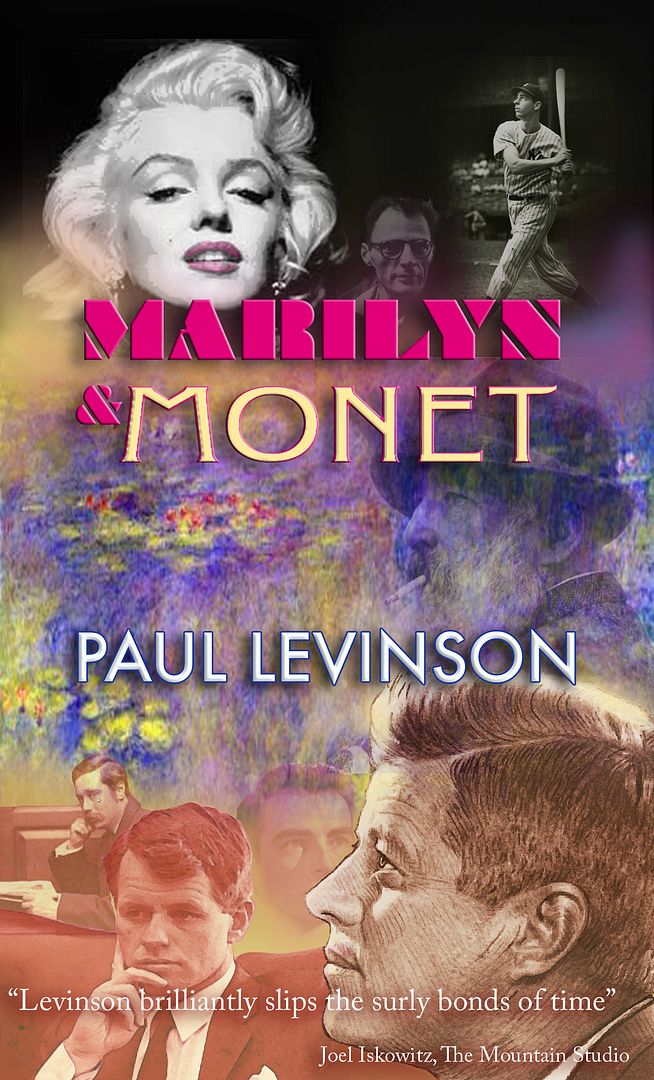
  • I enjoyed the Elvis in what's left of Las Vegas hologram, with a quick shot of Marilyn Monroe thrown in.   (I just published Marilyn and Monet, so I'm always glad to see her given screen time, or for that matter, stage time, as in Anthony Marinelli's Max & Domino which I reviewed here just last week.)  But Elvis belting it out on a stage is a fine homage to David Lynch, and there was a touch of Twin Peaks, somehow, in Bladerunner 2049.
Highly recommend, for the senses and brain.  Bladerunner 2049 is 2017 movie-making at top of its game.  Kudos to Ridley Scott and everyone involved in this movie.


It all started in the hot summer of 1960, when Marilyn Monroe walked off the set of The Misfits and began to hear a haunting song in her head, "Goodbye Norma Jean" ...

Monday, October 23, 2017

Curb Your Enthusiasm 9.4: "Hold You in his Armchair"

So, as I've mentioned here several times, I have something of a principle - well, not quite a principle, maybe more of just a practice - of not reviewing comedies.  They rarely have continuing storylines, and the act of reviewing always seemed somewhat antithetical to the very notion of comedy.  Yet I started against my better judgement to review this ninth season of Curb Your Enthusiasm, and I've been drawn so inextricably into comedy that I've even reviewed three short plays this weekend, two of which are comedies (see my review of Anthony Marinelli's  Max & Domino, for example).  So clearly, there's nothing to be gained by resisting a review of another episode of Curb.

In this case - a review of tonight's 9.4 - I drew the title from Rob Sheffield's masterful book, Dreaming the Beatles, and its maybe facetious discussion of whether the line in John Lennon's "Come Together" is "feel you in his arms, yeah, you can feel his disease" or "feel you in his armchair, you can feel his disease".  Never mind that the second makes no sense.  Sheffield says there's been a decades-long debate about which it is.

And what does this have to do with tonight's Curb?  Well, the least funny part of the episode, but still pretty funny, was Larry's quest to get his shrink (played by Bryan Cranston!) to get Larry a more comfortable armchair for their therapy sessions.  Hence the connection between armchair and therapy in Curb 9.4 and the armchair and disease lines in "Come Together".

Larry's disputing whether the patient is bound by doctor/patient confidentiality was funnier, and more profound.  And as almost always, I think Larry is right.

But the funniest, burst-out-laughing part came during Funkhouser's eulogy for his nephew, which Larry first disrupts in his pursuit of his reserved seat, then any seat, then someone who Larry is sure is about to enact the fatwa on him, but of course turns out just to be a late guest in Middle Eastern garb.  Anything Funkhouser does is funny, but this memorial scene was pure gold.

(The length of flies routine - the kind that zip and unzip - was also hilarious.  Some maybe that's a tie with the interrupted Funkhouser eulogy.)

Ok, enough of this comedy.  Time to turn to the grim and brutal Ray Donovan, which I'll do in my next review.

See also: Curb Your Enthusiasm 9.1: Hilarious! ... Curb Your Enthusiasm 9.2: Wife Swapping ... Curb Your Enthusiasm 9.3: Benefits


It started in the hot summer of 1960, when Marilyn Monroe walked off the set of The Misfits and began to hear a haunting song in her head, "Goodbye Norma Jean" ...

Saturday, October 21, 2017

Max & Domino: Dark, Funny, Iconic

I had the pleasure of seeing Anthony Marinelli's Max & Domino at The Duke on 42nd Street last night, one of six short plays which are semi-finalists in the New York New Works (NYNW) Theatre Festival.  All six were excellent, and I'll likely review each of them in the coming days, but I'll start with Max & Domino, which was my favorite for a variety of reasons.

I saw and reviewed here Marinelli's Acoustic Space - a short 2015 movie made from his short play - which apropos McLuhan (who came up with the term) was about the impact of ubiquitous smartphones on interpersonal relations, and looked to me like a movie that might have been produced had McLuhan and Woody Allen gone on to collaborate as producers after McLuhan's appearance in Annie Hall.  Max & Domino has nothing to do with phones, but is invested with Marinelli's savvy about media, this time about movie idols and fevered illusions.

Actually, Max & Domino is about just one movie icon, Marilyn Monroe, who as fate would have it is the Marilyn in my just published Marilyn and Monet.  Unfortunately, she didn't live long enough to star in a Woody Allen movie, but she's permanently in our firmament, as hot today as ever she was in the 1950s and 60s.

In Max & Domino, she's perfectly played by Amanda Greer, who delivers just the right verve and breathiness.  Greer is in fact Domino, one half of a mobster enforcer team who are torturing poor Charlie (well played by Mike Funk) to give up where he hid their money and who knows what.  Like a boxer on the ropes having visions of some babe in his real or mediated life, Charlie makes his beating more exquisite by imagining that at times the brunette Domino is blonde Marilyn.  (I told you this was both dark and funny.)

But the best punch comes with a twist at the end, which I won't tell you, except that all is revealed and clicks into place with stiletto precision.  I hope Max & Domino move on from the semi-finals, and Charlie rides forever like his namesake on the MTA.


It all started in the hot summer of 1960, when Marilyn Monroe walked off the set of The Misfits and began to hear a haunting song in her head, "Goodbye Norma Jean" ...

See also my reviews of the other NYNW semi-finalists: Frozen West ...  The Lady in the Woods ... Dear Diary, Burning Leaves, Sammy and Esther Are Breaking Up

Saturday, January 17, 2015

Acoustic Space: A Short, Sage and Funny Movie

Just saw Acoustic Space, a short film by Anthony Marinelli currently on the film festival circuit, and based on the award-winning play by Marinelli of the same name.   That name is taken from Marshall McLuhan's phrase - "acoustic space" - which McLuhan created to describe the all-at-once immersion of the electronic environment.   In contrast to visual space, in which we tend to focus on a single direction or source of information, acoustic space gives us information from everywhere in the environment at once.  We can hear radio, for example, regardless of where our eyes may be focused - that's why listening to the radio works so well when we're driving a car.   McLuhan wrote this in the 1960s and 70s.   In my Digital McLuhan (1999) and New New Media (2009, 2012), I explored how what McLuhan wrote 40-50 years earlier was even more applicable to our current digital age, in which we're even more immersed in information than we were back then.

Acoustic Space the movie is both predicated on our digital immersion and a delightful and intelligent word-play on acoustic.  A couple about to have dinner in a restaurant are talking more to people on their phones than they are to each other.  We've seen scenarios like this before, but Marinelli  brings a special wit and pizzazz to the endeavor, with the couple almost seeming to be talking to one another when they're not, because the words they're saying on the phone have so much in common.

The man is an advertising exec and the woman is trying to give advice to her friend whose relationship is falling apart.   Acoustic Space thus resonates with the best of Mad Men and Girls.  The waiter - not at all a dumb waiter - also has some memorable lines.  If Woody Allen - who also had what to do with McLuhan in Annie Hall - and his irrepressible sketches of urban, high-tech frenetic life are to your liking, you're bound to enjoy Acoustic Space.   Indeed, I have no doubt that once it's released to the public, lots of people will be talking about it - in person and on phones in restaurants.


InfiniteRegress.tv