Chuck Todd interviews me about alternate histories
Showing posts with label David Hartwell. Show all posts

Thursday, November 26, 2020

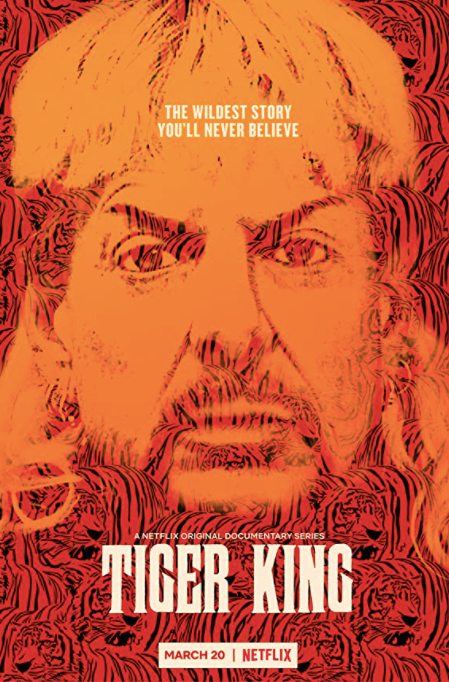
Tiger King: A McLuhanesque Perspective


“The 'content' of a medium is like the juicy piece of meat carried by the burglar to distract the watchdog of the mind,” Marshall McLuhan famously declared in Understanding Media (1964, p. 32).   The content of Tiger King, the runaway global hit documentary on Netflix, are the tigers and other animals in Joe Exotic's Oklahoma zoo, thrown pieces of meat, juicy and otherwise (some is expired meat from supermarkets).  But the deeper story, underlying the meat, is Joe Exotic's unquenchable thirst for fame, relentlessly pursued through social media.  And in the irony of ironies, he eventually obtained that fame, along with a prison sentence of 22 years for attempted homicide of an animal activist and mistreatment of animals.

My late editor at Tor Books, David Hartwell, once told me never to kill a pet cat or dog in my science fiction novels.  "Some readers will never forgive you," he said.  I didn't heed his advice in one of my novels, and its sales indeed were markedly off.  I have no idea what Joe Exotic actually did and didn't do to his animals.  I wasn't there.  But I was impressed, near the end of the docu-series, to hear someone remark that mistreatment of animals, including killing tigers, was likely to be far more effective in turning the jury against him, then his planned murder of animal-rights activist Carole Baskin in Florida.  One of his ultimately not-so-loyal staff, Kelci "Saff" Saffery, told Joel McHale in the postscript interview that the thing that got him the most angry at Joe was taking in an old horse from a grieving owner, and chopping it up for meat to feed the tigers after assuring the owner that he'd take good care of the horse.

The things he did to the animals apparently really happened, though we mostly only know this through the words of his staff.  In contrast, the threats against Carole Baskin were not only later reported by his workers and associates, but conveyed to the world via videos that Joe relished making and posting, in which he shot and otherwise assaulted dummies of Baskin.  Since his feud with Baskin fueled his pursuit of fame, he at very least had to have had some misgivings about getting her permanently out of the picture.  He fancied himself a country singer and posted music videos, with someone else's voice overdubbed.   He ran for President in 2016 and governor of Oklahoma in 2018 and, obviously, lost both times.  If you think about wrestler Jesse Ventura's successful run for governor of Minnesota in 1999, Joe's run in Oklahoma wasn't so crazy.  The only thing Ventura really had over Joe was more fame to begin with (in addition to Ventura being mayor of a medium-sized city in Minnesota, but without the pro-wrestling fame, that mayor position would likely not have been enough to propel Ventura into the governorship; here, by the way, is an interview Ventura did with me after he left the state house).

Joe Exotic, now in prison, has a lot more fame than Ventura had in 1999.  Can someone in prison run for Governor?  I don't know, that's up to state law.  Let's say he's released?  That depends, again, on the state law in Oklahoma.  But there's nothing in the U. S. Constitution that would prevent him from running -- again -- for President.

Given what we've had in the White House the past four years, stay tuned.  Fame is a fungible commodity that can easily be transferred from anything to politics.  Nothing would surprise me.


Tuesday, September 8, 2020

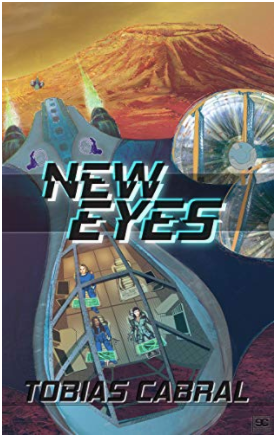
Review of Tobias Cabral's New Eyes: Newer Worlds

Tobias Cabral picked a good time to send me his 2018 novel New Eyes for review.   Mars is in the air.  Actually, it's always been in the air, or at least, at the top of the air, in the sky.  But NASA's Perseverance is on its way to Mars, with a landing date in February of next year.  Elon Musk wants to colonize the Red Planet (I'm 100% on board, here's a talk I gave at the 19th Annual International Mars Society Convention at The Catholic University in Washington, DC on 23 September 2016):

And I just saw, loved, and reviewed the first season of Away on Netflix.

Cabral's novel starts in February 2047.  Trips to Mars take just four days.  There's a space station named "Jeff Bezos," a ship named the "Elon Musk," and androids are "equipped with ‘minds’ that could not just pass but proctor the Turing Test" (italic and quotes around 'minds' in the novel).  And, at least one is capable of murder.  With the result that New Eyes is just as much in the tradition of Westworld and the new Raised by Wolves (see my reviews) as it is a descendant of The Martian Chronicles and The Martian.

But as the title suggests, the fulcrum of this narrative are eyes, in particular Gaspar's "Martian eyes".  The character's a "bio-cyberneticist," women desire his body, and his new eyes in effect make him a human on the way to becoming an android, in the time-honored Six Million Dollar Man way.

The novel also has resonance to the work of Orson Scott Card (sims play an important role, as in, you often can't tell what's really really real) and, to my eyes, at least, the novel reads a lot like Isaac Asimov (a big compliment in my book).   But as to the plot, well, Mars is "a mostly-unpopulated planet" at this point,  and this "young Martian society" is populated by humans and increasingly by androids.  Could this actually happen by 2047?  Probably not (more because of the androids than living on Mars).  But my late editor at Tor, David Hartwell, always told me that readers are willing to grant you at least one big part of a story they find unbelievable, and I'm happy to grant Cabral that.   I should also mention that Cabral throws in a bit more repartee humor than does Asimov -- someone comments that someone has a "nice assonance... that sounded naughty" -- and there's even some rapping in this story.

But that still doesn't tell you much about the nuts and bolts of the plot, does it?   You'll need to set your eyes on the novel to find that out.  Ok, I'm in a good mood.  Here's a quote from the novel: - think "alternate branches in a Many Worlds Hypothesis time travel story".  And enjoy.


first starship to Alpha Centauri leaves from Mars Vestibule ...


Sunday, October 20, 2019

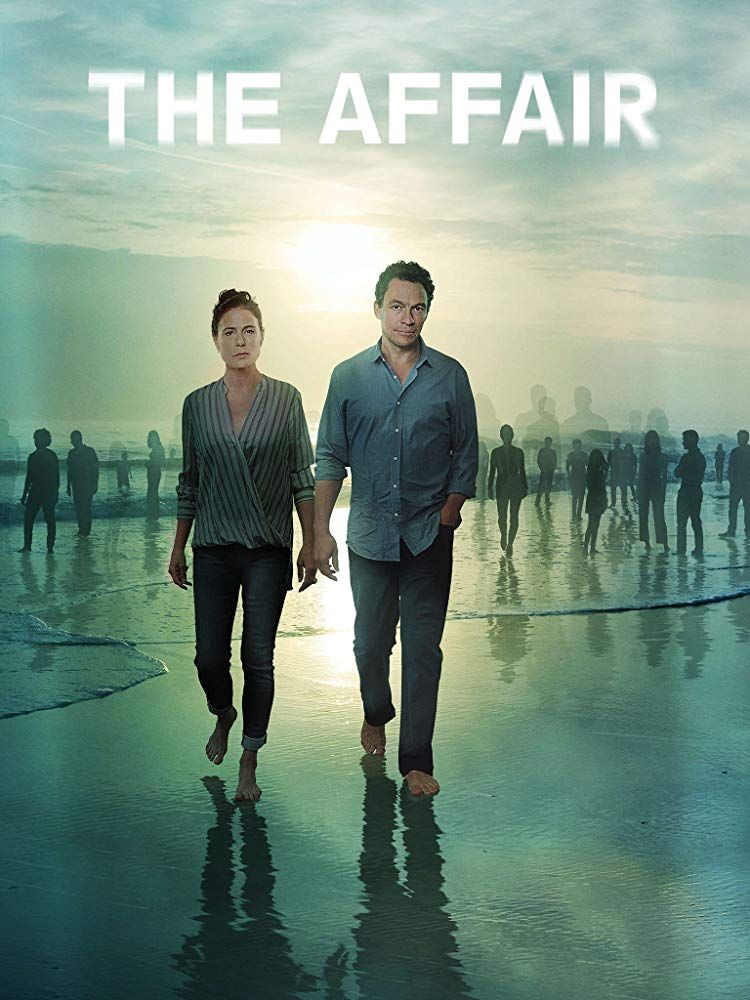
The Affair 5.9: Thoughts, Looks, Words, and Actions


Whew, quite an episode 5.9 of The Affair tonight - the headline of which would be: Helen realizes that Sasha is responsible for Noah's lynching in the press, but Whitney is still furious with Noah for what he did to her and their family.

Unpacking this ... Helen realizes that Sasha wanted Noah's name and influence exorcised from his (Sasha's) movie, so Sasha seized an opportunity to make connections to make that happen.  Since Sasha's a master at publicity, it pretty much worked, and also had the benefit of pulling Helen further away from Noah.

Whitney's story is more complex.   She at first comes to her father's defense when she confronts one his accusers, on a plane to LA (ok, my late and brilliant editor David Hartwell always said that readers would allow one very unlikely coincidence in a story, and I think this applies to movies and TV series as well).  Noah's accuser, Audrey, was his student right after he was released from prison.  He put down her writing with a declaration that she had "no inner life".  It devastated her, and now she's joined the women who say Noah demeaned women.

As Whitney tells Audrey, ok, so my father was a "shitty" teacher, but that doesn't he deserves this kind of public destruction - losing his name on his movie, losing his new book deal, etc., so you can some big publicity for your book.  Audrey's not convinced.   But later, back in LA, when Helen tries to explain that all of this was her fault - because she inadvertently gave Sasha a rope to hang Noah - it turns out that Whitney's not convinced, either.  She recalls a scene from several seasons back when Noah joined her in a steamy hot tub, not realizing she was Audrey.  And she saw the way Noah looked at her and friend - like "prey" was the word Whitney used.   And this visceral recollection touched all the pain she carried inside her about Noah breaking up their family.

My take at this point:  I would say, in general, looks and thoughts don't and shouldn't count.  Words count, and actions even more.  And for the kind of blowing up of his life Noah is enduring now, he should have been guilty of actions - as he apparently was not with Eden.

More after the next episode, next week.


And see also The Affair 3.1: Sneak Preview Review ... The Affair 3.2: Sneak Preview Review: Right Minds ... The Affair 3.3: Who Attached Noah? ... The Affair 3.4: The Same Endings in Montauk ... The Affair 3.5: Blocked Love ... The Affair 3.6: The Wound ... The Affair 3.7: The White Shirt ... The Affair 3.8: The "Miserable Hero" ... The Affair 3.9: A Sliver of Clarity ... The Affair 3.10: Taking Paris

And see also The Affair 2.1: Advances ... The Affair 2.2: Loving a Writer ... The Affair 2.3: The Half-Wolf ... The Affair 2.4: Helen at Distraction ... The Affair 2.5: Golden Cole ... The Affair 2.6: The End (of Noah's Novel) ... The Affair 2.7: Stunner ... The Affair 2.8: The Reading, the Review, the Prize ...The Affair 2.9: Nameless Hurricane ... The Affair 2.10: Meets In Treatment ... The Affair 2.11: Alison and Cole in Business ... The Affair Season 2 Finale: No One's Fault


Friday, April 22, 2016

The Americans 4.6: Martha, Martha, Martha

There have been three unbelievable things at work on The Americans -

1.  Elizabeth and Philip happen to live next door to Stan, who is FBI.

2.  Paige told the pastor that her parents are spies.

3.  Philip is pretending to be Martha's husband, with the thinnest disguise possible.   Martha works in the same FBI office as Stan.

My late science fiction editor, David Hartwell, always said that readers will allow one unbelievable aspect in a story, but their willing suspension of disbelief will break down if there's more than one. Audiences are of course the equivalent of readers.   Let's say Stan living next door is the one unbelievable element that the audience is willing to accept in The Americans.  The still leaves us two.

The Paige story has been handled this season, but clumsily.   It's not yet resolved, though, so there's hope for a resolution more satisfying than what we've seen.

Episode 4.6 at long last got down to Martha.   Again, it's amazing that it took so long for the FBI to catch on to what she was doing, and that Stan didn't run into Philip in disguise at some point, but now that the twisted yarn is finally unraveling, it's going to pieces well.   I can believe that Philip can't just kill Martha because he loves her on some level.  And that Elizabeth can't do it, either, out of her feelings for Philip, strange as that might seem.   Gabriel, however, is likely subject to no such decisive emotional restriction - though he is in some synch with Philip and Elizabeth - and it will be interesting to see what role he ultimately plays in the fate of Martha.

And our FBI men, now that they've finally seen what Martha has been doing, are moving with all deliberate alacrity.   The episode ends with Martha on the street, letting Gabriel know that she knows her "husband" is KGB, and the FBI just one step away.

Good ingredients for next week, and for the rest of this season and beyond.


Monday, February 15, 2016

Billions on Showtime: Winning Me Over

I thought I'd check in here with a few words about Billions, which just posted its fifth episode on Showtime last night.

The series, tailor-made for Bernie Sanders' campaign, started a bit slowly for me. The rapacious Wall Street billionaire has been well trodden on television and in the movies - in fact, there was a pretty-good two-night special about Bernie Madoff on network television just a few weeks ago.   I didn't see that much different in Billions at first.   But--

Well, the series is growing on me.  Last night's episode 1.5 was the best so far.   Bobby Axelrod is moving to leave it all, and take his family on a long boat ride to the Galapagos Islands, of Charles Darwin and survival of the fittest fame.  Aside from this cool history-of-science resonance, the storyline has a nice wrap-up: Axe instructs his people to sell off, including a bundle that crashes, and when Axe decides not to go, at last minute, he looks like a genius to his second-in-command, who comes to realize that likely Axe was serious about sailing off, after all.

The mortal antagonism of Axe and U.S. Attorney Chuck Rhoades, hell-bent on putting Axe away, is also developing well,   Interestingly, Axe likes good old-fashioned sex with his hot wife, and resists the temptation to cheat on her when he's away in Canada.   Chuck is also loyal to his wife, but their cup of tea - or at least, his, which she accedes to - is sadomasochism, stilettos, cigarette burns, and all. And though Axe is no angel to his staff, Chuck is often even worse, all adding to a complex and appealing dynamic of no one is really totally the good guy here.

Chuck's wife working for Axe as his sort of company psychologist is somewhat implausible.   On the other hand, as my late science fiction editor David Hartwell always told me, your audience can allow one unbelievable jump, if you stick to a plausible narrative in the rest of your story.

I'm certainly going to stick with Billions, and will be back here with reviews as the season progresses.


Wednesday, January 20, 2016

David G. Hartwell: R.I.P.

David G. Hartwell, my science fiction editor at Tor Books, suffered a grievous "brain bleed" yesterday after a fall, and is not expected to recover.  (Note added later in the day - and, alas, he did not.)

Actually, David was no longer my editor at Tor, since I stopped publishing with them after The Plot to Save Socrates paperback in 2007.   But I'll always think of him as my editor.

The big corporate world of traditional publishing boils down, as all human activities do, to individual human beings.  It's not that Tor wanted to publish my work, it was David.  In fact, though editors here and there have loved this or that piece of my work, I owe my career in science fiction to just two editors: Dr. Stanley Schmidt at Analog Magazine and Dr. David G. Hartwell at Tor.  Had it not been for them, I'd have missed out on what is often the best part of my professional life - being a published author of science fiction, getting a seat at the table of people whose works map out the quintessentially human activity of transforming the cosmos, maybe just a little.

Working with David was remarkable in itself.  When he told you, after reading a draft of your novel, that all you needed to do for it now was "move around some of the furniture,"  he was telling you it needed a major overhaul of ripping up and moving around chapters.  When a novel of yours he believed in didn't strike it all that big in sales, he attributed it to people for some reason "looking the other way".   He pleaded with me not to have a cat killed in one of my stories - he said readers would never forgive me - and I'm pretty sure I changed that scene and spared that cat. He advised against the title The Consciousness Plague for my second Phil D'Amato novel, claiming he had never had any luck with novels with "plague" in the title, and he was right about that, too.   He was not right about everything, and to this day I regret going along with some of his suggestions, but every book of mine that he edited bears his stamp, and I'm glad to have it.

David lived until a few years ago just a few miles north of me in Westchester, New York.   I drove him home from events in New York City, attended his birthday parties, and baby sat his son Peter with my son Simon.   Taking Peter to a dog show in White Plains, New York was easily a high point of that month.

David Brin, David Hartwell, and I were judges at the Fourth Annual Philip K. Film Festival in New York City just this past Martin Luther King, Jr. weekend.  I was there on Wednesday, Saturday, and Sunday.  David Hartwell was there on Thursday - when, of course, I was seriously thinking of going, but got tied up in something else.

So I've got to settle for the videos below - of David, Stan Schmidt, and me at a panel five years ago, and David and me at his birthday party in 2011 (this brief video by Moshe Feder).   And I can still hope for a miracle.  I've always believed in while there's life there's hope, and, hey, that's what science fiction is all about.  (Note added later in the day - and sadly, there was no science fictional ending to this story.  RIP, David, you bettered the lives of many people.)


Friday, March 13, 2015

The Americans 3.7: Martha, My Dear

Finally, a welcome episode of The Americans - 3.7 - that pays some attention to Martha, and the barely believable but riveting role she's been playing in our story.

The Americans began with one huge, all but unbelievable coincidence;  Stan the FBI guy living next door to Philip and Elizabeth, and never discovering (not yet, at least) who they really are.   Their true identities even survived drawings of them right up on Stan's FBI wall, even though those drawing look like, well, Philip and Elizabeth in disguise.   But, ok, my former science fiction editor, David Hartwell at Tor, once told me that readers are usually willing to grant a story one big coincidence before allowing their suspension of disbelief to be shattered, and that makes some sense.

But The Americans soon upped the ante with the Philip and Martha story, which strains credulity in all kinds of ways.  Back to the drawings on the wall, why doesn't Martha think the drawing of Philip in disguise looks at least familiar in some way?   And, sooner or later, won't Stan run into Philip in disguise - say, if he has to make a surprise visit to Martha's house on some kind of urgent business?

But episode 3.7 turned up the temperature even higher.  Gaad discovers a pen in his office has been bugged - presumably a pen given to Martha by Philip, which she - on his urging? - put into Gaad's office.   I put in the question mark because I'm honestly not sure about any of this.   Possibly I turned away from the screen for a moment in a crucial scene in an earlier episode, but my wife had the same uncertainty about the pen got into Gaad's office, too.  (Note added on 14 March 2014: A helpful reader in the comments below reminded me that we did see Philip task Martha with the pen at the end of the first season.)

Then there is the device in Martha's purse - what is it?  My wife was thinking maybe Martha is herself some kind of double agent, but she seems much too upset about all of this for her to be some kind of super cool operative who's taken Philip in on this (though that would be a great twist).  As it is, all of these discovered bugs have made Martha suspicious of Philip, which she should have been months or longer ago in terms of narrative time in the series.

So ... The Americans has opened up some huge holes, which I'm looking forward to seeing how it does not fall into.


Wednesday, August 29, 2012

Stan Schmidt Retiring from Analog

I read the news today, oh boy - came like a kick in the solar plexus - Stan Schmidt's retiring from Analog.

It's a cliche to say people made a difference in your life.  But like everything else Stan did at Analog, this was no cliche.  When Stan published my first Analog story - "The Way of Flesh," a Probability Zero piece in 1995 - I had no other "pro" publications, with the exception of one, "Albert's Cradle," a few years earlier in Amazing Stories.  The probability that I would have any career as a science fiction writer was truly not that much more than zero when Stan bought "The Way of Flesh".

But his next purchase from me, "The Chronology Protection Case," really opened up the gates.  The story has been reprinted half  dozen times, is used in a class at University of Southern California, has been made into a movie and an Edgar-nominated radio play.   It was a Nebula nominee finalist.  And its lead character, Dr. Phil D'Amato, went on to appear in two more Analog novelettes, and in three Tor novels. David Hartwell, my editor at Tor, came to know Phil D'Amato in the third novelette Analog published, "The Mendelian Lamp Case".

Did you know that I killed off Phil D'Amato in the first version of "The Chronology Protection Case"?  When Stan asked for revisions, he asked what was the point of killing off this new character?

Editors each have unique tastes that make them different from all other editors.  I was fortunate indeed to have started writing science fiction at a time when Stan was at the Analog helm.  As fate would have it, I had occasion to think a lot about Stan just this past Friday, when I signed off on a new "author's cut" Kindle edition of The Silk Code published by JoSara Media (the original edition was published by Tor in 1999, and won the Locus Award for Best First Science Fiction novel of that year).  I thanked Stan again in the Acknowledgments, for the life he had given to my character.

It's been said that Stan should at last get the Hugo Award for Best Editor.  True point, that.  But, you know what?  That doesn't really matter.   Stan wins an award, and will continue to win, every time someone reads one of the stories he edited at Analog.


my 2007 interview with Stan


Stan, David Hartwell, and me in 2010 interview

appreciations of Stan by Analog writers James Van Pelt and Juliette Wade

Saturday, December 29, 2007

The Silk Code in Top 20 of 2007 Podiobooks!

I'm usually trumpeting The Plot to Save Socrates when I talk here about my science fiction novels - which is pretty often - but today I'm pleased to announce that the podiobook of my 1999 novel, The Silk Code - as read by my good friend Shaun Farrell - has made the Top 20 Most Popular Podiobooks of 2007.

The list is in alphabetic order, so I have no idea how high it placed in the Top 20, but given my ego and imagination...

The nice thing about podiobooks is they're free! And Shaun gave this a good reading. You can get all of the chapters right here.

The Silk Code won the Locus Award for Best First Science Fiction of 1999, and it was also the first appearance in novel of Dr. Phil D'Amato - my NYPD forensic detective.

Phil appeared in the novelettes The Chronology Protection Case, The Copyright Notice Case, and The Mendelian Lamp Case earlier in 1990s, and the novels The Consciousness Plague and The Pixel Eye, published after The Silk Code. See the links below, and/or here for further details.

Phil even has a Wikipedia entry.

A complete list of links for and about the adventures of Dr. Phil D'Amato follows ...


David G. Hartwell, Cory Doctorow, and Daniel Keys talk about The Silk Code


The Silk Code one-minute audio mix


audio trailer for The Chronology Protection Case movie (by Jay Kensinger)


Shaun Farrell's podiobook of The Silk Code
... FREE!

Mark Shanahan's radio play of The Chronology Protection Case (live reading of the Edgar-nominated play) ... FREE!


The Consciousness Plague on iTunes ...


The Silk Code podiobook on iTunes
... FREE!


trailer for The Silk Code ... from the History Channel


trailer for Jay Kensinger's short film of The Chronology Protection Case


Phil D'Amato's Wikipedia entry


The Four Phils ... PL, JK, MS, and SF ...

Neanderthals in Fact and Fiction

Tuesday, November 27, 2007

Further Genesis of "The Light That Time Forgot"

I now know what I think of as the "furniture" of this story. The metaphor comes from my editor at Tor for The Silk Code through The Plot to Save Socrates - David G. Hartwell - who likes to talk about "rearranging furniture" when plot elements and/or characters in a draft novel need a major overall. I'm using it here more in the sense of what you put in an empty house or room, after you've constructed it.

The house is "The Light That Time Forget" - otherwise known as the title. I know the story, anthology, novel, whatever will be about time travel. That's where I was a few days ago.

But yesterday afternoon, driving to Fordham University, I realized what the furniture would be - what the texture, characters, vehicle of the story were all about.

Watercolor. Impressionist painters. Better living through captured light. Better living through watercolor. Something like that...

Now, at this point, I'm going to go into sub rosa mode, and not talk about the story. First, I don't like talking about my writing on a blow-by-blow basis. Second, I have no idea how long it will take me to write this - could be tomorrow, could be next year, or much longer...

But I'll definitely keep you posted. And will of course acknowledge the good denizens of Second Life, if and when (ok, I'm pretty confident it's just a question of when) "The Light That Time Forgot" is published.

See also Genesis of a Title: "The Light That Time Forgot"


The Plot to Save Socrates


"challenging fun" - Entertainment Weekly

"a Da Vinci-esque thriller" - New York Daily News

"Sierra Waters is sexy as hell" - curled up with a good book


more about The Plot to Save Socrates...

Get your own at Profile Pitstop.com


Read the first chapter of The Plot to Save Socrates
.... FREE!

Wednesday, October 24, 2007

David Hartwell, Cory Doctorow, Daniel Keyes on The Silk Code

Three powerhouses of science fiction across the decades comment in 10+ seconds each on my novel, The Silk Code ...

David Hartwell, senior editor at Tor Books, and editor of my science fiction novels from The Silk Code through The Plot to Save Socrates...

Cory Doctorow, of Boing-Boing, and author of Down and Out in the Magic Kingdom, etc…

Daniel Keyes, author of "Flowers for Algernon" ...


David Hartwell, Cory Doctorow, Daniel Keyes on The Silk Code

more on The Silk Code, winner of the Locus Award for Best First Science Fiction novel of 1999:

“As a genre-bending blend of police procedural and science fiction, The Silk Code delivers on its promises.”—Gerald Jonas, The New York Times Book Review

“As twisted as a double helix. ”—Wired

“D’Amato is an appealingly savvy character, and Levinson brings a great deal of invention to the endeavor.”—San Francisco Chronicle

“It is hard to put down, easy to pick up again, and an interesting read.”—San Diego Union-Tribune

“Mixes up-to-the-minute biotechnology with ancient myth, science fiction with police procedure, and prehistory with the near future. It’s an impressive debut.”—Joe Haldeman

“Forensic detective Phil D’Amato is one of my favorite characters, and the puzzles he solves are always imaginative, ingenious, and addictive, but Paul Levinson really outdoes himself this time in a mystery involving murders, moths, mummies, the Silk Road, poisons, fireflies, and forensics, all woven into a mystery only D’Amato could solve! A marvelous book!”—Connie Willis

“This damn book has everything: interesting science, suspense, characters that live on the page – and that we like! – and it debuts a new series hero, Dr. Phil D’Amato, forensic detective. I couldn’t put The Silk Code down. I’ll wager you won’t be able to either. Oh, and this is the kicker: The Silk Code is Paul Levinson’s first novel. ”—Jack Dann

“At last we get Paul Levinson’s superb forensic sleuth, Phil D’Amato, in a full-length novel. If you know Phil from his previous appearances, I need say no more. If you don’t, kick back and enjoy a mystery that spans the ages.”—Jack McDevitt

“The Silk Code is an intriguing story refreshingly rich not only in action but in ideas. Seldom have I seen a story so engagingly weave together so many seemingly disparate (dare I say it?) threads.”—Stanley Schmidt, editor of Analog

“Paul Levinson is an exceptional new writer, behind whose work stands an impressive body of knowledge and a great deal of human understanding. His first novel signals a writer to watch for the provocation and pleasure that he will bring to thoughtful readers. The Silk Code is smoothly written, evocative, and spicy! Highly recommended.”—George Zebrowski

“The Silk Code is a splendidly imaginative novel that explores worlds of ideas both scientific and philosophical, while carrying the reader effortlessly across countries, times, and cultures.”—Charles Sheffield

“The Silk Code is science fiction in the classic style, with an innovative mystery that breaks new ground. Acclaimed for his short fiction and insightful writing on the computer age, Paul Levinson now brings his many talents to a complex novel that will keep you guessing until the last page. ”—Catherine Asaro

”...cerebral but gripping”—Booklist

“Combining Neanderthals and mechanical looms, cantaloupes and coded butterflies, Levinson’s debut novel…offers a flurry of amazing prehistoric technologies, demonstrating that the mysteries of our past can be just as fruitful as those of our future… Levinson creatively explain gaps in both ancient history and biology… providing more wonders than many a futuristic epic.”—Publishers Weekly

”...well-informed and imaginative”—Kirkus Reviews

”...spins an ingenious web of genetic manipulation and anthropological evidence”—Library Journal

“A fascinating concept that pulls together a wide and varied array of ideas and recent discoveries.”—The Magazine of Fantasy and Science Fiction

“A rare thriller that actually achieves its goals as a detective tale and a work of boldly speculative sf.”—Gary K. Wolfe, Locus Magazine

=============================================
buy the paperback for a penny on Amazon! (e-mail me for details on how to get autographed copy at no additional cost)

get Shaun Farrell's reading of the podiobook free
InfiniteRegress.tv