Chuck Todd interviews me about alternate histories
Showing posts with label Robert Browning. Show all posts

Friday, August 11, 2023

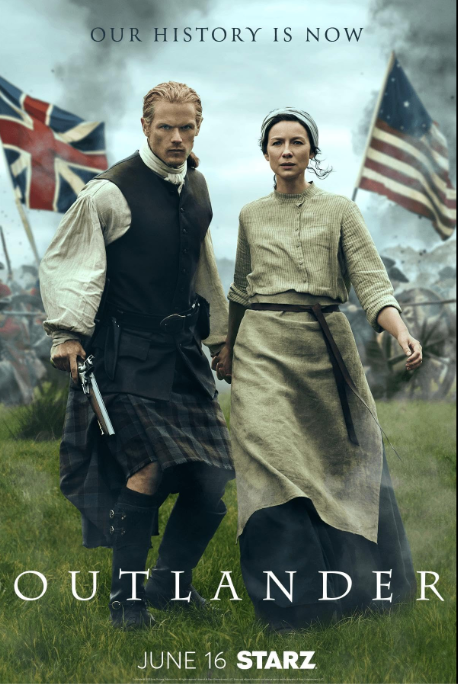
Outlander 7.8: Benedict Arnold and Time Travel

Outlander 7.8, the midseason finale, was superb on many levels.  And it amply continued what I said about 7.7: it provided a vivid example of the insanity of war.

[Spoilers ahead ... ]

As a time-travel devotee, I especially liked two interactions that Claire and Jamie had with Benedict Arnold:

1. Jamie quotes Browning's "A man's reach must exceed his grasp, or what's a heaven for," and Claire slightly winces.  That's because Browning doesn't publish this in a poem until 1855, and Jamie is about to fight the Second Battle of Saratoga in 1777.  I love "mistakes" like this in time travel.  Did Arnold at some point in the future tell someone that line -- he said he found it very impressive -- and it percolated forward in history to Browning?  If so, that's an example of the "where did it come from" paradox in time travel.  When a phrase from the future is set loose in the past, it's impossible to figure out where it originated, the future or the past?  It bounces back and forth from the future to the past then back to the future in a never-ending circle.   (I'll also note that I like what Marshall McLuhan made of this line, changing it to "A man's reach must exceed his grasp, or what's a metaphor?" That's a pretty good definition of metaphor, as well as being a pun.)

2. Later, Claire tells a wounded Benedict Arnold that he's justified in feeling his accomplishments in the American army have not been recognized.  Arnold has been wounded psychologically as well as physically, and Claire's supporting his grievances may have been just the last straw that got him to leave the Americans and join the British, and therein have his name in future history become synonymous with "traitor".   Another mind-bending example of where did it come from.  Had Claire from the future not supported Arnold's anger, he might not have joined the British. (You can see by the expression on her face that she realizes a second too late that her answer might have stoaked Arnold's switching sides -- though, perhaps she did that deliberately, to avoid the risk of changing the history she knew.)

Other than time travelers in America during the Revolutionary War, there were lots of other excellent touches in this episode.  Jamie accidentally shooting the hat off William's head and his later giving his son a hat was a beautiful, powerful little piece of storytelling.  I also liked Ian and Rachel almost getting together, even if it ended with Ian on the boat to Scotland and Rachel accosted by that psycho creep, the well-named Arch Bug.

And back to time travel, as became clear at the end of episode 7.7, Roger going back in time through the Stones in Scotland promises to bring us all kinds of exciting encounters and likely more paradoxes in the second half of this excellent season next year.  And I'll be back here with more reviews.

See also Outlander 7.1-2: The Return of the Split ... Outlander 7.3: Time Travel, The Old-Fashioned Way ... Outlander 7.7: A Good Argument for the Insanity of War

And see also Outlander 6.1: Ether That Won't Put You to Sleep

And see also Outlander 5.1: Father of the Bride ... Outlander 5.2: Antibiotics and Time Travel ... Outlander 5.3: Misery ... Outlander 5.4: Accidental Information and the Future ... Outlander 5.5: Lessons in Penicillin and Locusts ... Outlander 5.6: Locusts, Jocasta, and Bonnet ... Outlander 5.7: The Paradoxical Spark ... Outlander 5.8: Breaking Out of the Silence ... Outlander 5.9: Buffalo, Snake, Tooth ... Outlander 5.10: Finally! ... Outlander 5.11: The Ballpoint Pen ... Outlander Season 5 Finale: The Cost of Stolen Time

And see also Outlander 4.1: The American Dream ... Outlander 4.2: Slavery ...Outlander 4.3: The Silver Filling ... Outlander 4.4: Bears and Worse and the Remedy ... Outlander 4.5: Chickens Coming Home to Roost ... Outlander 4.6: Jamie's Son ... Outlander 4.7: Brianna's Journey and Daddy ... Outlander 4.8: Ecstasy and Agony ... Outlander 4.9: Reunions ... Outlander 4.10: American Stone ... Outlander 4.11: Meets Pride and Prejudice ... Outlander 4.12: "Through Time and Space" ... Outlander Season 4 Finale:  Fair Trade

And see also Outlander Season 3 Debut: A Tale of Two Times and Places ...Outlander 3.2: Whole Lot of Loving, But ... Outlander 3.3: Free and Sad ... Outlander 3.4: Love Me Tender and Dylan ... Outlander 3.5: The 1960s and the Past ... Outlander 3.6: Reunion ... Outlander 3.7: The Other Wife ... Outlander 3.8: Pirates! ... Outlander 3.9: The Seas ...Outlander 3.10: Typhoid Story ... Outlander 3.11: Claire Crusoe ...Outlander 3.12: Geillis and Benjamin Button ... Outlander 3.13: Triple Ending

And see also Outlander 2.1: Split Hour ... Outlander 2.2: The King and the Forest ... Outlander 2.3: Mother and Dr. Dog ... Outlander 2.5: The Unappreciated Paradox ... Outlander 2.6: The Duel and the Offspring ...Outlander 2.7: Further into the Future ... Outlander 2.8: The Conversation ... Outlander 2.9: Flashbacks of the Future ... Outlander 2.10: One True Prediction and Counting ... Outlander 2.11: London Not Falling ... Outlander 2.12: Stubborn Fate and Scotland On and Off Screen ... Outlander Season 2 Finale: Decades

And see also Outlander 1.1-3: The Hope of Time Travel ... Outlander 1.6:  Outstanding ... Outlander 1.7: Tender Intertemporal Polygamy ...Outlander 1.8: The Other Side ... Outlander 1.9: Spanking Good ... Outlander 1.10: A Glimmer of Paradox ... Outlander 1.11: Vaccination and Time Travel ... Outlander 1.12: Black Jack's Progeny ...Outlander 1.13: Mother's Day ... Outlander 1.14: All That Jazz ... Outlander Season 1 Finale: Let's Change History


Saturday, June 9, 2018

The Crossing 1.10-11 Ends: Apex Begins

The Crossing may have ended tonight, if no network or streaming service gives it continuing life, which it eminently deserves, seeing as how these last two episodes redeemed or proved The Crossing's mettle as a time-travel narrative worth watching and continuing, with a classic time-travel slap-in-your-face turn of events.  (Spoilers follow.)

The twist was a variant of the perennial time-travel gambit of the trip to the past causing the very evil that the trip was supposed to prevent or at least avoid in the first place.  The vehicle in this case was Sophie, who injects herself with some concoction that makes her the first Apex to arise.  Reece, who was the first Apex to arrive in our time - that's why I said "arise" regarding Sophie - tries her best to prevent this from happening, explaining to Sophie that Reece doesn't want Sophie to be the start of Apex (but see the following paragraph).  But Reece understandably is a bit distracted, still focusing on finding Leah, and still suffering some of the residual effects of her medical torture.  So Sophie tricks her.

But Reece may have been distracted about something a little deeper regarding Sophie and Apex.  Were Apex never to ever arise, that would mean that Reece would cease to exist.  This would mean that either Leah wouldn't exist either (since who knows what effect Apex had on Leah's parents or grandparents meeting), or if she did exist, who knows what kind of life she would have had without Reece and Apex.  Maybe Reece was willing to gamble that Leah would exist and be happy without Apex or Reece, but, if this was Reece's thinking, it should have been made more apparent.  Not making this clear leaves us with other possibilities, such as Apex being not as mentally superior as they are physically, or having a blindspot to paradoxes of time travel that some us humans know about right now.

The Crossing, however, deserves credit for pitching us into these questions and quandaries - that's what good time-travel story-telling should be doing.  Should not a first season of a series exceed its reach, or what's a second season or meta-for? (Apologies to Robert Browning and Marshall McLuhan).  And The Crossing has left us with other compelling questions, such as why was Ellis's name all over the wall with Apex writing from the future, and why was Marshall's (not McLuhan's) picture in Hannah's locket?  (Maybe the picture in the locket was earlier explained, though, and I missed it because I got too tangled up in the paradoxes.)

Not to mention that Homeland Security's treatment of the immigrants from the future in The Crossing bears disturbing resemblances to Homeland Security's treatment of immigrants from south of the border - the geographical not temporal border - right here in our reality.  (Is that why the series wasn't renewed?  Who can say?)

Here's something I can tell you for sure about one possible future: if The Crossing continues somewhere, I'll be sure to review it.  If not - well, I enjoyed this first season, especially the past two hours.

See also The Crossing: Lost Again, But OK ... The Crossing 1.2: Calling for More Time Travel ... The Crossing 1.3: The Missing Inventor ... The Crossing 1.4: Hofstra ... The Crossing 1.5: Migrations in Conflict ... The Crossing 1.6: Apex Antibodies ... The Crossing 1.7: The Locket ... The Crossing 1.8: The Cure ... The Crossing 1.9: The New Machine


Tuesday, September 20, 2016

Metaphors, Skittles, and Free Speech

Earlier today on MSNBC, conservative radio host and Trump supporter Hugh Hewitt championed "metaphor" in his response to the criticism Donald Trump, Jr. (the candidate's son) has received for his comparison of US immigration policy regarding children to ingesting a handful of Skittles candy, some of which may be poisoned.

We don't want to live in a society, Hewitt nobly proclaimed, in which politically-correct thought police ban use of metaphors.

Now that's something which I, and I would bet any rational person, would strongly support.  A world without metaphor would be dull and dismal and limited indeed - because, as Marshall McLuhan liked to say, punning on the poet Robert Browning, one's reach must exceed one's grasp, or what's a metaphor?

But Hewitt's proclamation is incomplete, to the point of being disingenuous.  For surely Hewitt would agree that we must be free to criticize and denounce metaphors, when we find them dehumanizing. Surely Hewitt is not saying that sons of Presidential candidates, or anyone for that matter, should be able to tweet whatever they want in some kind of zone that protects them from scathing criticism?

As repulsive as so much of the Trump campaign has been, I would never advocate or even imply that he and his ilk should be silenced.   I agree with Louis Brandeis that "the remedy to be applied [to falsehoods and fallacies] is more speech, not enforced silence".  Surely that applies to demeaning metaphors.

Sunday, April 27, 2014

Chris Hayes on Showtime's Years of Living Dangerously Tonight

No one needs another show to watch on Sunday night these days.  In addition to Mad Men and Game of Thrones, which I watch and regularly review, there's also The Good Wife and Turn, which I watch and sometimes review, and Mr. Selfridge, which I watch and enjoy and usually don't review, because enough is enough.   On the other hand, to paraphrase the Victorian poet Robert Browning, one's reach on TV should exceed one's grasp, or what's a DVR for?   And Years of Living Dangerously, whose third episode is on tonight, is also On Demand.

I'm looking forward to Chris Hayes' contribution to this high-tech broadside on the need to wake up to the dangers of global warming.  Just to be clear, though I think Hayes is one of the brightest and most cogent voices on television, I don't agree with everything he says.  For example, I'm not too worried about the apocalypse to democracy thought to be engendered by Citizens United, seeing as how Obama - whom I voted for twice, and strongly support - handily won reelection in 2012, or two years after that much derided Supreme Court decision.   This confirms to me, once again, that Milton and Jefferson were right that people are inherently rational and vote their best interests - now in the 21st century, regardless of the mega-bucks spent on political advertising.

But Hayes and James Cameron and the all-star cast both in front of and behind the camera in Years of Living Dangerously are completely right that we need to do something about what is going on in the climate around us.   Look, even if all the evidence that the world is slowly heating up is wrong, wouldn't we be better off having some control over our climate and the temperature of the world?  To say, as do some Republicans, that the climate is in God's hands, misses the point that God or natural selection or whatever brought us here left us with minds and the capacity not to just accept the natural world around us but improve it, for us,  and most living denizens of this planet.   Surely, we're better off now than in ancient Rome, with its average lifespan of 20-30 years (45-47 for those who made it to the age of 10) - a result of science and medicine and its invention and application via human mentality.

The Scientific Revolution in the Renaissance was borne on the wings of the printing press (as I detail in The Soft Edge: A Natural History and Future of the Information Revolution).  Television in America, though it's had its moments with Nova and the original Carl Sagan Cosmos series and the reboot now on Fox, has by and large not risen to the task.   It's good to see Years of Living Dangerously and some of the best minds on the planet join the ranks.


Tuesday, March 19, 2013

The Following 1.9: All in a Name, or Metaphor in the Service of Murder

You've got to hand it to The Following.  In addition to being one of the slickest, sickest shows about serial killers ever on television - which is to say, quite good, excellent, if you like this sort of theme in your fiction - The Following also gets the highest marks for sheer creativity in the kind of killings that Joe and his following dish out every week.

In episode 1.9 on last night, it's any woman in a given area with the same name as Joe's wife - Claire Matthews - who becomes the victim.  Why?  Joe's way of punishing Ryan, who slept with Claire.   I have to admire that kind of ingenuity in coming up with insane reasons to kill.

And the show continues to plumb the dark machinery of the arch pyscho Joe and his followers.  When one of them, bent on killing a Claire Matthews, is challenged by Ryan's point that she's not the Claire Matthews who is the inspiration of this chapter in Joe's murders, the psycho follower chides and proclaims to Ryan that this Claire Matthews is "a metaphor" for Joe's wife.  So in addition to these brutally bizarre killings, The Following enlists literary theory in its arsenal.   Which is well motivated, seeing as how Joe is a professor of English and a devotee of Poe.   Or, to paraphrase the poet Robert Browning, one's murderous reach must exceed one's grasp, or what's a meta for?

Joe's machinery is, of course, the darkest and most complex of all.  At the root of it is the deep satisfaction he gets from being party, direct or indirect,  to a killing.   But closer to the surface, we see him serving as a sensitive, responsive, helpful mentor to the troubled souls who come to him for guidance.   It's this mix of insanity and compassion that make The Following so compelling.

In addition, we're treated to an every changing variety of psycho followers in every episode.  In this sense, The Following is like Criminal Minds on speed, or compressed, or - again, if you like this sort of crime and horror - a big step forward and much better.

See also The Following Begins ... The Following 1.2: Joe, Poe, and the Plan ... The Following 1.3: Bug in the Sun ... The Following 1.4: Off the Leash ... The Following 1.5:  The Lawyer and the Swap ... The Following 1.7: At Large


InfiniteRegress.tv