Chuck Todd interviews me about alternate histories
Showing posts with label Elvis Presley. Show all posts

Friday, April 10, 2026

For All Mankind 5.3: The Newton, The First Amendment, and ... Last Breath


A powerful episode 5.3 of For All Mankind up last night, percolating with all kinds of gleaming details, as befits a series ultimately about the cosmos:

  • There was a nice alternate history touch with talk of the "Newton," which Apple released in our reality with great fanfare in 1993, promoted as the first "Personal Digital Assistant," but discontinued in 1998.
  • Defense of the First Amendment, as my readers and students well know, is one of my primary issues in our reality.  It was therefore gratifying to hear one of the protestors say, as she was being arrested by the police thugs on Mars, "We have the right to protest -- it's the First Amendment!" But much as this was welcome, the cop's response was all too true: "This isn't America -- there is no First Amendment".  And, indeed, no country other than the United States has the ironclad protections of free expression from government interferences prescribed in our First Amendment (even though they're often ignored, as tragically seen in the past year, as our own Federal thugs outrightly murdered Renée Good, Alex Pretti, and who knows how many others who dared to exercise their First Amendment right "peaceably to assemble, and to petition the Government for a redress of grievances").  But the cop on Mars who said only America has this kind First Amendment was, unfortunately, right.  Even our neighbor to the north doesn't have it. I once was explaining the First Amendment in an interview on the CBC, and the interviewer replied, "Well, we don't worship the First Amendment" -- a sad but true acknowledgment, even though support of the First Amendment is a matter of logic, and democracy, not faith.
  • As I've said before when talking or writing about alternate history, in order for it to be convincing, it needs to have salient elements of reality in evidence.  I thus was glad to see Starbuck's and Domino's Pizza insignias in the Martian marketplace.
  • Elvis singing "Love Me Tender" was good to hear.
  • And Baldwin and Gordo in their much younger days was good to see, but--
Did Baldwin take his last breath in the end?  I have a firm principle in watching TV series and movies: unless the character's head is blown off, I think there's a chance the character survives.  Now, I suppose if Baldwin doesn't survive in his human form, his mind might already be embedded in some AI -- after all, For All Mankind is science fiction.  But I'm still thinking that we haven't seen the last of old Baldwin in his human form.

See also For All Mankind 5.1: On the Intersection of Alternate and Real Histories ... 5.2: Actor Reunions

And see also For All Mankind 4.1: Back in Business and Alternate Reality ... 4.2: The Fate of Gorbachev ... 4.3-4.4: The Soviet Union in the 21st Century, On Earth and Mars ... 4.5: Al Gore as President and AI ... 4.6: Aleida and Margot ... 4.7: Dev on Mars ... 4.8: Sergei and Margot ... 4.9: Progress ... 4.10: Earth vs. Mars

And see also For All Mankind 3.1: The Alternate Reality Progresses ... 3.2: D-Mail ... 3.3-3.4: The Race

And see also For All Mankind, Season 1 and Episode 2.1: Alternate Space Race Reality ... For All Mankind 2.2: The Peanut Butter Sandwich ... For All Mankind 2.3: "Guns to the Moon" ... For All Mankind 2.4: Close to Reality ... For All Mankind 2.5: Johnny and the Wrath of Kahn ... For All Mankind 2.6: Couplings ... For All Mankind 2.7: Alternate History Surges ... For All Mankind 2.8: Really Lost in Translation ... For All Mankind 2.9: Relationships ... For All Mankind 2.10: Definitely Not the End
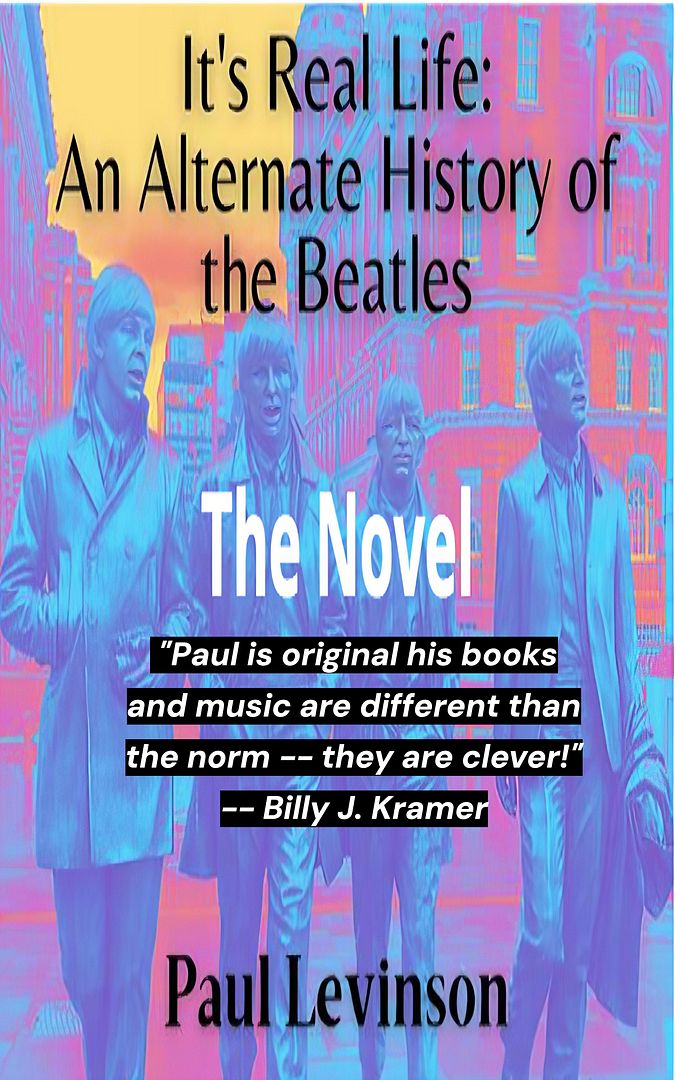
in Kindle, paperback, and hardcover


Monday, March 9, 2026

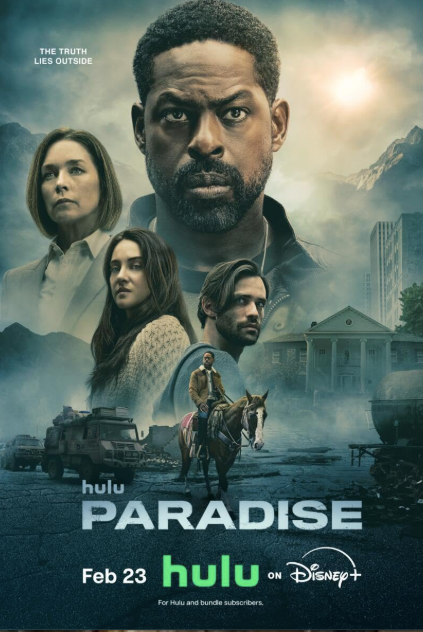
Paradise Season 1 and Season 2.1-2.5: A Story about Anything But ... and More


My wife and I binged Season One and the first five episodes of Paradise 2.1-2.5, and we loved it.  So much so, I decided to post this review, and come back after Season Two ends in the weeks ahead with another review.

You know, it's no easy thing to pull off a science fiction / who-done-it mystery hybrid -- I've tried it myself in my Phil D'Amato series -- and the first season of Paradise does it splendidly.  It kept the ultimate villain hiding in plain sight until the end, as it told its post-apocalyptic story hurtling along with surprises in every episode.

And in addition to all this, Paradise in both seasons treats us to a potent true-love story, with all the trimmings.  Human relationships are always put to the test when humanity is hit with an extinction-level event, but the love explored in Paradise is so deep and real it would've worked splendidly even if the background was just another Pleasant Valley Sunday.

Speaking of which, the songs in the series are as good as those in Lost, with a special emphasis on Elvis.  In an attractive twist, which adds to the surreality of the narrative, we get covers of some great songs, spun out in slow tempos which hang seductively in the air and paint the walls and the meadows of the scenes.  And the acting is just superb.  Sterling K. Brown, who was so memorable in Dan Fogelman's other masterpiece, This Is Us, is just perfect as a man thrust into ... well, I've resisted talking about the specifics of the plot so far, so I won't start now.  But I will say that Shailene Woodley, Julianne Nicholson, Jon Beavers, and James Marsden also put in powerhouse performances.

And I'll also say that I was glad to hear quantum entanglement mentioned in the second season (see, again, Phil D'Amato), and Episode 7 in the first season was so punch-in-the-stomach heart-in-your-mouth compelling I'm feeling it's one of the best episodes of anything ever on television, period.


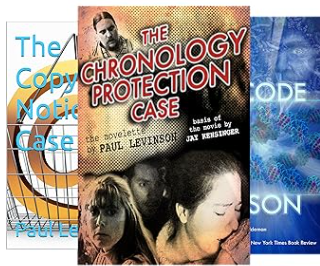
Phil D'Amato series ... radio play and movie  "The Chronology Protection Case"

Saturday, September 9, 2023

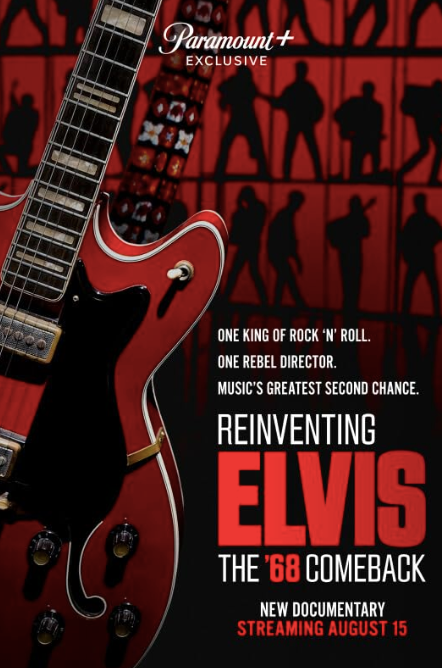
Reinventing Elvis: The ‘68 Comeback: An Appreciation


I just saw Reinventing Elvis: The ‘68 Comeback.  The new documentary, narrated by Steve Binder -- about Elvis Presley's Comeback Special that aired on NBC back on December 3, 1968, directed by Steve Binder -- has been streaming on Paramount Plus since August 15, 2023.  The documentary did for me and my appreciation of Elvis what Peter Jackson's masterpiece The Beatles: Get Back did for me about The Beatles.  Except The Beatles since the first time I heard (and saw) them on The Jack Paar Program in January 1964 have always been much higher in my estimation, more prominent in my life and love of music, at the pinnacle of that, in fact, than was and now is Elvis.  But Peter Jackson's documentary both reaffirmed and lifted my connection to The Beatles, and Steve Binder's documentary did the same for me for Elvis, albeit at very different levels.

I saw The Beatles: Get Back the night the first third of the documentary went up on Disney Plus.  Why did I wait weeks to see Reinventing Elvis?  Well, I guess that's just another indication of the difference between The Beatles and Elvis Presley in my life.  I did see the Comeback Special when it aired on NBC on December 8, 1968.  I was in the recording studio the next day, recording a demo of a song I had written with Ed Fox -- "Sunday Princess" -- with a singer whose name was Joey Ward.  We talked about how superb Elvis was on that special.  Joey said he was so taken with it, he was going to start combing his hair like Elvis.  I remember laughing to myself, and later telling Ed I would never do that.  I was happy with my long straggly hair and moustache.  Another example of the difference between my appreciation of The Beatles and Elvis.

But Elvis was the best he ever was in that special -- better than what I'd seen of him on The Ed Sullivan Show a decade earlier and better than most of his movies (though I think Jailhouse Rock is a great movie and a really great song, and the same for Viva Las Vegas -- well, certainly the song, though Ann-Margret was nonpareil in the movie).  You don't see or hear any mention of that song or the movie in Reinventing Elvis, but the documentary is a nearly continuous explosion of powerful and beautiful performances.

My favorite part of the documentary, other than those performances, is a sequence which Binder tells us the geniuses at NBC cut from the 1968 special, the bordello scene, which was too erotic for NBC's censors, and is hot even by today's standards.  The sexual energy between Elvis and one of the women dancers is palpable and realistic, which is exactly what a documentary should be.

Another scene that caught my eye is seen earlier in the film.  Elvis is walking through a crowd, smiling, but as he turns his expression briefly changes to sheer dislike.  Who was Elvis looking at?  It's tempting to think it was Colonel Tom Parker, Elvis's notorious manager, who we learn in the documentary was not a Colonel and not named Tom Parker, either.  He's literally identified as the villain in the movie, and I do recall how Elvis said it broke his heart when the Colonel refused to let him play the male lead in the 1976 movie A Star Is Born.  Kris Kristofferson got the role, and Elvis died a year later.  Reinventing Elvis barely tells us why Elvis didn't once and for all break free of the ersatz Colonel -- he was a "father figure" to Elvis -- and confined himself to defying the Colonel only when he had a strong person like Binder at his side.

If you ever liked any of Elvis' work, definitely see Reinventing Elvis.  You'll like it and appreciate it and understand it and Elvis even more.


Sunday, January 19, 2020

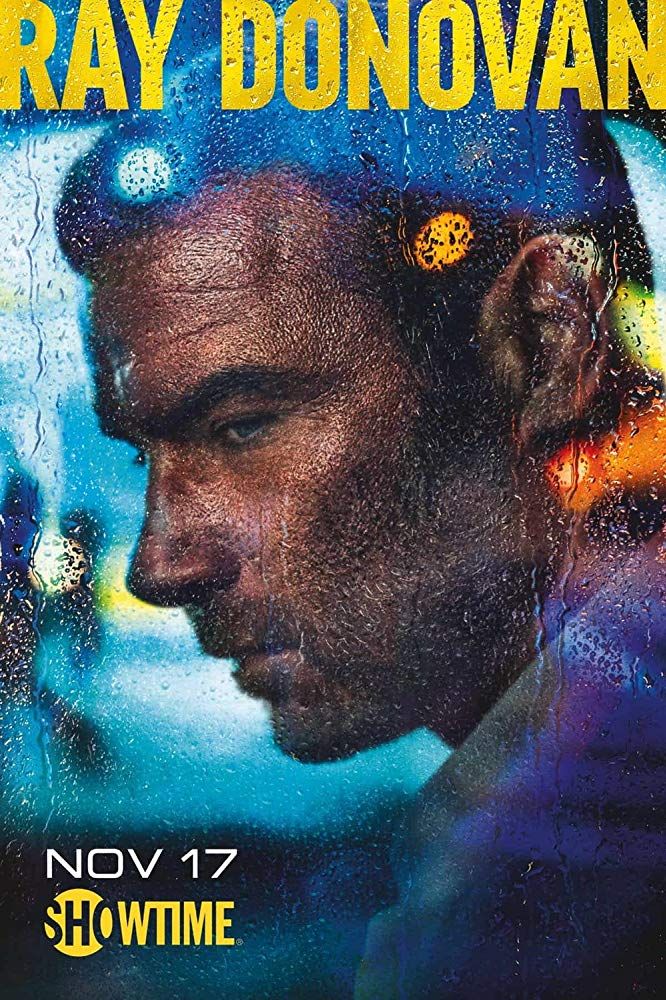
Ray Donovan Season 7 Finale: Linda to Elvis


And an emotional powerhouse to a brilliant season to end this seventh season of Ray Donovan tonight, pretty much sandwiched between Linda Ronstadt singing Desperado at the beginning and Elvis singing You'll Never Walk Alone at the end, what more could you ask for?

Several points that especially struck me -

  • Daryll more than Declan was responsible for Smitty getting shot to death in that shoot-out.  Although it was Declan's bullet, Daryll was the one who started shooting.
  • I'm of course glad that Terry didn't jump off the Empire State Building.  Did he go up to observatory knowing that he couldn't jump off, or did he discover that after he got up there?  I'm hoping it's the first - which would mean that Terry's conversation with Dr. Amiot (an absolutely perfect scene) had some impact on Terry.
  • I'm not entirely convinced that Mickey would've walked away, leaving Smitty there on the ground.  All season, we have seen Mickey becoming a little bit more of a semi-decent mentch, especially after his resurrection.  So, I just don't know if that was fully motivated.
  • I'm guessing that Ray and Molly are finished now, but that's too bad.  They were a good couple.
  • No resolution of the Mayor vs. Ray, but that's ok, because it gives at least one major storyline for the next season.  (My wife points out that the judge surviving puts the Mayor in hot water, but we didn't see how that played out.)
But this season proves that, all in all, New York City has been very good indeed for Ray Donovan the series.  I've never been more disappointed that a season ended.

 See also Ray Donovan 7.1: Getting Ahead of the Game ... Ray Donovan 7.2: Good Luck ... Ray Donovan 7.3: "The Air that I Breathe" ... Ray Donovan 7.4: Claudette and Bridget ... Ray Donovan 7.5: Bing! ... Ray Donovan 7.6: Phone Booths and Cellphones ,,, Ray Donovan 7.7: Back Story ... Ray Donovan 7.8: The Wife ... Ray Donovan 7.9: Pulling for Life

See also Ray Donovan 6.1: The New Friend ... Ray Donovan 6.2: Father and Sons ... Ray Donovan 6.4: Politics in the Ray Style ... Ray Donovan 6.6: The Mayor Strikes Back ... Ray Donovan 6.7: Switching Sides ... Ray Donovan 6.8: Down ... Ray Donovan 6.9: Violence and Storyline ... Ray Donovan 6.10: Working Together ... Ray Donovan 6.11: Settled Scores and Open Questions ... Ray Donovan Season 6 Finale: Snowfall and Mick

See also Ray Donovan 5.1: Big Change  ... Ray Donovan 5.4: How To Sell A Script ... Ray Donovan 5.7: Reckonings ... Ray Donovan 5.8: Paging John Stuart Mill ... Ray Donovan 5.9: Congas ... Ray Donovan 5.10: Bunchy's Money ... Ray Donovan 5.11: I'm With Mickey ... Ray Donovan 5.12: New York

See also Ray Donovan 4.1: Good to Be Back ... Ray Donovan 4.2: Settling In ... Ray Donovan 4.4: Bob Seger ... Ray Donovan 4.7: Easybeats ... Ray Donovan 4.9: The Ultimate Fix ... Ray Donovan Season 4 Finale: Roses

And see also Ray Donovan 3.1: New, Cloudy Ray ... Ray Donovan 3.2: Beat-downs ... Ray Donovan 3.7: Excommunication!

And see also Ray Donovan 2.1: Back in Business ... Ray Donovan 2.4: The Bad Guy ... Ray Donovan 2.5: Wool Over Eyes ... Ray Donovan 2.7: The Party from Hell ... Ray Donovan 2.10: Scorching ... Ray Donovan 2.11: Out of Control ... Ray Donovan Season 2 Finale: Most Happy Ending

And see also Ray Donovan Debuts with Originality and Flair ... Ray Donovan 1.2: His Assistants and his Family ... Ray Donovan 1.3: Mickey ... Ray Donovan 1.7 and Whitey Bulger ... Ray Donovan 1.8: Poetry and Death ... Ray Donovan Season 1 Finale: The Beginning of Redemption


It started in the hot summer of 1960, when Marilyn Monroe walked off the set of The Misfits and began to hear a haunting song in her head, "Goodbye Norma Jean" ...

Saturday, October 6, 2018

The Man in the High Castle 3.1: Real People in Alternate History


With the kick-in-the-gut news of the all-but-certain confirmation of Brett Kavanaugh to the U. S. Supreme Court today, I only managed to see the first episode of the third season of the brilliant Man in the High Castle on Amazon Prime tonight.  Its alternate history of the Nazis and Japanese winning the Second World War was much more enjoyable than the real news in our reality.  Herewith a review of that first episode, with more to come as I see the rest over the weekend.

I especially like the mix of real people from our own reality into the American Reich in 1962.  J. Edgar Hoover, unsurprisingly, fits right into Nazi New York, collecting all kinds of "scheiße" for the Reich, and, if he's anything like our J. Edgar, for himself to use to maintain his power as well. George Lincoln Rockwell, founder of the American Nazi Party in our reality, is the Reichsmarshall of North America in Man in the High Castle.   He and Edgar will no doubt cause Smith a lot of trouble, even with his promoted status, and vice versa.

Leni Riefenstahl, the brilliant Nazi film maker (Triumph of the Will) who lived to be over a 100 years old in our reality, gets a shout-out - and a put-down - as being more than 60 in this episode by a dazzling blond Nazi film maker who has some talent with the camera herself.   And Elvis's "Can't Help Falling in Love" gets sung in the Neutral Zone by someone who reminded me a bit of Buddy Holly (who died in our reality in 1959), but probably isn't.

So the first episode comes packed with lots of things that make alternate reality storytelling so much fun.   And, speaking of alternate realities,  there's also a hint that they'll play a much bigger role - literally interacting with and bumping into one another - than they did in the first two seasons, with Juliana talking to her sister about the different realities they each inhabited, one of which, as we know, had the sister dying.

The story is now moving well beyond Philip K. Dick's novel, but still true to its intentions, and I'll be back here tomorrow with more.

See also The Man in the High Castle 3.2-3: Alternate Realities, Frederic Brown, and Rockwells ...  The Man in the High Castle 3.4-6: "Tis Death that's Dead" ... The Man in the High Castle 3.7-10: The Metaphysics of Alternate Realities

See also The Man in the High Castle 2.1-2.3: My Heimisch Town ... The Man in the High Castle 2.4-2.6: Rails and Realities ... The Man in the High Castle 2.7-2.10: Alternate Reality to the Rescue, Literally

See also The Man in the High Castle on Amazon ... The Man in the High Castle 2-10: Timely Alternate Reality Par Excellence ... The Man in the High Castle in Reality - Well, on NYC Subway Cars


Monday, April 23, 2018

Timeless 2.6: Lucy and Flynn


As has been hinted at and gradually gaining moment - ironically, after Wyatt was re-united with Jessica, ironically after he and Lucy had made love for the first time - Lucy and Flynn finally get together at the end of Timeless 2.6.  Or, at very least, Lucy comes into Flynn's room at night with a nice bottle of vodka.  Their being together of course changes everything, and it will be fun to see in the weeks ahead how this plays out.

As for the time travel, rock 'n' roll and time travel are one of my favorite couples - it's been a bedrock of several of my novels and stories - and it was good to see the team, with Flynn instead of Wyatt, and expanded to four with Connor - go back in time to save Elvis, the Beatles, and other icons of the ensuing music.  They do this by saving blues legend and progenitor Robert Johnson from Rittenhouse assassination.  (Connor is fortunately a blues aficionado, which is why he's drafted by the team.)

But as much as everyone - including me - loves the Beatles (see my frequent posts here about The Beatles) - they and music in general are not the ultimate reason Johnson needs saving.   Lucy tells us that without Elvis and The Beatles, there would be no Civil Rights movement, no end of the Vietnam War,  none of pathbreaking social developments that lit up the 1960s.  This may be a bit of a stretch - lots of other factors led to the culture of the 1960s and its liberation of much of humanity - but I'm happy to accept it as the ultimate reason for making sure Elvis and The Beatles happened (though, strictly speaking, if I were writing this episode, I'd hold out for just the incredible music of the 1950s and 60s itself as more than enough reason for saving Johnson).

All in all, Timeless is continuing with a good mix of world events that need protecting, obvious and more subtle, as well as personal stories that continue to intrigue.  And we learn in the closing moments that Jiya's latest vision shows Rufus being killed...

See you here with word about how all that turns out next week.


                    more time travel about music

Sunday, February 25, 2018

Peter Brown Called

just published ...


Writing science fiction and songs have been two of my lifelong passions. This anthology combines them, with a selection of my science fiction and fantasy stories that has music as a theme, and my lyrics that deal with far-off suns, robots, and time travel.


Table of Contents 

Prologue 

 =stories= 

Marilyn and Monet 
The Harmony 
The Kid in the Video Store 
Ian, Isaac, and John 
Saving Lennon (from The Loose Ends Saga) 
The Suspended Fourth 
Sam’s Requests 
The Singing Pottery (from The Silk Code) 

 =songs= 

Evening's Evergreen Morning 
A Piece of the Rainbow 
The Lama Will Be Late This Year 
Alpha Centauri 
Lime Streets 
Tau Ceti 
If I Traveled to The Past 
 I Fell in Love with a Robot 
The First House on Mars

 =alternate equation #1=

Elvis, Ed, and Einstein

read an excerpt you won't find any place else on Speculative Fiction Showcase

Saturday, October 28, 2017

Bladerunner 2049: The Only Better Movie of this Kind is Bladerunner, and Hey


I loved it.  So did my son Simon, who's now a father of his own.  We loved it almost as much as the original Bladerunner, which we saw more than once on videotape, before there even were DVDs for rent, back in the early 1990s.   That's high praise.  The only reason Bladerunner 2049 wasn't as good as Bladerunner circa 1982 was that the 1982 movie broke so much new ground.  Back in the mid-80s, when I was teaching in the MA in Media Studies Program at the New School, I asked Stephen Jacobs (who then was my student, and has long since become a professor himself, at the Rochester Institute of Technology) to give me an example of cyberpunk.  "Bladerunner" he replied.  It defined the field, at least in the movies.  It was and still is that good.  Not only that, it began Philip K Dick's run of stories made into great movies and TV series, with the current example of The Man in the High Castle on Amazon.  And it inspired me to write The Civil Right of Robots.

But Bladerunner 2049 did as outstanding a job as could be done in a sequel for that kind of movie - moreover, a sequel on the screen some 35 years later.  Rather than reviewing the plot, or even the acting - other than mentioning that both were excellent, and Ryan Gosling as "K" and Harrison Ford reprising his Deckard role were especially excellent - I'll go over certain points and questions which capture this visually and intellectually stunning film (and there will be spoilers):

  • Did you catch that "CCCP Soviet" sign on the building in LA?  How could the Soviets still have a sign on a building in 2049?  Maybe Putin managed to restore the Soviet Union?  Possibly.  But I think a better explanation is that Bladerunner 2049 and in turn Bladerunner are and were alternate realities from the outset.  Or, at least they are now.  The Bladerunner of 1982 took place in 2019, in a world that doesn't look much like our world does now, in 2017 (except insofar as Times Square has seemed increasingly Bladerunner-inspired in the past decade). So the makers of Bladerunner 2049 had to make a sequel in a world that looked 30 years later than the world of 2019 and how it was depicted in 1982.  That world has Japan much on its mind - Japan looked like it could become the dominant computer power back then - and, of course, the Soviet Union and Russian were in everyone's head, too.  Bladerunner 2049 has both Russian and Japanese all over the scenes. It could have not flashed Soviet at all,  and benefitted from the unexpected prominence of Russia in our popular culture in the past year.  But instead the sign says CCCP and Soviet - as a shorthand for saying this is the future of Bladerunner 1982/2019, not our future.  Very nice touch.
  • Did "K" die at the end?  The convention in movie-making is that if (a) you're very badly wounded, and (b) you're lying motionless with your eyes open, then (c) you're dead.  On the other hand, we've learned that the replicants can only be killed when their brains are destroyed, by a bullet, or, in the case of Niander's evil, powerful, beautiful replicant apprentice, by deprivation of oxygen because K drowned her.  But nothing like that happened to K.  He's been badly wounded - but I'd put my money on his not dying.
  • So, is Deckard a replicant or not?  On the yes side, he has a pretty high survival quotient, too.  And he did father a replicant with Rachel, who definitely was a replicant.  But, wait, that's also evidence that he isn't a replicant, right?  I mean, isn't it more likely that human sperm and replicant ovum created a living being, than replicant sperm and replicant ovum?  I think so.  I am a little less sure that Deckard is human than K is alive, but I'd go with Deckard as human if push came to shove.
  • I enjoyed the Elvis in what's left of Las Vegas hologram, with a quick shot of Marilyn Monroe thrown in.   (I just published Marilyn and Monet, so I'm always glad to see her given screen time, or for that matter, stage time, as in Anthony Marinelli's Max & Domino which I reviewed here just last week.)  But Elvis belting it out on a stage is a fine homage to David Lynch, and there was a touch of Twin Peaks, somehow, in Bladerunner 2049.
Highly recommend, for the senses and brain.  Bladerunner 2049 is 2017 movie-making at top of its game.  Kudos to Ridley Scott and everyone involved in this movie.


It all started in the hot summer of 1960, when Marilyn Monroe walked off the set of The Misfits and began to hear a haunting song in her head, "Goodbye Norma Jean" ...

Wednesday, October 4, 2017

Review of Rob Sheffield's Dreaming the Beatles 16 of X: "I'm in Love, with Marsha Cup"

Back with a review of the next two chapters of Rob Sheffield's continuing-to-be-excellent Dreaming the Beatles.  These chapters were particularly superb, replete with discussions of the Abby Road photographs and the Paul-Is-Dead controversy - actually, almost every chapter so far has been particularly superb - but what I most enjoyed was Sheffield's assessment of the public's input on what are the lyrics of a song, transcending at times even the lyricist's, because he or she may not quite know what the lyrics are (certainly not what they mean - see what I say about I. A. Richards below), and may not even get them right.  As examples of that, Sheffield cites Lennon's "two foot small," which he sang in "You've Got To Hide Your Love Away" instead of the intended "two foot tall," or the debate about whether Lennon was singing "hold you in his armchair, you can feel his disease" or "hold you in his arms, yeah, you can feel his disease" in "Come Together".

I've always been an "arms" man myself, but, then, again, when I first heard Elvis's 1957 #1 single I was sure he was singing "I'm in love, with Marsha Cup," whoever exactly she was.  But those kinds of mishearings happen all the time, and what Sheffield is really probing is what is the ultimately correct lyric when there is no absolutely factual record to consult?

Here I. A. Richards, a literary theorist who made his mark back in the 1920s, always struck me as being of great value.  Richards argued that it is the reader (which can easily be translated to listener) not the author of a text who is and has the ultimate authority on what that text means.   In the case of the acoustic realm, where the words are intrinsically not as clear as in the visual, the question can sometimes become not just what the lyrics mean, but what they are.

Sheffield develops the question of lyrics and their reality out of the Paul-Is-Dead nonsense from the late 1960s and after, which emerged out of interpretations of lyrics played backwards.  Although I never believed any of that for instant - it was a form of fake news, years ahead of its time -  I can report that Paul was definitely alive and well and sounding great at his Nassau Coliseum concert last week

Unless he was an imposter.  But, in that case, that imposter has done an unbelievably great job, as Sheffield points out, from "Hey Jude" to "Golden Slumbers" and "The End".  McCartney sang them all last week, including "Let Me Roll It," proving the imposter continued showing his mettle even after the Beatles disbanded.

And I'll be back with another review soon.

See also Review of Rob Sheffield's Dreaming the Beatles 1 of X: The Love Affair ... 2 of X: The Heroine with a Thousand Faces ... 3 of X: Dear Beatles ... 4 of X: Paradox George ... 5 of X: The Power of Yeah ... 6 of X: The Case for Ringo ... 7 of X: Anatomy of a Ride ... 8 of X: Rubber Soul on July 4 ... 9 of X: Covers ... 10 of X: I. A. Richards ... 11 of X: Underrated Revolver ... 12 of X: Sgt. Pepper ... 13 of X: Beatles vs. Stones ... 14 of X: Unending 60s ... 15 of x: Voting for McCartney, Again ... 17 of X: The Split ... 18 of X: "Absolute Elsewhere... 19 of X: (Unnecessary but Brilliant) Defense of McCartney ... 20 of X: "All Things Must Pass" ... 21 of X: Resistance ... 22: The 70s Till the End ... 23: Near the Science Fiction Shop ... 24 of 24: The Last Two

And here's "It's Real Life" -- free alternate history short story about The Beatles, made into a radio play and audiobook and winner of The Mary Shelley Award 2023


lots of Beatles in this time travel

Sunday, April 2, 2017

Big Little Lies: Elvis and Answers

A superb conclusion to the Big Little Lies - a superb conclusion to one of the best series ever on any television.   Although there's always room for a second season, and I hope it happens, this short season was about as good as it gets.

First, let me say that the Elvis renditions on trivia night were themselves worth the price of admission.  Zoe Kravitz's "Don't" - one of my favorite Elvis songs anyway - was nonpareil.  And Adam Scott's performance of "The Wonder of You" was nothing to sneer at, either.  (Though my wife tells me he was lip-synching - well, kudos to the singer and the lip synching.)

But back to the plot: the ending was just right for this kind of whodunnit, because the "culprit" was the person who we would have least reason to even remotely suspect.  Bonnie (played by Zoe Kravitz) had no reason to kill anybody.

Until she saw what Perry was doing.  And, even then, she didn't intend to kill him.

But, boy, did he deserve to die. (Which is why I put "culprit" in quotes.)  Not only because of what he had been doing to Celeste, but because he is revealed as Jane's rapist.  That was a wild twist, and maybe the one weakness in the plot - wouldn't she have recognized Perry?  However much he changed, his eyes, his voice would have been the same.  But we do get the additional irony here that not only was Perry to father of violent Max, but of sweet Ziggy.

I'll conclude with saying I honestly don't know who should get the Emmy for best lead actress, Reese Witherspoon and Nicole Kidman were both so extraordinary in different ways.  Reese Witherspoon walked the line between being a bitch and a caring woman just perfectly.  And Nicole Kidman as an abused woman, trying to hold together her marriage, was indelible.  As for acting, hats of to Alexander Skarsgard for an unforgettable performance as the despicable Perry.

I'd watch another season in a heartbeat.  But this short season has already made television history.


See also Big Little Lies: Big Good, Truly ... Big Little Lies 1.5: Multivalent Whudunnit

Wednesday, August 31, 2016

Elvis & Nixon on Amazon: History As It Could Have Been Written


I don't usually review comedies, but Elvis & Nixon isn't really a comedy, though it's billed as such, and even though it does have lots of laughing-out-loud scenes and lines.

But the Amazon original movie mostly is a seemingly cracked but deeply revealing double bio-pic, and a bio-pic not of two lives, but of what led up to a single moment in history when Elvis Presley met Richard Nixon in the White House.  The photograph above, the most requested from the National Archives, captured that moment.

The movie provides the background, true in general, but like all docu-dramas, replete with dialogue written for the movie.

What we learn about Nixon is nothing new, but ever fascinating to see.   He's a deeply insecure man, even in the most powerful office on the planet.  He complains to an aide, before the meeting, that he's not very good-looking, and doesn't have it as easy as guys like the Kennedys and Elvis who are.   Although Elvis doesn't hear this, he later compliments Nixon on his good lucks, as part of his successful effort to butter him up.

Elvis is riven with insecurity, too.  It's not only December 1970, but December or at very least the late Fall of Elvis's career.  Though millions of course know of him and still adore him, it's an older crowd, and he's no longer making the record-breaking records that launched him to superstardom, succeeding Frank Sinatra in the 1950s, gyrating on the Ed Sullivan show, and Elvis knows this.  He hates the Beatles, and is almost bored with his public.   Indeed his passion at this point is what brings him to the White House - collecting police badges, in pursuit of a badge as a Federal agent at large, a position he's conjured into being.

Kevin Spacey at Nixon is of course perfect and superb.  Michael Shannon, last seen to good effect on Boardwalk Empire, is outstanding as Elvis.  If you'd like to know what this off-beat movie most reminds me of it would be the second season of Fargo, which takes place in 1979.   Elvis & Nixon and Fargo have almost nothing specifically in common - the one point of similarity would be Reagan appearing in an episode of Fargo - but the two share a uniquely true, bizarre but incisive ambience you'll find in few other places on the screen.

Sunday, May 1, 2016

The Girlfriend Experience: Eminently Worth It

If it had to pick the best new 2016 television series on any medium - network TV, cable, or streaming - it would be The Girlfriend Experience on Starz.   And though it's hard to compare The Girlfriend Experience to the science fiction, crime, and historical drama I usually review here, it may well be the best series now on television, period.

What's it about?  Well, the girlfriend experience is offered by call girls who not only provide sex, but companionship, dinner, affection, conversation, attentive listening during the time that is purchased, for a thousand dollars or more an hour.   The purveyor of the experience thus needs to be not only beautiful, but intelligent and empathetic.

In order for a series like this to work, the lead actress has to not only be gorgeous, but convey that intelligence and sensitivity.  That would be Riley Keough, who gives a virtuoso performance as Christine Reade.   She's Elvis Presley's granddaughter, by the way.   I don't how she sounds on record, but she has more acting talent than everyone in her family combined - and I liked Elvis in Jailhouse Rock, and Priscilla was pretty good in Dallas, too.  But their granddaughter is something else again on screen.

The story's excellent, too.   Christine has a day job as a law student and legal intern - which is also why she needs to be so intelligent - and this puts The Girlfriend Experience on a continuum with Secret Diary of a Call Girl on Showtime (about a straight-up prostitute) and every lawyer show ever on television, including The Good Wife, and for that matter in a different way with Girls on HBO and The Devil Wears Prada in the movies, too.

But the subject of The Girlfriend Experience is something all its own, and the narrative does a good job of mining its possibilities and complications. Christine's clients range from obsequious to savvy, from brutal to sweet to even sometimes cool.   One of them realizes he can't afford to continue shelling out the big bucks for this and asks for a discount.   Another drops dead (off camera).   A third craves the jealousy part of any real relationship, and asks Christine to set that up.

The pacing in the 13-episode season, each 30 minutes, took a little getting used to, and wasn't helped by the fact that Cablevision didn't have all the episodes up on Starz On Demand as advertised - maybe I should pay for a more satisfying cable experience (wait, I thought I was already doing that) - but in the end and in retrospect I rather like the way the story is rolled out, especially the unconventional season finale.

There's astute use of media in the story, with smartphones and videos playing crucial roles, thus giving the media scholar a great excuse to watch this.

But you don't need an excuse.  The Girlfriend Experience is brilliant, provocative, appealing television, and a unique addition to the screen.


#SFWApro


Monday, July 6, 2015

True Detective 2.3: Buckshot and Twitty

Well, as I was saying last week, True Detective couldn't be crazy enough to kill one of its leading men in the very second episode, could it, as wild and iconoclastic as such a move might have been.  But we discovered in True Detective 2.3 last night - after a fabulous opening sequence with a bizarre but compelling Elvis-like impersonator singing "The Rose" (reminiscent of one of the best scenes in any movie, Dean Stockwell delivering Roy Orbison's "In Dreams" in Blue Velvet) - that Ray survived!  Because Ray was hit with two shotgun blasts, alright - but loaded with buckshot not lead.

Ok, first, I'm no weapons expert, and I wouldn't know buckshot from grape nuts cereal, or birdshot, either, but the point is that kudos to True Detective, that was an excellent feint. And while we're at it, the impersonator was apparently of Conway Twitty - not Elvis - but the two are pretty similar, anyway, and throw in Conrad Birdie there, too.  And one of other thing: the scene in Blue Velvet was a lip synch (not technically an impersonation) - Roy Orbison's voice coming out of Dean Stockwell's mouth - and so, it maybe seems, was "The Rose" in TD.

Interestingly, Blue Velvet's David Lynch was supposed, until recently, to be producing a new slew of Twin Peaks episodes, until he bowed out, so it was especially gratifying to see this Lynchian bow to his work at the beginning of last night's True Detective.  As was the case last year, part of what makes True Detective so appealing is not the storyline per se, but the ambience via which it is presented.   Hey, let's be honest.  It is the shimmering water color ambiguous ambience that truly makes True Detective what it is - like no other show on television, by a long shot, in the combination of its searingly misty imagery and mix of sound and music.

But the story's developing well, particularly at this point with Frank, who is a suitably complex racketeer, able to dish out a beat-down to an associate who foolishly bad mouths him, and take note that Ray is off his booze, drinking just water.  Frank is the too obvious source of the shotgun blasts on Ray - putting someone up to it - but why do that, to frighten Ray?  And the rounds are police issue, which presumably Frank could acquire, but why, to distance Ray further from the police? More likely the shooter is connected more directly to the police, or to Ray's paternity, or some combination.

Frank is not yet as interesting as Tony Soprano, but he's off to a good start, as is True Detective this second season.

See also Season Two: True Detective: All New ... True Detective 2.2: Pulling a Game of Thrones

And see also Season One: True Detective: Socrates in Louisiana ... True Detective Season One Finale: Light above Darkness

 
Like philosophic crime fiction?   Try The Plot to Save Socrates ...

#SFWApro


InfiniteRegress.tv