Chuck Todd interviews me about alternate histories
Showing posts with label Jared Harris. Show all posts

Sunday, October 26, 2025

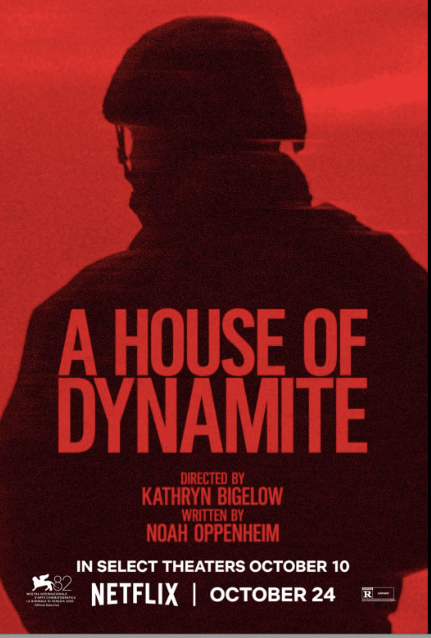
A House of Dynamite: MAD -- Mutually Assured Destruction -- In Our Day and Age


I grew up in a world in which Dr. Strangelove was a plausible movie, a world in which we lived with the Soviet Union, armed to the teeth with nuclear weapons, as were we, and our best chance that we wouldn't blow up the Earth, if not to smithereens, to an uninhabitable planet, was MAD -- the mutually assured destruction that a nuclear war would engender, which would stop we human beings from ever starting such a no-win war.

As A House of Dynamite on Netflix tells us, at the beginning, we the world gradually learned to scale down our armaments, but the world has gone back to at least verbal apocalyptic belligerence in the past decade, with Russia, in particular, refusing to rule out nuclear weapons if the US and NATO attacked it in response to the Russian attack on Ukraine, or maybe if we gave Ukraine too much assistance.

[Spoilers ahead ... ]

A House of Dynamite posits such world in which a missile is launched towards the United States.  Attempts to intercept it with our missiles unaccountably fail.  Maybe our defense system has been compromised by prior surreptitious cyber attacks.  Maybe the system wasn't that effective in the first place. We’re told that stopping a missile like that is like “a bullet hitting a bullet”.

We soon learn that Chicago is the target.  (Here I'll say that the movie was made before Trump unconstitutionally targeted Chicago for National Guard deployment.  Just sayin'.)  We see this story play out from three different simultaneous angles, from the standpoints of American military and political leaders and personnel.  The actors are top notch: Idris Elba as US President (he's been great in everything I've seen since Stringer Bell in The Wire), Jared Harris as Secretary of Defence (Hari Seldon in Foundation), and Rebecca Ferguson as a Captain who finds herself heading the White House Situation Room (Juliette Nichols in Silo), are just three of many examples.

All three stories end with the missile seconds from hitting Chicago, and the President struggling to make a decision.  Retaliate?  Against which country?  Russia, China, North Korea?  And what kind of retaliation -- how much of the presumed enemy will be destroyed?  How much of the Earth will be left inhabitable?

And here the movie ends.  Right.  Just like the last scene of The Sopranos.   We the audience need to fill in the ending.  Or at least think about it.   Is this good movie-making?  I actually thought it worked great in The Sopranos (see my reviews, beginning here, for what I think happened to Tony).  But The Sopranos was clearly a totally fictitious story about familiar characters in our reality.  A House of Dynamite is fiction, too, but somehow seems less a fiction, much closer to our reality, the world I grew up in, the world we now inhabit.

And as a denizen of that world, I found the ending unsatisfying.  But maybe in such a scenario there is no narratively satisfying ending.  A happy ending would have been the missile hitting Chicago with no bomb, or no bomb going off.  Deputy National Security Advisor Jake Baerington (played by Gabriel Basso, who believe it or not played J. D. Vance in Hillbilly Elegy) tells the President this a possibility, in an attempt to caution him not to launch a massive nuclear counter-strike.  This of course goes against the military advice of General Anthony Brady (Tracy Letts, Elvis and Nixon -- hey, it's a movie about a President).

So who would the President listen to?  I'd hope it would be Baerington not Brady.  But maybe that's not realistic, after all.  

Thursday, July 13, 2023

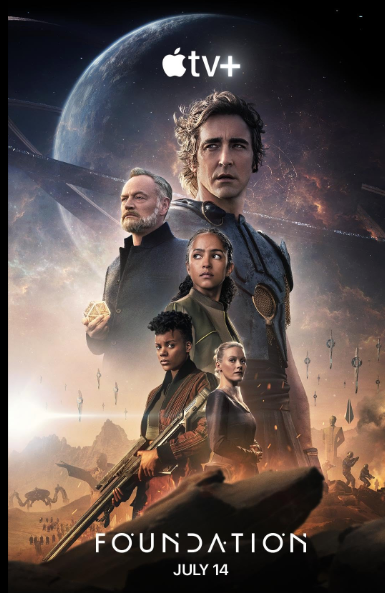
Foundation 2.1: Once Again, a Tale of Two Stories


Foundation is back on Apple TV+ with the first episode of its second season.  Here's a review, with no big spoilers.

Here's what this first episode of the second season is most like: the first season of Foundation on Apple TV+.  Here's what it's significantly not much like: Isaac Asimov's novels, upon which this series is supposed to be based.  But you knew that, and I said that, already.  In fact, I just did, when I said the first episode of the second season is most like the first season.

And, to be clear. as I said in my reviews of the first season back in 2021, the dissimilarity of this TV series to Asimov's novels doesn't mean that it's all bad.  But nor can I help not being disappointed, not missing the trilogy that I read and loved three times, and the sequels which I read once and loved not as much but well enough.

Once again, my favorite part of the TV series are the Cleon clones and Demerzel -- Cleon wasn't cloned in the novels and Demerzel was very different, but their rendition in the TV series is often superb.  This continues in episode 2.1.  Lee Pace as Brother Day is once again a powerhouse.  Same for Laura Birn as Demerzel.  And Terrence Mann as Brother Dusk is simmering and outstanding, and Cassian Bilton as Brother Dawn is memorable.  All told, they tell an exciting, high intellect, high octane story vividly.  And, yeah, they're the bad guys (I guess).

The good guys, who are supposed to be Hari Seldon and the Foundation, are not nearly as impressive. Jared Harris is a great actor, but he's been put in a box in this TV series, and even when he screams and yells he barely breaks through.  And as for the rest ... Gaal and Salvor, well, I don't think I'd mind at all if they were almost unrecognizable from the characters with their name in the novels, if they'd been given a riveting story.  Instead, we get mental gymnastics and proclamations of profundity with not much substance or appeal.

But I'll keep watching, because I enjoy the clone story, and I still have some hope somewhere that the TV series will deliver some of what I most enjoyed in the novels.


See also Foundation 1.1-2: Mathematician, Man of the People, and Cleon's Clones ... Foundation 1.3: Clonal Science Fiction, Hari Seldon as V. I. Lenin ... Foundation 1.4: Slow Hand, Long Half-Life, Flipped Coin ... Foundation 1.5: What We Learned in that Final Scene ... Foundation 1.6: Folded Variations ... Foundation 1.7: Alternate History/Future ... Foundation 1.8: Divergences and Convergences ... Foundation 1.9: Vindication and Questions ... Foundation Season 1 Finale: Right Up There


Friday, September 24, 2021

Foundation 1.1-2: Mathematics, Man of the People, and Cleon's Clones


I've been saying on Twitter and Facebook and anyplace with an eye or an ear that I've been waiting most of my life to see Isaac Asimov's Foundation trilogy and then series on a screen.  That's surely a prescription for disappointment.  But I just watched the first two episodes of Foundation on Apple TV+ and I thought they were superb.  Not perfect, but more than enough to be not disappointed but thrilled.

First, let me say that, in general when I review a movie or TV series based on a novel or story I previously read, I try not to get tied up in comparisons.  The screen and the page are, after all, very different media, with different necessities of expression and portrayal.   But Asimov's stories are so incandescent, it's not possible to ignore them when thinking about the television series.

And I think the first two episodes of the series do capture the best parts of the Asimov stories.  The primacy of mathematics in predicting the broad currents of history, but not the actions of individuals, come through powerfully in the first two episodes.   Especially in the stunning ending of the second episode.

[Spoilers follow ... ]

That would be Hari Seldon murdered by his adopted son Raych, on the ship to Terminus.  I don't know if I liked that -- actually, I do know, I didn't -- and I'm not sure it was well enough motivated.   But it certainly was traumatically shocking, and amply demonstrated the unpredictability of individual behavior.

Cleon's clones, though, on the other hand, were somewhat predictable, certainly the cruelty of Brother Day.  But the relationship between the boy (Dawn), the old man (Dusk), and Day was interesting, even fascinating, and one of the best parts of the TV series not in the Asimov stories.  

I also really loved the scene on the ship to Terminus with Hari talking to the workers in the laundry room.  It was good and comforting to see the esoteric mathematician being such a true man of the people.  Seldon was never fleshed out on Asimov's pages, and Jared Harris did a fine job of doing that in the first two episodes.  As I was watching them, it occurred me to me that Foundation in these first two episodes was most like David Goyer's Da Vinci's Demons, which makes sense, since Seldon and Da Vinci were both geniuses who predicted the future. The trial of Hari was also effective, as it was in Asimov, evoking Galileo on trial for his life and ideas in the Vatican.

In addition to Harris,  Lou Llobell does a fine job as Gaal Dornick, who has an excellent expanded role in the TV series as not only a mathematician but a human being.  And Lee Pace is powerful and believable as the powerful Brother Day.   Robots played no role in the original Asimov trilogy, and an increasing role in the sequels.  I'm not sure what I think as yet of Laura Birn's Demerzel on the TV screen.

I'll tell you more when I review the third episode right after I see it next Friday early morning.  And here's my audio podcast with some further thoughts about the first two episodes:


See also Foundation 1.3: Clonal Science Fiction, Hari Seldon as V. I. Lenin ... Foundation 1.4:  Slow Hand, Long Half-Life, Flipped Coin ...  Foundation 1.5: What We Learned in that Final Scene ... Foundation 1.6: Folded Variations ... Foundation 1.7: Alternate History/Future ... Foundation 1.8: Divergences and Convergences ... Foundation 1.9: Vindication and Questions ... Foundation Season 1 Finale: Right Up There


Friday, July 16, 2021

Podcast: Thinking about Asimov's Foundation on Apple TV+


Welcome to Light On Light Through, Episode 186,  in which I consider the history, implications, and possibilities of Isaac Asimov's Foundation series debuting on Apple TV+ this September.


Check out this episode!

Monday, June 3, 2019

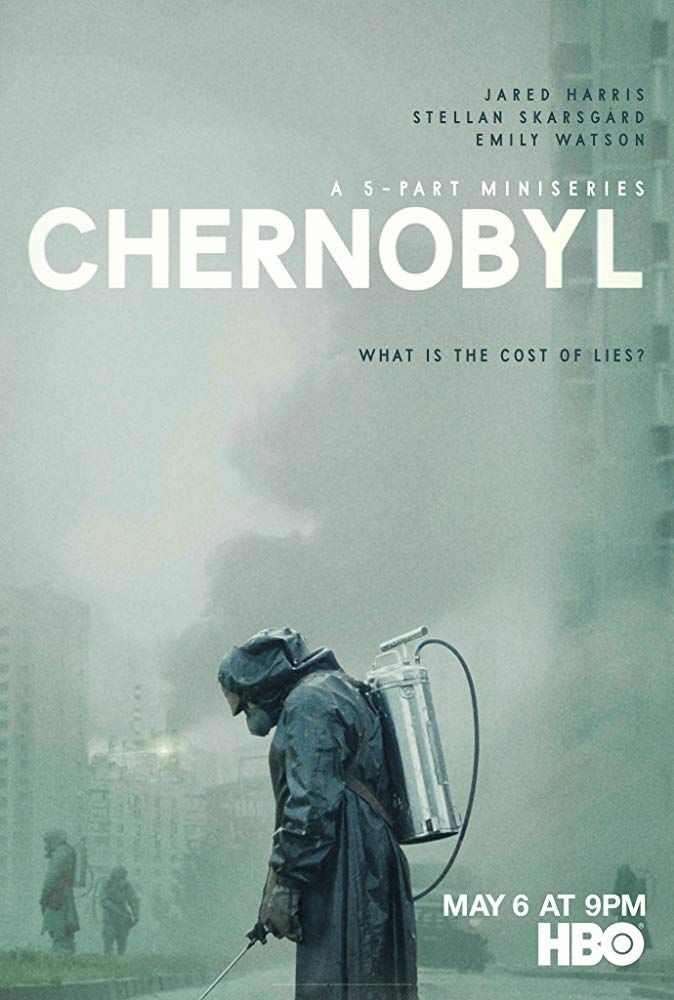
Chernobyl 1.5: "What Is the Cost of Lies?": Chernobyl and Trump


Chernobyl 1.5, the finale of this crucially instructive docudrama, ended with the last words we heard from Legasov's recording: "What is the cost of lies?"

But it's a question that could be put to Donald Trump, and his constant assault on the truth from The White House.   And that makes Chernobyl not only a cautionary true story on the hazards of nuclear energy, but, just as importantly, on the dangers of suppressing the truth, whether on behalf of a misguided state such as in the Soviet Union, or unbridled personal ego as with Donald Trump.

The truth that the Soviets suppressed led to the final straw that broke the nuclear reactor and made it explode: the tips of the rods that were meant, when inserted, to be the failsafe of a nuclear explosion in fact had just the opposite effect.  They made the reactor explode.   The Soviets knew this before Chernobyl, but kept it secret out of fear of seeming ignorant or incompetent about nuclear energy.  Which was in fact exactly what they were.   And then the Soviet regime tried to stop Legasov (given an Emmy-worthy performance by Jared Harris) from letting the world know about this.  (And speaking of Emmy-worthy, the same eminently applies to the whole series - hats off to creator Craig Mazin.)

According to Gorbachev, it was Chernobyl that brought the Soviet Union down, the blatant example it gave of the arrogance and blindness of the Soviet regime.   There were many other reasons that the Soviet regime deserved to fail.  It's tragic, however, that what brought it down was the death of so many innocent people.

We here in the United States who value freedom can only hope that it takes something far less costly - either impeachment and conviction, or loss of the next Presidential election - to bring down the liar in The White House.

See also: Chernobyl 1.1: The Errors of Arrogance ... Chernobyl 1.2: The Horror Movie ... Chernobyl 1.3: The Reasons ... Chernobyl 1.4 Bio-Robots


Monday, June 4, 2012

Mad Men 5.12: Exit Lane

Well, it was clear since Lane embezzled some of the company's funds, and forged Don's signature in the process, that some kind of big no good would come to Lane.   But in Mad Men 5.12, it got as bad as it could for poor Lane.

Don shows another thread of decency when he doesn't turn Lane over to the police, after Don discovers what Lane did.  But Don does insist on Lane's "voluntary" resignation.   Lane pleads to stay, but Don rightly says that Lane can no longer be trusted.   Don also adds that Lane can pick himself up after this, some place else, and that Don was no stranger to starting over.

It's not enough for Lane, who hangs himself in the office the next day.  The reactions, again, of the characters are revealing.  Joan, the most empathetic and human of the crew, is crying.  Everyone else is pretty shaken up.  Don knows what to do - he's not going to just leave Lane hanging there, for the police to arrive - and he of course also feels guilty.   Tough season for actor Jared Harris - playing memorable, very different kinds of characters, now violently gone in two major series (Mad Men and Fringe) - and fine pieces of acting in both.

As upset as Don, he manages to be a good father, doing the right thing for Sally's would-be boyfriend.  And Betty finally rises to the occasion, too, at last being a comforting, good mother, as Sally deals with the realities of entering adolescence.

For a show about cut-throat advertising execs, Mad Men has a way of hitting some deep human notes, and it's never been better than doing that this season.

See also Mad Men Season 5 Debut: It's Don's Party  ... Mad Men 5.3: Heinz Is On My Side ... Mad Men 5.4: Volunteer, Dream, Trust ... Mad Men 5.5: Ben Hargrove ... Mad Men 5.6: LSD Orange ... Mad Men 5.7: People of High Degree ... Mad Men 5.8: Mad Man and Gilmore Girl ... Mad Men 5.9: Don's Creativity  ... Mad Men 5.10: "The Negron Complex" ... Mad Men 5.11: Prostitution and Power

And from Season 4: Mad Men 4.1: Chicken Kiev, Lethal Interview, Ham Fight ... 4.2: "Good Time, Bad Time?" "Yes." ... 4.3: Both Coasts ... 4.4: "The following program contains brief nudity ..."  4.5: Fake Out and Neurosis ... 4.6: Emmys, Clio, Blackout, Flashback  ... 4.7: 'No Credits on Commercials' ... 4.8: A Tale of Two Women ... 4.9: "Business of Sadists and Masochists" ... 4.10: Grim Tidings ... 4.11: "Look at that Punim" ... 4.12: No Smoking!  ... Mad Men Season 4 Finale: Don and -

And from Season 3: Mad Men Back for 3 and 3.2: Carvel, Penn Station, and Diet Soda and 3.3: Gibbon, Blackface, and Eliot and 3.4: Caned Seats and a Multiple Choice about Sal's Patio Furniture and 3.5: Admiral TV, MLK, and a Baby Boy and 3.6: A Saving John Deere and 3.7: Brutal Edges ... August Flights in 3.8 ... Unlucky Strikes and To the Moon Don in 3.9 ... 3.10: The Faintest Ink, The Strongest Television ... Don's Day of Reckoning in Mad Men 3.11 ... Mad Men 3.12: The End of the World in Mad Men ... Mad Men Season 3 Finale: The End of the World

And from Season Two: Mad Men Returns with a Xerox and a Call Girl ... 2.2: The Advertising Devil and the Deep Blue Sea ... 2.3 Double-Barreled Power ... 2.4: Betty and Don's Son ... 2.5: Best Montage Since Hitchcock ... 2.6: Jackie, Marilyn, and Liberty Valance ... 2.7: Double Dons ... 2.8: Did Don Get What He Deserved? ... 2.9: Don and Roger ... 2.10: Between Ray Bradbury and Telstar ... 2.11: Welcome to the Hotel California ... 2.12 The Day the Earth Stood Still on Mad Men ... 2.13 Saving the Best for Last on Mad Men

And from Season One: Mad Men Debuts on AMC: Cigarette Companies and Nixon ... Mad Men 2: Smoke and Television ... Mad Men 3: Hot 1960 Kiss ... Mad Men 4 and 5: Double Mad Men ... Mad Men 6: The Medium is the Message! ... Mad Men 7: Revenge of the Mollusk ... Mad Men 8: Weed, Twist, Hobo ... Mad Man 9: Betty Grace Kelly ... Mad men 10: Life, Death, and Politics ... Mad Men 11: Heat! ... Mad Men 12: Admirable Don ... Mad 13: Double-Endings, Lascaux, and Holes

20-minute interview with Rich Sommer (Harry Crane) at Light On Light Through


                 Special Discount Coupons for Angie's List, Avis, Budget Car, Garden.com, eMusic


The Plot to Save Socrates

"challenging fun" - Entertainment Weekly

"a Da Vinci-esque thriller" - New York Daily News

"Sierra Waters is sexy as hell" - curled up with a good book


Enjoy listening to audio books? Get a free audio book copy of The Plot to Save Socrates - or any one of 85,000 other titles - with a 14-day trial membership at Audible.com ...
 

Friday, March 30, 2012

Fringe 4.16: Walter Likes Yiddish

We learn in Fringe 4.16 that Walter's no fan of Sumerian - "not my favorite ancient language," he explains, "I prefer Yiddish."  Of course, Yiddish is a medieval language - a combination of ancient Hebrew and high German that arose in the shtetls in Europe, but zayr gut, anyway.  That's part of the charm of Walter.

By the way, maybe it was just my imagination, but did Walter look a little younger to you at the end of tonight's episode?  Just sayin'.   And Astrid looked different, too.

The story was a cool return visit to an episode from Season One, with a souped up DNA turning its carriers into porcupine creatures.  Tonight the bad guy behind this is David Robert Jones, which my wife realized is played by the same actor who plays Lane on Mad Men (Jared Harris).  Fine acting - two wildly different, excellently played characters.

Otherwise, Olivia is in danger of losing her job at the FBI - she's lost 40-percent of this season's (world with Peter erased after Reiden Lake) memories, and which the 10th Floor (FBI brass) finds an insufficient amount of the Olivia they hired.   By the end of the episode, Broyles nobly stands up for her, figuring that Olivia's better than 90% of the agents, so 40% of her is still a good number.  Admirable algebra.


But there's something about this, our world, minus Peter after the lake, to which Peter has now returned, which may still need a little explaining.   How come Peter's absence has changed so many things in the world, including all kinds of events with which he had nothing to do in the original world, such as, for example, Lincoln Lee being such a major character in this world that developed without Peter?


Wait a minute - maybe Peter did have something to do with Lee's prominence - Lee moved into the void that existed in Fringe in Peter's absence.  And the porcupine people - why did they take a different path in the without-Peter-world?  Because without Peter, without Peter and Walter as antagonists, Jones became more powerful. The indirect effects of Peter's absence being so great show how important Peter was in that world, in ways we didn't realize.

And so the shook-up kaleidoscope is gradually reassembling ....


Hey, check out my essay The Return of 1950s Science Fiction in Fringe in this new anthology


See also Fringe Returns for Season 4: Almost with Peter ... Fringe 4.2: Better and Worse Selves ... Fringe 4.3: Sanity and Son ... Fringe 4.4: Peter's Back, Ectoplasm, and McLuhan ... Fringe 4.5: Double Return ... Fringe 4.6: Time Slips ... Fringe 4.7: The Invisible Man ... Fringe 4.8: The Ramifications of Transformed Alternate Realities ... Fringe 4.9: Elizabeth ... Fringe 4.10: Deceit and Future Vision ... Fringe 4.11: Alternate Astrid ... Fringe 4.12: Double Westfield / Single Olivia ... Fringe 4.13: Tea and Telepathy ... Fringe 4.14: Palimpsest ... Fringe 4.15: I Knew It!

See also Fringe 3.1: The Other Olivia ... Fringe 3.2: Bad Olivia and Peter ... Fringe 3.3: Our/Their Olivia on the Other Side ... Fringe 3.5: Back from Hiatus, Back from the Amber ... Fringe 3.7: Two Universes Still Nearing Collision ... Fringe 3.8: Long Voyages Home ... Fringe 3.10: The Return of the Eternal Bald Observers ... Flowers for Fringenon in Fringe 3.11 ... Fringe 3.12: The Wrong Coffee  ... Fringe 3.13: Alternate Fringe ... Fringe 3.14: Amber Here ... Fringe 3.15: Young Peter and Olivia ... Fringe 3.16: Walter and Yoko ... Fringe 3.17: Bell, Olivia, Lee, and the Cow ... Fringe 3.18: Clever Walternate ... Fringe 3.19 meets Inception, The Walking Dead, Tron ... Fringe 3.20: Countdown to Season 3 Finale 1 of 3 ... Fringe 3.21:  Ben Frankin, Rimbaldi, and the Future ... Fringe Season 3 Finale: Here's What Happened ... Death Not Death in Fringe 
 
See also reviews of Season 2: Top Notch Return of Fringe Second Season ... Fringe 2.2 and The Mole People ... Fringe 2.3 and the Human Body as Bomb ... Fringe 2.4 Unfolds and Takes Wing ... Fringe 2.5: Peter in Alternate Reality and Wi-Fi for the Mind ... A Different Stripe of Fringe in 2.6 ... The Kid Who Changed Minds in Fringe 2.7 ... Fringe 2.8: The Eternal Bald Observers ... Fringe 2.9: Walter's Journey ... Fringe 2.10: Walter's Brain, Harry Potter, and Flowers for Algernon ...  New Fringe on Monday Night: In Alternate Universe? ... Fringe 2.12: Classic Science Fiction Chiante ... Fringe 2.13: "I Can't Let Peter Die Again" ... Fringe 2.14: Walter's Health, Books, and Father ... Fringe 2.15: I'll Take 'Manhatan' ... Fringe 2.16: Peter's Story ... Fringe 2.17: Will Olivia Tell Peter? ... Fringe 2.18: Strangeness on a Train ... Fringe 2.19: Two Plus Infinity ... Fringe the Noir Musical ... Fringe 2.21: Bring on the Alternates ... Fringe 2.22:  Tin Soldiers and Nixon Coming ... Fringe Season 2 Finale: The Switch

See also reviews of Season One Fringe Begins ... Fringe 2 and 3: The Anthology Tightrope ... 4: The Eternal Bald Observer ... 7: A Bullet Can Scramble a Dead Brain's Transmission ... 8. Heroic Walter and Apple Through Steel ... 9. Razor-Tipped Butterflies of the Mind ... 10. Shattered Pieces Come Together Through Space and Times ... 11. A Traitor, a Crimimal, and a Lunatic ... 12, 13, 14: Fringe and Teleportation ... 15: Fringe is Back with Feral Child, Pheromones, and Bald Men ... 17. Fringe in New York, with Oliva as Her Suspect ... 18. Heroes and Villains across Fringe ... Stephen King, Arthur C. Clarke, and Star Trek in Penultimate Fringe ... Fringe Alternate Reality Finale: Science Fiction At Its Best


                 Special Discount Coupons for Angie's List, Avis, Budget Car, Garden.com, eMusic


The Plot to Save Socrates

"challenging fun" - Entertainment Weekly

"a Da Vinci-esque thriller" - New York Daily News

"Sierra Waters is sexy as hell" - curled up with a good book


Enjoy listening to audio books? Get a free audio book copy of The Plot to Save Socrates - or any one of 85,000 other titles - with a 14-day trial membership at Audible.com ...

Sunday, August 23, 2009

Mad Men 3.2: Carvel, Penn Station, and Diet Soda

A second episode of the third season of Mad Men tonight, especially rich in Spring 1963 historical detail...

Don says the family will go to Carvel, after they do stuff the kids will find boring in Tarrytown. Ah, Carvel ... its first store was opened on Central Avenue, not far from where I live in Westchester. Many's the time we took the kids there. Many's the time my wife and I earlier enjoyed Tom Carvel's hoarse, heart-felt sell of his Carvel cakes on local TV. So it was good to hear Don say the name tonight. And especially moving, because that first store was demolished just this past March. Gone now, melted away like ice cream from a bygone era...

Later, down in the office, Paul Kinsey puts his noble foot in his mouth over an important client, Madison Square Garden, which wants to fight back against the bashing it's been taking over its plans to tear down classic Penn Station and replace it with ... well, the ugly vestibule and corridors that pass as Penn Station in NYC today. Paul speaks up for tradition and the importance of preserving history, and nearly loses the client. Don's called in by the irritating Brit overlord (financial officer Lane Pryce - well played by Jared Harris), and gets the client back, by weaving a good tale about the new station being a gleaming future against New York City's decay - only to learn that the powers that be back in London think Sterling, Cooper et al should pass on MSG as a client after all. (But the original Penn Station was indeed torn down, so the MSG people apparently were able to withstand the criticism back in the 1960s, after all ... And so we've suffered for all of these years, but it looks as if Moynihan Station, under the splendid 33rd Street Post Office, will be the new Penn Station at long last, so lovers of great train stations will have the last laugh.)

Soda 1963 style also played a role in tonight's Mad Men, with Peggy struggling against the boys to launch an ad campaign for a Pepsi diet soda - Patio - that didn't riff so completely off women wanting to be like Ann Margret in Bye Bye Birdie (a superb movie, I don't care what they say, as was Viva Las Vegas in its own way)(my man Harry Crane certainly enjoyed Ann's performance). Peggy does a good few bars of Bye Bye Birdie herself - to herself in the mirror - and she also has a great scene with an engineering student she picks up at a bar. And the Mad Men writers get the history of diet cola just right - Ken says Pepsi wants Patio to be another Diet Rite cola, which indeed was the first diet cola, introduced in 1958, five years before Pepsi's Patio and "the Coca Cola Company put the robust flavor in Tab!"

But soft-serve ice cream, trains, and fizz weren't the only historical details that rang true in tonight's episode. There was an ominous, bone-chilling detail as well. We see the date of Roger's daughter's wedding on an invitation in his office. November 23, 1963....

This will be a countdown that will be ticking away, one heart-rending beat at a time, this whole season.

PS - I didn't mention one other very important storyline in tonight's episode, because it had no important historical detail. But it does further demonstrate a point I made in my review of last week's episode: Don's fundamental, surprising decency, despite his obvious flaws. Tonight we see it when Don, seeing Betty's distress over her mentally fading father, engineers his moving in with them.

See also: Mad Men Back for 3

And from Season Two: Mad Men Returns with a Xerox and a Call Girl ... 2.2: The Advertising Devil and the Deep Blue Sea ... 2.3 Double-Barreled Power ... 2.4: Betty and Don's Son ... 2.5: Best Montage Since Hitchcock ... 2.6: Jackie, Marilyn, and Liberty Valance ... 2.7: Double Dons ... 2.8: Did Don Get What He Deserved? ... 2.9: Don and Roger ... 2.10: Between Ray Bradbury and Telstar ... 2.11: Welcome to the Hotel California ... 2.12 The Day the Earth Stood Still on Mad Men ... 2.13 Saving the Best for Last on Mad Men

And from Season One: Mad Men Debuts on AMC: Cigarette Companies and Nixon ... Mad Men 2: Smoke and Television ... Mad Men 3: Hot 1960 Kiss ... Mad Men 4 and 5: Double Mad Men ... Mad Men 6: The Medium is the Message! ... Mad Men 7: Revenge of the Mollusk ... Mad Men 8: Weed, Twist, Hobo ... Mad Man 9: Betty Grace Kelly ... Mad men 10: Life, Death, and Politics ... Mad Men 11: Heat! ... Mad Men 12: Admirable Don ... Mad 13: Double-Endings, Lascaux, and Holes

20-minute interview with Rich Sommer (Harry Crane) at Light On Light Through


10-min podcast review of Mad Men


The Plot to Save Socrates


"challenging fun" - Entertainment Weekly

"a Da Vinci-esque thriller" - New York Daily News

"Sierra Waters is sexy as hell" - curled up with a good book


more about The Plot to Save Socrates...

Get your own at Profile Pitstop.com


Read the first chapter of The Plot to Save Socrates
.... FREE!
InfiniteRegress.tv