Chuck Todd interviews me about alternate histories
Showing posts with label Analog Magazine. Show all posts

Saturday, May 6, 2023

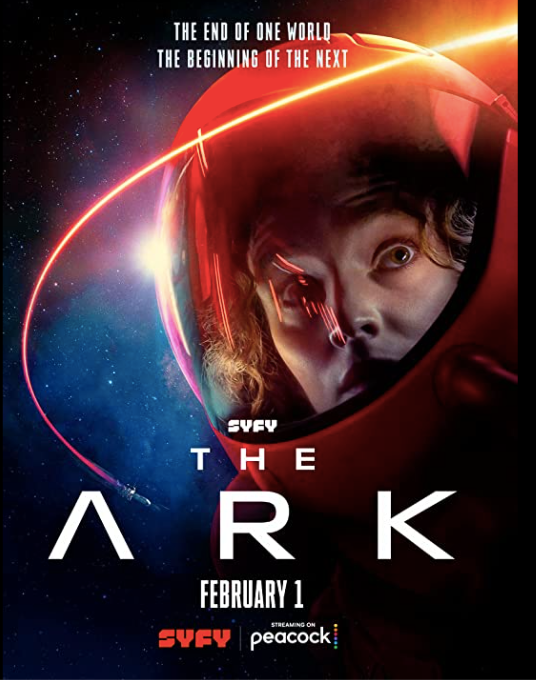
The Ark 1.9-1.12: Real Science Fiction


I binged the final four episodes of the first season of The Ark -- again, I was busy talking about the radio play of my alternate history story about The Beatles, "It's Real Life" -- and I'm glad I did, rather than watch those episodes on a weekly basis.  Especially for a narrative like The Ark, binging is the way to go.

And what kind of narrative is The Ark? It's classic science fiction, in the tradition of Hal Clement, and Analog Magazine (where my science fiction has been published more than a dozen times, so I'm a bit biased).  But the hallmark of that kind of science fiction, which The Ark does so well, is life-and-death problems arise which can be solved by the application of ingenious science.

[Spoilers ahead ... ]

So in The Ark, that strange disease killing Bryce and Maddox can be cured by an anti-toxin in which the active ingredient is a spider's venom.  Except it doesn't work. The scientists in Ark 1 come to the rescue: they realize the venom quickly decays, so to get it into the system of the afflicted people, they need to be bitten by the spiders, which naturally injects their venom directly in Bryce's and Maddox's bodies.  That's what I call real science fiction.

Or realizing that what was thought to be water on Proxima B is actually methane, which explodes part of the planet when it's set in motion.   In this case, the only cure is getting out of the way of the debris from the planet, which Ark 1 only barely does, with the ship barely intact.  Science doesn't provide much of a fix, but at least an understanding of what has happened and why.

It used to be said about classic science fiction that it may be good with the science, but not with the human relationships in the story.  That was never really true in the first place, and The Ark does a pretty good job at this, in any case.  I guess my favorite couple is Bryce and Markovic, though outside of that relationship, Bryce is too quick to throw a punch.  But Markovic makes up for that with her savvy and her smile.

I was happy to see that The Ark has been renewed for a second season.  All the way out there in space, on the more advanced Ark 15 now, this story has a lot of life left to it, and I'm looking forward to watching it play out in the years ahead.

See also The Ark 1.1: Worth Watching ... 1.2: Why I'M Enjoying It ... 1.3: Asteroid and Comet ... 1.4: Hallucinations ... 1.5-1.6: More than One ... 1.7: "You Know My Name (Look Up The Number)" ... The Ark 1.8: "Follow Your Future Selves"

a second ship around Proxima Centauri B, too ...


Sunday, June 30, 2019

Minor Quibble with Kamala Harris: The Opposite of Science Fact is not Science Fiction

Although it's at most a minor quibble with Kamala Harris's superb performance in this past Thursday's Democratic debate - see my assessment of that over here - I thought, as a past President of the Science Fiction Writers of America (1998-2001), that I ought to weigh in on a concern which has made it all the way to The Washington Post.

The concern arises from Harris's point made during the debate that our response to climate change needs to be based on "science fact not science fiction".   Unfortunately, this contrast, likely the product of one of Harris's writers not what she herself may think, shows a woeful misunderstanding and ignorance of science fiction.  Anyone who has read any of Asimov, Heinlein, and Clarke, not to mention Verne and Wells, would know that science fiction does not deny or belittle science.  To the contrary, the essence of science fiction is to use science as a foundation to explore dramatic situations, including global catastrophes, and predictions of the future.

As a science fiction author myself - of novels and short stories - I have had the majority of my short stories (some 17) published in Analog Magazine, aka Analog Science Fiction and Fact Magazine.  Over the years, newer writers have asked me what I would recommend for enhancing their chances of getting published in Analog.  My answer: get your science right, and make sure it plays a decisive part in your story.

The fundamental connection between science fiction and science fact has been recognized by scientists such as Marvin Minsky, who said Asimov's robot stories inspired Minsky's life-long work in AI, and by Nobel Laureate Paul Krugman, who cited Asimov's Foundation series as inspiration for Krugman's work in economics.

And, to get back to Harris's inapt comparison, it's not that hard to find suitable opposites to science - pseudo-science, fantasy, conspiracy theory, all would have worked well in Harris's formulation.

But, as I said, this is a minor quibble, and now that I've gotten it of my system, I can return to thinking about who is the best candidate to beat Trump.  Harris's performance on Thursday makes her a major contender.


Tuesday, January 10, 2017

The Perversity of Things: review #7 of X: The Invention of Invention and the Advent of Science Fiction

Continuing with my reviews (#7 of X) of The Perversity of Things: Hugo Gernsback on Media, Tinkering, and Scientifiction, edited by Grant Wythoff (University of Minnesota Press, 2016) - which will be less frequent now, given the end of the winter break, but focusing here on pages 46-51 of Wythoff's remarkable 59-page Introduction to the 359-page volume.

Wythoff in these pages focuses on Gernback's contribution to the very way in which we conceive of invention - where what we today call new media come from, and what is the best environment, or the social structure most conducive, for these seedling inventions to develop into useful technologies.

I'd make two points here.  One is that it can't be coincidental that Alfred North Whitehead, in his Science and the Modern World, observes that the most important invention of the late 19th century and the aptly-named Age of Invention was "the invention of invention" itself - or the very notion that human beings could create technologies that didn't already exist to do useful things - like talk to people who were miles away from us, move in automated vehicles, etc.  Whitehead published that book in 1925, right around the time that Gernsback was holding forth with similar ideas, which in effect proves the point: invention was in the air, not just in flying vehicles, but as a concept in everyone's minds.

Gernsback goes further, as we've seen earlier, and identifies the ideal inventor as a tinkerer not a corporate employee.   And he also goes further in considering the best circumstances for the invention to get into the mainstream - or, in terms of the Toy, Mirror, and Art schema I mentioned in my previous review, what is needed to jumpstart the new gimmick into widespread, practical use.

Wythoff then segues into another aspect of Gernsback's work, which is especially close to my heart (though actually most are), and is of course what most people associate with Gernsback: science fiction.   Wythoff's brief, and I agree, is not at all that this association is incorrect, but it is incomplete - because Gernback is far more than a pioneering publisher of short science fiction.   He's also a philosopher of technology, of considerable importance.

But Gernback's contribution to the birth and growth of that genre (short-form science fiction) was indeed enormous - and, unsurprisingly, idiosyncratic.  Wythoff observes that, in Gernsback's Amazing Stories and other science fiction publications, the process of invention was more prominent than the characters who did and reacted to the invention.   This spotlight on science over character stayed with science fiction for at least half a century, and still characterizes the leading science fiction magazine, Analog, which published 15 of my stories and 2 essays between 1995-2013 ("The Chronology Protection Case," "Loose Ends," and "The Orchard" are the best-known - see this list for details).

Indeed, Analog far more than Amazing Stories carried and still carries the mantel that Gernsback built for the science fiction magazine, and magazines in general, including an active, critiquing, tinkering readership.  But I'll leave that story for subsequent reviews of The Perversity of Things.

See also: The Perversity of Things: review #1 of X: Gernsback as Philosopher of Technology ... #2 of X: Learning by Doing ... #3 of X: The Evolution of Media ... #4 of X: Gernsback and the The First Amendment ... #5 of X: Amateurs vs. Corporations ... #6 of X: Thought Experiments and Toys ... #8 of X: Definitions and Fake News


Friday, May 3, 2013

Unburning Alexandria - the novel - published!

I'm pleased to announce that my novel, Unburning Alexandria, was published yesterday by JoSara MeDia.  The long-awaited sequel to The Plot to Save Socrates is now available on Kindle, iTunes, Nook, and Kobo.  A paperback was published by JoSara MeDia in at the end of July 2013.

I started writing Unburning Alexandria when I was finishing up The Plot to Save Socrates in late 2005 - indeed, the opening chapter of Unburning Alexandria was originally the next-to-last chapter in The Plot to Save Socrates.  But on the urging of my editor at Tor, David Hartwell, I took that chapter out of The Plot to Save Socrates and saved it for Unburning Alexandria.  The chapter, along with the next chapter in the novel, were published as a novelette called "Unburning Alexandria" in Analog Magazine in November 2008.

When JoSara published my author's cut of The Plot to Save Socrates last December, I re-inserted that chapter in The Plot to Save Socrates.  For the reader's convenience - and for those who read the original printed versions of The Plot to Save Socrates rather than the ebooks - I included that chapter as Chapter 0 in Unburning Alexandria.

In either case, I hope you enjoy Unburning Alexandria, which tells the following story -

Mid-twenty-first century time traveler Sierra Waters, fresh from her mission to save Socrates from the hemlock, is determined to alter history yet again, by saving the ancient Library of Alexandria - where as many as 750,000 one-of-a-kind texts were lost, an event described by many as “one of the greatest intellectual catastrophes in history.”

Along the way she will encounter old friends such as William Henry Appleton the great 19th century American publisher and enemies like the enigmatic time travelling inventor Heron of Alexandria. And her quest will involve such other real historic personages as Hypatia, Cleopatra’s sister Arsinoe, Ptolemy the astronomer, and St. Augustine - again placing her friends, her loved-ones, and herself in deadly jeopardy.

In this sequel to THE PLOT TO SAVE SOCRATES, award winning author Paul Levinson offers another time-traveling adventure spanning millennia, full of surprising twists and turns, all the while attempting the seemingly impossible: UNBURNING ALEXANDRIA.


Thanks to Joel Iskowitz, the world-renown illustrator whose works appear on US coins and stamps around the world, for the cover.

Here's a video of a reading I did from the beginning of Unburning Alexandria, at the late great Robin's Bookstore in Philadelphia in 2008.


  • Read a sample from Unburning Alexandria - a whole chapter, FREE - at SF Signal.
  • Read why JoSara MeDia published Unburning Alexandria
from Sam Tomaino's review of "Unburning Alexandria" (the novelette in Analog Magazine) in SFRevu in 2008:

Paul Levinson's "Unburning Alexandria" was a nicely told story of time travel set in 413 AD Alexandria and other cities. Sierra is trying to rescue works from the famous library but she has another goal, too. A number of characters, historical and not, pop in to the story filled with intrigue and mystery. I liked this but I was left waiting for more. I hope Mr. Levinson has more to tell.

I did indeed have more - and it's now out in the novel, Unburning Alexandria ...


reviews of the novel

"Levinson's stories are intricately plotted and avoid the tricky Gordian knots of paradoxes with skill and fun." - John DeNardo, Kirkus

"You get used to reading verbal bombshells when you read Paul Levinson’s science fiction works.... characters say things like, 'I was here, in Carthage, three months from now'.” - Jim Curtis, The Morton Report

"little quirkinesses ... and a lot of clever ideas" - GF Willmetts, SFCrowsnest

"Not since Ilium had a novel kept me reading into the wee hours of dusk (I finished this sucker at 3:30 am, unable to resist immediately tweeting my triumph from the mountain tops). Just before tossing all aces like a godforsaken magician, Levinson shuffled his paradoxes like a deck of cards, and I have to admit, stoked the flames of my imagination. It was a great ride." - Shane Lindemoen 


words by Paul Levinson, music by John Anealio, demo by John Anealio

Friday, November 16, 2012

Fictionwise Closing Its Digital Doors


I received word earlier tonight that Fictionwise will be permanently closing on December 4, 2012.

The site was a pioneer in e-publishing when it launched back in 2000.  It began as a short story site, and only published short fiction which had been published "professionally" elsewhere.  I did quite well with them back in the day, and still have 22 short stories (actually, short stories, novelettes, and novellas), all science fiction, on the site.   Indeed, given that all of those stories were reprints, the money was especially sweet.  But in many ways the very notion of "professionally" published showed the site was wedded to the past.

Barnes & Noble bought them out in 2009, and the handwriting has been on the wall - or the screen - since then.  Fictionwise was no match on its own for Amazon, and Barnes & Noble apparently looked at them as a poor relation from the other side of the tracks.


One of the best things about Fictionwise for me, in the early days, was the way I could talk to readers about my stories. This was ahead even of Amazon and its forums. Before Fictionwise, I'd meet readers at science fiction conventions and book signings at Barnes & Noble, but you can only have a conversation with so many people at a given time in person. With Fictionwise, you could "meet" your readers just about any time.

It was an ideal place for short fiction. Novels always each have their own distinct identities. But short stories, especially when published in a magazine, are in part an appendage of the magazine's identity. When I put my stories first published in Analog up on Fictionwise, for the first time they had lives of their own. I'm still delighted as can be to get a story published in Analog or any magazine, but it's also nice when they can speak for themselves in the same way as my novels.


I'll miss Fictionwise.   You can get to the site here,  in case anyone wants a last look around.


Wednesday, August 29, 2012

Stan Schmidt Retiring from Analog

I read the news today, oh boy - came like a kick in the solar plexus - Stan Schmidt's retiring from Analog.

It's a cliche to say people made a difference in your life.  But like everything else Stan did at Analog, this was no cliche.  When Stan published my first Analog story - "The Way of Flesh," a Probability Zero piece in 1995 - I had no other "pro" publications, with the exception of one, "Albert's Cradle," a few years earlier in Amazing Stories.  The probability that I would have any career as a science fiction writer was truly not that much more than zero when Stan bought "The Way of Flesh".

But his next purchase from me, "The Chronology Protection Case," really opened up the gates.  The story has been reprinted half  dozen times, is used in a class at University of Southern California, has been made into a movie and an Edgar-nominated radio play.   It was a Nebula nominee finalist.  And its lead character, Dr. Phil D'Amato, went on to appear in two more Analog novelettes, and in three Tor novels. David Hartwell, my editor at Tor, came to know Phil D'Amato in the third novelette Analog published, "The Mendelian Lamp Case".

Did you know that I killed off Phil D'Amato in the first version of "The Chronology Protection Case"?  When Stan asked for revisions, he asked what was the point of killing off this new character?

Editors each have unique tastes that make them different from all other editors.  I was fortunate indeed to have started writing science fiction at a time when Stan was at the Analog helm.  As fate would have it, I had occasion to think a lot about Stan just this past Friday, when I signed off on a new "author's cut" Kindle edition of The Silk Code published by JoSara Media (the original edition was published by Tor in 1999, and won the Locus Award for Best First Science Fiction novel of that year).  I thanked Stan again in the Acknowledgments, for the life he had given to my character.

It's been said that Stan should at last get the Hugo Award for Best Editor.  True point, that.  But, you know what?  That doesn't really matter.   Stan wins an award, and will continue to win, every time someone reads one of the stories he edited at Analog.


my 2007 interview with Stan


Stan, David Hartwell, and me in 2010 interview

appreciations of Stan by Analog writers James Van Pelt and Juliette Wade

Tuesday, July 5, 2011

my Readercon schedule - July 15-16, 2011

My Readercon 22 schedule (Burlington Marriott, Burlington, Massachusetts) - including my first public reading from "Ian's Ions and Eons" (Analog, April 2011) - follows ....

Friday July 15

6:00 PM    F    The Dissonant Power of Alternative Voicing. Glenn Grant, Paul Levinson, Kate Nepveu, Kenneth Schneyer (leader), Howard Waldrop. At Readercon 21, there was a panel discussion on the use of documentary text in fiction to lend "authority" to the voice. It can be argued, however, that alternative voicing strategies, particularly the use of documents, framing narratives, etc., are powerful precisely because they are not authoritative. Readers know that they are reading an incomplete version of the document, and consequently are led to imagine what is not being said. What lurks in the interstices between texts? What is this particular document-writer failing to say, or deliberately omitting? This panel will explore the use of dissonance occasioned by indirect voicing to make the reader a fuller, more active participant in the process of creating the fiction.

Saturday July 16

10:00 AM    VT    Reading. Paul Levinson. Levinson reads from Ian's Ions and Eons.
12:00 PM    Vin.    Kaffeeklatsch. Paul Levinson, Barry B. Longyear.
3:00 PM    E    Autographs. Paul Levinson, Rick Wilber, D. Harlan Wilson. 


Further details - including complete conference schedule and directions to the Marriott in Burlington, MA - over here.

Saturday, April 2, 2011

Source Code: Fringe Travel

No Fringe on tonight, so my wife and I went out to see Source Code, which turned out to be a good stand-in for Fringe.   Source Code is in fact a pretty good science fiction movie, with a plot that was a little bit bare bones, with the result that we the viewers had to figure a little too much out, almost on our own.  But a pretty good story, nonetheless.

Here's what I think happened:

Colter (a pilot from Afghanistan) wakes up in Sean's body - alive, well, and awake - on a train approaching Chicago.  He's sitting across from Christina.   He doesn't get how and why she knows him, thinks he, she, and/or everyone around him is crazy.  Before too long - 8 minutes, to be exact -  the train blows up and kills everyone.

We soon learn that Colter is really now on a mission - to find out who set the bomb that blew up the train.  His mentality is able to go back into Colter's body on that train, via a new process known as "source code".   He can be sent back for 8-minutes, to the same time, as many times as necessary - though it takes an emotional toll on him, as noticed by Colleen Goodwin (his direct supervisor, who is concerned about this) and Dr. Rutledge (head of the project, who cares only about this mission).  It is this going back as many times as necessary that has led to some characterizations of Source Code as Quantum Leap meets Groundhog Day.  Source Code also has some echoes of 12 Monkeys - same gritty feel in parts (just like Fringe) -  but it really has little in common with time travel.

We're eventually told by Rutledge that the source code creates an alternate reality - Colter in Sean's body on the train - and the plan is that if Colter can get the name of the bomber to Goodwin and Rutledge, they can use this to stop a much worse potential explosion, which we learn is a dirty bomb that would take out a big piece of Chicago.

It takes Colter most of the movie to get the bomber's name.  By this time, he's fallen for Christina, and wants to save her, and, while he's at it, all the people on the train.  Rutledge insists that can't happen - the source code is about influencing the future (stopping the big explosion in Chicago) not about changing the past (stopping the bomb on the train).    After Rutledge gets the name of the bomber, which leads to his being stopped before he gets to Chicago, Rutledge wants to erase Colter's memories of this and send him another mission.   Goodwin, who has more empathy for Colter, defies Rutledge and sends Colter back one more time - presumably so he can at least die feeling somewhat fulfilled, by calling his father (who thinks his son Colter was killed in Afghanistan), being with Christina one last 8-minute time, and saving her and everyone on the train by defusing the bomb.

Now we get into somewhat speculative territory.  Here's what I think happened on that score:

On this last mission to the train, Colter has indeed stopped the bomb from going off on the train - in that alternate reality.  This apparently allows that reality to continue, not only with all the original passengers on the train, but with Colter (in Sean's body), so that Christina and Colter live happily ever after, beginning with their kiss on the train that was not followed by the train exploding.

In our reality, Rutledge is furious that Goodwin defied him.  But in the alternate reality - which is now continuing beyond 8 minutes, because Colter stopped the train from exploding - Colter is able to send Goodwin a text that shows that he is not only alive in some sense in this alternate reality lab, but that another reality (our reality) had successfully sent him back to this reality - that is, the reality in which Colter was sent back numerous times from our reality - if you're still with me.

So, all in all, a pretty good story, as I said, but maybe having more in common with Fringe than any time travel story, and a bit short on clear, scientific or pseudo-scientific explanation.

And also a little short on at least one ethical issue: what happened to Sean in the alternate reality?  True, he would have died anyway, without Colter's intervention.  But now Christina thinks she's with Sean, when in "fact" she's with Colter, because in this "happy" ending Sean no longer exists.

***

Hey, if you like science fiction movies that are really about time travel, see Back to the Future, 12 Monkeys, or Deja Vu.    Or check out this low-budget 2002 short movie by Jay Kensinger, adapted from my 1995 novelette published in Analog Science Fiction and Fact Magazine ...  "The Chronology Protection Case" ....


Tuesday, October 14, 2008

Nobel Laureate Paul Krugman Cites Asimov's Foundation Series as Inspiration

A great moment on the PBS Newshour with Jim Lehrer tonight, when new Nobel Laureate in Economics Paul Krugman was asked by Lehrer what inspired him to become an economist. Krugman replied it was reading Isaac Asimov's Foundation series as a teenager, and seeing how social scientists saved galactic civilization.

That's the second reason I'm really happy that Krugman won the Nobel Prize - and even more important than the first, which was that Krugman is on the honor roll of guests insulted by Bill O'Reilly.

The Foundation series is much more important. Written as a series of short stories for Astounding Magazine in 1940s (later and presently Analog Magazine), expanded and published as the Foundation trilogy in the 1950s, this has easily been my favorite reading of all time - since the days I first read it at age 12, and ever since. I list the Foundation trilogy among my favorites on Facebook, MySpace, and all the online places I hang my hat and can list my favorite books (actually, I rarely wear a hat). I included Asimov among the four thinkers who most influenced my work in my 1997 The Soft Edge: A Natural History and Future of the Information Revolution - mostly because of the Foundation trilogy. It also inspired me to think and write science fiction.

And its story is: The galactic civilization looks good on the outside, but is already crumbling within. Hari Seldon develops "psychohistory," a way of mathematically mapping all trends in human behavior, and using the equations to predict the future. He sets up two Foundations, at opposite sides of the galaxy, to further refine and take advantage of psychohistory to shorten the galactical dark ages. Of course-

No, I won't tell you any more, in case you haven't read it. Suffice to say, I've read it at least three times. Asimov and others wrote sequels, and some of those novels were excellent. But none as riveting as the Foundation trilogy.

Congratulations Paul Krugman - on winning the Nobel Prize, and on your great taste in science fiction...


See also, for a little deeper reading, my The Invigoration of a Philosophic Issue in Science Fiction: How Pierre-Simon Laplace’s Demon Finds a Stage in the Foundation and Dune Trilogies.  It was first published as a  Google "knol" but was reprinted here after the knol system was shut down. It does have spoilers.

Saturday, February 23, 2008

Publication News about "Unburning Alexandria" - the sequel to The Plot to Save Socrates - Sierra Waters' story continues

UPDATE - May 3, 2013 - Unburning Alexandria (the novel) is finished and published.    Details here.  The following announcement is about the publication of the novelette in 2008.

Dear Infinite Regress Friends and Readers -

Many of you have been asking me when the sequel to my novel, The Plot To Save Socrates, will be published. As some of you know, its title is Unburning Alexandria, and I'm currently about half-way through writing the novel (and really enjoying it!)

For a variety of reasons, I still can't give you an exact date for publication of the novel.

But, I'm pleased to tell you that Analog: Science Fiction and Fact magazine will be publishing the first two chapters of "Unburning Alexandria" as a standalone novelette, in August 2008 (the cover date of the issue of Analog will be November, 2008).*

*Note added January 2010:  You can purchase the November 2008 issue of Analog, with "Unburning Alexandria," over here - look for "Back Issues".

For those of you who have read The Plot To Save Socrates, you'll find some dangling questions at the end of the novel answered - as well, of course, as some new ones raised. (My original draft of The Plot to Save Socrates actually had some of this material in the final chapter.)

I am especially pleased that this novelette will be published in Analog. I consider its editor, Stan Schmidt, one of the best editors in the business. Stan published my first three Phil D'Amato stories in Analog in the 1990s, and a lot of my other short fiction in the 1990s. Indeed, the last story I published in Analog was "The Man Who Brought Down the New York Times," in December 2000.

Writing novels, nonfiction books, political blogs, television reviews, chairing a department at Fordham University, has kept me from writing shorter fiction. But I've always loved the short form, and I intend to get back to doing at least a little of that now (along with the novels, nonfiction books, political blogs, tv reviews, and the rest).

And there's no better place to have any science fiction published than in Analog - not only edited by Stan Schmidt, but long the highest circulation science fiction magazine in the field.

You might enjoy visiting the Analog site, and I certainly recommend subscribing if you love science fiction or even just good short stories.

And if you haven't read The Plot to Save Socrates, you can get the first chapter online, free, right here.

Enjoy ... Paul


"challenging fun" - Entertainment Weekly

"a Da Vinci-esque thriller" - New York Daily News

"Sierra Waters is sexy as hell" - curled up with a good book

Wednesday, October 10, 2007

Californication Continues: 9: The Manuscript

CalifornicationI gave this review of Californication, Episode 9, a title, because that was its central theme: the manuscript. Or, more precisely, the manuscript for a new short novel - or, as Hank called it, a "novella" (I love that term - and that length manuscript - one of my most successful publications was a novella - "Loose Ends," a time travel story, that was published in Analog Magazine in the late 1990s.)*

But back to Hank: he's written a novella while in New York. He had gone there for his father's funeral, after a great night of intimacy in all ways with Karen, and stayed on in New York to do some writing. Karen had inspired him.

Back in L.A., Hank wants Karen to read it. He's always counted on her reading of his work. He also wants her to marry him.

Charlie's thrilled about the new manuscript - money, money, money. Speaking of which, Hank gets a big unexpected royalty check for the movie made from his novel....

Mia's thrilled about the manuscript, too, and wants to read it. (Hank lets us know at some point that it's about a guy who sleeps with an under-age woman, but doesn't know about that at time ... hmmm ... Hank writes from what he knows.)

So everyone's pretty happy at this point - a rarity in Californication.

But not Karen, who, it seems, wants to stay with that stiff of a fiance, after all (I don't really believe her).

Things even turn worse, suddenly, for Hank .... but there's a great surprise ending, and, I won't give it away, except to say, it's all about that manuscript....

Great show tonight.
=============================================================

*More about Loose Ends

See reviews of other Californication episodes: Californication Going On Mondays ... 2 ... 3 ... 4 ... 5 ... 6 ... 7 ... 8 ... 10 ... 11: Pivitol Mia ... 12: Californication Comes ... To a Season's End


5 minute podcast review of Californication


The Plot to Save Socrates


"challenging fun" - Entertainment Weekly

"a Da Vinci-esque thriller" - New York Daily News

"Sierra Waters is sexy as hell" - curled up with a good book
InfiniteRegress.tv