Chuck Todd interviews me about alternate histories
Showing posts with label Ron Howard. Show all posts

Tuesday, April 6, 2021

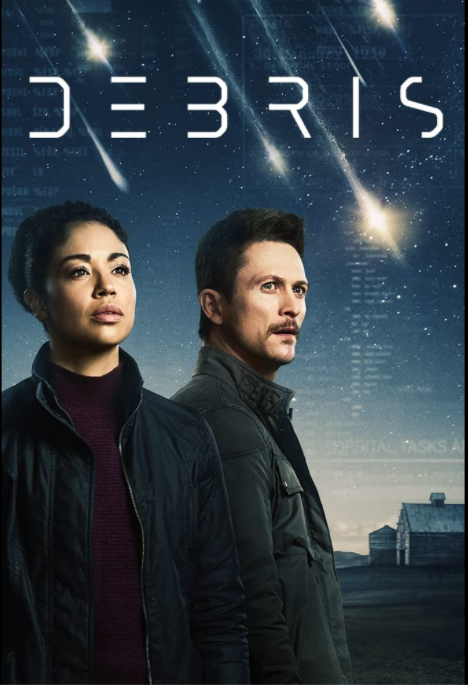
Debris 1.6: Fountain of Youth and Its Complications

Debris 1.6 re-visits the ancient Fountain of Youth myth, in which you drink from some magical source of water and regain your youth.   Later on in the New World, Ponce de Leon was allegedly searching for a fountain of youth when he discovered Florida.  More recently, in 1985, Ron Howard directed Cocoon, in which alien cocoons found in a pool restore the youthful energy of elderly swimmers.   And just last night, Debris gave us a story in which interstellar debris literally makes very old people young again.

Of course, in the legends and the science fiction, there's always a problem with the fountain, a price to pay, assuming the fountain is even found.  In Debris, the price is that everyone who gets young again has to stay in proximity to the other rejuvenated oldsters.  If they don't, they'll get old again, and die.

You know what?  This doesn't seem like all that steep a price to me.  And this undermines Bryan and Finola's motive in the narrative for getting the rejuvenated back to their original old age.   What would be the problem in setting up a community of young-again people?  Perhaps that was explained and I missed it, but as it is, it seems that the main motive of Bryan and Finola is to counteract any effects of the interstellar debris on Earth, even if they are beneficial.

And this in turn brings to the fore a larger question which gets at the very heart of this series.  If all the effects of the debris were bad, or could be used for bad purposes, it would make perfect sense to track down all the debris and keep them out of reach.  But if some of the debris are beneficial, what then?  Are Bryan and Finola on the side of the angels, and just another pair of warriors in a very new kind of war?*

*Back in 2010, in an interview on Ancient Aliens on the History Channel, I questioned why governments rather than citizens should be the presumptive interface between humans and extra-terrestrials who come to Earth.  See1min24secs into this video


I'll be watching to see how these questions play out.

See also Debris 1.1 Some Probability of Gems Among the Pieces ... Debris 1.2: Clones ... Debris 1.3: Trapped Out of Time ... Debris 1.4: Suspentia Belief ... Debris 1.5: Fine Tuning


Saturday, November 25, 2017

Eight Days a Week: A Crucial Piece of the Story

Having listened to the Beatles Channel on Sirius XM Radio every day since the glorious day it debuted back in May, having read a chapter or two of Rob Sheffield's wonderful Dreaming the Beatles on some of those days, too, I'm surprised it took me so long to see Ron Howard's documentary Eight Days a Week on Hulu, where it's been playing since September.

I'd heard of it, but I'm doing so many things, I forgot to check when it would be screenable.  And, actually, it was hearing Dennis Elsas talk about it on his Fab Fourum this past week - which I listen to on the Beatles Channel, along with Peter Asher's From Me to You, just about every week - that made me realize, hey, this movie has been on Hulu for a good few months now.

It's an impressive work, which provides crucial insight, an almost visceral explanation, of what the Beatles got out of touring in the first place - the incredible energy and ratification they got back from their audiences, a reflection of what they were giving out - and why they decided to end it, in favor of devoting all their energies to recording, with Sgt. Pepper being the result.  I never attended any of those fabled concerts in the 1960s, but my wife and I had great seats at Paul McCartney's concert in the Nassau Coliseum in September, and got a great dose of that energy, still astonishing and inspiring, in 2017.

The personalities of the four Beatles, which we already knew, also come through in the movie, and expand what we know of them.  The humor of George Harrison, the discomfort of Paul and John at John's statement that the Beatles were more popular than Jesus, the dynamo of Ringo's drumming, are all things I didn't quite realize before I saw the movie.  The consummate musicianship of the four, who play tight as a drum, with perfect harmony, in concerts at stadiums with thousands of people cheering so the Beatles could hardly hear one another, comes through beautifully in every song.

The documentary also has some nice minor touches, like Larry Kane, who toured with the Beatles in the 1960s, and my wife and I got to watch as an Eyewitness News anchor in New York City in the late 1970s.  I would've liked to see at least a little more of the Beatles' wives and girlfriends, but, hey, that could be another documentary in itself.

All in all, Eight Days a Week provides another piece of our understanding of a musical group not only the most extraordinary in our lifetime, but, as the movie implies, in the history of humanity.


Saturday, April 19, 2014

Gravity: Exquisite Scale

I finally saw Gravity last night.  It's worth all the awards and nominations it's been receiving, including being on the just-announced finalist list for Best Dramatic Presentation, Long Form, for the Hugo, to be presented at the World Science Fiction Convention in London this coming August.

The scale was just right: two humans against the awe and peril of the cosmos.  The fact that it was two rather than more made all the difference, and gave us a chance to get into the thinking especially of Ryan Stone, the main character, well played by Sandra Bullock.   George Clooney's Lt. Matt Kowalski was also perfect in the crucial supporting role.

We're tragically accustomed to catastrophes in space travel, due to the Challenger and the Columbia space shuttle disasters.  But these actually were disasters of space travel not far off the Earth, and the only disaster the took place out in space was actually the close call, not disaster, of Apollo 13, made into a superb, realistic movie by Ron Howard back in 1995.

Gravity, a totally fictional story, is closer to Apollo 13 in taking place well off Earth, but with tragic circumstances for all but one of the crew.  All the icons of near-Earth orbit, old and new, are brought into play in this riveting story, including the US Space Shuttle, the Hubble telescope, the International Space Station, the Russian Soyez, and the Chinese Tiangong 1 space station, just launched in 2011. The interplay of these major players in near space - each has a significant role in the story - is one of the best parts of the movie.

Stone's struggle to survive and get back to Earth is also one of the more satisfyingly heroic stories to appear on the screen in some time.   This is due, in large part, to the sheer complex simplicity of the contest of one woman against the universe.   Although I guessed that Kowalski's return was a dream, his role in the story, including his sacrifice to give Stone a fighting chance, was also one fine piece of moving movie making.

Outer space in the movies has all too often been given over to military conflicts and vast battles.   These can be excellent, but also make a movie on the human scale of Gravity all the more inspiring.


#SFWApro

InfiniteRegress.tv