Chuck Todd interviews me about alternate histories
Showing posts with label Jewish culture. Show all posts

Sunday, May 5, 2024

Review of Sarah Seltzer's The Singer Sisters: The Musical Mystique


There's a meta-genre of fiction epitomized in different but overlapping ways by Eddie and the Cruisers, Rob Reiner's This Is Spinal Tap, and Daisy Jones and the Six -- the first and the third adapted to the screen from novels -- that helps us understand what those who make music that lights up our nights are doing when they're off-stage and not in the studio.  Sarah Seltzer's The Singer Singers, a debut novel to be published this August, not only fits well in that narrative family, but in some ways exceeds it.  I'd expect to see it adapted on some kind of screen before too long.

The Singer Sisters actually tells us two stories, deftly interwoven.  One is a moving snapshot of the folk-rock music scene,  and therein the larger music venue in which folk-rock played, in the last third of the 20th century.  The other is a tableau of upper middle class Jewish culture, in New York City, Boston, and beyond, in the same period of time.

The Singers -- aka the Zingleman sisters -- strive to succeed across two tempestuous generations along with other fictional singers and writers, against a backdrop of real superstars that even non-devotees of folk-rock will instantly recognize.  The characters worry about "stealing from Dylan".  One of the singers concludes that "Joan Baez was right and Dylan wrong, that kindness mattered more than genius" (I would say that both are crucial).  There's a quote from Gordon Lightfoot's "Early Morning Rain" -- "see the silver bird on high" -- and a mention of Phil Ochs (not a superstar but shoulda been).  And there are fictitious characters that the cognoscenti will surely know, like the rock critic who uses his way with words to unfairly lambaste brilliant work (as the real rock critic did to Phil Ochs -- not to mention Paul McCartney). Meanwhile, the Singer songs are not only spoken of by the characters, but Seltzer actually delivers more than a dozen sets and snippets of original lyrics, demonstrating a considerable talent not only as a novelist but a lyricist, and leaving the reader yearning to hear them put to music and fulfilled in song.  In addition to a movie or a limited TV series, The Singer Sisters also has the makings of a Broadway musical.

The Zingleman sisters are Jewish, and their Yiddishkeit permeates the novel, not only in cream sodas, but their parents' wise view that they'd rather see their children fed with goishe food than go hungry without it. In this sense, The Singer Sisters has a kinship with Philip Roth's Goodbye Columbus, and I hope the novel is recognized as the compelling portrait of Jewish culture in America that it is.  It's especially important, given the rising wave of anti-Semitism that's afflicting our country and the world.

In case it's not obvious, The Singer Sisters is very much a woman's novel, explored in sisterhood, motherhood, and daughterhood, with love, heartbreak, pain, exultation, and a panoply of uniquely female emotion in every chapter.  But men might well get a necessary education from this novel too, and I heartily recommend it to any human being.

more about The Singer Sisters here.

============


my interview with Sarah Seltzer

============


"Paul Levinson's It's Real Life is a page-turning exploration into that multiverse known as rock and roll. But it is much more than a marvelous adventure narrated by a master storyteller ... it is also an exquisite meditation on the very nature of alternate history." 

-- Jack Dann, Fiction Writer's Guide to Alternate History


Tuesday, November 7, 2023

Podcast: Paul Levinson interviews Jack Dann about Alternate History


Welcome to Light On Light Through, Episode 359, in which I interview Jack Dann about his book The Fiction Writer's Guide to Alternate History and other things science fictional. 

Relevant links:


Check out this episode!

Saturday, December 7, 2019

Fiddler on the Roof - In Yiddish, Off-Broadway, Outstanding


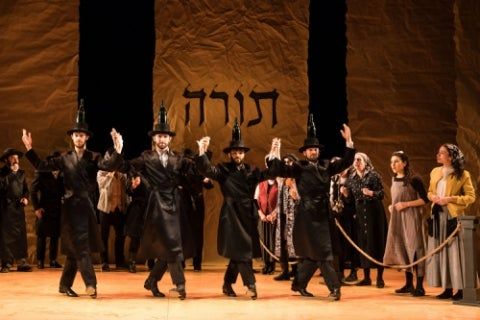
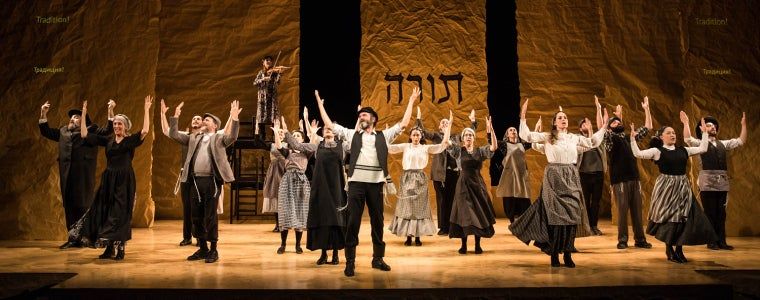
My wife and I just got back from Fiddler on the Roof - at the Stage 42 theater, appropriately enough, on 42nd Street, just a few blocks from Broadway.  In Yiddish - only appropriate, since the play (written in English by Joe Stein in the 1960s, with music by Jerry Bock and lyrics by Sheldon Harnick) is based on stories written by Sholem Aleichem in Yiddish at the end of the 19th century.

I've had a long relationship with this wonderful play and the stories it is based upon.  I read Sholem Aleichem as part of my Yiddish studies in shuleh at the end of the 1950s.  I saw the play in the mid-60s on Broadway with my entire family, including my grandmother, who had escaped Kiev with her brothers around the same time as Tevye struggles to make sense of the world that is coming into being in Fiddler someplace not too far from Kiev.  My wife played Yente in Fiddler in her summer camp, also in the mid-1960s.  And we saw the movie with Topol as Tevye in the early 1970s.

And, what can I say, this marvelous play has special relevance to our own times because, well, it's about life in Russia and Ukraine, and on one level is about the intolerance of the ruling class (Russians) to people viewed as irrevocably others (in this case, people like my maternal grandmother and her brothers, and, by descent, people like my family and me).  That's the political subtext and sometimes text of this story.

But the continuing forefront of the play is how Tevye, father of five daughters and seeming defender of tradition, finds his beliefs severely tested as his three oldest daughters each break way from tradition in the mates they choose to marry in successively more drastic ways.  These stories are conveyed in wonderfully memorable songs, brought into motion by some astonishing dancing. In one case, of four men with bottles balanced precariously on their heads as they danced,  I couldn't tell if the bottles were in some way attached to their hats (via velcro or whatever), they danced so well without disturbing the bottles [Note added 13 December 2019: But see comment below from Fiddler choreographer: Amazing! The bottles in this breathtaking performance were actually balanced on the dancers’ heads!].   If only Tevye were able to balance the vicissitudes of his life so effectively.  If only everyone else was, then and today.


Steven Skybell as Tevye was just superb, as was every single other person in the cast.  Hearing it in Yiddish, which I can understand just a little better than a bissel, was a joy. The story and the acting brought tears of every kind to my eyes.  It's rare that I say this about any play, movie, or television show, but seeing that play was a truly life-affirming experience. Fiddler is supposed to close in early January 2020.  See it if you can!

Monday, June 17, 2013

Magic City: Yiddish, Cuba, Bathing Suit Excellent

I caught up with the first season of Magic City and the first episode of the second season in the past few days, and was impressed indeed.  It takes place a tad before the start of Mad Men - in late 1958 into 1959 - but it has almost nothing else in common with Mad Men.   Instead of high-rolling Madison Avenue advertising, we get beach-front Miami Beach, where the main high-rolling depicted is among gamblers, mobsters, and hotel owner Ike Evans.   The mob - in the person of Ben Diamond - contributes murders - and the women, from prostitutes to girl friends and wives, are sassily bright and beautiful.   There's plenty of nudity of all kinds, making Magic City much more like Rome than Mad Men.

The plot is pretty good, too, with some genuinely climatic and touching moments, and a few over-the-top situations and resolutions, which are ok by me.   Ike - well played by Jeffrey Dean Morgan - is struggling to keep his hotel successful and even afloat.   He seeks the help of Diamond, ends up with a murder of union head on his hands, who also happens to be an old friend.   To make matters even more tense, Ike's son Stevie is sleeping with Diamond's wife, and Ike's other son Danny wants to work in the DA's office - the very DA who is out to get Ike and Diamond at any cost.

A lot of the first season was devoted to Stevie keeping polaroids of him and Diamond's wife out of Diamond's hands.   When Diamond finally does get a look at them, however, he kills neither his wife or Stevie, because he rather watch them making love.   Not completely believable, but I guess there are crazed mobsters like Diamond around somewhere, so why not in Miami Beach.

The show has a Yiddishe tahm - look it up if you don't know the language - which makes it especially welcome and appealing.   More than just a Yiddish word is thrown in every now and again.  Magic City is thoroughly steeped in Jewish customs and attitudes.  And among the characters who are Jewish are not only Ike and his kids (though not his second wife, who is Cuban), but Ben Diamond (far more brutal than Meyer Lansky), the late union leader, and even the obsessed DA.   And Cuba indeed plays a significant role in this story.  As does JFK, not yet seen, but on his way to becoming President.

In short, Magic City is zesty, refreshing, pounding, and sexy - I'll be an avid viewer from now.   And my wife really likes it, too.


#SFWApro

Friday, March 30, 2012

Fringe 4.16: Walter Likes Yiddish

We learn in Fringe 4.16 that Walter's no fan of Sumerian - "not my favorite ancient language," he explains, "I prefer Yiddish."  Of course, Yiddish is a medieval language - a combination of ancient Hebrew and high German that arose in the shtetls in Europe, but zayr gut, anyway.  That's part of the charm of Walter.

By the way, maybe it was just my imagination, but did Walter look a little younger to you at the end of tonight's episode?  Just sayin'.   And Astrid looked different, too.

The story was a cool return visit to an episode from Season One, with a souped up DNA turning its carriers into porcupine creatures.  Tonight the bad guy behind this is David Robert Jones, which my wife realized is played by the same actor who plays Lane on Mad Men (Jared Harris).  Fine acting - two wildly different, excellently played characters.

Otherwise, Olivia is in danger of losing her job at the FBI - she's lost 40-percent of this season's (world with Peter erased after Reiden Lake) memories, and which the 10th Floor (FBI brass) finds an insufficient amount of the Olivia they hired.   By the end of the episode, Broyles nobly stands up for her, figuring that Olivia's better than 90% of the agents, so 40% of her is still a good number.  Admirable algebra.


But there's something about this, our world, minus Peter after the lake, to which Peter has now returned, which may still need a little explaining.   How come Peter's absence has changed so many things in the world, including all kinds of events with which he had nothing to do in the original world, such as, for example, Lincoln Lee being such a major character in this world that developed without Peter?


Wait a minute - maybe Peter did have something to do with Lee's prominence - Lee moved into the void that existed in Fringe in Peter's absence.  And the porcupine people - why did they take a different path in the without-Peter-world?  Because without Peter, without Peter and Walter as antagonists, Jones became more powerful. The indirect effects of Peter's absence being so great show how important Peter was in that world, in ways we didn't realize.

And so the shook-up kaleidoscope is gradually reassembling ....


Hey, check out my essay The Return of 1950s Science Fiction in Fringe in this new anthology


See also Fringe Returns for Season 4: Almost with Peter ... Fringe 4.2: Better and Worse Selves ... Fringe 4.3: Sanity and Son ... Fringe 4.4: Peter's Back, Ectoplasm, and McLuhan ... Fringe 4.5: Double Return ... Fringe 4.6: Time Slips ... Fringe 4.7: The Invisible Man ... Fringe 4.8: The Ramifications of Transformed Alternate Realities ... Fringe 4.9: Elizabeth ... Fringe 4.10: Deceit and Future Vision ... Fringe 4.11: Alternate Astrid ... Fringe 4.12: Double Westfield / Single Olivia ... Fringe 4.13: Tea and Telepathy ... Fringe 4.14: Palimpsest ... Fringe 4.15: I Knew It!

See also Fringe 3.1: The Other Olivia ... Fringe 3.2: Bad Olivia and Peter ... Fringe 3.3: Our/Their Olivia on the Other Side ... Fringe 3.5: Back from Hiatus, Back from the Amber ... Fringe 3.7: Two Universes Still Nearing Collision ... Fringe 3.8: Long Voyages Home ... Fringe 3.10: The Return of the Eternal Bald Observers ... Flowers for Fringenon in Fringe 3.11 ... Fringe 3.12: The Wrong Coffee  ... Fringe 3.13: Alternate Fringe ... Fringe 3.14: Amber Here ... Fringe 3.15: Young Peter and Olivia ... Fringe 3.16: Walter and Yoko ... Fringe 3.17: Bell, Olivia, Lee, and the Cow ... Fringe 3.18: Clever Walternate ... Fringe 3.19 meets Inception, The Walking Dead, Tron ... Fringe 3.20: Countdown to Season 3 Finale 1 of 3 ... Fringe 3.21:  Ben Frankin, Rimbaldi, and the Future ... Fringe Season 3 Finale: Here's What Happened ... Death Not Death in Fringe 
 
See also reviews of Season 2: Top Notch Return of Fringe Second Season ... Fringe 2.2 and The Mole People ... Fringe 2.3 and the Human Body as Bomb ... Fringe 2.4 Unfolds and Takes Wing ... Fringe 2.5: Peter in Alternate Reality and Wi-Fi for the Mind ... A Different Stripe of Fringe in 2.6 ... The Kid Who Changed Minds in Fringe 2.7 ... Fringe 2.8: The Eternal Bald Observers ... Fringe 2.9: Walter's Journey ... Fringe 2.10: Walter's Brain, Harry Potter, and Flowers for Algernon ...  New Fringe on Monday Night: In Alternate Universe? ... Fringe 2.12: Classic Science Fiction Chiante ... Fringe 2.13: "I Can't Let Peter Die Again" ... Fringe 2.14: Walter's Health, Books, and Father ... Fringe 2.15: I'll Take 'Manhatan' ... Fringe 2.16: Peter's Story ... Fringe 2.17: Will Olivia Tell Peter? ... Fringe 2.18: Strangeness on a Train ... Fringe 2.19: Two Plus Infinity ... Fringe the Noir Musical ... Fringe 2.21: Bring on the Alternates ... Fringe 2.22:  Tin Soldiers and Nixon Coming ... Fringe Season 2 Finale: The Switch

See also reviews of Season One Fringe Begins ... Fringe 2 and 3: The Anthology Tightrope ... 4: The Eternal Bald Observer ... 7: A Bullet Can Scramble a Dead Brain's Transmission ... 8. Heroic Walter and Apple Through Steel ... 9. Razor-Tipped Butterflies of the Mind ... 10. Shattered Pieces Come Together Through Space and Times ... 11. A Traitor, a Crimimal, and a Lunatic ... 12, 13, 14: Fringe and Teleportation ... 15: Fringe is Back with Feral Child, Pheromones, and Bald Men ... 17. Fringe in New York, with Oliva as Her Suspect ... 18. Heroes and Villains across Fringe ... Stephen King, Arthur C. Clarke, and Star Trek in Penultimate Fringe ... Fringe Alternate Reality Finale: Science Fiction At Its Best


                 Special Discount Coupons for Angie's List, Avis, Budget Car, Garden.com, eMusic


The Plot to Save Socrates

"challenging fun" - Entertainment Weekly

"a Da Vinci-esque thriller" - New York Daily News

"Sierra Waters is sexy as hell" - curled up with a good book


Enjoy listening to audio books? Get a free audio book copy of The Plot to Save Socrates - or any one of 85,000 other titles - with a 14-day trial membership at Audible.com ...

Thursday, December 1, 2011

Bones 7.4: The Tush on the Xerox

It was great to see Ralph Waite back on Bones 7.4 as "Pops," Booth's grandfather Hank, in a sad, beautiful episode about the passing of Booth's father, and how Bones helps Booth comes to terms with it, in a way that brought tears to Booth's and certainly my eyes.  But I'll get to that in a minute.

First, a shout-out to a nice toochas oyfen tish - or more precisely, tush on the xerox - which, while not solving the case, helps swing it in a enjoyable direction, a take-off of sorts on Murder on the Orient Express, in which an ensemble of suspects seem guilty (one of whom with the tush in question),  but the killer turns out to be someone else.   It's been a fine Fall season for the toochas - what with Manny's primo pronunciation of the word over on Boardwalk Empire - and it was good to see Bones lend a hand.

But back to Booth's father.  Bones is at first at a loss in how to how to help Booth deal with the loss of a father whom he hated in many ways and with good reason.  Hank, in a powerful scene, tries to get Booth to see that Hank is grieving over the loss of his son - Booth's father - and the guilt Hank feels for the way that Booth's father turned out.  This affects Booth, but just barely. He accepts a small box that his father left for him,  but doesn't open it.  It's left for Angela to give Bones the best advice, as she usually does - just draw on who you are, Angela says, you're the one Booth loves.

And Bones does just that.   Applying her knowledge of quantum physics, and its paradoxical view that all times - present, past, and future - exist simultaneously when the universe is looked at in a certain way, Bones gets Booth to see that the good times he had with his father (for they weren't all bad) are with him right now.  That includes one of the best days of his life - when his father took him to a Phillies game - and Bones' quantum mechanical acumen is confirmed when Booth opens the box, and finds (among other meaningful things) that his father had saved those very two tickets to the baseball game. It had been an extraordinary day, a time worth never forgetting, for Booth's father, too.

As this was an extraordinary episode for Bones.  Everything is better through the lens of Bones and Booth being together.   More vibrant, more keen,  more quivering.   And making the loss of Booth's father the focus of that lens upped the payoff.  Where and when else on television can you see quantum mechanics, controversial and ambiguous as a hard science, used to such clear and uplifting effect in a human relationship?   Only by Bones on Bones, and in a show in which the dimensions of an ass-bone, as Booth puts it, also play a significant role.

For another story about quantum mechanics and human relationships, see The Chronology Protection Case.


See also Bones 7.1: Almost Home Sweet Home ... Bones 7.2: The New Kid and the Fluke ... Bones 7.3: Lance Bond and Prince Charmington

And see also Bones 6.1: The Linchpin ... Bones 6.2: Hannah and her Prospects ... Bones 6.3 at the Jersey Shore, Yo, and Plymouth Rock ... Bones 6.4 Sans Hannah ... Bones 6.5: Shot and Pretty ... Bones 6.6: Accidental Relations ... Bones 6.7:  Newman and "Death by Chocolate" ... Bones 6.8: Melted Bones ... Bones 6.9: Adelbert Ames, Jr. ... Bones 6.10: Reflections ... Bones 6.11: The End and the Beginning of a Mystery ... Bones 6.12 Meets Big Love ... Bones 6.13: The Marrying Kind ... Bones 6.14: Bones' Acting Ability ... Bones 6.15: "Lunch for the Palin Family" ... Bones 6.16: Stuck in an Elevator, Stuck in Times ... Bones 6.17: The 8th Pair of Feet ... Bones 6.18: The Wile E. Chupacabra ... Bones 6.19 Test Runs The Finder ... Bones 6.20: This Very Statement is a Lie ... Bones 6.21: Sensitive Bones ... Bones 6.22: Phoenix Love ... Bones Season 6 Finale: Beautiful

And see also Bones: Hilarity and Crime and Bones is Back For Season 5: What Is Love? and 5.2: Anonymous Donors and Pipes and 5.3: Bones in Amish Country and 5.4: Bones Meets Peyton Place and Desperate Housewives and Ancient Bones 5.5 and Bones 5.6: A Chicken in Every Viewer's Pot and Psychological Bones 5.7 and Bones 5.8: Booth's "Pops" and Bones 5.9 Meets Avatar and Videogamers ... Bad Santa, Heart-Warming Bones 5.10 ... Bones 5.11: Of UFOs, Bloggers, and Triangles ... Bones 5.12: A Famous Skeleton and Angela's Baby ... Love with Teeth on Bones 5.13 ... Faith vs. Science vs. Psychology in Bones 5.14 ... Page 187 in Bones 5.15 ... Bones 100: Two Deep Kisses and One Wild Relationship ... Bones 5.17: The Deadly Stars ... Bones Under Water in 5.18 ... Bones 5.19: Ergo Together ...  Bones 5.20: Ergo Together ...  Bones 5.21: The Rarity of Happy Endings ... Bones Season 5 Finale: Eye and Evolution


                 Special Discount Coupons for Angie's List, Avis, Budget Car, Garden.com, eMusic


The Plot to Save Socrates


"challenging fun" - Entertainment Weekly

"a Da Vinci-esque thriller" - New York Daily News

"Sierra Waters is sexy as hell" - curled up with a good book


Enjoy listening to audio books? Get a free audio book copy of The Plot to Save Socrates - or any one of 85,000 other titles - with a 14-day trial membership at Audible.com ...

Monday, November 21, 2011

Boardwalk Empire 2.9: Ireland, Radio, Polio

Another powerful, wrenching, historically brilliant Boardwalk Empire last night - 2.9 - in which Nucky Thompson goes to Ireland to seek a booze supply in return for his Thompson guns (the name is pure coincidence, as Nucky says).

The Irish part of this story is straight-up fine and tough international intrigue. When John McGarrigle refuses to make the deal with Nucky - even after Nucky impresses the rest of the Irish rebellion leaders with the power of his guns - and McGarrigle tells Owen he must stay in Ireland, rather than return to America with Nucky (and return to Margaret, which Nucky doesn't yet know), the result is somewhat predictable but still satisfying.  Owen, also without Nucky's knowledge, arranges for McGarrigle's assassination.  His successor will make the deal.

But the most punch-in-gut development happens back in Atlantic City ("AC," as Jimmy at one point calls it).  Margaret's  daughter is striken with polio.  Like many of the historical touches in Boardwalk Empire, this shows us how very far we've come from that time, which is so much like ours in many other ways.  But imagine what it must have been like to live in a world, before polio vaccine rid us of this disease, where you get a little flu-like fever, but end up paralyzed for life.  Americans of all classes were hit by this virus, including Franklyn Delano Roosevelt, who mostly kept his paralysis from public view during his four terms as US President.

FDR addressed and unified the nation via his "fireside" chats on radio, a medium which again makes a major appearance on Boardwalk Empire, even bigger than a few weeks ago.  We now actually hear the radio broadcast of the Jack Dempsey fight.  Jimmy listens to and enjoys it - after Al Capone, no student of the media, says listening to radio is like "reading a book," and goes to the fight in person.   Radio also attracts the medical staff away from Margaret's daughter, which allows Margaret to cuddle in bed with her, against the doctor's strong orders.  Polio is highly contagious (but, fortunately, as the doctor didn't say or didn't know, more than 95% of the people who contract the illness suffer no debilitating consequences).  Margaret's action is both a commendable act of love and courage but a bit reckless in that she could be endangering her son.

The radio broadcast of the Dempsey fight also closes out the episode, a very nice touch.  And, apropos of Yiddish culture not radio, I was very glad to see that Manny Horvitz aka Munya survived the attempt to take him out in Philadelphia.  This will spell trouble for Jimmy, but Munya has the best pronunciation of "toochis" these days on television (kudos to actor William Forsythe).


                 Special Discount Coupons for Angie's List, Avis, Budget Car, Garden.com, eMusic


The Plot to Save Socrates


"challenging fun" - Entertainment Weekly

"a Da Vinci-esque thriller" - New York Daily News

"Sierra Waters is sexy as hell" - curled up with a good book


Enjoy listening to audio books? Get a free audio book copy of The Plot to Save Socrates - or any one of 85,000 other titles - with a 14-day trial membership at Audible.com ...

Sunday, August 14, 2011

Sholem Aleichem and Marshall McLuhan

I saw Joseph Dorman's 2011 documentary, Sholem Aleichem: Laughing in the Darkness, with Tina last night.  Superb footage and sage commentary about the man born Sholem Rabinovich in Russia in 1859, who died world-renown under his pen name Sholem Aleichem in New York City in 1916 (a year after my father was born here in 1915, four years after Marshall McLuhan was born in Edmonton in 1911).  Sholem Aleichem was known as the Yiddish Mark Twain.   Given one of his specialties in ironic endings of short stories, he also could have been known as the Yiddish O'Henry or De Maupassant.

But the Twain reference speaks most to Sholem Aleichem's relevance to Marshall McLuhan.  Mark Twain's ear for American vernacular, and capacity to put it on the written page, fired up his master works Tom Sawyer and Huckleberry Finn.  Aleichem did the same for Yiddish.  McLuhan provided tools for explaining this genius of both writers - hybrid energy, their capturing of one mode, the acoustic, and rendering it convincingly in another mode, the visual.

As Dorman's movie makes clear, Sholem Aleichem might have written in Russian, his native written language, or in Hebrew, the formal, sacred language of his people.  Instead, he chose to write in the shtetel slang he heard all around him.  This made him cooler than Tolstoy and the Talmud, a written rapper of his time.

McLuhan understood and wrote about the power of slang, including its transformation into cliche and in turn into archetype (see my Digital McLuhan and its discussion of McLuhan's tetrad for more).  Sholem Aleichem, alas, died a decade before his work would achieve its full archetype status - in the Soviet Union, Palestine, and America, in different ways, as the movie shows.

Laughing in the Darkness now buttresses that enduring status.   I had one quibble with the documentary - it made no mention of Joe Stein, who wrote the play, Fiddler on the Roof,  which catapulted Aleichem's Tevye the Milkman stories into theatrical and then cinematic prominence in the 1960s and 70s.  Although I studied Sholem Aleichem in the Workmen's Circle Yiddisheh shuleh in the late 1950s, and heard about him from my parents and grandparents, for many people Fiddler was their introduction to Sholem.

From the ear to the page to the screen, a McLuhanesque story of media evolution right there.

Tuesday, January 18, 2011

House 7.9: The Vilda Chaya

My mother always used to call me that - a "vilda chaya" - when I was a kid and my hair was unruly.  "You look like a vilda chaya" - could also be spelled "chia" - meaning, you look like a wild animal.  It was my favorite line in House 7.9 tonight, said by Cuddy's mother - played by Candice Bergen - about how Cuddy's daughter was behaving earlier out doors.   Arlene Cuddy (Lisa's mother) had an almost constant stream of choice Yiddishisms, including shtup and shmendrick (look 'em up).   She converted to Judaism when she married Lisa's father, and developed a real ear for our language.

There was also a keen ethical issue at the heart of tonight's episode:  is heroism a disease?  A guy from a rock band jumps on to the train tracks to save a woman.   He then collapses and ends up in Princeton-Plainsboro.  Martha, like most people in the world, thinks he's a hero.   House thinks whatever made him sick affected his judgment before he jumped on the tracks, and that's why he was so brave.  I could have called this review "Is Heroism a Disease," but I couldn't resist the vilda chaya.

The resolution of the debate about heroism pretty much goes to House - the hero was suffering from an illness.  But Martha gets points for predicting that the illness was an infection, and, besides, I think she's right in general about the nature of heroism.  House's view is too cynical and I would bet rarely medically supported.  It is tempting to use in fiction, though (see my novel, The Plot to Save Socrates).

Other good touches tonight:  Taub's picture is up on billboards, House drugs Arlene, and Chase and Foreman have a little discussion about why neither of them were on the billboard.  And I'm off to watch Lie to Me ...


See also House and Cuddy on the Other Side in Season 7 Premiere ... House 7.2: House and Cuddy, Chapter 2 ... House 7.3: The Author and the White Lie

And see also House Reborn in Season Six? ... 6.2: The Gang is Back and Fractured ... 6.3: The Saving Hitler Quandary ... 6.4: Diagnosis vs. Karma ... 6.5 Getting Better ... 6.6 House Around the Bases ... Four's a Crowd on House 6.7 ... House 6.8 and the Reverse of Flowers for Algernon ... House 6.9: Wilson ... House 6.10: Back in Business ... House 6.11: Making Amends, Mending Fences, and a Psychopath  ... House 6.12: The Progression to Mensch ... House 6.13: Cuddy's Perspective ... House Meets Blogger in 6.14 ... House 6.15: About Taub ... House 6.16: Revealing Couples ... House 6.17: Socrates on Steroids ... House 6.18: Open Marriage


                 Special Discount Coupons for Angie's List, Avis, Budget Car, eHarmony, eMusic, Mozy, Zazzle


The Plot to Save Socrates


"challenging fun" - Entertainment Weekly

"a Da Vinci-esque thriller" - New York Daily News

"Sierra Waters is sexy as hell" - curled up with a good book

Saturday, October 24, 2009

Coen Bros A Serious Man - You'll Laugh Til It Hurts

My wife and I saw the Coen Brothers "A Serious Man" last week and loved it. We laughed until there were tears in our eyes, and had tears in our eyes at other times during this profound film.

The short preface of the movie - itself worth the price of admission - was entirely in Yiddish. I can't remember the last time I heard mitten derinnen at the beginning or for that at any time in a movie. In fact the last time I heard it at all was from my parents, years ago. (It means, roughly, "right in the middle of everything" - as in, everything was going great, and mitten derinnen he or she walked in.) Same for plopple - meaningless or loose-lipped chatter - one of my all-time favorites. As in, I was trying to leave, but he was ploppling his head off. Or, she can't keep anything to herself, once she starts talking she'll plopple out the truth...

And the rest of movie was a flat-out masterpiece of Jewish and academic culture. Anyone who has ever tried to get clear-cut advice from a rabbi will recognize the rabbis in this movie. My father, for example, once went to a rabbi and asked- nope, I'm going to resist ploppling about this.

Francesca Maximé interviewed me about A Serious Man last week, and we definitely didn't plopple. Well, maybe a little. But we covered a lot the highlights of the movie, with no spoilers, and I even told one of my favorite rabbi jokes about the husband and wife who- well, watch the video clip.

Here's the takeaway - after the interview, go out and see the movie. You'll laugh till it hurts.


Special Discount Coupons for Angie's List, Avis, Budget Rent-a-Car, eBags, eHarmony, eMusic, Nutrisystem


Friday, July 31, 2009

Baby Boy Botwin and the "Bimah" in Weeds

It was good to see Andy agree to be Baby Botwin's father on Weeds 5.8 last Monday. He's morphed from a sage, hilarious nut to a sage, hilarious nut who also has deep sense of responsibility and Jewish tradition. Andy was always a good uncle. Now he's stepping up to be a good father, with all the Jewish trimmings. He tells Nancy he'll be there on the "bimah" (also spelled bima, and bema) with his new "son" - the bimah is the raised platform in the synagogue on which the Torah is read and Jewish boys are barmitzvahed - and names him Avi Melech (my father the king).

In contrast, Esteban the biological father is losing luster with every episode. He walks out on Nancy and the baby after his political handler - an attractive woman whom Nancy has an apt word for - tells Esteban he can't be the father of this son and win elections in Mexico. In place of the dashing, powerful mayor and drug lord of last season, we have a mean-spirited, not very brave loser.

Esteban comes to Nancy after Avi's "bris" (circumcision) and insists their son is not Jewish, and will be baptized in a Church. But Nancy will have none of it.

You can't put the toothpaste back in the tube. More important, it's great to see Nancy finally standing up for herself and her family.

Yet, interestingly, Avi Melech's English name is "Stevie Ray" ... not a sound-alike of Avi Melech (many English Jewish names sound like the Hebrew name - Morris for Moshe) but an homage to well ... Not likely the singer, and Esteban Reyes would be Steven Ray...

There was lots of humor and weed in this episode, but the starring theme was a clash of cultures, and it made for the best episode so far this season.

See also: Weeds Season 5 Sneak Preview Review


5-min podcast review of Weeds


The Plot to Save Socrates


"challenging fun" - Entertainment Weekly

"a Da Vinci-esque thriller" - New York Daily News

"Sierra Waters is sexy as hell" - curled up with a good book


more about The Plot to Save Socrates...

Get your own at Profile Pitstop.com


Read the first chapter of The Plot to Save Socrates
.... FREE!

Thursday, October 9, 2008

Seder in Space

Hey, Expanded Horizons, a new online science fiction magazine, has just published an excerpt from my 2001 Borrowed Tides novel - "Seder in Space".

You'll find the table of contents to Expanded Horizons, with link to the excerpt, over here.

Hey - it's free!

Enjoy...

Friday, July 11, 2008

Sitting Shiva on Weeds and Laughing: 4.4

No, Weeds hasn't died - in fact, its sitting shiva episode was the best yet of Season 4, bursting with energy, humor ... and life.

Except for grandma. She may have survived being taken off life support in Episode 3, but not Nancy's pillow, applied off-camera. The pillow, by the way, is a good example of why no technology is inherently always evil or good. The evil gun can save lives and help us hunt for food, the good pillow can be used for murder and euthanasia (ok, not as bad as murder, but I'm just saying).

Now, in the Jewish religion, the custom is for the immediate family of the departed loved one to sit at home, on wooden boxes (not comfortable), for seven days - "shiva" is Yiddish for seven. You can't play, you can't work, you can't prepare or buy food. So compassionate friends and relatives bring it to you. It's tough going - when I was kid, I thought it was sitting "shiver".

You can talk, though. And the seven little clips of the Botwins talking for seven days were hilarious. One of the best sequences in all of the seasons.

In the aftermath:

Lenny takes Nancy's money and decamps - we may not see him again.

And Doug is moving in permanently.

Trading Lenny for Doug. Not bad ... but I'm going to miss Albert Brooks as Lenny. A classic performance.

See also: Showtime's Sassy Hour of Sin ... Weeds 4.3: Nancy by the Endless Sea ... Nancy Gets Spanked and Likes It: 4.8 ... Nancy Has Limits: 4.9 ... Shane and Two Girls: 4.10 ... Nancy Turns a Corner: 4.11 ... The First Bitter Fruit of Telling Till: 4.12


The Plot to Save Socrates


"challenging fun" - Entertainment Weekly

"a Da Vinci-esque thriller" - New York Daily News

"Sierra Waters is sexy as hell" - curled up with a good book


more about The Plot to Save Socrates...

Get your own at Profile Pitstop.com


Read the first chapter of The Plot to Save Socrates
.... FREE!
InfiniteRegress.tv