22 December 2024: The three latest written interviews of me are here, here and here.
Showing posts with label First Amendment. Show all posts

Friday, April 10, 2026

For All Mankind 5.3: The Newton, The First Amendment, and ... Last Breath


A powerful episode 5.3 of For All Mankind up last night, percolating with all kinds of gleaming details, as befits a series ultimately about the cosmos:

  • There was a nice alternate history touch with talk of the "Newton," which Apple released in our reality with great fanfare in 1993, promoted as the first "Personal Digital Assistant," but discontinued in 1998.
  • Defense of the First Amendment, as my readers and students well know, is one of my primary issues in our reality.  It was therefore gratifying to hear one of the protestors say, as she was being arrested by the police thugs on Mars, "We have the right to protest -- it's the First Amendment!" But much as this was welcome, the cop's response was all too true: "This isn't America -- there is no First Amendment".  And, indeed, no country other than the United States has the ironclad protections of free expression from government interferences prescribed in our First Amendment (even though they're often ignored, as tragically seen in the past year, as our own Federal thugs outrightly murdered Renée Good, Alex Pretti, and who knows how many others who dared to exercise their First Amendment right "peaceably to assemble, and to petition the Government for a redress of grievances").  But the cop on Mars who said only America has this kind First Amendment was, unfortunately, right.  Even our neighbor to the north doesn't have it. I once was explaining the First Amendment in an interview on the CBC, and the interviewer replied, "Well, we don't worship the First Amendment" -- a sad but true acknowledgment, even though support of the First Amendment is a matter of logic, and democracy, not faith.
  • As I've said before when talking or writing about alternate history, in order for it to be convincing, it needs to have salient elements of reality in evidence.  I thus was glad to see Starbuck's and Domino's Pizza insignias in the Martian marketplace.
  • Elvis singing "Love Me Tender" was good to hear.
  • And Baldwin and Gordo in their much younger days was good to see, but--
Did Baldwin take his last breath in the end?  I have a firm principle in watching TV series and movies: unless the character's head is blown off, I think there's a chance the character survives.  Now, I suppose if Baldwin doesn't survive in his human form, his mind might already be embedded in some AI -- after all, For All Mankind is science fiction.  But I'm still thinking that we haven't seen the last of old Baldwin in his human form.

See also For All Mankind 5.1: On the Intersection of Alternate and Real Histories ... 5.2: Actor Reunions

And see also For All Mankind 4.1: Back in Business and Alternate Reality ... 4.2: The Fate of Gorbachev ... 4.3-4.4: The Soviet Union in the 21st Century, On Earth and Mars ... 4.5: Al Gore as President and AI ... 4.6: Aleida and Margot ... 4.7: Dev on Mars ... 4.8: Sergei and Margot ... 4.9: Progress ... 4.10: Earth vs. Mars

And see also For All Mankind 3.1: The Alternate Reality Progresses ... 3.2: D-Mail ... 3.3-3.4: The Race

And see also For All Mankind, Season 1 and Episode 2.1: Alternate Space Race Reality ... For All Mankind 2.2: The Peanut Butter Sandwich ... For All Mankind 2.3: "Guns to the Moon" ... For All Mankind 2.4: Close to Reality ... For All Mankind 2.5: Johnny and the Wrath of Kahn ... For All Mankind 2.6: Couplings ... For All Mankind 2.7: Alternate History Surges ... For All Mankind 2.8: Really Lost in Translation ... For All Mankind 2.9: Relationships ... For All Mankind 2.10: Definitely Not the End


in Kindlepaperback, and hardcover


Saturday, June 14, 2025

Senator Alex Padilla vs. the American Gestapo


The above is the complete extant video of what happened to US Senator Alex Padilla the other day in California, the state he represents.  We don't see what happened before this, but the video begins with Sen. Padilla being pushed by some kind of Federal agent.  Padilla tells his assaulter who he is -- "Senator Padilla" -- and his assaulter's response, joined by other assasulters, is to wrestle the Senator to the ground.

I use the word "assaulter" because assault is defined as any offensive or unwanted touching of the body.  Assault is a crime, and it doesn't matter whether the assault is done by whatever kind of Federal agent.  The job of any kind of police is to apprehend criminals, and stop crimes from happening if the crime has not already occurred.   Their job is manifestly not to assault a US Senator, or any other person exercising their Constitutional rights --  in Senator Padilla's case, the right to free speech guaranteed in the First Amendment.

And assault, unfortunately, is not the worst crime that can be committed.  In 1970, four unarmed protestors at Kent State University were shot dead by National Guardsmen sent there by the governor of Ohio.  None of those murderers were ever brought to justice.

I call them, and their current incarnations, Gestapo, because that's what this flagrant disregard of rights, and appliance of violence to crush those rights, ultimately leads to.  Whether it's a US Senator pushed to the floor and handcuffed, or Marines facing down peaceful protestors in Los Angeles today, these assaults on our democracy need to stop.  And their perpetrators, and the people who put them in that place, need to be brought before a court of law.

Law enforcement needs to stay focused on the prevention and solving of real crimes, like the assassination of Democratic State Representative Melissa Hortman and her husband Mark in Minnesota early today.

***


And here's another video of Sen. Padilla at Secretary Noem's event*. That video shows that Padilla was a little rude, for asking a question (in a conversational tone of voice -- certainly not shouting) while Noem was talking. Certainly not grounds for being forcibly removed from the event. Had I been in Secretary Noem's place, I would have answered the question and invited the Senator up to join me on the stage.

*Thanks Frank Tomasulo for sending me this URL for the two videos in this post.


Sunday, December 29, 2024

Outlander 7.14: Prostitute Economics


An excellent episode 7.14 of Outlander up on Starz this week.  I won't warn you about spoilers because there will be none -- nothing too specific -- in this review.  [But if you don't want any hint of a spoiler at all, be so advised.]

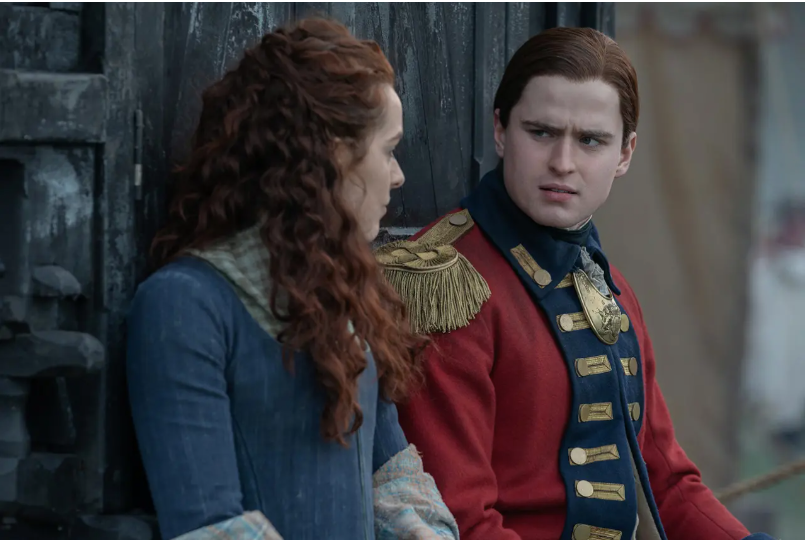
My favorite scene in this episode is when Arabella (Jane) explains to William how she charges as a prostitute, breaking down her services into three options.  I don't recall hearing quite such salty language, certainly not in this context, before in the now long history of Outlander on Starz.  There used to be a time in cable TV history when HBO and then Showtime were the leaders in these kinds of scenes with that kind of language.  (Network TV, of course, is too frightened about FCC bans to include that language in their shows, however necessary for the story.  Those FCC bans, and the FCC itself, are unconstitutional, in my view, because they blatantly violate our First Amendment.  But don't get me started.)

Anyway, the scene between Arabella and William is not only frank, but surprisingly tender (with excellent acting by both Silvia Presente as Arabella and Charles Vandervaart as William).  But maybe "surprisingly" is unfair to the series, certainly this season, where there has been a mix of violence, and brutal honesty, and tenderness, many times.  The relationship between Claire and John Grey is a great example, played out over a few episodes.  It was very good to see Claire tenderly -- and not so tenderly -- patch up John's eye, whose socket had been fractured by Jamie's outraged punch in episode 7.12.  Patching up the eye,  I think, is symbolic for patching up the relationship of Claire and John, and I hope the beginning of doing that for Jamie and John, too.

Meanwhile, over in Scotland, it looks like Brianna and Roger are on the verge of crossing paths through time, with Brianna going back in time to look for her husband, just as Roger has realized that Jem their son may no longer be in the past.  I hope for that family's sake that they don't get those wires too crossed in the episodes ahead.

See also Outlander 7.9: Powerful Separations ... Outlander 7:10: The Nature of Deaths on TV Series ... Outlander 7.11: The Rough Night ... Outlander 7.12: The General ... Outlander 7.13: Good Scenes, Ad Hoc Metaphysics

And see also Outlander 7.1-2: The Return of the Split ... Outlander 7.3: Time Travel, The Old-Fashioned Way ... Outlander 7.7: A Good Argument for the Insanity of War ... Outlander 7.8: Benedict Arnold and Time Travel

And see also Outlander 6.1: Ether That Won't Put You to Sleep

And see also Outlander 5.1: Father of the Bride ... Outlander 5.2: Antibiotics and Time Travel ... Outlander 5.3: Misery ... Outlander 5.4: Accidental Information and the Future ... Outlander 5.5: Lessons in Penicillin and Locusts ... Outlander 5.6: Locusts, Jocasta, and Bonnet ... Outlander 5.7: The Paradoxical Spark ... Outlander 5.8: Breaking Out of the Silence ... Outlander 5.9: Buffalo, Snake, Tooth ... Outlander 5.10: Finally! ... Outlander 5.11: The Ballpoint Pen ... Outlander Season 5 Finale: The Cost of Stolen Time

And see also Outlander 4.1: The American Dream ... Outlander 4.2: Slavery ...Outlander 4.3: The Silver Filling ... Outlander 4.4: Bears and Worse and the Remedy ... Outlander 4.5: Chickens Coming Home to Roost ... Outlander 4.6: Jamie's Son ... Outlander 4.7: Brianna's Journey and Daddy ... Outlander 4.8: Ecstasy and Agony ... Outlander 4.9: Reunions ... Outlander 4.10: American Stone ... Outlander 4.11: Meets Pride and Prejudice ... Outlander 4.12: "Through Time and Space" ... Outlander Season 4 Finale:  Fair Trade

And see also Outlander Season 3 Debut: A Tale of Two Times and Places ...Outlander 3.2: Whole Lot of Loving, But ... Outlander 3.3: Free and Sad ... Outlander 3.4: Love Me Tender and Dylan ... Outlander 3.5: The 1960s and the Past ... Outlander 3.6: Reunion ... Outlander 3.7: The Other Wife ... Outlander 3.8: Pirates! ... Outlander 3.9: The Seas ...Outlander 3.10: Typhoid Story ... Outlander 3.11: Claire Crusoe ...Outlander 3.12: Geillis and Benjamin Button ... Outlander 3.13: Triple Ending

And see also Outlander 2.1: Split Hour ... Outlander 2.2: The King and the Forest ... Outlander 2.3: Mother and Dr. Dog ... Outlander 2.5: The Unappreciated Paradox ... Outlander 2.6: The Duel and the Offspring ...Outlander 2.7: Further into the Future ... Outlander 2.8: The Conversation ... Outlander 2.9: Flashbacks of the Future ... Outlander 2.10: One True Prediction and Counting ... Outlander 2.11: London Not Falling ... Outlander 2.12: Stubborn Fate and Scotland On and Off Screen ... Outlander Season 2 Finale: Decades

And see also Outlander 1.1-3: The Hope of Time Travel ... Outlander 1.6:  Outstanding ... Outlander 1.7: Tender Intertemporal Polygamy ...Outlander 1.8: The Other Side ... Outlander 1.9: Spanking Good ... Outlander 1.10: A Glimmer of Paradox ... Outlander 1.11: Vaccination and Time Travel ... Outlander 1.12: Black Jack's Progeny ...Outlander 1.13: Mother's Day ... Outlander 1.14: All That Jazz ... Outlander Season 1 Finale: Let's Change History


Wednesday, December 18, 2024

US Supreme Court Completely Right to Take Up the Tik Tok Banning Case


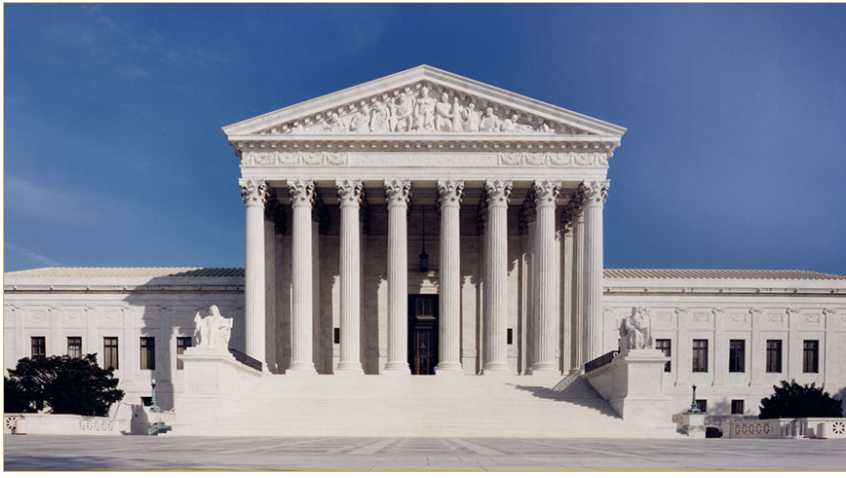
The New York Times just reported that the US Supreme Court has decided to hear TikTok's challenge to the law that would ban TikTok from the USA on January 19, 2025 unless its Chinese owners sold it to a non-Chinese company.   I've been very critical of our current Supreme Court for all kinds of important reasons, but I think it is doing the right thing to take up this case.  I applaud its decision to take up this case, and I further hope that it strikes down the law that would ban TikTok as blatantly unconstitutional -- because it is -- a clear violation of the First Amendment.

As everyone knows, including the bipartisan Congress that passed the law, and President Biden who signed it into law, earlier this year, the First Amendment to our Constitution says "Congress shall make no law abridging the freedom of speech or of the press." The only exception is speech or any communication that contributes to a criminal act.  So, to use an obvious example, you can't put an ad in a newspaper or on a social media site saying you're looking to hire a hitman as competent as the Jackal.  Now, I get that China is our adversary in the habit of spying on us in all kinds of ways, but I haven't seen any evidence or proof that such spying, which would be a crime, is actually happening via TikTok. Have you?

I've also heard, by people who should know better, that the First Amendment applies to the United States and its citizens, not its Chinese owners who are bringing the case to the Supreme Court.  That argument either accidentally or deliberately misses the crucial fact that it is Americans, people who are living in the United States, more than 160 million of us, whose First Amendment rights will be violated the moment we're no longer able to post videos on TikTok, talk to people on the site, etc.  How anyone could miss that point is beyond me.

Congress and the President have been muddled about the First Amendment and it how it applies to the Internet since Congress passed and Bill Clinton signed into law the Communications Decency Act in the 1990s.  It was left to the US Supreme Court to strike down that unconstitutional law, which made it a crime punishable not only by hefty fines but a few years in prison for anyone to post anything on the Internet that was "objectionable" and potentially viewable by minors.  I hope the current Supreme Court once again rises to the occasion, and lets the well-meaning but muddled members of both political parties that they need to take the First Amendment, and the rights it guarantees, which are fundamental to our democracy, a little more seriously.


Here is what I had to say about this impending ban, shortly after the law was enacted this past Spring


Friday, June 24, 2022

The Talmud vs. Today's Supreme Court Decision Overturning Roe v. Wade

The Jewish Talmud generally holds that life begins with the first breath (see, for example, When Does Life Begin? A Jewish View).  What would this mean for a Jewish woman who wants to have an abortion in a state in which abortion is banned, due to today's U.S. Supreme Court decision?

If she is denied the right to have an abortion, due to the Supreme Court's decision based on the Christian view that life begins with conception, is she not having her Jewish religious belief overridden by a Christian doctrine adopted by the Supreme Court of the United States?  And would this not be a blatant violation of the First Amendment to our Constitution, and its separation of church and state, mandated in the clause, "Congress shall make no law respecting an establishment of religion"?

This is the essence of Florida Rabbi Barry Silver's suit against Florida's recently enacted 15-week ban on abortion.  As Silver explains, "when life begins is radically different for Jews than it is for the people that wrote this law.”

Ultimately, the only way to reliably safeguard the rights of women over their bodies is to elect 54 Democrats to the Senate.  With two Democrats, Manchin and Sinema, almost certain to vote against lifting of the filibuster, that leaves 50 Senators to vote in favor of that.  VP Harris can break the tie, which opens the possibility of expanding the number of Justices on the Supreme Court, by Congress and President Biden.

Before then, it will be instructive to see what happens when Rabbi Silver's suit lands in the current Supreme Court,  Will they choose to ignore the separation of church and state required by the First Amendment?


Friday, November 19, 2021

Call for Papers: Special Issue of Studia Humanistyczne (in English) on The Future of Social Media

The Future of Social Media

Call for papers for special issue of Studia Humanistyczne AGH. Contribution to Humanities guest-edited by Paul Levinson, Fordham University


Social media are at a crisis crossroads here in the United States, and therefore the world.  Beginning with the election of Donald Trump to the US Presidency in 2016 and continuing with the fight against the deadly COVID19 pandemic, social media have been blamed for spreading misinformation and outright lies that have, in the case of COVID19, cost numerous human lives.  Calls have therefore arisen in the mass media and around the world for government regulation of social media.  But such regulation would run contrary to the tradition of a vibrant Internet, in which free expression flourishes. Indeed, such regulation could be a path towards the dissolution of democracy and the rise of fascism.


This special issue of Studia Humanistyczne AGH. Contribution to Humanities looks to explore all sides of this issue, around the world, in social media of any kind, via scholarly, well-researched and reasoned articles, 2000-6000 words in length, written in English. Appropriate topics would include:


·      Case studies that examine how disinformation on social media led to loss of life, endangerment of public health, etc.

·      Examination of elections in democracies which were adversely affected by disinformation on social media

·      Examples of how attempts to control social media backfired or succeeded in countries with authoritarian leadership

·      Proposals for moving forward in a way that limits disinformation but respects freedom in social media


Final articles will be due February 15, 2022.  Expected publication date will be June 2022.


Please send proposed title, draft abstract, and bio-brief by December 31, 2021 to Levinson.paul@gmail.com


After acceptance of the draft abstract, the manuscript should be submitted by the author on the journal platform: https://www.editorialsystem.com/shaghen


Studia Humanistyczne AGH. Contributions to Humanities provides immediate open access to its content on the principle that making research freely available to the public supports a greater global exchange of knowledge. Access and distribution is allowed under the CC BY 4.0 license. There is no fee for publishing in the Journal.  More information about the Journal: http://www.journalssystem.com/shagh/en


Detailed guidelines can be found at: http://www.journalssystem.com/shagh/Editorial-Rules,2335.html

Thursday, June 24, 2021

Podcast: Supreme Court Protects Student Right to Free Speech!


Welcome to Light On Light Through, Episode 183, in which I discuss the importance of the Mahanoy Area School District v. B.L. US Supreme Court decision yesterday, which found that a high school's attempt to punish a student for using obscene language on her Snapchat violated the student's  (Brandi Levy's) First Amendment rights.

Read the Supreme Court decision here.

Read blog post about the decision here


Check out this episode!

Wednesday, June 23, 2021

Supreme Court Protects Student Right to Free Speech!

A very important and precedent-setting ruling came down this morning from the U.S. Supreme Court,  which ruled 8-1 that the Mahoney Area School District in Pennsylvania was wrong to try to punish high school student Brandi Levy for posting "Fuck school, fuck softball, fuck cheer, fuck everything" on Snapchat in 2017 after she was not given a spot on her high school's cheerleading squad.

The decisive ruling affirms that the protection the Supreme Court gave students in its 1969 Tinker decision -- in which it held that students could not be prohibited from wearing black armbands to school to protest the Vietnam War -- applied to non-political statements made outside of school on a social media network like Snapchat.

The decision is significant for at least three reasons:  (1) it recognizes that obscene language is worthy of First Amendment protection, (2) it protects students from school censorship for statements made outside of the school, and (3) it does not make an exception for First Amendment protection because the communication was on the Internet.

The first point, I hope, should from now on be taken as a precedent not to allow the FCC to censure and fine television and radio media for broadcasting obscene language, which, for example, has led CBS to lacerate rap and hip-hop performances during the Grammys every year.  Today's decision can also be seen as a reversal of the Supreme Court's unfortunate FCC v. Pacifica decision in 1978, which upheld the FCC's right to censure and threaten WBAI-FM Radio for broadcasting George Carlin's seven dirty word routine.

The second point and the third point in effect reverse the Supreme Court's 2011 decision to not even consider Avery Doninger's appeal of the 2008 US Court of Appeals Second Circuit decision (made by a panel that included Judge Sonia Sotomayor, before she was appointed to the Supreme Court) that Doninger's high school was entitled to punish her after she called school officials "douchebags" on her Live Journal blog.  (See my 2009 interview with Avery and Lauren Doninger for more).  Now, just under a decade later, the Supreme Court including Sotomayor has spoken clearly and overwhelmingly on the excesses of school officials, who could use an education themselves on the First Amendment.

The one dissenter in today's momentous decision was Clarence Thomas, who (amazingly) found the Court's decision  "untethered from anything stable".   The First Amendment couldn't be a more reliable post on which to tether our freedoms.

Thomas, of course, was appointed by George H. W. Bush in 1991.  In other words, every single one of Trump's appointees did the right thing in this hallmark case, demonstrating again the independence of our judiciary, which more often than not over the years continues to be one the pillars of our freedom and our democracy.

=== Read the Supreme Court decision here ====

Sunday, April 18, 2021

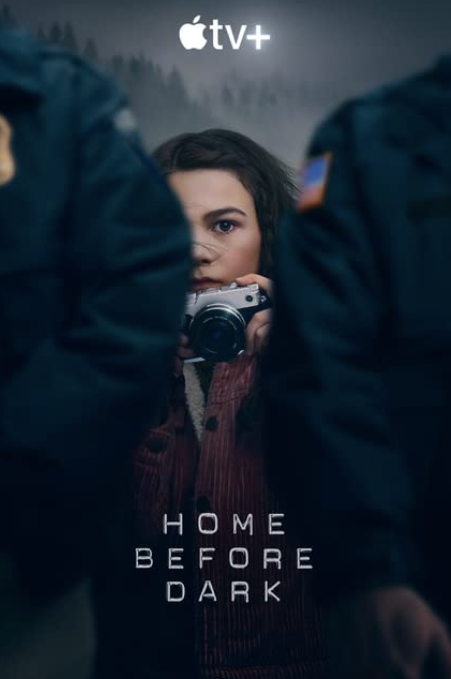
Home Before Dark: The Fact-Seeking Journalist As Hero


I've just seen one of the most inspiring television series in years.  It made me proud to be both a writer and a professor who teaches about journalism.   Home Before Dark is a 10-episode first season of a series that debuted on Apple TV+ about a year ago, a fictionalized narrative of a real 9-year old girl, Hilde Lysiak, who in real life when she was a few years older won the Junior Zenger Award for Press Freedom in 2019, aptly described on Wikipedia as "given to a journalist who fights for freedom of the press and the people's right to know."

There’s been a lot of remonstrating in the past few years about how satisfaction of partisan public opinion has replaced the investigating and reporting of truth in print, televised, and most of all social media, including by me (The Opinionization of Journalism) and in bold new books like Andrey Mir’s Postjournalism. It was therefore profoundly reassuring and a call back to truth to see Home Before Dark, all the more so because the protagonist is nine years old and a real person.

The fictionalized narrative is quite good, as well, harkening to Stranger Things as Hilde and her nine-year-old friends investigate a kidnapping that haunted and pulled apart a small West Coast town for decades. There's teenage angst and romance with her older sister Izzy,  a questionable older sheriff, racism and sexism and snobism effectively mixed into a riveting mystery that Hilde and her parents and friends attempt to solve.  Brooklynn Prince was fabulous and deserved an Emmy for her performance as Hilde.  The whole cast was excellent but I especially also liked Kylie Rogers as Izzy, and Joelle Carter (Justified!) and Sharon Lawrence (NYPD Blue!) back on the screen.

But the paeon to truth-seeking journalism is what puts Home Before Dark over the top.  Hilde's favorite movie is All The President's Men, and tells the jaded sheriff  "The truth is what makes everything work right ... it’s bigger than me, it’s bigger than you, it’s bigger than all of us".  He unsurprisingly, patronizingly replies, "that's adorable".  But we know better, or should know better.   It's no surprise that those words about the truth come from a 9-year old girl, fortunately not yet bitten by the cynicism that afflicts so many adults.   We should know better, and I surely do now.

PS: Season 2 will be on Apple TV+ this June 11.


Friday, February 12, 2021

Why the First Amendment Does and Doesn't Protect Trump from Impeachment Conviction

There's been word that Trump's attorneys in his Senate impeachment trial will say Trump's incendiary words to the crowd before they turned and savagely attacked the U. S. Capitol on January 6, 2021 were protected under the First Amendment, in particular that Congress "shall make no law abridging ... the freedom of speech".   So, Congress cannot punish Trump for the words he spoke on that morning.

Two arguments have been raised against that view.  

The first, I think, is incorrect.  I heard John Dean say on CNN (and other pundits on other channels) that the First Amendment is meant to protect citizens from the government, not the government (Trump as President) from the government (Congressional impeachment and Senatorial conviction).  But that can't be right.  If Trump as an American citizen has no First Amendment protections because he was President, how about the Vice President?  How about members of Congress?  How about Governors and Mayors and anyone who works for any part of the government?  Should First Amendment rights be waived for elected officials but not appointed officials?  How about for firefighters and sanitation workers?  Suspending any citizen's First Amendment rights because they are a government official creates an absurd slippery slope which would start with the President and extend to many millions of people -- as of 2011, the Office of Personnel Management reported 2.79 million people working for just the Federal government.  Do all of those people have no First Amendment rights?  Chances are few of those government employees knew they were surrendering their First Amendment rights when they signed up or campaigned for those jobs.

The second argument, presented by House impeachment manager Jamie Raskin, is much better and, I think, completely correct.  Representative Raskin said yesterday that the First Amendment doesn't protect someone who incites others to riot.   Those words spoken by Trump on that morning to an angry and armed crowd, urged to walk down the street to the U. S. Capitol, provoked not just a riot, but a riot that killed a police officer, and wounded more than a hundred more, not to mention the severe vandalizing and threat to lives of the Vice President, Senators, and members of Congress, and their staffs.  The First Amendment has been repeatedly cited by U. S. Supreme Courts as not protecting speech that directly leads to attacks on life, limb, and property, and that's precisely what Trump's exhortations to the crowd on January 6, 2021 did.

Trump is responsible for his riot-provoking words, which in fact provoked a deadly riot, and that's why the First Amendment offers him no protection for those words.  I think it's important to get right, and not confuse the issue with unspoortable arguments that people lose their First Amendment rights when they become part of government.


Monday, January 25, 2021

Podcast: Twitter Ban of Trump Was Right, Even Though It Violates the Spirit of the First Amendment


Welcome to Light On Light Through, Episode 165, in which Brian Standing on WORT-FM Radio (Madison, Wisconsin) interviews me about why I think Twitter's banning of Donald Trump was the right thing to do, even though that violates what I call the "spirit of the First Amendment".  We also discuss why I think government should keep its hands off social media.

Further reading:


Check out this episode!

Wednesday, January 20, 2021

Just Published: Twitter Was Right to Ban Trump, Even Though It Violates the Spirit of the First Amendment

I'm a First Amendment scholar – and I think Big Tech should be left alone
Twitter’s ban of Trump has concerned free speech advocates across the political spectrum. 

Jaap Arriens/NurPhoto via Getty Images


Paul Levinson, Fordham University

Twitter’s banning of Trump – an action also taken by other social media platforms, including Facebook, Instagram, YouTube and Snapchat – has opened a fierce debate about freedom of expression and who, if anyone, should control it in the United States.

I’ve written and taught about this fundamental issue for decades. I’m a staunch proponent of the First Amendment.

Yet I’m perfectly OK with Trump’s ban, for reasons legal, philosophical and moral.

The ‘spirit’ of the First Amendment

To begin, it’s important to point out what kind of freedom of expression the First Amendment and its extension to local government via the Fourteenth Amendment protect. The Supreme Court, through various decisions, has ruled that the government cannot restrict speech, the press and other forms of communications media, whether it’s on the internet or in newspapers.

Twitter and other social media platforms are not the government. Therefore, their actions are not violations of the First Amendment.

But if we’re champions of freedom of expression, shouldn’t we nonetheless be distressed by any restriction on communication, be it via a government agency or a corporation?

I certainly am. I’ve called nongovernmental suppressions of speech to be violations of “the spirit of the First Amendment.”

Every time CBS bleeps a performance of a hip-hop artist on the Grammys, the network is, in my view, engaging in censorship that violates the spirit of the First Amendment. The same is true whenever a private university forbids a peaceful student demonstration.

These forms of censorship may be legal, but the government often lurks behind the actions of these private entities. For example, when the Grammys are involved, the censorship is taking place out of fear of governmental reprisal via the Federal Communications Commission.

When governmental suppression is sanctioned

So, why, then, am I OK with the fact that Twitter and other social media platforms took down Trump’s account? And, while we’re at it, why am I fine with Amazon Web Services removing the Trump-friendly social media outlet Parler?

First, a violation of the spirit of the First Amendment is never as serious as a violation of the First Amendment itself.

When the government gets in the way of our right to freely communicate, Americans’ only recourse is the U.S. Supreme Court, which all too often has supported the government – wrongly, in my view.

The court’s 1919 “clear and present danger” and 1978 “seven dirty words” decisions are among the most egregious examples of such flouting of the First Amendment. The 1919 decision qualified the crystal-clear language of the First Amendment – “Congress shall make no law” – with the vague exception that government could, in fact, ban speech in the face of a “clear and present danger.” The 1978 decision defined broadcast language meriting censorship with the even vaguer “indecency.”

And a government ban on any kind of communication, ratified by the Supreme Court, applies to any and all activity in the United States – period – until the court overturns the original decision.

In contrast, social media users can take their patronage elsewhere if they don’t approve of a decision made by a social media company. Amazon Web Services, though massive, is not the only app host available. Parler may have already found a new home on the far-right hosting service Epik, though Epik disputes this.

The point is that a corporate violation of the spirit of the First Amendment is, in principle, remediable, whereas a government violation of the First Amendment is not – at least not immediately.

Second, the First Amendment, let alone the spirit of the First Amendment, doesn’t protect communication that amounts to a conspiracy to commit a crime, and certainly not murder.

I would argue that it’s plainly apparent that Trump’s communication – whether it was suggesting the injection of disinfectant to counteract COVID-19 or urging his supporters to “fight” to overturn the election – repeatedly endangered human life.

Be careful what you wish for

Given that Trump was still president – albeit with just a few weeks left in office – when Twitter banned him, that ban was, indeed, a big deal.

Jack Dorsey, co-founder and CEO of Twitter, appreciated both the need and perils of such a ban, tweeting, “This moment in time might call for this dynamic, but over the long term it will be destructive to the noble purpose and ideals of the open internet. A company making a business decision to moderate itself is different from a government removing access, yet can feel much the same.”

In other words, a company that violates the spirit of the First Amendment can “feel much the same” to the public as government actually violating the First Amendment.

To be sure, I think it’s concerning that a powerful cohort of social media executives can deplatform anyone they want. But the alternative could be far worse.

Back in 1998, many were worried about the seeming monopolistic power of Microsoft. Although the U.S. government won a limited antitrust suit, it declined to pursue further efforts to break up Microsoft. At the time, I argued that problems of corporate predominance tend to take care of themselves and are less powerful than the forces of a free marketplace.

Sure enough, the preeminent position of Microsoft was soon contested and replaced by the resurgence of Apple and the rise of Amazon.

Summoning the U.S. government to counter these social media behemoths is the proverbial slippery slope. Keep in mind that the U.S. government already controls a sprawling security apparatus. It’s easy to envision an administration with the ability to regulate social media not wielding that power to protect the freedoms of users but instead using it to insulate themselves from criticism and protect their own power.

We may grouse about the immense power of social media companies. But keeping them free from the far more immense power of the government may be crucial to maintaining our freedom.The Conversation

Paul Levinson, Professor of Communication and Media Studies, Fordham University

This article is republished from The Conversation under a Creative Commons license. Read the original article.


=====================================

Added 24 January 2020:  Comment and Response on LinkedIn

Comment from Will Huff:

I’m with you on the right of Twitter and Facebook, but where does this slope stop for private businesses? They are essentially denying service to those they don’t agree with. Is this discrimination based on political ideology. Is discrimination ok if it only about things agreed with or does it end up becoming ok for everything? Could Walmart say that people wearing Trump shirts can’t shop there? Or Biden shirts? Could a baker deny baking a cake?

Response from Paul Levinson:

Thanks for the comment, and a very good question. A private business cannot refuse service for illegal discriminatory reasons (such as the customer seeking service being Black). I don't know of any cases in which a customer was refused service because of a political statement on a shirt. Certainly a public service, like a Post Office or a city bus, could not do that, because such refusal of service would be from a government agency and the refusal would therefore indeed violate the First Amendment. But conceivably a private business could refuse service, because the business is not the government. In Masterpiece Cakeshop v. Colorado Civil Rights Commission (2018), the Supreme Court said a private bakeshop could refuse to bake a cake for a gay couple, but only because the Colorado Civil Rights Commission showed a religious bias in siding with the gay couple. So this decision in a sense pitted freedom of religion vs. discrimination.

Sunday, September 13, 2020

First Amendment and Public's Right to Know Could be Put to the Test: ByteDance rejects Microsoft Bid for TikTok

The news just broke that ByteDance just rejected Microsoft's offer to buy TikTok*.

This is big news, with profound First Amendment implications.  Trump has threatened to ban TikTok in the United States.  Were it owned by Microsoft, an American corporation, banning any of its media would be an obvious, ipso facto, violation of the First Amendment, and its provision that "Congress [i.e, the Federal government] shall make no law ... abridging the freedom of speech, or of the press".

But what about TikTok, now owned by the Chinese company ByteDance?   Some would argue that the First Amendment pertains only to American media.   I (and others) would argue otherwise.  The First Amendment is designed to protect the public's right to know -- Congress is prohibited from banning or restricting media because that seriously interferes with everyone's right to know what's going on.  How else can a democracy function?

I'm glad that ByteDance said no to Microsoft. I have nothing at all against Microsoft -- in fact, I defended Microsoft against our government's foolish threats to break up their alleged monopoly back in the 1990s -- but I'm glad that ByteDance's action will put Trump's blustering to a legal test.  If that happens, if he doesn't back down, it will ultimately be up to the U. S. Supreme Court to determine whether the First Amendment protects the public's right to have access to international media, which is becoming increasingly important in our interconnected world.

You never know for sure about any Supreme Court decision before it's rendered, but I'm always glad to see an issue like this, which gets at the First Amendment and its foundation of our democracy, put to the judicial test.

*PS: And news just came through that ByteDance decided to make Oracle, a U. S. firm, as its partner for Tikok.  Will that qualify for TikTok as being an American firm?


Tuesday, April 14, 2020

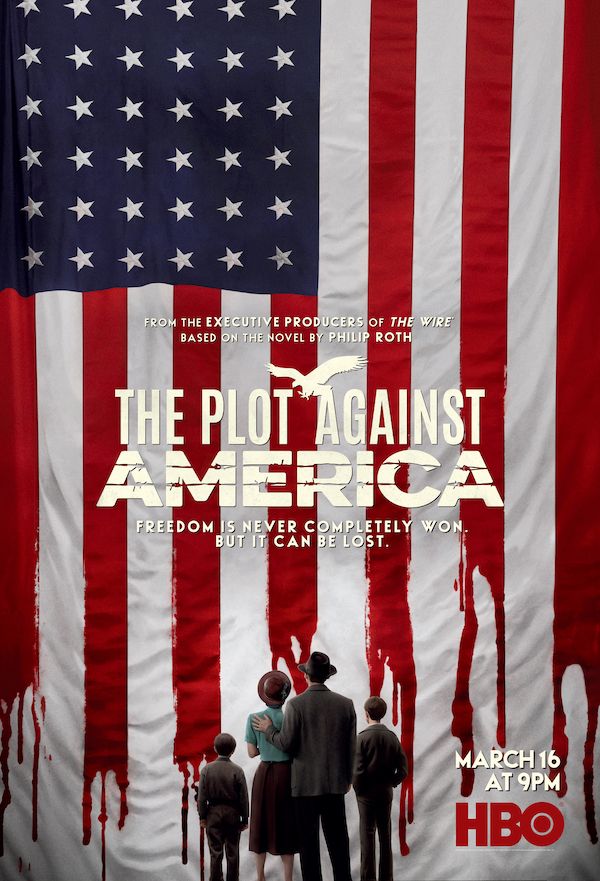
The Plot Against America 1.5: Involuntary Transfer


Another powerful, deeply infuriating episode - 1.5 - in the 1940s alternate American history which has Lindbergh as President and anti-semitism rising that is The Plot Against America.

The main theme is the transfer of Jewish residents of Eastern cities to rural mid-America that Rabbi Lionel Bengelsdorf kept insisting was voluntary.  He and we learn the truth when he sees the rabid-anti-semite Henry Ford, a member of the Lindbergh cabinet, give his definition of voluntary.  If you want to keep your job, you agree to move your family.  What does the Rabbi need, to get him see how blind he is and has been?  The Lindberghs don't even attend his wedding.  And yet he continues to promote Lindbergh as the greatest thing since sliced bread in America.

As an example:  when Walter Winchell finally denounces the Rabbi's pet transfer program on Winchell's radio show with his breathless, patented voice, Bengelsdorf gets Winchell fired from his radio show.  I don't even know if there's an FCC in this alternate reality.  I do know that in our reality, I've frequently denounced the FCC and its regulation of broadcasters as a blatant violation of our First Amendment (see, for example, my Flouting of the First Amendment).

In The Plot Against America, the government being forbidden from abridging freedom of speech and press isn't the only egregious violation of the First Amendment.  Before the hour is over, we see a Winchell rally - he's starting a Presidential campaign - broken up by fascist thugs, with the local police and the FBI looking on and doing nothing.  So much for the right guaranteed in the First Amendment of people to peaceably assemble.

Next week is the finale, and I regret this series being so mini.   There's a lot more story to tell in this rise of fascism in America which almost happened - in the attack on the press by the President's minions which bear such resemblances to our own time.  I'll be back here next week with some parting thoughts on this all-too pertinent series.

See also The Plot Against America 1.1: Yet Another Alternate Nazi History, with Forshpeis ... The Plot Against 1.2: The 33rd President ... The Plot Against America 1.3: Corrosive Anti-Semitism ... The Plot Against America 1.4: Close to Home


Friday, December 6, 2019

Interviewed by Bob Mann on Inaugural Episode of Hot Media: We Talked about Donald Trump's Threat to a Free Press


I was interviewed 52 times on Bob Mann's Let's Consider the Source radio show on Sirius/XM Radio from 2007 through 2019 (see here for a list of all shows and topics), including his final show in January 2017.  I was thus especially pleased and honored to be his very first guest on his new podcast Hot Media earlier this week.  Our topic was the threat Donald Trump poses to freedom of expression.

Tuesday, September 17, 2019

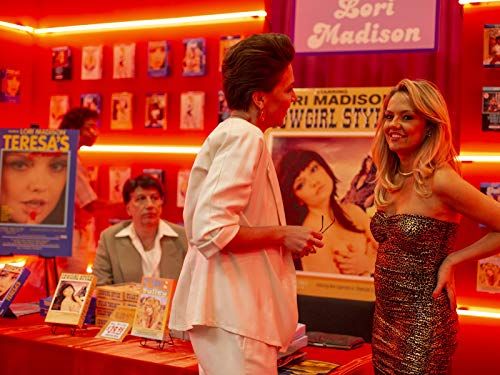
The Deuce 3.2: The First Amendment!


Abby easily had the best line in tonight's episode 3.2 of The Deuce, when she explains that if you don't use the First Amendment to protect porn movies, "it's not gonna be there for the ideas".   The geniuses on the Supreme Court didn't get this in 1915, when they decreed in Mutual Film v. Ohio that film was not protected by the First Amendment, since it was a form of entertainment not an expression of ideas.   It wasn't until Burstyn v. Wilson in 1952 that this was overturned.  Good to see that Abby got the full gist of this in 1985.

Otherwise, almost no one, including Abby, is very happy in tonight's episode.  Abby loses her friend.  Lori in California objects to a stalk of corn being used in her porn scene.  Neither Vincent nor Frankie are too thrilled in their separate proceedings, though they do give us a good scene together face-to-face, nice trick photography.

But there is more good news on the fringes.   Looks like Candy may be on the way to finding true love or at least pretty good love with Corey Stoll's character Hank.  And Bobby doesn't have AIDS.  All of which says there's room for at least some happy endings on The Deuce.

Given that this its final season, whatever endings we get this year will be the final words on the series.   I'm hoping that, at very least, both twin brothers are thriving, as are Candy and Lori.  But I'm an optimist, and The Deuce has always been about unvarnished not rose-colored reality.   You know what, I still hope those characters and even a few others survive.

See also The Deuce 3.1: 1985

And see also The Deuce Is Back - Still Without Cellphones, and that's a Good Thing ... The Deuce 2.2: Fairytales Can Come True ... The Deuce 2.3: The Price ... The Deuce 2.4: The Ad-Lib ... The Deuce 2.6: "Bad Bad Larry Brown" ... The Deuce 2.9: Armand, Southern Accents, and an Ending ... The Deuce Season 2 Finale: The Video Revolution

And see also The Deuce: NYC 1971 By Way of The Wire and "Working with Marshall McLuhan" ... Marilyn Monroe on the Deuce 1.7 ... The Deuce Season 1 Finale: Hitchcock and Truffaut 

  
It all starts in the hot summer of 1960, when Marilyn walks off the set
of The Misfits and begins to hear a haunting song in her head,
"Goodbye Norma Jean" ..
InfiniteRegress.tv