Chuck Todd interviews me about alternate histories
Showing posts with label I. A. Richards. Show all posts

Tuesday, July 22, 2025

Superman: Foe of Musk and Putin


I've been following and enjoying Superman's exploits since I started watching him played by George Reeves on television when I was a kid in the 1950s, and started reading the comic book a few years later, created by Jerry Siegel and Joe Shuster way back in 1938.  And as an adult I even contributed an article about The Man of Steel -- “Superman, Patriotism, and Doing the Ultimate Good” (which explored why Superman didn't just wipe out Hitler and the Nazis in World War Two) in The Man from Krypton -- an anthology published in 2006.

I think I've also seen most of the movies.  Like the TV series and the comics, they were all immensely entertaining.  But none packaged that with the political acumen and clout that James Gunn invested in the new Superman movie that my wife and I just saw in the LOOK Dine-In Cinemas in Dobbs Ferry.  Andrew Slack and Jose Antonio Vargas nailed in their guest column in The Hollywood Reporter, "Yes, Superman Has Always Been an Immigration Story," what Gunn did in his movie.  Superman has always been the ultimate alien -- literally, he came from outer space.  And just as people from other countries helped build and protect America from day one, so Superman has done the same since he started growing into adulthood in Kansas.

The movie also gets all the related political travesties and depredations that currently afflict our country and thereby the world right on target, too.  Lying buffoons on a Fox-like "news" channel, a fickle populace gobbling down fake news like it was cotton candy, a Putin-like character invading a neighboring country just as Hitler did in the 1930s, and most important, making Lex Luthor, Superman's brilliant, demented arch-enemy who first appeared in the comics in 1940 into someone we've all come to know all too well the past few years.

My nine-year-old grandson called it when he saw Superman with my son a couple of days ago and told him: "Lex Luthor is Elon Musk".  I don't know if Musk is as smart or as evil as Luthor, but he's certainly done plenty of damage.  Among the many reasons to cheer what Gunn has done in this movie is the way he put up Musk in Luthor.

And there are indeed many other reasons.  Superman is not only powerful but vulnerable and amazingly admirably sweet and good -- he takes the time to save a squirrel.  David Corenswet (who was in one episode of House of Cards) was excellent in the title role.  So were Rachel Brosnahan (Mad Men, Mrs. Maisel ) as Lois Lane, Edi Gathegi (For All Mankind, StartUp) as Mr. Terrific, and Nathan Fillion (The Rookie, Castle) as Green Lantern.  In fact, everyone was in fine form, including the super heroes I didn't know, the robots, and especially the dog.

So, if you're a fan of Superman, you can't go wrong with this movie.  And if you're a fan of democracy and a foe of fascism, you can go wrong with this movie, either.

***


Note added: James Gunn claims in this interview that one of the biggest pieces of fake news in his movie -- a recording of Superman's parents, released by Lex Luthor, urging their son to use his super powers to dominate the world -- actually wasn't fake news at all, that is, Superman's parents really said that.


My response: as I. A. Richards advised way back in the 1920s, it's a mistake to ask the author or creator what they intended in a given passage (or scene). They may be trying to manipulate the public, for whatever reason. It's far better, Richards says, to let the work speak for itself.

(Thanks Cynthia Walker and Nick Leshi for getting a conversation about this going on Facebook.)

Sunday, May 25, 2025

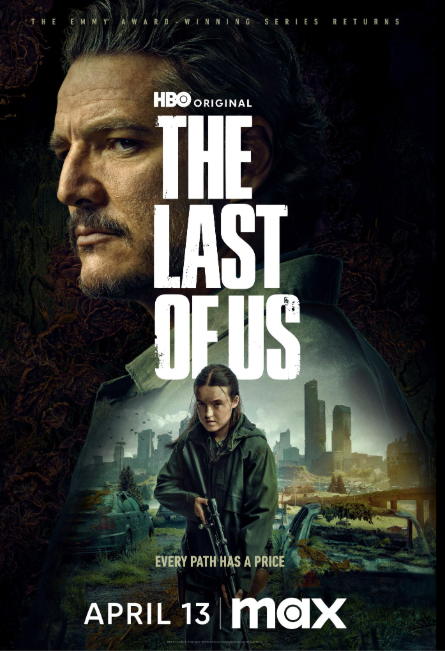
The Last of Us 2.7: Those Who Die


Well, a lot of characters died in the season 2 finale of The Last of Us on Max tonight.

[Spoilers ahead ... ]

Two more of the people who presided over Joel's killing die in 2.7: Owen is killed by Ellie because he draws a gun and attempts to fire on her.  Mel is accidentally killed by Owen as he fires his gun (after being shot by Ellie) and his bullet hits the wall, bullet bouncing off whatever the wall is made of, so the bullet hits a very pregnant Mel in the neck, who dies before Ellie can save her baby (by cutting the baby free) as Mel is pleading with Ellie to do.

And that's the least of it.

Before the episode is over, Jesse is shot and killed by Abby (he was the most ethical character in the show), and Abby fires point blank at Ellie, before the screen turns black in an end-of-The-Sopranos moment.

Of course, that final scene in The Sopranos was the final scene of the series, not of the second season in a continuing series.   And there was no gun shot in that final scene, before all went black.  David Chase, the main brains behind the series, now says that scene was meant to "imply" Tony Soprano's death.  But having read I. A. Richards, who a century ago, back in the 1920s, said we can safely ignore explications by authors of their works (there could be interpretations they didn't intend which are nonetheless valid, or the authors could just be lying), I don't think we should pay much if any attention to what Chase says about his masterpiece.

But back to The Last of Us:

  1. Since the series is continuing, even a gun fired before all goes black is no proof of anything.
  2. And there's no point looking at the game from which The Last of Us series is derived, because the makers of the series have been free to change whatever they wanted to change from the game when they made the series.
So is Ellie dead?  How should I know?  At this point, we can't even be sure she's been shot.  But I'd bet we'll find out more in Season 3.

And although it's too soon to say the following about Ellie, paraphrasing what Shelley said about Keats' death -- weep not for Ellie, 'tis death that's dead not she -- we can certainly apply that to Jesse, a brave, highly ethical soul that we could certainly use more of in our world off-screen, and the ethical crisis that's now raging.  Here's to Jesse, whose morality is eminently worthy of veneration.

See also The Last of Us 2.1-2.2: The Killing Cold ... 2.6: Father and Daughter Flashbacks

And see also The Last of Us 1.1-1.2: The Fungus Among Us ... 1.3: Bill and Frank ... 1.4: Gun and Pun ... 1.5: Tunnels ... 1.6: Joel ... 1.7: Riley's Wise Advice ... 1.8: Ellie vs. the Resort ... 1.9: The Limits of Utilitarianism

more about The Silk Code here


Tuesday, November 23, 2021

Podcast: Foundation 1st Season: Cora Buhlert, Joel McKinnon, and Paul Levinson discuss


Welcome to Light On Light Through, Episode 215, in which Cora Buhlert, Joel McKinnon, and I talk about the first season of Foundation on Apple TV+.

Cora's reviews of the first season of Foundation are here  ...  also check out Joel McKinnon's Seldon Crisis podcast and his What I Like about the Show on Reddit

Talk to us on Twitter:  @CoraBuhlert @JoelGMcKinnon @PaulLev

Enjoy the video of this podcast episode.

Postcard from Isaac Asimov to me in 1979 about the Foundation trilogy

In addition to Asimov's novels and autobiographies, these three books were discussed ed in this episode:

Check out this episode!

Wednesday, October 4, 2017

Review of Rob Sheffield's Dreaming the Beatles 16 of X: "I'm in Love, with Marsha Cup"

Back with a review of the next two chapters of Rob Sheffield's continuing-to-be-excellent Dreaming the Beatles.  These chapters were particularly superb, replete with discussions of the Abby Road photographs and the Paul-Is-Dead controversy - actually, almost every chapter so far has been particularly superb - but what I most enjoyed was Sheffield's assessment of the public's input on what are the lyrics of a song, transcending at times even the lyricist's, because he or she may not quite know what the lyrics are (certainly not what they mean - see what I say about I. A. Richards below), and may not even get them right.  As examples of that, Sheffield cites Lennon's "two foot small," which he sang in "You've Got To Hide Your Love Away" instead of the intended "two foot tall," or the debate about whether Lennon was singing "hold you in his armchair, you can feel his disease" or "hold you in his arms, yeah, you can feel his disease" in "Come Together".

I've always been an "arms" man myself, but, then, again, when I first heard Elvis's 1957 #1 single I was sure he was singing "I'm in love, with Marsha Cup," whoever exactly she was.  But those kinds of mishearings happen all the time, and what Sheffield is really probing is what is the ultimately correct lyric when there is no absolutely factual record to consult?

Here I. A. Richards, a literary theorist who made his mark back in the 1920s, always struck me as being of great value.  Richards argued that it is the reader (which can easily be translated to listener) not the author of a text who is and has the ultimate authority on what that text means.   In the case of the acoustic realm, where the words are intrinsically not as clear as in the visual, the question can sometimes become not just what the lyrics mean, but what they are.

Sheffield develops the question of lyrics and their reality out of the Paul-Is-Dead nonsense from the late 1960s and after, which emerged out of interpretations of lyrics played backwards.  Although I never believed any of that for instant - it was a form of fake news, years ahead of its time -  I can report that Paul was definitely alive and well and sounding great at his Nassau Coliseum concert last week

Unless he was an imposter.  But, in that case, that imposter has done an unbelievably great job, as Sheffield points out, from "Hey Jude" to "Golden Slumbers" and "The End".  McCartney sang them all last week, including "Let Me Roll It," proving the imposter continued showing his mettle even after the Beatles disbanded.

And I'll be back with another review soon.

See also Review of Rob Sheffield's Dreaming the Beatles 1 of X: The Love Affair ... 2 of X: The Heroine with a Thousand Faces ... 3 of X: Dear Beatles ... 4 of X: Paradox George ... 5 of X: The Power of Yeah ... 6 of X: The Case for Ringo ... 7 of X: Anatomy of a Ride ... 8 of X: Rubber Soul on July 4 ... 9 of X: Covers ... 10 of X: I. A. Richards ... 11 of X: Underrated Revolver ... 12 of X: Sgt. Pepper ... 13 of X: Beatles vs. Stones ... 14 of X: Unending 60s ... 15 of x: Voting for McCartney, Again ... 17 of X: The Split ... 18 of X: "Absolute Elsewhere... 19 of X: (Unnecessary but Brilliant) Defense of McCartney ... 20 of X: "All Things Must Pass" ... 21 of X: Resistance ... 22: The 70s Till the End ... 23: Near the Science Fiction Shop ... 24 of 24: The Last Two

And here's "It's Real Life" -- free alternate history short story about The Beatles, made into a radio play and audiobook and winner of The Mary Shelley Award 2023


lots of Beatles in this time travel

Tuesday, July 25, 2017

Review of Rob Sheffield's Dreaming The Beatles 10 of X: I. A. Richards

The most interesting aspect (and there are many) of Rob Sheffield's chapter on the Beatles and LSD in his Dreaming the Beatles - brilliant, I'd say, to any state of mind - is his discussion at the end of whether "Lucy in the Sky with Diamonds" was a John Lennon anthem to LSD.

The story that it isn't is better than well known:  John's son Julian came home with a picture of Lucy, a girl at school, with a sky and diamonds, and told his father that he had drawn a picture of Lucy in the Sky with Diamonds.  Or something like that.

And then there's the story, not quite as well known,  about Peter Yarrow and his "Puff the Magic Dragon" (actually based on a poem by Leonard Lipton).  Yarrow (and Lipton) have always insisted the lyric was as much about pot as the "Star Spangled Banner" and its bombs bursting in air was about some psychedelic drug around at the time of our War of 1812.  Even though it seemed obvious to just about everyone else that "puff" and "paper" and "dragon" aka "draggin'" were about grass.

I had already encountered I. A. Richards - a British literary critic, not a rock star - years before. Nearly a century ago - in the 1920s, to be more precise - Richards propounded a series of things that the literary critic, or anyone wanting to understand a literary work, should avoid. Among the most important red flags that grew out of Richards' work was what Wimsatt and Beardsley later termed the "intentional fallacy" - it doesn't matter what the creator of the work may have intended, what counts is what the reader objectively gets from the work.

From that, it's a relatively small move to the position that it doesn't matter what the creator of the work says the work is about - or, to use a modern parlance, that the creator of a work is an unreliable guide to what the work may be about.

When I first encountered Richards in the 1970s, I could immediately see his injunctions could apply to creative work in any medium - the Beatles and Peter, Paul, and Mary lyrics, and, much later, to the ending of The Sopranos.   So, with that in mind, it was especially fun to read Sheffield's account of LSD and "Lucy in the Sky with Diamonds".

Other strong parts of this chapter were the competition between the Beatles and Dylan, and McCartney's confidence that the Beatles had surpassed Dylan's understanding of them by the time they were doing Revolver (the subject of the next chapter).

It's of course possible that Sheffield might say that this wasn't one of the strongest parts of this chapter - but I'll place my confidence in Richards.

And I'll be back with more soon - maybe tomorrow, though you never know.

See also Review of Rob Sheffield's Dreaming the Beatles 1 of X: The Love Affair ... 2 of X: The Heroine with a Thousand Faces ... 3 of X: Dear Beatles ... 4 of X: Paradox George ... 5 of X: The Power of Yeah ... 6 of X: The Case for Ringo ... 7 of X: Anatomy of a Ride ... 8 of X: Rubber Soul on July 4 ... 9 of X: Covers ...  11 of X: Underrated Revolver ... 12 of X: Sgt. Pepper ... 13 of X: Beatles vs. Stones ... 14 of X: Unending 60s ... 15 of X: Voting for McCartney ... 16 of X: "I'm A Loser" ... 17 of X: The Split ... 18 of X: "Absolute Elsewhere... 19 of X: (Unnecessary but Brilliant) Defense of McCartney ... 20 of X: "All Things Must Pass" ... 21 of X: Resistance ... 22: The 70s Till the End ... 23: Near the Science Fiction Shop ... 24 of 24: The Last Two

And here's "It's Real Life" -- free alternate history short story about The Beatles, made into a radio play and audiobook and winner of The Mary Shelley Award 2023


lots of Beatles in this time travel

Tuesday, July 17, 2012

Political Animals: Alternate Hillary History

Political Animals (6-part mini-series) debuted on the USA Network Sunday night.  The Hollywood Reporter called the 2.6 million viewers "soft ratings"- I disagree, those numbers are pretty decent. I hear tell that the producers say that series was not really inspired by Hillary and Bill Clinton - that's complete nonsense, and another demonstration of literary critic I. A. Richards' admonition that the creator of a narrative is the last person you should go to for an explanation of what it means - the creator could be anything from dissembling to not being in touch with the implications of the work.

Alternate history is a form of story telling well known in science fiction.  How would the world have been different had Lincoln or JFK not been assassinated, had Germany won the Second World War, etc?  I take a similar tack about Socrates and the hemlock in The Plot to Save Socrates.

Political Animals is the story of Elaine Barrish, former First Lady of a popular two-term President (the most popular "since Kennedy") with a southern accent and a penchant for the ladies and affairs.  She loses a close campaign for the nomination for President to a young, well-spoken, dynamic opponent.   So far, the history is not alternate but all but identical to Hillary and Bill's.  But on the night she concedes to her opponent, the divergence from our real world begins:  Elaine wants and gets a divorce from her philandering husband.

So the excellent set-up for this series is: what would have happened had Hillary left Bill after conceding the nomination to Barack Obama in 2008?  One highly significant development stays the same:  President Garcetti (played by Adrian Pasdar, who also played a President in one of the realities in Heroes) makes Elaine his Secretary of State.   And the show if off and running.

There are inevitable minor differences between the reality of Political Animals and ours.  Former President Hammond and Elaine Barrish (who uses her original name, unlike Hillary) have two sons (one gay, the other engaged to a bulimic) and no daughter.  And, at this point, it looks like Obama is a better President than Garcetti (who is Italian American not African American).

But the tableau is easily recognizable as ours, with the twist, and that's its appeal.  What differences will this twist engender? Elaine is free to sleep with other people - though the only man she sleeps with so far is her former husband, at least once, for special emotional support - and she vows to run again for President. The acting is excellent - Signorney Weaver as Elaine and Ciarán Hinds (Caesar in HBO's superb Rome) as her former husband and former ex-President, and I'm looking forward to every episode of this original, courageous, and highly entertaining series.


The Plot to Save Socrates


"challenging fun" - Entertainment Weekly

"a Da Vinci-esque thriller" - New York Daily News

"Sierra Waters is sexy as hell" - curled up with a good book

Thursday, June 21, 2007

The Sopranos and Hamlet

"And the rest is silence" - the famous, many-sided ambiguous last line of Hamlet.

The "rest" could mean respite, sleep, or remainder. The "silence" could mean quiet or death. Is the remainder - what comes after the story of Hamlet - just a time-out, or a death of everything we have seen? When Horatio says this about the bodies he finds on the floor - which we presumably know are dead - what is he telling us about what happens after?

As I was reading Dick Cavett's excellent piece written before The Sopranos' finale, I realized that, in addition to The Lady, or the Tiger echoes, The Sopranos also partakes of Hamlet.

I'm sure I'm not the first person to make that connection - just as I was not the only person to call forth The Lady, or The Tiger - but I thought it useful to record it here.

"And the rest is silence" has been praised by I. A. Richards and other literary critics as the ideal ambiguous ending. Like The Lady or the Tiger, it is a triumph of written language.

In the case of The Sopranos, the "rest" was not just silent, but sudden black. And it was shocking - in a way that the last words of Hamlet were not - because it spoke in image rather than words, and defied our expectations of how a television show, let alone a series, should end.

I'm more sure - less ambiguous - than ever that The Sopranos as a whole and its ending in particular will take its place next to Shakespeare.

listen to free podcast of this review, and reviews of all the other final nine episodes
Further reading:

The Sopranos and the Closure-Junkies

The Sopranos, or the Tiger?

The Sopranos Ninth of Nine: The Anti-Ending Ending

The Sopranos as a Nuts-and-Bolts Triumph of Non-Network TV my 2002 article

I. A. Richards' Practical Criticism

also -
Sopranos Symposium at Fordham University, May 22-25, 2008: Final Program


The Sopranos Podcasts - listen to reviews and analyses to your heart's content

And ...  A Conversation with Dominic Chianese  ... complete video and transcript

And ... reviews of the first eight episodes this final season: The SopranosFirst of NineSecond of NineThird of Nine,Fourth of NineFifth of NineSixth of NineSeventh of NineEighth of Nine


The Plot to Save Socrates


"challenging fun" - Entertainment Weekly

"a Da Vinci-esque thriller" - New York Daily News

"Sierra Waters is sexy as hell" - curled up with a good book


Enjoy listening to audio books? Get a free audio book copy of The Plot to Save Socrates - or any one of 85,000 other titles - with a 14-day trial membership at Audible.com ...
 
InfiniteRegress.tv