Chuck Todd interviews me about alternate histories
Showing posts with label Margaret Thatcher. Show all posts

Monday, August 3, 2026

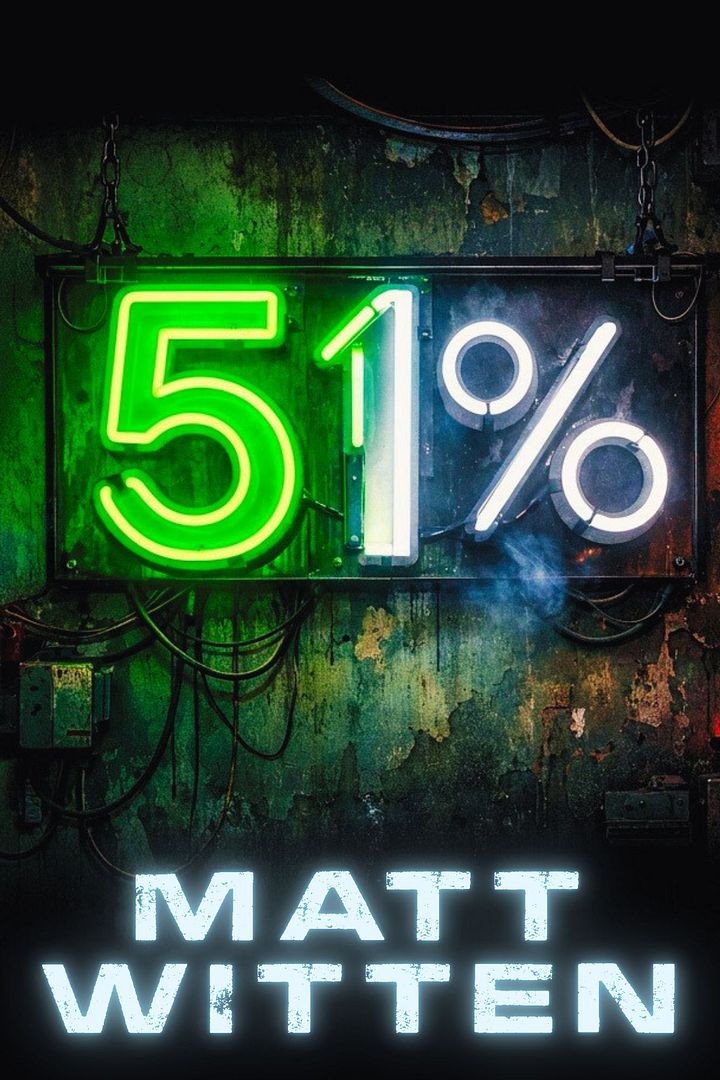
Review of Matt Witten's 51%: 100% Excellent, Relevant, Enjoyable, and Important


There couldn't be a better time to read Matt Witten's cyberpunk novel, 51%, in which Ayn Randian corporate power and philosophy controls and permeates all parts of American life, including the NYPD (New York's police), which are named NYPDInc, and in which police need payment from the people to do their work.  Apple's adaptation of William Gibson's Neuromancer will be streaming this coming January.  Even more important, Trump's hijacking of American democracy is claiming more innocent lives via ICE and other Federal police just about every week -- the most recent, Edwin Lopez-Cornejo, a 41-year-old migrant from El Salvador, died the day before yesterday at the Delaney Hall Detention Facility in Newark, NJ -- and that kind of "legal" killing requires vigorous response in all aspects of communication, including science fiction.

Witten's novel, published this past April, takes place 20 years from now.  People who are not rich pay for their medical treatment, education, and other essential needs by selling percentages of themselves to corporations.  If they sell more than 50%, they become corporate property, with where they live and work completely controlled by their owners.  To make sure that the 51%ers don't try to evade this corporate slavery, biochips are implanted in them, and their owners are alerted if anyone tries to remove them.

This is the environment in which NYPDInc Detective Luke (aka Juke) O'Keefe and his partner Halee Navarro (who carries a gun but is actually a “Crime Marketing Consultant”) must work in as they attempt to find the killer of Talia, a young immigrant 51% woman in New York City, and get drawn into a desperate, ingenious plan to break free of the corporate enslavement.  Witten has a keen sense of what the city would look like in such a corporate-glorified country, with streets renamed "Ayn Rand", "Randy Weaver", "Fountainhead", and "John Galt" -- right alongside current names like "Waverly" -- and gun models called "Hestons" and "Ruby Ridges".  Witten also knows his kittens, writing  "She started down the hall -- and tripped on a kitten, which had slipped out of the speck between her legs".  ("Speck", by way, is slang for apartment in this Big Corporate Apple, in which NYPDInc cops are called "Dincs" and the FBI cleverly called "Fincs".)

Given the ascent of AI in our world today, there of course is an AI character in 51% who, in another move that will make you smile, speaks with Margaret Thatcher's voice.  There's also use of fireflies in the story, which I'm also glad to see because they harken at least as far back in science fiction as my 1999 novel The Silk Code and Peter Watt's 2006 Blindsight, and they warrant more widespread use in our world.  And in the last third of the novel, there's almost nonstop action that will keep you glued for at least a few hours or longer, capping the memorable love story throughout.

But those are the science fiction and police fiction wheels of 51%, and the most important raison d'etre for this successor to Aldous Huxley’s Brave New World and George Orwell’s 1984, along with the enjoyment it provides, is the lesson it gives us about the likes of Trump and his allies and the damage they continue to do to our country and our world, and why we must show up at the ballot box this November and begin to get them out of office.

more about The Silk Code here




Thursday, November 19, 2020

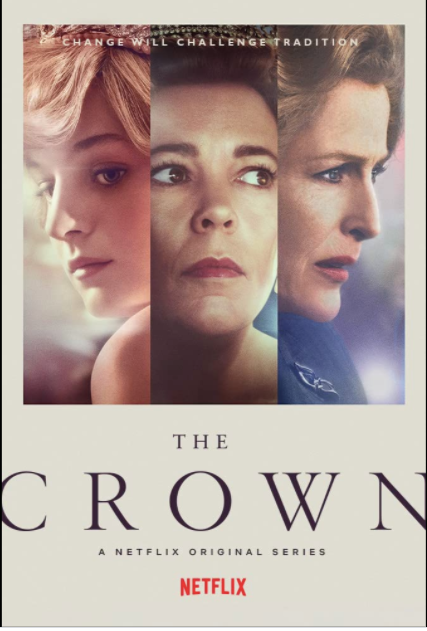
The Crown season 4: Margaret Thatcher and The Queen, Charles and Diana


I thought Season 4 of The Crown, which my wife and I just finished binge watching, was the best of the series so far.  It had two toweringly important stories, each brilliantly acted and powerfully presented.

Margaret Thatcher, the U.K.'s Iron Lady, contemporary of Ronald Reagan (from my American perspective), was tour-de-force portrayed by Gillian Anderson.  Her acting, excellent to begin with in The X-Files, just gets better and better.  Her conversations with Olivia Coleman as Queen Elizabeth II were non-pareil.  Woman-to-woman, perfect tones of voice and gestures and head inclinations and facial expressions, these conversations are a veritable textbook of how to act.  And the true story of Thatcher, the combination of her real toughness and real vulnerabilities, including her clinging love of power, rang bells as to what's happening in the United States right now.  Trump has none of Thatcher's steel.  His toughness is all bravado.  But he has the same love of power.  And though Thatcher believed in democracy, albeit as a hard-eyed conservative, and Trump is a fascist at heart, their penchant for clinging to power is disturbing to contemplate, and deftly portrayed by Anderson as Thatcher in The Crown.

Charles and Diana, as we all know, is a modern-day Shakespearean tragedy.  Josh O'Connor has Charles, at least far as we saw him in the news clips, pretty well down pat.  The slightly bent head, the almost diffident smile, all of that hiding a keen wit and a boiling well of anger at being stuck in this marriage and even life makes a riveting counterpoint to Emma Corrin's Diana, innocent at first, growing into a thirst for fame, soaking it up, and the beginning of a real humanitarian soul that leads her to hug a boy with AIDS in Harlem, NY.  The two of them drive themselves and hence the larger family to the breaking point.

But the Queen survives it all, and succeeds, better politically than personally, but still tolerably well at this point, as the family celebrates an internally frosty Christmas in the closing scene.  I have no idea how accurate this all is.  I of course know nothing of Elizabeth personally, and I prefer ancient Roman history to England for the past seventy years.  But, as I always tell my students, docu-dramas never tell the complete truth, not usually even most of it, and that's ok.  Because, at their best, they can tell deeper truths about human affairs, in all senses of that word.   And this season of The Crown does one fabulous job of it.


See also  The Crown season 1: Peerless ...  The Crown season 2: Standing Ovation ... The Crown season 3: Outstanding Story, Worthy Chapters


Tuesday, November 25, 2014

The Prosecutor Attacks the Media

Among the disturbing aspects of St. Louis Prosecutor Robert McCulloch's announcement last night of no indictment of Darren Wilson for his killing of Michael Brown - aside from that appalling no indictment itself - was McCulloch's lashing out at the media, social and cable, for stirring people up and spreading falsehoods about the shooting of Michael Brown.

If McCulloch had any familiarity with history, he'd know that blaming the media is a time-honored dishonorable tactic of demagogues, politicians, and public officials unhappy with the public's reaction to their policies.  It's the reason totalitarian societies are quick to keep the media on a short leash, and why even the world's leading democracies castigate the media which are not under government control.   Democratic and Republican Presidents both blamed the media and its reporting for the growing public opposition to the Vietnam War, when in fact the opposition was based on an increasing number of Americans not wanting a war with a country which never attacked us. Margaret Thatcher was so unhappy with the BBC's coverage of the Falkland War, that she not only criticized the channel but put it under closer government control.

Social media have indeed added a new kind of headache for the public official who wants the world to see things his or her way, that is, maintain the monopoly of knowledge which the public official is able to wield to make the official look good or get what the official wants.    Government officials can and do appeal to traditional media to delay reporting on certain stories, for the public's so-called good.   But there's no executive to appeal to when it comes to social media.

And that's what makes Twitter, Facebook, YouTube, and Tumblr so crucial to our continuing democracy.   McCulloch can impugn the witnesses to Michael Brown's killing all he wants.  And, indeed, since his speech didn't take place in a court of law, where opposing arguments and cross-examinations could have been offered, he could dominate the stage as he did for half an hour last night.

But he cannot dominate or dictate to the world at the large, and the way people now communicate in this world.  As John Milton once observed, people are rational, and when given presentations of truth and falsity, people are sooner or later able to discern the truth.   Social media now play a critical part in that presentation.   And with their help - which is none other than the help of the people - and traditional media as well, I think there's a good chance that the truth will come out in the killing of Michael Brown, before the books are closed on his terrible death.


InfiniteRegress.tv