Chuck Todd interviews me about alternate histories
Showing posts with label A. E. Housman. Show all posts

Sunday, January 26, 2020

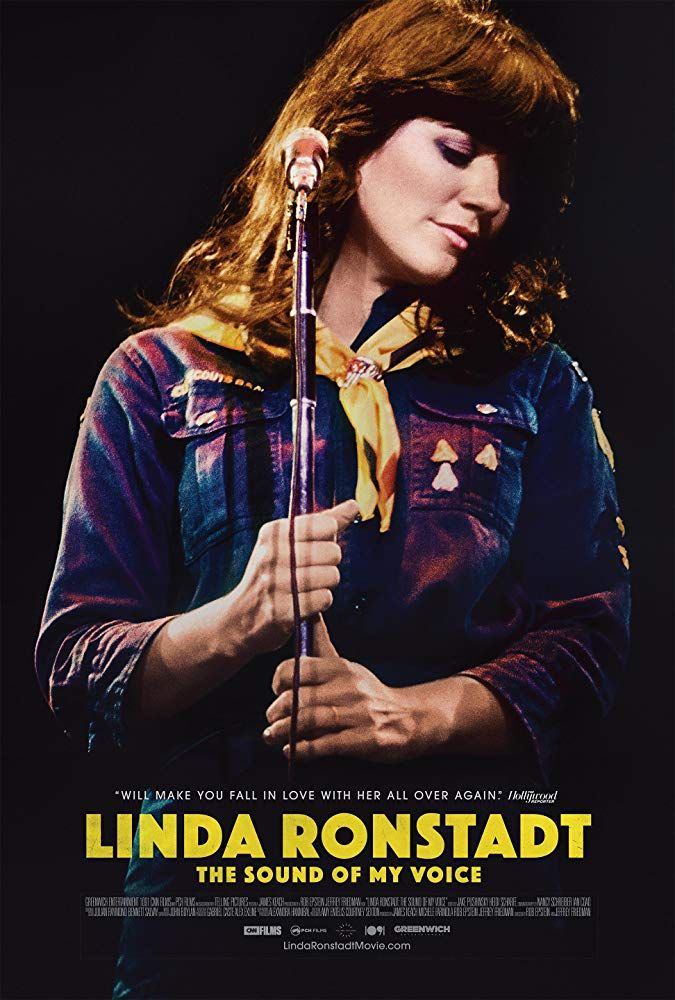
Linda Ronstadt: The Sound of My Voice: Perfection


My wife and I finally had a chance to see the CNN documentary Linda Ronstadt: The Sound of My Voice last night.  It was just perfect - in terms of the time it devoted to Ronstadt's many performances, the sheer range and power of them all, and the many people, after all these years almost as famous as she, with whom she interacted and changed their lives.

I think my favorite part was at the very end, when Ronstadt, unable to perform since 2009 when Parkinson's caught up with her, sings harmony in 2019 with her cousin and nephew.  She insists she isn't really singing, just piecing notes into the harmony, but the beauty of her voice comes through nonetheless.

That ending segment shows that not only she, but her capacity to bring the world pleasure through the sound of her voice, is still very much alive.  All of us, famous and anonymous, sooner or later suffer the ravages of old age.  The only way they can be avoided is via A. E. Housman's "Athlete Dying Young" or the tragic death of Kobe Bryant today.

It was great see Emmylou Harris, J. D. Souther, Jackson Browne, Don Henley, and so many others on the screen, now, and through the decades in which they had such mutually beneficial relationships with Linda Ronstadt.  I was especially pleased to see Peter Asher, long Ronstadt's producer, who now hosts one of my favorite shows on Sirius XM's Beatles Channel, From Me To You.

The good thing about great musical performance, ever since Edison invented the phonograph in 1876, is that we can have them to hear forever.   Add to that the invention of YouTube in 2005, and we now have the visual performances, too.  I know that I and millions of others will continue to enjoy them.

Welcome Up: Songs of Space and TimedigitalvinylCD

Thursday, June 25, 2009

Michael Jackson and the Ever Lasting Record

Michael Jackson died today. He was 50 years old. In his own way, he was the successor of Frank Sinatra in the 1940s, Elvis in the 1950s, the Beatles in 1960s, and no one recording artist or group in the 1970s. He was probably the most like Elvis, in that both died, way too young, of natural causes. Jackson was a voice, an image, and an icon that helped define the decade of the 1980s.

He also help ignite a revolution in video that we are still enjoying. Not only was his "Thriller" album in the 1980s the best selling album in history, his "Thriller" video helped propel MTV to international attention in its early days in the 1980s. This along with HBO and CNN in turn helped launch cable television, which spelled the dethroning of network television as the only game in town. YouTube today can be seen as a beneficiary of the music video revolution that Michael Jackson helped start.

Whenever someone famous and great dies way before his or her time, I always think of A. E. Housman's poem, "To An Athlete Dying Young." Housman's pervesely rational take was that it's not so bad - because, when you die young, you don't live to see someone else exceed your record, and leave your accomplishments in the dust. "Eyes the shady night has shut, cannot see the record cut."

Michael Jackson did see some very rough times after his glory years. But his record and place in history will never be diminished.

Monday, December 1, 2008

Cameron Meets A. E. Housman and Andre Bazin in The Sarah Connor Chronicles

An appealingly old-fashioned, almost sweet episode 2.11 of The Sarah Connor Chronicles tonight, with talk of A. E. Housman (of "An Athlete Dying Young" fame) and the capacity of photography to, as Andre Bazin put it, rescue an image from "its proper corruption" in time - make the image, in contrast to the reality, live forever.

As I discuss in my book, The Soft Edge, years ago I was at a flea market in Stanfordville, NY. I picked up a photograph from a table - I could tell by the kind of photography (cartes de visite) that it was taken back in the 1870s. The photo was of a woman, likely in her late teens, early twenties. And, there she was, looking out at me - across more than 100 years. Could she have had any idea, when that photograph was taken, that someone a hundred years later would be looking back into her eyes?

Cameron and a guy she knows in a library contemplate and discuss such things, as they hunt through a nifty series of photographs, recordings, and early film from the 1920s and after. They discover Myron Stark, whom Cameron recognizes as a Terminator. He accidentally burns down a New Year's Eve celebration - the fire was caused by the electricity that accompanies all travel through time. But he's not a good Terminator at all. He's on a mission - to kill someone at an appointed place in ... 2010. Stark has just arrived at the wrong time.

But it's the right time for this part of The Sarah Connor Chronicles, because it gives us a chance to see even more closeness to humanity in Cameron. She and the guy in the library, who's in a wheelchair, could almost become a couple ... except, well, he's very ill, and although it's not 100% clear why he's gone at the end, he's gone, and Cameron, after all, is still a Terminator.

She figures out what Stark is up to, and finally takes him on in the flesh and circuits, as the photographs of the past merge with the reality in the present. It's poetic - Stark's progress from old photography to real life - and much as A. E. Housman said. The Terminator never had to worry about seeing his record surpassed as he grew older, but neither was he better off dying young, because he was never alive in the first place.

And the same is true of Cameron. Whatever she had slightly going with the guy in the library couldn't last, because he, disabilities of not, was frail and human, and Cameron is something else. Will she miss the guy in library? Maybe the most we can say is she learned something from him, but who knows what, and she shows up next time, with donuts again, to get into the new person in the library's good graces ... this time, a woman her own age.


See also 2.1 Cameron's Back ... 2.2 Firing on All Cylinders ... 2.3 Who, Truly, Is Agent Ellison? ... 2.4: Meet Allison ... 2.5: Unpacking the Future ... 2.6: Terminator Mom, Human Daughter ... 2.7: The Saving Robbery and Cromartie ... 2.8 Perspectives and Death ... 2.9: An Idiot's Guide to Time Travel in The Sarah Connor Chronicles ... 2.10: Riley Lashes Out at Facebook ... 2.12: Sarah Connor Chronicles in Triple Time


The Plot to Save Socrates


"challenging fun" - Entertainment Weekly

"a Da Vinci-esque thriller" - New York Daily News

"Sierra Waters is sexy as hell" - curled up with a good book


more about The Plot to Save Socrates...

Get your own at Profile Pitstop.com


Read the first chapter of The Plot to Save Socrates
.... FREE!

Friday, August 31, 2007

A. E. Housman and a Princess Dying Young: Thoughts About Diana

From Greg Morago's interview with me in yestersday's Hartford Courant ...

... A.E. Housman's poem "To an Athlete Dying Young" couldn't have said it better: Dying in your prime is exceptionally stunning.

"There's something incredibly poignant about someone dying at the top of their game, at the peak of their success, whether it's an athlete or a movie star or a princess," said Paul Levinson, chairman of the department of communications and media studies at Fordham University. "As horrible as it sounds, there's something magical about it."

That magic could have something to do with the fact that a celebrity dying young means an adoring public will never have to see them crippled by time. "You will never see them getting older," Levinson said. "It's a way of keeping them young forever."

And free of scandal in an increasingly complicated world. "Once a person is dead, they're safe. They can't disappoint us by doing anything wrong," Levinson said....


And the key lines from A. E. Houseman ... Eyes the shady night has shut
Cannot see the record cut...


See also Anna Nicole, Phil Ochs, and A. E. Housman


Thursday, February 8, 2007

Anna Nicole, Phil Ochs and A. E. Housman

It's always sad when an athlete or movie star or rock star or any kind of celebrity dies in his or her prime. Potentials cut short. Promises unfufilled.

Phil Ochs, a folksinger and singwriter as great as Dylan, in my view, offered the disquieting thought that we the public might derive some satisfaction from the fall of a glamorous, powerful public figure. In his 1960s masterpiece, "The Crucifixion," Ochs said we build people up to stardom, in part for the weird pleasure of seeing them fall. He was talking most about John F. Kennedy, but he also had Marilyn on his mind.

Anna Nicole Smith was no Marilyn Monroe, any more than Madonna or any modern aspirants to her throne. But Anna captured our interest - her reality show and her life became increasingly difficult to distinguish.

And all-news stations are running nonstop with her death tonight, as Ochs might have predicted.

But there's another wordsmith whose observations may have some pertinence to today's events. The poet A. E. Housman, writing early last century, "To An Athlete Dying Young":

"Eyes the shady night has shut
Cannot see the record cut,
And silence sounds no worse than cheers
After earth has stopped the ears"

Helpful links:

The Collected Poems of A. E. Housman

There but for Fortune: The Life of Phil Ochs by Michael Schumacher

Digg   del.icio.us
reddit
InfiniteRegress.tv