Chuck Todd interviews me about alternate histories
Showing posts with label Chuck Todd. Show all posts

Saturday, January 6, 2024

Tetrads for History and Alternate History


listen to this podcast here, or anywhere you listen to podcasts

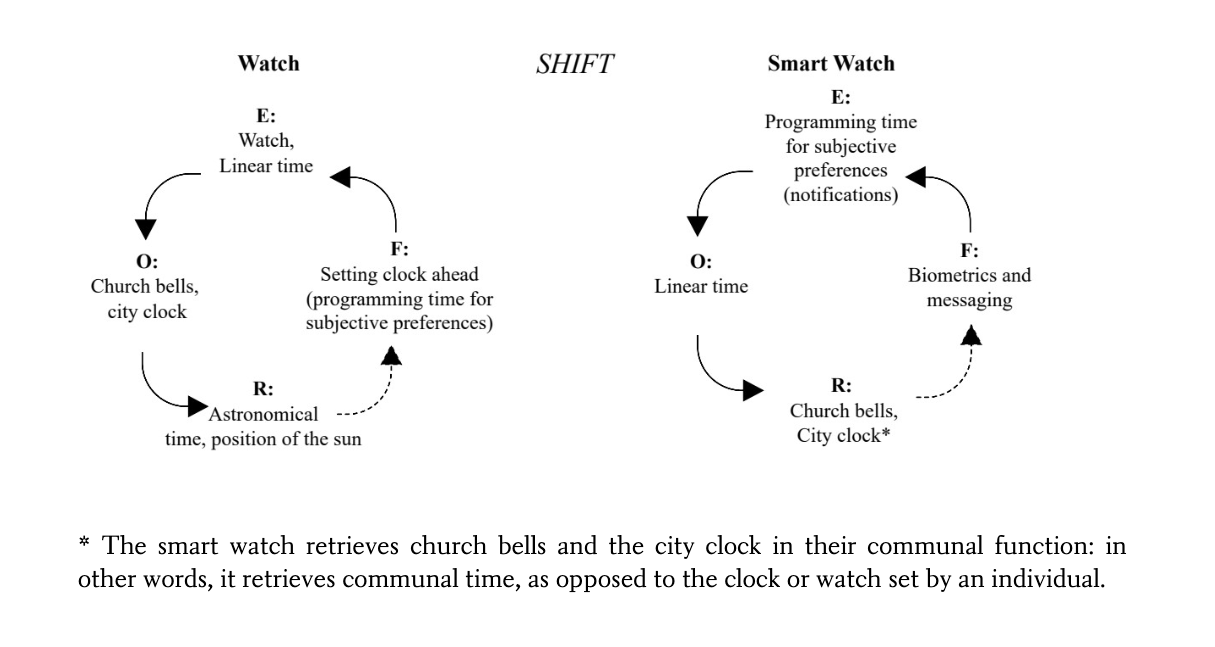
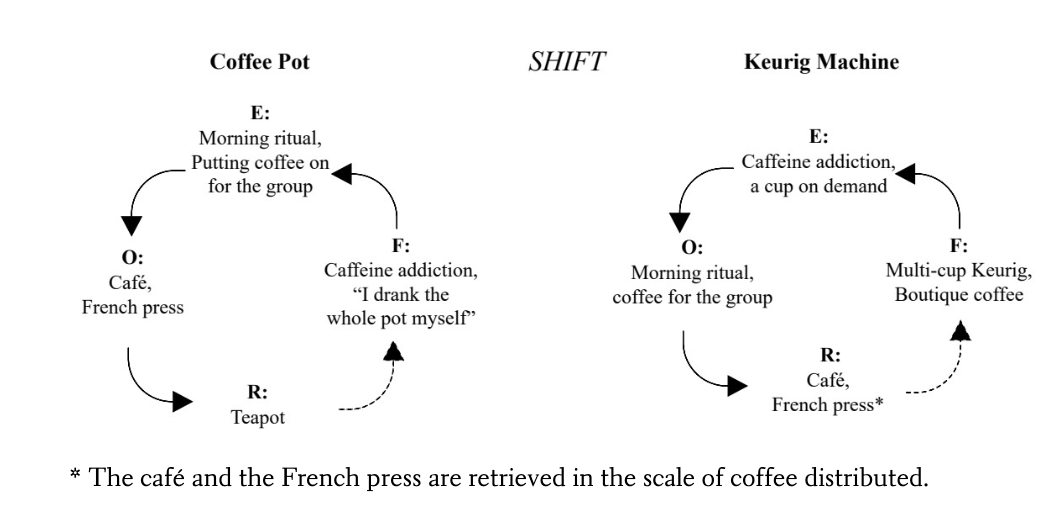
Marshall McLuhan's tetrad is a useful tool for discovering and understanding how human activities, especially media, are connected to one another.  It maps a four-part relationship that happens in any human endeavor.  That activity AMPLIFIES or ENHANCES an aspect or certain aspects of human life; as it does this, it OBSOLESCES an activity that had previously been amplified; and the human endeavor also RETRIEVES an activity that had previously been obsolesced or pushed off center stage; and the amplified activity REVERSES or FLIPS INTO a new activity, at once very different from but closely related to what was amplified.

So, for example:

RADIO AMPLIFIES sound and speech heard instantly across great distances, for the purposes of news, entertainment, etc; OBSOLESCES slower visual media such as newspapers and books; RETRIEVES word of mouth, in-person singing, oral history; and REVERSES into TELEVISION.

And TELEVISION, in turn, AMPLIFIES audio-visual sent instantly across great distances; OBSOLESCES radio (as a source of drama and comedy); RETRIEVES cave painting and all painting, motion pictures, and all forms of writing; and REVERSES into the Internet, smartphones, holography.

In other words, tetrads move through history in cycles -- or, as I have put it, in wheels or spirals.

Now, I've been thinking a lot about alternate history these days -- writing, reading, watching narratives in which some crucial element in the past has been changed.  Last week, I had a great conversation with Chuck Todd on his podcast, in which I said in order for an alternate history scenario to be plausible, its elements must be as close to real history as possible -- that is, everything other than the element of history that you're changing in your scenario.

And I realized last night that history and alternate history reside in a tetradic relationship.  Here's how I see that:

Tetrad for HISTORY

AMPLIFIES: the past, as accurately as we can know it

OBSOLESCES the daily news, focus on the here and now

RETRIEVES: myth, legend, religion, non-scholarly accounts of the past

REVERSES INTO: alternate history -- changing a key element of the past; for both entertainment (fiction) and a better understanding of "real" history (in quotes, because even real history is not the entire story)

Tetrad for ALTERNATE HISTORY

AMPLIFIES: a fictitious better or worse world, obtained by changing a crucial element of history (for example The Man in the High Castle imagines a world in which Germany and Japan won the Second World War).

OBSOLESCES: our immersion in the present, and our view that it was inevitable

RETRIEVES: the notion most of us had when we were children that we could change something just by wanting it

REVERSES INTO: real alternate realities, which recent data from the Webb Telescope suggests could be possible  (see this article in the New York Times which says our universe may be just one universe is a "multiverse").

***

Further reading on Tetrads: Laws of the Media (by Marshall McLuhan, with Preface by Paul Levinson); Tetrad Wheels of Cultural Evolution (Paul Levinson); Tetrad on the Selfie (Paul Levinson); Tetrads and Chiasmus: A Reclamation of the Tetrad Wheel (Matthew S. Lindia & Paul Levinson),

Further reading, listening to, viewing Alternate History: A Fiction Writer's Guide to Alternate History by Jack Dann; Paul Levinson's review of A Fiction Writer's Guide to the Alternate History; Paul Levinson's interview with Jack Dann; Paul Levinson's interview with Rufus Sewell, who starred in The Man in the High Castle series on Amazon Prime Video; Chuck Todd's interview with Paul Levinson about alternate histories; It's Real Life (alternate history about The Beatles by Paul Levinson, made into a radio play) 

More Tetrad Wheels (from Lindia & Levinson)


Wednesday, December 29, 2021

Meet the Alternative History: What If Hillary Clinton Had Run for President in 2004?


Doubling back to review the second episode of Chuck Todd's Meet the Alternative History podcast -- the first was about what if Bill Clinton had resigned in 1998, the third about what if JFK had lived, which I reviewed before the second episode because the topic is so transcendent.  This second episode finds Todd talking to Curtis Sittenfeld, whose 2020 novel Rodham (which I've yet to read) is an alternate history in which Hillary and Bill don't marry.

The conversation about the novel is fun and a good entree about how authors ply their craft.  The idea that Hillary Rodham would have had an incandescent public life not as Hillary Clinton is of course a paean to Hillary, and one which certainly seems plausible.  But I thought the real payoff in this podcast episode comes when the two discuss Todd's notion that Hillary Clinton, pursuing the exact same path as she did in our reality up until 2004, might well have won the U. S. Presidency had she run for that office that year.

Among the nuggets Todd reveals in that conversation is what David Axelrod told him about something that happened in 2009: that Trump had called Axelrod offering to run the early Obama dinner which the Salahis notoriously crashed.  Axelrod never returned (or was very slow to return) Trump's call.  Trump in turn didn't turn against Obama until a year or two later.  Todd says Axelrod wondered: could Trump have been an ally of Obama and the Democrats had Axelrod graciously accepted Trump's offer back then?

It's a fascinating conjecture about the very stuff of alternate history: little, seemingly inconsequential interactions or non-interactions that can have massive effects on subsequent history, aka the butterfly effect.  If ever those was a person in politics whose path was filled with those butterflies it would be Hillary Clinton.  She came razor close to winning the Democratic primaries in 2008, and in fact won the popular vote in 2016.  Todd also offers his view that, fifty years from now there may well be more books written about Hillary than Bill, and he may be right.

See also Meet the Alternative History: What If Bill Clinton Had No Resigned? and Meet the Alternative History: What If JFK Had Lived?

Listen to Meet the Alternative History on Spotify, Goodpods, or Podchaser


Meet the Alternative History: What If JFK Had Lived?


A superb second episode of Chuck Todd's Meet the Alternative History podcast, in part because Todd's conversation was with Michael Beschloss, the de facto Historian Laureate, and  in part because their main topic was what if John F. Kennedy had not been assassinated, pretty much the gold standard or apex of time travel objectives (see my Loose Ends) and alternate history speculation, informed and otherwise.

My two favorite consequences of JFK surviving in this highly informed conversation were

  • JFK ends the Vietnam War in 1966, after being elected to a second term (a sure thing) and after it was clear that the U. S. was fighting a losing battle over there.  Beschloss explains that Kennedy didn't have the do-or-die commitment to not backing down in a military confrontation that Lyndon Johnson and his closest advisors in Texas had in their bones, and Kennedy also would have been better at explaining what was happening in Vietnam to the American people. A wonderful scenario to consider.
  • RFK (also not assassinated) wins the election in 1968 (after first beating Johnson in the primaries) and appoints his brother JFK as Secretary of State.  The very thought is what makes Beschloss so effective as an historian of the real world -- he has a way of mixing the personal with the international that puts life on this planet in a relatable, comprehensible tableau.
One point I wish Todd and Beschloss had considered is what would have to the U. S. space program if JFK had survived?  I always thought that we got to the Moon in 1969 because everyone working on this challenge were determined to fulfill the slain President's commitment to landing a person on the Moon by the end of the decade.  (See my The Missing Ingredient for my thoughts and feelings about the real progress and lack of in the effort to get off this planet.)

Prior to discussing JFK, Todd and Beschloss also briefly considered what would have happened had Lincoln survived.  Their discussion provided an astute political dimension to the many alternate histories about the Civil War, and is well worth listening to in its own right.

Listen to Meet the Alternative History on Spotify or Goodpods or Podchaser

See also Meet the Alternative History: What If Bill Clinton Had No Resigned? ... Meet the Alternative History: What If Hillary Clinton Had Run for President in 2004?

another alternate space travel history

                                 The Loose Ends Saga


Thursday, December 23, 2021

Meet the Alternative History: What If Bill Clinton Had Resigned in 1998?: Political Analysis Meets Alternate History


I don't usually review podcasts here.  But given my love of alternate history -- as reader, viewer, interviewer, reviewer, and writer -- how could I resist.  I saw Jeff Greenfield this afternoon on Meet the Press with Chuck Todd, talking about the special four-episode Meet the Alternative History series on Chuck's Toddcast, and I just finished listening to the first episode.

First, a word about how I've come to be such a devotee of alternate history.  As an author of time travel science fiction, it's hard not to encounter alternate history, since any trip to the past is always on the verge of engendering an alternate history (see this Zoom lecture I gave last week to a Science Fiction and Philosophy course in Germany for more on that).  Sometimes the consequences can be major (you stop the assassination of JFK), sometimes they're just a tasty flourish (I had Joe Biden elected President in 2008, in my 2014 novel, Chronica).  As a reader and viewer, Philip K. Dick's 1962 The Man in the High Castle (in which the Axis powers won World War II) is among my all-time favorite novels, and the Amazon Prime series adaptation of the novel among my all time favorite television series (see my in-depth interview with Rufus Sewell, who starred in the series).  So alternate history fiction is as familiar and welcome to me as a walk on the beach on Cape Cod Bay, or a cool sunny day anywhere.

To be clear, the conversation between Todd and Greenfield in this podcast episode is not alternate history per se -- or not "alternative" history, an alternate name for alternate history which I don't like as a name as much as alternate history.  The conversation is rather, just that, a conversation.  But it's a very informed conversation, in which Todd and Greenfield consider all the political ingredients and possible political consequences of Bill Clinton resigning in 1998.  Al Gore becomes President.  Would Joe Lieberman have been his running mate in 2000?  Probably not.  It could have been Dianne Feinstein.   And what about 2004?  Would Gore have run again?  Where would Barack Obama have been in 2008, with Gore finishing his second term as President (assuming he ran and won)?  What about Hillary Clinton?  What about Trump?

If politics and alternate history are your cup of tea, this little podcast will be delicious listening.  Not that I agreed with everything Todd and Greenfield said.  Both loved only the first season of The Man in the High Castle on Amazon Prime, whereas I loved it all except the ending of the final season (see, again my interview with Rufus Sewell).  But, though Greenfield has written some alternate history (which I'm now more likely to read), the alternate history of science fiction is neither his nor Todd's speciality.  Politics is.  And the result is a great conversation, bubbling with effervescent scenarios, which I look forward to hearing more of, with additional guests, in the next three episodes.

Listen to Meet the Alternative History on Spotify or Goodpods.

See also Meet the Alternative History: What If Had JFK Lived? and Meet the Alternative History: What If Hillary Clinton Had Run for President in 2004?


Monday, October 3, 2016

Four Rudy Giuliani's on Twitter

I saw this earlier today on Meet the Press, and meant to write about it.

Rudy Giuliani is being interviewed by Chuck Todd, who cites a tweet from Giuliani.

Giuliani says that tweet wasn't by me - that there are four accounts impersonating him on Twitter. Todd says ok, drops the question, and moves on to something else.

What's going on?

Well, if you look for Giuliani on Twitter, you'll indeed find four accounts - actually, more than four - none of which have the coveted blue check mark, which indicates that the account was verified in some arcane way by Twitter.  Donald Trump's account has the check - and that's how we know that @realDonaldTrump  is really Donald Trump and @realDoneldTrump  is not.

I'm too lazy to paste the four bogus Giuliani accounts here - you can easily find them yourself - but, since indeed none have verifying check marks, I'll buy that none are really Giuliani.  But this begs the question of: why doesn't Giuliani get his own, real verified account?

Chuck Todd, as he often does, failed to follow up when Giuliani denounced the tweet as not his.   So we're left guessing why Giuliani doesn't have a check mark.   Is he on Twitter by some other name? Did Twitter not deign to give Giuliani a check mark?  (Hey, it happens - I don't have check mark on my @PaulLev account either.)

But whatever the reason, the result led to a signal moment in television news today, when the flagship Sunday news show of them all - Meet the Press debuted on NBC in 1947 - had to withdraw a question to a guest because it was about a tweet that in fact the guest didn't make, even though there are four accounts on Twitter tweeting under the guest's name.

More evidence for what I've said in McLuhan in an Age of Social Media about Twitter having toppled television as the cutting edge medium for delivery of news, and everyone other than the people on television knowing this.

Thursday, June 5, 2008

MSNBC Had Best Coverage of the Primary Campaigns

This is not a statistical analysis, but the impressions of one viewer - me - who happens to be a Professor of Communication and Media Studies at Fordham University in New York City, and author of a whole bunch of books about the media.

I'm thinking MSNBC had far and away the best coverage of the primary campaigns - far better than its CNN and Fox competition.

Here's why:

1. Tom Brokaw, Brian Williams, and Tim Russert commenting on the nights when the votes are counted: No other cable station or network has that kind of fire power - the current network news anchor (Williams), the previous network news anchor (Brokaw), and, just for good measure the host of Meet the Press (Russert). CNN and Fox have no parent network such as NBC to draw upon.

2. The coverage of MSNBC during the day is top-notch, even extraordinary. Andrea Mitchell interviews movers and shakers whenever she is on, which is often. (Her interview with Manhattan Congressman Charlie Rangel yesterday broke new ground in what was happening with Hillary Clinton, to give just one example.) Meanwhile, Nora O'Donnell and David Shuster, who also have shows on MSNBC during the day, are first-class political reporters. At best, CNN and Fox's day people may be as good as Contessa Brewer and Monica Novotny on MSNBC - but usually not.

3. Chuck Todd is outstanding as a political and statistical analyst on MSNBC. CNN makes a good showing with John King at the magic board, and Bill Schneider's political analysis - call that a draw, maybe. Frank Luntz on Fox is a distant third.

4. The prime-time lineups are about the most equal. Larry King on CNN is in a (good) class by himself. Britt Hume and Bill O'Reilly on Fox are certainly powerful commentators, and Hannity & Colmes are ok. (I'm not taking political positions here, just assessing power on television.) But Chris Matthews on MSNBC is right up there, too. And Keith Olbermann right after Matthews is an imposing presence, too. And for politics, David Gregory and Dan Abrams on MSNBC are a lot better than Greta Van Susteren on Fox, and, for my money, better than Anderson Cooper on CNN, one of its stars.

5. All three cable operations get good guests for regular political commentary. David Gergen on CNN is probably the best - adviser to umpteen Presidents - but Pat Buchanan and Joe Scarborough on MSNBC hold their own, and Newt Gingrich and Karl Rove on Fox News are nothing to sneeze at.

All in all: MSNBC is well ahead in two of the five categories above, and close to equal and sometimes better on the other three.

Prediction: If MSNBC keeps this up during the ensuing General Election campaign, it will be the #1 cable news network.

Advice: MSNBC has wisely moved its "Doc Block" to the midnight hour. I'd recommend removing it completely.

Thursday, November 1, 2007

Now Obama's Poll Results Are Denigrated by a "Professional" Pollster

And in the latest denigration of a network's own post-debate poll results by someone on that very network -

Chris Matthews just mentioned on MSNBC's Hardball that Barack Obama won the poll that MSNBC conducted after the Democratic Presidential debate on Tuesday-

To which Chuck Todd, MSNBC's "official" pollster replied - that poll was done with cell phones, via which Obama's supporters could keep pounding the call keys...

To which Matthews responded - like in the 1936 Literary Digest poll...

To which I will respond:

No, Chris, not like that 1936 poll at all, which was supposed to be a poll of a randomly selected part of the voting population, but was skewed or biased because it was conducted from lists of automobile owners and people who had telephones in their homes, and only very rich people had those luxuries in those days, so the Literary Digest poll wrongly showed the Democrat FDR losing...

Which has nothing in common with MSNBC's post-election poll - except that it, too, was conducted by phone. But it was never designed as a randomly conducted poll.

What Chris should have said to Chuck Todd: wrong, callers can't cast votes more than once on the same phone...

Well, at least Ron Paul now has company - now Obama's supporters, like Ron Paul's, are discounted because they participate in a poll that a network conducts, and then expresses no confidence in because they don't like the results.
InfiniteRegress.tv