reviewing Black Doves; Dark Matter; Dept. Q; Detective Hole; Dexter: Resurrection; For All Mankind; Foundation; Hijack; Memory of a Killer; MobLand; Outlander; Paradise; Presumed Innocent; Severance; Silo; Slow Horses; Smoke; Star City; Star Trek: Strange New Worlds; Tehran;The: Day of the Jackal, Diplomat, Last of Us, Night Agent; Your Friends & Neighbors +books, films, music, podcasts, politics
George Santayana had irrational faith in reason - I have irrational faith in TV.
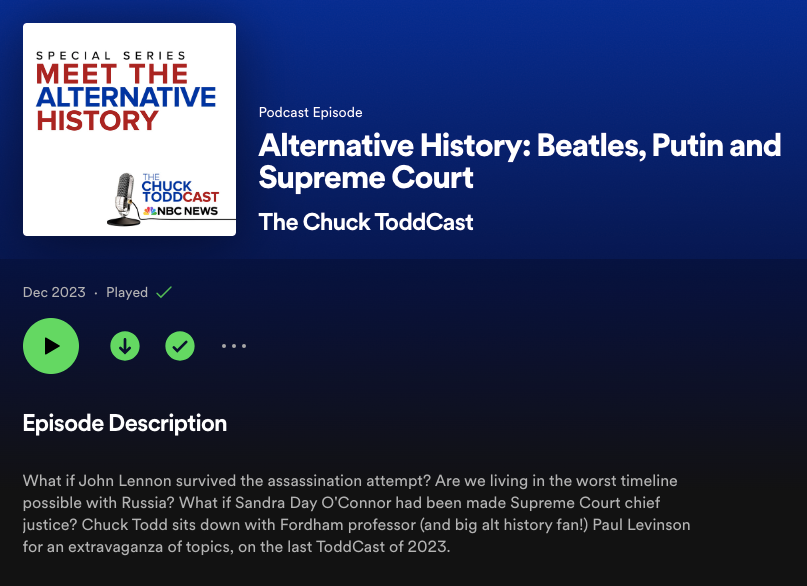
Chuck Todd interviews me about alternate histories
"Paul is original his books and music are different than the norm -- they are clever!" -- Billy J. Kramer🎶
"a wild ride" -- Michael McLuhan 🎶
"now I’m desperate to hear songs from the Asimov/McCartney musical" -- Thomas MacFarlane, The Beatles and McLuhan and Lennon and McCartney: Painting with Sound 🎶
""I got so hooked that I stayed up way beyond my bedtime and read it in one go. It was not just extremely entertaining (I started looking forward to the Tom Petty phone calls) but also a nifty take on averting the grandfather paradox." Geoffrey Winthrop-Young, Kittler and the Media🎶
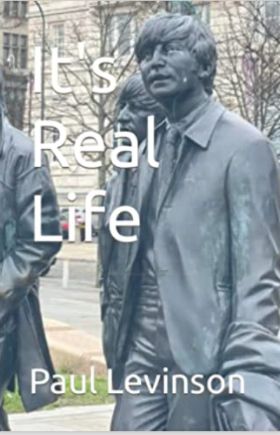
"Paul Levinson's It's Real Life is an incredibly unique and captivating peek behind rock and roll's mysterious curtain. The idea that the story delves into an alternate world adds to its page-turning intrigue. Highly recommended!" -- Steven Manchester, #1 bestselling author, The Menu 🎶
"brilliantly entertaining ... it’s no wonder this novel is such a transportive experience: it does exactly what our favorite songs do. It transports us, makes us remember, and wish ... you couldn’t find a better escape than Paul Levinson’s It’s Real Life." -- Anthony Marinelli, Amazon 🎶
"one of my favourite moments treats us to a Beatles concert in Central Park" -- Keith Soltys, Core Dump 🎶
"a fascinating tale of what could have been had John Lennon not been murdered ... a passionate celebration of a musical genius whose life was prematurely cut short ... a science fictional celebration [by] a master of speculative fiction and alternate reality, Paul Levinson" -- Chris Cosmain, Novikov Windows and The Amazon Anomaly 🎶
"Such a wonderful story! I grew up as a real science fiction fan and time travel and alternative history has always been a favorite SF genre of mine. The story offers such a speculative piece that keeps one thinking. A detective story mixed with all of this. Just a wonderful story. With synchronicity mixed into it and the mention of Roots of Coincidence, one of my favorite books from long ago. In many ways, a story for our times after Covid as many think we are living in some alternate reality or alternative history." -- John Fraim, Amazon 🎶
"What would you do if you came from an alternate reality in which John Lennon was never killed — and you became accidentally aware of our own universe? This excellent, eerie novel explores that question in ingenious style. It’s a page-turner with philosophical heft and a great sense of rock history (not to mention some surprise cameos by Lennon, David Bowie, Leonard Cohen, and other luminaries). Highly recommended for fans of Philip K. Dick and/or the Beatles." -- SVL, Goodreads 🎶
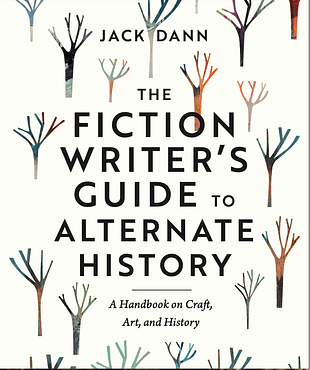
"Paul Levinson's It's Real Life is a page-turning exploration into that multiverse known as rock and roll. But it is much more than a marvelous adventure narrated by a master storyteller...it is also an exquisite (and absolutely non-didactic) meditation on the very nature of alternate history." -- Jack Dann, A Fiction Writer's Guide to Alternate History 🎶
=====================
Get the novel on Kindle, paper, or in hardcover here.
listen to this podcast here, or anywhere you listen to podcasts
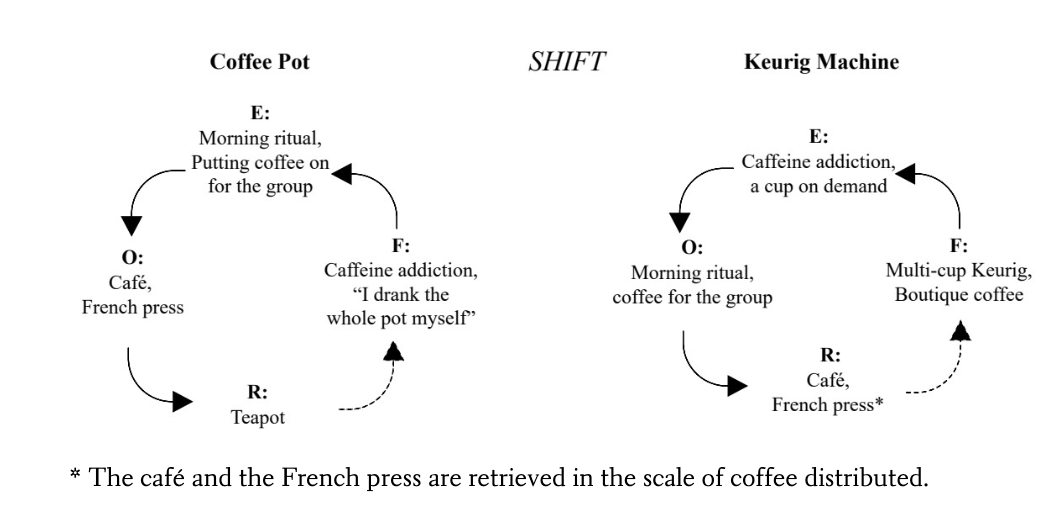
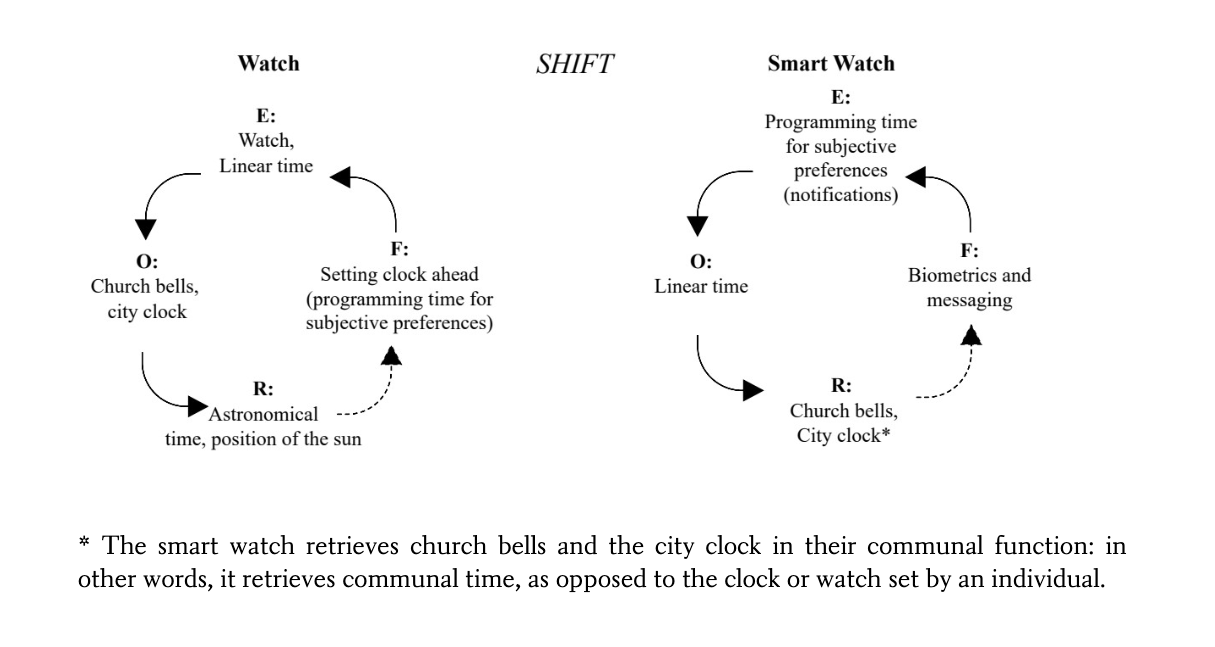
Marshall McLuhan's tetrad is a useful tool for discovering and understanding how human activities, especially media, are connected to one another. It maps a four-part relationship that happens in any human endeavor. That activity AMPLIFIES or ENHANCES an aspect or certain aspects of human life; as it does this, it OBSOLESCES an activity that had previously been amplified; and the human endeavor also RETRIEVES an activity that had previously been obsolesced or pushed off center stage; and the amplified activity REVERSES or FLIPS INTO a new activity, at once very different from but closely related to what was amplified.
So, for example:
RADIO AMPLIFIES sound and speech heard instantly across great distances, for the purposes of news, entertainment, etc; OBSOLESCES slower visual media such as newspapers and books; RETRIEVES word of mouth, in-person singing, oral history; and REVERSES into TELEVISION.
And TELEVISION, in turn, AMPLIFIES audio-visual sent instantly across great distances; OBSOLESCES radio (as a source of drama and comedy); RETRIEVES cave painting and all painting, motion pictures, and all forms of writing; and REVERSES into the Internet, smartphones, holography.
In other words, tetrads move through history in cycles -- or, as I have put it, in wheels or spirals.
Now, I've been thinking a lot about alternate history these days -- writing, reading, watching narratives in which some crucial element in the past has been changed. Last week, I had a great conversation with Chuck Todd on his podcast, in which I said in order for an alternate history scenario to be plausible, its elements must be as close to real history as possible -- that is, everything other than the element of history that you're changing in your scenario.
And I realized last night that history and alternate history reside in a tetradic relationship. Here's how I see that:
Tetrad for HISTORY
AMPLIFIES: the past, as accurately as we can know it
OBSOLESCES the daily news, focus on the here and now
RETRIEVES: myth, legend, religion, non-scholarly accounts of the past
REVERSES INTO: alternate history -- changing a key element of the past; for both entertainment (fiction) and a better understanding of "real" history (in quotes, because even real history is not the entire story)
Tetrad for ALTERNATE HISTORY
AMPLIFIES: a fictitious better or worse world, obtained by changing a crucial element of history (for example The Man in the High Castle imagines a world in which Germany and Japan won the Second World War).
OBSOLESCES: our immersion in the present, and our view that it was inevitable
RETRIEVES: the notion most of us had when we were children that we could change something just by wanting it
REVERSES INTO: real alternate realities, which recent data from the Webb Telescope suggests could be possible (see this article in the New York Times which says our universe may be just one universe is a "multiverse").
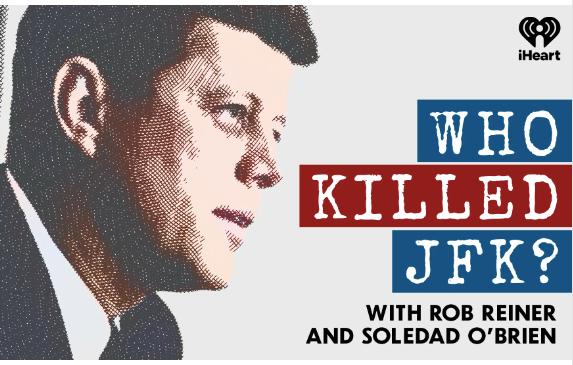
Rob Reiner and I have a lot in common regarding the assassination of John F. Kennedy on November 22, 1963 -- the awful anniversary of which is tomorrow, as I write this. Reiner first learns about the assassination, as he tells us in the podcast he's doing with Soledad O'Brien, in his high school physics class, when he was 16. I first found out about the assassination in my calculus class, which I was taking as a freshman in the City College of New York, when I too was 16. (In fact, we were both born in March 1947 in The Bronx. I was in the "SP"s, which New Yorkers might recall meant that you skipped 8th grade, which would explain why I was a year ahead of Reiner.) We both read and were very impressed by Mark Lane's Rush to Judgement, the 1966 book that attacked the Warren Commission's conclusion that one man, Lee Harvey Oswald, had been responsible for killing JFK. And most important, Reiner and I both felt and feel to this very day that the Warren Commission and the American government has been lying to us all these years about who killed JFK.
To be clear about the impact that assassination had on me, Reiner, and who knows how many more Americans and people around the world, that assassination was "the end of the innocence," to quote one of Don Henley's best songs, about the end of a true love affair. All of us 16 and younger and no doubt at least some years older found we instantly had a new view of the world, a sad, wise, and cynical view, the moment we heard Walter Cronkite or whoever it was deliver this terrible news. Cynical because, well, it's tough to see your optimism shattered, leaving you feeling naive to have had it in the first place. No amount of Beatles and landing on the Moon could change that, and the murder of John Lennon in 1980 only reinforced that horror in the soul.
Reiner seeks, if not to remedy that (it can never really be remedied), at least perhaps to reduce it, by getting at the truth of what really happened on November 22, 1963. In the first two episodes of his podcast, which O'Brien helps him deliver, Reiner explains how and why the CIA came to loathe and fear JFK. He didn't back it up to its satisfaction when it tried to wrest Cuba from Castro, and he let that attempt end in the Bay of Pigs. He started working hard to get a real peace with the Soviet Union, when he saw how close we came to destroying our civilization in the Cuban missile crisis. Reiner tells us of the note the newly widowed Jackie sent to Khrushchev. That's all in the first episode. And in the second, we learn of the various attempts, from people ranging from Geraldo Rivera and Dick Gregory, and others I hadn't heard of before, like Dick Russell, to get at the truth.
I'll be listening to every remaining episode of this important podcast. Its tone and intelligence scratch an itch that will always be there. I have no idea if Who Killed JFK? will address a question I've had since that day in Dallas when the curtain came down on my unbridled optimism about the good guys always winning. Why didn't Robert F. Kennedy, who remained Attorney General until September 1964, do everything in his power to find out what happened to his brother? Perhaps he would have, as President, if he hadn't been murdered himself in 1968.
Added 22 November 2023: Review of Episode #3
And today is the 60th anniversary of JFK's assassination. I would have thought about him and that heinous event on this day, anyway, but having listened to and reviewed the first two episodes of Rob Reiner and Soledad O'Brien's podcast last night, the assassination and the government "narrative" about it has been especially on my mind.
In the third episode, Reiner says "narrative" is a good word for what our government told us about the assassination, because so much of the government's story was fiction. Coincidentally, I've been thinking and reading a lot about alternate history recently -- and writing some of it -- and I found myself agreeing with the authors quoted in Jack Dann's Fiction Writer's Guide to Alternate History that a lot of our so-called real history is fiction.
In the third episode of Who Killed JFK?, Reiner details how the findings of what he aptly calls "the most important autopsy in American history" were not only kept from the American people, but deliberately bent to support what the government didn't want us to know -- that more than one shooter was firing at JFK in Dallas 60 years ago. We learn that Dr. James J. Humes, one of the two pathologists who performed the JFK autopsy, burned his first autopsy report, presumably because it contradicted the "single bullet" theory that our government was pushing. Reiner, O'Brien, and the experts they interview systematically explain why the single bullet theory is absurd -- way too much damage was done to Kennedy and John Connally, who was sitting in the front seat of Kennedy's limousine. We also hear convincing testimony that some of JFK's wounds came from the front, obviously impossible if Lee Harvey Oswald, firing from behind, was the only shooter.
So, today, November 22, has been and always will be a sad day for those of us who were cognizant the day that JFK was assassinated. But the Who Killed JFK? podcast is a welcome ray of hope that maybe we're finally getting close to the truth of what happened 60 years ago.
Welcome to Light On Light Through, Episode 359, in which I interview Jack Dann about his book The Fiction Writer's Guide to Alternate History and other things science fictional.
Relevant links:
Jack Dann's first publication, his 1974 Wandering Stars anthology
How Paul Levinson discoveredWandering Stars back in 1974
I've always had a keen love of alternate history science fiction. Amazon Prime Video's The Man in the High Castle series (2015-2019), a mostly brilliant adaptation of Philip K. Dick's path-breaking 1962 novel, in which the Axis won the Second World War, was pretty much from the moment I started watching it easily the best drama I've ever seen on television, and still is. (Here's an interview I did with Rufus Sewell in 2021 about the leading character he played in the series, one who wasn't in Dick's novel.)
But as much as I love alternate history, I didn't really start writing it until "It's Real Life," a story in which John Lennon wasn't murdered and The Beatles were still together and making music in 1996. That story was a finalist for the Sidewise Award, bestowed today for the best "short form" published in 2022. An ideal time for me to read and review Jack Dann's Fiction Writer's Guide to Alternate History.
The heart of this remarkable book is a colloquium, conducted in the previous decade among the leading writers of alternate history. I heard of all of them, met some of the them, and have read something between between all and some of their alternate history fiction. They respond to Jack Dann's prompts, and I don't think they saw each other's responses. They differ on what the "rules"of alternate history should be, including about whether there should be rules at all, consciously or unconsciously followed. They of course draw upon their own works as examples, in seeming violation of I. A. Richard's warning against the "intentional fallacy," that is, relying upon what authors say they intended in their work, but this doesn't really matter, because the authors in Dann's book also talk about work by other authors in the book, as well as authors not in the book, and their arguments can be evaluated without reference to their work.
One of their points that most struck me is Bruce Sterling's (p. 119) that “Commonly they’re [alternate histories] about troubled times in which the author has some kind of solution to offer.” This is exactly why I wrote "It's Real Life": it always seemed to me that the world in which John Lennon was assassinated was a deformation of the way reality was supposed to be, and I wrote the story to give the world a taste of the way it was meant to be. Pamela Sargent (p. 121), makes a similar point, writing that “Back in the early 1990s, I gave a talk at one convention in which I said that I had the persistent impression that all of us were living in a weird variant that had branched off from the main continuum," as does Paul Di Filippo (p. 97), who tells us that “I think the best such [alternate history] stories arise from creating a world the author would like to at least explore or even inhabit."
These and numerous other insights and explications in Dann's handbook are invaluable to authors at any stage in their careers. If they're just starting out, it provides a blueprint -- which as Dann makes clear, they needn't follow if it goes against their grain -- and if you're an old hand, you'll find the comfort of better understanding just why you chose to do this or that in the narrative you just wrote, or maybe just finished, because you started it a long time ago, a crucial way of writing for many a writer, also discussed in Dann's book.
Another point of discussion of special interest to me, because I've written half a dozen books on media history, and that's a lot of what I teach as a professor at Fordham University, is what these authors of alternate histories think of our "real" history. I put "real" in quotes because, as George Zebrowski (p. 120) notes, and I agree, “Tentative history is all we have, and in science fiction we can rehearse as many as we can imagine.” Yet to make this issue even more provocative, while Kim Stanley Robinson (p. 90) agrees that "all history is a fiction, and as such, maybe it’s always an ‘alternative history,’” John Kessel (p. 83) insists that “I want the counterfactual to illuminate some element of real history,” and I agree with that, too. Indeed, I think for a counterfactual or alternate history to work (some of the authors argue these have two different meanings, I do not), the story has to have some number of real signposts, to keep our appreciation of the alternate history on track.
Jack Dann of course also writes tellingly about his own alternate histories. He talks about how Milton's Paradise Lost and John Martin's illustrations of them a century later were inspirations and building blocks for Dann's own Shadows in the Stone (2019). All authors need inspirations, they're obviously essential, but you can't create them. The best you can do is recognize them and then act upon them when you're ready. In effect, the whole of The Fiction Writer's Guide to Alternate History is a treatise, in part multi-authored, of what inspires the imagining and writing of alternate histories.
I realized the moment I started writing "It's Real Life" that I was inspired by Peter Jackson and his The Beatles: Get Back documentary. I saw its three parts the instant they were released on the Thanksgiving weekend in 2021, and wrote "It's Real Life" in January 2022. In a way, that documentary is both an alternate history and it epitomizes the interplay of alternate and "real" history that is one of the central themes of Dann's book. What were The Beatles really like as they stood on edge of disbanding in the history we all remember and most of us deeply regret. Jackson has hours of outtakes recorded when The Beatles were making the depressing Let It Be documentary that proves they were far happier than we've been told and we "remember". Or were they? After all, they did break up.
I was so energized by Jackson's documentary that I wrote an alternate history in which The Beatles didn't break up. I've expanded it into a short novel that I haven't yet shown to anyone, except my wife, who read an earlier draft. I'll no doubt go over it at least a few more times before I decide what to do with it. Will I be influenced by the exhilarating experience I just had reading Jack Dann's Fiction Writer's Guide to Alternate History? Will I follow or break some of the rules that Dann and many of the authors in that book say can and maybe should be broken? I don't know. But you can find out by reading The Writer's Guide to Alternate History now, and It's Real Life the novel whenever it's published.
This came up at Monday's conference on Touching the Face of the Cosmos: On the Intersection of Space Travel and Religion, which I organized at Fordham University. It arose in my answer to a question I posed to the panel on "Science Fiction Looks at Space Travel and Religion" about what was each panelist's most memorable, profound, or otherwise significant example of a science fiction story, book, movie, or TV series they read or saw, in which the subject was space travel and religion. On the panel with me were David Walton, Alex Shvartzman, and Lance Strate. Among others in the audience were conference participants Guy Consolmagno, Molly Vozick-Levinson, Brittany Miller, Michael Waltemathe, James Heiser, Mark Shelhamer, and Tom Klinkowstein.
It was a tough question to answer - there are so many good candidate stories on page and screen - but I figured I owed my panelists and the audience my own answer. That was actually easy for me - it was Jack Dann's Wandering Stars: An Anthology of Jewish Fantasy and Science Fiction, which is just what it sounds like. I found it in the Science Fiction Shop - a bookstore I discovered on Hudson Street in Greenwich Village one afternoon in 1974. I had grown up on science fiction in the 1950s and early 1960s. (I have many times told the story of how I was banned from my Junior High School Library in 1958 by Mrs. Dayson, the librarian, because I refused to read anything other than science fiction.) But by the early 1970s, I was more into music and protesting against the Vietnam War than I was into science fiction. Jack Dann's anthology changed all that forever - rekindled a passion for science fiction (soon as a writer as well as reader) that would never leave me. And it also deepened my interest in Judaism - my religion - at least a little.
Isaac Asimov wrote the Introduction to Wandering Stars - come to think of it, that's likely what gave me the idea to get Asimov to write the Preface to my own anthology, not science fiction, In Pursuit of Truth: On the Philosophy of Karl Popper, nearly ten years later. The other book that I bought in the Science Fiction Shop that day was Joseph F. Patrouch's The Science Fiction of Isaac Asimov. It was the first lengthy assessment of Asimov's work I'd ever read. I devoured it. I still think it's the best.
Jack Dann and I have become friends (and he has a wonderful novella in the first Touching the Face of the Cosmos volume). I exchanged paper mail with Joseph Patrouch some decades ago. The Science Fiction Shop has long since closed. But those books by Dann and Patrouch will live forever.
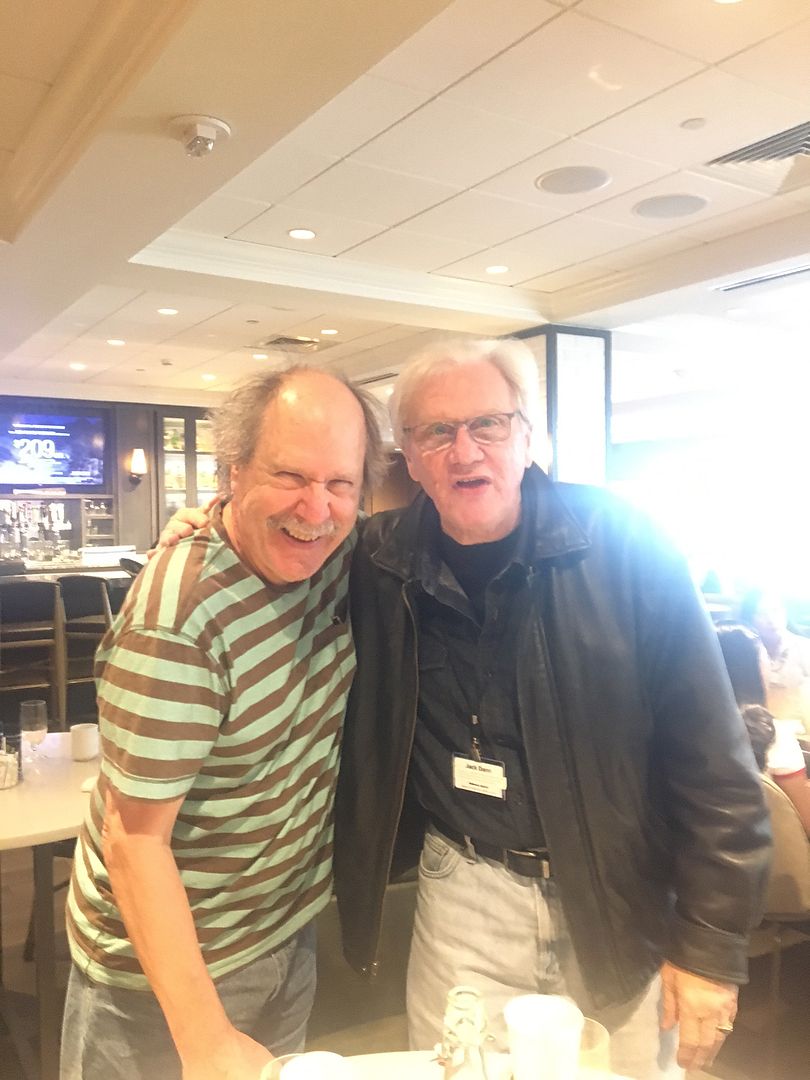
Paul Levinson & Jack Dann at Readercon 2019; photo by Tina Vozick