My wife and I saw The Trial of the Chicago Seven on Netflix on Saturday. Having lived through the real trial of the Chicago Seven (originally Eight) in 1969-1970, we thought there was a little too much fiction in this docu-drama to be 100% successful and effective. Nonetheless, it was powerful viewing.
reviewing Black Doves; Dark Matter; Dept. Q; Detective Hole; Dexter: Resurrection; For All Mankind; Foundation; Hijack; Memory of a Killer; MobLand; Outlander; Paradise; Presumed Innocent; Severance; Silo; Slow Horses; Smoke; Star City; Star Trek: Strange New Worlds; Tehran;The: Day of the Jackal, Diplomat, Last of Us, Night Agent; Your Friends & Neighbors +books, films, music, podcasts, politics
George Santayana had irrational faith in reason - I have irrational faith in TV.
Monday, October 19, 2020
The Trial of the Chicago Seven: A Little Too Much Fiction in this Docudrama
My wife and I saw The Trial of the Chicago Seven on Netflix on Saturday. Having lived through the real trial of the Chicago Seven (originally Eight) in 1969-1970, we thought there was a little too much fiction in this docu-drama to be 100% successful and effective. Nonetheless, it was powerful viewing.
Tuesday, September 8, 2020
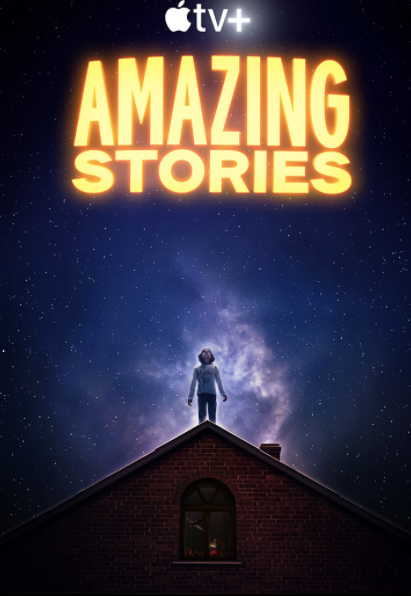
Amazing Stories (2020)1.3: "Dynoman and the Volt!": Sweet Superpowers

And this third episode has something else, something very special, with a capital "S" in the stars. It is Robert Forster's very last appearance on screen, made before his untimely death at age 78 in October 2019. I've loved Forster's work ever since his great appearance in Medium Cool in 1969 -- the cinema verite story of the 1968 Democratic Convention in Chicago -- and he made a memorable contribution to the TV series Heroes.
I mention Heroes because it has the same general theme as "Dynoman," the main difference being that the heroes in Heroes had natural superpowers, in contrast to Grandpa Joe Harris in "Dynoman and the Volt," who acquires his superpowers from a special ring, delivered to him just when he most needed it. That ring results not only in a big adventure, but the psychological reunification of Grandpa Joe with his grandson and son, who also get superpowers from the ring.
In the end, we get a heartwarming story which is more about real family than comic-book heroes, and that was a good thing to see. Thank you, Robert Forster, for bringing the world so many good hours of your great performances. I'm sad that you left us, but happy that you went out on such a profound and nurturing note.
See also Amazing Stories (2020) 1.1: "The Cellar": The Tops ... Amazing Stories (2020) 1.2: "The Heat": Life After Life ... Amazing Stories (2020) 1.4: "Signs of Life": Happy Revivals ... Amazing Stories (2020) 1.5: "The Rift": Time Travel and a Candy Bar
Tuesday, October 15, 2019
El Camino: Flashbacks and Onward

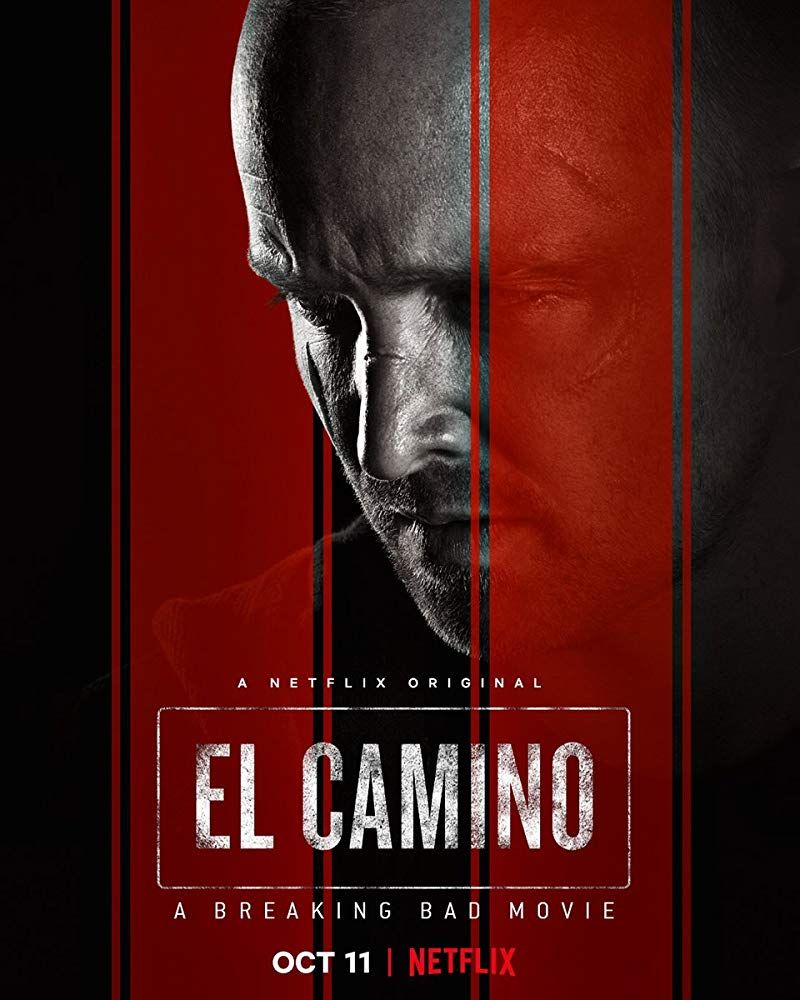
El Camino, aptly described by IMDb as "a sequel of sorts, to Breaking Bad," is nothing but a success, unqualified.
The "of sorts" does amply to El Camino's status as a sequel, and one of the key reasons, perhaps the key reason, why it is so satisfying. Walter (Bryan Cranston), Mike (Jonathan Banks), and Todd (Jesse Plemons), none of whom survived the original series, each appear in El Camino in flashback scenes that we haven't seen before in Breaking Bad. Todd's was much better than Mike's, and Walter's was sheer magic, but all three in-and-of themselves make El Camino eminently worth watching.
Robert Forster, whose character Ed survived the original series, made a crucial and winning appearance in El Camino. He was one of my favorite actors since the groundbreaking Medium Cool, and everything subsequent from Jackie Brown to even Heroes, and had the rare ability to be perfect in every disparate part he played. In a tragic irony which somehow also is in line with Breaking Bad, Forster passed away on the day El Camino debuted on Netflix. RIP, truly.
As for the story of El Camino, I don't want to give any of it away, so I won't talk about the plot. But Aaron Paul does a fine job as Jesse Pinkman, who is appropriately a bit older and wiser and all-around more capable than he was in Breaking Bad. The movie crackles with sarcasm and satire and all kinds of humor interspersed with bullets flying and other life-and-death situations, and is a good additional (very short) season to one of the most original and remarkable series ever on television.
Is there room for another sequel? See the movie and decide.
See also my review of Breaking Bad: The Official Book
And see also Breaking Bad Final Episodes #1: Walt vs. Hank ... Breaking Bad Final Episodes #2: Skylar and Jesse ... Breaking Bad Final Episodes #3: The Ultimate Lie ... Breaking Bad Final Episodes #4: Old Yeller ... Breaking Bad Final Episode #5: Coordinates ... Breaking Bad Final Episode #6: The Knife and the Phone ... Breaking Bad Penultimate: $10,000 for 2 Hours ... Breaking Bad Finale: "I Did It for Me"
Also: Talking about Walter White and Breaking Bad
And see also Breaking Bad Season 5 Premiere: Riveting Entropy ... Breaking Bad 5.3: Deal with the Devil ... Breaking Bad 5.7: Exit Mike ... Breaking Bad Final Half-Season Finale
And see also My Prediction about Breaking Bad ... Breaking Bad Season 4 Debuts ... Breaking Bad 4.2: Gun and Question ... Breaking Bad 4.11: Tightening Vice ... Breaking Bad 4.12: King vs. King ... Breaking Bad Season 4 Finale: Deceptive Flowers
Wednesday, October 23, 2013
The Fifth Estate: First Rate and Important
Now I assume part of this poor attendance can be attributed to a typical weekday night. But some of it is no doubt due to the public's lack of interest in this movie, and/or the negative reviews it's received, and that's a shame.
A lot of the movie is told from the perspective of Daniel Berg, the German info-activist who helped get WikiLeaks going, but who split with Assange when the Manning leaks first hit. Assange has denounced the movie on the grounds that it is based in large part on Berg's book, which Assange of course thinks is biased. You know what? I don't care. Since I wasn't there, I can't possibly know whether Berg's negative assessments of Assange are true. But it doesn't matter, because even if Berg is right, that does not counter-act or erase the enormous and revolutionary good Assange has done.
Among the aspects of WikiLeaks which are verifiable is that no one lost his or her life as a result of the Manning leaks. The movie, however, included a high-tension scene of someone outed by leaks escaping from Lybia to Egypt, with the lives of him and his family in immediate peril. Did this really happen? Perhaps. But the only things we know for sure happened as a result of the huge number of cable documents Bradley (now Chelsea) Manning gave to WikiLeaks is that people in the US State Department and elsewhere were embarrassed. And maybe that's good.
What's certainly good in the movie is this: In one of the best scenes in the movie, the UK Guardian editor (one of the three papers that published the initial leaks) talked about how the fourth estate - journalism prior to the digital age - started when courageous pamphleteers published Parliamentary discussions which were supposed to be secret. In those days, all such governmental deliberations were kept from the public. But how can a democracy work if such deliberations are kept from the people who vote? In provoking questions such as these, The Fifth Estate continues in the tradition of important movies about the media, ranging from Medium Cool to The Social Contract, and television shows like The Hour and The Newsroom.
Our freedoms are indeed predicated on access to information and knowledge. Kings and parliaments even in more democratic societies strove to keep that information from view, but lost those battles in the long run. In today's age, a WikiLeaks or its equivalent is needed to keep our world fully informed. Whether Assange is a nice guy or not is beside the point. What counts is that he and WikiLeaks are fighting that same battle today, on the global level of digital media. And we the freedom-loving public are its beneficiaries.
For more of my views about WikiLeaks, see this live chat several weeks ago on Canada.com ...
Also catch my interview about The Fifth Estate on Bob Mann's Let's Consider the Source this weekend (October 26-28, 2013) on Sirius/XM Radio.
Monday, June 3, 2013
Mad Men 6.10: Medium Cool
We also get a good depiction of McLuhan's global village circa 1968 when Don later in Los Angeles watches the same television coverage of the convention as Megan in New York. The two talk about what they see on the phone. Although they were just two, and the telephone connection was national not global, this is the closest we could get to a real global village in 1968, before the Internet literally allowed anyone watching television anywhere to instantly talk to anyone anywhere else in the world on a moment's notice, just as people can do with neighbors in an in-person village. Mad Men continues to have the resonance with McLuhan it displayed in the first season - explicitly in episode 1.6 - as befits a show about advertising.
Meanwhile, Don in California - with Roger and Harry - gives us yet another alternative dimension bizarro California Mad Men story. In Mad Men, California plays the role of an alternate universe, with Don its primary denizen. Drugs result in Don floating face down in a pool - like the beginning or ending of a California noir movie - but he's not dead, and Roger fishes him out. While he's unconscious in the pool, we get another one of Don's fractured dreams - or nightmares.
Don also coughs on the plane back from California, and this is a worrisome reminder that lung cancer may be in Don's future, not in a dream but in reality. I hope this doesn't happen - a more surprising resolution would be to have Don coughing for other reasons.
Back in New York, it's a pleasure to see Joan exert her will and get face-to-face to reel in a client, Avon, by cutting Pete out of a decisive meeting. This violates company protocol, but as I realized as it was happening, the company cares more about money and clients than it does about protocol. So, if Avon signs up with our gang, Joan will be fine. If not - well, I still can't see Roger and Don allowing any punitive action to be taken against her.
The power battles between the two former companies now united continue to simmer, but the big step forward is nice to see: the company will now be known as Sterling, Cooper, and Partners. This actually helps Pete and Joan, where were partners but not in the company name, and - somewhat surprisingly but maybe not - Don has no problem with the loss of his name in the title. Actually, definitely not surprisingly, because, apropos California, Draper isn't even Don's name. "A rose by any other name would smell as sweet." But no one in Mad Men comes out smelling like a rose, certainly not Don, and that's part of the dark, quirky charm of this series.
See also Mad Men 6.1-2: The Lighter and the Twist ... Mad Men 6.3: Good Company ... Mad Men 6.4: McLuhan, Heinz, and Don's Imagination ... Mad Men 6.5: MLK ... Mad Men 6.6: Good News Comes in a Chevy ... Mad Men 6.7: Merger and Margarine ... Mad Men 6.8: Dr. Feelgood and Grandma Ida ... Mad Men 6.9: Don and Betty
See also Why "You Only Live Twice" for Mad Men Season 5 Finale ... Mad Men Season Five Finale
See also Mad Men Season 5 Debut: It's Don's Party ... Mad Men 5.3: Heinz Is On My Side ... Mad Men 5.4: Volunteer, Dream, Trust ... Mad Men 5.5: Ben Hargrove ... Mad Men 5.6: LSD Orange ... Mad Men 5.7: People of High Degree ... Mad Men 5.8: Mad Man and Gilmore Girl ...Mad Men 5.9: Don's Creativity ... Mad Men 5.10: "The Negron Complex" ... Mad Men 5.11: Prostitution and Power ... Mad Men 5.12: Exit Lane
And from Season 4: Mad Men 4.1: Chicken Kiev, Lethal Interview, Ham Fight ... 4.2: "Good Time, Bad Time?" "Yes." ... 4.3: Both Coasts ... 4.4: "The following program contains brief nudity ..." 4.5: Fake Out and Neurosis ... 4.6: Emmys, Clio, Blackout, Flashback ... 4.7: 'No Credits on Commercials' ... 4.8: A Tale of Two Women ... 4.9: "Business of Sadists and Masochists" ...4.10: Grim Tidings ... 4.11: "Look at that Punim" ... 4.12: No Smoking! ... Mad Men Season 4 Finale: Don and -
And from Season 3: Mad Men Back for 3 and 3.2: Carvel, Penn Station, and Diet Soda and 3.3: Gibbon, Blackface, and Eliot and 3.4: Caned Seats and a Multiple Choice about Sal's Patio Furniture and 3.5: Admiral TV, MLK, and a Baby Boy and 3.6: A Saving John Deere and 3.7: Brutal Edges ... August Flights in 3.8 ... Unlucky Strikes and To the Moon Don in 3.9 ... 3.10: The Faintest Ink, The Strongest Television ... Don's Day of Reckoning in Mad Men 3.11 ... Mad Men 3.12: The End of the World in Mad Men ... Mad Men Season 3 Finale: The End of the World
And from Season Two: Mad Men Returns with a Xerox and a Call Girl ... 2.2: The Advertising Devil and the Deep Blue Sea ... 2.3 Double-Barreled Power ... 2.4: Betty and Don's Son ... 2.5: Best Montage Since Hitchcock ... 2.6: Jackie, Marilyn, and Liberty Valance ... 2.7: Double Dons... 2.8: Did Don Get What He Deserved? ... 2.9: Don and Roger ... 2.10: Between Ray Bradbury and Telstar ... 2.11: Welcome to the Hotel California ... 2.12 The Day the Earth Stood Still on Mad Men ... 2.13 Saving the Best for Last on Mad Men
And from Season One: Mad Men Debuts on AMC: Cigarette Companies and Nixon ... Mad Men 2: Smoke and Television ... Mad Men 3: Hot 1960 Kiss ... Mad Men 4 and 5: Double Mad Men ...Mad Men 6: The Medium is the Message! ... Mad Men 7: Revenge of the Mollusk ... Mad Men 8: Weed, Twist, Hobo ... Mad Man 9: Betty Grace Kelly ... Mad men 10: Life, Death, and Politics ...Mad Men 11: Heat! ... Mad Men 12: Admirable Don ... Mad 13: Double-Endings, Lascaux, and Holes