Chuck Todd interviews me about alternate histories
Showing posts with label Gillian Anderson. Show all posts

Saturday, January 14, 2023

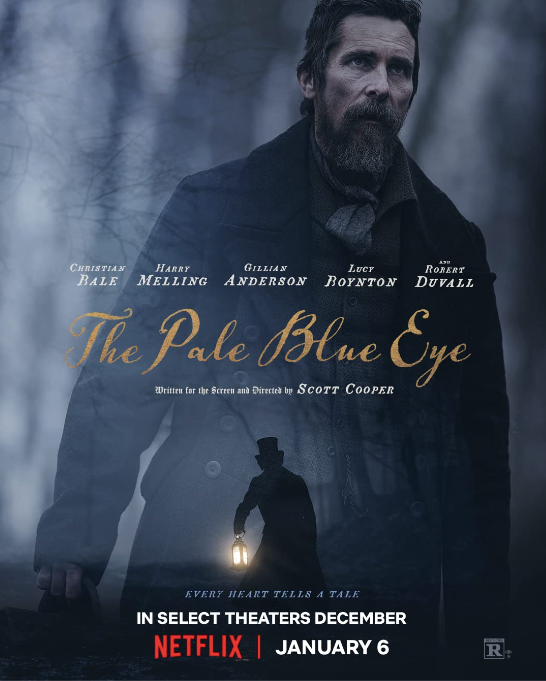
The Pale Blue Eye: Splendid Secret History of Young Poe


A murder mystery with all kinds of twists featuring a young Edgar Allan Poe quoting from Thomas Grey's "Elegy Written in a Country Churchyard," my all-time favorite poem, what more could I ask for?  Well, The Pale Blue Eye has that, as well as a first class story of life at West Point in 1830, so I couldn't ask for much more regarding a movie indeed.

This gem of a movie is in effect a secret history of Poe, that is, a story of what happened to him in 1830 when he was a cadet at West Point and a newly published poet -- a story which could have happened, but no doubt didn't, which is why we don't know anything about it.  We find Poe already a published poet at this time, and his involvement in a case in which hearts and other organs are removed from bodies, and his success in figuring out who the ultimate villain was (who was also and mostly a good guy), provides a brilliant case study of how Poe already had and further developed the chops to become the father of the mystery writing genre in our real history.

[Some very general spoilers ahead ... ]

Meanwhile, the mystery story is first class.  The ultimate solution is that one person was the murderer (for the sake of revenge) and two other people dismembered most of the dead bodies.  This is itself a solution that the real Poe in our history, and for that matter, Agatha Christie, would have approved of.

Like all good secret histories, The Pale Blue Eye offers satisfying anchors to what we know of the real Poe in our history.  The stolen physical heart shows up in our reality as one of Poe's most famous short stories, "The Tell-Tale Heart".  The name of a beloved and major character shows up as title of one of Poe's best-known poems.  And of course there's a raven -- though for all I know, it could have been a crow.

The West Point and surrounding upstate New York ambience in the 1830s feels just right, at least from what I know of it from my late 20th-century early 21st century experience.  There's nothing quite like the Hudson River at this point, with the cliffs and the trees and that upstate shade of green.  John Crowley captured it well in his science fantasy trilogy, as did Scott Cooper who directed and wrote the script of The Pale Blue Eye, based on Louis Bayard's novel of the same name (which I haven't read).  And while we're at it, Harry Melling, whom I recall from the Harry Potter movies and The Queen's Gambit was excellent as Poe, even looking like him, as was Christian Bale, whom I've seen in a ton of movies, as retired NY detective Landor.  Robert Duvall as Professor Jean Pepe and Gillian Anderson as Julia Marquis were pleasures to see.  And Lucy Boynton, whom I don't recall seeing before, was just right as Lea Marquis.  All in all, one stunningly fine cast.

If you're at all a Poe fan, you won't regret seeing this movie.  I'm a huge Poe fan, and count it was one of the best films I've seen in years.


Poe figures in this alternate history novel -- more about it here


Interview with Mark Dawidziak about his book, A Mystery of Mysteries: The Death and Life of Edgar Allan Poe


Thursday, November 19, 2020

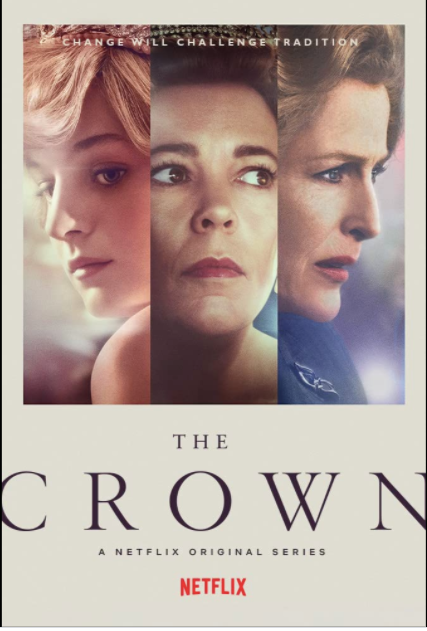
The Crown season 4: Margaret Thatcher and The Queen, Charles and Diana


I thought Season 4 of The Crown, which my wife and I just finished binge watching, was the best of the series so far.  It had two toweringly important stories, each brilliantly acted and powerfully presented.

Margaret Thatcher, the U.K.'s Iron Lady, contemporary of Ronald Reagan (from my American perspective), was tour-de-force portrayed by Gillian Anderson.  Her acting, excellent to begin with in The X-Files, just gets better and better.  Her conversations with Olivia Coleman as Queen Elizabeth II were non-pareil.  Woman-to-woman, perfect tones of voice and gestures and head inclinations and facial expressions, these conversations are a veritable textbook of how to act.  And the true story of Thatcher, the combination of her real toughness and real vulnerabilities, including her clinging love of power, rang bells as to what's happening in the United States right now.  Trump has none of Thatcher's steel.  His toughness is all bravado.  But he has the same love of power.  And though Thatcher believed in democracy, albeit as a hard-eyed conservative, and Trump is a fascist at heart, their penchant for clinging to power is disturbing to contemplate, and deftly portrayed by Anderson as Thatcher in The Crown.

Charles and Diana, as we all know, is a modern-day Shakespearean tragedy.  Josh O'Connor has Charles, at least far as we saw him in the news clips, pretty well down pat.  The slightly bent head, the almost diffident smile, all of that hiding a keen wit and a boiling well of anger at being stuck in this marriage and even life makes a riveting counterpoint to Emma Corrin's Diana, innocent at first, growing into a thirst for fame, soaking it up, and the beginning of a real humanitarian soul that leads her to hug a boy with AIDS in Harlem, NY.  The two of them drive themselves and hence the larger family to the breaking point.

But the Queen survives it all, and succeeds, better politically than personally, but still tolerably well at this point, as the family celebrates an internally frosty Christmas in the closing scene.  I have no idea how accurate this all is.  I of course know nothing of Elizabeth personally, and I prefer ancient Roman history to England for the past seventy years.  But, as I always tell my students, docu-dramas never tell the complete truth, not usually even most of it, and that's ok.  Because, at their best, they can tell deeper truths about human affairs, in all senses of that word.   And this season of The Crown does one fabulous job of it.


See also  The Crown season 1: Peerless ...  The Crown season 2: Standing Ovation ... The Crown season 3: Outstanding Story, Worthy Chapters


Sunday, October 8, 2017

Top of the Lake: China Girl: Top of the Genre

My wife and I saw all six episodes of Top of the Lake: China Girl on Sundance last night.  It was that good.  The first season a few years back took a little longer, and not just because it had seven episodes.  It was compelling and memorable, but meandered down side stories a little too often.  In contrast, China Girl was even more compelling, and tight as a drum in its complex, multi-tiered plot.

Elisabeth Moss is back as Robin Griffin, a detective with a palette of smarts, passions, and vulnerabilities like none you've ever seen on television (I guess Gillian Anderson as Stella Gibson in The Fall would be about the closest, but even she is figuratively as well as literally continents apart from Robin).   Robin's back in Sydney from her visit in season 1 to New Zealand, this time to investigate the death of a prostitute who turns out to have been part of a surrogate mother ring.  Robin's personal life is woven in perfectly - which is to say sometimes harrowingly, sometimes lovingly - into the plot, including her 17-year old daughter last seen by Robin shortly after she was born.  Moss's performance is incandescent.

Her police partner is a nice surprise - Miranda Hilmarson played by Gwendoline Christie from Game of Thrones, with Christie showing a much greater gamut of acting talent than she did on Thrones.  Robin and Miranda are a complicated, ultimately powerful team, alternately screaming at and consoling each other, and one of the best scenes in this series is the two of them sitting on a dock, coming to terms.

There are paucity of really worthwhile men in this story - I'd say maybe one and a half - with the majority being liars, psychos, sleazes, and killers.  But that's the story, the scoundrels are very well acted, and some of the women are close to despicable and well acted, too, including Nicole Kidman (with grey hair) as the adoptive mother of Robin's daughter.

The plot contains all kinds of twists, some sudden, some long and dangling, and I'd rate these six hours as among the best ever on television.  Kudos to Jane Campion who wrote and created this.

Friday, December 2, 2016

The Fall Season 3: Delving into Homicide

I binge-watched The Fall Season 3 on Netflix this week, and found it superbly disturbing and brilliant, the best of the three seasons.  [Big spoilers follow.]

The story in all three seasons pits Stella Gibson, brought into Belfast to investigate serial killings done by Paul Spector, who seems like the sweetest guy in the world. Both parts are played to perfection - by Gillian Anderson and Jamie Dornan - and Anderson's performance is one of the most powerful I've ever seen on any television or movie screen.

There's plenty of action, but what makes this series special are the deeper moments of contemplation and reflection.  Gibson nails her suspects, at last, at the end of the second season, but the match of wits continues and escalates in the third season, as Spector evinces amnesia, presumably brought on by the trauma of his capture, which nearly kills him.

Is he feigning or really suffering a memory loss, which would make his prosecution in court much more difficult.   Gibson is sure he's feigning, the medical and psychology staff - and we the audience - are not so sure.

The doctors in intensive care, Spector's nurse in particular, are correctly devoted to bringing this monster back to full health.  The head of psychiatric facility to he's brought wants only to find the truth of what's going on now in Spector's brain.

This of course is connected to what went on in his brain before.  I've seen many examinations of the homicidal mind on television and in cinema over the decades, but never as breathtakingly chilling as in this third season of The Fall.   It's a trip that Joseph Conrad, who explored insanity in a different context in Heart of Darkness, would have enjoyed, if that's the right word.

Spector's outburst - in which he physically beats Gibson after an interrogation which puts him in a corner and strips his soul bare (the police have linked him to a killing which took place before his amnesia-blanked years) - is both shocking and instantly totally believable in retrospect, a winning combination in a narrative moment.   Not so believable is why Spector would not have been put in a padded cell somewhere after that, rather than back to the psychiatric unit where he does even more damage, and that's the biggest flaw in in this otherwise flawless story.   But that story is so riveting and convincing and horrifying that it easily survives as a masterpiece despite the flaw.

Word on the web is that Stella Gibson may well return in a 4th series created, written, and directed by Allan Cubitt.  The supporting characters - such as Spector's attorney Aidan McCardle (Loxley on Mr. Selfridge) - are excellent.  I'll be watching for sure.


Wednesday, July 23, 2014

I'll Follow You Down: Excellent Time Travel Movie

I just saw I'll Follow You Down - an excellent small-scale but large-idea time travel movie, panned by myopic critics, such as in this review last month in the Hollywood Reporter.

By small-scale, I mean that the movie concerns one family only - grandfather, daughter and husband, and their son and his girlfriend.  There's no gunplay (except one time), no history of the world at stake, none of the things we've come to expect in time travel on the big screen, and which, by the way, I also very much enjoy.

But I'll Follow You Down has something else, more rare in time travel stories.  We see the effect of time travel on a few human beings - in this case, the time traveler's family.   To do this well, a movie has to make the time travel seem plausible, real enough so that those characters who realize what has happened to their family can take action to correct it.

At the same time, the story has to respect the paradoxes of time travel, especially the chestnut of, if I travel to the past to correct a problem, and I succeed, how will I know about the problem in the first place, in the future?  Multiple universes or realities are one good way of dealing with this, as I explain in this 2-minute video on Vidoyen: How can I get around the grandparent time travel paradox? posted by Paul Levinson, PhD on Vidoyen.

I'll Follow You Down takes great and rare care in treating these paradoxes seriously, in both the set-up and resolution of the story.   The acting is excellent - with Haley Joel Osment, Gillian Anderson, Victor Garber, and Rufus Sewell in the major roles - and the plot is satisfyingly tight in both the interpersonal relationships that power the story, and the science in the science fiction that makes it possible.  Little details such as a pocket watch being left on the ground in a mugging, and a character commenting I don't know the reason the muggers left the watch, create a straightforward verisimilitude that lends credence to the entire story.  That's a better way of handling loose ends than coming up with a convoluted explanation.

The ending in particular is outstanding (don't worry, I won't give it away) - motivated, shocking, and ultimately ...  well, see the movie.   It's not perfect - there's a crucial scene in which a father should have recognized his son a little sooner - but this movie comes pretty close, and scores on all the issues that count in a narrative about the impact of time travel on a family that could almost be living next door.

Other reviews of off-the-beaten-track recent time travel movies: Dimensions: Watercolor Time Travel and 95ers: Time Runners: Original and Entertaining

 
another kind of time travel

#SFWApro

And The Chronology Protection Case movie


podcast review of I'll Follow You Down and
two other time travel movies
InfiniteRegress.tv