Chuck Todd interviews me about alternate histories
Showing posts with label The Sopranos. Show all posts

Sunday, October 26, 2025

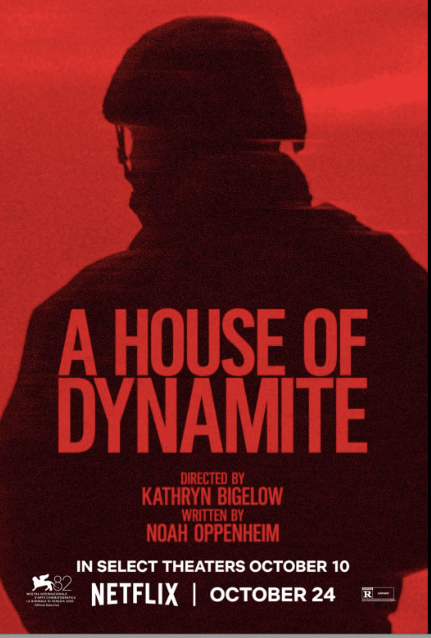
A House of Dynamite: MAD -- Mutually Assured Destruction -- In Our Day and Age


I grew up in a world in which Dr. Strangelove was a plausible movie, a world in which we lived with the Soviet Union, armed to the teeth with nuclear weapons, as were we, and our best chance that we wouldn't blow up the Earth, if not to smithereens, to an uninhabitable planet, was MAD -- the mutually assured destruction that a nuclear war would engender, which would stop we human beings from ever starting such a no-win war.

As A House of Dynamite on Netflix tells us, at the beginning, we the world gradually learned to scale down our armaments, but the world has gone back to at least verbal apocalyptic belligerence in the past decade, with Russia, in particular, refusing to rule out nuclear weapons if the US and NATO attacked it in response to the Russian attack on Ukraine, or maybe if we gave Ukraine too much assistance.

[Spoilers ahead ... ]

A House of Dynamite posits such world in which a missile is launched towards the United States.  Attempts to intercept it with our missiles unaccountably fail.  Maybe our defense system has been compromised by prior surreptitious cyber attacks.  Maybe the system wasn't that effective in the first place. We’re told that stopping a missile like that is like “a bullet hitting a bullet”.

We soon learn that Chicago is the target.  (Here I'll say that the movie was made before Trump unconstitutionally targeted Chicago for National Guard deployment.  Just sayin'.)  We see this story play out from three different simultaneous angles, from the standpoints of American military and political leaders and personnel.  The actors are top notch: Idris Elba as US President (he's been great in everything I've seen since Stringer Bell in The Wire), Jared Harris as Secretary of Defence (Hari Seldon in Foundation), and Rebecca Ferguson as a Captain who finds herself heading the White House Situation Room (Juliette Nichols in Silo), are just three of many examples.

All three stories end with the missile seconds from hitting Chicago, and the President struggling to make a decision.  Retaliate?  Against which country?  Russia, China, North Korea?  And what kind of retaliation -- how much of the presumed enemy will be destroyed?  How much of the Earth will be left inhabitable?

And here the movie ends.  Right.  Just like the last scene of The Sopranos.   We the audience need to fill in the ending.  Or at least think about it.   Is this good movie-making?  I actually thought it worked great in The Sopranos (see my reviews, beginning here, for what I think happened to Tony).  But The Sopranos was clearly a totally fictitious story about familiar characters in our reality.  A House of Dynamite is fiction, too, but somehow seems less a fiction, much closer to our reality, the world I grew up in, the world we now inhabit.

And as a denizen of that world, I found the ending unsatisfying.  But maybe in such a scenario there is no narratively satisfying ending.  A happy ending would have been the missile hitting Chicago with no bomb, or no bomb going off.  Deputy National Security Advisor Jake Baerington (played by Gabriel Basso, who believe it or not played J. D. Vance in Hillbilly Elegy) tells the President this a possibility, in an attempt to caution him not to launch a massive nuclear counter-strike.  This of course goes against the military advice of General Anthony Brady (Tracy Letts, Elvis and Nixon -- hey, it's a movie about a President).

So who would the President listen to?  I'd hope it would be Baerington not Brady.  But maybe that's not realistic, after all.  

Sunday, May 25, 2025

The Last of Us 2.7: Those Who Die


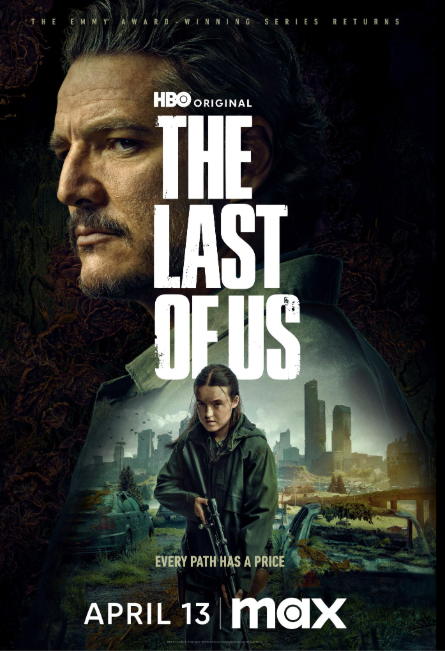
Well, a lot of characters died in the season 2 finale of The Last of Us on Max tonight.

[Spoilers ahead ... ]

Two more of the people who presided over Joel's killing die in 2.7: Owen is killed by Ellie because he draws a gun and attempts to fire on her.  Mel is accidentally killed by Owen as he fires his gun (after being shot by Ellie) and his bullet hits the wall, bullet bouncing off whatever the wall is made of, so the bullet hits a very pregnant Mel in the neck, who dies before Ellie can save her baby (by cutting the baby free) as Mel is pleading with Ellie to do.

And that's the least of it.

Before the episode is over, Jesse is shot and killed by Abby (he was the most ethical character in the show), and Abby fires point blank at Ellie, before the screen turns black in an end-of-The-Sopranos moment.

Of course, that final scene in The Sopranos was the final scene of the series, not of the second season in a continuing series.   And there was no gun shot in that final scene, before all went black.  David Chase, the main brains behind the series, now says that scene was meant to "imply" Tony Soprano's death.  But having read I. A. Richards, who a century ago, back in the 1920s, said we can safely ignore explications by authors of their works (there could be interpretations they didn't intend which are nonetheless valid, or the authors could just be lying), I don't think we should pay much if any attention to what Chase says about his masterpiece.

But back to The Last of Us:

  1. Since the series is continuing, even a gun fired before all goes black is no proof of anything.
  2. And there's no point looking at the game from which The Last of Us series is derived, because the makers of the series have been free to change whatever they wanted to change from the game when they made the series.
So is Ellie dead?  How should I know?  At this point, we can't even be sure she's been shot.  But I'd bet we'll find out more in Season 3.

And although it's too soon to say the following about Ellie, paraphrasing what Shelley said about Keats' death -- weep not for Ellie, 'tis death that's dead not she -- we can certainly apply that to Jesse, a brave, highly ethical soul that we could certainly use more of in our world off-screen, and the ethical crisis that's now raging.  Here's to Jesse, whose morality is eminently worthy of veneration.

See also The Last of Us 2.1-2.2: The Killing Cold ... 2.6: Father and Daughter Flashbacks

And see also The Last of Us 1.1-1.2: The Fungus Among Us ... 1.3: Bill and Frank ... 1.4: Gun and Pun ... 1.5: Tunnels ... 1.6: Joel ... 1.7: Riley's Wise Advice ... 1.8: Ellie vs. the Resort ... 1.9: The Limits of Utilitarianism

more about The Silk Code here


Monday, February 7, 2022

A Kind of Murder: Yep, Just That


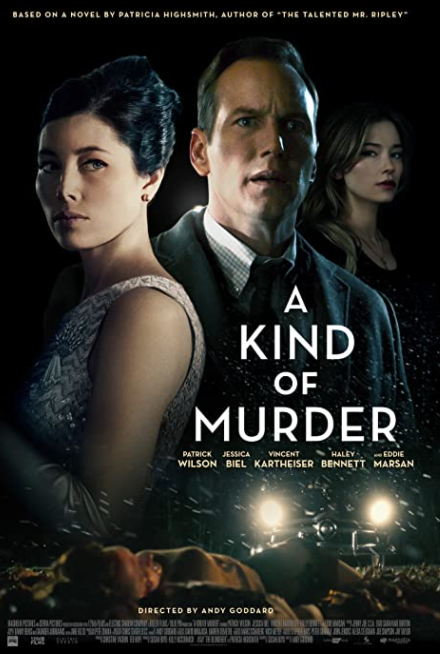
I just a late 2016 movie, A Kind of Murder, on Amazon Prime Video. It's advertised as "Hitchcockian Noir," which it's not -- somewhere between not quite and not by a long shot.  But, then, again, Hitchcock's work is so uniquely masterful, I've never seen anyone else's work equal to what he did, including some who came close, like Brian De Palma.

[Spoilers ahead ... ]

Here's the story:  Walter Stackhouse, a writer in 1960 New York, is in an unhappy marriage with a mentally distraught wife. He's writing some kind of murder mystery, and collects newspaper articles about lurid and/or unsolved crimes-- including a recent case in which the wife of a bookstore owner in New Jersey, Marty Kimmel, turns up dead.  Laurence Korby, a detective who is no Sherlock Holmes and has a nasty violent streak to boot, is sure Kimmel did it.  When Stackhouse's wife, who tried to take her life with pills turns up dead in New Jersey,  Korby isn't sure where her murderer is Kimmel or Stackhouse, because (as we should know from umpteen police dramas), the husband is always the first suspect.

So this is a pretty good, even excellent, set-up.  And the acting (especially Patrick Wilson as Stackhouse and Eddie Marsan as Kimmel, but also Vincent Kartheiser as Corby, Jessica Biel as Mrs. Stackhouse, and Haley Bennett as his girlfriend) and the ambience are excellent.   But the ending chooses to be stylishly ambiguous, rather than giving us the satisfaction of an answer to the whodunnit.

All we know for sure as the closing credits role is Kimmel killed his wife.  He possibly/likely killed Corby and Stackhouse, too, though the scene was so dark you had to look twice to be sure.  And, then, in the last scene, as Stackhouse is on his back, apparently dying from the wounds Kimmel inflicted, we see him going over in his mind all the major scenes of the movie, concluding with him sitting in his apartment at his typewriter, typing "the end".

So is he envisioning all of that including the typewriter in his mind as he takes his dying breath on the damp concrete?  Or is he actually sitting at his typewriter typing "the end" -- the end to the whole story he has typed, which we just saw on the screen?

Well, I do like ambiguity in an ending -- like in "The Lady and the Tiger" or in the last scene of The Sopranos, but as I said, in "A Kind of Murder," that just too ambiguous by half.  Or, as my wife said, maybe that's why the movie, an adaptation of The Blunderer, a 1954 novel by Patricia Highsmith, is called A Kind of Murder.


Saturday, October 2, 2021

The Many Saints of Newark: You'll Enjoy It Immensely


After all of these years -- 21 or 14, depending on whether you count from the beginning or the end -- The Sopranos is arguably still the best series ever on any kind of television screen.  What's beyond argument is that The Sopranos started it all, and opened the gates, paved the way, for all the great television that ensued on cable and streaming screens.

It certainly changed my life, all for the better, not only as a viewer but a media scholar thinking and writing about television.  The late David Lavery asked me to write an essay about The Sopranos just a few years into the series for an anthology he was putting together.  The result was "Naked Bodies, Three Showings a Week, No Commercials: The Sopranos as a Nuts-and-Bolts Triumph of Non-Network TV" in This Thing of Ours: Investigating The Sopranos published by Columbia University Press and Wallflower Press in 2002.   His next good idea was to organize a conference on The Sopranos, which I did at Fordham University with David and Douglas Howard's help in 2008.  Lots of important things came out of that conference, including a nice long interview with Dominic Chianese, and another anthology, The Essential Sopranos, chock full of essays, including my "The Sopranos and the Closure Junkies," published by University of Kentucky Press in 2011.  And just for good measure, I was interviewed for "Defining a Landmark," a documentary on The Sopranos included in The Sopranos: The Complete Series, brought out by HBO on blu-ray in 2014.

So now that we've got my creds out of the way, what about the movie?

Well, with The Many Saints of Newark, just up on HBO Max for the month of October, that 2014 package is no longer complete.  The two-hour movie thus had everything to lose for David Chase, if it didn't live up to the extraordinary series to which it has the temerity of being a prequel.  Anything short of loving it would have made it a disappointment.

And I just saw it, and I loved it.  For lots of reasons.

One of the great joys in seeing a prequel is getting to know the younger selves of characters you came to know and prize in their primary presentations.  Michael Gandolfini was an inspired choice to play Tony Soprano as a teenager.  Not only did he look and sound like the adult Tony played by his father James, Michael had a perfect presentation of lines, the mix of mischief and disappointment, and the beginning of that short fuse to anger that animated his father.

And Michael Gandolfini is by no means the only actor who delivered memorably recognizable performances in The Many Saints of Newark.  Among my favorites are John Magaro, whose young Silvio not only had the toupe (of course, and preceded by a comb over for his even younger self) but had the scowl and literally walked the walk as well as talked the talk.  The same for Corey Stoll as Uncle Jun, not the toupe (of course) but in every way the bespectacled uncle of Tony.  And Vera Farmiga was so convincing as Livia -- the intensity of her gaze, the angle of her head -- she was recognizable as Tony's mother before anyone spoke her name.

And there was great work in this movie as well by actors playing characters who weren't in the original series.  My favorite of these was Alessandro Nivola, who did a stand-out job as Dickie Moltisanti, Christopher's father.

Now as to the plot.  It was strong, believable, and fleshed out in classic Sopranos detail.  And there's a stunning revelation at the end, which I won't say anything about except it was thoroughly plausible given what we know of the character in later life on The Sopranos.   

I'll also mention that the movie was studded with gems of fine touches, like baby Christopher Moltisanti crying when he sees Tony as a pouty young boy (William Ludwig), and an old biddy remarking that some people think that newborns have knowledge of "the other side" (as Christopher in a narration from the grave reminds us earlier in the film, Tony killed him).  It was also a nice touch saving the iconic "Woke Up This Morning" for the closing rather than the opening of the movie, since the song was an entree to The Sopranos.

So here's my recommendation: If you've seen The Sopranos, see The Many Saints of Newark, you'll enjoy it immensely.  If you haven't seen The Sopranos, see the entire series, then see the prequel movie.  You'll enjoy it immensely.


Wednesday, March 24, 2021

Deadly Illusions: Not Quite Deadly


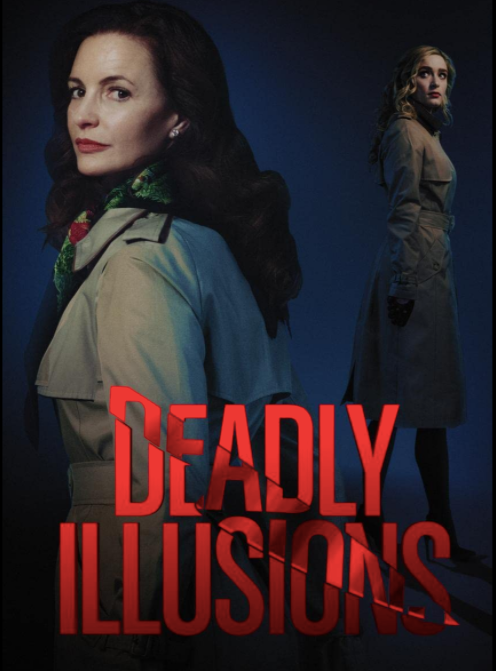
Just saw Deadly Illusions on Netflix.  In a nutshell, it's a fairly good thriller about a writer (Mary) who may or may not be imagining scenes in her book which have her hiring a seductive, psychotic nanny who seduces her, kills her friend, and almost kills her husband.

The nub of the narrative, then, is whether or not we're witnessing a lurid imagination, or a terrible mistake in hiring.  The few reviews I've read seem to think it's the latter -- that Grace/Margaret is indeed a split personality prude/insane seductress.   They cite the final scene, in which Mary visits Grace in a psych ward.  But I'm not so sure.

Because, how do we know that the final psych ward scene is not part of Mary's new novel?  That's the problem with any kind of story in which the imagination of a character could be the essence of what we're reading or seeing on a screen.  And Deadly Illusions, having raised this possibility, does an insufficient job in resolving it in the end.

To be clear, I have nothing at all against unclear endings.  I thought the ending of The Sopranos, for example, in which we don't know if Tony lives or dies, was a sheer masterpiece.  But that's because the two possibilities, life or death, were brilliantly given almost perfectly equal weight.  Obliging viewers to make their own decisions.

Not so the ending of Deadly Illusions.   Which is why I said the movie was "fairly good".  Look, it takes a lot of work to get an ambiguous ending like this just right.  Deadly Illusions, though offering a very enjoyable ride, just didn't do this in the end.

See also The Sopranos End and the Closure Junkies

Wednesday, July 3, 2019

City on a Hill 1.3: One Upping The Sopranos


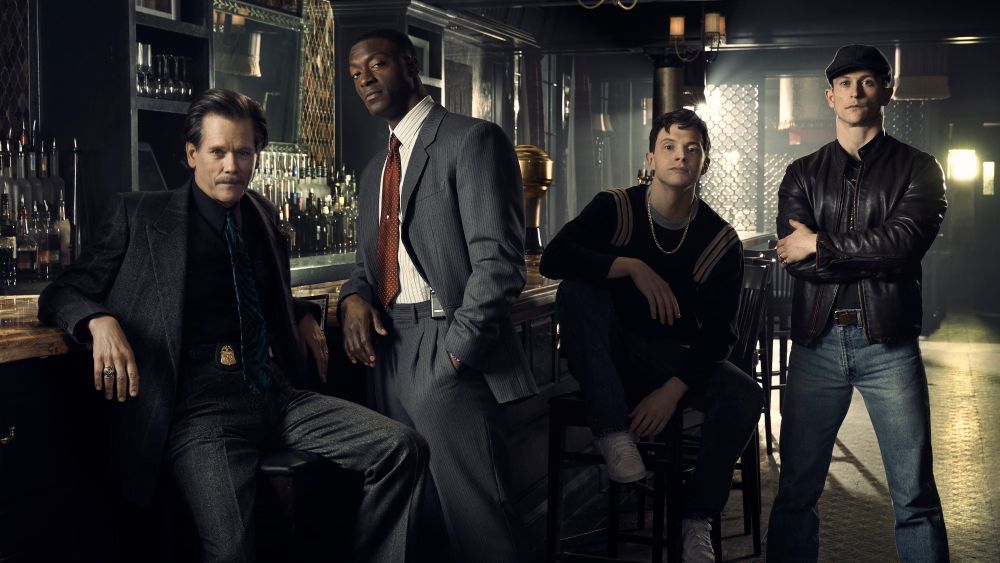
What better day to review City on a Hill and its Boston story than July 3?  Well, maybe tomorrow, July 4, but I'll be spending most of that day in Cape Cod Bay, and likely won't be writing many reviews.  As for City, of its three primary interlocking stories lines - police Jackie, DA DeCourcy, and heister Frankie - I continue to find Jackie's the most powerful, in particular the story of Jackie and his wife Jenny.

In 1.3, Jenny, like the mostly good Catholic she is, seeks the advice of her priest in dealing with her frustrating lack of sexual relationship with her husband.  The priest's counsel is, unsurprisingly, not very helpful.  But note the handsome young priest who is also sitting in on the conversation.  Jackie certainly did, though she kept it to herself in the conversation.  The audience certainly did.   It whispered a revisiting one of the most memorable interludes on The Sopranos.

Carmela Soprano had, well, not an explicit sexual relationship with Father Phil, but there was erotic energy in every plate of food she made for him.  Jenny is not quite there yet with Father Doyle, but his paying Jenny a visit at her home later in the episode is a big step in the right direction.  Carmela never got beyond the food surrogate.   Maybe that was because, let's face it, Tony might well have killed Phil if his relationship with Carmela went any further.  But Jackie's not a killer - at least, not that kind of killer - so that leaves more room for Jenny and Doyle to sooner or later end up in bed.  Add to that the fact that Jenny is far more motivated than Carmela - Jenny's been sex-deprived for how many years? - and I'd say it's a very good bet that the comfort they'll share will be more than food.

Hey, enjoy the 4th and the food and the family, and I'll see you here next week.

See also City on a Hill: Possibilities ... City on a Hill 1.2: Politics in a Cracked Mirror


Saturday, October 13, 2018

The Romanoffs 1.2: The Royal We: A Walk on the Dark Side


Well, The Romanoffs 1.2, entitled The Royal We, takes a darker, nastier, murderous turn, with none of the comedy of the first episode (The Violet Hour), unless you find dwarfs acting as the royal family Romanoffs (Romanovs) on a cruise to celebrate the family, funny.

But the evil stuff was pretty compelling.  Michael Romanoff (exceptional acting by Corey Stoll) has no happiness in his life, including with his wife Shelly, though that's for no want of her trying.  He finds himself on a jury for a murder trial, obligating Shelly to go on the cruise she booked for the two of them on her own.   Michael seems to hit pay dirt on the jury.  A beautiful former ballet dancer, Michelle (excellent work Janet Montgomery), is on it, too.  He's instantly smitten.  He deliberately extends the deliberations by refusing to find the obviously guilty defendant guilty.  He soon contrives to meet with the dancer when the jury takes a break for the weekend - they're not sequestered - and manages to sleep with her after she more or less seduces him.  Meanwhile, in contrast, Shelly says no to handsome Ivan, in a corridor near the door of her room on the boat, after they kiss and he clearly indicates his intentions.

She returns to a powder keg of Michael wanting to see more of Michelle, and she demurring (she's married, too).  I won't tell you anymore lest I give too much away, but the intensity of what happens is reminiscent of both The Sopranos and Mad Men and Heather, the Totality in different ways.  Weiner is not only a master of societal foibles, but the ugliest, harrowing facets of human nature.

With two episodes of The Romanoffs now on the screen, we can see that they're as different as day and night.  What Weiner is really after in this new anthology is telling very different stories, with no connection to one another whatsoever, except for the Romanoff label. 

Which makes me wonder about the subsequent episodes even more, and want to see them.  I'll be back here next Friday with a review of #3.

See also: The Romanoffs 1.1: The Violet Hour: Compelling, Anti-Binge Watchable Comedy of Manners  ... The Romanoffs 1.3: House of Special Purpose: Meta Ghost Story... The Romanoffs 1.4: Expectation: Unfulfilled .... The Romanoffs 1.5: Bright and High Circle: Music and Abuse ... The Romanoffs 1.6: Panorama: The Royal Disease ... The Romanoffs 1.7: End of the Line: The Adoption Racket ... The Romanoffs 1.8:  The One that Holds Everything: Writer on a Train

  
It all starts in the hot summer of 1960, when Marilyn walks off the set
of The Misfits and begins to hear a haunting song in her head,
"Goodbye Norma Jean" ...

Friday, October 12, 2018

The Romanoffs 1.1: The Violet Hour: Compelling, Anti-Binge Watchable Comedy of Manners


I've been a fan of Matthew Weiner's since The Sopranos and Mad Men.  So has my wife.  I even read and rave-reviewed his 2017 novella Heather, The Totality.  So of course we were going to watch The Romanoffs, the new anthology series on Amazon Prime, now consisting of eight standalone 90-minute episodes connected by the sinew of each episode tells the story of a different character or characters who think they are descendants of the royal Russian family, all or most of whom were slain by the Bolsheviks in 1918.   The first two episodes were put up today, and the rest will be shown on a weekly basis.

All ninety minutes of The Violet Hour were excellent.  The story takes place in Paris, featuring Anushka (who claims she is a descendant), her American nephew Greg, his French girlfriend Sophie, and Anushka's caretaker Hajar, who was born in Paris and whose parents came from North Africa.  There's comedy, profundity, passion, and surprises all packaged in this tale of how Anushka is determined to see that her Romanoff bloodline survives into the next generation.

The genre is so original it's hard to classify.  It has elements of Downton Abbey and Woody Allen.  It would have been a good standalone movie, and someone said somewhere that these episodes could be watched and considered as individual movies.  But the fact that Weiner has tied them all together by this unlikely thread makes them all the more appealing - or, at least, that's what I thought before watching the first episode and even more strongly now.

Weiner's decision not to show them all at once certainly supports the each episode is a movie structure.  As such, The Romanoffs could be considered the first deliberately anti-binge-watchable series on a streaming service.  I'm not sure how I feel about that - we're going to watch the second the episode as soon as I post this review.  I know we'd want to watch the third, if not right after the second, at least tomorrow night,

But The Violet Hour was so good we'll be happy to wait for that third, next week.

See also The Romanoffs 1.2: The Royal We: A Walk on the Dark Side  ... The Romanoffs 1.3: House of Special Purpose: Meta Ghost Story ... The Romanoffs 1.4: Expectation: Unfulfilled ... The Romanoffs 1.5: Bright and High Circle: Music and Abuse ... The Romanoffs 1.6: Panorama: The Royal Disease ... The Romanoffs 1.7: End of the Line: The Adoption Racket ... The Romanoffs 1.8:  The One that Hold Everything: Writer on a Train

  
It all starts in the hot summer of 1960, when Marilyn walks off the set
of The Misfits and begins to hear a haunting song in her head,
"Goodbye Norma Jean" ...

Friday, November 3, 2017

Heather, the Totality: The Bombshell

As everyone knows who has read this blog or seen me talk at conferences about The Sopranos,  etc., I've long admired Matthew Weiner's work on both The Sopranos and Mad Men, and indeed consider it to be at the very apex of television.  I was thus more than pleased to get a slightly-advance copy of Weiner's first novel (due to be published November 7) late yesterday, and read it one-and-a-half sittings (a little in the wee hours of the morning, the rest just this afternoon).  It's only 134 short pages, but it's so compelling I'm sure I would have read all of it in that time, anyway, had it been twice as long.

It didn't need to be. Weiner's novel is exceptional, very much a slice of life in New York at this moment, and very different in style and pacing at the same time.  There's only one line of true dialogue, and it's a bombshell.  The descriptive passages are reminiscent of both Dickens and Salinger.  And the story rings true on all kinds of levels.

Not long ago, I got in my car in the parking lot of a supermarket, and noticed a guy looking at a woman who was walking by.  There was something in his eyes that, I don't know, was more sinister than just appreciation.  I stayed in my car a few minutes, until the woman got safely in her car and drove away.

This is the spark plug of Heather, the Totality.  A father (Mark) notices a construction worker looking at his 14-year old daughter (Heather) as she walks out of their building.  That scene happens 2/3s or more into the novel.  Before that, we learn a lot about Mark, Karen (Mark's wife and Heather's mother), Heather, and the construction worker, Bobby.  We learn enough about Bobby to know that Mark's concerns about what Bobby might do to his daughter are well-founded.

I'm not going to tell you the ending.  Give yourself a treat and get a copy of this novel, destined to be recognized as a new kind of story telling.

  
It all starts in the hot summer of 1960, when Marilyn walks off the set
of The Misfits and begins to hear a haunting song in her head,
"Goodbye Norma Jean" ...

Tuesday, October 3, 2017

The Deuce: NYC 1971 by way of The Wire

I thought, what's not to like about The Deuce, a new series,  now four episodes along, on HBO?  David Simon and George Pelecanos, best known for The Wire (unarguably one of the best series ever on television) are producers and writers, as is Richard Price (author of the superb Bronx novel, The Wanderers, as well as The Night Of, last year on HBO).  The Deuce even has two great actors from The Wire - Gbenga Akinnagbe and Lawrence Gilliard Jr. - and a riveting storyline about prostitutes and porn back in 1971, with lots of skin in the story.

So what's not to like about The Deuce?  Absolutely nothing - meaning, it's another example of outstanding and unique television, as only HBO and sometimes Showtime, have been able to deliver.  For HBO, The Deuce is very much in The Sopranos, The Wire, and Treme lineage -- meaning, memorable characters, searing narrative, served up with vivid color and style.

Richard Price and his way with words is in evidence all over.  Barely a conversation goes by without an apt phrase and a ringing line.  Simon and Pelecanos come across with their keen eye for detail, as a character mentions Penny Lane as a good song, and the songs playing the background are always bang-on right for the time.  I walked down or close to those New York streets, and nothing in The Deuce looked out of place.

And the characters and their vectors and actors are real and rewarding, too.   Gbenga Akinnagbe portrays a pimp with heart, Gary Carr with maybe a little less kindness but more than enough swagger to make up for it.  Maggie Gyllenhaal is just right as an older prostitute who wants to be in show business aka the porn industry; Margarita Levieva is very appealing as an NYU student who drops out (where I was student just a few years later - too bad I missed her) and into porn or prostitution or maybe not, it's still too to tell; and Emily Meade as the ingenue hooker under C. C.'s thumb (played by Gary Carr) and more, as they may be falling in love, or at least something, is just perfect.

Yeah, and I haven't even mentioned James Franco, who plays a bartender turned bar owner with a heart of gold - with money put up by the mob (with boss played by Michael Rispoli, who played nearly the same role years ago on The Sopranos, but doesn't look a day older) - as well as a gambler twin brother who's not quite as golden, with his typical sensitivity and splash.

The upshot: I'm looking forward to watching The Deuce for a long time.


Tuesday, July 25, 2017

Review of Rob Sheffield's Dreaming The Beatles 10 of X: I. A. Richards

The most interesting aspect (and there are many) of Rob Sheffield's chapter on the Beatles and LSD in his Dreaming the Beatles - brilliant, I'd say, to any state of mind - is his discussion at the end of whether "Lucy in the Sky with Diamonds" was a John Lennon anthem to LSD.

The story that it isn't is better than well known:  John's son Julian came home with a picture of Lucy, a girl at school, with a sky and diamonds, and told his father that he had drawn a picture of Lucy in the Sky with Diamonds.  Or something like that.

And then there's the story, not quite as well known,  about Peter Yarrow and his "Puff the Magic Dragon" (actually based on a poem by Leonard Lipton).  Yarrow (and Lipton) have always insisted the lyric was as much about pot as the "Star Spangled Banner" and its bombs bursting in air was about some psychedelic drug around at the time of our War of 1812.  Even though it seemed obvious to just about everyone else that "puff" and "paper" and "dragon" aka "draggin'" were about grass.

I had already encountered I. A. Richards - a British literary critic, not a rock star - years before. Nearly a century ago - in the 1920s, to be more precise - Richards propounded a series of things that the literary critic, or anyone wanting to understand a literary work, should avoid. Among the most important red flags that grew out of Richards' work was what Wimsatt and Beardsley later termed the "intentional fallacy" - it doesn't matter what the creator of the work may have intended, what counts is what the reader objectively gets from the work.

From that, it's a relatively small move to the position that it doesn't matter what the creator of the work says the work is about - or, to use a modern parlance, that the creator of a work is an unreliable guide to what the work may be about.

When I first encountered Richards in the 1970s, I could immediately see his injunctions could apply to creative work in any medium - the Beatles and Peter, Paul, and Mary lyrics, and, much later, to the ending of The Sopranos.   So, with that in mind, it was especially fun to read Sheffield's account of LSD and "Lucy in the Sky with Diamonds".

Other strong parts of this chapter were the competition between the Beatles and Dylan, and McCartney's confidence that the Beatles had surpassed Dylan's understanding of them by the time they were doing Revolver (the subject of the next chapter).

It's of course possible that Sheffield might say that this wasn't one of the strongest parts of this chapter - but I'll place my confidence in Richards.

And I'll be back with more soon - maybe tomorrow, though you never know.

See also Review of Rob Sheffield's Dreaming the Beatles 1 of X: The Love Affair ... 2 of X: The Heroine with a Thousand Faces ... 3 of X: Dear Beatles ... 4 of X: Paradox George ... 5 of X: The Power of Yeah ... 6 of X: The Case for Ringo ... 7 of X: Anatomy of a Ride ... 8 of X: Rubber Soul on July 4 ... 9 of X: Covers ...  11 of X: Underrated Revolver ... 12 of X: Sgt. Pepper ... 13 of X: Beatles vs. Stones ... 14 of X: Unending 60s ... 15 of X: Voting for McCartney ... 16 of X: "I'm A Loser" ... 17 of X: The Split ... 18 of X: "Absolute Elsewhere... 19 of X: (Unnecessary but Brilliant) Defense of McCartney ... 20 of X: "All Things Must Pass" ... 21 of X: Resistance ... 22: The 70s Till the End ... 23: Near the Science Fiction Shop ... 24 of 24: The Last Two

And here's "It's Real Life" -- free alternate history short story about The Beatles, made into a radio play and audiobook and winner of The Mary Shelley Award 2023


lots of Beatles in this time travel

Thursday, June 22, 2017

Gomorrah Season 2 Finale: The Brutal Analysis

Hey, I haven't been reviewing Gomorrah - the justly lionized Italian mafia series that takes place in Naples, and in Italian (with English subtitles) - but there's no time like the present, with the finale of the second season just on Sundance.

I'm not going to recap everything that came before - except to say it's an excellent series. If you haven't seen it, don't read anything further, because this discussion of the Season 2 finale will obviously have spoilers.

That finale features a good twist at the very end, as Ciro, with Genny's help, kills Pietro (Genny's father).  This season was aired in the UK last year, and the ending evoked a lot of criticism.  Why would Genny enable the killing of his own father, rather than kill Ciro, the man who had killed Genny's mother and humiliated him when he was younger?

This is a complex story, but the answer is straightforward.  To the very end, Pietro continued to belittle Genny and treat him like a child.  This was clearly warranted in the first season, but clearly not in the second: it was clear to everyone except Pietro that Genny was his own man.

Gomorrah has been compared to The Sopranos, but unlike The Sopranos, there's barely the scent of a hero in Gomorrah.   Genny, I suppose, is the closest to it - but what kind of hero sets up the killing of his own father?   I certainly preferred Ciro over Pietro, but, jeez, Ciro murdered his own wife. And though Pietro had a steely appeal, killing Ciro's daughter is flagrantly unacceptable.

Yet within this brutal story, there's somehow room for a little tenderness.  We see this in Genny's son, whom he names Pietro, and in the woman (Patrizia) Pietro was going to marry - indeed, she is also one of the most appealing characters in the story.

I hope we see her next season, which will no doubt be Genny's story.  Pietro would have won, had it not been for Genny.   But I can't see any alliance between Genny and Ciro lasting too long.

Meanwhile, strong acting by Marco D'Amore (Ciro), Salvatore Esposito (Genny), Fortunato Cerlino (Pietro), and Cristiana Dell'Anna ( Patrizia).

Sunday, September 4, 2016

Narcos 2: In League with The Godfather Saga


My wife and streamed Narcos 2 on Neflix the last two evenings, and, what can I say, it was outstanding, a stand-out masterpiece in both true-crime and crime fiction drama, in any medium.  I liked it even better than the first season, and I would now place it in league with The Godfather trilogy and The Sopranos.

Pablo Escobar's crew is portrayed in vivid and memorable detail.  Limon the driver ... La Quica the hitman ... Blackie the masterful bomber ... everywhere you turn in this story you find a subplot as riveting as the overall drama, and acted with style and precision (Limon by Leynar Gomez, La Quica by Diego Cataño, and Blackie by Julián Díaz).

As the pressure mounts on Escobar and the Medellín Cartel, he and we can never be sure who is still loyal.   The story has some shockers, especially if you're not familiar with the real history.   The pressure comes from so many interlocking sources that, as was the case in the first season, you find yourself admiring Escabar's intelligence and survival skills, despite the murders that he ruthlessly dishes out, especially when he's angered.   In addition to (most of) the government of Colombia including its President, and the US DEA, Escobar must fend off increasingly damaging attacks from the rival Cali Cartel and a brutally effective rightwing military group, Los Pepes.   Even worse for Escobar, these groups have an alliance, uneasy but effective enough for the DEA - or at least one agent, Peña - to funnel high-tech surveillance info to Cali and Los Pepes.

Even a fleeting knowledge of history will tell you how Escobar's story ends. What you may not know, though, is the lack of telecom sophistication that sealed his fate, or the joy he took in just buying and eating strawberries and creme like any other citizen of Medellín (assuming that's true, but touchingly shown in the series).  But the bigger questions attendant to his life of crime continue.  Miguel Uribe, husband of Diana Turbay - tragically killed by Colombian National Police in 1991 during a botched rescue attempt after Escobar had kidnapped her (portrayed in Season 1) - told me at dinner in New York City in the late 1980s that the drug cartels wouldn't have grown rich and powerful in his country had there not been such a keen taste for the white powder in ours. And that problem obviously still remains.

And this means there's more than ample Narcos story to tell for a third and subsequent seasons, which I hope are made.  As for the first two, they shouldn't be mistaken for literal history - some of which is left out, such as La Quica's arrest in Queens, NY and his conviction for the bombing of Avianca Flight 203, for which he's still serving time in the U. S. - but that's the difference between documentary and docudrama.  Indeed, even documentaries sometimes leave out material that others deem important to the true story, but what we're left with in Narcos is a fabulous piece of work - not really the "magical realism" with which the narrator Agent Murphy frames the story (clever, given that the late Gabriel García Márquez, one of the pillars of magical realism, also penned News of a Kidnapping, about the cartel's kidnappings, including Diana Turbay) -  but a real epic of our time, or the time that led to our time, brilliantly told and directed, and indelibly acted by Wagner Moura as Escobar and Paulina Gaitan as Tata his wife.  Narcos, like all the great crime drama, takes its place not only with The Sopranos and The Godfather, but Shakespeare and the Greek tragedies - in other words, with stories of greed and yearning for freedom, and right and wrong, and establishment vs. anti-establishment, as old as our very humanity.

See also Narcos on Netflix: Outstanding

#SFWApro


a different kind of crime


Wednesday, August 17, 2016

Silvercup North in the Morning


I spent a wonderful hour this morning at the opening ceremony of Silvercup North - the spacious new, third motion picture and television production studio of Silvercup Studios in the Port Morris area of the Bronx - where New York Governor Andrew Cuomo was the featured speaker.

Everything about this ceremony was right.  I grew up in the Bronx, a little north of Port Morris around Allerton Avenue and White Plains Road.  I've been a professor at Fordham University (the Governor's alma mater), across the street from the Botanical Gardens and the Bronx Zoo, since 1998.

I grew up eating Silvercup bread.  The very sign makes me hungry and smells good.  "The Bronx is Back" looked good, too.   And although I moved up to White Plains from the Bronx with my family in the early 1990s, the Bronx was never really gone for me.

The is the first time I've had the pleasure of hearing Andrew Cuomo speak in person.  And it was a pleasure, indeed.  Our governor is articulate, humorous, and sharp as a whip.   Somewhere down the line, I'd like to see him run for President.  Bronx Borough President Ruben Diaz, Jr., who introduced Cuomo, also has a great future ahead.  Like the Governor, Diaz got involved in politics via his father, Ruben Diaz, Sr., who is currently a NY State Senator and took a bow from the audience.

The Suna Brothers, who brought Silvercup Studios to prominence in Queens in the 1980s, were on hand. Silvercup Studios has already made an enormous contribution to New York and the world's popular culture.   The studio was talked about on panels at The Sopranos Conference I organized at Fordham University in 2008 - lots of The Sopranos was filmed at Silvercup in Long Island City.

As many of you know, time travel is one of my passions - as a reader, viewer, and author. I was therefore delighted to hear, and consider it a most auspicious omen, that the first production in Silvercup North will be ABC-TV's Time after Time, based on the movie about the young H. G. Wells.  What more could you ask for! (Shameless plug, H. G. Wells makes an appearance in my Ian's Ions and Eons - the name of a time-travel agency located a little off Johnson Avenue in the Riverdale section of the Bronx.)

As icing on the cake of this morning, it was great to see Gary Kesner, Executive VP at Silvercup. Gary and my wife Tina were in class together many years ago at the Bronx High School of Science - there's the Bronx again - and we've stayed in touch all too sporadically over the years.

Thanks to Jim Jennewein, Artist in Residence at Fordham University, for inviting me to this event, and to Rachel Honan, photographer and our student at Fordham, who conversed with us before the speeches.

Good times for the Bronx on street and screen beckon ahead!


Thursday, March 10, 2016

American Crime Season 2: Too Little Info

American Crime, arguably one of the best and most important series ever on any kind of television - network, cable, streaming - which I would be happy to argue on behalf, ended last night on a less than stellar note, with too many unanswered questions.

First and foremost, we still can't be sure what happened to Taylor, on the night he presumably was raped, or had unconsensual sex with Eric.  The problem is that both Eric and Taylor seem sympathetic and convincing in their contradicting assertions.  I'm not sure I see the point in casting and leaving this situation in such ambiguous terms.   And just to add more insulting ambiguity to the injured storyline, we also aren't told if Eric is getting into that car at the end - a car which represents his coming out into a very new kind of life.

I also wasn't happy with the way the show morphed into a cautionary tale about hacking, again with no resolution.  The result not only diverted from the important sexual assault, gun violence, and racism stories, but with its hackers-being-hacked message pitched us into the paranoid world already and much more effectively explored in Mr. Robot.

Don't get me wrong - I love ambiguous endings, in some cases, as I made clear in my Sopranos End and the Closure Junkies little essay about the sudden cut to black at the end of The Sopranos.  But that was very different from what we saw last night in American Crime, which was more frustrating that suddenly, bi-explicably shocking.

Nonetheless, American Crime remains in a class of its own - a very good class, as I said above - and I'm therefore very much looking to a third season, which hasn't been announced at this moment.  I hope a third season brings back the repertoire company which played so well in the first two seasons, including Benito Martinez, who put in a brief, unexpected appearance last night.

See also: American Crime 2.1-3: So Real, It Hurts ... American Crime through 2.6: Brilliant and Unflinching

And see alsoAmerican Crime, American Fine ... American Crime 1.7: The Truest Love ... American Crime 1.10: The Exquisite Hazards of Timing ...American Crime Season 1 Finale: The Banality of So-Called Justice


a different kind of crime

#SFWApro

Monday, October 26, 2015

McLuhan in An Age of Social Media


Just written last Thursday - already #1 on
Amazon Computers and Technology Top 100

last updated 22 November 2016


This essay can be considered a new chapter in my book Digital McLuhan, published in 1999, or before the advent of Twitter, Facebook, YouTube, and the social media of our age. Marshall McLuhan's ideas, including hot and cool, the medium is the message, and the tetrad, are applied to help us understand selfies, tweeting, iconic television shows such as The Sopranos and Mad Men, the Arab Spring, the U.S. Presidential election of 2016, and the Kindle revolution itself.


Monday, May 18, 2015

Mad Men: The End of an Era and the Ultimate Cool

I've been saying lately that we're in the third golden age of television, epitomized by House of Cards streaming all at once on Netflix.  Mad Men was one of the stalwarts of the second golden age - the revolution of cable over network and the first golden age of television in the 1950s.  Mad Men debuted just a month after the conclusion of The Sopranos, which initiated the second golden age.  And tonight Mad Men concluded in its turn, as well.  It was advertised as the end of an era, and it was - the end of cable television as the undisputed creative edge of television drama.

As for the stories themselves in this final episode, there was a lot that was good in them, even satisfying in some cases.  The best of this was Peggy finding happiness and true love at last with Stan.   Pete's ending is happy, too, and so is Roger's.

Joan's is bitter sweet,   In order to pursue her creative, professional self, she has to give up the man she loves.   The lesson there is that in the society of the early 1970s, at least, it was difficult for a woman, in contrast to a man, to have both.  Mad Men has been brilliant in showing the struggles of professional women in that era.  Presumably our world has improved at least a little in that regard since then.

And Don?  His ending is the most frustrating - for the audience as well as him.  He perhaps has finally shed the illusion that he built around himself, but what's left?  I always thought that Don Draper was the most real part of Dick Whitman, and now Don has neither.

Or maybe not.   Who did the Coke commercial we see at the very end?   Peggy and Stan would be the logical people, since we saw Peggy talking to Don on the phone about his doing it, which means it was certainly on her mind.   But could Don have gone back to New York and done it himself?   Or, was Peggy, Don's greatest student, finally putting into best practice what she learned from the master?  Or, in perhaps the happiest ending that went unseen, maybe the three worked on it together.

My wife correctly points out that Don has a motive to go back to New York - to be with his kids - and the Coke commercial could easily have been inspired by that Esalen or whatever hippy therapy group that was.  This would constitute an epic conquering and co-option of the flower-power counter-culture by the brazen commercialism of advertising via the reconstituted Don.  On the other hand, Don sitting there with that beatific smile on his face is a very long distance from Manhattan.

Matthew Weiner, like David Chase before him, is a master of ambiguity. Instead of the sudden cut to black in The Sopranos, we get the Coke commercial - which, in terms of the most important things in life, is itself a blackness or a celebration of nothingness, just a stupid soft drink with caffein.  It's the real unreal thing, the ultimate McLuhanesque medium cool, a canvass that invites us to fill in the story.

But isn't that what Mad Men has always been most about, a celebration of illusions writ large, perpetrated by professionals and self-generated by consumers, in advertising and true life stories alike?  I don't know for sure, but I sure enjoyed the ride.

-> 20-minute interview with Rich Sommer (Harry Crane) in 2007 at Light On Light Through

See also Mad Men 7.1: Vignettes and Playboy ... Mad Men 7.2:  Flowers and the Hung-Up Phone ... Mad Men 7.3: "Lunch with Rod Serling" ... Mad Men 7.4: Computer! ... Mad Men 7.5: Retrofit Paranoia ... Mad Men 7.6: The Dance ...  Mad Men Mid-Season 7 Finale: Telescope vs. Television ... Mad Men 7.8: Don, Rachel, and the Waitress ... Mad Men 7.9: Fast Ride ... Mad Men 7.10: "Fast Girl" ... Mad Men 7.11: The End of Sterling, Cooper, Draper. ... Mad Men 7.12: Poor Betty

And see also Mad Men 6.1-2: The Lighter and the Twist ... Mad Men 6.3: Good Company ... Mad Men 6.4: McLuhan, Heinz, and Don's Imagination ... Mad Men 6.5: MLK ... Mad Men 6.6: Good News Comes in a Chevy ...  Mad Men 6.7: Merger and Margarine ... Mad Men 6.8: Dr. Feelgood and Grandma Ida ... Mad Men 6.9: Don and Betty ... Mad Men 6.10: Medium Cool ... Mad Men 6.11: Hand in the Cookie Jar and Guy de Maupassant ... Mad Men 6.12: Rosemary's Baby, Dick Cheney, and Sunkist ... Mad Men Season 6 Finale: Beyond California

And see also Why "You Only Live Twice" for Mad Men Season 5 Finale ... Mad Men Season Five Finale

And see also Mad Men Season 5 Debut: It's Don's Party  ... Mad Men 5.3: Heinz Is On My Side ... Mad Men 5.4: Volunteer, Dream, Trust ... Mad Men 5.5: Ben Hargrove ... Mad Men 5.6: LSD Orange ... Mad Men 5.7: People of High Degree ... Mad Men 5.8: Mad Man and Gilmore Girl ...Mad Men 5.9: Don's Creativity  ... Mad Men 5.10: "The Negron Complex" ... Mad Men 5.11: Prostitution and Power ... Mad Men 5.12: Exit Lane

And from Season 4: Mad Men 4.1: Chicken Kiev, Lethal Interview, Ham Fight ... 4.2: "Good Time, Bad Time?" "Yes." ... 4.3: Both Coasts ... 4.4: "The following program contains brief nudity ..." 4.5: Fake Out and Neurosis ... 4.6: Emmys, Clio, Blackout, Flashback  ... 4.7: 'No Credits on Commercials' ... 4.8: A Tale of Two Women ... 4.9: "Business of Sadists and Masochists" ...4.10: Grim Tidings ... 4.11: "Look at that Punim" ... 4.12: No Smoking!  ... Mad Men Season 4 Finale: Don and -

And from Season 3Mad Men Back for 3 and 3.2: Carvel, Penn Station, and Diet Soda and 3.3: Gibbon, Blackface, and Eliot and 3.4: Caned Seats and a Multiple Choice about Sal's Patio Furniture and 3.5: Admiral TV, MLK, and a Baby Boy and 3.6: A Saving John Deere and 3.7: Brutal Edges ... August Flights in 3.8 ... Unlucky Strikes and To the Moon Don in 3.9 ... 3.10: The Faintest Ink, The Strongest Television ... Don's Day of Reckoning in Mad Men 3.11 ... Mad Men 3.12: The End of the World in Mad Men ... Mad Men Season 3 Finale: The End of the World

And from Season TwoMad Men Returns with a Xerox and a Call Girl ... 2.2: The Advertising Devil and the Deep Blue Sea ... 2.3 Double-Barreled Power ... 2.4: Betty and Don's Son ... 2.5: Best Montage Since Hitchcock ... 2.6: Jackie, Marilyn, and Liberty Valance ... 2.7: Double Dons... 2.8: Did Don Get What He Deserved? ... 2.9: Don and Roger ... 2.10: Between Ray Bradbury and Telstar ... 2.11: Welcome to the Hotel California ... 2.12 The Day the Earth Stood Still on Mad Men ... 2.13 Saving the Best for Last on Mad Men

And from Season OneMad Men Debuts on AMC: Cigarette Companies and Nixon ... Mad Men 2: Smoke and Television ... Mad Men 3: Hot 1960 Kiss ... Mad Men 4 and 5: Double Mad Men ...Mad Men 6: The Medium is the Message! ... Mad Men 7: Revenge of the Mollusk ... Mad Men 8: Weed, Twist, Hobo ... Mad Man 9: Betty Grace Kelly ... Mad men 10: Life, Death, and Politics ...Mad Men 11: Heat! ... Mad Men 12: Admirable Don ... Mad 13: Double-Endings, Lascaux, and Holes


InfiniteRegress.tv