Chuck Todd interviews me about alternate histories
Showing posts with label Westworld. Show all posts

Saturday, June 10, 2023

Silo 1.6-1.7: The Book and the Water

I'm reviewing episodes 1.6 and 1.7 of Silo together because they're very closely related, and revolve around two themes: the book and the water.

[Spoilers ahead ... ]

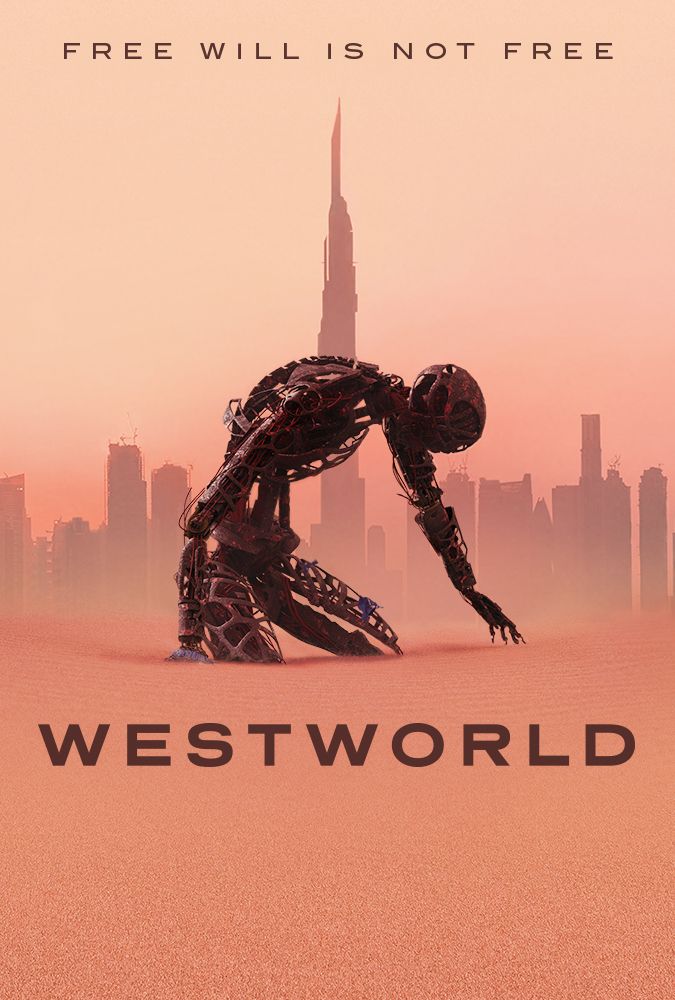
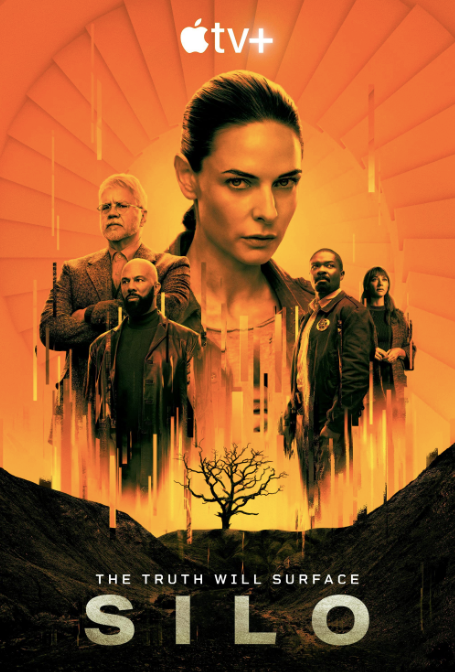
Episode 1.6 has Juliette discovering and devouring a relic that provides a key piece of the hidden truth: a book, with pictures of the outside world, including, especially, the ocean.  Being on Cape Cod, this immediately resonated with me.  There's truth indeed in any big body of water, and especially when the reader is living in a silo.  And there's a whole tradition in our off-screen world of books being conveyors of repressed truths, ranging from Station Eleven to, of course, 1984.  Silo has echos of 1984 already, and you can add that great dystopian novel to Westworld (listen to the music in Silo), a dystopian television triumph, until its final season.

And in episode 1.7 Juliet briefly rescues Gloria, who gave that book to George's mother, who in turn gave it to her son.  The episode is entitled "The Flamekeepers," and that's who Gloria and George's mother were.  And now -- as Gloria tells Juliette -- Juliet is their standard bearer.

The heroes and villains are this story are slowly coming into focus.  In addition to everyone who went outside to clean, and now Juliet, there are few others willing to buck what we would today call this fascist regime.  Bernard seems to be a good guy, and by and large, even Juliet's father, at least in things concerning his daughter's wellbeing.  Billings could wind up being a good guy, but that's pretty much it.  Sims, wherever his ultimate loyalties may reside, is so far a reliable agent of deceptive government.

But we still know precious little about that -- who they are, and what they ultimately want.  I'm looking forward to more of that become clear in the concluding three episodes of this season, and in seasons ahead of this provocative series.

See also Silo 1.1-1.2: A Unique Story, Inside and Out ... Silo 1.3: Like Chernobyl, Repaired ... 1.4: Truth, Not Quite ... 1.5: Revelations


Friday, October 21, 2022

The Peripheral 1.1-1.2: Cyberpunk, Time Travel, and Alternate Reality


Just saw the first two episodes of The Peripheral on Amazon Prime Video.  It's an adaptation of the 2014 novel of the same name by William Gibson, the veritable godfather of cyberpunk, and made by the creators of Westworld on HBO, so it has to be good, right?

Well, it is.  Pretty good, that is.   I haven't read the book, so I'm not making comparisons.  My favorite parts are 2099 London, inside the peripheral, a cyber construct that our heroes and villains from an earlier time -- just ten years from now, and who knows when else -- inhabit.  But there's some triteness here.  Good old Southern boys.  The mother of the hero (or one of the heroes), Flynne (well played by ChloĆ« Grace Moretz) dependent on some drug to treat her deadly cancer.  I also could have lived without such physical detail of the eye-transplant in the first episode.

But there are also lots of fun and cool details, like the deputy or whoever he was coming upon what seems to be a coffee-to-go just floating in the air, in the second episode.  And Flynne does bring back a drug from the future to cure her mother, after seeing an obituary for her, who would otherwise have died very soon.  We also soon learn that Flynne's entering the peripheral causes her visceral self to branch off in a different life back in 2030.  So we're dealing here not just with cyberpunk, but with time travel, in effect, and alternate realities, which is tremendously ok in my book.

In addition to drugs and knowledge, money can also be transferred from 2100 to 2030, or seventy years back in time, from the cyberworld to the real world -- if you can call a world already significantly different from ours in 2022 really real -- and that opens all kinds of possibilities, such as people in the further future hiring assassins in the nearer future.  And at this point, that's what we have in The Peripheral, all kinds of intriguing possibilities.  Good guys and bad guys, young and older people, of all genders, and lots of people and things in between.  I'd say as long as The Peripheral continues to mine the esoteric, mind-bending possibilities of cyberspace, time travel, and alternate realities, it could be a top-notch series.

I'll be watching and reviewing.


It's Real Life

alternate reality about The Beatles on Amazon, and  FREE on Vocal


Monday, July 4, 2022

Westworld 4.2: The Meta-Story

Westworld 4.2 continued the leaner, meaner narrative that apparently will typify this season, and I'm glad of it.

Among the most salient developments:

[Spoilers ahead ... ]

1. The Man in Black aka William is in top murderous form.  He's the main source of evil.  His better-looking self is an AI host, with his human originator back in some pathetic Matrix-like stasis.  He (William host) seems close to taking over the US government itself, having already taken care of the Vice President.  I said last week that I thought William throwing his mob-like self around like this was a little trite.  But it's now so audacious, I'm beginning to enjoy it.

2. Maeve and Caleb continue as the best/only good guys in the fray.  It's (of course) no easy battle.  The host makers have improved the models, to the point where they're not quite amenable to Maeve's control.  But the two make a good team, and animate every scene they're in.

3. Christina once Delores continues to have the most interesting intellectual story, at least in my book: what she writes seems to become reality, or at least insofar as one character.  This kind of meta storytelling, in which characters literally jump off the page or screen, is always fun to see.

Still missing in action in Bernard, who must have an important role this season.  And Teddy, after making that dramatic entry at the end of 4.1, wasn't on hand at all in 4.2, but I'm sure we'll see him again soon.

And I'll see you back here next week with my review of the next episode.


They're coming out into the open, for the first time in centuries ....

Sunday, April 17, 2022

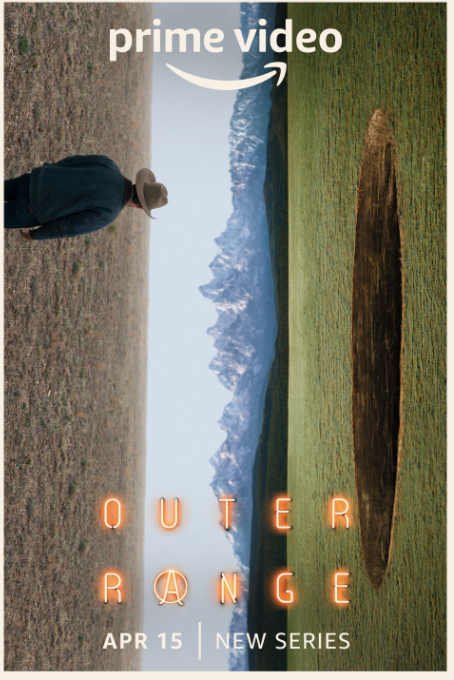
Outer Range 1.1-2: Elusive Hybrid


The hybrid of science fiction/fantasy with the western (contemporary or historical) genre has long been sought after, touted as a natural, powerful combination for a television series, for as far back as I can remember.  But it's seldom been realized, and off the top of my head, I can't think of a single successful example.  Last year's Invasion on Apple TV+ took a shot with a lead-off episode out West, with no less an actor than Sam Neill in the lead -- but it was the weakest episode segment in an otherwise top-notch series.  My wife suggested Westworld as an example that achieved the elusive goal, and yes, it did, but only partially, because the heart of its narrative was not western.

But I'll never say no to a recipe which seems so logical, so I'll gave Outer Range and its first two episodes which went up on Amazon Prime Video on Friday a shot.  The upshot: I wasn't blown away by the narrative, but I liked it enough to keep watching.

[Spoilers ahead ...]

Here's the story:  On a ranch in Wyoming, Royal Abbott (well played by Josh Brolin) discovers a water hole or pond (I'm not sure what it is, or should be called) that has some strange properties.   It's not clear as yet exactly what those are either, but they may entail bringing back the dead, or some kind of time travel, if the bison that keeps appearing with some arrows in its side is any indication.  Before the two hours are over, Royal throws a dead body (whom one of his sons killed) into the water, and is shoved in the water himself by Autumn (Imogen Poots -- great name), a young woman who shows up with a deep interest in the area.  Royal comes back fine the next day -- with just a wound in his leg -- but the dead body, not as yet.  Autumn clearly has some knowledge of what's going on, but even she doesn't know the whole story -- she's surprised when Royal comes back.  It's also no doubt also significant that Royal's daughter-in-law is missing (did she fall into the water hole and then the hole disappeared, too?).

So clearly, there are a lot of provocative questions in the air, which means a lot of possibilities for this series.  I would have advised Amazon to put up all eight episodes of Outer Range, so it could be properly binged and therefore comprehended and appreciated.  But, as I said, I'm sufficiently intrigued to watch more, and I'll see you back here with my reviews of the next two episodes next week.


Saturday, August 21, 2021

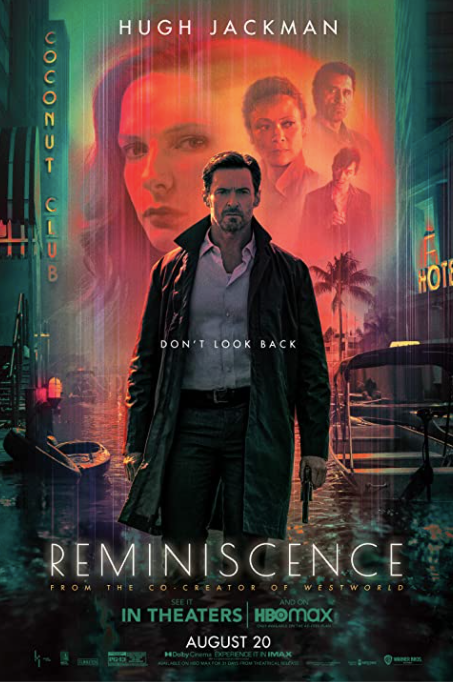
Reminiscence: Recalling the Many Things that are Good and Great about It


So here we are again.  Critics are giving Reminiscence (on HBO Max) mixed reviews, saying it's derivative.  I agree that it's derivative, but think it's excellent.  In general, I think being derivative is not a bad thing, and I disagree with the myopic critics who miss how well Reminiscence does it.

Yes, Reminiscence is reminiscent of Blade Runner.  Even more so in some ways of Total Recall, and for that matter, of all things Philip K. Dick.  But it also recalls a lot of Christopher Nolan's work, as well as movies as far back as the 1940s like Laura, and even Body Heat in 1981 to some extent.  And if it harkens to Westworld, well, Lisa Joy plays a central creative role in both.

I was a little bothered by Thandiwe Newton's character Emily motivated by the exact same thing as her character Maeve in Westworld -- finding her daughter -- but that's just one unnecessary misstep in a long list of gambits and interludes done very well in Reminiscence.  Among them are the deft mix of a flooded world and the refuge in memories, and outstanding acting by Hugh Jackman in the lead role, and Rebecca Ferguson as his all-consuming love interest Mae.

This is first time I've seen Ferguson, and I'm very impressed.  She's Swedish, and even before I knew that, she reminded me of Ingrid Bergman.  Come to think of it, Jackman's Nick Bannister reminded me a bit of Bogart.  Is that supposed to be bad?  Of course not.  It makes Reminiscence even more fun to watch.

I won't go into the plot, so as not to risk spoilers.  I will say that I like happy endings, and I'll leave it to you to decide where the ending of Reminiscence resides on the happy/sad meter.  Nick tells Mae that there are no happy endings, especially of happy stories, presumably because to end them is sad.  Mae responds that therefore she'd like to hear a happy story that ends right in the middle.  That's the kind of dialogue that lifts Reminiscence into a top tier, and if it reminds us of triumphs in cyberpunk ranging from Incandescence to Altered Carbon, so much the better.


Friday, September 25, 2020

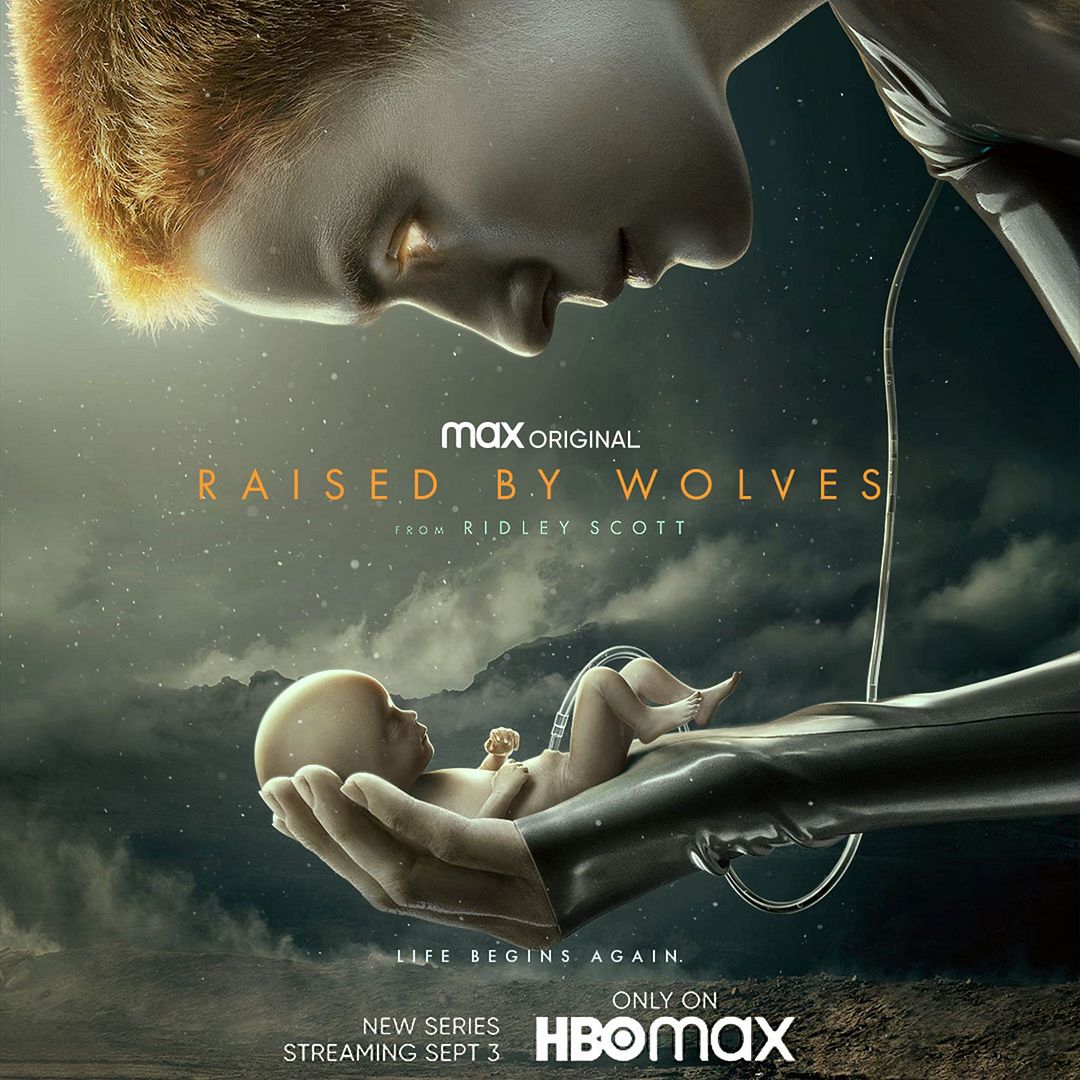
Raised by Wolves 1.8-9: Frankenstein and Motherhood

The story brought vividly home in Raised by Wolves 1.8 and 1.9, that androids can bear biological children, a hybrid of some sort of android and human, lifts this series into territory not even explored in a series as sophisticated as Westworld.   Of course, Westworld takes place on Earth, with a science a lot earlier in its development than what we see in Raised by Wolves, so I'm not criticizing Westworld on this account as much as noting the difference.  And that difference is about as profound as it gets.

A question I started addressing in the 1980s when I first began considering artificial intelligence was the connection between artificial intelligence and life.   Since the only intelligence that we know arose in living beings -- i.e.,  us, we humans - it struck me that an attempt to develop artificial intelligence truly worthy of the name without first understanding how intelligence arose out of our own DNA was "putting Descartes before the horse" (Mind at Large: Knowing in the Technological Age, 1988, p. 180; or see this if you don't want to read the book).   Yet most artificial intelligence, in science fiction as well as our real world laboratories, has proceeded on the basis of non-living circuitry.

In fiction, the monster created by Dr. Frankenstein -- colloquially known as Frankenstein, in Mary Shelley's 1818 novel of the same name -- can be considered the first modern android.  It is made of flesh and blood, and has a DNA-developed brain, so there is no reason he and his eventual almost-bride could not have had children -- indeed, it is Dr. Frankenstein fear of creating a species of monsters that gets him to abandon his project of giving the monster a mate.   Even in the Boris Karloff movies made over a century later, in which a bride of the monster is created, one catastrophe or another that befalls the "monsters" always preclude them from reproducing.  Which makes what was is happening in Raised by Wolves all the more remarkable.   

How exactly Mother, now on the way to being a completely biologically apt name for her, came to be impregnated is not completely clear, and she doesn't completely or even mostly understand herself.  She had virtual sex with her male human creator in a simulation.  Presumably this triggered a fetus that developed from what already was inside her, in contrast to the embryos that were implanted in her and we met in the first episode.

With only one more episode left this season, it will be fascinating to see where this -- "the future of humanity" -- goes.  It was good to see Father back to his senses, and all the children together, and Marcus get his comeuppance, though I hope he's not dead, he's too important and well-acted a character.  (It occurred to me as an outside possibly that possibly Marcus had sex with Mother at some point after he so nearly kissed her, that we didn't see.  Maybe that relates to that look on Mother's face that I talked about in my review last week.)   Not likely, I'll be definitely back here next week with some thoughts on the season finale.


See also Raised by Wolves 1.1: Fast Action and Deep Philosophy  ... Raised by Wolves 1.2-3: More than Meets the Eye ... Raised by Wolves 1.4-5: Halfway to Dune ...Raised by Wolves 1.6-7: The Look on Mother's Face


Tuesday, September 1, 2020

Raised by Wolves 1.1: Fast Action and Deep Philosophy


I just saw Raised by Wolves 1.1, courtesy of HBO Max, where the series is set to debut this Thursday, September 3.  In a sentence, it's a big concept, altogether excellent combination of fast action and deep philosophy, as befits Executive Producer Ridley Scott, and especially well-suited to our pandemic ridden time, when the very fate of humanity could well be at stake if things get much worse.

The narrative features androids and space travel (the action) and a conflict between true believers and atheists (the philosophy) who have left a dying Earth.  As such, the series is one big step more promising than the excellent Westworld, at least to my science fictional tastes, because it tells a story not only of humans and androids, but sets it way out in space, on a planet around another star.   The flavor is therefore closest to 2001 than anything else, even though Raised by Wolves has not much else in common with Clarke's story and Kubrick's movie.

The special effects and overall cinematography are top-notch to the point of breathtaking at times.  The acting is also fine, and it was good to see Travis Fimmel from Vikings back on the screen.   Amanda Collin is fine as Mother the android, and her character comes with the awesome power of killing everything around her with a scream (reminds me, in an odd way, of the episode "Sound that Kills" in the ancient Science Fiction Theater television show).  Munro Lennon-Ritchie and Jadon Holdsworth as Campion put in good performances, and it will be fun to see how this crucial character - a young boy whose allegiances to belief have not been settled as yet - develops.

I'd add that if ever there was a series I wanted to binge-watch to the end - at least, of this first season - Raised by Wolves appears to be that.   But I'll take it the way it's being presented, and will be back here with subsequent reviews.


Monday, May 4, 2020

Babylon Berlin 3: Complex Pleasures and Inescapable Conclusions


I binged the third season of Babylon Berlin on Netflix the past few nights, having seen and immensely enjoyed the first two seasons two years ago, in May 2018.  Enjoyed doesn't do the series justice, because it taps all manner of emotions, including dread and disgust at the growing Nazi shadow on late-1920s Berlin, where the new reeds of democracy still held tenuous sway.  I felt the same way about the third season.  Enjoyed doesn't do it justice.  What I've been able to take away from this remarkable narrative is far more complex and valuable than mere enjoyment.

Babylon Berlin is really a variety of genres, rivetingly rolled into one.  It's historical drama, with pinpoint accuracy and all kinds of revelations, ranging from the brass dials of an instrument used to administer shock therapy to a device that records an in-person conversation, without one of the parties being aware.   It's a top-notch whodunnit homicide detective story, with all kinds surprises and unexpected turns.  It's in German, which offers a special pleasure for my Yiddish ears to hear (Yiddish is middle-German).  And it's pretty good romance, as well, with Volker Bruch and Liv Lisa Fries doing a fine job as detectives Gereon Rath and Charlotte Ritter.

But my two favorite threads in Babylon Berlin Season 3 are the focus on the making of a film, an early talkie, in 1929, and the political context, which I'll tell you about after the film.  The film intersects with the murder story, as the lead actress and her replacement get killed by a masked intruder ("If only she'd stuck with silent films," someone comments about one of the actresses, and her inability to hit the high notes).  Not only that, but the film mutates into a blend of science fiction and horror - science fiction about androids, and the human-machine interaction, making Babylon Berlin just ideal to watch before the Sunday-night conclusion of the third season of Westworld.  (The Weimar Republic made a great contribution to early science fiction movies in our reality, as Fritz Lang's silent movie Metropolis amply attests.) You can't ask for more than that.

But Babylon Berlin does deliver more, in the subtle way, with occasional bursts of raw violence, that the Nazi menace is intruding ever more prominently into life in Berlin, from lead detective Rath's son reading Mein Kampf and joining the Hitler Youth to Nazis blowing up buildings. I said in my review of the first two seasons that comparisons between what happened to the democracy of the Weimar Republic in the late 1920s and early 1930s, and Trump and his followers in America right now, is inescapable.  The third season of BB introduces yet another element in the decline and fall of the Republic: the stock market crash in New York City, which will ripple across the Atlantic and shake Germany, and therein provide another reason for German citizens to lose confidence in their democracy.

This is a crucial and sobering lesson.  Stay tuned.

See also Babylon Berlin (1 and 2): Eye-Opening History


They're coming out into the open, for the first time in centuries ....

Westworld Season 3 Finale: Redemption, Less or More


Well, an at-once instructive and provocative Season 3 finale of Westworld just on, which pretty much redeemed a lot of the frustrations and incoherence of the rest of this season, which had its moments nonetheless.

Some highlights (with spoilers, of course):

  • Dolores is likely dead.  Charlotte (who started as a Dolores) is still alive, proudly carrying some of her wounds rather than going in for repair.  But, as she explains to the living Man in Black, no longer in black, she started out the same as Dolores, but living or whatever the exact right word it is for hosts who move through this world, that very process makes you go your own way - analogous, if you think about it, to human twins, who are totally identical only at birth.  The process of life inevitably makes identical twins increasingly slightly different.  That's just a fact of life. (I suppose there could even be some slight differences that emerge during gestation.) Further, back to Dolores, there's the possibility that one or more of those nugget brains of Dolores are still out there, who knows where, which could be inserted in a host and lead to another Dolores someday, in some future season.  All of which is to say, Dolores is not dead, she's just likely dead.
  • Speaking of the Man in Black, he's finally back, just as a host.  But I'm glad the slightly or more insane William, who was an annoying character this season, and one of the frustrations I referred to in my opening paragraph, is gone.   And since he was human, there's a good chance in his case that gone is really gone.
  • Maeve finally found herself.  She was too smart to think that going with Serac would get her back with her daughter.  It took way too long for her to find herself, but better late than never.  I look forward to her having a much more satisfying and satisfactory role in the next season.
  • Caleb's story was also predictable, but kudos for the nice touch of having Dolores choose him not for his violence, but for his sense of beauty aka humanity.  Again, we saw that throughout this season, as of course did Dolores from the first time when we saw them meet not that long ago at the beginning of this season.
  • I thought Bernard's story was excellent, both throughout this season and tonight, where we first see him finally come to terms with the loss of his son (actually, Arnold's son), in one of the most tender, beautiful scenes of the entire series, so far, and then see him sitting on the bed like a Buddha, or a big Yoda, as he glimpses some ultimate or closer-to-ultimate meaning...
That we'll have to wait until next season to get some further glimpse of, but, hey, that works for me,


They're coming out into the open, for the first time in centuries ....


Monday, April 27, 2020

Westworld 3.7: M vs. D


We finally get a full-fledged woman-to-woman or host-to-host one-on-one battle between Maeve and Dolores in Westworld 3.7 tonight, although it's not really one-on-one since drones and whatever machines the two can control are brought into the fray - and, who knows, some might even have minds of their own - and the resolution hinges on a red button a one-armed Dolores presses (a drone shot off half of her other arm), which renders her and Maeve unconscious just as Maeve was about finish her.

It's hard to keep count, but I'm pretty sure this wouldn't have been the last Dolores around.  Charlotte is still alive, though she is apparently no longer an ally with the primary Dolores, after following her commands got Charlotte's beloved family and nearly Charlotte herself killed last week.  But killing our Dolores would certainly have put a crimp in her master plan, with Caleb, for example, even now not fully cognizant of what Dolores has planned for him, at least not as insofar as we the audience have seen.

She apparently wants and expects Caleb to lead the human race, as she tells him, but he hasn't a clue as to what she means, and, again, neither do we.  A not unreasonable guess is she wants Caleb to lead the human race to its own destruction, but why would Caleb due that?  All the revelations tonight about his past, including that he killed his friend, provide no motive for him to lead the human race to some kind of suicide - after all, Caleb only killed his friend after he realized that his friend was going to kill him.

Further, there's a wildcard in all of this.  In addition to Dolores and Caleb vs. Maeve and Serac, we also have the Man in Black, now in white, who realizes that his role is now to save the human race.  He's no ally of Serac, seeing as how he's not happy about Serac stealing his company, but he is human - I think - and therefore certainly not an ally of Dolores.  I say "I think" he's human because, on this show, you never really know sure.  He certainly was human.  But he's spent enough time in hospitals that who knows what could have been done to him.  But if I had to bet, I'd say he's human.

Next week is the finale of this short season, and what I will bet on is we won't get answers to all of these questions. Likely not even most of them.  But that's ok,  The series has been renewed.


They're coming out into the open, for the first time in centuries ....

Monday, April 20, 2020

Westworld 3.6: Family Group Therapy


A solid Westworld episode 3.6 last night - i.e., challenging, harrowing, cutting-edge literally - in which at least three separate but ultimately interlocking stories unfold:

1. The Man in Black, aka William, now in white, is still under mental supervision, to put it mildly.  I'd still like to see him escape and do some damage in the real world. In a way, being in this kind of high-tech a quasi mental institution is like being in another kind of Westworld park.  I did like the scene with all the versions of William sitting around a table and talking to the real William in a kind of family group therapy.  These included William as a boy, William as we knew him when he first came to Westworld, the Man in Black himself, and just for good measure, William's father-in-law Delos.   I always get a feeling with Westworld that it's animated by situations the writers have long envisioned, even prior to Westworld.  This scene typifies that for me.

2. Although I'm getting a little tired of seeing Nazis in television dramas, it's always good to see Maeve flexing her martial kills, and the scene with her and the Nazis was top-drawer.  I also like how she's drawing ever closer to a confrontation with at least one of the Doloreses.

3. Speaking of which, Dolores as Charlotte does pretty well for herself, even though she can't keep her husband and son from being incinerated when her car is rocketed.  One of the advantages of being a host is that your body is apparently less destructible than the old-fashioned human kind that we the viewers all sport.  My guess is the death of her family, along with her own close call with it, will make Charlotte even more ferocious.

Almost no sign of Bernard in this episode, and none of Caleb, which is interesting in and of itself. The coming attractions show a big role for Caleb next week - good, since he's now the most unpredictable character on Westworld.


They're coming out into the open, for the first time in centuries ....

Monday, April 13, 2020

Westworld 3.5: Ground Control


Let me just say that this third season of Westworld is so different from the first two that it seems more like a new sequel series than the third season of a single series.  The tableau certainly isn't the same.  Even the recurring characters, especially the multiple Dolores, are different.  But this new series is provocative and altogether excellent.  But you already knew that.

Tonight's episode 3.5 featured some great music and some notable, even crucial reveals.  Let's start with the reveals.

Serac's erstwhile bodyguard - his body now inhabited and animated by a Dolores - tells Bernard, "You're the only one we can't replace".  That's an extraordinarily important point.  Why is that?  Bernard's a host, so why can't he be replaced?  Because there's no master file of his mind or soul or whatever you want to call it?  I'm trying to recall if we've ever seen Bernard replaced in earlier seasons?  Were a bank of Bernards wiped out at the end of season two?  I'm not sure - perhaps the machines that control the world wiped out that part of my memory.

Then there's what that dying guy says to Caleb: "You did it".   Did what?  Of all the new characters this season, we still know the least about Caleb.  Was his running into Dolores the accident that it seemed to be?  Caleb apparently is an innocent, but also seems to have a reflexive understanding of the world around him.  The answer to who Caleb is will likely also explain why Dolores trusts him.

Third and last reveal I'll mention now: Serac saying that, although the super-AI machine his brother created and Serac now controls has immense and detailed power over people's lives, we humans still have a "bubble of agency" to do on occasion what we want to do. When those bubbles present themselves is of course not clear.  But they mean that anyone and everyone still have modicums (or modica?) of unpredictable free will.

Just like every time you sit down or stand up to play or sing a song.  Which brings me to the music in this episode.  It was especially good, via the "genre" Caleb was experiencing.  But I especially liked the violin instrumental rendition of David Bowie's "Space Oddity".  Can't get much better than that in depicting a world veering out of control.


They're coming out into the open, for the first time in centuries ....

Monday, April 6, 2020

Westworld 3.4 The Man in White and Multiple Doloreses


Another complex and disruptive episode - 3.4 - of Westworld last night, in which more fates than usual happen to at least two of our central characters.

I'll say right out that I always liked The Man in Black, aka William, and I didn't like what happened to him last night, though it was done effectively.  Ending up in a mental institution, in a figuratively padded cell, dressed now in white, may have been a fate that William deserved, but just deserts can only go so far in a story that redefines itself and therein its future in every episode.  William may not deserve something better, but we the audience do, and I'd like to see William back, if not literally in the saddle, into some kind of better, more influential action.

Meanwhile, Dolores's character was redefined in the way a snowflake becomes a blizzard - well, if not quite a blizzard, into four versions of herself, with a principle that says, in effect, that there can be an infinite number of versions of her.   Pearls - which contain the mind, and/or, if you're more spiritually inclined, the soul - are apparently easily enough to duplicate.  Dolores's pearl now animates Doroles's body, Charlotte's body, Liam's bodyguard Martin, and Musashi.  And, since we already know how easy it is to replicate a host body, there could be who knows how many versions of each of those hosts walking or laying around, and who knows how many more Doloreses in other host bodies.

Given the awesomeness of this situation, I'm guessing the sooner or later Westworld will need to put some kind of break on it.  Meaning, something that gets in the way of this replication, some limit to how far and wide the replication can take place, maybe some kind of noise in the system that happens incrementally with each reproduction.  On the other hand, the essence of digital life is that code can be replicated with zero noise an infinite number of times.  Which means, at least scientifically, Westworld is on firm ground doing whatever it pleases with this multiplicity.


InfiniteRegress.tv