Chuck Todd interviews me about alternate histories
Showing posts with label Linda Ronstadt. Show all posts

Sunday, January 12, 2025

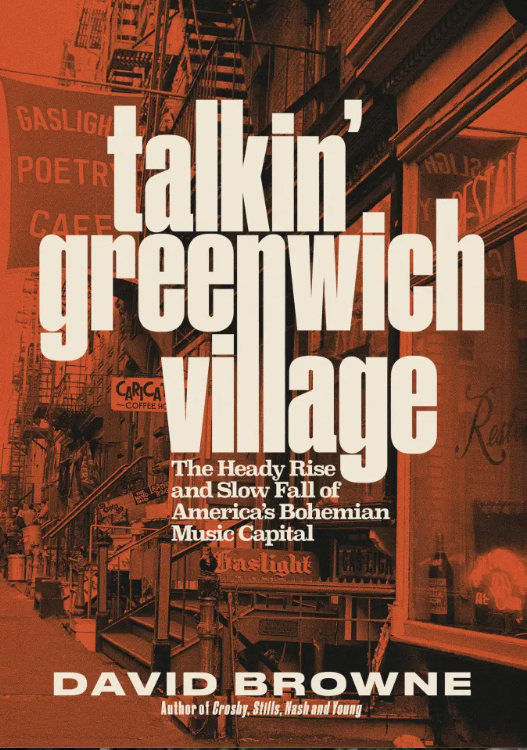
Review of David Browne's Talkin' Greenwich Village: Cornucopic Rainbow Biography


                                    more about the book here

If ever there was a time-travel ticket to a past and a place that you knew so well you could still see the sun glinting through the tree leaves, hear the din of the eateries as you walked by, and, most important, still hear the music that actually defied any given time or place, it would be David Browne's book, Talkin' Greenwich Village: The Heady Rise and Slow Fall of America's Bohemian Music Capital.  That's because Browne has a way of writing, an eye for detail, a penchant for commentary, that draws you in to fill the background you in one way or another actually experienced, or, what Marshall McLuhan called "cool".

Yeah, I sang doo-wop in Washington Square Park with my acapela group The Transits in the early 1960s, and then my folk-rock group The New Outlook a few years later (Ellie Greenwich and Mike Rashkow heard us uptown one Sunday afternoon in Central Park, and signed us to Atlantic Records, after changing our name to The Other Voices), but the way I really got to know the village was finishing up my BA in Journalism at NYU, then going a few blocks up to the New School for an M.A., then back to NYU for my PhD in the 1970s.  (I even managed to write three pieces for The Village Voice just before all that, my sum-total career as a music journalist.)

Turns out David Browne and I could have passed each other in the street -- David arrived to pursue his BA in Journalism at NYU in 1978, and I left, thankfully finished with school, in 1979 -- or bumped into each other going in and out of the diner southeast of the park.  But David stayed focused on the Village and its clubs and their music, to the present day, while I pursued music on the radio, MTV, iTunes, and anyplace I could hear it, and only came to the Village with my wife to eat in a great Italian restaurant near Houston Street, or go shopping at Balducci's.

And Talkin' Greenwich Village is one of the results of Browne's passion -- he's written more than half a dozen other books about popular music, and writes for Rolling Stone -- and delivers a cornucopia of vignettes, insights, and are what in effect mini reviews of dozens of artists.  You know, I always judge a book by how well it treats a subject I know something about.  My wife and I were/are devoted fans of Phil Ochs -- I consider his "The Crucification" right up there with the very best songs that Dylan wrote -- and Browne not only got everything right in his discussion of Ochs and his life in the Village (with an intermission in California) over the 1960s and 70s, until he took his own life the year my wife and I got married (we went to the Memorial Concert for Ochs that Browne also aptly describes), but I also learned something from his description of Ochs.  It's become hard-wired into Ochs's story that he was broken when Dylan did not include him in his Rolling Thunder tour.  But Browne provides a missing piece of the story, telling us how Ochs badgered Dylan, when Dylan was first beginning to put together the group that would tour.   Which means, it's not quite true that a callous or jealous Dylan simply didn't include Ochs on the tour.

But in addition to, I don't know, at least vignettes of 50 artists spread across 8 chapters and an Epilogue teeming with information -- Browne lists every interview he did for the book in its Bibliography -- he focuses on two artists, Dave Van Ronk, and the Roche Sisters (and, also of course, Bob Dylan), and makes them, in effect, centerpieces and guides to what Browne is telling us happened in these magical decades.  I only saw Van Ronk once (at the Phil Ochs 1976 Memorial  Concert at the Felt Forum) and the Roche Sisters only on YouTube.  But Browne's accounts of Van Ronk and of the Roches across the decades amount to mini but in-depth biographies of the two, and make Talkin' Greenwich Village irresistible reading just on their own.

But lest you think everything in this book is as serious as Ochs, or even Dylan, Browne also has a knack for the kind of detail that will make you chuckle, or even laugh out loud.  Seeking the name of a song on one of The Blues Project's just-recorded albums, the response to the person who's writing down the titles is "'What song? You mean Steve’s song?' To [Steve] Katz’s chagrin, 'Steves Song,' complete with a missing apostrophe, became the title."  Or, "when Orbison and Ronstadt huddled in his dressing room, [Jerry] Brown [then Ronstadt's boyfriend], waiting patiently outside, finally began pounding on the door: 'Let me in! I’m the governor of California!'''  Or, "the worst [performers in this Village venue] were booed or heckled. When asked if one contestant should be booted off the stage, [owner] Porco grumbled, 'No, I think we should shoot him.'”

Of course, no volume is perfect, and I'll tell you the one thing I missed in this New York Public Library of a book. I was a big fan of The Blues Project, and to this day I find myself humming or singing to myself "Cheryl's Going Home".  The song was written by Bob Lind (who wrote "Bright Elusive Butterfly of Love"), who does a pretty good job singing it.  But the Blues Project rendition, with those piercing guitar notes, and their interplay with organ, is something else.  Browne tells us almost as much about The Blues Project, Danny Kalb in particular, as he does about Van Ronk, the Roches, and Dylan.  But not a word about that elusive heart-breaker Cheryl.  I guess she was already home and out of sight.

But every page of this pulsating encyclopedia of whirling words is worth reading.  The fall of Greenwich Village and its clubs and taverns and whatever you want to call them brought tears to my eyes, because David Browne had made it seem like a beloved living organism, a mini gaia of music just several blocks long.  My only really lasting regret about this book is that it wasn't ten times longer.  As it was, it's 400 pages went by too quickly, because I just couldn't put the book down.

=========

Check back here at the end of the month for my upcoming interview with David Browne.

=========


                        in Kindlepaperback, and hardcover


Monday, January 30, 2023

The Last of Us 1.3: Bill and Frank


A letter-perfect, memorable, beautiful episode 1.3 of The Last of Us, in which see how two people can find deep satisfaction in a lasting relationship that flourishes amidst the fungal ruin.

[Spoilers ahead... ]

Although Joel and Bella play a significant role, and it was good to see Anna Torv's Tess back in a flashback -- as I hoped for/predicted last week -- the heart of this episode was Frank and Bill.  It could easily have been a standalone movie or even series, but as it was, it lit up The Last of Us.

Bill's a conspiracy theorist survivalist who goes way back, before the arrival of the fungus (which we learn probably arrived in cereals -- oi! that could make me lose my taste for oatmeal every morning).  Frank shows up hungry, not having eaten in two days, not long after the pandemic has struck.  Bill is suspicious but cooks Frank a delicious dinner -- rabbit -- washed down by Beaujolais, which gives Frank an opening for a line about who knew how well Beaujolais and rabbit went together.   Bill and Frank certainly go well together (great acting by Nick Offerman and Murray Bartlett in the roles) and they live out their lives until ... well, I don't want to give everything away.  I will say that I thought the ending was the best way to go, given what the world around the two was like.

The larger lesson of this heartening and heartbreaking story is that who knows how many people really survived the fungal attack.  There could be thousands of couples and families in out of the way places around the world.   And this in turn means that there could be many seasons of this story.

But as to where we are now, Joel and Bella have a car, which plays Linda Ronstadt's "Long, Long Time" as the two drive west, a song played on the piano and sung earlier by Bill and Frank, an incandescent love song, which will now remind me of Bill and Frank for a long, long time.

See also The Last of Us 1.1-1.2: The Fungus Among Us


I talk about The Last of Us, beginning at 40mins 40secs


Sunday, January 26, 2020

Linda Ronstadt: The Sound of My Voice: Perfection


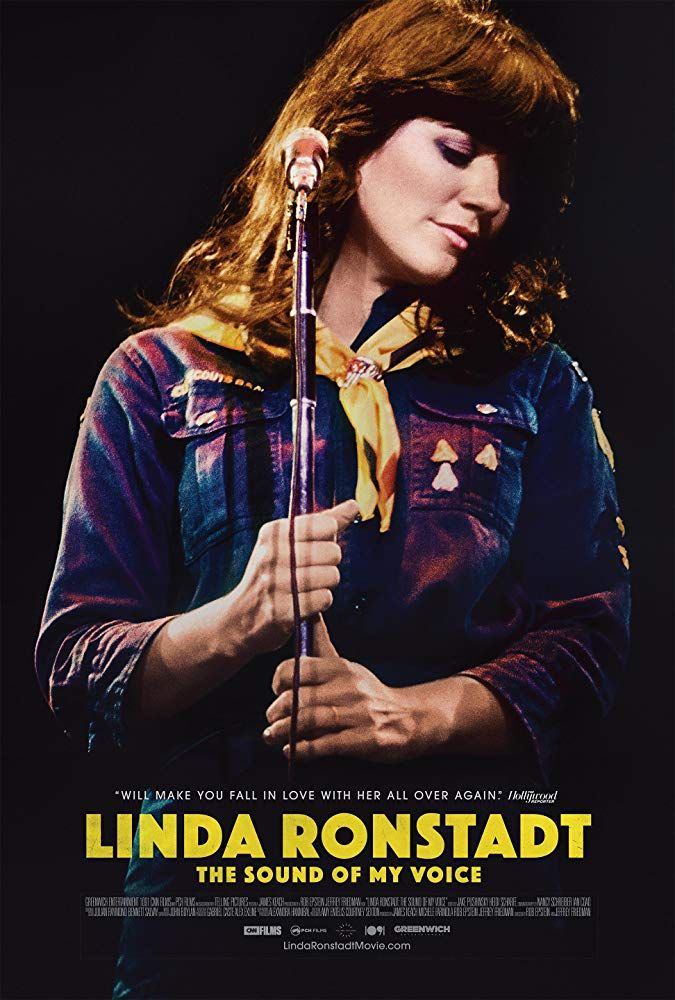
My wife and I finally had a chance to see the CNN documentary Linda Ronstadt: The Sound of My Voice last night.  It was just perfect - in terms of the time it devoted to Ronstadt's many performances, the sheer range and power of them all, and the many people, after all these years almost as famous as she, with whom she interacted and changed their lives.

I think my favorite part was at the very end, when Ronstadt, unable to perform since 2009 when Parkinson's caught up with her, sings harmony in 2019 with her cousin and nephew.  She insists she isn't really singing, just piecing notes into the harmony, but the beauty of her voice comes through nonetheless.

That ending segment shows that not only she, but her capacity to bring the world pleasure through the sound of her voice, is still very much alive.  All of us, famous and anonymous, sooner or later suffer the ravages of old age.  The only way they can be avoided is via A. E. Housman's "Athlete Dying Young" or the tragic death of Kobe Bryant today.

It was great see Emmylou Harris, J. D. Souther, Jackson Browne, Don Henley, and so many others on the screen, now, and through the decades in which they had such mutually beneficial relationships with Linda Ronstadt.  I was especially pleased to see Peter Asher, long Ronstadt's producer, who now hosts one of my favorite shows on Sirius XM's Beatles Channel, From Me To You.

The good thing about great musical performance, ever since Edison invented the phonograph in 1876, is that we can have them to hear forever.   Add to that the invention of YouTube in 2005, and we now have the visual performances, too.  I know that I and millions of others will continue to enjoy them.


Welcome Up: Songs of Space and TimedigitalvinylCD

Sunday, January 19, 2020

Ray Donovan Season 7 Finale: Linda to Elvis


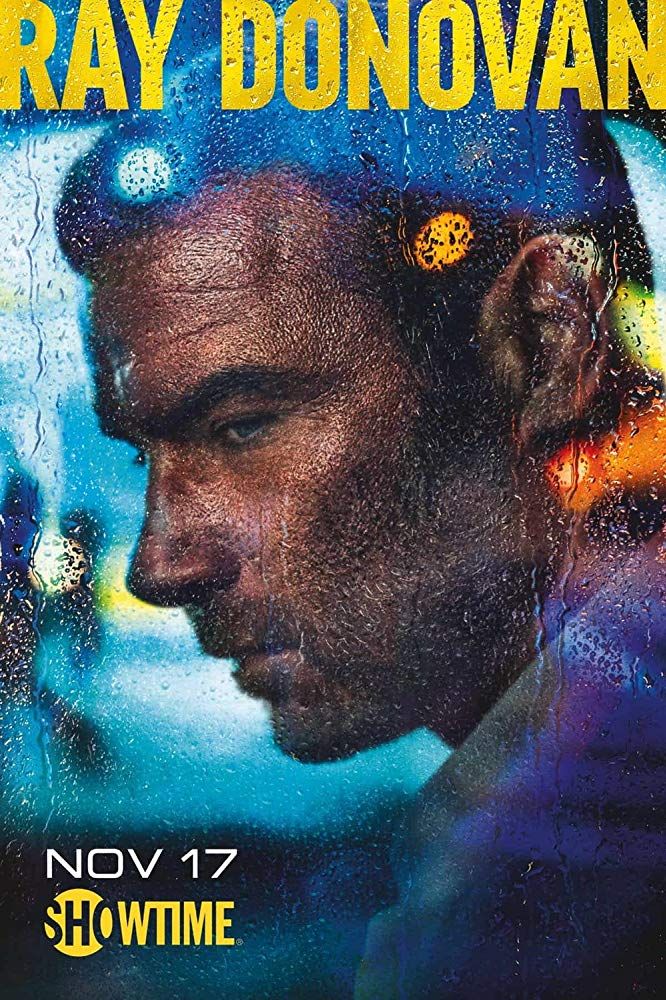
And an emotional powerhouse to a brilliant season to end this seventh season of Ray Donovan tonight, pretty much sandwiched between Linda Ronstadt singing Desperado at the beginning and Elvis singing You'll Never Walk Alone at the end, what more could you ask for?

Several points that especially struck me -

  • Daryll more than Declan was responsible for Smitty getting shot to death in that shoot-out.  Although it was Declan's bullet, Daryll was the one who started shooting.
  • I'm of course glad that Terry didn't jump off the Empire State Building.  Did he go up to observatory knowing that he couldn't jump off, or did he discover that after he got up there?  I'm hoping it's the first - which would mean that Terry's conversation with Dr. Amiot (an absolutely perfect scene) had some impact on Terry.
  • I'm not entirely convinced that Mickey would've walked away, leaving Smitty there on the ground.  All season, we have seen Mickey becoming a little bit more of a semi-decent mentch, especially after his resurrection.  So, I just don't know if that was fully motivated.
  • I'm guessing that Ray and Molly are finished now, but that's too bad.  They were a good couple.
  • No resolution of the Mayor vs. Ray, but that's ok, because it gives at least one major storyline for the next season.  (My wife points out that the judge surviving puts the Mayor in hot water, but we didn't see how that played out.)
But this season proves that, all in all, New York City has been very good indeed for Ray Donovan the series.  I've never been more disappointed that a season ended.

 See also Ray Donovan 7.1: Getting Ahead of the Game ... Ray Donovan 7.2: Good Luck ... Ray Donovan 7.3: "The Air that I Breathe" ... Ray Donovan 7.4: Claudette and Bridget ... Ray Donovan 7.5: Bing! ... Ray Donovan 7.6: Phone Booths and Cellphones ,,, Ray Donovan 7.7: Back Story ... Ray Donovan 7.8: The Wife ... Ray Donovan 7.9: Pulling for Life

See also Ray Donovan 6.1: The New Friend ... Ray Donovan 6.2: Father and Sons ... Ray Donovan 6.4: Politics in the Ray Style ... Ray Donovan 6.6: The Mayor Strikes Back ... Ray Donovan 6.7: Switching Sides ... Ray Donovan 6.8: Down ... Ray Donovan 6.9: Violence and Storyline ... Ray Donovan 6.10: Working Together ... Ray Donovan 6.11: Settled Scores and Open Questions ... Ray Donovan Season 6 Finale: Snowfall and Mick

See also Ray Donovan 5.1: Big Change  ... Ray Donovan 5.4: How To Sell A Script ... Ray Donovan 5.7: Reckonings ... Ray Donovan 5.8: Paging John Stuart Mill ... Ray Donovan 5.9: Congas ... Ray Donovan 5.10: Bunchy's Money ... Ray Donovan 5.11: I'm With Mickey ... Ray Donovan 5.12: New York

See also Ray Donovan 4.1: Good to Be Back ... Ray Donovan 4.2: Settling In ... Ray Donovan 4.4: Bob Seger ... Ray Donovan 4.7: Easybeats ... Ray Donovan 4.9: The Ultimate Fix ... Ray Donovan Season 4 Finale: Roses

And see also Ray Donovan 3.1: New, Cloudy Ray ... Ray Donovan 3.2: Beat-downs ... Ray Donovan 3.7: Excommunication!

And see also Ray Donovan 2.1: Back in Business ... Ray Donovan 2.4: The Bad Guy ... Ray Donovan 2.5: Wool Over Eyes ... Ray Donovan 2.7: The Party from Hell ... Ray Donovan 2.10: Scorching ... Ray Donovan 2.11: Out of Control ... Ray Donovan Season 2 Finale: Most Happy Ending

And see also Ray Donovan Debuts with Originality and Flair ... Ray Donovan 1.2: His Assistants and his Family ... Ray Donovan 1.3: Mickey ... Ray Donovan 1.7 and Whitey Bulger ... Ray Donovan 1.8: Poetry and Death ... Ray Donovan Season 1 Finale: The Beginning of Redemption


It started in the hot summer of 1960, when Marilyn Monroe walked off the set of The Misfits and began to hear a haunting song in her head, "Goodbye Norma Jean" ...

InfiniteRegress.tv