Chuck Todd interviews me about alternate histories
Showing posts with label The Beatles. Show all posts

Monday, May 25, 2026

For All Mankind 5.9: Penultimate Episode of Penultimate Season


In case you think "penultimate" is some kind of compliment, it pretty much isn't.  This is the 5th season of a 6-season series, and the next-to-last episode of this 10-episode season.  It wasn't even a close-to-great episode of a close-to-great season, though I think the overall series is a memorable triumph in alternate history, about a crucial aspect of our existence: the need and attractiveness of getting off this planet to discover what place we have in the vast and (as far as we know) infinite universe.

But this season, with a couple of shining exceptions, didn't do much to further that alternate history or the metaphysics of existence beyond our planet.  As I've said in prior reviews, the battle between humans on Earth and on Mars is old hat in science fiction.  Episode 5.9 gives us yet another rendition of that, as the forces of our home planet strive to rip our brave pioneers on Mars to shreds.  And, indeed, there isn't much alternate history in any superior military force laying waste to a limited band of pioneers.

The action on Titan, on other hand, was riveting, as that story has been from the beginning.  The discovery of extraterrestrial life, in Ringo's words, don't come easy.   Kelly and her three-person crew, including the former captain, seemed fixed on finding it.  I wish them luck, and hope we see them getting at least a glimpse of it in the upcoming season finale later this week.

That finale will be up on Apple TV this coming Friday -- along with the Star City debut, another alternate history about the human sojourn into space, this time from the Soviet perspective, i.e,, the view from the victor of the race to get to the Moon, which is the basis of For All Mankind.  I'll certainly be reviewing that, humming "Back in the USSR", one of my Beatles' favorites, more recently done justice by The Analogues in our real history.

See also For All Mankind 5.1: On the Intersection of Alternate and Real Histories ... 5.2: Actor Reunions ... 5.3: The Newton, the First Amendment, and ... Last Breath ... 5.4: Robots Replacing Us In Space? ... 5.5: ICE on Mars ... 5.6: Earth vs. Mars ... 5.7: Titan! ... 5.8: Firing On All Cylinders

And see also For All Mankind 4.1: Back in Business and Alternate Reality ... 4.2: The Fate of Gorbachev ... 4.3-4.4: The Soviet Union in the 21st Century, On Earth and Mars ... 4.5: Al Gore as President and AI ... 4.6: Aleida and Margot ... 4.7: Dev on Mars ... 4.8: Sergei and Margot ... 4.9: Progress ... 4.10: Earth vs. Mars

And see also For All Mankind 3.1: The Alternate Reality Progresses ... 3.2: D-Mail ... 3.3-3.4: The Race

And see also For All Mankind, Season 1 and Episode 2.1: Alternate Space Race Reality ... For All Mankind 2.2: The Peanut Butter Sandwich ... For All Mankind 2.3: "Guns to the Moon" ... For All Mankind 2.4: Close to Reality ... For All Mankind 2.5: Johnny and the Wrath of Kahn ... For All Mankind 2.6: Couplings ... For All Mankind 2.7: Alternate History Surges ... For All Mankind 2.8: Really Lost in Translation ... For All Mankind 2.9: Relationships ... For All Mankind 2.10: Definitely Not the End


Monday, May 4, 2026

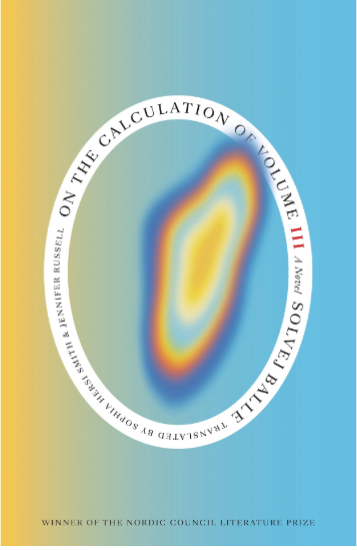
On the Calculation of Volume (Book III): Multiplication


Well, I told you at the end of my review of On the Calculation of Volume (Vol II) that I'd be back with a review of Vol III very soon, and here I am.  Volume III, unlike Volume II, changed everything in this mega-story, and was every bit as powerful as Volume I.

The key new ingredients were fellow travelers/inmates of November 18.   Henry joining Tara was signaled in the teaser at the end of Volume II, and before Volume III is over, the two are joined by Olga and Ralf, and a new teaser at the end alerts us to more people who live over and over in November 18.

Henry, Olga, and Ralf arrive in the story at different times.  Ralf's introduction is the most packed with possibilities.  Tara learns about him in the first place from Olga, who is desperate to find him -- he went missing after he and Olga connected.   I initially thought Ralf was missing from November 18 because he had found a way out, which I assumed made him unavailable for some reason in the November 18ths Olga -- joined later by Tara and Henry -- was searching.   But he turns up, and the voices of Henry, Olga, and then Ralf give author Solvej Balle the opportunity to explore the metaphysics of loopism more widely than she did with just Tara. 

Ralf sees his and the other three's endless presence on November 18 as a way they "can alert people on the brink of disaster".  It's a logical and lofty goal -- if you know a car is going to crash in a particular place on November 18, you can prevent the crash by arranging for a road block on a subsequent November 18, or better, if the crash is due to something wrong with the car, by fixing it (assuming those kind of changes stick with November 18).  Further, to do this on as massive a scale as possible, Ralf wants "to develop an interspace: a kind of high-speed bridge between the analog and digital worlds, capable of converting vast volumes of data back and forth with minimal effort, with no information loss and fast enough to save lives."  A time-looped man with a plan indeed!   We could use a "bridge" like that in our off-page real life world.

There are lots of other goodies in this third volume of Tara's adventure, including books by fictitious authors, focus on the city of Bremen where the four come to live (Cora Buhlert, a Hugo Award winner, lives there, too, and that's not fiction), and Raphael’s famous "School of Athens" fresco, which always reminded me of the cover of The Beatles' Sgt. Pepper.  And I'll be back here with more as soon as I finish Vol IV in this magical mystery tour through revolving time.

See also On the Calculation of Volume (Book I): The Irreducible Metaphysics of Time Loops ... (Book II): Life in the Loop Lane


in Kindlepaperback, and hardcover


Saturday, February 28, 2026

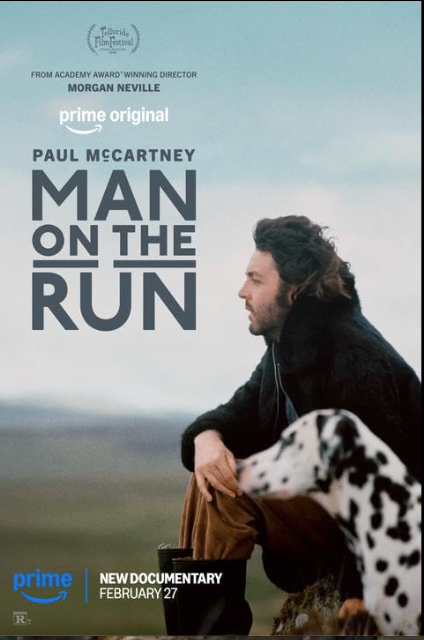
Man on the Run: The Rocky Flight of Wings


My wife and I saw Man on the Run, a nearly 2-hour documentary on Amazon Prime, about Wings, Paul McCartney's group that flew around the world from shortly after The Beatles broke up in early 1970 to shortly after John Lennon was murdered at the end of 1980, making a Beatles reunion forever impossible.

Let me say that I've always thought Wings at their best -- "Let Me Roll It," "Band on the Run," "Jet," "Mull of Kintyre," and "Live and Let Die"-- was every bit as good as The Beatles at their best, which is actually a huge lot better than good.  And like all the recent Beatles documentaries, the sound in this documentary was great, and an outright pleasure to hear.

The story, though, was no pleasure to see.  A sadness hung over the movie, and not just because we knew it would conclude close after Lennon's assassination.   But we see Paul McCartney's struggle, beginning with his attempt to get the world to see, back then, and continuing now, that Lennon had announced to the band much earlier than McCartney did to the world that The Beatles were over.  In part, McCartney's problem was the way in which he made that announcement, in an interview he conducted with himself, in which he even took a shot at poor Ringo, proclaiming McCartney wouldn't miss him.

The result was a lot of people -- fans and critics -- listened to McCartney's efforts, before he created Wings, with a lot less than a kindly ear.  The myopic critic Robert Christgau was especially harsh, missing completely the affectionate brilliance of Uncle Albert/Admiral Halsey, and many of McCartney's other solo efforts, literally solo in that he played all the instruments and sung all of the parts either by himself or with Linda.   I've been complaining about Christgau for decades, but I guess I should thank him, because The Village Voice published my response to Christgau's article, which I sent to the weekly newspaper as a letter to the editor, and they published as an article -- my first published article -- for which they paid me $65.

McCartney created Wings in large part in response to such criticisms, and the group succeeded splendidly.  They started out playing to small audiences, but in a few years played to sell-out crowds teeming with shouting fans with a great line-up that consisted of Paul, Linda, Denny Lane, and an evolving variety of musicians.  McCartney was happy about that, but continued to be plagued by public misunderstandings.  I recall how I felt, when I heard McCartney's response to Lennon's murder -- "it's a drag" -- thinking that Paul must've been in shock when he gave that seemingly shallow reply to a journalist's question, but one of my students (I was teaching then at Fairleigh Dickinson University) came up to me after, in sheer disbelief that McCartney had said this.   It was good in the documentary to hear that Paul had said a lot more than the drag line in his response to that question -- the media as they often do just broadcast the most provocative line -- and heartening and soothing to hear Sean Lennon say recently in the documentary that he always understood how much his father and Paul had loved one another.

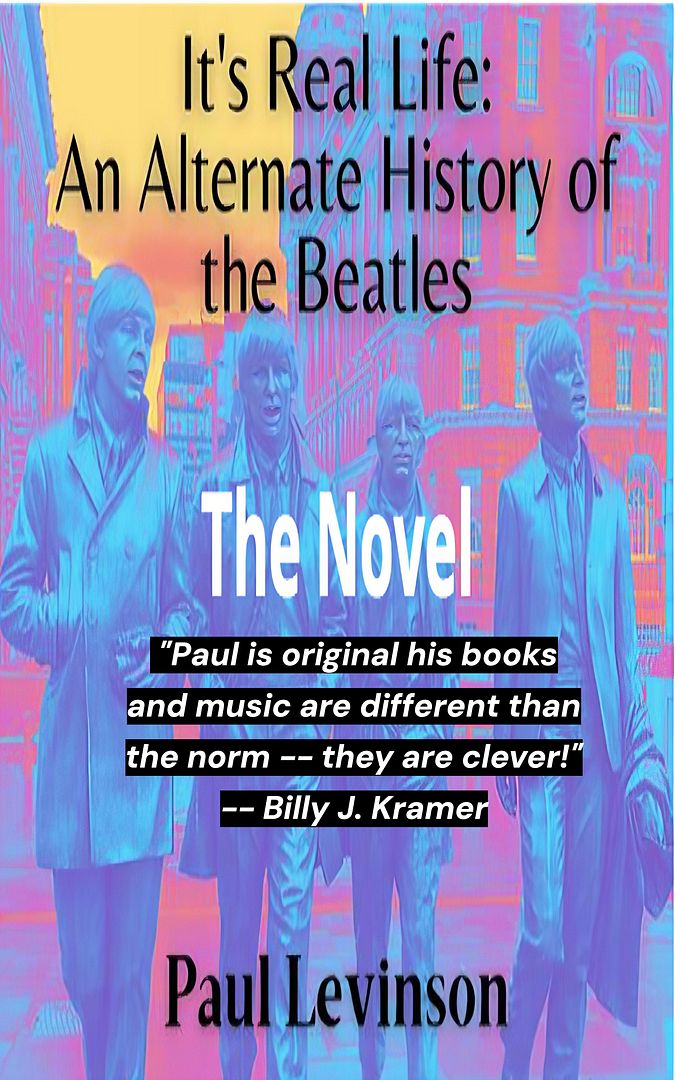
My wife and I continue to love The Beatles, and Paul and his music.  One way I tried to deal with how much I miss them was the novel I wrote, It's Real Life: An Alternate History of The Beatles.  Seeing Man  on the Run didn't have too much of a healing effect, but I guess that's the problem with reality.


more about the novel here

Sunday, November 30, 2025

Audio Podcast: Review of (Beatles) Anthology 2025: The Highs and the Highs (and the One Low)


Welcome to Light On Light Through episode 416, in which I review the The Beatles Anthology 2025 documentary.

Relevant links:


Check out this episode!


Note added February 10, 2026: And check out this new episode of Rock Talk Studio

Saturday, November 29, 2025

(Beatles) Anthology 2025: The Highs and the Highs (and the One Low)


My wife and I watched the renewed and expanded Beatles' Anthology on Disney+ the past three nights. I'd seen and heard bits and pieces of various lengths of the original eight episodes -- on YouTube, The Beatles Channel on Sirius XM, and everything in between -- which originally aired on ABC-TV in 1995, but we somehow had managed not to have seen that original on the unsmart TV in our family room.  It was more than wonderful to see and hear what 2025 director Oliver Murray did with the 1995 eight episodes -- uncovering/discovering new footage as well as calling upon Peter Jackson and his elves to bring to current vibrant life what was done in 1995 (just as Jackson had done so miraculously with The Beatles: Get Back in 2021) -- but the real treat for me (treat is too weak a word) was seeing the new ninth episode.

I'll go over some of highlights of the first eight episodes, and then delve into the wonders of ninth episode, and the one problem I had with it.

About the first eight episodes:

  • It was great to see Murray the K get his due (just as he had in Martin Scorsese's Beatles '64 last year).  I worked with Murray the K when he was at WNBC Radio in New York City in 1970s.  He hired me after he read my article "Murray the K in Nostalgia's Noose" in The Village Voice in 1972 (my second-ever published work -- my first was "A Vote for McCartney" a year earlier, my response to dyspeptic critic Robert Christgau's attack on Paul and his early post-Beatles work).  Murray never got the credit he deserved back then in ushering in The Beatles, and before then on WINS with Alan Freed, and after when he was on WOR-FM helping to invent the FM radio format. I had such a good time working with him on NBC, I even wrote and recorded a song about him -- "Murray the K's Back in Town" -- which he played on the air.  (The late Pete Fornatale -- protagonist of my It's Real Life: An Alternate History of The Beatles -- played that song on his Mixed Bag on WFUV Radio in the early 2010s.)
  • Great shots that I hadn't seen before of The Beatles in their 1964 Washington, DC concert!
  • There was a spectre, a foreshading, of what would happen to John at the end of 1980. George worries throughout about the exposure of The Beatles in a country in which John F. Kennedy had just been assassinated.  (The sick devotion to guns in this country is still claiming lives.)  John himself notes after the DC concert that "some bloody animal cut Ringo's hair".
  • I was reminded again what a uniquely almost  extraterrestrial person Ed Sullivan was.  I mean, no one here on Earth had his accent or his delivery.  Even in Japan, the Beatles are introduced in Japanese (of course), and the host concludes in English with "Ladies and Gentlemen, The Beatles!" -- delivered in a pretty good mimic of Ed.
  • I find it hard to believe that "Pennylane" didn't go to #1 in the UK. Beaten out by Engelbert Humperdinck's "Release Me"? Maybe if it was "Les Bicyclettes de Belsize" ...
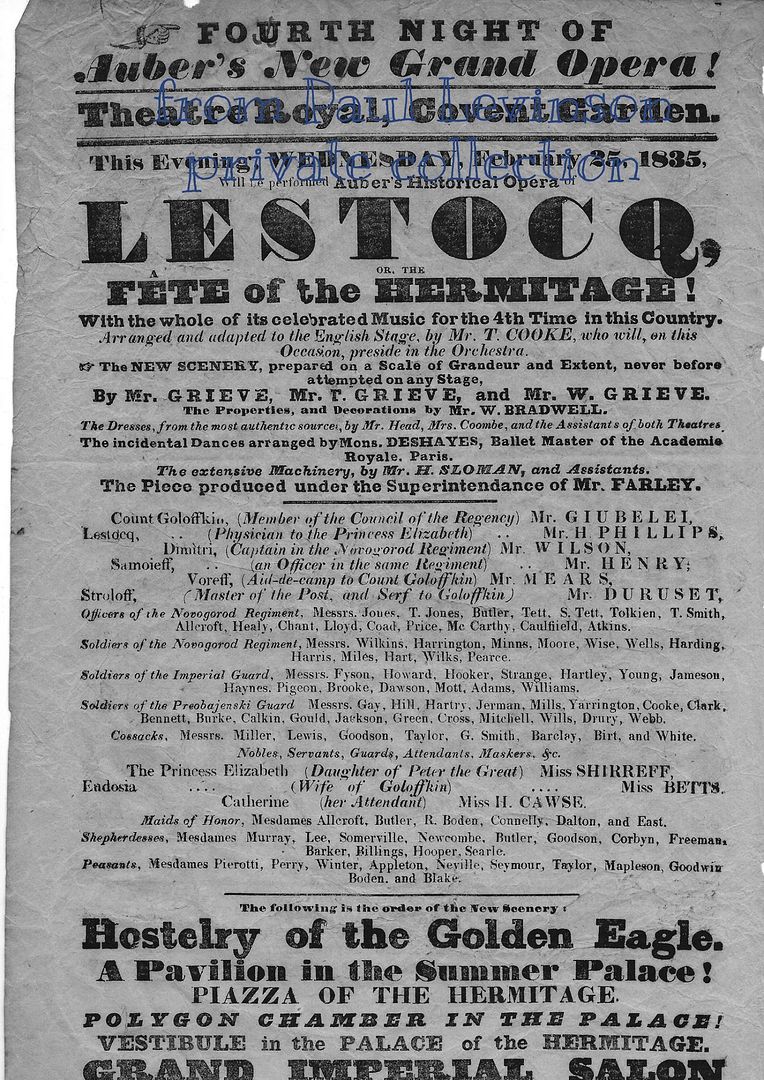
  • John -- after The Beatles had broken up and at odds with Paul -- objects to Sgt Pepper being called a "concept" album, saying "Mr. Kite" and all the songs on the album other than the Peppers could easily have been on any other Beatles' LP.   (George also critiques Sgt Pepper.)  As far as I'm concerned, I think Sgt Pepper is indeed a concept album and what John says is also true.  There's really no contradiction here, both are true.  And I'll also say how happy I was to find the following poster in an antique shop my wife and I were in, must've been, the late 1970s.  It's hanging on a wall outside our bedroom.  Every time I walk by it, I smile.  It reminds me of Sgt Pepper.


Now, about the new ninth episode:

It was not only heartwarming (to see the three surviving Beatles still making such superb music) and heartbreaking (because now George is gone), it was chock full of fascinating and important information.  My favorite example: I had always heard, regarding the genesis of "Free As A Bird", "Real Love", and "Now and Then", that the transformation projects began when Yoko Ono gave Paul a tape with some of John's demo recordings from the 1970s.  But in episode 9 of Anthology, George tells us about a crucial preface: When Roy Orbison died, The Traveling Wilburys were thinking of taking some of Elvis's demos and bringing them to life with the inimitable Wilbury voices.  But they decided not to go in that direction, because (in George's words), it was "too gimmicky".  (George didn't say, but rumor has it that the Wilburys were thinking of inducting Del Shannon into the group, but he took his life in 1990.)

But if I had to pick my favorite moment in the ninth episode, and therefore all nine episodes of this beautifully burnished Anthology, it would be Paul and George completing their incomparable three-part Beatles harmony with John's voice in the chorus of "Real Love".  It's been one of my favorite Beatles songs since I first heard it in the mid-1990s.  The song inspired me to write It's Real Life: An Alternate History of The Beatles (the video of Anne Reburn's cover of the song follows below -- she performed this in the radio play broadcast on Killerwatt Radio, adapted from the first chapter of my novel; "Real Life", by the way, was John's title for the song before he changed it to "Real Love").  Paul and George's voices being in such synch with John's recording, the harmony snapping into place, snapping into life, is a deeply acoustic proof to me that this uniquely satisfying sound will never die.  At that instant, the former Beatles became The Beatles again, and gave evidence that The Beatles will always be with us.


Powers that be often miss the immortality of what is all around them.  After Marshall McLuhan died in December 1980 (same year and month as John: their lives were intertwined: they both hit America big in 1964), I proposed a book about him to an editor at St. Martin's Press.  He laughed and told me no one cared about McLuhan any more. That book became my Digital McLuhan, which Routledge published in 1999.  I still receive royalties checks for sales of that book every year.   In the 1970s, I told my doctoral thesis advisor Neil Postman that I thought The Beatles, like Shakespeare, would be known and enjoyed for as long as there were human beings.  He laughed too.

Which brings me to the one criticism I have about episode 9.  Paul and Ringo are still alive.  Yes,The Beatles music including their harmonies will live forever.  But not the mortals who made it.  Wouldn't it have been wonderful to have another hour, or even just a few minutes, to have Paul and Ringo look back at 1995 from their vantage point right now?  Oliver Murray of course interviewed Paul and Ringo in the short film he made, Now and Then: The Last Beatles Song, that accompanied release of the single in 2023.  I guess that could be considered a coda to Anthology 2025, but wouldn't a few additional or more words from Paul and Ringo looking back at what they accomplished in 1994 (when "Free As A Bird" was made) and 1995 (when "Real Love" was made) have been just the perfect cup of sencha tea after the marvel we just took in?

Chris Willman asks Oliver Murray in an excellent interview in Variety why there are no contemporary 2025 voices in Episode 9.   Murray replies: "I didn’t really like the idea of Ringo [and Paul] in 2025 talking about an interview that he gave in 1995 about something that happened in 1965. It was all too nebulous to do that." I'm not sure I know what "too nebulous" means, in this context. "That is, I think I disagree".


in Kindlepaperback, and hardcover

Added February 10, 2026: Check out this new episode of Rock Talk Studio

Saturday, November 15, 2025

One to One: John & Yoko: As They Really Were


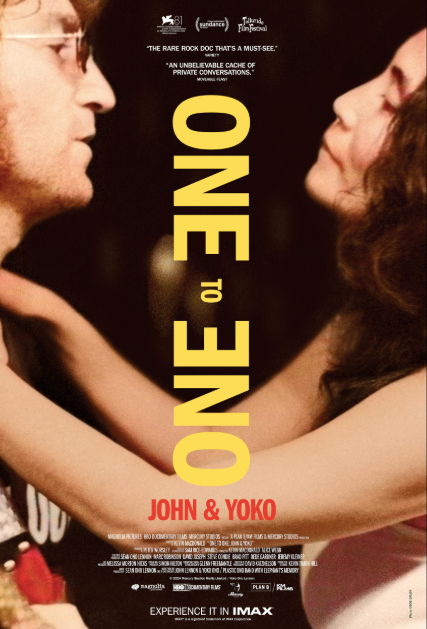
My wife and I just finished watching One to One: John and Yoko, the 2024 documentary, 141 minutes, comprised of never-seen-before and newly restored footage, of John and Yoko and others, singing and talking, now on HBO.  It takes place mostly in New York City, in the early 1970s.   For all kinds of reasons, I thought it was one of most powerful, effective documentaries I've ever seen.

Here are some of the reasons, in no particular order:

  • Yoko has a beautiful singing voice.  I don't know why, but just about everything I've heard her sing up until One to One has Yoko wailing, often off-key.  But that obviously was a deliberate performance.   In fact, she was a fine, sensitive singer.
  • Speaking of performances, I always thought John and Yoko's interlacing campaigns for peace, justice, women's rights, and just plain decency were some combination of real commitment and performative art.  I thought the real commitment was most of it, but after seeing One to One, I think it was all of it.  John Lennon may have wanted to have hit records in the 1970s, but they were all on behalf of deeply worthy causes.
  • And Lennon's singing sounded better than ever.  His performance at the One to One Concert put on to help kids at Willowbrook and kids with other disabilities was dynamite magic, at least as good as what he sounded like with The Beatles, with songs ranging from "Mother" to "Give Peace a Chance" and of course "Imagine" with lyrics that were more profound and important than anything The Beatles sang (as brilliant as so many of their songs are).
  • The documentary makes John and Yoko's love for New York palpable. It pulsates through the screen.
But that brings me to the end of the movie, which rolls with the joy that Lennon felt when he beat the deportation charges that Nixon brought against him (Nixon, the worst American President until he was usurped by the current holder of that office).  But we who lived past the end of 1980 know that this celebration of a happy ending was tragically premature.  The bullets that One to One showed crippling George Wallace in his Presidential campaign in 1972 would go on in 1980 to take the life of John Lennon.  The same bullets, in as much as they shouldn't have gotten into the guns that got in the hands of the sicko psychos who pulled the triggers.  This was America.  It still is.

But that's another true story.  For tonight, my advice is see this documentary, and learn who John Lennon and Yoko Ono really were.

Further reading:

Audio:

  • “It’s Real Life” radio adaptation of the first chapter of the novel … here’s the radioplay on Killerwatt Radio … here’s the audiobook

  • my appearance on the Rock Is Lit podcast


  • check out the Rock Talk Studio podcast


Videos:

Saturday, July 26, 2025

And So It Goes: The Extraordinary Billy Joel Documentary


My wife and I saw the second part of the extraordinary Billy Joel documentary last night, after seeing the first part last week.  I've been a big fan of Billy Joel since "Piano Man".  I thought and still think "Only the Good Die Young" was a masterpiece song, same for "Say Goodbye to Hollywood," and same for "Uptown Girl" which also has a masterpiece video.  In fact, I can't really think of any Billy Joel recording I don't like, and the same only applies only to a dozen or so other artists beginning with The Beatles.

But as to his life, the person who wrote and recorded all those great songs, I never knew too much.  I knew of course he'd been married to Christie Brinkley.  I knew he'd been touring for a while with Elton John -- another piano man -- but that ended on an acrimonious note (they later reconciled).  I heard him a few times on The Beatles Channel on Sirius/XM Radio -- talking about The Beatles and playing their records -- and I knew about his recent long run in Madison Square Garden.  My wife and I were going to a lot of concerts prior to COVID, and I had in my mind that we should go so see Billy Joel, but that didn't (yet) happen.

But I didn't know much about his personal life, and how that related to his music, and And So It Goes -- directed by Susan Lacy and Jessica Levin -- does a brilliant job of telling that true story.  Here are some of my takeaways (in no order of importance, because all are important):

  • Billy Joel found writing lyrics somewhat of a burden.  Given that his lyrics were uniquely descriptive, setting scenes and telling stories that seemed to splash out as naturally as the rain, I (as a songwriter as well as a fan) found that especially interesting.
  • Billy Joel's manager, his one-time brother-in-law, robbed him of millions of dollars.  As is clear in this documentary, Joel, in addition to being incredibly talented, is also highly intelligent, so I found that surprising as well.  It's well known that doo-wop groups were regularly robbed of their royalties by record companies in the 1950s, but Joel's misfortunates happened 50 years later.
  • Billy Joel always loved classical music. (His father, who abandoned his family when Billy was a boy, was a classically trained pianist.)  I knew, of course, that Jeff Lynne and ELO did/do, but Billy Joel always seemed firmly rooted in rock 'n' roll.
  • Billy Joel has always been quick to denounce his tone-deaf critics in the media.  Good for him.
  • Billy Joel was spoken for in the documentary by a cavalcade of musical stars that lit up the screen:  Paul McCartney (who said Billy's "I Love You Just the Way You Are" was his answer when he was asked which song did he wish that he had written), Bruce Springsteen, Jackson Browne, Don Henley, Garth Brooks, Nas,  Sting, and Pink)
  • Billy Joel has been beset by demons all of his life -- which makes his extraordinary accomplishments even more impressive.
All too often, these kinds of eye-opening, definitive documentaries happen after the subject is no longer with us.  Good for Billy Joel for giving that to us now.  His active participation in And So It Goes is itself a testament to what mind-blowing talent he has.

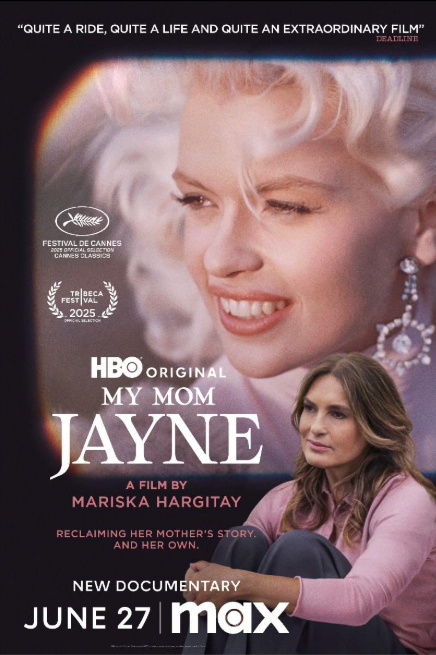
Creds to HBO for putting this on!  As I my wife mentioned, this is the second great documentary on HBO this summer, after My Mom Jayne.


Sunday, July 6, 2025

My Mom Jayne: Mariska Hargitay's Heroic Struggle to Find Herself and Her Mother Jayne Mansfield


Mariska Hargitay was already an excellent rarity in television -- indeed, unique, in that her character Olivia Benson on Law & Order: Special Victims Unit has been on TV some 26 years and counting, longer than any other character in a TV drama.  That's no surprise, given that Hargitay plays Benson with sensitivity and power in episode after episode.  It's therefore also no surprise that My Mom Jayne, Hargitay's documentary about her mother Jayne Mansfield, is also unique, sensitive and powerful and unlike any documentary I've ever seen.  My wife and I saw it last night on HBO Max, and were glued to the screen, often with tears in our eyes.

I grew up in the 1950s and early 60s, and my friends and I in the Bronx would often debate whom we'd like to spend the night with -- Marilyn Monroe, Jayne Mansfield, or Mamie Van Doren.  Of course, they all were highly attractive.  But, believe it or not, we also discussed whom we'd like to talk to.  We knew that Marilyn was married, then had been married, to playwright Arthur Miller, so we figured she had to be pretty smart.  We knew almost nothing more about Jayne and Mamie than what they looked like.

My Mom Jayne makes the convincing case that Jayne Mansfield was no dummy either.  She not only was contemplative and intelligent, she played the violin and piano.  And after she'd established herself as a hot dumb blonde bombshell, she worked very hard and not very successfully to demonstrate that she had a brain, endeavoring to explain that the dumb blonde was an act. The popular culture is very resistant to that kind of change.  It's hard to negate what made you famous, and get your devoted admirers to accept that all of that was just a stepping stone to something else.  (One of the things that made The Beatles so transcendent is that they were able to move so smoothly from "I Wanna Hold Your Hand" to "A Day in the Life" and the Abbey Road medley.)

Jayne Mansfield's struggle to get the world to know who she really was, cut short only by her untimely tragic death in an auto accident in 1967, is one of the two central themes of My Mom Jayne, and epitomized in an interview we see of Jayne by Jack Paar.  That host of The Tonight Show for just five years (1957-1962) -- who, by the way. introduced The Beatles to America -- was the intellectual's intellectual, more so than Carson, Letterman, and even Dick Cavett.  So Jayne must have figured she had a chance of convincing Jack about her fine mind and talent.  But the interview ends with a smirking Jack saying he'd like Jayne to kiss him.  (Speaking of Jack, he also sounds in that interview a lot like Johnny, which shows that Johnny adopted more than created his inimitable way of talking to his guests.)

The other central theme of My Mom Jayne is Mariska Hargitay's lifelong struggle to find out who she really is.  Mariska was just three when her mother died, so she has no memories of her mother.  Mariska's quest to find out who her mother was and therefore who Mariska is and how she got here turns out to be such a riveting, complex story, with so many twists and turns, it could almost have been a two-part episode of Law & Order: SVU.  Indeed, there are so many surprises packed into the end, I won't say anything more, except that if you've been a fan of Mariska or Jayne, or a devotee of our popular culture, or just like a compelling true story, you'll want to see My Mom Jayne.

                  science fiction/fantasy novelette

Wednesday, June 11, 2025

Brian Wilson: What He and His Music Mean to Me


I grew up listening to rock 'n' roll, which was half doo-wop, and half Chuck Berry, Buddy Holly, and Elvis.  As the 1960s began to emerge, the Four Seasons in 1962 and the Beach Boys in 1963 carried on with a modernized, popified doo-wop sound.  The Beatles were closer than just around the next corner.  And that was the milieu in which I formed my first group, The Transits, slightly more old-fashioned than the Four Seasons and the Beach Boys, but covering their best songs.

The Transits sang at the YMHA on the Grand Concourse in the Bronx, a stone's throw from Yankee Stadium in early 1964.   "Dawn" and "Rag Doll" by the Four Seasons and "Surfer Girl" by the Beach Boys were at the top of the list of the songs we covered.  As I walked a girl home whom I'd met at the concert, I told her I was tired of being in a group that sang those kinds of songs -- I wanted to be in a group that sounded more like The Beatles.

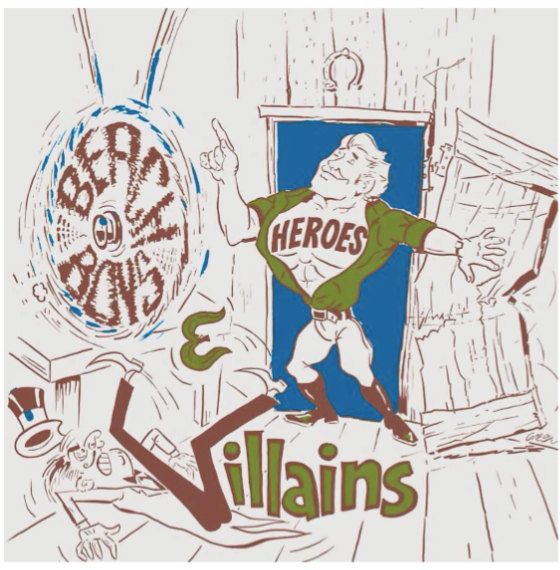
The Four Seasons would never progress very far beyond their pop doo-wop origins.  But the Beach Boys under Brian Wilson's leadership sure did.  As is well known, The Beatles' Rubber Soul in 1965 inspired the Beach Boys' Pet Sounds in 1966 which in turn inspired The Beatles' Sgt. Pepper's Lonely Hearts Club Band in 1967.  While The Beatles were recording and releasing Sgt. Pepper, the Beach Boys were doing the same with their Smiley Smile album featuring "Heroes and Villains" (also released as a single).  So the two groups were not only inspiring one another, they in effect were co-creating across the continents, a musical incarnation of Marshall McLuhan's global village, which he prophetically wrote about in The Gutenberg Galaxy back in 1962.

For a variety of reasons, however, "Heroes and Villains" didn't get the immediate acclaim it so eminently deserved.  It has been one of my all-time favorite recordings since the moment I first heard it, though I can't quite recall where that was.  The harmony in that recording -- like the harmony in the Beach Boys' "Sloop John B" adaptation on Pet Sounds -- is in the stratosphere, the ultimate evolution, at least as of now, of multi-dimensional doo-wop.

Brian Wilson did not get the adulation at first hearing that "Heroes and Villains" amply merited.  But I touted it everywhere I could.  My wife Tina and I were thrilled to hear Brian sing it in the Beach Boys reunion tour, at their performance in 2012 in White Plains, NY.  It was a sad night, not only because of course Dennis and Carl Wilson weren't there, but because WFUV disc jockey Pete Fornatale, who had been one of the champions of everything Beach Boys and Beatles on his Mixed Bag shows, had recently unexpectedly passed away.  (Come to think of it, I may have first heard "Heroes and Villains" on Pete's original "Mixed Bag" show on  WFUV back in the 1960s.   Pete, by the way, is the hero of my 2024 novel, It's Real Life: An Alternate History of The Beatles.)  But it was wonderful indeed to see and hear Brian in person.

I still think The Beatles are the best rock group to ever have written and recorded myriad forms of rock music.  Over the years, I've switched back and forth between the Beach Boys and the Rolling Stones as to which is the second greatest rock group in history.  But I think I'm content now to leave it with both of them tied for second place, and every other great group vast caverns below them.

Thank you Brian Wilson, rest in peace.  Your "Heroes and Villains" will always be playing somewhere, and you are its hero.


Sunday, March 2, 2025

Trupa Trupa at the Bowery Electric in New York City


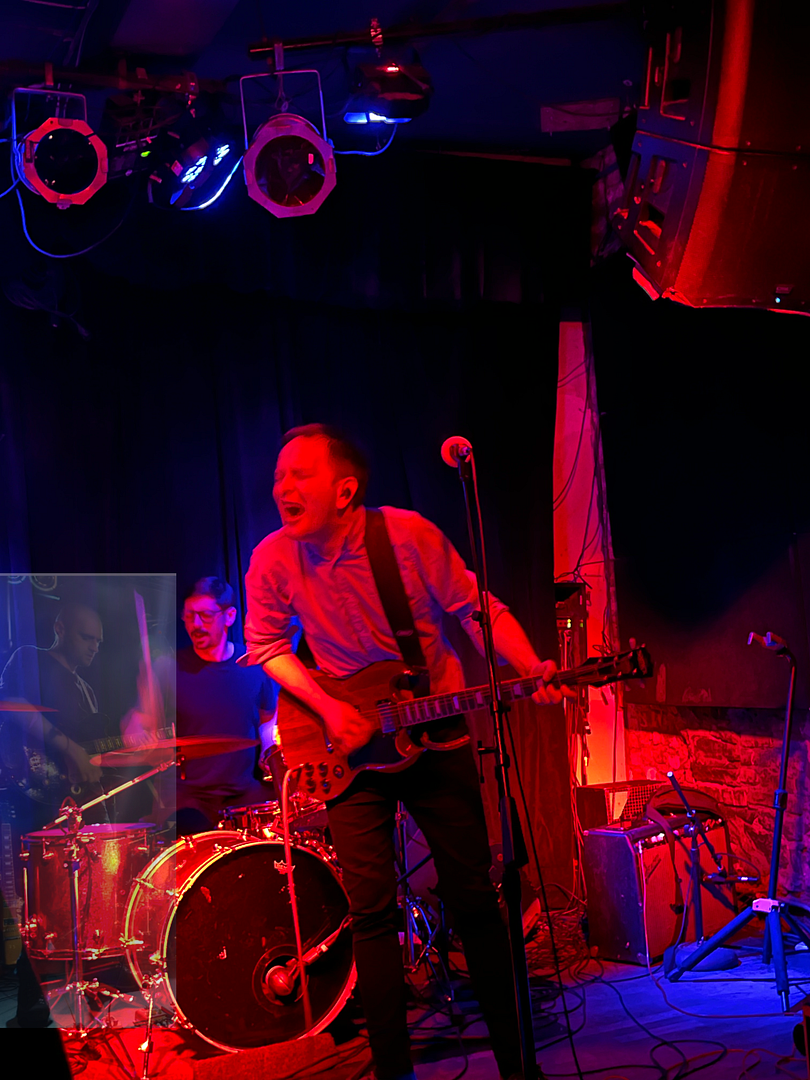
Grzegorz Kwiatkowski is a man of many talents.  He's a holocaust investigator and denouncer of fascism, a poet, and a member of the neo-punk band (don't rely on me for the terminology) Trupa Trupa.  I've seen him talk at New York University (my double alma mater) about his holocaust research and his assessment of current fascism.   I read and was very impressed with Crops, his book of poetry (here's my review).  I've interviewed Grzegorz on my YouTube channel.  I've listened to but had never seen in person his band Trupa Trupa. Until tonight, when Trupa Trupa put on a volcanic performance in the small but packed Bowery Electric venue in New York City -- packed with gyrating fans (including me), who loved every minute.

And performance is the right word for it.  Trupa Trupa not only sings and plays two guitars and a drum -- all of which is done with a keen edge of power and excitement -- but Grzegorz  especially puts on an impressive nonverbal show of facial expressions and panoply of gestures.  Ray Birdwhistell (look him up) would have had a really good time at this concert.  Maybe even Baryshnikov.

And all of this was window dressing for a potent bunch of high octane songs which could wake, if not the dead, likely someone in a coma.  But my favorites were two slow songs -- "Wasteland" and even more so, "Sacrifice" --  and "Uniforms," in a class of its own, which I've been liking a lot as an anti-fascist paen for a few years now.

And as a Beatles fan who can never get enough of them, I was delighted to hear Trupa Trupa work bits of "Magical Mystery Tour," "Blue Jay Way," and of course "All You Need Is Love" into their show.  This song is a tonic for the hate daily spilling out of the White House.  And I heard it on Sirius/XM's Beatles Channel when I was driving home.  That has to be a sign of something hopeful.

So count me in now as a big fan, not only of Grzegorz Kwiatkowski but Trupa Trupa.  Tonight was the last performance of their American tour.   I'll be sure to see them next time they're in town.


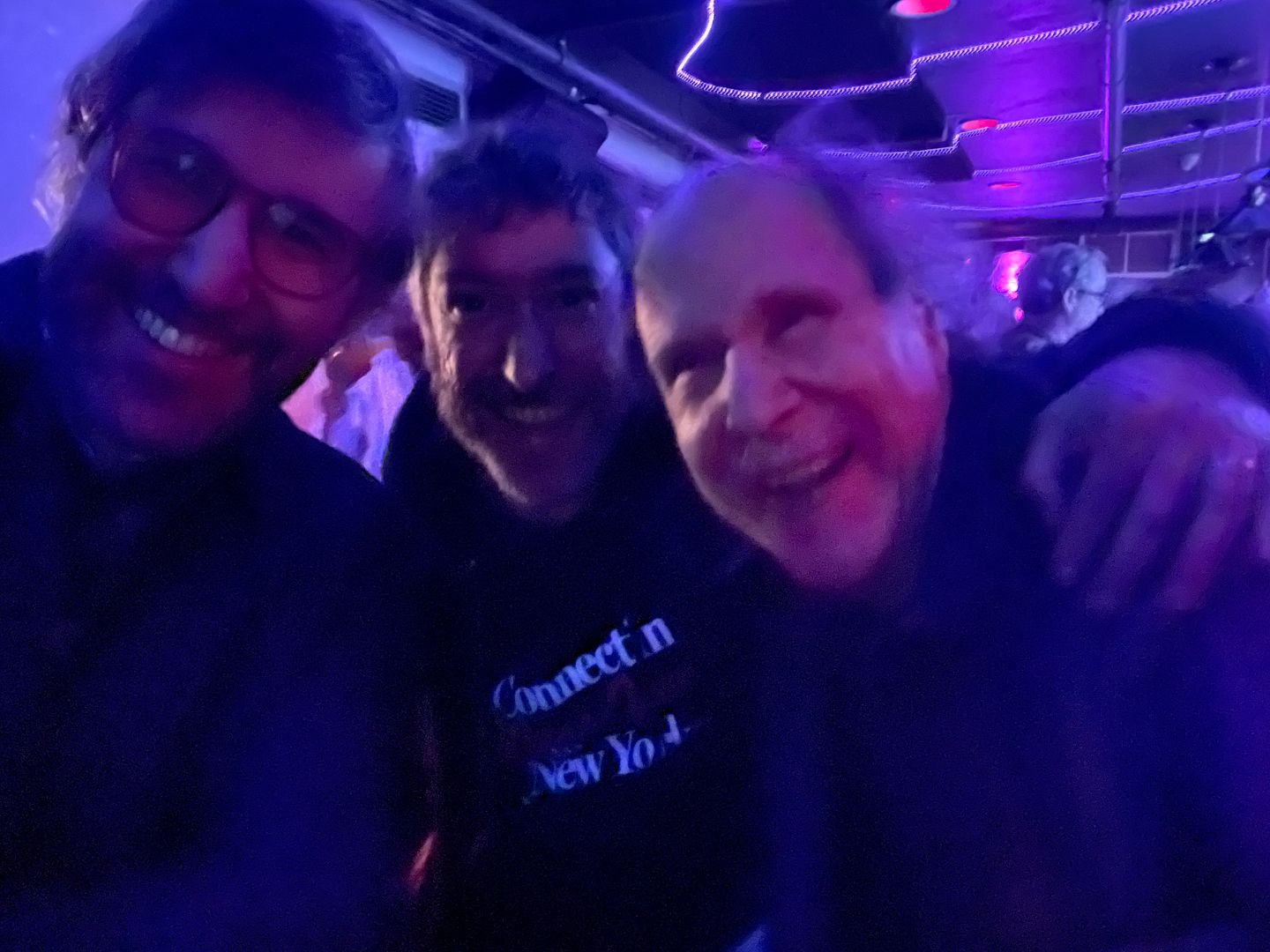
selfie of NY Times reporter & family friend Mike Grynbaum, Rolling Stone Deputy Editor Simon Vozick-Levinson, and Yours Truly enjoying the concert earlier tonight

Wednesday, February 26, 2025

Video of Unique Dramatic Reading from It's Real Life: An Alternate History of The Beatles at Big Red Books


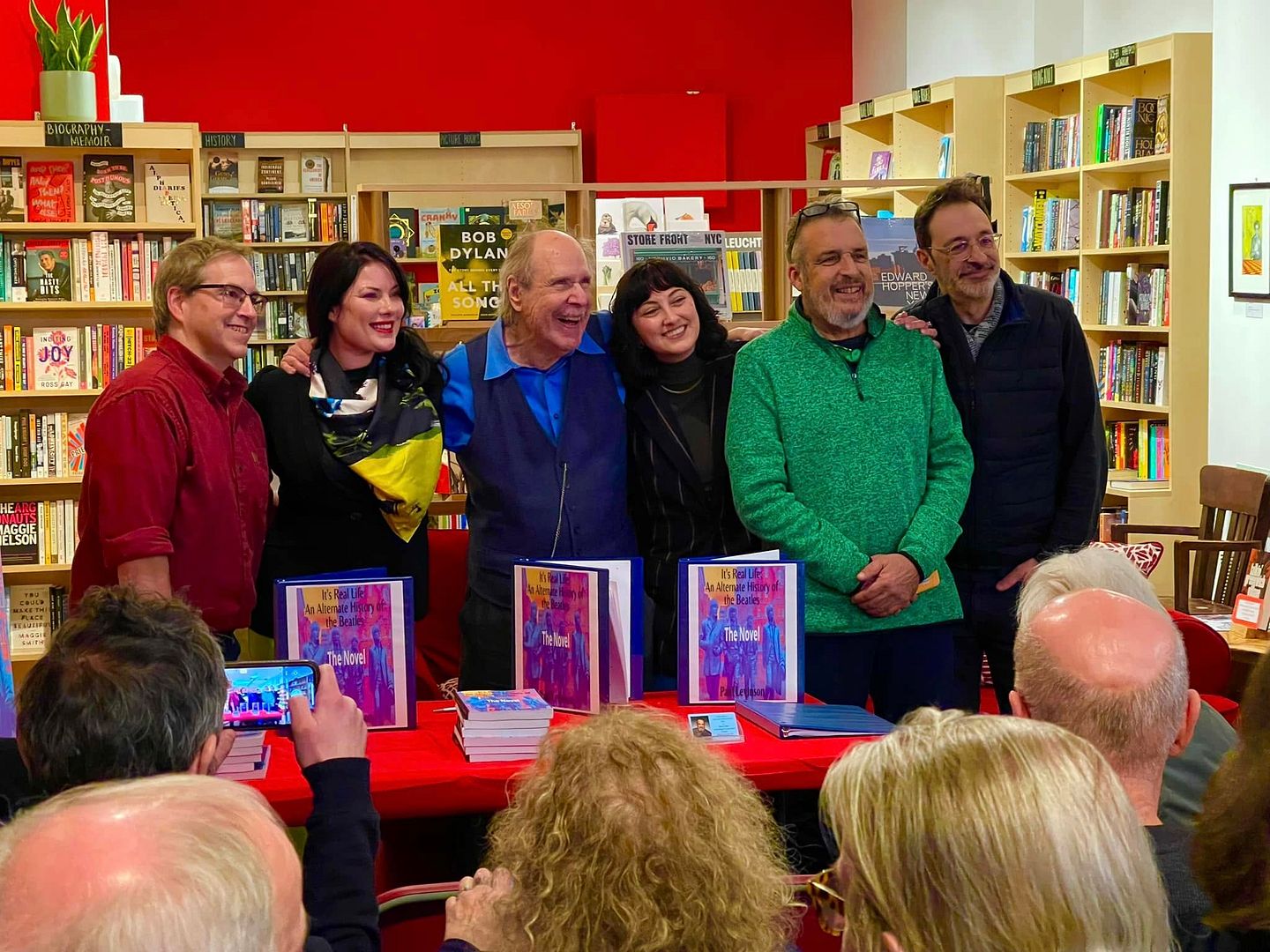
This reading took place on 23 February 2025 at Big Red Books in Nyack, NY, and features Anthony Marinelli and Amanda Greer -- real life characters from the novel who voiced what they say in the novel -- as well Denise Reed, Frank LoBuono, and me.

More about the novel here


Anthony Marinelli, Amanda Greer, Paul Levinson, Denise Reed,
Frank LoBuono, and Richie Fulco (owner of Big Red Books)


Wednesday, December 25, 2024

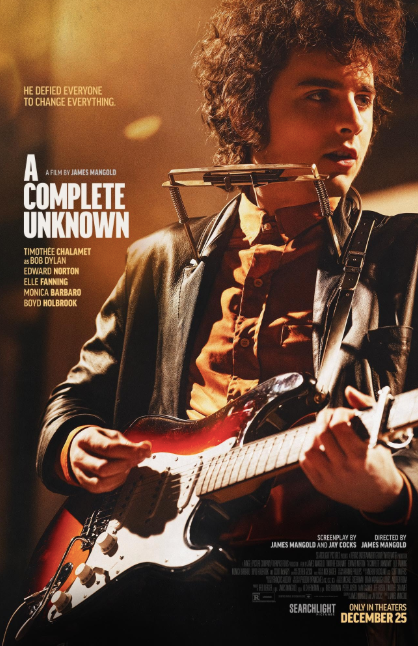
A Complete Unknown: A Nearly Completely Superb Bob Dylan Biopic, Slightly Alternate History


My wife and I just got back from seeing A Complete Unknown, the Bob Dylan biopic.  We both loved it.  The following is my take on the movie.

Dylan recently famously tweeted (on X) that Timothée Chalamet is "a brilliant actor so I’m sure he’s going to be completely believable as me. Or a younger me. Or some other me."  Unsurprisingly, Dylan got it entirely right.  Every biopic ever made is about someone inevitably a little or lot different from the subject of the movie.  Not only can the actor not possibly look 100% like the subject -- unless they are the subject's identical twin, and the producer somehow managed to go back in time and talk the twin into playing the subject's part in the biopic -- but there's inevitably dialogue left out or changed, streets and buildings that don't look the same as the originals, etc, etc.  Look, frankly, even a documentary is never entirely truthful.  It may be more truthful than the biopic, but the director inevitably has to make easy and painful decisions to leave certain things out, etc, etc.   In a phrase, all biopics and docu-dramas are alternate histories (and documentaries, too, just a little less so).

But A Complete Unknown is so good because it managed to get so many things right.  Chalamet as Dylan and Edward Norton as Pete Seeger were letter and note perfect in the words they spoke, the songs they sang, and even what they looked like and how they moved.  Monica Barbaro was not quite there singing as Joan Baez, whose rich mellifluous voice back then is unmatchable, but Barbaro hit all the notes well, and certainly captured Baez's attitude, energy, and intelligence with style.  I don't know what Suze Rotolo at that age was like, even in video. She was inspiration for the part of Sylvie Russo in the movie, because Dylan (to his credit) in our current time didn't feel right about having her character by name in the movie, because she left the world in 2011 and couldn't give her consent to be portrayed in the movie -- but Elle Fanning did a fine job in the part.  (The obvious explanation is Dylan wanted the name changed because some of the interactions with Dylan and Russo in the movie are at variance in some significant way with what really happened between Dylan and Rotolo.)

In addition to Dylan's songs, which were immensely enjoyable to see written, and see and hear performed, there was a symmetry, a kind of rhyme, in the movie, which I expect will stay with me for a long time.  One of my favorite examples is Woody Guthrie's "So Long, It's Been Good to Know You".  It starts off the movie, which begins in 1961, as Dylan comes to New York, and goes to see Woody Guthrie, who was already seriously ill (in reality, he'll live until 1967), and meets Pete Seeger (who had a wonderful cover of the song, solo, and earlier with The Weavers).  At that point, it seems like the song is about Dylan and Seeger saying goodbye to Guthrie.  But when the movie ends, with Dylan going the apostate electric way, the song is played again, and the goodbye is to the Dylan who has forsaken acoustic folk for an electric band with Al Cooper et al. 

The title itself of this cinematic triumph underwent a transformative rhyme.  Dylan is "a complete unknown" when he first crosses the Hudson and arrives in New York City and the movie begins.  And of course the song that plays out the movie as Dylan commits to high voltage is "Like a Rolling Stone," in which "a complete unknown" is one of the many signature phrases.

The implication in the movie -- actually a little more than an implication -- is that Dylan did this because he wanted to be as famous as the Beatles.  I don't know Dylan personally, and have no idea if that's true, but I do know that both kinds of Dylan -- "Blowing in the Wind," "The Times They Are A-Changin'," and "Masters of War" evolving into "Like a Rolling Stone," "Just Like A Woman," and "Positively Fourth Street" (I don't think the last two were in the movie) -- were equally works of genius in their own ways.  And I also know, for whatever it's worth, that the lyrics Dylan wrote are in a class of their own, at the top of the best lyrics ever written, surpassing the timeless word-craft of Cole Porter, John Lennon and Paul McCartney.

There was one scene I found annoying in the movie.  One of the highlights of the momentous Newport Folk Festival scene has Joan Baez singing "There But for Fortune," a huge hit for her, written by Phil Ochs.  Dylan is shown offstage, not looking very happy.  Maybe he's understandably nervous.  Or maybe he's jealous.  But the song isn't identified by Baez.  And in fact there's no mention of Ochs anywhere in the movie.  Whether an accidental oversight or a deliberate cut of something that was filmed ... who knows.  It certainly doesn't make sense given the prominence of the song in that scene, not to tell the movie audience who wrote it.

I'm also sorry we didn't hear any of "God On Our Side" -- especially relevant on this day -- the most irrefutable anti-war song, pinpointing the hypocrisy and insanity of war, ever written.

But I guess that's just personal opinion, and I also think that, just like Dylan's songs, this movie will never grow old.  It will be watched long into the future, after which people might watch Peter Jackson's documentary about The Beatles, and then Martin Scorsese's.  But there's no need to wait for the future.  My recommendation is see A Complete Unknown as soon as you can.

=============

One of the real people left out of the movie is Terri Thal, Dylan's first manager.  Here's an interview Frank LoBuono did with her on his Being Frank podcast on May 30, 2024.

For more on the movie, see David Browne's piece in Rolling Stone.

=============


I haven't written an alternate history as yet about Dylan, but here's one I wrote about The Beatles, in Kindlepaperback, and hardcover


I've always been partial to rhymes.  They're the velcro of the mind.
You can listen to my 1972 album on Bandcamp and Spotify.


The Weavers singing "So Long, It's Been Good to Know You"
InfiniteRegress.tv