reviewing Black Doves; Dark Matter; Dept. Q; Detective Hole; Dexter: Resurrection; For All Mankind; Foundation; Hijack; Memory of a Killer; MobLand; Outlander; Paradise; Presumed Innocent; Severance; Silo; Slow Horses; Smoke; Star City; Star Trek: Strange New Worlds; Tehran;The: Day of the Jackal, Diplomat, Last of Us, Night Agent; Your Friends & Neighbors +books, films, music, podcasts, politics
George Santayana had irrational faith in reason - I have irrational faith in TV.
Chuck Todd interviews me about alternate histories
Showing posts with label Simon Vozick-Levinson. Show all posts
Showing posts with label Simon Vozick-Levinson. Show all posts
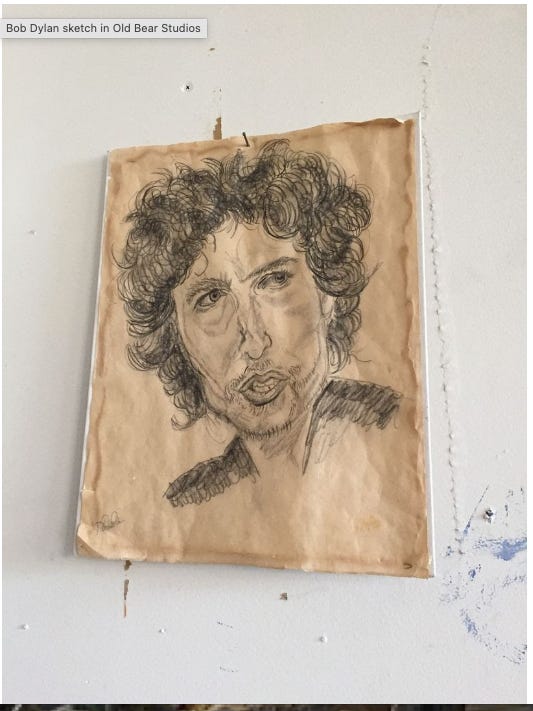
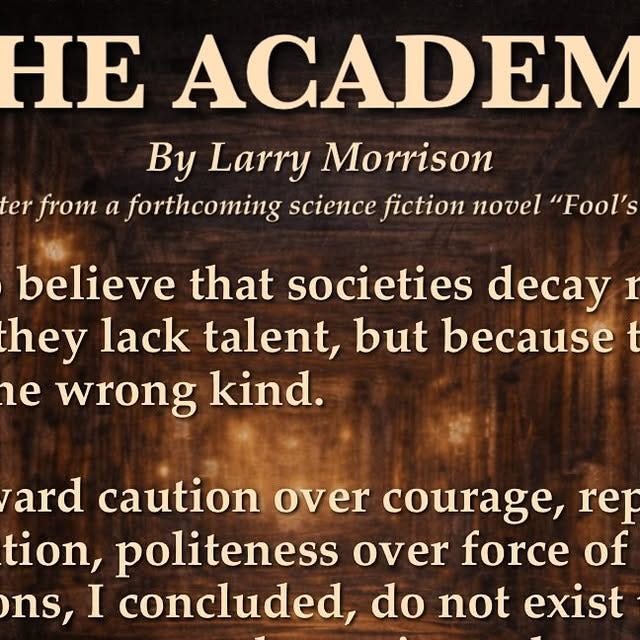
Dylan posted the above on Instagram yesterday (my son Simon Vozick-Levinson alerted me to it this morning). On Instagram and Reddit, and probably in other places, people are speculating that if Dylan did write it, he used AI to write it. I’m no expert on AI, but I’ve been listening to Dylan’s lyrics since the 1960s, and the excerpt he posted certainly seems consonant with the style and content of his lyrics.
Lyrics often repeat ideas and feelings — indeed, that’s what choruses explicitly do. And the ideas and emotion presented in this excerpt feel like a lyric — a song without music, lamenting, protesting, objecting to the danger, the destruction of our democracy that we see happening all around us, every day. I’m glad to see a man who actually won the Nobel Peace prize come out and assess this, decry this, in his own inimitable way.
His novel/lyric aim in particular at universities who acquiesce, crumble under the pressure of the Trump administration and his allies. I’m looking at you, Columbia University.
And, by the way, Dylan’s no stranger to science fiction. His Frankenstein-like song, "My Own Version of You" in his Rough and Rowdy Ways LP in 2020, is a funny, great little piece of science fiction, in one of his best albums.
We the people who believe in freedom and democracy need all the help we can get in these desperate days, and it’s welcome indeed to have Dylan stepping up and in any way he can.
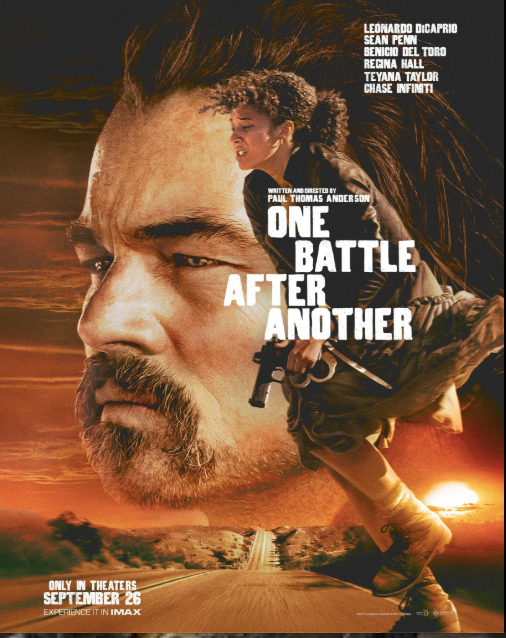
My son (Simon Vozick-Levinson, Deputy Music Editor at Rolling Stone) invited me to see One Battle After Another with him (he wanted to see it a second time), and I'm sure glad that I just did. Paul Thomas Anderson's movie (based on Thomas Pynchon's 1990 novel Vineland, which I haven't read) opened in New York City and around the country last month, on September 25. It tells the story of resistance to a fascist United States of America, a story which is becoming ever more like the reality of ICE and government agents pepper-spraying clergy, pulling innocent American citizens off the street for deportation without a hearing, that we see every day on television and social media.
The only difference is Federal police in One Battle After Another fire real bullets not pepper-spray. But the dystopian movie -- this fictional film of a Hitlerian dystopia that is nearly here -- gives us a frightening portrayal of the racism and xenophobia of the rich white men and military who order ICE to go out and do their worst. At the same time, the movie portrays those who are driven to violence to oppose what they rightly see as the destruction of America.
One Battle After Another indeed shows us two generations of opposition to fascist government in the USA. This has two narrative dividends. First, it enriches the narrative, exploring the family dynamics of the revolutionaries. Also first, it provides a truthful historical depth to the story: in our offscreen reality, fascism and its attendant racism didn't originate in the past ten or twenty years. It has roots that go back centuries not decades to the birth of America, and its acceptance of slavery.
The movie is also brilliantly acted. Leonardo DiCaprio, Sean Penn, and Benicio Del Toro never disappoint, and they all were outstanding in this movie. Chase Infiniti, who was memorable in the TV series Presumed Innocent, was powerful in One Battle After Another, as was Teyana Taylor. It was also great to see Wood Harris (The Wire) and Tony Goldwyn (Law & Order) and Brooklyn Demme on the big screen. (Demme was interviewed on the Being Frank podcast this past April, in an episode that ended with Frank LoBuono playing my song "Alpha Centauri").
Speaking of songs, there was some excellent music, across a diversity of times. My favorite was "Soldier Boy" by the Shirelles, which was eerily satisfying to hear, given that it was on Top 40 radio in 1962, the happiest time in politics in my recollection, a time that sparkled with promise and progress, in such stark contrast to this wrought movie and our country today. And there was indeed some gallows humor that was pretty funny in One Battle After Another, which was also a tonic for what was happening on the screen.
The action scenes were excellent, too. One of my favorite was Del Toro’s character Sensei Sergio St. Carlos escaping via a tunnel under his house, something I’ve always wanted to construct, and one thing I’ve admired about El Chapo. The car chases were exceptional, with one blockbuster chase involving three cars driving at lightning speed in hilly terrain, each driver having a separate agenda, something I've never seen before, even in a James Bond movie.
But the undeniable strength of this movie is its warning against what America is becoming before our very eyes -- a sober warning delivered with all manner of quirks and idiosyncratic characters that all too often border on gonzo -- which couldn't have been delivered at a better, more necessary time.
I didn't think about November 22, 1963 much yesterday, as I usually do on one of the worst anniversaries of my and maybe your lifetime, because I was busy with all kinds of other things, including doing a little virtual concert at Philcon (a science fiction convention) of songs from my new album, Welcome Up: Songs of Space and Time, my first new album in almost 50 years.
But I was on my son Simon's Tumblr page today, scrolling back through his posts, and came upon this one from back in March. The world has been so crazy since then and now, with Covid and the election, and I've been so immersed teaching online classes, writing, doing podcasts, and the like, that I didn't get a chance to listen to Dylan's "Murder Most Foul" until today.
It's the best Dylan lyric -- as in emotive power, tear up the street and rip up your soul, but maybe you can put it back together -- since, I don't know, "Hurricane"? -- and, no, actually, "Murder Most Foul" is a lot more than that. Because of its subject. The story of our lives, or everyone's who was alive and cognizant in 1963 and all these years since. The song is almost a couplet with Dylan's 2012 Roll On John, about another unfathomably unacceptable assassination, but a much shorter song, and almost a warm-up for "Murder Most Foul," which joins Phil Ochs' masterwork, The Crucifixion, as an extraordinarily insightful song about the event which in a single moment changed the course of history, inextricably and unalterably, for the worst. But "The Crucifixion" was at the moment, written back then. And "Murder Most Foul" is about then, and now, and all time time in between. About the end of the joy and innocence and optimism for the future that surged through the early 1960s, an extinction that the world has manifestly still not recovered from.
I know I haven't. I think about it often. Even write about it in my science fiction. It's reassuring that Dylan hasn't either. "Murder Most Foul" captures all of this and more with a lyric which, if you want to know where I'd place it, it would be among the best lyrics Dylan, the greatest lyricist of the 20th century, ever wrote. Plays upon words about playing songs and playing parts. I may teach a course about this song someday. It even has a recondite reference to Daniel Keyes' "Flowers for Algernon," one of my all-time favorite science fiction stories. But the killing of John F. Kennedy was too terrible to be fiction. And Dylan caught it all. In a gruff, plaintiff voice that floats halfway between speech and song, over a piano played by Fiona Apple that will pierce your heart. And here in the 21st century, with a fifth of it almost gone, this song could well be one of the greatest of this century, too.
On a lesser but still significant note -- at least to me -- Dylan's song also scratches an itch I have had about songs about DJs that also goes back to the 1960s. I even wrote a short story about that -- Sam's Requests -- and just a month or two ago created a Spotify songs-about-DJs playlist with that theme. Dylan's song eminently belongs there, containing a series of requests, that in some arcane, nearly endearingly inscrutable way reflect Dylan's commentary on the times, to Wolfman Jack, whom I actually worked with. I just added Dylan's song to the playlist. Yeah it belongs there, and in a permanent place in the thoughts of those of us who lived through that era-shattering day.
No, we never made it to the New Frontier, but we'll never stop trying.
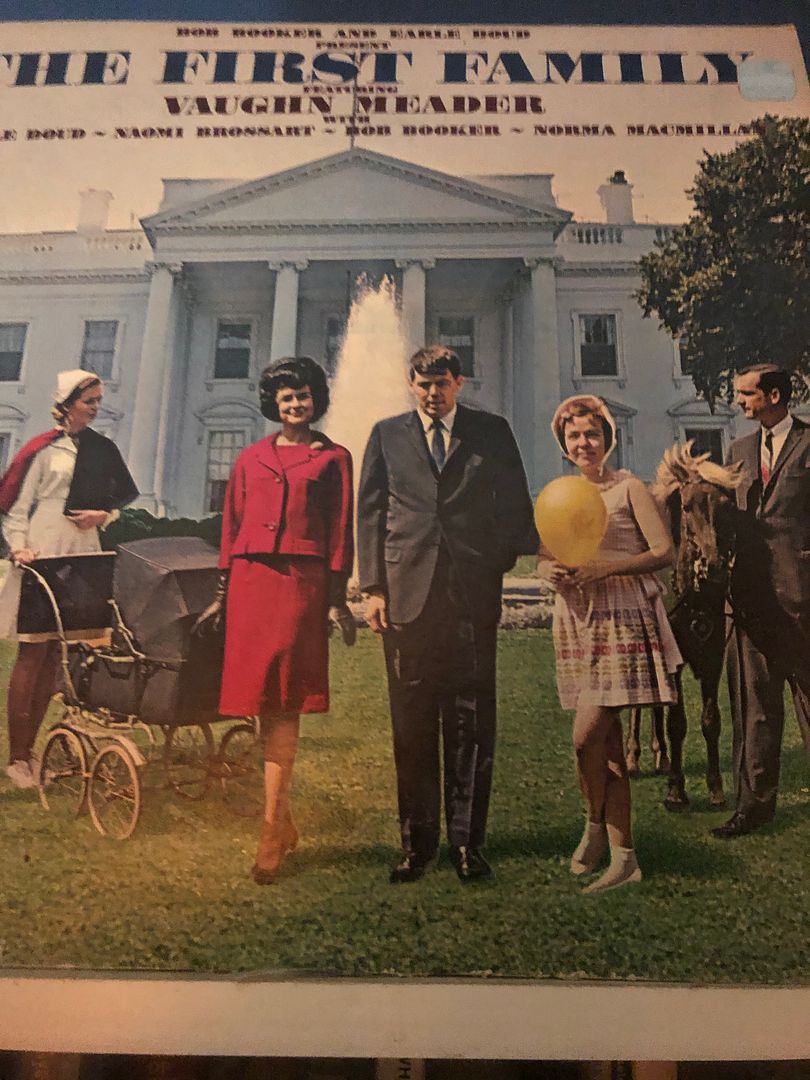
a happier time
Further reading:
Here are the lyrics -- or here with the song -- more insights than you'll find in a dozen of the best books on the subject
Next up in Rob Sheffield's one-of-a-kind Dreaming the Beatles, which I've been reviewing here now about a chapter a month, because that's the way I like it, is an outstanding defense of Paul McCartney, as only Sheffield with his combination of depth, irreverence, and sheer style could do it.
The thing is - as you'll know from reading almost any one of my previous reviews here (see list at end of this review) - I don't think McCartney needs any defense. I find people who don't like his music tone-deaf, jealous, or at best marching to a drummer so different from mine that I have nothing to say to them. It's not that I love every song McCartney has written and recorded. It's just that I love more of them then I do any other artist's. It's not that I don't love Lennon just as much, and that I don't acknowledge that many of Lennon's songs, from when he was with the Beatles (like "Rain") and when he was on his own (like "Jealous Guy" or even "Whatever Gets You Through the Night") are easily as good as or even better than McCartney's best. It's just I've gotten a little more, in sum, over the years, from McCartney's music than from Lennon's, and this was so even before the unacceptably tragic day when Lennon was murdered (my Loose Ends Saga concludes with a time-traveling plan to prevent that).
And it's not that I agree with every move McCartney has made outside of the studio, either. On a personal level, I imagined that McCartney would contact me after my Vote for McCartney was published in The Village Voice in 1971 (my first published article). That never happened (but I was thrilled when my son, Simon Vozick-Levinson, got to interview McCartney twice for Rolling Stone decades later). But regarding McCartney's music - the worst I can say about it is some of his songs and recordings aren't as wonderful as others. Which is why I think his career needs no defense.
Yet Sheffield's defense is both a pleasure to read and useful. I confess to never having heard So Bad, a McCartney song which Sheffield enjoys. I just listened to it on YouTube, and concur with Sheffield. (He might have also mentioned two McCartney songs from a little later which are among my favorites - My Brave Face which he wrote with Elvis Costello, and Hope of Deliverance - by, hey, different strokes.) And Sheffield's takes on various aspects of McCartney's life and career - ranging from quick notes like "he did less to fuck up his good luck than any rock star ever" to a magnificent, extended little essay on Paul McCartney and Cary Grant as two very similar expressions of working class Brits become famous in America - are genius. (And just for good measure, I agree completely with Sheffield's praise for McCartney's concert in 2016 - my wife and I felt the same about his concert in Hempstead, NY this past Fall.)
All of which adds up to McCartney, though his admirability should be self-evident, is fortunate to have someone with Sheffield's pop-cultural sensitivity and analytic depth writing about him in this destined-to-be classic book. McCartney doesn't need this defense but he more than deserves it.
I've always loved The Beatles. First as a fan, always as a fan. How much as a fan? Well, I was delighted to find a subscription to Sirius/XM Radio in my new car, early this month, and I promptly tuned it to MSNBC. Until The Beatles channel checked in on May 18, and that's what I listen to when I'm driving now. Even when I'm not driving - I just came in from my driveway, because I wanted to hear the end of "Baby You Can Drive My Car". I'd probably still be there, if the urge to write this review had not been so strong.
Yeah, writing soon blended into my love of The Beatles. First as a singer and songwriter, in the early 1960s through the early 1970s (produced at one point by Ellie Greenwich), and then as a writer of nonfiction and about two decades later of science fiction. My first published article - "A Vote for McCartney" in The Village Voice in 1971 - took on the Voice's dyspeptic, tone-deaf critic Robert Christgau. who had savaged Paul's debut solo album, McCartney. (Christgau had a habit of missing the forest - at some point, he also lashed out at Phil Ochs, a lyricist second only to Dylan, for his guitar playing). My Loose Ends Saga - arguably my best-known science fiction (arguable in the sense that many people deny it) - has a time traveler faced with the choice of either saving John Lennon or stopping September 11.
So, I was primed to read Rob Sheffield's Dreaming the Beatles: The Love Story of One Band and the Whole World since 1963, but my son Simon, who edited at Rolling Stone and knows Sheffield, pushed me over the top this weekend when I was raving about The Beatles station. My wife had already purchased the hardcover and the audiobook, and I knew I would love it - a perfect accompaniment to my own continuing love story with The Beatles.
Sheffield is a masterful writer on all kinds of levels. He has a knack for spot-on record reviews in less than a sentence - noting "the brash aggression of 'And Your Bird Can Sing'" and "the hair-curling harmonies of 'I Don't Wanna Spoil the Party'". He has an assumption that The Beatles were and are in a class by themselves, which, though it may seem obvious to true-believers, Sheffield turns into a galvanizing and even surprising organizing principle. He has a photographic, watercolor eye, describing how Ringo's wife Maureen was "freezing her ass off" on the roof in the Get Back concert in a way that makes you want to grab your coat and get your hat on a hot Spring day.
There's so much in this book, in fact, that I decided after reading just the first 11 pages, that it warranted more than a single review. After all, The Beatles were and are about songs, which is a short form, but even if not, who says a book has to be reviewed all at once, in one big review? So consider what you've been reading here as an introductory review, of just the Prelude and part of the next chapter of the book, and I'll be back with more, soon. I'll likely have the whole book reviewed in the next weeks, maybe the next months. It probably won't take years, but you never know. (See my series of reviews of The Perversity of Things as an example of another series of reviews in progress.)
And that's it for now. Get the book. (I'm sure I'll disagree with some of Sheffield's views but I disagree with some of everyone's except mine, and even I change my mind.) I'm going to watch a little of MSNBC, and then get back in the car.
Today's a great day for the Vozick-Levinsons. Son Simon's pathbreaking interview with Sir Paul McCartney has just been published in Rolling Stone. It contains such gems as McCartney reminiscing about "Being for the Benefit of Mr. Kite!" -
I have great memories of writing it with John. I read, occasionally, people say, "Oh, John wrote that one." I say, "Wait a minute, what was that afternoon I spent with him, then, looking at this poster?"
If you've ever loved the Beatles, this interview is bound to bring a smile to your soul.
But I take a special pleasure and pride in this interview. Turns out that my very first published article was "A Vote for McCartney," which appeared in the Village Voice in 1971. The story of how I got it published is a story in itself. I had read a scathing and lame review of McCartney's latest album - a post-Beatles album - by the dyspeptic Village Voice music critic Robert Christgau, and fired off a letter to the editor with my counter-arguments. To Christgau's claim that McCartney's Ram was "a classic form/content mismatch," I systematically explained why that was manifestly not the case, and concluded that the mismatch is "apparently in the wires and components of Robert Christgau's stereo."
That was about the gentlest criticism I offered of Christgau, and I had doubts that the Voice would even publish my letter. I poured over the "Letters" section of every new issue, and had pretty much come to the conclusion of, oh well, at least I had gotten this out of my system ... until, one day, a Thursday, my phone started ringing. At least three of my friends had seen my "article" in the Village Voice. A check for $65 arrived in the mail the very next day - accounts payable departments rolled a lot better in those days - with a note from Diane Fischer, a Voice associate editor, saying she hoped it was "ok" that rather than publishing my letter as a letter, the Voice had published it as an article in its "My Turn" section!
That first published article not only set me on a career of writing, but teaching. When I applied for my first teaching job at St. John's University in 1975 for a "Creative Journalism" course, I brought with me "A Vote for McCartney" and two other articles I had subsequently published in the Village Voice. I was hired on the spot.
Reading the article from where we are now in 2013, I think I went too far in my criticisms of Lennon and Harrison. But I was right-on about Christgau's tin ears, and about the transcendingly enduring beauty and power of Paul McCartney's lyrics and music. And what a joy it is to see my son bring that point home today in the online pages of
Rolling Stone.
Just got back from the Brooklyn Book Festival - Trevor Quachri, new editor of Analog, invited me to come by the Dell (publisher of Analog) table at 1pm, to sign some issues of Analog with my stories, and also sell some of my own books if I wanted. I had a fabulous time, for all kinds of reasons -
I sold multiple copies of every one of my novels - more than I usually sell at major science fiction conventions. There's a lesson here: the general public, people who may not go to science fiction conventions, are interested in science fiction. The Dell table was bustling the whole time I was there, and I bet after I left as well.
It was good to see the table for the National Coalition Against Censorship also holding forth to the multitudes - always inspires me to see the strength of the First Amendment and the many people who see its crucial importance.
Simon and Sarah unexpectedly came by. So did Bob Blechman, though I sorta expected him. It was good to see Sheila Williams - editor of Asimov's - again, too. And Ian Randal Strock, Assistant Editor of Analog years ago, and now publisher/editor of SF Scope.
Emily Hockaday is the new Editorial Assistant at Analog. It was great to meet her, too.
My father grew up in Brooklyn, and got his law degree at Brooklyn Law School, which was hosting some of the Brooklyn Book Festival events. It felt good to be back in my father's domain.
I taught at nearby Polytechnic University briefly in the late 1980s. The neighborhood was just beginning to come back then. It's exciting to see what a cultural center it has become.
There was a love of books in the air - a buoyant kind of feeling which carries along with a sense of hope for all kinds of things, ranging from politics to culture. A perfect tonic for any kind of day, and the weather was splendid today, anyway.
I plan on making the Brooklyn Book Fair a yearly September visit - even if the weather is not as glorious as it was today. But, in the meantime, if you wish you had come by the Dell table and picked up a copy of one of my novels, or an issue of Analog with one of my stories, there's a least an easy option for you regarding one of my novels - that's what they made Kindles for.
"As a genre-bending blend of police procedural and science fiction, The
Silk Code delivers on its promises." -- Gerald Jonas, The New York Times
Book Review