Chuck Todd interviews me about alternate histories
Showing posts with label Hal Clement. Show all posts

Saturday, May 6, 2023

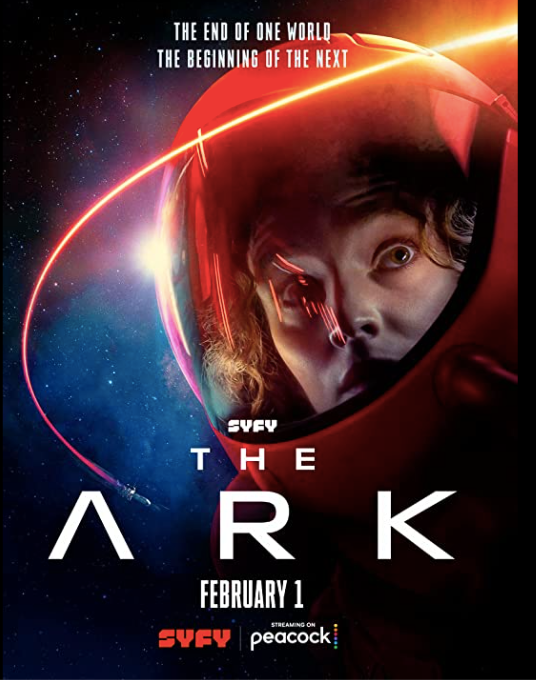
The Ark 1.9-1.12: Real Science Fiction


I binged the final four episodes of the first season of The Ark -- again, I was busy talking about the radio play of my alternate history story about The Beatles, "It's Real Life" -- and I'm glad I did, rather than watch those episodes on a weekly basis.  Especially for a narrative like The Ark, binging is the way to go.

And what kind of narrative is The Ark? It's classic science fiction, in the tradition of Hal Clement, and Analog Magazine (where my science fiction has been published more than a dozen times, so I'm a bit biased).  But the hallmark of that kind of science fiction, which The Ark does so well, is life-and-death problems arise which can be solved by the application of ingenious science.

[Spoilers ahead ... ]

So in The Ark, that strange disease killing Bryce and Maddox can be cured by an anti-toxin in which the active ingredient is a spider's venom.  Except it doesn't work. The scientists in Ark 1 come to the rescue: they realize the venom quickly decays, so to get it into the system of the afflicted people, they need to be bitten by the spiders, which naturally injects their venom directly in Bryce's and Maddox's bodies.  That's what I call real science fiction.

Or realizing that what was thought to be water on Proxima B is actually methane, which explodes part of the planet when it's set in motion.   In this case, the only cure is getting out of the way of the debris from the planet, which Ark 1 only barely does, with the ship barely intact.  Science doesn't provide much of a fix, but at least an understanding of what has happened and why.

It used to be said about classic science fiction that it may be good with the science, but not with the human relationships in the story.  That was never really true in the first place, and The Ark does a pretty good job at this, in any case.  I guess my favorite couple is Bryce and Markovic, though outside of that relationship, Bryce is too quick to throw a punch.  But Markovic makes up for that with her savvy and her smile.

I was happy to see that The Ark has been renewed for a second season.  All the way out there in space, on the more advanced Ark 15 now, this story has a lot of life left to it, and I'm looking forward to watching it play out in the years ahead.

See also The Ark 1.1: Worth Watching ... 1.2: Why I'M Enjoying It ... 1.3: Asteroid and Comet ... 1.4: Hallucinations ... 1.5-1.6: More than One ... 1.7: "You Know My Name (Look Up The Number)" ... The Ark 1.8: "Follow Your Future Selves"

a second ship around Proxima Centauri B, too ...


Sunday, June 16, 2019

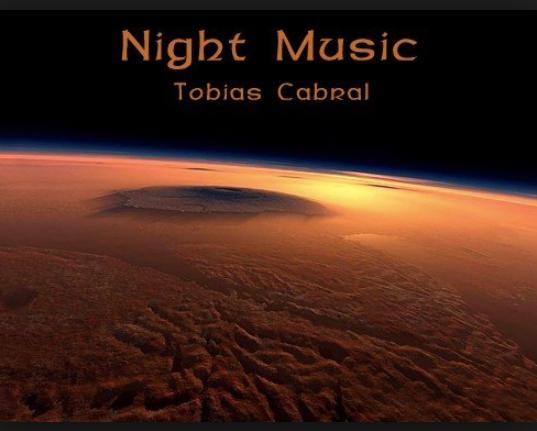
Review of Tobias Cabral's Night Music: A Dose of Hard SF, and Wash It Down with Rock 'n' Roll


Well, it's not quite rock 'n' roll, but there's definitely crucial music in Tobias Cabral's short 2009 novel (136 pages) Night Music, which is all about what happens at Zubrin Base on Mars.

And there's lots of science.  Although the genre is called science fiction, there's usually precious little hard science in the fiction we read under that moniker.  I've often said that Asimov's Foundation trilogy, for example, which I consider the greatest science fiction ever written, is really more philosophy-of-science fiction than science fiction.  Hal Clement's work, to stay with the golden age, is a rarity in that hard science actually plays a pivotal role in the stories he tells.

Cabral does this as well in Night Music.  It's not that hard science is a determining factor in this narrative.  It's that what happens on Zubrin Base, and the expedition to go out there to investigate, is told by science at every step, and accompanied by scientific details and explanations at every turn.

I don't want to say too much about the determinative role of the music, lest I give away the plot.  But I will say that, back here on Earth, I've been captivated by the hypothesis that we humans could sing before we could speak.  That's why, for example, I had my Neanderthals communicating via music in The Silk Code.   In Night Music, the acoustic is more akin to the music of the spheres.  But the novel is also about beginnings, the commencement of human interaction with another intelligent life-form.

It's praise, in my book, to say that Night Music could have been written, in terms of its style and structure, in the 1950s, even though its content is much more current.  If you have a taste for this kind of story-telling, pick up a little Night Music, an at-once profound and refreshing treat.


InfiniteRegress.tv