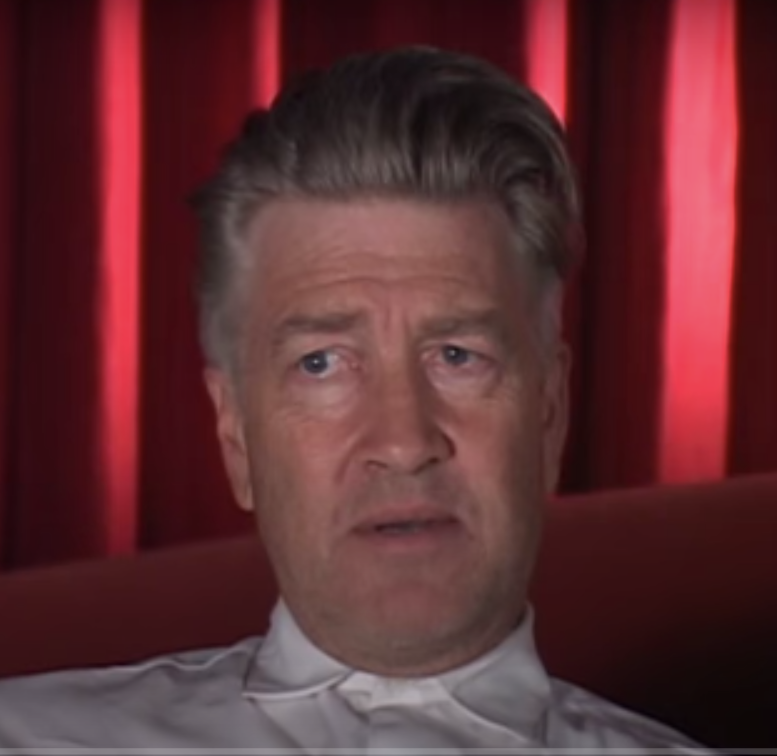
Chuck Todd interviews me about alternate histories
Showing posts with label David Lynch. Show all posts

Thursday, January 20, 2022

The Lip-Synching Scene in David Lynch's Blue Velvet as a Touchstone Transcendent Moment


David Lynch is 76 years old today -- happy birthday!  That made me think about my favorite scene in all of David Lynch's great work, and, for that matter, probably in any movie I've ever scene: Dean Stockwell lip synching Roy Orbison's "In Dreams" in Blue Velvet back in 1986, with Dennis Hopper doing a fine job as that deeply sick guy, who tries to join in the lip-synching, but whose demons won't allow him the succor of dreams.


That scene also represents what I think of as a nexus in popular culture, with several different careers revived and propelled in that one scene.  Dean Stockwell had been a moderately important star, playing angry and sensitive young men, in the 1950s and 1960s.   Lynch had begun using him in Dune in 1984, but his performance in that Blue Velvet lip synching was incandescent and brought him to everyone's attention, including the people who cast him in a co-starring role in Quantum LeapBlue Velvet had nothing to do with science fiction, but that Roy Orbison moment would forever and anon and make Stockwell a science fiction icon.

Meanwhile, Orbison's career, which also had been flagging, suddenly skyrocketed in the next few years. His voice in The Traveling Wilburys was one of the most prominent parts of their signature sound, and made them the best supergroup ever, surpassing Crosby, Still, and Nash, the previous holders of that position, in my humble opinion.  Orbison's solo 1989 "You Got It" was also at least a minor masterpiece. And here I always mention Anne Reburn (and her clones)' cover of "You Got It" as a high water mark of music video production.

Science fiction and rock music have been my life's two cultural passions.  Blue Velvet the movie was neither, but it gave rebirth to careers and soaring performances in both,  and made David Lynch an enduring hero well before Twin Peaks and all the rest.
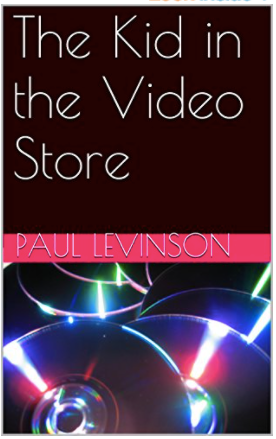

The Kid in the Video Store - science fiction about the 1988 

Roy Orbison and Friends, A Black and White Night concert


Sunday, October 6, 2019

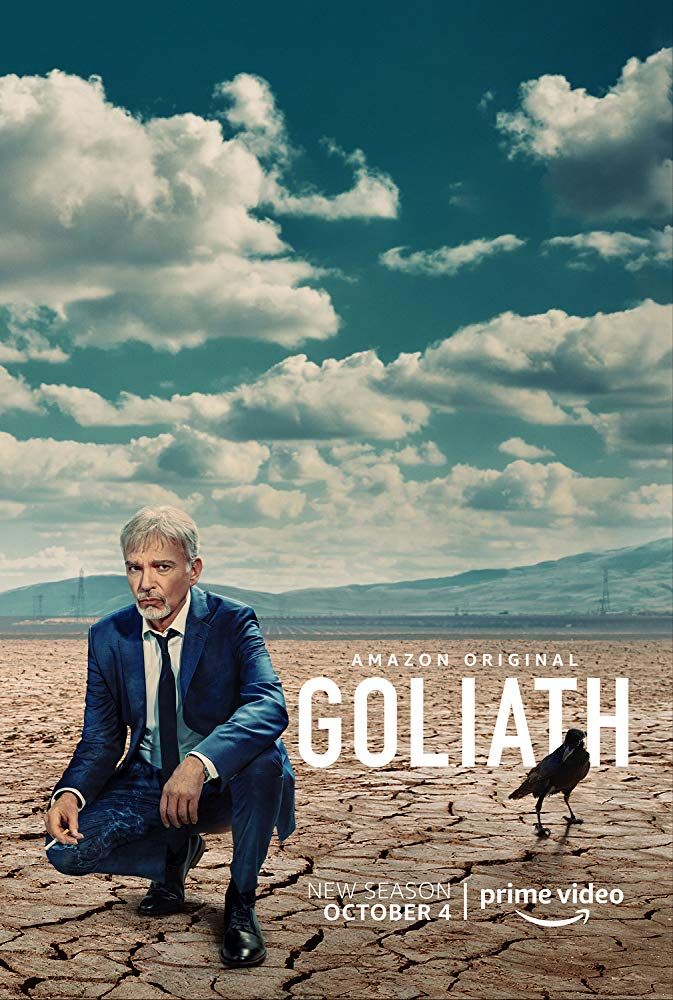
Goliath 3: Literally Streaming Excellence


Goliath 3, steaming on Amazon Prime video, could have been written and directed by David Lynch, and I mean that as a compliment.  It has a singer in a nightclub characterizing the action or moving it along with a fine assortment of songs including "Anyone Who Had a Heart" and "The Rose".  Believe it or not, she even gives a pretty good rendition of "In Dreams," twice no less.  Drug states easily and uneasily intermingle with the reality, a state of perception easily adduced to Billy Bob Thornton as attorney Billy McBride, and he's abetted by a great cast including all kinds of memorably seedy people, including even a Dennis in a big role, not Hopper but Quaid.

And the general plot couldn't be more pressingly relevant: a rapacious almond company literally sucking the water out of southern California.  As Patty Solis-Papagian (very well played by Nina Arianda), Billy's associate attorney in fighting the monsters, aptly puts it, they're working in "Satan's dusty ass crack".  This dry, druggy, alcohol-washed ambience is the most trenchant we've seen so far on Goliath.  (But I'd be happy to see Billy unknowingly drugged by his adversaries a little less often.)

Though this season stars a combination of water and the struggling lack of it, there's not a placid scene in the eight episodes.  Instead, we get a cascade of surprises, including plot twists, old enemies, comeuppances, and unexpected deaths and survivals.   It's a bracing, drenching, refreshing, and addictive season, which makes it an especially good thing that it's streaming (ok, that's it for the water references).  Kudos to the memorable heroes (Billy and Patty with the hard-to-pronounce last name) and memorable villains (Dennis Quaid as Wade, and Amy Brenneman as his sister Diana).  Highest recommendation.

See also Goliath 1 on Amazon: Law Drama as Its Meant to Be Seen ... Goliath 2: Truly Surprise Ending


Sunday, November 25, 2018

The Romanoffs 1.8: The One That Holds Everything: Writer on a Train


Well, The Romanoffs certainly saved the most wicked, and very likely the best, episode for its finale, episode 1.8.   Matthew Wiener as director and co-writer presents the most narratively complex story in the series - at least three stories within stories - and pulls it off with style and aplomb, including at least one scene with music that feels like David Lynch was behind it.  There's even a touch of Hitchcock in this episode, in the sense that beware what happens when you talk to a stranger on a train.

The stories are what the woman on the train tells the writer (who happens to be the writer of the Romanov series we've seen or seen mentioned at least two or three times in earlier episodes, all excellent, too - the series within Wiener's series).  This in turn leads to Simon's story (as a young man), which in turn leads to Christopher's story about Simon as a boy.

Except, that's not the end, by any means, because the woman on the train turns out to be Simon, who is transgender and fully transitioned into Candace (she took that name because Simon's mother always called him her "sugar candy"), so she's in fact telling the whole story, all along.  About that story, I won't say anything more, on the slim chance that you're reading this and haven't yet seen this episode, except to say that the ending comes with just deserts par excellence.

In many ways, this is one of the most remarkable series I've ever seen on television.  Not all of the episodes were equally brilliant, but all were good enough, and it's hard to expect more of eight episodes which are standalone except insofar as they each have more or much less of a Romanov connection.

I'd watch another season in a heartbeat.  And, in the meantime, while I'm waiting or if it never comes, I know I'll be replaying a lot of what I've seen in these episodes in my head.

See also: The Romanoffs 1.1: The Violet Hour: Compelling, Anti-Binge Watchable Comedy of Manners ... The Romanoffs 1.2: The Royal We: A Walk on the Dark Side ... The Romanoffs 1.3: House of Special Purpose: Ghost Story ... The Romanoffs 1.4: Expectation: Unfulfilled ... The Romanoffs 1.5: Bright and High Circle: Music and Abuse ... The Romanoffs 1.6: Panorama: The Royal Disease ... The Romanoffs 1.7: End of the Line: The Adoption Racket

  
It all starts in the hot summer of 1960, when Marilyn walks off the set
of The Misfits and begins to hear a haunting song in her head,
"Goodbye Norma Jean" ...

Monday, January 15, 2018

Philip K. Dick's Electric Dreams 1.9 The Commuter: Submitted for Your Approval


I said somewhere in my ongoing one-by-one reviews of Philip K. Dick's Electric Dreams 10-episode standalone anthology on Amazon Prime that I thought the series was "right up there with The Twilight Zone".  I just checked - that was in my review of the third episode.  I make quick judgments - but I still feel that way.  I even entitled my review of Electric Dreams 1.8 Impossible Planet "Eye of the Beholder," which was the title of one of the best Twilight Zone episodes.   Of course,  there were 156 episodes of The Twilight Zone, in contrast to only 10 so far (of which I've only seen the first 9 at this point) of Electric Dreams, so when I say "right up there" I mean only that the episodes I've seen in Electric Dreams rank with any random fraction of a season of The Twilight Zone.   If and when Electric Dreams gets to exceed 150 episodes - which it actually could, given that Dick wrote 44 novels and 121 short stories -  I'll get back to you with a more definitive comparison.

In the meantime, episode 1.9 The Commuter feels so much like a Twilight Zone episode that I half expected Rod Serling to appear and say "submitted for your approval" (though he actually said that only three times in the entire series).  But The Commuter easily could have been a companion to "A Stop at Willoughby," the 30th episode of The Twilight Zone, from 1960, which has also always been one of my favorites.  Indeed, since Philip K. Dick's original "The Commuter" story was published in 1953 (in Amazing Stories - where, by the way, one of my first stories, "Albert's Cradle," was published in 1993), Rod Serling may well have read Dick's story and had it in mind when he wrote "Willoughby".

Jack Thorne does a fine job bringing it to the screen in 2018, greatly assisted by Timothy Spall whose Ed has one of those quintessentially British faces.  His "Willoughby" is "Macon Heights," a stop on a train line that doesn't quite exist - literally.   So here the "real or not real" thread is woven around a town, replete with a diner that serves great pie, which, when you add in the attractive, talkative waitress, also resonates with another real-or-not multiple reality classic, Twin Peaks.  David Lynch, Rod Serling, and Philip K. Dick do have a lot of uncommon in common.

Anyway, that's a  pretty good last line, it's nearly five in the morning, and I want to give the 10th and final episode of Electric Dreams my best attention, so I'll watch it tomorrow and be back here shortly after with a review.

See also Philip K Dick's Electric Dreams 1.1 Real Life: Mutually Alternate Realities ...  1.2 Autofac: Human v Machine ... 1.3 Human Is: Compassion or Alien? ... 1.4 Crazy Diamond: DNA Batteries ... 1.5 The Hood Maker: Telepathy and Police ... 1.6 Safe and Sound: This Isn't A Drill ... 1.7 Father Thing: Dick from Space ... 1.8 Impossible Planet: Eye of the Beholder ... 1.10: Kill All Others: Too Close for Comfort

  
more alternate realities ...


Saturday, October 28, 2017

Bladerunner 2049: The Only Better Movie of this Kind is Bladerunner, and Hey


I loved it.  So did my son Simon, who's now a father of his own.  We loved it almost as much as the original Bladerunner, which we saw more than once on videotape, before there even were DVDs for rent, back in the early 1990s.   That's high praise.  The only reason Bladerunner 2049 wasn't as good as Bladerunner circa 1982 was that the 1982 movie broke so much new ground.  Back in the mid-80s, when I was teaching in the MA in Media Studies Program at the New School, I asked Stephen Jacobs (who then was my student, and has long since become a professor himself, at the Rochester Institute of Technology) to give me an example of cyberpunk.  "Bladerunner" he replied.  It defined the field, at least in the movies.  It was and still is that good.  Not only that, it began Philip K Dick's run of stories made into great movies and TV series, with the current example of The Man in the High Castle on Amazon.  And it inspired me to write The Civil Right of Robots.

But Bladerunner 2049 did as outstanding a job as could be done in a sequel for that kind of movie - moreover, a sequel on the screen some 35 years later.  Rather than reviewing the plot, or even the acting - other than mentioning that both were excellent, and Ryan Gosling as "K" and Harrison Ford reprising his Deckard role were especially excellent - I'll go over certain points and questions which capture this visually and intellectually stunning film (and there will be spoilers):

  • Did you catch that "CCCP Soviet" sign on the building in LA?  How could the Soviets still have a sign on a building in 2049?  Maybe Putin managed to restore the Soviet Union?  Possibly.  But I think a better explanation is that Bladerunner 2049 and in turn Bladerunner are and were alternate realities from the outset.  Or, at least they are now.  The Bladerunner of 1982 took place in 2019, in a world that doesn't look much like our world does now, in 2017 (except insofar as Times Square has seemed increasingly Bladerunner-inspired in the past decade). So the makers of Bladerunner 2049 had to make a sequel in a world that looked 30 years later than the world of 2019 and how it was depicted in 1982.  That world has Japan much on its mind - Japan looked like it could become the dominant computer power back then - and, of course, the Soviet Union and Russian were in everyone's head, too.  Bladerunner 2049 has both Russian and Japanese all over the scenes. It could have not flashed Soviet at all,  and benefitted from the unexpected prominence of Russia in our popular culture in the past year.  But instead the sign says CCCP and Soviet - as a shorthand for saying this is the future of Bladerunner 1982/2019, not our future.  Very nice touch.
  • Did "K" die at the end?  The convention in movie-making is that if (a) you're very badly wounded, and (b) you're lying motionless with your eyes open, then (c) you're dead.  On the other hand, we've learned that the replicants can only be killed when their brains are destroyed, by a bullet, or, in the case of Niander's evil, powerful, beautiful replicant apprentice, by deprivation of oxygen because K drowned her.  But nothing like that happened to K.  He's been badly wounded - but I'd put my money on his not dying.
  • So, is Deckard a replicant or not?  On the yes side, he has a pretty high survival quotient, too.  And he did father a replicant with Rachel, who definitely was a replicant.  But, wait, that's also evidence that he isn't a replicant, right?  I mean, isn't it more likely that human sperm and replicant ovum created a living being, than replicant sperm and replicant ovum?  I think so.  I am a little less sure that Deckard is human than K is alive, but I'd go with Deckard as human if push came to shove.
  • I enjoyed the Elvis in what's left of Las Vegas hologram, with a quick shot of Marilyn Monroe thrown in.   (I just published Marilyn and Monet, so I'm always glad to see her given screen time, or for that matter, stage time, as in Anthony Marinelli's Max & Domino which I reviewed here just last week.)  But Elvis belting it out on a stage is a fine homage to David Lynch, and there was a touch of Twin Peaks, somehow, in Bladerunner 2049.
Highly recommend, for the senses and brain.  Bladerunner 2049 is 2017 movie-making at top of its game.  Kudos to Ridley Scott and everyone involved in this movie.


It all started in the hot summer of 1960, when Marilyn Monroe walked off the set of The Misfits and began to hear a haunting song in her head, "Goodbye Norma Jean" ...

Monday, August 28, 2017

Twin Peaks: The Return 1.16: Finally!

Well, by the far the best episode of Twin Peaks: The Return - 1.16 - with the two-hour finale on tap for next week (though the inside the atom bomb episode was a nonpareil story in itself).  But tonight -

1. As I (sarcastically) said I was hoping last week - because I'd just about given up hope - that near electrocution indeed brought the good Cooper back to life on Earth, totally woken out of his stupor.  I couldn't agree more with that little man from the other dimension, Cooper's (and our) guide of sorts, who said "Finally". Yes, indeed.   It was great to Cooper back to his old, so deeply decent self, and my favorite line was when he said "I am FBI."  Close seconds were the Twin Peaks theme playing as good Cooper moved back into play, and Cooper saying goodbye to Janey-E, and she realizing that he was something different from her Dougie, and something very good to her and their boy.

2. The shoot-out in front of Dougie's house was also top-notch Lynch, also reminiscent of the Cohen Brothers.  (As I think I mentioned in an earlier review, Fargo the television series is certainly deeply indebted to Twin Peaks.)  But every single character in that shoot-out was perfectly played, especially by Tim Roth (who just played one character, but he was just right in a deadpan way.)

3. Jim Belushi, who's been just outstanding all season in one of his finest comedic roles, was also just right tonight.  I read somewhere that David Lynch was unhappy with some or one or whatever of Belushi's ad libs - I don't know what the ad lib was, but what was on the screen tonight was high camp deluxe.  (And Robert Knepper as his brother was 100%, too.)

4. Even the ending was the best so far: a double-ending, with Eddie Vedder (Edward Louis Severson II) doing an acoustic-guitar concluding song, unexpectedly followed by Audrey dancing and clearly awakening from a nightmare herself.

In fact, this whole Return could be seen as awakening from a nightmare, because that's what it is. And now I'm feeling a little bad that it all be over next week (and hoping our Cooper will indeed come back to Janey-E).  See ya next week.

See also Twin Peaks: The Return 1.1-2: Superluminal Sans Cherry Pie ... 1.3-4: Coffee and Cole ... 1.5: The Mod Squad Meets Big Love in the Diner ... 1.6: Red Door and Childish Scribbles ... 1.7: Lost and Not Lost ... 1.8: Atom Bomb and Mr. Homn ... 1.9: "I Don't See No Hidden Buttons" ... 1.10: "No Stars" ... 1.11: Double Cherry Pie and Viva Las Vegas ... 1.12: No Song - Slim Hope of Deliverance ... 1.13: Humor ...1.14: Painstaking Progress ... 1.15: Meditation on a Gas Station

FREE on Amazon Prime

Available on Prime

Monday, August 14, 2017

Twin Peaks 1.14: Painstaking Progress

Hey, it's tough to make progress when your adversary is from/in another dimension and an evil one at that, and one with the power to snap up good people and return them with an evil twin.  Not to mention that the FBI agent in charge of the case can't speak softly and carry a big stick, because he's hard of hearing (proof - he was a hearing aid).  But the forces of good made a small amount of painstaking, painful progress in Twin Peaks 1.14 nonetheless.

Truman finally managed to convey to Cole that there may be two Coopers afoot.   It's especially appropriate that Truman was the conveyor of this news, seeing as how he's the brother of the original Sheriff Truman - Harry Truman - who likely has no relationship to the U. S. President who dropped the atom bombs on Japan, though, come to think of it, you never know, given the almost entire hour devoted to inside an atomic explosion on the Return a few episodes ago.  David Lynch again shows a knack for being uncannily in synch with what's happening in the real world, given the concern about nuclear warheads and North Korea these days, though maybe that's too serious to even slightly joke about (but probably not).

But, anyway, the two true Trumans in Twin Peaks are not twins but brothers, and they don't even look all that much alike, but being a bro on this show is good enough.  Our heroes are also beginning to close in the E's - Janey-E and Doug E - and I'm wondering if these E's have any connection to E=mc-square (that's what Elvis may have said to himself about Ed Sullivan, i.e.,  E[d] = mc-square - those these types of puns ain't E-asy).

Meanwhile, back at the end of the episode, we once again have a great musical performance by Lissie - especially appropriate (memorable music) given the appearance of David Bowie in vintage Twin Peaks aka dream sequence footage.

See ya next time.

See also Twin Peaks: The Return 1.1-2: Superluminal Sans Cherry Pie ... 1.3-4: Coffee and Cole ... 1.5: The Mod Squad Meets Big Love in the Diner ... 1.6: Red Door and Childish Scribbles ... 1.7: Lost and Not Lost ... 1.8: Atom Bomb and Mr. Homn ... 1.9: "I Don't See No Hidden Buttons" ... 1.10: "No Stars" ... 1.11: Double Cherry Pie and Viva Las Vegas ... 1.12: No Song - Slim Hope of Deliverance ... 1.13: Humor

FREE on Amazon Prime

Available on Prime

Monday, June 19, 2017

Twin Peaks: The Return 1.7: Lost and Not Lost

First, let me mention that Twin Peaks, especially The Return, has a resemblance to Lost.  If you don't know what that means, I can't help you.

Meanwhile, episode 1.7 is the most informative so far in The Return, so much so that I'm beginning to feel a little non-lost, at last.

The FBI and the Sheriff are both beginning to - slowly - close in on finding good Agent Cooper, still, mostly, in a stupor. But he had great moves in stopping the midget alter-dimensional psycho, and he also continued his rehabilitation by responding well to "Agent" - bringing the total of words he's now responded to, showing an awareness of his true identity, to I think three now, right?

And speaking of the FBI and the Sheriff, this episode had three stand-out performances by old white guys - David Lynch at his stentorian best as the FBI honcho, Robert Forster as the deadpan local sheriff, and James Morrison (not Jim) as the warden.  (Morrison, by the way, was last seen to great effect in 24, which, believe it or not, at least to me, also has some indefinable connection to Twin Peaks).

Also noticeable in this episode is no band performing at the end, or anywhere in the episode.  Instead, we get a great scene with the instrumental "Green Onions" playing as someone sweeps the floor - I mean, sweeps up the entire floor - of a bar, with the attention to task that one would find in a scene with someone sweeping the floor of a barber shop. Maybe this was in lieu of barbershop harmony? Or, more likely, you didn't need a song with words in this episode, because so many of the words in the hour added up to some kind of sense, a high-point for the series return so far.  And, as if to underscore this point, we also have an instrumental ending - Santo & Johnny's "Sleep Walk" - which is so obviously relevant to Twin Peaks it's ridiculous though it still worked beautifully.

And I'll see you again next week.

Monday, June 5, 2017

Twin Peaks: The Return 1.5: The Mod Squad Meets Big Love in the Diner

Well, I have no idea what tonight's insane episode 1.5 of Twin Peaks is called, or even if it has a name, but I might entitle it, "The Mod Squad Meets Big Love in the Diner".

Because ... my favorite scene featured Mädchen Amick (original Twin Peaks) and Peggy Lipton (also original Twin Peaks, but I'll always think her as Julie Barnes in The Mod Squad) as waitresses in that Twin Peaks diner, into which walks Amanda Seyfried (from Big Love).  There's no Agent Cooper or cherry pie, but Amanda walks out, gets into a car, and the Paris Sisters' "I Love How You Love Me" starts playing as she goes into some kind of rapture.  Call me crazy, but that's always been one of my favorite early Phil Spector productions, and one of the reasons this was my favorite scene.

As for Cooper, he's still not up to cherry pie, but he's drinking more coffee, and begins responding to "agent".   Petit a petit, l'oiseau fait son nit.

There were some other good scenes, but it's almost pointless to describe them, in any known or unknown language,  because Twin Peaks is more than ever about the medium not the content, in true David Lynch implementing Marshall McLuhan fashion.  McLuhan famously tagged the electric light as all medium with no content - or a medium without a message - and this is as good as any a description of Twin Peaks, even though the music breaks through in almost every episode as some mighty good acoustic pie.

But you could easily reverse that, and say that Twin Peaks has so much content that it's too much to watch and comprehend - like trying to understand what you see when you look into an electric light - so you might as well just let the max headroom info flow over you and enjoy the sensory massage.

See you next you all on the other side of the bulb next week.

See also Twin Peaks: The Return 1.1-2: Superluminal Sans Cherry Pie ... 1.3-4: Coffee and Cole

FREE on Amazon Prime

Available on Prime


not free, but available in paper or all-electric Kindle


Monday, May 29, 2017

Twin Peaks: The Return 1.3.-4: Coffee and Cole

The second installment of Twin Peaks: The Return - aka episodes 3 and 4 - continued tonight in the unmitigated gonzo, steampunk, B-movie style to which we became accustomed last week.

Let me also say that one of the high points - perhaps the highest points - of David Lynch's work have been the singers on stage at one point or another in the narrative.  The Dean Stockwell character lip synching Roy Orbison's "In Dreams" in Blue Velvet, with Dennis Hopper's self-tortured character trying to sing along but taking the needle off the record, and Kyle MacLachlan's character in shock in the small, standing audience in the room, was so powerful that I've wanted to write a book about that scene as a transcendent moment in popular culture for years.  As it is, it's easily one of the best scenes in any movie.

Performances of original songs by unknown (to me) musicians and singers have ended every episode of Twin Peaks: The Return so far, and they've all been excellent.  But that Everly Brothers-like performance at the end of 1.3 was superb and to my ears and eyes already a classic.

Back to Kyle MacLachlan, the central story in episodes 1.3-4 was Agent Cooper's return to this planet.  It's unsurprisingly no easy return.  Part of the difficulty makes sense.  Cooper can't talk or think normally because he's been in that insane, other-dimensional room for 25 years.  Part of it, like all Lynch works, doesn't - or doesn't quite make sense.  Apparently, Cooper was "tricked," and his doppelgänger is still out and about on Earth, though soon locked up.  But the real Cooper seems to be making at least a little bit of progress, responding well to a cup of coffee in the morning, put on his breakfast table by his doppelgänger's wife (played by Naomi Watts, who starred in Mulholland Drive, generally recognized as David Lynch's second-best work - high praise - and I agree).

And speaking of Lynch, it was good to see him return as FBI Deputy Director Cole these two episodes (he was actually an FBI Regional Bureau Chief in the original), which got me thinking: how about Cole as Comey's replacement, now that Lieberman has bowed out?

Hey, if that actually happened, it would be a lot less strange than some of the developments in Twin Peaks: The Return, which I'll be back to offer a few more paragraphs about next week.

See also Twin Peaks: The Return 1.1-2: Superluminal Sans Cherry Pie

FREE on Amazon Prime

Available on Prime

Monday, May 22, 2017

Twin Peaks: The Return 1.1-2: Superluminal Sans Cherry Pie

Twin Peaks was back - therefore also known as Twin Peaks: The Return - last night with the two first episodes of some new seasons on Showtime.   I enjoyed it. But - well, it's a strange and tough narrative to enjoy.

Here's my story about the story so far - that is, the return, and how it relates, after the first two episodes, to the original two seasons (and, for that matter, to the subsequent movie, which was actually a prequel):

Twin Peaks started out as an idiosyncratic, remarkably good, just slightly absurdist whodunnit, as FBI Agent Dale Cooper, who loves a good cup of coffee and a piece of cherry pie, investigates the murder of homecoming queen Laura Palmer, who turned out to have been leading a double life.  There were lots of suspects and bizarre characters and intricate plots, which are resolved - if you can call it that - by a shift into a supernatural, science fictional, insano world of lodges in other dimensions, time rollbacks, doppelgängers (a literal double life) and all kinds of spirits with no real interest in coffee or cherry pie.

Twin Peaks: The Return starts out in and on this superluminal plane (I take faster than light to be the beginning of impossible dark fantasy), and sprinkles in a murder or two just to keep the story's feet on the whodunnit ground.  But this return has little of the detective mystery that drove so much of the original.   Good Agent Cooper is almost completely within the Black Lodge.  He's kissed and whispered to by Laura Palmer, who realizes she's dead, even though she like Cooper look and are 25 years older.  The doppelgänger bad Cooper is mixed up in some kind of criminal business, but the essential point, as told to good Cooper in the Black Lodge, is that he can't get out until the bad Cooper returns, which he has no intention of doing.

My favorite thread was actually a science fiction sub-story right out of the 1950s, which features a young couple about to make love, with the guy taking his eyes off an extra-dimensional device he's supposed to watch (he doesn't know it's extra-dimensional) with dire results for the amorous couple. I especially liked this not only because I was brought up on clunky 1950s science fiction on the screen, but because I'm pretty sure I was actually in a room much like this one myself, when Bill McClane was interviewing me for his 2002 documentary, "The Evolution of Science Fiction" (though it may have been his 2014-2015 "How to Survive the End of the World" series).  I'm not kidding, see the IMDb listings for Evolution and End).

So you get the idea.  If you like Lynch at his Dadaist best - which gave flavor and edge to his Blue Velvet (whose "In Dreams" sequence is one of my all-time favorite scenes in any movie, period), Twin Peaks, and Mulholland Drive - you'll find it in spades, as almost the complete mind-bending story, in Twin Peaks: The Return.  At least, insofar as the first two episodes.

And I'll be back with more next week.


FREE on Amazon Prime

Available on Prime


Friday, December 30, 2016

The Neon Demon: Van Goughian Nigtmare

I saw The Neon Demon - an original Amazon movie - late last night.  It was listed as a thriller-horror - but that was enough to attract my interest, as well as short roles by Mad Men's Christina Hendricks and everyone's Keanu Reeves.   I don't know if I'd call it either a thriller or a horror, though it had plenty of blood.  Van Goughian nightmare might be a better label.

The single best part of The Neon Demon, written and directed  Nicolas Winding Refn, was the color.  It was a treat, a roller coaster ride, and an assault on the senses - which is to say, the surreal, Impressionistic coloring in every scene was a major and memorable player in this story.  In that sense, Neon Demon has a kinship with Baz Luhrmann's Moulin Rouge.

But The Neon Demon has a barely discernible story, or narrative that so closely intertwined with someone's dream that the plot is difficult to follow.  The gist is that Jesse (well played by Elle Fanning) is a beautiful 16-year old, advised by Christina Hendrick's character to say she's 19, who is trying to break into the LA model scene.  She's befriended by Ruby (Jena Malone), the most interesting character in the movie, a make-up artist for models and the dead, which says something right there.   Meanwhile, Jesse's so gorgeous that she does break in - as well as being coveted by all manner of men and women - but the price is her own mentality.

Assuming that crucial parts of the story are in her head not actually on and in her body.  At times, this razor-edge ambiguity works perfectly - as when we discover that Jesse's corpse made love to in the morgue is (likely) not her assailant's fantasy but Jesse's.  But other times, I needed a little more to know whether the copious blood on the screen was really flowing or just imagined.

There's also some intelligent aesthetic philosophy in The Neon Demon, mainly about how important erotic beauty - stunning sexual attractiveness - really is in human life, and in Hollywood in particular. In that regard, The Neon Demon is also reminiscent of some David Lynch's work, including Blue Velvet, one of my all-time favorite movies.

But The Neon Demon is something different.  See it with a grain of salt, and be prepared to be disappointed and engaged, annoyed and bedazzled, all at the same time. 

Monday, June 27, 2016

Ray Donovan 4.1: Good to Be Back

Good to see Ray Donovan in its and his season 4 debut last night.   It had all the elements we've come to enjoy in this quirky sometimes brutal sometimes tender show.

Ray is back from the brink where we left him last season.  And he winds up having to fix things up for the very guy who helped him back from the edge.  Not only that, but this happens just at the time that Bridget has accepted Ray's heartfelt invitation to have dinner with the family.  Classic Ray!

The only thing that didn't happen according to what we've come to expect is that Bridget is not angry at Ray for coming late, and neither is Abby.  Each has good reason:  Bridget is thrilled with the girl with guitar painting she thinks Ray bought for her (the title of this episode) and Abby is understandably concerned about her Stage 0 breast cancer (Stage O is the best a diagnosis for cancer can be, but it's still cancer and incredibly upsetting).

As for the painting, we know of course that Ray did not buy it - it was sent by the woman who wants a piece of Ray, and here we can see the beginning of big trouble brewing for him this season.

Elsewhere, Jon Voight puts in another customarily inspired performance as Ray's father Mickey, replete with some musical scenes with singing by the love of Mickey's life, which captured something of the singing we've seen over the years in David Lynch movies like Blue Velvet and its imitations.   But it worked well in Ray Donovan last night.

This series has a unique mix of all kinds of offbeat, colorful threads, as I indicated at the beginning, and I'm looking very much forward to seeing what it comes up with this season.

See also Ray Donovan 3.1: New, Cloudy Ray ... Ray Donovan 3.2: Beat-downs ... Ray Donovan 3.7: Excommunication!

And see also Ray Donovan 2.1: Back in Business ... Ray Donovan 2.4: The Bad Guy ... Ray Donovan 2.5: Wool Over Eyes ... Ray Donovan 2.7: The Party from Hell ... Ray Donovan 2.10: Scorching ... Ray Donovan 2.11: Out of Control ... Ray Donovan Season 2 Finale: Most Happy Ending

And see also Ray Donovan Debuts with Originality and Flair ... Ray Donovan 1.2: His Assistants and his Family ... Ray Donovan 1.3: Mickey ... Ray Donovan 1.7 and Whitey Bulger ... Ray Donovan 1.8: Poetry and Death ... Ray Donovan Season 1 Finale: The Beginning of Redemption


  different kinds of crimes and fixes

#SFWApro

Monday, July 6, 2015

True Detective 2.3: Buckshot and Twitty

Well, as I was saying last week, True Detective couldn't be crazy enough to kill one of its leading men in the very second episode, could it, as wild and iconoclastic as such a move might have been.  But we discovered in True Detective 2.3 last night - after a fabulous opening sequence with a bizarre but compelling Elvis-like impersonator singing "The Rose" (reminiscent of one of the best scenes in any movie, Dean Stockwell delivering Roy Orbison's "In Dreams" in Blue Velvet) - that Ray survived!  Because Ray was hit with two shotgun blasts, alright - but loaded with buckshot not lead.

Ok, first, I'm no weapons expert, and I wouldn't know buckshot from grape nuts cereal, or birdshot, either, but the point is that kudos to True Detective, that was an excellent feint. And while we're at it, the impersonator was apparently of Conway Twitty - not Elvis - but the two are pretty similar, anyway, and throw in Conrad Birdie there, too.  And one of other thing: the scene in Blue Velvet was a lip synch (not technically an impersonation) - Roy Orbison's voice coming out of Dean Stockwell's mouth - and so, it maybe seems, was "The Rose" in TD.

Interestingly, Blue Velvet's David Lynch was supposed, until recently, to be producing a new slew of Twin Peaks episodes, until he bowed out, so it was especially gratifying to see this Lynchian bow to his work at the beginning of last night's True Detective.  As was the case last year, part of what makes True Detective so appealing is not the storyline per se, but the ambience via which it is presented.   Hey, let's be honest.  It is the shimmering water color ambiguous ambience that truly makes True Detective what it is - like no other show on television, by a long shot, in the combination of its searingly misty imagery and mix of sound and music.

But the story's developing well, particularly at this point with Frank, who is a suitably complex racketeer, able to dish out a beat-down to an associate who foolishly bad mouths him, and take note that Ray is off his booze, drinking just water.  Frank is the too obvious source of the shotgun blasts on Ray - putting someone up to it - but why do that, to frighten Ray?  And the rounds are police issue, which presumably Frank could acquire, but why, to distance Ray further from the police? More likely the shooter is connected more directly to the police, or to Ray's paternity, or some combination.

Frank is not yet as interesting as Tony Soprano, but he's off to a good start, as is True Detective this second season.

See also Season Two: True Detective: All New ... True Detective 2.2: Pulling a Game of Thrones

And see also Season One: True Detective: Socrates in Louisiana ... True Detective Season One Finale: Light above Darkness

 
Like philosophic crime fiction?   Try The Plot to Save Socrates ...

#SFWApro


Saturday, April 28, 2012

The Third Returns with Exits

Emon Hassan's The Third returns with its second episode - "Exits" - this Tuesday, May 1.  If ever there was a medium is the message movie, ala Marshall McLuhan, "The Third" would be it (even though McLuhan liked tetrads better than triads).   This is because the story, quiveringly, quietly terrifying, is told with not much content.

But I'll tell you a bit about the content, anyway.  An old woman is stretched out, eyes closed, in bed.  I thought she was dead, until she smiled.   Her son kneels by her bed, and cries.  Maybe she was dead, after all.

There's not much of the emotive actor Philip Willingham in this episode, except that haunting face, at the beginning.  But there's a guy who looks like an elderly Buddy Holly, or maybe Elvis Costello, if he'd continued with his Buddy Holly look.  And the woman and son.


The music by Kevin Mahonchak is superbly eerie and unsettling, as is the cinematography by Hassan.  The second episode of The Third premiering on the first (you knew that was coming) is just five minutes or so, with four more episodes to follow.  In case it's not apparent, there's a kind of music of the spheres, mathematical synchronicity to The Third, not only in its name but its presentation.


Reviewing last week's episode of Mad Men, I said it felt like it had been directed by some David - Cronenberg or Lynch.  The same could be said of the shot of other-worldliness to the cortex that is The Third.  You can catch the start of Exits (a rearrangement of exist) only on the Web, on Tuesday, over here - where you can also see all six episodes of last year's pilot, right now.  Click on the label "The Third" below to read my reviews of three of those.


Monday, April 23, 2012

Mad Men 5.6: LSD Orange

Mad Men 5.6 ... LSD, break-up shake-ups, diced-up sequences out of time, and anachronisms galore ...

Focus groups in 1966?  I don't think so.   Intimate encounters with total strangers in movie theaters?  Always possible, not very frequent. LSD parties?  I guess so, possibly, technically yeah, but not very likely.

Was that Timothy Leary at that little party with Roger and Jane?  I dunno, maybe, or maybe Roger was just addressing Leary in the abstract.

It was that kind of episode.  It was sad and good to see Roger and Jane break up, courtesy of their acid trip (and now the path is more open to Joan).  It was not so good and also sad to see Don and Megan at such odds, and Megan's statement that every time they fight like that, it takes a little of their love away, did ring true for them.

Peggy's been a wild card, since the very first episode of the series, when she slept with Pete.   She was that way tonight, drunk and stoned in the movie house, after she runs into more trouble with client Heinz.   "Beans, beans, the magic fruit  ..."

So, I don't know, it's like David Cronenberg or Lynch directed this episode, or maybe Tarantino.  Did it work for Mad Men?  Well, the orange Howard Johnson certainly did, and I don't blame Megan one bit for for not liking the orange sherbert, it had artificial written all over it, and that worked just right, too.

See also Mad Men Season 5 Debut: It's Don's Party  ... Mad Men 5.3: Heinz Is On My Side ... Mad Men 5.4: Volunteer, Dream, Trust ... Mad Men 5.5: Ben Hargrove

And from Season 4: Mad Men 4.1: Chicken Kiev, Lethal Interview, Ham Fight ... 4.2: "Good Time, Bad Time?" "Yes." ... 4.3: Both Coasts ... 4.4: "The following program contains brief nudity ..."  4.5: Fake Out and Neurosis ... 4.6: Emmys, Clio, Blackout, Flashback  ... 4.7: 'No Credits on Commercials' ... 4.8: A Tale of Two Women ... 4.9: "Business of Sadists and Masochists" ... 4.10: Grim Tidings ... 4.11: "Look at that Punim" ... 4.12: No Smoking!  ... Mad Men Season 4 Finale: Don and -

And from Season 3: Mad Men Back for 3 and 3.2: Carvel, Penn Station, and Diet Soda and 3.3: Gibbon, Blackface, and Eliot and 3.4: Caned Seats and a Multiple Choice about Sal's Patio Furniture and 3.5: Admiral TV, MLK, and a Baby Boy and 3.6: A Saving John Deere and 3.7: Brutal Edges ... August Flights in 3.8 ... Unlucky Strikes and To the Moon Don in 3.9 ... 3.10: The Faintest Ink, The Strongest Television ... Don's Day of Reckoning in Mad Men 3.11 ... Mad Men 3.12: The End of the World in Mad Men ... Mad Men Season 3 Finale: The End of the World

And from Season Two: Mad Men Returns with a Xerox and a Call Girl ... 2.2: The Advertising Devil and the Deep Blue Sea ... 2.3 Double-Barreled Power ... 2.4: Betty and Don's Son ... 2.5: Best Montage Since Hitchcock ... 2.6: Jackie, Marilyn, and Liberty Valance ... 2.7: Double Dons ... 2.8: Did Don Get What He Deserved? ... 2.9: Don and Roger ... 2.10: Between Ray Bradbury and Telstar ... 2.11: Welcome to the Hotel California ... 2.12 The Day the Earth Stood Still on Mad Men ... 2.13 Saving the Best for Last on Mad Men

And from Season One: Mad Men Debuts on AMC: Cigarette Companies and Nixon ... Mad Men 2: Smoke and Television ... Mad Men 3: Hot 1960 Kiss ... Mad Men 4 and 5: Double Mad Men ... Mad Men 6: The Medium is the Message! ... Mad Men 7: Revenge of the Mollusk ... Mad Men 8: Weed, Twist, Hobo ... Mad Man 9: Betty Grace Kelly ... Mad men 10: Life, Death, and Politics ... Mad Men 11: Heat! ... Mad Men 12: Admirable Don ... Mad 13: Double-Endings, Lascaux, and Holes

20-minute interview with Rich Sommer (Harry Crane) at Light On Light Through


                 Special Discount Coupons for Angie's List, Avis, Budget Car, Garden.com, eMusic


The Plot to Save Socrates

"challenging fun" - Entertainment Weekly

"a Da Vinci-esque thriller" - New York Daily News

"Sierra Waters is sexy as hell" - curled up with a good book


Enjoy listening to audio books? Get a free audio book copy of The Plot to Save Socrates - or any one of 85,000 other titles - with a 14-day trial membership at Audible.com ...
 
InfiniteRegress.tv