Chuck Todd interviews me about alternate histories
Showing posts with label Martin Scorsese. Show all posts

Saturday, November 29, 2025

(Beatles) Anthology 2025: The Highs and the Highs (and the One Low)


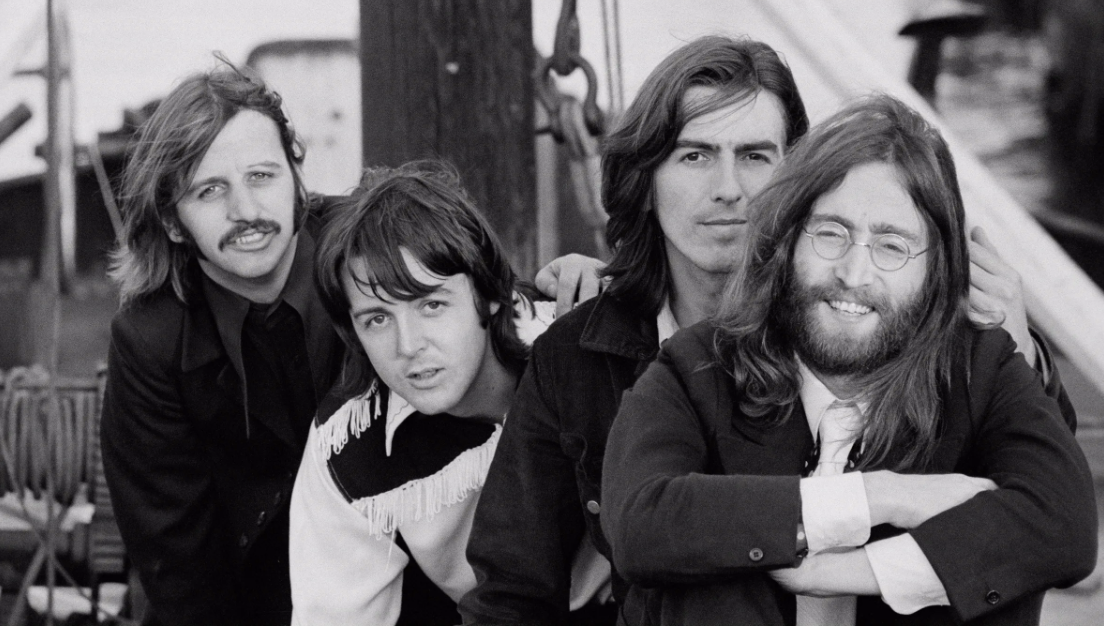
My wife and I watched the renewed and expanded Beatles' Anthology on Disney+ the past three nights. I'd seen and heard bits and pieces of various lengths of the original eight episodes -- on YouTube, The Beatles Channel on Sirius XM, and everything in between -- which originally aired on ABC-TV in 1995, but we somehow had managed not to have seen that original on the unsmart TV in our family room.  It was more than wonderful to see and hear what 2025 director Oliver Murray did with the 1995 eight episodes -- uncovering/discovering new footage as well as calling upon Peter Jackson and his elves to bring to current vibrant life what was done in 1995 (just as Jackson had done so miraculously with The Beatles: Get Back in 2021) -- but the real treat for me (treat is too weak a word) was seeing the new ninth episode.

I'll go over some of highlights of the first eight episodes, and then delve into the wonders of ninth episode, and the one problem I had with it.

About the first eight episodes:

  • It was great to see Murray the K get his due (just as he had in Martin Scorsese's Beatles '64 last year).  I worked with Murray the K when he was at WNBC Radio in New York City in 1970s.  He hired me after he read my article "Murray the K in Nostalgia's Noose" in The Village Voice in 1972 (my second-ever published work -- my first was "A Vote for McCartney" a year earlier, my response to dyspeptic critic Robert Christgau's attack on Paul and his early post-Beatles work).  Murray never got the credit he deserved back then in ushering in The Beatles, and before then on WINS with Alan Freed, and after when he was on WOR-FM helping to invent the FM radio format. I had such a good time working with him on NBC, I even wrote and recorded a song about him -- "Murray the K's Back in Town" -- which he played on the air.  (The late Pete Fornatale -- protagonist of my It's Real Life: An Alternate History of The Beatles -- played that song on his Mixed Bag on WFUV Radio in the early 2010s.)
  • Great shots that I hadn't seen before of The Beatles in their 1964 Washington, DC concert!
  • There was a spectre, a foreshading, of what would happen to John at the end of 1980. George worries throughout about the exposure of The Beatles in a country in which John F. Kennedy had just been assassinated.  (The sick devotion to guns in this country is still claiming lives.)  John himself notes after the DC concert that "some bloody animal cut Ringo's hair".
  • I was reminded again what a uniquely almost  extraterrestrial person Ed Sullivan was.  I mean, no one here on Earth had his accent or his delivery.  Even in Japan, the Beatles are introduced in Japanese (of course), and the host concludes in English with "Ladies and Gentlemen, The Beatles!" -- delivered in a pretty good mimic of Ed.
  • I find it hard to believe that "Pennylane" didn't go to #1 in the UK. Beaten out by Engelbert Humperdinck's "Release Me"? Maybe if it was "Les Bicyclettes de Belsize" ...
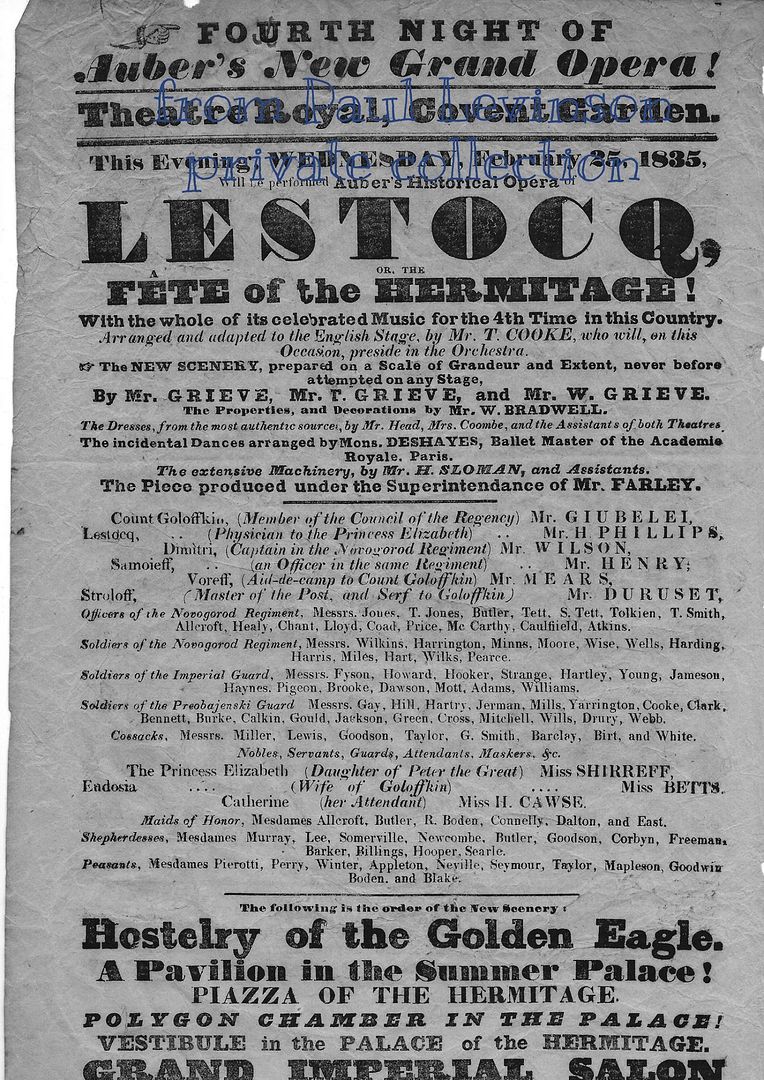
  • John -- after The Beatles had broken up and at odds with Paul -- objects to Sgt Pepper being called a "concept" album, saying "Mr. Kite" and all the songs on the album other than the Peppers could easily have been on any other Beatles' LP.   (George also critiques Sgt Pepper.)  As far as I'm concerned, I think Sgt Pepper is indeed a concept album and what John says is also true.  There's really no contradiction here, both are true.  And I'll also say how happy I was to find the following poster in an antique shop my wife and I were in, must've been, the late 1970s.  It's hanging on a wall outside our bedroom.  Every time I walk by it, I smile.  It reminds me of Sgt Pepper.

Now, about the new ninth episode:

It was not only heartwarming (to see the three surviving Beatles still making such superb music) and heartbreaking (because now George is gone), it was chock full of fascinating and important information.  My favorite example: I had always heard, regarding the genesis of "Free As A Bird", "Real Love", and "Now and Then", that the transformation projects began when Yoko Ono gave Paul a tape with some of John's demo recordings from the 1970s.  But in episode 9 of Anthology, George tells us about a crucial preface: When Roy Orbison died, The Traveling Wilburys were thinking of taking some of Elvis's demos and bringing them to life with the inimitable Wilbury voices.  But they decided not to go in that direction, because (in George's words), it was "too gimmicky".  (George didn't say, but rumor has it that the Wilburys were thinking of inducting Del Shannon into the group, but he took his life in 1990.)

But if I had to pick my favorite moment in the ninth episode, and therefore all nine episodes of this beautifully burnished Anthology, it would be Paul and George completing their incomparable three-part Beatles harmony with John's voice in the chorus of "Real Love".  It's been one of my favorite Beatles songs since I first heard it in the mid-1990s.  The song inspired me to write It's Real Life: An Alternate History of The Beatles (the video of Anne Reburn's cover of the song follows below -- she performed this in the radio play broadcast on Killerwatt Radio, adapted from the first chapter of my novel; "Real Life", by the way, was John's title for the song before he changed it to "Real Love").  Paul and George's voices being in such synch with John's recording, the harmony snapping into place, snapping into life, is a deeply acoustic proof to me that this uniquely satisfying sound will never die.  At that instant, the former Beatles became The Beatles again, and gave evidence that The Beatles will always be with us.


Powers that be often miss the immortality of what is all around them.  After Marshall McLuhan died in December 1980 (same year and month as John: their lives were intertwined: they both hit America big in 1964), I proposed a book about him to an editor at St. Martin's Press.  He laughed and told me no one cared about McLuhan any more. That book became my Digital McLuhan, which Routledge published in 1999.  I still receive royalties checks for sales of that book every year.   In the 1970s, I told my doctoral thesis advisor Neil Postman that I thought The Beatles, like Shakespeare, would be known and enjoyed for as long as there were human beings.  He laughed too.

Which brings me to the one criticism I have about episode 9.  Paul and Ringo are still alive.  Yes,The Beatles music including their harmonies will live forever.  But not the mortals who made it.  Wouldn't it have been wonderful to have another hour, or even just a few minutes, to have Paul and Ringo look back at 1995 from their vantage point right now?  Oliver Murray of course interviewed Paul and Ringo in the short film he made, Now and Then: The Last Beatles Song, that accompanied release of the single in 2023.  I guess that could be considered a coda to Anthology 2025, but wouldn't a few additional or more words from Paul and Ringo looking back at what they accomplished in 1994 (when "Free As A Bird" was made) and 1995 (when "Real Love" was made) have been just the perfect cup of sencha tea after the marvel we just took in?

Chris Willman asks Oliver Murray in an excellent interview in Variety why there are no contemporary 2025 voices in Episode 9.   Murray replies: "I didn’t really like the idea of Ringo [and Paul] in 2025 talking about an interview that he gave in 1995 about something that happened in 1965. It was all too nebulous to do that." I'm not sure I know what "too nebulous" means, in this context. "That is, I think I disagree".
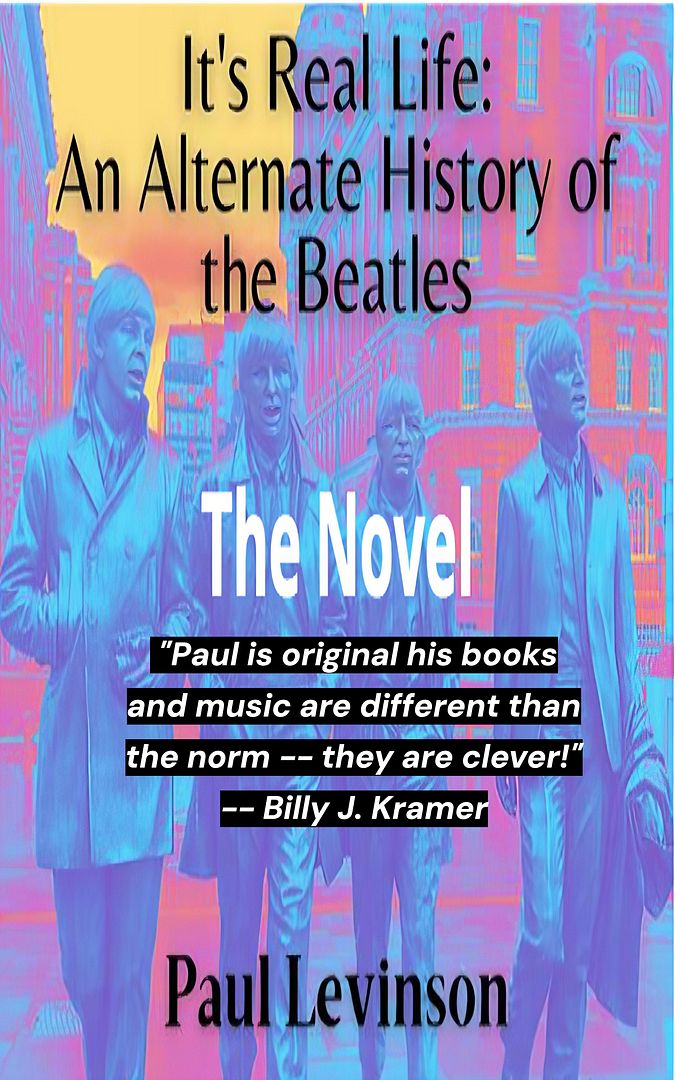


in Kindlepaperback, and hardcover

Added February 10, 2026: Check out this new episode of Rock Talk Studio

Friday, November 29, 2024

Beatles '64: The Real Thing


Just saw Martin Scorsese's Beatles '64, up today on Disney+.  It's everything you would expect from a master like Scorsese and his masterful 1978 The Last Waltz, but much more, given what the Beatles were and are to so many millions of people on this planet.  As I began saying in the 1970s, that impact will last for thousands of years, right up there with Socrates and Shakespeare, even though at one point in the documentary, a young Paul scoffs at The Beatles having anything to do with "culture," preferring instead to say that what The Beatles are about are "laughs".

Here are some of the highlights of Beatles '64, made possible by some of the footage the late Albert and David Maysles brothers took of The Beatles first trip to America -- for their first appearance on the Ed Sullivan Show, concert in Washington DC, and concert back in New York in Carnegie Hall -- that had special resonance with me.  I present them in more or less chronological order in the movie:

  • A girl fan in New York City tells about the gifts she brought for each Beatle.  For Ringo, it's two "science fiction books".  She doesn't say which ones, but even so, it's good to hear.
  • Another girl says Elvis "is old anyway".  I think Elvis was great, but I get what she means.
  • Yet another girl, who goes to Julliard, explains that "we don't usually like rock 'n' roll ... [but] The Beatles are the greatest".  See below about Leonard Bernstein and his CBS special and his daughter Jamie for more on this point.
  • Ronnie Spector, interviewed probably ten or so years ago, says "Murray the K was downstairs [saying] you gotta get me upstairs to meet The Beatles." My second published article was about Murray the K (in The Village Voice in 1972 -- my first was about Paul McCartney in the same weekly newspaper a year earlier in 1971), and I even wrote a song about Murray the K that he played on his WNBC-AM radio show.  Beatles '64 had a lot more to say about Murray, which I'll discuss below.
  • I loved seeing the Ronettes hold the Phil Spector Christmas Album, which has two recordings by the Ronettes -- "I Saw Mommy Kissing Santa Claus" and "Frosty the Snowman" -- that I still play on YouTube all time.
  • A nasty NYPD cop tells two girls to get off the floor The Beatles were on, in their hotel, to walk down the stairs "before I throw you down the stairs".  An unfortunate parallel to the London bobbies who go up to the roof to break up The Beatles last concert that we see in Peter Jackson's The Beatles: Get Back, also on Disney+, and now a perfect pair with Beatles '64.
  • Black teenage girls love The Beatles; black teenage boys do not, one of them saying, "I think they're [The Beatles are] disgusting."  (But see Smokey Robinson, whom I'll discuss below.)
  • Murray the K appears throughout the movie.  The Beatles tend to think he's too "loud," John mocks him in the movie, and George Harrison remarks in an interview probably conducted in the mid-1980s that Murray, in effect, just glommed on to The Beatles and their first visit to New York. I actually worked with Murray in the early 1970s -- he invited me to come work with him after he read my 1972 article about him -- and I didn't find him too loud at all.  He likely had mellowed by then.
  • Smokey Robinson does an endearing performance of McCartney's "Yesterday" in the 1960s, and in a very recent interview explains that The Beatles had a tender, feminine way of expressing their emotions, which Smokey found very admirable.  Jamie Bernstein (Leonard's daughter) and Betty Friedan echo and elaborate on this perceptive view.  Clips from Leonard Bernstein's pathbreaking 1967 CBS show on The Beatles and the "rock revolution" appear throughout Scorsese's film (here's my review of Maestro which, amazingly, said nothing about that TV show).
  • Back to Murray the K: he gets George in 1964 to introduce James Ray's "Got My Mind Set on You".  Unsaid in the movie is that of course George would have a big hit singing the song in 1987.  Hey, Murray at least deserves credit for helping keep the song in George's head (he had first heard the song in an earlier trip to the U.S.).
  • Marshall McLuhan appears a lot in the second half of the movie, saying things like "JFK was the first TV President" and interviewing John and Yoko in Toronto at the end of 1969.  I worked with McLuhan at the end of the following decade -- he was also the real thing, the most perceptive scholar I've ever had the chance and pleasure to work with (more on McLuhan in my just updated McLuhan in an Age of Social Media). Beatles '64 sets up The Beatles coming to America as the immediate sequence and desperately needed healing musical salve to the crushing depression caused by JFK's assassination, which indeed it was.  McLuhan's breakthrough book, Understanding Media, arrived at same time.  The Beatles helped heal America, McLuhan helped us understand what was happening.
  • Harry Benson, a now 94-year-old photographer, tells us that Lennon "used to speak, of all things, about Lee Harvey Oswald ... he was worried about violence" directed against him and The Beatles in America.  That brought me to tears.  (I say more about Lennon's assassination, and how it brought me to write It's Real Life: An Alternate History of The Beatles, in this interview conducted just last week.)
  • But on a lighter note, speaking of tears, I had to laugh when I heard that "George Harrison was near tears" when he and The Beatles were dissed at a reception for them at the British Embassy after their Washington DC concert. McCartney had a much better response.
  • Also on a lighter note, and putting on my media theorist hat, I was pleased to hear the word "cassette," long before there were little tape recordings, back in 1964, used to describe a place that cans of soda inhabited, when someone said, "draw it [the soda can] out of the cassette".
  • But the documentary returns to the assassination of JFK, which, along with the assassination of John Lennon, were the worst public events in my life.  At the end of the movie, satirist and critic Joe Queenan, who appears throughout the film, tells us that his "father never recovered from Kennedy's assassination but we did".  And that of course was because we had The Beatles.  The "we" is my generation, and what Queenan says is all the more trenchant, since he earlier tells us that his father beat him, and also decreed that Queenan couldn't watch The Beatles on Ed Sullivan, which Queenan said was worse. But he managed to watch at his uncle's place.
I could say more about this documentary, but you get the picture, and if you loved or love The Beatles, and feel the same about Peter Jackson's The Beatles: Get Back, see this movie, Beatles '64, at least once.


in Kindle, paperback, and hardcover


More books about McLuhan the media at Connected Editions

Saturday, March 7, 2020

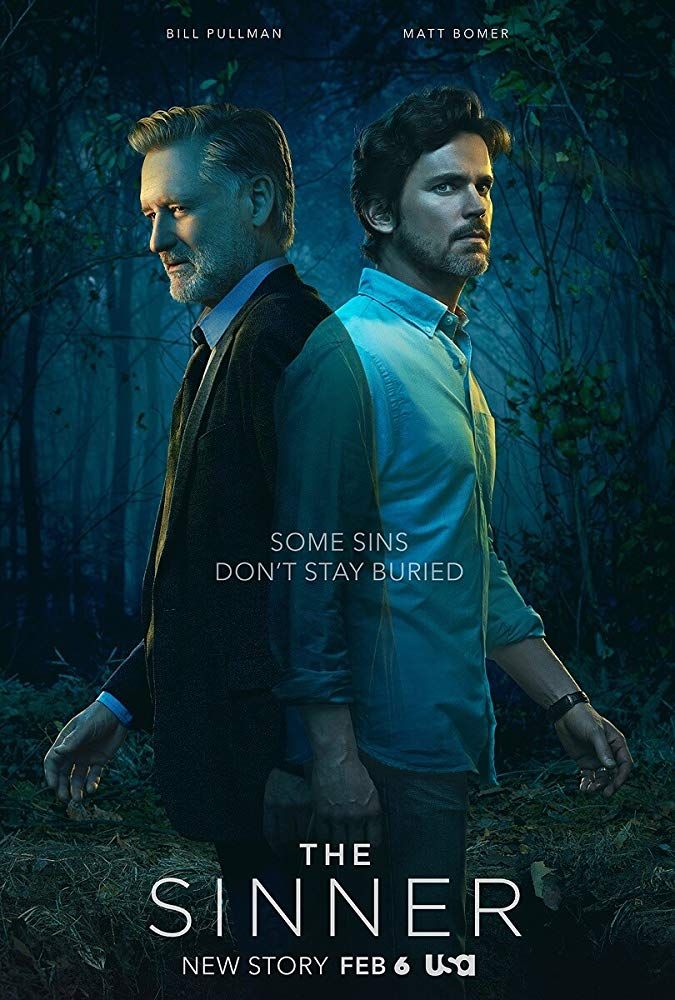
The Sinner 3.4-5: Why Doesn't Harry Just Arrest Jamie?


Didn't get a chance to review The Sinner 3.4, so I'll review both 3.4 and 3.5 right here. The question for me which looms ever larger in 3.4 and 3.5 is why doesn't Harry just arrest Jamie already?

Episode 3.4 was actually a great standalone episode, which reminded me a lot of Martin Scorsese's After Hours (1985), a nightmare night if there ever was one in lower Manhattan.  In The Sinner, Harry goes an escalating crisis of trying to contain Jamie, or get some kind of confession from him, which ends with Harry passed out in his car (he took some strong drug for his sciatica) and Jamie on the loose with an opportunity to kill someone, which he does.

But why doesn't Harry arrest Jamie already?  I know, he doesn't have much evidence, or at least enough evidence on Jamie.  And before the frenzied killing at the end of episode 3.4, Jamie was at most guilty of the weakest kind of murder - letting someone bleed out - if that is even any kind of murder at all.  But all through 3.5, Harry becomes increasingly aware that Jamie has killed and could kill again.  Why is Harry pussy-footing around?

On the plus side of 3.5, it was good to see Harry kiss the artist, and nice to see her say that "was nice".  Long suffering Harry - suffering not only physically but emotionally - could use a little sexual healing in his life, not to mention eventually some love.

Despite my unwillingness to suspend my disbelief about Harry letting Jamie stay on the loose, I'm really enjoying this season, especially the New York City scenes, and the scenes in that fictional upstate town, which is really none of other than Hartsdale, or at least the Hartsdale train station, in our reality.

See also The Sinner 3.1: Second Degree Murder, First Degree Detective ... The Sinner 3.2:  The Contractor and the Contractee ... The Sinner 3.3: The Baby Monster

And see also The Sinner 2.1: The Boy ... The Sinner 2.2:  Heather's Story ... The Sinner 2.3: Julian's Mother ... The Sinner 2.5: The Scapegoat ... The Simmer 2.7: Occluded Past Unwound - Mostly ... The Sinner Season 2 Finale: The Ambiguity of Harry


Wednesday, November 27, 2019

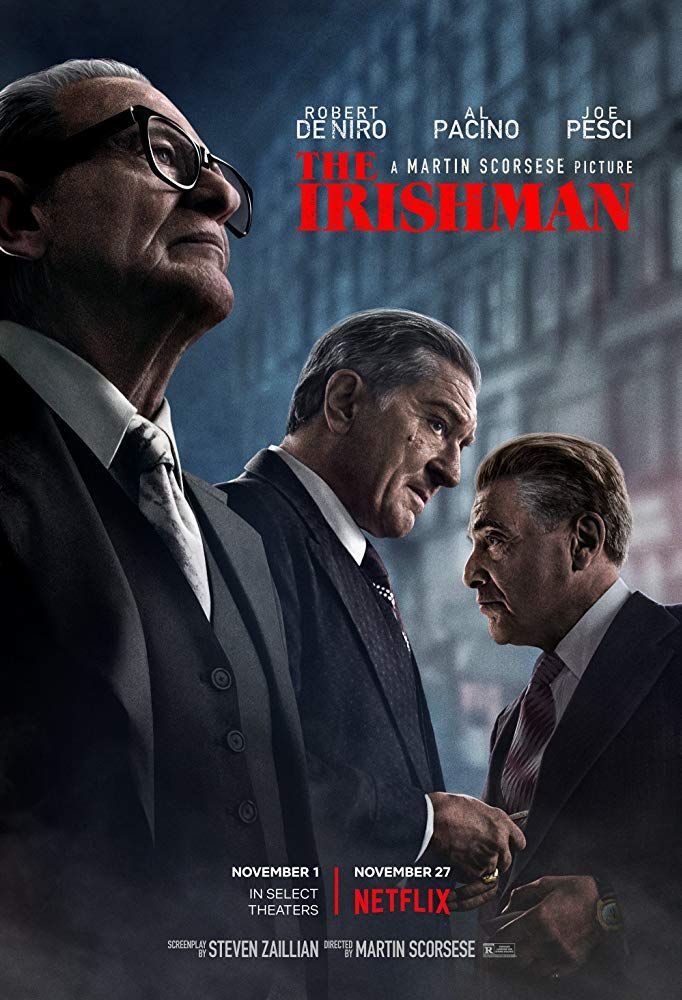
The Irishman: "It's What It Is"


"It's what it is" was an oft-repeated phrase in this three-and-a-half movie about who killed Jimmy Hoffa, and how.  And what this movie by Martin Scorsese certainly is, is something extraordinary, in the story it tells, and in the way it was directed by Scorsese, and acted by Robert De Niro, Al Pacino, Joe Pesci, and, for that matter, everyone else in the movie.

One big question is how true is the story Frank Sheeran tells us in the last days of his life.  Part of this story is how Sheeran killed Joey Gallo in 1972 in Umberto's Clam House in New York City.  Up until this movie, based on  Charles Brandt's 2004 book, I Heard You Paint Houses (which I haven't read), I had thought that four other gunmen (not Sheeran) had killed Gallo (see the Wikipedia entry on this). Since I wasn't there, I can't with certainty know who killed Gallo.  But if Sheeran did not kill Gallo, why should we believe that he killed Hoffa?

A somewhat lesser but still significant question is why Sheeran's daughter Peggy had such deep misgivings about her father, to the point of never talking to him again after Sheeran (presumably) killed Hoffa?  Why did she have those misgiving all those years?   Why her and not her sisters?  Based on the movie, the only answer I can think of is that Peggy had almost a sixth sense about her father, which is not very satisfying as even a component of such a momentous story.  (There was the scene of Sheeran crushing the hand of the man who pushed her in the grocery store - with Peggy looking on - but this doesn't seem sufficient for her life-long, growing abhorrence of her father.)

But there's an old saying to the effect of, though it may not be true, it's still a great story.  And that is manifestly the case for The Irishman.  And a lot of the story does make a perfect kind of sense.  Why did Russ (played by Pesci) talk Sheeran into killing Hoffa?  It was to protect both Sheeran and Russ, as Russ later explains to Sheeran.  If someone else had killed Hoffa, the mob would have been concerned, very concerned, that Sheeran might seek some vengeance.  As we heard early in the movie, being very concerned is a state that everyone takes very seriously.  With Sheeran pulling the trigger on Hoffa, the mob didn't have to be concerned about vengeance because, who could Sheeran take vengeance on, himself?

As for the acting, tour de force doesn't do justice to the three main players.  De Niro was absolutely masterful in voice and expression.  Pacino was the same - the way he says "phone" in his first conversation as Hoffa with Sheeran is just the right tone to establish Hoffa as a character in a world of his own.  And the same for Pacino's expression when Russ (Pesci) tells Hoffa that he may not be showing proper "appreciation".  Pesci delivers that line with a quiet strength and mob wisdom that typifies his character.  All three acted their characters over decades - the "de-aging" process enhanced this, but their acting brought the ages home.  My recommendation: all three actors should split the Oscar for best performance this year.  The supporting roles in the movie might be too short for supporting Oscars, but they were all memorable, ranging from Jesse Plemons as Hoffa's son Chuckie to Harvey Keitel as mobster Angelo Bruno.  (And shoutout to the inimitable Logan Crawford who plays a reporter.)

I have to also talk about the music.  I used to sing "In the Still of the Night" by The Five Satins with my doo-wop group in the late 50s/early 60s (I was just a kid), and it was great to hear that song at least three times in The Irishman.  The other music was right on key for the movie, too.

Scorsese is already lauded for Goodfellas and Casino, movies about the mob that were so good they come in just below The Godfather trilogy.  I'd put The Irishman just above those two, and I'm going to keep thinking about it.

I should also mention - it's one thing to see a movie on Netflix that would never be in a movie theater.  It's quite another to see a movie on Netflix, by one of the world's leading directors, with all-time great actors, that is playing in theaters in New York City right now.  The streaming revolution continues apace.


It started in the hot summer of 1960, when Marilyn Monroe walked off the set of The Misfits and began to hear a haunting song in her head, "Goodbye Norma Jean" ...


Thursday, August 1, 2019

Listen to the Way Pacino (Hoffa) Says "Phone"


This has to be one of the best trailers I've ever seen - for Martin Scorsese's new movie, The Irishman, due out on Netflix and select theaters this Fall.  It stars Robert De Niro, Al Pacino, and Joe Pacino.  It's about Jimmy Hoffa.  How could you go wrong?

But it looks and sounds to be even better than that.  Listen to way Pacino, playing Hoffa, says "phone" (about 28 seconds in).   Pacino's voice and phrasing, the way he bends words just right, like daggers (usually softly) in your heart, has always been one of his strongest suits.  But this "phone" is something else.  Beyond just right.  Sheer acoustic genius.

And De Niro has been subject to a new "de-aging process".   That's something to see, too.  This trailer is like a real window to the past - except the real is the Hoffa story, and the fiction is someone De Niro's current age playing him in a 2019 movie.

Pesci also is in fine form and voice.   I could listen to these three guys all night.   If the movie is anything as good as the trailer, it'll be one for the ages.  Look for my review here in the Fall.

Tuesday, May 17, 2016

Victoria: Buckle Up

I saw Victoria on Netflix last night, based on a recommendation by New York Times photographer Emon Hassan, conveyed by my wife.  Emon said see it "now"! He was right.  This movie, reminiscent in some ways of Scorsese's After Hours and any number of amateur-heist movies, but with a story and frenetic pace all its own, was non-stop draining and breathtaking.

Non-stop is probably the key word here.  Victoria was motion-photographed in one uninterrupted flowing and jangling point of view, in a way that keeps your feet and eyes to the fire as much as the riveting story.  That story is about Victoria, who runs into some guys in bar in Berlin, and winds up as the driver in a life-and-death big robbery.

The very language in this movie is part of its charm - most of the Germans speak German, but since Victoria is Spanish, from Madrid, she speaks mostly English, which the main German guy speaks pretty well, too.   The linguistic mix underscores one of the main messages of the movie, which is that none of the characters understand the others all that well, certainly not Victoria and her German friends.

But that doesn't get in way of real emotion, either, as Victoria indicates when she tells Sonne that she thinks she's falling in love with him.   Budding love, however, has a hard time of it in this story, as Victoria moves from beautifully playing the piano for Sonne to helping him and his buddies with the robbery.

The acting is good and the plot is well constructed.  I was guessing until the very end.  I recommend you see this movie maybe with a glass of wine in hand - the caffein in coffee or tea may be too much for you as you get caught up in the 2 hours and 18 minute ride on the screen.

Friday, March 25, 2011

Fringe 3.18: Clever Walternate

A taut, more or less standalone Fringe 3.18 tonight, all on the other side, driven by Faulivia's pregnancy and Walternate's goal to insure its successful outcome.

First, some tasty alt-differences, including sophisticated digital imagery on the wall of a doctor's office, and Francis Coppola not Martin Scorcese as the director of "Taxi Driver".   But our Eternal Bald Observer is clearly on the job on the other side.

Walternate's concern about Fauxlivia's pregnancy not resulting in her or her baby's death - the baby being Peter's and thus Walternate's grandchild - stems from Faulivia having a condition will result in either her or the baby's death if she goes to term.   Fauxlivia is soon kidnapped, and, we soon learn, given a treatment which greatly accelerates her pregnancy.

Walternate assigns Lincoln to the case with due urgency.  But it occurred to me then that Walternate might well be behind the kidnapping and the accelerated pregnancy.  If not, who would the kidnappers be?   People from our side?  Not likely, given that we were in previous episodes given no sign of that.  Maybe people from a third reality?  Always possible, but again, that would be pulling a third rabbit out a hat, at this point.  How about a group working with the Bald Observers?   Possible, but, so far, the only Bald Observers we've seen are, well, bald.

And it turns out that Waltnerate is indeed behind this.   The accelerated pregnancy will beat out the development of the virus that otherwise would have killed either Fauxlivia or the baby, or even both.   This way, Walternate can have his grandchild - which turns out to be a boy - and Fauxlivia.

But all's never quite well that ends well, when we're dealing with Fringe.  The price Waltnernate has paid for the success of his plan is making Lincoln suspicious - and, in the bargain, he's now told Fauxlivia he loves her (under the influence of thinking she might die, which we the viewers were encouraged to think, also, by the playing of that Lost-type music which usually meant death on that show).

More good ingredients for this continuing, fine story - and, hey, Fox announced today that Fringe will be back next year - after, of course, the four remaining episodes of the current season, which pick up in three weeks.


See also Fringe 3.1: The Other Olivia ... Fringe 3.2: Bad Olivia and Peter ... Fringe 3.3: Our/Their Olivia on the Other Side ... Fringe 3.5: Back from Hiatus, Back from the Amber ... Fringe 3.7: Two Universes Still Nearing Collision ... Fringe 3.8: Long Voyages Home ... Fringe 3.10: The Return of the Eternal Bald Observers ... Flowers for Fringenon in Fringe 3.11 ... Fringe 3.12: The Wrong Coffee  ... Fringe 3.13: Alternate Fringe ... Fringe 3.14: Amber Here ... Fringe 3.15: Young Peter and Olivia ... Fringe 3.16: Walter and Yoko ... Fringe 3.17: Bell, Olivia, Lee, and the Cow

See also reviews of Season 2: Top Notch Return of Fringe Second Season ... Fringe 2.2 and The Mole People ... Fringe 2.3 and the Human Body as Bomb ... Fringe 2.4 Unfolds and Takes Wing ... Fringe 2.5: Peter in Alternate Reality and Wi-Fi for the Mind ... A Different Stripe of Fringe in 2.6 ... The Kid Who Changed Minds in Fringe 2.7 ... Fringe 2.8: The Eternal Bald Observers ... Fringe 2.9: Walter's Journey ... Fringe 2.10: Walter's Brain, Harry Potter, and Flowers for Algernon ...  New Fringe on Monday Night: In Alternate Universe? ... Fringe 2.12: Classic Science Fiction Chiante ... Fringe 2.13: "I Can't Let Peter Die Again" ... Fringe 2.14: Walter's Health, Books, and Father ... Fringe 2.15: I'll Take 'Manhatan' ... Fringe 2.16: Peter's Story ... Fringe 2.17: Will Olivia Tell Peter? ... Fringe 2.18: Strangeness on a Train ... Fringe 2.19: Two Plus Infinity ... Fringe the Noir Musical ... Fringe 2.21: Bring on the Alternates ... Fringe 2.22:  Tin Soldiers and Nixon Coming ... Fringe Season 2 Finale: The Switch

See also reviews of Season One Fringe Begins ... Fringe 2 and 3: The Anthology Tightrope ... 4: The Eternal Bald Observer ... 7: A Bullet Can Scramble a Dead Brain's Transmission ... 8. Heroic Walter and Apple Through Steel ... 9. Razor-Tipped Butterflies of the Mind ... 10. Shattered Pieces Come Together Through Space and Times ... 11. A Traitor, a Crimimal, and a Lunatic ... 12, 13, 14: Fringe and Teleportation ... 15: Fringe is Back with Feral Child, Pheromones, and Bald Men ... 17. Fringe in New York, with Oliva as Her Suspect ... 18. Heroes and Villains across Fringe ... Stephen King, Arthur C. Clarke, and Star Trek in Penultimate Fringe ... Fringe Alternate Reality Finale: Science Fiction At Its Best


                 Special Discount Coupons for Angie's List, Avis, Budget Car, eHarmony, eMusic, Mozy, Zazzle


The Plot to Save Socrates


"challenging fun" - Entertainment Weekly

"a Da Vinci-esque thriller" - New York Daily News

"Sierra Waters is sexy as hell" - curled up with a good book

Tuesday, September 21, 2010

Boardwalk Empire on HBO

Boardwalk Empire opened on HBO this Sunday Night.  With Martin Scorsese and The Sopranos' Terence Winter behind it, Boardwalk Empire had to be good.   Judging by the first episode, the series is a lot better than good, and promises to be another superb HBO vibrant slice of history, a successor, in its own way, to Rome, which was one of the best series ever on television.

The history of Boardwalk Empire is the onset of Prohibition in 1920.  The place is Atlantic City.   Steve Buscemi, who is never less than riveting in anything he does (including Tony Blundetto in The Sopranos) plays Nucky Thompson, Treasurer in Atlantic City and a racketeer.   As his rebellious protege Jimmy Darmody tells Nucky, however, "you can't be half a gangster."

Nucky's trying to move a boatload of now illegal booze, meaning dangerous but much more profitable.  His buyers are Arnold Rothstein and young Lucky Luciano, both from New York City.  Lucky's played by Vincent Piazza, who looks at lot like Michael Nouri, which makes sense, since Nouri played Lucky on The Gangster Chronicles a few decades ago.   Young Al Capone and his Chicago boss are also on hand, as are the Feds, who are revving up to combat exactly what Nucky and his associates are trying to do.

Before the episode is over, Al will be driving the booze to Chicago, where he kills his boss in his ascension to power.   As Scorsese remarked in one of the promos for the show, one of its great pleasures is seeing iconic gangsters we know well from their later escapades - notably Luciano and Capone - in their earlier years.   Meanwhile, Enoch "Nucky" Thompson is based on the real-life Republican political boss (sweet!) and gangster Enoch "Nucky" Johnson, who held forth in Atlantic City from 1911-1941.

I hope the series runs that long.  It has great color and flavor, fine music, and full-frontal nudity (though, in the first episode, it was confined to a young woman on an autopsy table with a bootleg still in the back).


5-min podcast review of Boardwalk Empire


                 Special Discount Coupons for Angie's List, Avis, Budget Car, eHarmony, eMusic, Mozy, Zazzle


The Plot to Save Socrates


"challenging fun" - Entertainment Weekly

"a Da Vinci-esque thriller" - New York Daily News

"Sierra Waters is sexy as hell" - curled up with a good book

Monday, September 10, 2007

Bob Dylan and Ron Paul

I was watching Martin Scorsese's 2005 No Direction Home last night - the story of Bob Dylan's complex rise through the folk, anti-war, and rock eras. My favorite scene in this extraordinary chronicle is Dylan and Joan Baez singing Dylan's "With God On Our Side" at the 1963 Newport Folk Festival. The words and emotion of that anti-war song ring as true today, unhappily, as in 1963. They're not being sung, but they're being said, by Ron Paul and his supporters.

"God On Our Side" - how countries going to war always claim or think God is on their side - is probably the best anti-war song ever written. Dylan also wrote "Masters of War," a close second. And I put Phil Ochs' "I Ain't A Marchin' Anymore" and Edwin Starr's "War" (written by Norman Whitfield and Barrett Strong) up there, too.

But what made the Newport Folk Festival scene so powerful was not just the song but the Dylan and Baez performance, two thin wisps with wonderful voices, and the way the crowd responded. This was July, 1963. JFK was still alive, and our undeclared in war in southeast Asia still low profile. But Dylan's song brought the crowd just a little into a terrible future...

We're still in that future of illegal wars right now. Critics of these wars are not on stage at Newport anymore. They're communicating on YouTube and the Internet. They're Ron Paul and Dennis Kucinich and Mike Gravel.

What was the exchange last week between Mike Huckabee and Ron Paul, if not a short debate between someone (Huckabee) who believes that America has God on its side, and someone (Ron Paul) who sees the danger and hypocrisy in that...

After the Newport Folk Festival, in December 1963, Dylan received an award from the Emergency Civil Liberties Committee, celebrating the Bill of Rights. That strikes a chord in 2007, too. Which candidate speaks most often about the Bill of Rights? Ron Paul, and, actually, he is often the only candidate for President speaking about the First Amendment.

The second part of Scorsese's movie shows the torrent of criticism Dylan ran into when he began writing and singing different kinds of songs, with electric back-up. I always loved Dylan's electric as much as his folk phase. But there's a lesson here for the current campaign as well: people need to get beyond supporting the expected candidates, or doing what is politically expected of them. They need to support candidates who truly feel right to them - who are saying and doing the right things - regardless of preconceptions.

It's been a long time since 1963. It's long since due that we heed Dylan's message, and break free of the double-talking political past.


Digg!
InfiniteRegress.tv