Chuck Todd interviews me about alternate histories
Showing posts with label Station Eleven. Show all posts

Saturday, June 10, 2023

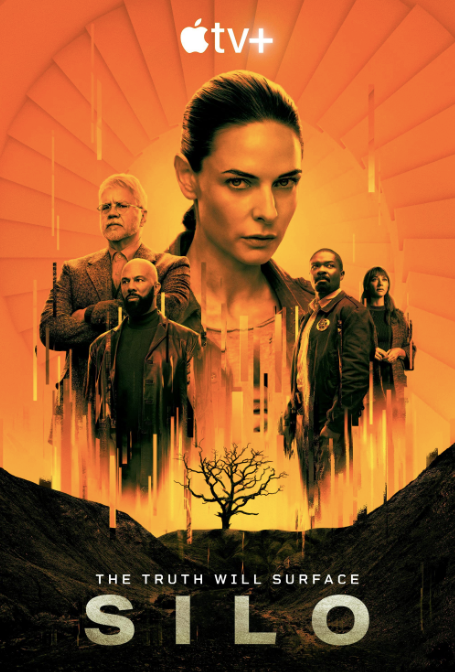
Silo 1.6-1.7: The Book and the Water

I'm reviewing episodes 1.6 and 1.7 of Silo together because they're very closely related, and revolve around two themes: the book and the water.

[Spoilers ahead ... ]

Episode 1.6 has Juliette discovering and devouring a relic that provides a key piece of the hidden truth: a book, with pictures of the outside world, including, especially, the ocean.  Being on Cape Cod, this immediately resonated with me.  There's truth indeed in any big body of water, and especially when the reader is living in a silo.  And there's a whole tradition in our off-screen world of books being conveyors of repressed truths, ranging from Station Eleven to, of course, 1984.  Silo has echos of 1984 already, and you can add that great dystopian novel to Westworld (listen to the music in Silo), a dystopian television triumph, until its final season.

And in episode 1.7 Juliet briefly rescues Gloria, who gave that book to George's mother, who in turn gave it to her son.  The episode is entitled "The Flamekeepers," and that's who Gloria and George's mother were.  And now -- as Gloria tells Juliette -- Juliet is their standard bearer.

The heroes and villains are this story are slowly coming into focus.  In addition to everyone who went outside to clean, and now Juliet, there are few others willing to buck what we would today call this fascist regime.  Bernard seems to be a good guy, and by and large, even Juliet's father, at least in things concerning his daughter's wellbeing.  Billings could wind up being a good guy, but that's pretty much it.  Sims, wherever his ultimate loyalties may reside, is so far a reliable agent of deceptive government.

But we still know precious little about that -- who they are, and what they ultimately want.  I'm looking forward to more of that become clear in the concluding three episodes of this season, and in seasons ahead of this provocative series.

See also Silo 1.1-1.2: A Unique Story, Inside and Out ... Silo 1.3: Like Chernobyl, Repaired ... 1.4: Truth, Not Quite ... 1.5: Revelations


Thursday, January 27, 2022

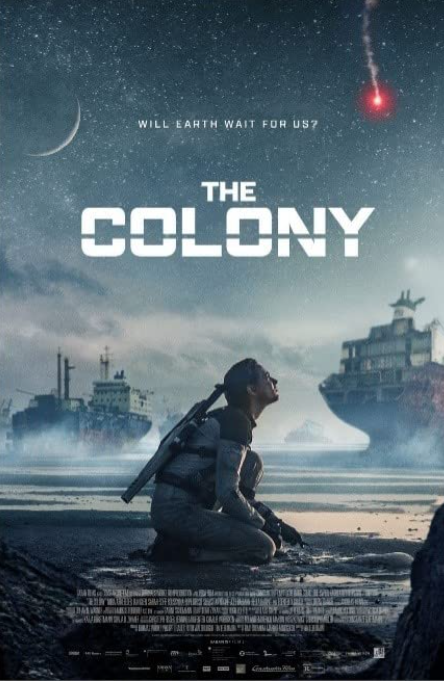
The Colony: Conradian/Keplerian Noir


Well, I just saw The Colony (original name of the movie, Tides) on Netflix.  This seems to be the season for post-apocalyptic stories, understandable given the dangerous state of our world, in areas ranging from  COVID to climate to Russia massing troops on the border of Ukraine.  I thought Station Eleven, a series on HBO Max based on Emily St. John Mandel's novel, was a masterpiece.  I wouldn't say the same about The Colony.  But I will say that, for my money, it's much better and more worth seeing than the massively popular Don't Look Up.  (Though I'll also admit to you that I paid no money for either, other than the subscription price on Netflix.)

In The Colony, Earth has been devastated by both climate and plague, and some rich people on Earth have escaped to Kepler. a planet which we've indeed in our current reality identified as being in the Goldilocks zone, i.e, likely amenable to human life.  But it turns out it's not that habitable after all because, although the Earthlings can survive there, they lose their fertility.  In a last desperate move, they send two expeditions back to Earth, to see if perhaps our planet cured itself and was once again capable of supporting our demanding species, if not in the style to which we've become accustomed, at least in a way that enabled us to live beyond a single generation.

The answer is a qualified yes.  The toxic environment is much better, but the people now living on the planet have reverted to barbarism.  This aspect of the story is the least original, but the overall narrative still works well because our astronaut from Kepler, from the second ship from that arrives here, encounters survivors from the first voyage, with all kinds of repercussions and results.

I won't say anything more about the plot.  But this  Conradian/Keplerian "Heart of Darkness" in which Earth itself is that heart serves as a good tableau for a realistic morality play in the Asimovian tradition, in which humans who have made it far from our solar system are certainly different from those they left behind but are still part of our species, with all of our strengths and flaws.  Fine work by Nora Arnezeder as Blake (the astronaut on the second voyage), Sebastian Roché as her father from the first voyage, Iain Glen, also from the first voyage, and Eden Gough as Neil, a precocious boy on Earth.


first starship to Alpha Centauri has just enough fuel to get there

Thursday, January 13, 2022

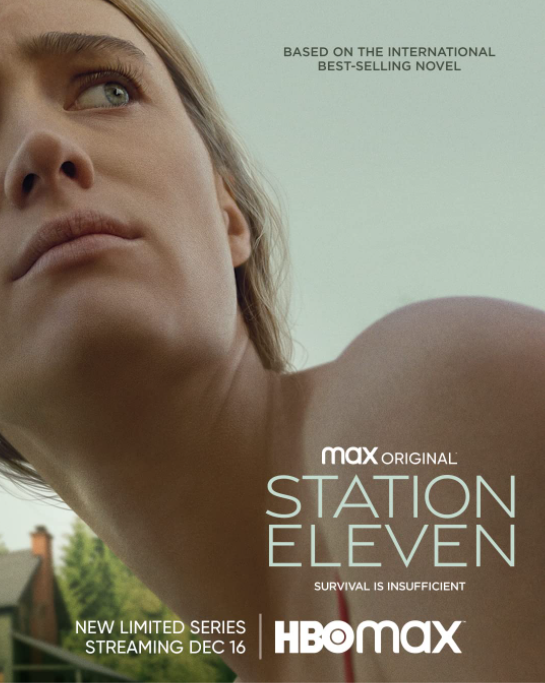
Station Eleven Finale: Hope and Plaudits


What a glorious, hopeful finale to the masterful television series known as Station Eleven.  An ending so uplifting, in a story of humanity beset by a virus that kills 99% of the population, that it can serve as beacon of hope, a map to a better world, in our own world, also beset by a deadly virus, but far less lethal than the deadly flu in Station Eleven.

There were so many wonderful parts of this finale.  Kirsten and Jeevan hugging near the end.  If that wasn't satisfying to the soul on the deepest level, I don't know what is.    Tyler aka the Prophet telling his mother to join him.  Even the passing around of the book that is Station Eleven -- the illustrated book within the illustrious watercolor television series -- well, that was inspiring, too.

The performance of Hamlet was great, too, especially Tyler as Hamlet not stabbing Clark as Claudius with the knife.   That knife, of course, hadn't done Tyler any real harm when Kirsten stabbed him with it, so maybe he knew that in some sense it just was a symbolic knife not a real cutting edge at all, except that it cut to the emotional core.

The music once again, in Hamlet and throughout the episode, was just superb.  I've never heard a better performance of "Midnight Train to Georgia," even from Gladys Knight and the Pips.  Georgia, the state that has become a symbol and a beacon, to use those words again, in our own democracy in our off-screen world.

Big plaudits to Dan Romer for the music.   Accolades to the brilliant acting of Mackenzie Davis as Kirsten and Matilda Lawler as her younger self and Himesh Patel as Jeevan at all ages.  In fact, every scene was boosted to admirable heights by the performances of everyone.

Station Eleven has redefined the presentation and staging of a post-apocalyptic story .  It will take its place alongside of A Canticle for Leibowitz (I read the novel but haven't seen the adaption) as a standard-bearer of portraying humanity on and after the very brink.  Kudos to Emily St. John Mandel for writing the novel (which I haven't yet read) on which the series is based and  Patrick Somerville for bringing the series to life.


See also Station Eleven 1.1-3: "Looking Over the Damage" Well Worth Seeing ... Station Eleven 1.4-5: Shakespearean Prophet ... Station Eleven 1.6-7: Time, Blake, and Bosch ... Station Eleven 1.8-9: Before and After

Thursday, January 6, 2022

Podcast Review of Station Eleven 1.8-9


Welcome to Light On Light Through, Episode 234, in which I review episodes eight and nine of Station Eleven on HBO Max.

Podcast reviews of Station Eleven episodes one to three ...episodes four and five... episodes six and seven

Written blog post review of Station Eleven 1.8-9


Check out this episode!

Station Eleven 1.8-9: Before and After


Station Eleven is such a deep and deeply nuanced story, it's going to be talked about and studied for years, even decades, to come.  Just as episodes 1.8 and 1.9 coax us through these times and time spans.  If this characterization seems a little more poetic than usual, it's because Station Eleven is itself pure poetry.

[Spoilers ahead, of course ... ]

It's 2040, according to the walls of the airport/museum.  Elizabeth has white hair.  Earlier, we see Kirsten, probably 20 years after 2040, or maybe longer, also with white hair.  Time flies when you're having a good time, and apparently just as much or even more when you're not.   That's a lot about the future.  And though the Prophet aka Tyler tells Kirsten the past, the Before, does not exist or matter, his knowledge of the airport prompts Kirsten to comment to him, "I guess there is a Before".  One of the charms of Kirsten is the time she takes with her rejoinders.  That comes with being such an eagle-eyed observer of reality, such as it is.   As for the Prophet, he later tells Kirsten that the Before is coming, and vows that he's not going to let that happen.  That Before, by the way, is our off-screen world, the world we're living in right now.

When Kirsten gets to see Sarah, she tells Kirsten that "the play's the thing".  It's more than that in this meta-Shakespearean post-apocalypse narrative. In Station Eleven, the play is life.  Sarah, who may  be dying from a heart attack, also tells Kirsten that she has to get better at saying goodbye.

Which brings us to the next episode, 1.9, in which Kirsten says a final goodbye to Jeevan (but we later learn that "goodbyes are better than death"), in a story literally pregnant with profundities, including the very experience of pregnancy.  "There's a person inside me.  I don't like strangers," one of the pregnant women tells Jeevan.  And this episode -- an inspiring paean to life -- concludes with Jeevan having and raising a family with her, in the 20 years later that we've seen in the previous episode 1.8.

Earlier, Terry, a real but de-licensed doctor who runs the department store now a birthing center, says the essence of being a doctor is having "the courage to bear witness to death" -- keen truth, especially relevant in our own age of COVID.  She's a font not only of wisdom but winning detail, telling Jeevan, with whom she left an oreo cookie that he ate (it did look good), that it's an example of "five centimeters" -- useful information for a de facto obstetrician, who is better identified by one of the women whose baby he helps deliver, as a healer.

And these episodes, especially, 1.9, are indeed healing.  A wondrous and welcome thing to find in a story about the near end of the world.

They're also very satisfyingly connective.  Tyler, older than a boy, younger than a man, makes an appearance at the birthing center, and offers another disparagement of the Before. Jeevan gives him a strange look.

So let's get to next week, and the final episode, number Ten, of Station Eleven.


See also Station Eleven 1.1-3: "Looking Over the Damage" Well Worth Seeing ... Station Eleven 1.4-5: Shakespearean Prophet ... Station Eleven 1.6-7: Time, Blake, and Bosch


Friday, December 31, 2021

Station Eleven 1.6-7: Time, Blake, and Bosch


First, let me say in this review of Station Eleven 1.6 and 1.7, up on HBO Max today, that I thought episode 1.7 was the best so far in this superbly powerful series.

[Spoilers ahead ... ]

The vehicle of the adult Kirsten, poisoned by darts in the present, going back to Frank's apartment in Chicago to interact with her younger self, as she observes her younger self along with Frank and Jeevan, was brilliant and brilliantly executed.   My single favorite of moment of that:  Kirsten assuring her younger self not to worry, she'll see Frank again, because, the person who is saying that, the older Kirsten, is right there in Frank's apartment, was a perfect meta-gambit to make this point.  A close second was discovering at the end that the adult Kirsten may have actually been there, in the physical apartment in the present, with Frank's dessicated corpse in the bed.

If truth be told, I've liked these earlier-set episodes, from the first episode through the airport last week to tonight's episode 7, a little more than the episodes that take place in the future (or the present, depending on how you look at it).  Probably because the near future day-after-tomorrow story is just easier to relate to.

The troubadour future, though, has its tapestry and its moments.  Episode 1.6 tonight felt like a new William Blake poem, wrapped in a Bosch painting (mostly the Dutch painter with a bit of the Amazon Prime series), with lots of choices for appropropriate music.  (Back to 1.7: The rap song by Frank was off-the-charts great.  Dan Romer gets credit for the music -- I have no idea if he wrote it or chose it.  Either way, kudos!)  If I could choose a song to add to that 1.6 tapestry, I think it would be "You Know My Name" by the Beatles. I can't exactly tell you why.  Maybe because it's at once such a negation and triumph of a song.

And my favorite moment of 1.6 was learning that that airport was the Museum.  That's a clever stroke, too.  If you think about it, airports and museums have a lot in common.

At this point, although there is a lot of competition, I'm thinking Station Eleven is up there or down there with best post-apocalypse narratives I've seen on the screen.


See also Station Eleven 1.1-3: "Looking Over the Damage" Well Worth Seeing ... Station Eleven 1.4-5: Shakespearean Prophet


Thursday, December 23, 2021

Station Eleven 1.4-5: Shakespearean Prophet


Well, if you thought Station Eleven wasn't dead serious, you'll give up any hope that it wasn't after you've seen episodes 1.4-5, up on HBO Max today.  No, only kidding, of course.  This is a series about the near extinction of the human species, so how could it not be deadly serious?  But I wasn't really kidding, if that makes any sense.   As serious and to-the-core frightening as this narrative was from the get-go, it's even more, a lot more so, after these two new episodes.

Before getting into why, let me say that the cinematography and music in this television series is an Impressionistic triumph.  The images range from the watercolor fields of Monet to the rage and confusion in oil of Van Gogh (nice phrase, right?).  And the music is some kind of riff on Debussy, though as far as I know none of the music in this TV series that is more like a movie was actually written by him.

[Ok, time for just one big spoiler ... ]

I guessed pretty early on in 1.5 that Tyler was, or would grow up to be, David aka the Prophet.  And in 1.4, we learn why Kirsten tried to kill him, and why he deserved to be.  I said in a review of the Succession season 3 finale that that ultra-contemporary series was Shakespearean.  Not to throw too many compliment bouquets, but the post-ultra-contemporary Station Eleven is Shakespearean, too.  It shouts that out literally from the stage at the beginning of the very first episode with King Lear.  And it continues that, with actors who speak as if they are on stage not screens,* in situations which are exquisite human tragedies.

Tyler's voyage in that airport was a sight to behold.   Although Station Eleven had this quality all along, that airport story for the first time tipped the balance from science fiction to horror, though the action was psychological, not blood and gore.  I'll also say, as the series completes its midpoint, though I know already that I'm going to think the series will conclude its first season far too soon.  And that's because it's taking so much time to tell its story, and I'm luxuriously bathing in, with a wary eye, every minute.

Station Eleven is quickly shaping up, with not much time left to contest it, as the best new science fiction series from a non-classic source on 2021 television.

*You can hear my Bronx accent in the audio podcast of this review:


See also Station Eleven 1.1-3: "Looking Over the Damage" Well Worth Seeing ... Station Eleven 1.6-7: Time, Blake, and Bosch


Saturday, December 18, 2021

Station Eleven 1.1-1.3: "Looking Over the Damage" Well Worth Seeing


With Apple TV+'s  run of superb science fiction -- Foundation, Invasion, and Finch -- temporarily on pause, it looks like HBO Max has picked up the slack with a powerful new series, Station Eleven, a new Matrix movie up next week, and the first half of Dune this past October.  

The first three episodes of Station Eleven introduce us to a complex, perilous, beauty of a story.  It's a story about the passion and agony of creating art, about bringing a story into being.  And, oh yeah, it's a story about "the end of the world," due to a super-virulent (super-all-too-familiar) flu that kills over 99% of the population.

So, well, almost the end of the world (shows how we’ll we’ve actually done in our real, off-screen world),  and therein lies the heart of Station Eleven.  A heart within a heart, a play within a play, because Station Eleven is not only the name of this series, it's the name of a book that Miranda (outstanding performance by Danielle Deadwyler), a major character in this series, wrote.  (A much more appropriate meta than what Facebook says it's becoming, I would say.)  And the book is no mere prop for a meta-title.  It's something that "ruined my life," as said by Miranda and her husband.

The series unfolds in a mode first perfected in Lost:  now, or close to now, when the extinction-level pandemic strikes, and twenty years into the future, when we see how a small group of survivors struggles and (at this point) perhaps triumphs in a way.  When we're in the now, we see flashforwards (the plural of Rob Sawyer's excellent term); when we're in the future, we see flashbacks to the present.  This makes the story a little difficult to follow, but it's worth that price.  Station Eleven, in just three episodes, has already unfurled a rich, memorable tapestry of characters and humanity, as they "look over the damage," another one of the mantras of the series.

[Spoilers ahead ... ]

It's already left us with all kinds of questions.  Why, exactly, did Kirsten (well played by Mackenzie Davis, with great facial expressions that in themselves tell the story) try to kill that guy (Prophet?) in episode 1.2?  Because he said Kirsten and her troupe were "monsters"?  I doubt it's because she has that thin a skin. Because he told Kristen that some of her friends would start to "disappear"?  He didn't say he would make them disappear. There must be more to that stabbing, but that's good grist for the continuing narrative.  

I'll also mention that this series -- based on the novel by Emily St. John Mandel that I haven't read -- is evocatively photographed and accompanied by outstanding music, including Dylan's "Don't Think Twice."  I'm not going to think twice about continuing to watch this vivid series, and I'll be back here with reviews.


See also Station Eleven 1.4-5 : Shakespearean Prophet   ... Station Eleven 1.6-7: Time, Blake, and Bosch
InfiniteRegress.tv