Chuck Todd interviews me about alternate histories
Showing posts with label David Chase. Show all posts

Sunday, May 25, 2025

The Last of Us 2.7: Those Who Die


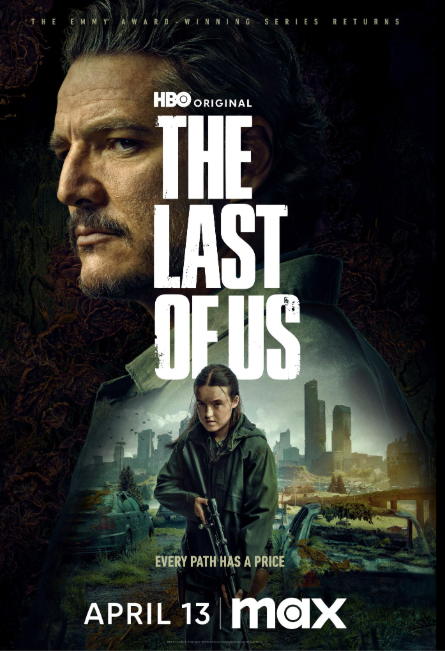
Well, a lot of characters died in the season 2 finale of The Last of Us on Max tonight.

[Spoilers ahead ... ]

Two more of the people who presided over Joel's killing die in 2.7: Owen is killed by Ellie because he draws a gun and attempts to fire on her.  Mel is accidentally killed by Owen as he fires his gun (after being shot by Ellie) and his bullet hits the wall, bullet bouncing off whatever the wall is made of, so the bullet hits a very pregnant Mel in the neck, who dies before Ellie can save her baby (by cutting the baby free) as Mel is pleading with Ellie to do.

And that's the least of it.

Before the episode is over, Jesse is shot and killed by Abby (he was the most ethical character in the show), and Abby fires point blank at Ellie, before the screen turns black in an end-of-The-Sopranos moment.

Of course, that final scene in The Sopranos was the final scene of the series, not of the second season in a continuing series.   And there was no gun shot in that final scene, before all went black.  David Chase, the main brains behind the series, now says that scene was meant to "imply" Tony Soprano's death.  But having read I. A. Richards, who a century ago, back in the 1920s, said we can safely ignore explications by authors of their works (there could be interpretations they didn't intend which are nonetheless valid, or the authors could just be lying), I don't think we should pay much if any attention to what Chase says about his masterpiece.

But back to The Last of Us:

  1. Since the series is continuing, even a gun fired before all goes black is no proof of anything.
  2. And there's no point looking at the game from which The Last of Us series is derived, because the makers of the series have been free to change whatever they wanted to change from the game when they made the series.
So is Ellie dead?  How should I know?  At this point, we can't even be sure she's been shot.  But I'd bet we'll find out more in Season 3.

And although it's too soon to say the following about Ellie, paraphrasing what Shelley said about Keats' death -- weep not for Ellie, 'tis death that's dead not she -- we can certainly apply that to Jesse, a brave, highly ethical soul that we could certainly use more of in our world off-screen, and the ethical crisis that's now raging.  Here's to Jesse, whose morality is eminently worthy of veneration.

See also The Last of Us 2.1-2.2: The Killing Cold ... 2.6: Father and Daughter Flashbacks

And see also The Last of Us 1.1-1.2: The Fungus Among Us ... 1.3: Bill and Frank ... 1.4: Gun and Pun ... 1.5: Tunnels ... 1.6: Joel ... 1.7: Riley's Wise Advice ... 1.8: Ellie vs. the Resort ... 1.9: The Limits of Utilitarianism

more about The Silk Code here


Saturday, October 2, 2021

The Many Saints of Newark: You'll Enjoy It Immensely


After all of these years -- 21 or 14, depending on whether you count from the beginning or the end -- The Sopranos is arguably still the best series ever on any kind of television screen.  What's beyond argument is that The Sopranos started it all, and opened the gates, paved the way, for all the great television that ensued on cable and streaming screens.

It certainly changed my life, all for the better, not only as a viewer but a media scholar thinking and writing about television.  The late David Lavery asked me to write an essay about The Sopranos just a few years into the series for an anthology he was putting together.  The result was "Naked Bodies, Three Showings a Week, No Commercials: The Sopranos as a Nuts-and-Bolts Triumph of Non-Network TV" in This Thing of Ours: Investigating The Sopranos published by Columbia University Press and Wallflower Press in 2002.   His next good idea was to organize a conference on The Sopranos, which I did at Fordham University with David and Douglas Howard's help in 2008.  Lots of important things came out of that conference, including a nice long interview with Dominic Chianese, and another anthology, The Essential Sopranos, chock full of essays, including my "The Sopranos and the Closure Junkies," published by University of Kentucky Press in 2011.  And just for good measure, I was interviewed for "Defining a Landmark," a documentary on The Sopranos included in The Sopranos: The Complete Series, brought out by HBO on blu-ray in 2014.

So now that we've got my creds out of the way, what about the movie?

Well, with The Many Saints of Newark, just up on HBO Max for the month of October, that 2014 package is no longer complete.  The two-hour movie thus had everything to lose for David Chase, if it didn't live up to the extraordinary series to which it has the temerity of being a prequel.  Anything short of loving it would have made it a disappointment.

And I just saw it, and I loved it.  For lots of reasons.

One of the great joys in seeing a prequel is getting to know the younger selves of characters you came to know and prize in their primary presentations.  Michael Gandolfini was an inspired choice to play Tony Soprano as a teenager.  Not only did he look and sound like the adult Tony played by his father James, Michael had a perfect presentation of lines, the mix of mischief and disappointment, and the beginning of that short fuse to anger that animated his father.

And Michael Gandolfini is by no means the only actor who delivered memorably recognizable performances in The Many Saints of Newark.  Among my favorites are John Magaro, whose young Silvio not only had the toupe (of course, and preceded by a comb over for his even younger self) but had the scowl and literally walked the walk as well as talked the talk.  The same for Corey Stoll as Uncle Jun, not the toupe (of course) but in every way the bespectacled uncle of Tony.  And Vera Farmiga was so convincing as Livia -- the intensity of her gaze, the angle of her head -- she was recognizable as Tony's mother before anyone spoke her name.

And there was great work in this movie as well by actors playing characters who weren't in the original series.  My favorite of these was Alessandro Nivola, who did a stand-out job as Dickie Moltisanti, Christopher's father.

Now as to the plot.  It was strong, believable, and fleshed out in classic Sopranos detail.  And there's a stunning revelation at the end, which I won't say anything about except it was thoroughly plausible given what we know of the character in later life on The Sopranos.   

I'll also mention that the movie was studded with gems of fine touches, like baby Christopher Moltisanti crying when he sees Tony as a pouty young boy (William Ludwig), and an old biddy remarking that some people think that newborns have knowledge of "the other side" (as Christopher in a narration from the grave reminds us earlier in the film, Tony killed him).  It was also a nice touch saving the iconic "Woke Up This Morning" for the closing rather than the opening of the movie, since the song was an entree to The Sopranos.

So here's my recommendation: If you've seen The Sopranos, see The Many Saints of Newark, you'll enjoy it immensely.  If you haven't seen The Sopranos, see the entire series, then see the prequel movie.  You'll enjoy it immensely.


Monday, May 18, 2015

Mad Men: The End of an Era and the Ultimate Cool

I've been saying lately that we're in the third golden age of television, epitomized by House of Cards streaming all at once on Netflix.  Mad Men was one of the stalwarts of the second golden age - the revolution of cable over network and the first golden age of television in the 1950s.  Mad Men debuted just a month after the conclusion of The Sopranos, which initiated the second golden age.  And tonight Mad Men concluded in its turn, as well.  It was advertised as the end of an era, and it was - the end of cable television as the undisputed creative edge of television drama.

As for the stories themselves in this final episode, there was a lot that was good in them, even satisfying in some cases.  The best of this was Peggy finding happiness and true love at last with Stan.   Pete's ending is happy, too, and so is Roger's.

Joan's is bitter sweet,   In order to pursue her creative, professional self, she has to give up the man she loves.   The lesson there is that in the society of the early 1970s, at least, it was difficult for a woman, in contrast to a man, to have both.  Mad Men has been brilliant in showing the struggles of professional women in that era.  Presumably our world has improved at least a little in that regard since then.

And Don?  His ending is the most frustrating - for the audience as well as him.  He perhaps has finally shed the illusion that he built around himself, but what's left?  I always thought that Don Draper was the most real part of Dick Whitman, and now Don has neither.

Or maybe not.   Who did the Coke commercial we see at the very end?   Peggy and Stan would be the logical people, since we saw Peggy talking to Don on the phone about his doing it, which means it was certainly on her mind.   But could Don have gone back to New York and done it himself?   Or, was Peggy, Don's greatest student, finally putting into best practice what she learned from the master?  Or, in perhaps the happiest ending that went unseen, maybe the three worked on it together.

My wife correctly points out that Don has a motive to go back to New York - to be with his kids - and the Coke commercial could easily have been inspired by that Esalen or whatever hippy therapy group that was.  This would constitute an epic conquering and co-option of the flower-power counter-culture by the brazen commercialism of advertising via the reconstituted Don.  On the other hand, Don sitting there with that beatific smile on his face is a very long distance from Manhattan.

Matthew Weiner, like David Chase before him, is a master of ambiguity. Instead of the sudden cut to black in The Sopranos, we get the Coke commercial - which, in terms of the most important things in life, is itself a blackness or a celebration of nothingness, just a stupid soft drink with caffein.  It's the real unreal thing, the ultimate McLuhanesque medium cool, a canvass that invites us to fill in the story.

But isn't that what Mad Men has always been most about, a celebration of illusions writ large, perpetrated by professionals and self-generated by consumers, in advertising and true life stories alike?  I don't know for sure, but I sure enjoyed the ride.

-> 20-minute interview with Rich Sommer (Harry Crane) in 2007 at Light On Light Through

See also Mad Men 7.1: Vignettes and Playboy ... Mad Men 7.2:  Flowers and the Hung-Up Phone ... Mad Men 7.3: "Lunch with Rod Serling" ... Mad Men 7.4: Computer! ... Mad Men 7.5: Retrofit Paranoia ... Mad Men 7.6: The Dance ...  Mad Men Mid-Season 7 Finale: Telescope vs. Television ... Mad Men 7.8: Don, Rachel, and the Waitress ... Mad Men 7.9: Fast Ride ... Mad Men 7.10: "Fast Girl" ... Mad Men 7.11: The End of Sterling, Cooper, Draper. ... Mad Men 7.12: Poor Betty

And see also Mad Men 6.1-2: The Lighter and the Twist ... Mad Men 6.3: Good Company ... Mad Men 6.4: McLuhan, Heinz, and Don's Imagination ... Mad Men 6.5: MLK ... Mad Men 6.6: Good News Comes in a Chevy ...  Mad Men 6.7: Merger and Margarine ... Mad Men 6.8: Dr. Feelgood and Grandma Ida ... Mad Men 6.9: Don and Betty ... Mad Men 6.10: Medium Cool ... Mad Men 6.11: Hand in the Cookie Jar and Guy de Maupassant ... Mad Men 6.12: Rosemary's Baby, Dick Cheney, and Sunkist ... Mad Men Season 6 Finale: Beyond California

And see also Why "You Only Live Twice" for Mad Men Season 5 Finale ... Mad Men Season Five Finale

And see also Mad Men Season 5 Debut: It's Don's Party  ... Mad Men 5.3: Heinz Is On My Side ... Mad Men 5.4: Volunteer, Dream, Trust ... Mad Men 5.5: Ben Hargrove ... Mad Men 5.6: LSD Orange ... Mad Men 5.7: People of High Degree ... Mad Men 5.8: Mad Man and Gilmore Girl ...Mad Men 5.9: Don's Creativity  ... Mad Men 5.10: "The Negron Complex" ... Mad Men 5.11: Prostitution and Power ... Mad Men 5.12: Exit Lane

And from Season 4: Mad Men 4.1: Chicken Kiev, Lethal Interview, Ham Fight ... 4.2: "Good Time, Bad Time?" "Yes." ... 4.3: Both Coasts ... 4.4: "The following program contains brief nudity ..." 4.5: Fake Out and Neurosis ... 4.6: Emmys, Clio, Blackout, Flashback  ... 4.7: 'No Credits on Commercials' ... 4.8: A Tale of Two Women ... 4.9: "Business of Sadists and Masochists" ...4.10: Grim Tidings ... 4.11: "Look at that Punim" ... 4.12: No Smoking!  ... Mad Men Season 4 Finale: Don and -

And from Season 3: Mad Men Back for 3 and 3.2: Carvel, Penn Station, and Diet Soda and 3.3: Gibbon, Blackface, and Eliot and 3.4: Caned Seats and a Multiple Choice about Sal's Patio Furniture and 3.5: Admiral TV, MLK, and a Baby Boy and 3.6: A Saving John Deere and 3.7: Brutal Edges ... August Flights in 3.8 ... Unlucky Strikes and To the Moon Don in 3.9 ... 3.10: The Faintest Ink, The Strongest Television ... Don's Day of Reckoning in Mad Men 3.11 ... Mad Men 3.12: The End of the World in Mad Men ... Mad Men Season 3 Finale: The End of the World

And from Season Two: Mad Men Returns with a Xerox and a Call Girl ... 2.2: The Advertising Devil and the Deep Blue Sea ... 2.3 Double-Barreled Power ... 2.4: Betty and Don's Son ... 2.5: Best Montage Since Hitchcock ... 2.6: Jackie, Marilyn, and Liberty Valance ... 2.7: Double Dons... 2.8: Did Don Get What He Deserved? ... 2.9: Don and Roger ... 2.10: Between Ray Bradbury and Telstar ... 2.11: Welcome to the Hotel California ... 2.12 The Day the Earth Stood Still on Mad Men ... 2.13 Saving the Best for Last on Mad Men

And from Season One: Mad Men Debuts on AMC: Cigarette Companies and Nixon ... Mad Men 2: Smoke and Television ... Mad Men 3: Hot 1960 Kiss ... Mad Men 4 and 5: Double Mad Men ...Mad Men 6: The Medium is the Message! ... Mad Men 7: Revenge of the Mollusk ... Mad Men 8: Weed, Twist, Hobo ... Mad Man 9: Betty Grace Kelly ... Mad men 10: Life, Death, and Politics ...Mad Men 11: Heat! ... Mad Men 12: Admirable Don ... Mad 13: Double-Endings, Lascaux, and Holes


Friday, January 8, 2010

A Conversation with Dominic Chianese - The Sopranos' Uncle Junior


Here, at last, is a more or less verbatim transcript of the interview that David Lavery and I conducted with Dominic Chianese - Uncle Junior of The Sopranos - at The Sopranos: A Wake Conference at Fordham University in New York City on May 23, 2008. The conversation also includes 24 questions from the audience. Thanks to Giselle Isner for the transcription.   (April 21, 2011: Video now posted of the complete conversation - see it here.)


A Conversation with Dominic Chianese - The Sopranos' Uncle Junior
Pope Auditorium, Fordham University, Lincoln Center campus
Conference: The Sopranos: A Wake
May 23, 2008
 
Chianese:  Dominic Chianese
Levinson:  Paul Levinson
Lavery:  David Lavery
AM:  audience members
 
Levinson:  Welcome to Fordham University and our conference on “The Sopranos: A Wake.” For those of you who may not know me, my name is Paul Levinson. I’m Chair of the Department of Communication and Media Studies. In fact, I’m ending my second and final term as Chair and I can’t think of any better way to end it than doing a conference like this and in fact this very panel that you’re soon going to hear, with the two people seated at the table.

Let me introduce you to probably the lesser known person, [audience laughter] but certainly a very significant person, and actually he is someone who helped put together most of this conference. In fact he was here with me and the other people who put together this conference back in September 2002, when we had a little vest pocket conference on The Sopranos. His name is David Lavery, and he [audience applause]…He certainly deserves a round of applause. He has edited two books about The Sopranos. One of which I am especially fond of because an essay of mine is in there, but the other book is pretty good too. I would say there’s probably no one in the world who knows more about television - not just The Sopranos, but Lost, Buffy, Heroes - than David Lavery. So I am very happy that David is here with us.

And sitting next to David is someone who was born in the Bronx in 1931. Actually I was born in the Bronx too just a few years after that - not that many years after that. He may look familiar to you because in The Godfather II, you may recall that tall sinister figure, Johnny Ola [applause], but of course he’s probably far better known, in addition to that role and other distinguished roles over the years, for the part he played in The Sopranos as Uncle Junior [applause], otherwise known as Corrado Soprano.

And when I was speaking to Bob Milang the other day, when he called me and we were discussing Uncle Junior coming to this conference, I said to him I thought that that character in many ways was the heart and soul of the show. It was such a wonderful show, there were so many important characters, but there was something about the Junior character that brought out aspects of the show that no other character did. Now the actor has a name other than Uncle Junior, and his name is Dominic Chianese, so we are going to have an interview with Dominic ... well, really not so much of an interview, more a discussion in which both David and I will ask questions and I encourage Dominic to answer however he pleases, however short or long because far be it from me to ever tell Dominic what to do, but then, you know, we want to this to be a group experience as well, so we will leave a lot of time for all of you to ask questions. By the way, we do have another member of The Sopranos cast here in the audience, Katalin Pota. You may remember Lilliana [applause]... She played the housekeeper on The Sopranos, so we’re glad to have her here as well. All right, let's then go to the discussion. I am going to sit down right at that table, and I’ll ask the first question and we’ll see how it goes.
 
Why don’t we start at the end if that’s okay. One of the things that struck me with the final season of The Sopranos was the diminished role that Uncle Junior had on that show, and I was wondering if you could perhaps speak to that. How did you feel about approaching that as an actor? Were you disappointed in that? Did you think the story called for that?
 
Chianese:  You speak specifically about the ending?
 
Levinson:  Yes, we can talk specifically about the very last minutes of the show, and also the whole final season.
 
Chianese:  The final season…well I think the ending is a good indication of, I think of what David [Chase] was trying to write, in my opinion. I noticed that when we read the script, the final script, we were amazed at the quietness of the ending. However, when all the actors read the final script, there was no indication that there would be a blackout for maybe 15 or 20 seconds. We just thought they’d end up having an ice cream soda and onion rings together, and that was it. Finito, complete, you know. Even David said, “Why not?” So we were all surprised when the blackout came. My wife and I thought, of course, we had lost television. But, my daughter pointed something out to me, which I think is very interesting. David – the greater genius that he is – he may put clues sometimes, and we don’t realize it. If you remember, she told me….I haven’t checked on it, but if you go home and check on the jukebox that he was playing at the table,  it had a song in it – “Don’t Stop Believing,” or something like that. There was a “B” side to that. Does anybody know what the title of the “B” side was?
 
Audience member #1:  “Any Way You Want It”
 
Chianese:  “Any Way You Want It.” [audience laughter] I think maybe that’s David’s motive or something, his idea or his motive for putting it in, and that struck me as something David possibly would do. Any way you want it. You make the idea. A lot of teenagers come up to me and got mad at me, and said “why don’t you kill him?” What am I gonna say?  [audience laughter]
 
Lavery:  Paul started at the end. I would like to go back to start at the beginning. Could you reflect or remember anything about the casting, about how you were actually cast in the show?

Monday, August 18, 2008

Mad Men 2.4: Betty and Don's Son

At least three powerful story lines in tonight's episode (2.4) of Mad Men ... Peggy's relationship with her jealous sister and a young priest ... American Airlines of course falls through after Sterling Cooper pulls out all the stops for a pitch on Good Friday ... but the story that I found the most winning was Bobby's (Don and Betty's sweet, highly intelligent, little boy).

Betty's been on Bobby's case all season, growing increasingly intolerant of the little lies and things that little boys do. It comes to a head tonight, as Betty, in her least attractive moment (emotionally, she still looked beautiful) urges Don to spank Bobby and be a better disciplining father.

Don's relationship with his own father, and the beatings he endured, makes him averse to any kind of punishment for Bobby, let alone a spanking. In a superb scene with the two of them, Don explains this to Bobby, who notes that Don's father is dead, and Don could use a new one. Don hugs him. An outstanding performance by the two of them - but special kudos to seven-year old Aaron Hart, and a really classic, heart-warming rendition of little Bobby. I'd give Aaron an Emmy just for that.

Meanwhile - what's got into Betty? Why is she acting so, well, cruel to her son? The Freudian answer is that she's taking out the resentment she has for Don on Bobby ... Well, Freud's a little obvious, but more so now then back in 1962.

Children of course played a major role in The Sopranos, Matthew Wiener's other great work (in a supporting creative role with David Chase). And so did at least one priest, and his interaction with Carmela. The priest in tonight's Mad Men, and the hint of the romantic relationship he might have imagined with Peggy, resonated a little with The Sopranos.

That's a good thing. Both The Sopranos and Mad Men are among the best stories ever to be told on television.


See also: Mad Men Returns with a Xerox and a Call Girl ... 2.2: The Advertising Devil and the Deep Blue Sea ... 2.3 Double-Barreled Power ... 2.5: Best Montage Since Hitchcock ... 2.6 Jackie, Marilyn, and Liberty Valance ... 2.7: Double Dons ... 2.8: Did Don Get What He Deserved? ... 2.9: Don and Roger ... 2.10: Between Ray Bradbury and Telstar ... 2.11: Welcome to the Hotel California ... 2.12: The Day the Earth Stood Still on Mad Men


And listen to my fabulous 20-minute interview last Fall with Rich Sommer (Harry Crane) at Light On Light Through


The Plot to Save Socrates


"challenging fun" - Entertainment Weekly

"a Da Vinci-esque thriller" - New York Daily News

"Sierra Waters is sexy as hell" - curled up with a good book


more about The Plot to Save Socrates...

Get your own at Profile Pitstop.com


Read the first chapter of The Plot to Save Socrates
.... FREE!

Sunday, September 16, 2007

Emmys Marred by Fox's Heavy-Handed Censorship

Sadly, the most striking thing about the Emmys on Fox tonight was the three times they cut off a speaker, and went to a lame shot of a glittering black ball on the ceiling.

The first time, presenter Ray Romano was saying something about Frasier- cut to the glittering ball.

The second time, Katherine Heigl had just won the Emmy for best supporting actress for Grey's Anatomy. "Shit...," she started to say from her seat in audience- cut to the glittering ball.

These two instances were annoying. What, are we the American people all children, that we cannot hear such language? Is there a scintilla of evidence that children are in fact harmed by hearing such words?

But the third cut was far worse. Sally Field, on stage to accept her Emmy Award for best actress for a drama - Brothers and Sisters - was talking about the pain of war, and dared to say that, "if mothers ruled the world, maybe there would be no more godda-"

Cut to the glittering ball. We're not allowed to hear the phrase "goddamned war," even though war is just that.

David Chase, up on stage at the end of the Emmys for The Sopranos' much justified win as best dramatic series, mused ... "and, hell, let's face it, if the world and this nation were run by gangsters, maybe- maybe it is...."

My wife immediately observed - Chase must have heard what they did to Sally Field.

The Federal Communications Commission, under whose unconstitutional rule the networks are afraid to treat Americans like adults, are certainly political gangsters. Someday, I hope soon, an enlightened President and Congress will banish the FCC into the has-been of history, the bygone affront to democracy, it deserves to be. Ron Paul would certainly do that, and I'd hope John Edwards, Barack Obama, or one of the other good Democrats.

In the meantime, the Academy of Television Arts and Sciences should think about moving the Emmys telecast to cable.

Digg!

InfiniteRegress.tv