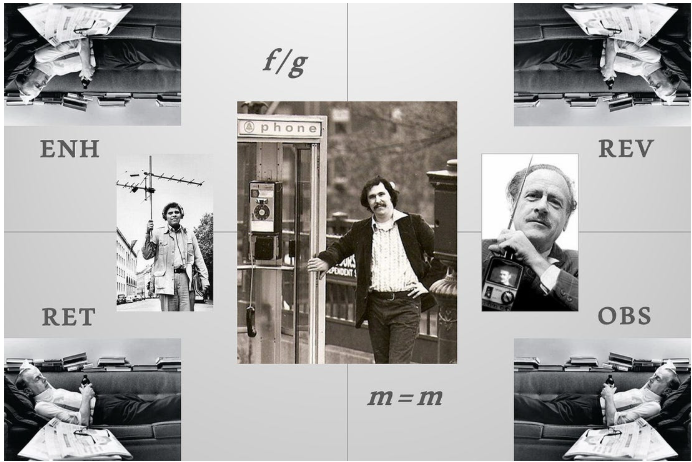
Here's the two-part interview Andrey Mir recently did with me about Neil Postman and Marshall McLuhan. I was Postman's student, and I wrote two books about McLuhan, as well as organized the one and only conference about the Tetrad.

Showing posts with label Tina Vozick. Show all posts
Showing posts with label Tina Vozick. Show all posts
Wednesday, September 9, 2026
In-Depth Two-Part Interview about Neil Postman and Marshall McLuhan


Sunday, July 6, 2025
After Recording Welcome Up: Songs of Space and Time, at Old Bear Records, October 2018
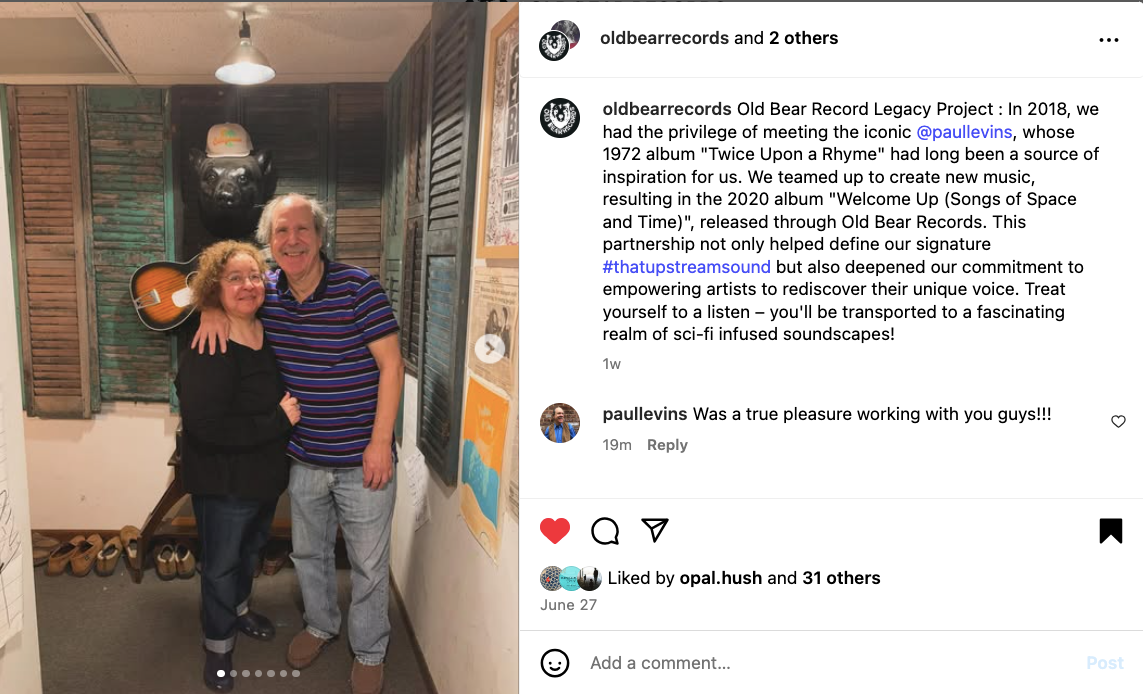
Tina Vozick & Paul Levinson at Old Bear Records, October 2018
Sunday, December 18, 2022
On Cape Cod Bay
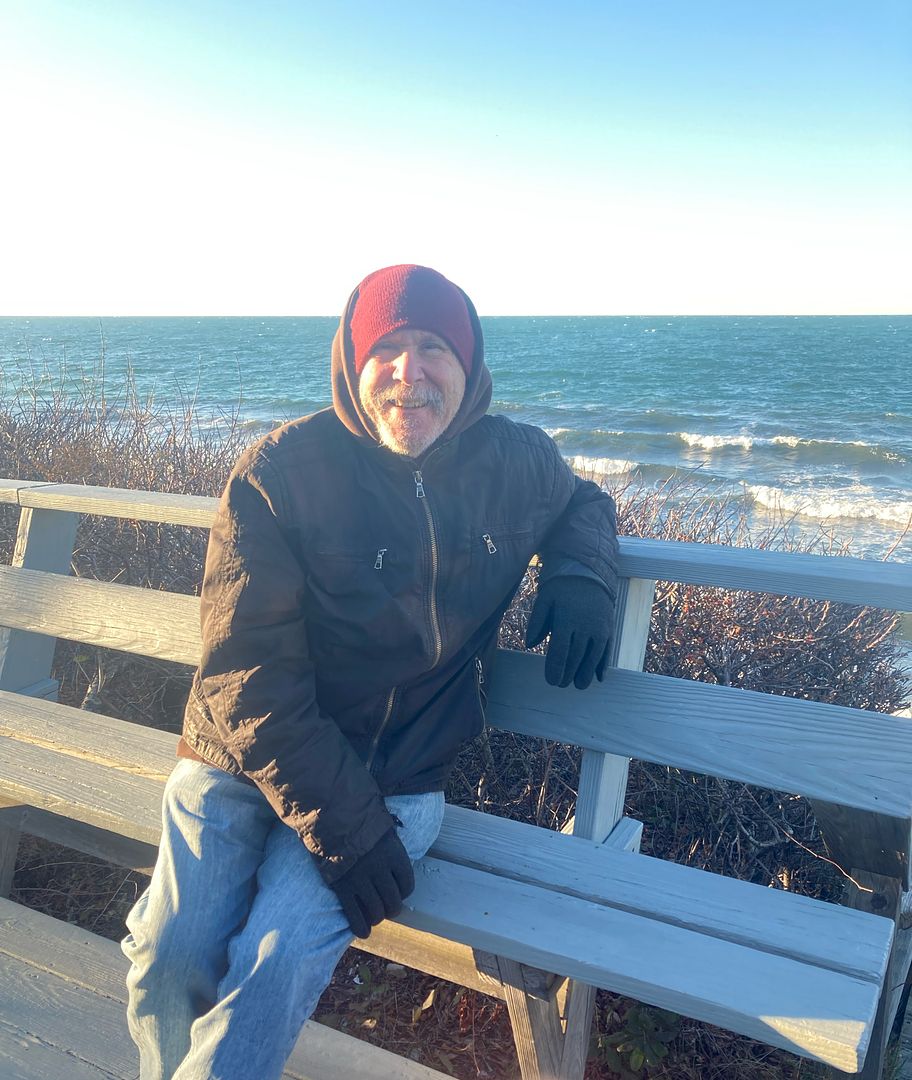
In between the writing ... taken the other chilly day on Cape Cod Bay
photo of me by Tina Vozick
Saturday, May 19, 2018
Eric McLuhan: The Pot Roast and the Jokes
I first met Eric McLuhan in March 1978 at the airport in New York. He and his father, Marshall, had flown in from Toronto for the "Tetrad Conference" I had organized at Fairleigh Dickinson University which would start the next day, March 10. Tina and I waited for Marshall and Eric in the baggage claim area. It was like a scene out of a movie. Maybe like Woody Allen's take on the closing scene in Casablanca. Except this was a beginning.
Everyone else had picked up their baggage. There were no cellphones then, so we could not be 100% positive they had boarded the plane in Toronto. There were no suitcases left on the conveyor. Finally, we saw the two of them in the far distance, as if walking out of a mist, carrying their bags. I had already met Marshall several times before that, after he'd invited me to lunch on an earlier visit to New York, after I'd written a Preface to his Laws of the Media. Every time, including at the airport, was one of the high points in my life.
We drove Marshall and Eric back to our apartment by Van Cortland Park in the Bronx. Tina had made pot roast - we forever after called it the McLuhan pot roast. Josh Meyrowitz and Ed Wachtel joined us after dinner. At the conference the next day, and at the pot roast dinner, what I most remember about Eric was our exchange of jokes. We continued this just about every time we saw each other over the years, in New York and Toronto, and somehow always came up with new material. (Often these jokes were about money - which Marshall had aptly examined as a medium of communication in Understanding Media. Jokes such as ... A woman walks into a bank and up to a teller, who asks her for identification. She pulls a mirror out of her purse, looks at herself, and informs the teller, 'Yes, it's definitely me' .... Or, a gunman walks into a diner, points the weapon at the cashier, and demands the money in the drawer. The cashier responds, 'to take out?' ...)
It wasn't easy being Marshall's son, elaborating upon the work of someone whose contribution was so extraordinary and incandescent, that many academics were not up to understanding it. But Eric gave it a go, and never lost his sense of humor, and the twinkle in his eye which he inherited from his father.
Paolo Granata emailed me last year with a great idea: how I would like to organize an event at Fordham to commemorate the 50th anniversary of Marshall's year at Fordham University as a visiting scholar, 1967-1968. Eric, who of course was with his father at Fordham in 1967-1968, too, would be available in 2017, too. I put together an evening on October 13, 2017, with talks by Eric, John Carey (who was a student at Fordham in 1967-1968, and attended Marshall's talks then) and me. (Thanks to Jackie Reich, our department chair, for supporting this.) The room which seated 100 was packed to standing room only. (The video of the event is below. I introduce Eric at about 8 minutes 5 seconds into the video, Eric begins his talk at 11 minutes 50 seconds.)
The night before, Tina and I took Eric and Andrew to dinner. Andrew had followed in his father's footsteps, being his essential and wonderful travel companion, as Eric had been for Marshall. The food and the jokes were still good.
I don't know about afterlives. I know about memories. RIP? That wasn't Eric's style. Maybe somewhere in the cosmos, but definitely in my head, he'll still be telling jokes.
Everyone else had picked up their baggage. There were no cellphones then, so we could not be 100% positive they had boarded the plane in Toronto. There were no suitcases left on the conveyor. Finally, we saw the two of them in the far distance, as if walking out of a mist, carrying their bags. I had already met Marshall several times before that, after he'd invited me to lunch on an earlier visit to New York, after I'd written a Preface to his Laws of the Media. Every time, including at the airport, was one of the high points in my life.
We drove Marshall and Eric back to our apartment by Van Cortland Park in the Bronx. Tina had made pot roast - we forever after called it the McLuhan pot roast. Josh Meyrowitz and Ed Wachtel joined us after dinner. At the conference the next day, and at the pot roast dinner, what I most remember about Eric was our exchange of jokes. We continued this just about every time we saw each other over the years, in New York and Toronto, and somehow always came up with new material. (Often these jokes were about money - which Marshall had aptly examined as a medium of communication in Understanding Media. Jokes such as ... A woman walks into a bank and up to a teller, who asks her for identification. She pulls a mirror out of her purse, looks at herself, and informs the teller, 'Yes, it's definitely me' .... Or, a gunman walks into a diner, points the weapon at the cashier, and demands the money in the drawer. The cashier responds, 'to take out?' ...)
It wasn't easy being Marshall's son, elaborating upon the work of someone whose contribution was so extraordinary and incandescent, that many academics were not up to understanding it. But Eric gave it a go, and never lost his sense of humor, and the twinkle in his eye which he inherited from his father.
Paolo Granata emailed me last year with a great idea: how I would like to organize an event at Fordham to commemorate the 50th anniversary of Marshall's year at Fordham University as a visiting scholar, 1967-1968. Eric, who of course was with his father at Fordham in 1967-1968, too, would be available in 2017, too. I put together an evening on October 13, 2017, with talks by Eric, John Carey (who was a student at Fordham in 1967-1968, and attended Marshall's talks then) and me. (Thanks to Jackie Reich, our department chair, for supporting this.) The room which seated 100 was packed to standing room only. (The video of the event is below. I introduce Eric at about 8 minutes 5 seconds into the video, Eric begins his talk at 11 minutes 50 seconds.)
The night before, Tina and I took Eric and Andrew to dinner. Andrew had followed in his father's footsteps, being his essential and wonderful travel companion, as Eric had been for Marshall. The food and the jokes were still good.
I don't know about afterlives. I know about memories. RIP? That wasn't Eric's style. Maybe somewhere in the cosmos, but definitely in my head, he'll still be telling jokes.
Saturday, May 3, 2014
Jose Antonio Vargas' Documented - A Review
Tina and I had the pleasure of seeing Documented tonight, Jose Antonio Vargas's auto-biographical documentary about the struggle of undocumented Americans - known in the popular culture as "illegal aliens" - to achieve their just place in American society. Tina and I each have a little good history with Jose. Tina was interviewed by him about her work on Wikipedia's political pages in 2007, for a front-page article in The Washington Post. And Jose and I talked politics and the Internet on Dylan Ratigan's MSNBC show in 2011. Still, if I hadn't liked the movie, I wouldn't be reviewing it. And if I had any problems with the movie, I'd say so in my review. As it is, I found the movie nothing but exceptional.
The movie in effect was presented in two intertwining parts - Vargas's political battles after he came out as an undocumented American, and the personal travails of not having seen his mother in 20 years. The political part of the movie is much like Michael Moore's best work, with one big advantage: Vargas is not only investigating how the cards have been stacked against undocumented Americans, he is an undocumented American himself. Thus, when he objects to being called "illegal," his complaint comes from a directly wounded heart. Frankly, the term "illegal alien" is idiotic in any case - where I come from, an alien comes from another planet (science fiction writer Rob Sawyer captures this well in his novel Illegal Alien) - but Vargas is able to demonstrate how being called an "illegal" is an insult to any person working hard in this country, regardless of where they were born or how they got here. We see Vargas's tears when he learns about Obama's giving undocumented Americans a path to citizenship - but only if they're under 30 years of age - and this provides as accurate an assessment as ever I've seen of Obama's Presidency and its failure so far to take the full steps needed to set America on the right path on more than one crucial social issue.
You might be wondering how Vargas got into this country and managed to become a reporter at The Washington Post without the proper work visa. This gets into the second element of the movie, which shows us how Vargas arrived here as a 12-year-old, to live with his grandparents, with his mother back in the Philippines. His grandfather arranged for a doctored green card for Jose, who had no knowledge of what had happened until later on. Meanwhile, Jose's mother was unable to even visit him in America, because she had no employment back in the Philippines to support her visa application. The impact of this separation on Jose was painful, to say the least, and continues to this very day. An emotional highpoint of the movie is the healing that begins when Jose has a difficult Skype reunion with his mother and half-siblings on the other side of the world - it's easily the most effective Skype conversation scene I've seen to date in any movie or television series.
What becomes searingly clear as the movie progresses is the absurdity of our immigration policy - an absurdity which is self-destructive not protective of the best in America. That a man who has lived such a life and made such a movie could be considered either illegal or alien shows how far our country has veered from its original ideal of all people created equal. We were and are a country of immigrants, and we're fortunate indeed to have an immigrant such as Jose Antonio Vargas bravely working on behalf of our better natures. In fact, he could be deported any day for his coming out as an undocumented American - Obama does deserve credit thus far for not deporting him - and this movie provides an inspiring testament to this American whose work is still in progress.
The movie in effect was presented in two intertwining parts - Vargas's political battles after he came out as an undocumented American, and the personal travails of not having seen his mother in 20 years. The political part of the movie is much like Michael Moore's best work, with one big advantage: Vargas is not only investigating how the cards have been stacked against undocumented Americans, he is an undocumented American himself. Thus, when he objects to being called "illegal," his complaint comes from a directly wounded heart. Frankly, the term "illegal alien" is idiotic in any case - where I come from, an alien comes from another planet (science fiction writer Rob Sawyer captures this well in his novel Illegal Alien) - but Vargas is able to demonstrate how being called an "illegal" is an insult to any person working hard in this country, regardless of where they were born or how they got here. We see Vargas's tears when he learns about Obama's giving undocumented Americans a path to citizenship - but only if they're under 30 years of age - and this provides as accurate an assessment as ever I've seen of Obama's Presidency and its failure so far to take the full steps needed to set America on the right path on more than one crucial social issue.
You might be wondering how Vargas got into this country and managed to become a reporter at The Washington Post without the proper work visa. This gets into the second element of the movie, which shows us how Vargas arrived here as a 12-year-old, to live with his grandparents, with his mother back in the Philippines. His grandfather arranged for a doctored green card for Jose, who had no knowledge of what had happened until later on. Meanwhile, Jose's mother was unable to even visit him in America, because she had no employment back in the Philippines to support her visa application. The impact of this separation on Jose was painful, to say the least, and continues to this very day. An emotional highpoint of the movie is the healing that begins when Jose has a difficult Skype reunion with his mother and half-siblings on the other side of the world - it's easily the most effective Skype conversation scene I've seen to date in any movie or television series.
What becomes searingly clear as the movie progresses is the absurdity of our immigration policy - an absurdity which is self-destructive not protective of the best in America. That a man who has lived such a life and made such a movie could be considered either illegal or alien shows how far our country has veered from its original ideal of all people created equal. We were and are a country of immigrants, and we're fortunate indeed to have an immigrant such as Jose Antonio Vargas bravely working on behalf of our better natures. In fact, he could be deported any day for his coming out as an undocumented American - Obama does deserve credit thus far for not deporting him - and this movie provides an inspiring testament to this American whose work is still in progress.
Monday, November 7, 2011
Voicemail from Marshall McLuhan, 1978
Here is a voicemail from Marshall McLuhan to me, left on what we then called our "answering machine," from August 1978. I had just completed my doctoral dissertation at NYU - but hadn't yet even handed it in to my advisers, Neil Postman and Christine Nystrom. Instead, I decided to mail it up to Marshall McLuhan in Toronto - we had met after I wrote the Preface to his "Laws of the Media" published in June 1977 in et cetera, and the "Tetrad Conference" I had organized with him, Eric McLuhan, Bob Blechman, and other notables at Fairleigh Dickinson University (where I then was an Assistant Professor) in March 1978. Tina and I went on vacation right after I sent up the dissertation, and this is the message from Marshall we found on our return...
voicemail from Marshall McLuhan, 1978
See also Levinson re: McLuhan 2011 list of conferences and interviews, 2011
Subscribe to:
Posts (Atom)
