Chuck Todd interviews me about alternate histories
Showing posts with label Black Lives Matter. Show all posts

Monday, July 27, 2020

Motherless Brooklyn: Go Down Moses and Black Lives Matter


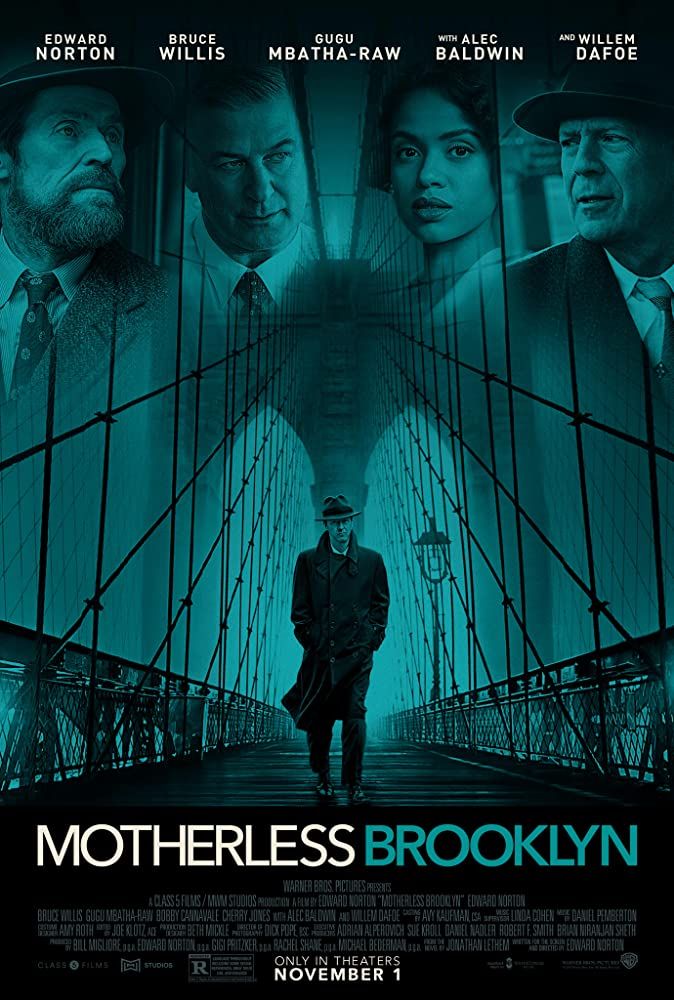
The wife and I just saw Motherless Brooklyn on HBO.  It's billed as an Edward Norton movie - he also starred in it - based on the Jonathan Lethem novel.  I didn't read the novel (I was busy writing the sequel to The Silk Code when Lethem's novel was first published in 1999).  But it's just as well.  As readers of my reviews in this blog may know, I like reviewing movies and TV series on their own terms, not on how they compare with the novels or short stories on which they may have been based.  I will say that my wife mentioned that she saw that the Norton movie departed from the Lethem novel in many major ways.

The story in the movie is about Robert Moses, the controversial, legendary builder, responsible for any number of highways in and around New York City (including the Long Island Expressway), bridges, and even Jones Beach. Moses was controversial because it was claimed he ran roughshod over and failed to provide for the poor communities near or over which he erected his great structures.  This accords with the focus and expansion of Black Lives Matter now, at long last happening, though Lethem's novel and even Norton's movie were created long before this happened.

In the movie, Robert Moses is renamed Moses Randolph, and unsurprisingly very well played by Alec Baldwin.  His antagonist is Lionel (nicknamed Brooklyn and long without a mother, hence the title).  Lionel is a detective whose boss is killed, likely because he crossed Randolph in some big way.  Also, Lionel has Tourettes, which makes for an especially memorable character, and gives Norton the opportunity to deliver an Oscar-worthy performance, which he does.  Gugu Mbatha-Raw plays Laura Rose, a pivotal character to Lionel and the movie, and she puts in a winning performance, too.

I also liked the less leading characters.  My favorite was The Wire's Michael Kenneth Williams, who plays a Mile Davis-type character (identified only as "The Trumpet Man") who uses his trumpet in more ways than one. Also, The Trumpet Man and Brooklyn have a conversation about the shared basis of extreme musical talent and Tourettes that is itself worth price of admission.

I should mention that The Wire is in my view sometimes the best series ever on television, and always in contention for that position, and one of the reasons is that its cast was so stellar.   But back to Motherless Brooklyn, it's a satisfying and altogether excellent movie, and I highly recommend it.


Friday, June 5, 2020

Blog Post: The Problem of Police Authority

The murder of George Floyd by Minneapolis police has got me thinking - as it should everyone - about what we can do about this problem of homicide not prevented by but perpetrated by police who are supposed to protect us.  It's a problem that has been erupting in America for decades, and caught on video ever since Rodney King was savagely beaten in 1991, which showed it's also a problem of assault and crimes committed by police that are less than murder.  And though African-Americans are all too often murdered and brutalized by cops, Caucasians are also afflicted by life-threatening violence from police, as was the 75-year old man (Martin Gugino, a peace activist) thrown to the ground last night by Buffalo police and now in serious condition in the hospital.

And, actually, I've been thinking about this since the late 1950s, when I was a 12-year-old kid in the Bronx.  I was standing by a Carvel with my friends, a few days before July 4.  A cop car pulled up, and two cops got out of the car, and announced they were looking for kids with firecrackers.   When one of the cops approached me, I told him I didn't have any firecrackers (true).  He asked me to empty my pockets.  I asked him if he had a search warrant.  His response was to shove me up against a wall, and frisk me.  Later, when I got home, I told my father, who was a lawyer.  We went to the police station and filed a complaint.  Although I described the cop, I didn't get his badge number.  The "case" was settled by the police about a week later telling my father that the cops on the mission to reduce illegal firecrackers that night had no recollection of any such incident.

I came to realize something which was repeated years later when I was driving my teenage daughter home and I was pulled over.  "Can I help you?" I asked the officer.  "Can I help you?" he angrily repeated.  He proceeded to give me a ticket for going through a stop sign that wasn't even there. (I never did find out why he pulled me over in the first place - maybe it was the Hillary Clinton for Senate sticker on the bumper.)  I got the ticket dismissed because the cop didn't show up for the hearing, but I didn't appreciate spending my whole evening in town court.

I did appreciate, as in understand, that cops had no tolerance for any challenge to their authority.  And as I heard the news about the murder of black men and women by police across America over the years, I came to understand that I had gotten away lucky.  I was white.  I was pushed up against the wall, I was illegally ticketed.  Had I been black, I might well have been slaughtered.  The common denominator in all of these cases is some challenge to police authority.  The intolerance of police to such challenges pertains to all people.   But when you add racism into the mix, you get police murdering George Floyd and hundreds of unarmed blacks over the years.

What can be done about this?  I'm not a psychologist, but it's obvious that, ironically, people who are insecure about being taken seriously, being respected, seem to line up to become police.  Whether they can be trained to overcome this insecurity, I don't know.  Maybe a more effective approach would be to weed them out in the first place, if possible, though that would no doubt deplete the pool of police candidates.  In the long run, the very long run, and I mean this only semi-sarcastically, perhaps the best solution would be to replace human police with robot police - robots which would be programmed to take challenges to their authority in stride, and which wouldn't be racist.*

But we can't wait for a run that's long, or any length at all.  As the Rev. Al Sharpton said in his eulogy for George Floyd yesterday, in a speech whose power and eloquence was right up there with MLK's, we need change right now.  And that begins with police not only being suspended and fired, but brought up on the maximum charges that can be brought against them for their murder and assault of innocent people.

*Notes added: Over on LinkedIn, where I put a link to this post:

1.  Dan Pesta, whom I hardly knew previously, wondered "Who programs the robot police?" I responded, "Yes, that would be crucial. My initial thoughts would be a broadly representative community of ethicists, lawyers, law enforcement, people from relevant communities, and of course, programmers. And they would appoint a different group to actually implement the code. Such a development would be at least as important as robotic cars. Since the robotic police couldn't be killed, only damaged, that would remove one big motive for police application of violence right there."

2. Madhusudan Mukerjee, whom I do not know at all, then commented, "To add to that: who will program the people who will program the robots? Or shall we replace the people who program the robots with robots? In that case, Dan's question resurfaces... I cannot yet imagine a robot going down on one knee in deference to a crowd and to join a protest that they believe in." I responded, "There are good people in the world, more than enough to program the robots. And if the robot programming were successful, it would't be necessary to go down on one knee any more to protest police brutality, because police brutality would be a thing of the past."


Sunday, August 25, 2019

See You Yesterday: Time Travel meets Black Lives Matter


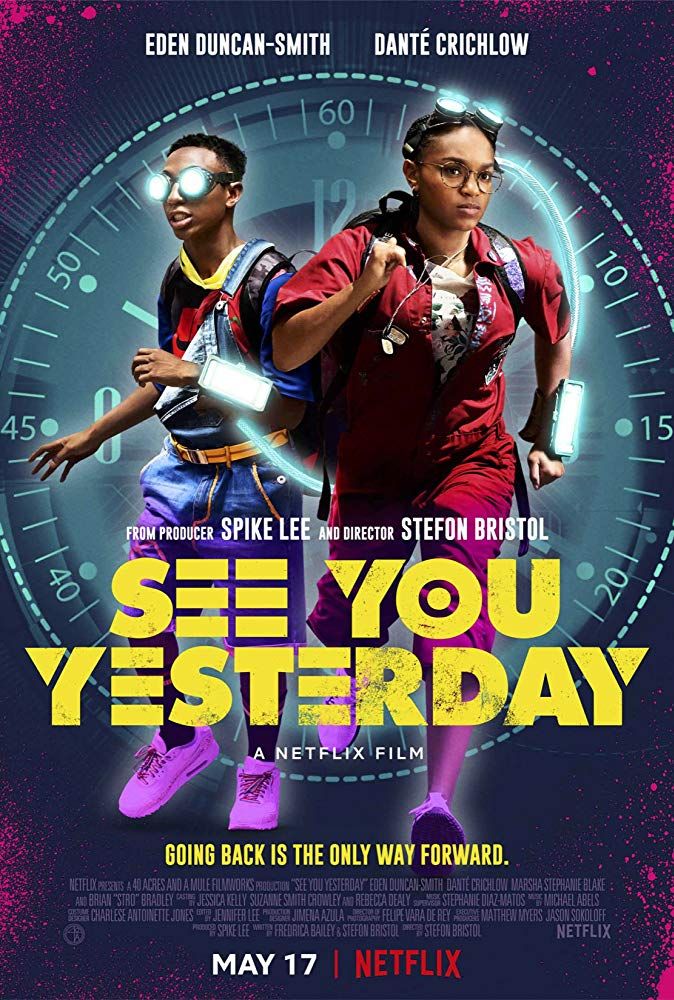
I just saw See You Yesterday, the Spike Lee production, directed and co-written by Stefon Bristol (with Fredrica Bailey), which came out on Netflix this past May.   As a time-travel story, it's good enough.  As a narrative about the continuing murder of African-American young men in American cities by cops, as told through the mechanism of time travel, it's a crucial masterpiece.

C. J. and Sebastian (well played by Eden Duncan-Smith and Dante Crichlow) are two genius Brooklyn high school kids who invent a time machine.  They use it to go a day back in time (its limit) to stop the police killing C. J.'s brother Castro (good performance by Astro), shot down by NYPD who wrongly suspect Castro of robbing a bodega.   They succeed - but Sebastian is shot and killed in the process.  C. J. goes back again to prevent that from happening, but Castro sacrifices himself to save Sebastian.  C. J. goes back one more time, and the movie ends without our knowing what happens this time ...

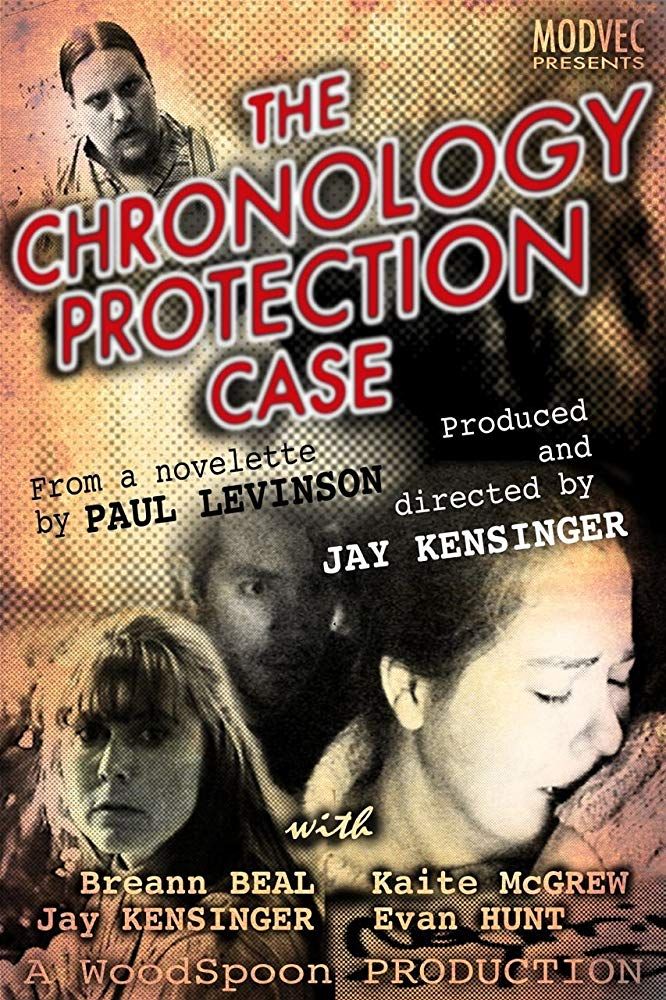
As I said, a good enough time travel story, by which I mean that it was done well, but we've seen the perverse difficulty of improving history via time travel, including personal history, many times before.  As a commentator on time travel and also a science fiction author, I frequently invoke the stubborn resistance of the universe to change (see, for example, The Chronology Protection Case).

But the melding of this time travel metaphysic with the brutal reality of Black Lives Matter is something we haven't seen before, and something we and everyone needs to know. C. J.'s repeated attempts to undo or prevent the cops' ill-considered, racist bullets with the same lack of result is a powerful, sobering metaphor for the difficulty of bringing to justice police who murder in our off-screen reality.   Even videos, which we've had as far back as Rodney King, beaten to within an inch of his life, don't usually help.

And the ambiguous ending of See You Yesterday similarly captures a profound and unsettling reality in the fight to educate and reform cops, and put the ones who kill innocent people behind bars.  Just as we don't know what C. J. will now do, we have no clear course of action, a pathway everyone can see, towards stopping once and for all these murders of African Americans.

But movies like See You Yesterday are part of the answer.   Getting the word out in as many ways as possible is the only way forward.   Looking into the future, I expect that See You Yesterday will become a classic in this effort.


Tuesday, May 21, 2019

The Red Line Finale: Realism and Optimism


As I've said before in my review of The Red Line, I give CBS-TV a lot of credit for airing this sensitive and important mini-series.  It's the kind of series you'd expect to find on cable or streaming, and its presence on an old, traditional network at once tells us that this network isn't so old or traditional, after all.

[spoilers follow] ....


The ending was realistic and optimistic, a tough combination to find anywhere these days.  The cop, Paul Evans, gets off without a grand jury indictment, which still happens all too often when a white cop is caught on video killing a black man, without justification.  In other words, murdering him.

But Tia wins the election as Alderman.   Even though the corrupt DA also wins.  And, in the end, Evans resigns.  He recognizes that he's racist.  That's progress and optimistic indeed.

The gay thread of this vivid drama was handled very well, too.  Jira's biological father has found her, and that's heart-warming.  But he also found God, years ago, and his devout beliefs tell him a man and a man being husband and husband is wrong.  Jira, as much as she wants a relationship with her biological father, tells him to leave.  All of this is very realistic.

I know The Red Line is billed as a mini-series, but I would tune in immediately if there was a sequel.  And there's ample room for that.  I want to see how Tia does in office.  I want to see how Daniel does with Liam.  And speaking of Daniel - if Noah Wyle doesn't at least get nominated for an Emmy, I'll be stunned.  And, though there have been lots of other strong male performances in short series, I'd say he has a strong chance of winning, as well.

 See also The Red Line 1.1-4: Bursting with Crucial Lessons for Our Age

Videos in which I talk about Black Lives Matter:  here and here


Saturday, May 11, 2019

The Red Line 1.1-4: Bursting with Crucial Lessons for Our Age


My wife and I caught up with the first four episodes of The Red Line - shown on two evenings - and found the mini-series powerful and important, addressing more than one crucial issue of our time.  I was going to say that The Red Line is especially good for a non-cable traditional network - it's on CBS - but the truth is it's especially good for all television media, including cable and streaming services.

The trigger that starts the story is a young white cop in Chicago shooting and killing a black MD in a convenience store, mistakenly believing the MD, who was actually trying to help the store owner, was about to kill him.   This opens a wrenching black-lives-matter narrative (see my two videos that address that subject, here and here.)   But there's much more to this story.

Harrison, the MD who is killed, is not only African-American.  He's gay, and happily married to Daniel, a white high school teacher.  They have an adopted daughter, and we soon learn that Jira, also African American, now has a special need to get to know her mother.   She's the only one that Jira can relate to as an African-American living in Chicago.   This brings us into another significant part of this story - parent-child relationships, and their special complexity when the child is adopted, even more  complex when adopted by parents who are gay, and one is black and the other white.

But there's even more.  Jira's mother, Tia, is running to be on the Chicago City Council - a position as Adlerman - and this pitches us into no-holds-barred Chicago politics.   Her opponent has been there for decades, and is not only a grand old man, but someone willing to do anything to keep his seat.

The three threads - fast-on-the-trigger Chicago cops, family relationships, and down-and-dirty big city politics - are woven together well, with Tia meeting her daughter at memorial event for Harrison at which Daniel is speaking, Tia being threatened by white cops who don't appreciate her criticism of the CPD, etc.   The acting is superb, with special creds to Noah Wyle as Daniel, Emayatzy Corinealdi as Tia, and Aliyah Royale as Jira.  This is a series bursting with lessons necessary for our age.  Highly recommended.

I'll be back here in the weeks ahead with more reviews.  There are a lot of questions yet unanswered in this compelling series, a lot of relationships as yet unexplored or even revealed.  On that last point, I'll hazard a prediction.  We don't yet know the identity of Jira's biological father.   I'm thinking it would be a wild but logical twist if her biological father was none other than Harrison.


Saturday, February 2, 2019

Breslin and Hamill: Deadline Artists: The Art Is Still Alive and Kicking


Breslin and Hamill: Deadline Artists - the documentary on HBO - is lots of things.  A paean to an age of journalism (Breslin would say "reporting," as this movie tells us) which is either gone or transmuted into another form, depending upon whom you listen to.   A story of New York City, which, also, is either dead or transformed.   But definitely a story of two uniquely gifted writers who indeed worked on a deadline, the deadline of timely reporting, i.e., at most, last hour's or yesterday's news, not last week's.

The two - Jimmy Breslin (1929-2017) and Pete Hamill (1935- ) - were actually very different in style.  Breslin was straightforward, kick in the gut, say what needs to be said reporting.  Hamill was much more poetic, stringing together descriptive phrases like Monet did with watercolors.

The New York City and beyond that the America they described, each in his own way, is one I grew up in.   Their defense of the written word, as essential both to their own very lives, but also the lives of the city and our country, is one which I always felt a part of.   Indeed, in our age of Trump and his savage attack on the press, I feel that way more than ever.  (See, for example, this panel I took part in on Fox Nation the other day, the lone progressive holding forth vis-a-vis three conservatives.)

Breslin, in particular, had a suitable contempt for the NYPD.  Years before Black Lives Matter, Breslin was unafraid to lash out at the bad cops in the NYPD who brutalized African Americans.  Hamill and Breslin had the fortune-misfortune to be right there when Robert F. Kennedy was shot.  (I was on the phone with my girlfriend, Tina, later my wife, when we heard the horrible news on television.)   Breslin ran on a ticket with Norman Mailer for Mayor of NYC.  Hamill dated Jackie Kennedy and Linda Ronstadt.   At one time, both wrote columns for the New York Daily News, which advertised that you could read one or another of the two at least six days a week.   That's the way it was when you wanted to read something of the story of our lives.

All of that and more is vividly portrayed in image and interviews in this superb documentary (hats off to Jonathan Alter and the other people who wrote and directed).   That, in itself, is one of the reasons I'm with the people who think that hard-hitting poetic reporting is still very much alive and kicking.  It may not be in print on paper as much as it used to be, but it's with us on cable, streaming services, and yes, this Internet, which is still mostly comprised of words, and reaches far more people than the combined tabloids of New York City ever did.


Monday, July 11, 2016

Black Lives Matter ALSO

Racists and perhaps some well meaning people have been proclaiming on television and the Internet that "Black Lives Matter" is racist, because it excludes the lives of other ethnic groups as mattering. As an example of a racist, former NYC Rudy Giuliani, whose record on police brutality directed against African-Americans was deplorable, point blank said on CBS's Face the Nation yesterday that "Black Lives Matter is inherently racist" and "anti-American".

At very best, such a claim misses the crucial context of Black Lives Matter, which is not that ONLY Black Lives Matter, but quite the opposite: Black Lives Matter ALSO.   In fact, though this argument has been become searingly heated with the awful murders of African-Americans in Louisiana and Minnesota and murder of police officers in Dallas last week, I've been seeing people point out this all-important "also" subtext on the Web and TV ever since the Black Lives Matter movement began in 2013, to finally address a problem that has been going on for centuries.

Why have so many people missed this obviously implied "also"?  A better question would be why has anyone?   As Marshall McLuhan pointed out back in the 1960s, everyone who communicates does so on two levels, a figure and a ground.   When someone says some music is cool, people intuitively understand that you don't need to put on an extra shirt or an overcoat to enjoy it.

There is some minimal education needed to get the ground, the context, of any given statement.  A child would not instantly know that cool music has nothing to do with literal temperature.

Bur how could any sentient human being alive the past decade or longer not immediately get the context of Black Lives Matter - not immediately understand that it's a plea for black lives having as much worth less as white lives, and, yes, as much worth as lives of police?

As much worth, not more worth, and the fact that Giuliani and others somehow miss this, and say that Black Lives Matter is racist, only demonstrates, once again, that they are the racists themselves.


Tuesday, February 9, 2016

Bernie Sanders Sources of Support in New Hampshire from Gun Owners

MSNBC reported the following biggest sources of votes for Bernie Sanders in his victory in the New Hampshire Democratic Primary over Hillary Clinton:


The third line - "gun owner" - should stick out like a saw thumb for anyone interested in a better, safer America - a country not riven by bullets in big cities, school, and sometimes even fired by police officers against innocent people, all too often African-African.

This is - or certainly should be - the key reason for Democrats in other states, and independents, too, to vote for Hillary not Bernie.   Bullets that kill people and destroy the lives of their families are surely a more important issue than what Hillary said in her speeches to Wall Street.

As I've said before, I actually agree with Bernie on some important issues - including his call to abolish capital punishment and establish higher public education for all.  But these issues also pale in comparison to the death daily meted out by guns gone wild in America.

I hope the Clinton campaign moves this issue to the front of its discussion points in upcoming primaries, especially in South Carolina, which has suffered so tragically in the past year from the gun epidemic.


Thursday, January 7, 2016

Making a Murderer: Showing Us the Truth about our Unjust Justice System

There are monsters in Making a Murderer, the 10-hour documentary released on Netflix just a few weeks ago, but likely not Steven Avery and definitely not his nephew Brendan Dassey, both sentenced to life imprisonment for the murder of Teresa Halbach ten years ago, in 2005.  No, the indisputable monsters in this true story are police, prosecutors, and Dassey's first defense attorney.

Also indisputable is that Avery was not guilty of a rape and assault committed in 1985,  for which he served 18 years in prison - nearly half of them after the real criminal confessed - said confession shelved by the detective who could act upon it - and for which crime Avery was released only after the discovery of DNA that was the rapist's not Avery's.

Much of the 10 hours of Making a Murderer are the trials of Avery and his nephew for the 2005 murder, and the various appearances in court before and after the trials.   These courtroom scenes in themselves make Making a Murderer like no other documentary you've ever seen, and one especially and ideally suited to streaming on Netflix.  As you watch hour after hour of this wrenching horror story unfold, you feel for all the world as if you're actually in those courtrooms, in the jury box, watching the proceedings unfold.  (I served as foreperson on a jury on a much lesser criminal trial a few years ago, and watching Making a Murderer brought all of that back.)  The interviews, especially with Avery's attorneys and family, are also indelible.

Brendan Dassey was convicted on no evidence other than a confession obtained by police, who fed him the elements of the confession, and by a ratification of that confession by his first defense attorney's investigator, who for some reason (he and the attorney) wanted their client to confess to Halbach's murder.  The amazing and sickening thing about both of those confessions, and the role of the detectives and the defense attorney's investigator, is that the interrogations of Dassey, then 16 years old and with limited intellectual capacity, were fully recorded on video.  But more sickening and horrifying than that was the fact that the jury and judge in the original trial, and subsequent judges who reviewed the case and trial, saw those videos - as did we, the audience of this remarkable documentary.   The decisions of those jurors and judges, on the basis of what we have seen with own eyes, is about the worst indictment of our legal system I've ever seen.

Avery's situation is a little more complicated.  He never confessed.  He was convicted for the murder on the basis of evidence - such as his blood found in the victim's car.  An FBI agent testified that a test proved the blood was fresh - not taken from a vial of Avery's blood stored from the 1985 case. A forensic expert called by the defense testified that the FBI agent had not accurately reported the limits of the test - in particular, that the lack of an EDTA finding in the test did not prove that EDTA was not present in the blood (yes, that's the way many of these tests work - a positive finding means the chemical was present, but a negative finding does not mean it was not).  The forensic expert explained this very clearly.  Enough for reasonable doubt and a not-guilty verdict, right?  You might think so, but not in this trial (though it was later revealed that 7 of the 12 jurors in the Avery case initially wanted a not-guilty verdict, and were inexplicably talked out of it).

Winston Churchill is famous for saying democracy is the least worst form of government, and Making a Murderer provides a vivid piece of evidence that the same could be said for our judicial system.   Video evidence, seeing something with your own eyes, was apparently not enough in Dassey's case.  But, then again, it hasn't been enough in the cases of cop after cop in the past few years, shown right there on video shooting or otherwise killing an innocent African American - not enough for grand juries to indict, or if they do indict, for most juries to return a guilty verdict (see my Eye in the Sky in the Hand for more).

The common awful denominator of Making a Murderer and all of those black lives matter cases is the undue respect so many Americans have for our police and prosecutorial systems.  One can only hope that, as more people see this extraordinary documentary, they will begin to see the truth behind the curtain.   Thank you filmmakers Moira Demos and Laura Ricciardi, and Netflix, for bringing this to our attention.

PS added 13 August 2016: I was delighted to see that a Federal judge overturned the conviction of one of the two defendants, now 27-year old Brendan Dassey, on grounds that his confession (the unfair circumstances of which were vividly presented in the documentary) was "involuntary under the Fifth and Fourteen Amendments" to the U. S. Constitution.  (See also McLuhan in an Age of Social Media for more on the salutary connection of binge-watching and justice.)

Friday, January 1, 2016

John Lennon 75th Birthday Concert on AMC: My New Year's Resolution and the Gun Scourge


We saw John Lennon's 75th Birthday Concert on AMC last night.  It took place in The Theater at Madison Square Garden in New York City on December 5, and first aired on AMC on December 19.   In an alternate history with a better world, John Lennon would have performed at this concert himself.  But that was not to be.  He died of the epidemic of guns that has been ravaging America my whole life.   But that's another story, and at least we have his music.

It's easy to forget, given the Beatles' beginning with "Love Me Do," that Lennon was one of the towering, transcending lyricists of our time, indeed of all time and history.   This began to emerge as far back as "Nowhere Man," but became ringingly clear with "But when you start carrying pictures of Chairman Mao, you ain't gonna make it with any one anyhow" in "Revolution," a couplet right up there with the best of what Dylan wrote.

Steven Tyler and Eric Church brought the crowd to their feet with their rendition of "Revolution," but that was true of just about every performance, and the incandescent words they conveyed.   I'd forgotten how brilliant the lyric of "Mind Games" is - with its talk of "mind guerrilla" and "druid dudes" - until Eric Church sang it and lifted the veil.  But that was also the case with Aloe Blacc's "Watching the Wheels" - first time I've heard him, he has a fantastic voice, by the way - and even Sheryl Crow's "Hard Day's Night" had a real plain-spoken elegance, harkening in a way to Woody Guthrie.

But the preponderance of the songs at the birthday concert were Lennon-alone compositions and performances, brought out after the Beatles' breakup.   And it may well be that Lennon did his very best work, most enduring and significant, after  the Beatles.  Well, certainly most socially significant, including "Imagine," "Give Peace a Chance," and "Power to the People," all well performed at the concert, especially "Power," with a stonking guitar solo by Tom Morello (exceeded only by Prince's performance on "My Guitar Gently Weeps" at the George Harrison Memorial Concert as the best I've ever heard from any guitarist.)  But even on the personal level, consider the difference between "Julia" (a Beatles song, not performed at the concert), and "Mother," released by Lennon right after the Beatles split, and rendered with heart-rending power by The Roots at the concert.   Or "Jealous Guy," one of my all-time favorite songs performed by anyone, and done well by Pat Monahan last month.

But if this is so - if Lennon did his best work in the 1970s - then that returns us to what we lost when Lennon was murdered in 1980.  I thought at the time, and feel even more strongly since, that Lennon's assassination was on a par of horror with JFK's, MLK's, and Bobby's in terms of what it took, irreplaceable, from our lives and ongoing world.

I've dealt with this just a bit as a science fiction writer, in my "Loose Ends" short story saga, which before it concludes delves into an attempt to save John Lennon at the Dakota.  But what his death took from us needs much more than wishful thinking and science fiction.   Gun violence is never "another story," cannot be, because it is foist and forced upon us all the time.  My New Year's Resolution for 2016 is thus to do everything I can to reduce the scourge of guns in America - including those wielded by police against African-Americans - before it takes from us another John Lennon, or anyone else.


Wednesday, September 2, 2015

The Eye in the Sky in the Hand: How Video Cameras in Smartphones are Finally Beginning to Bring Police to Justice

I'll be presenting this paper at Digital Culture Symposium at the Annenberg School for Communication, University of Pennsylvania, in Philadelphia on December 3, 2015, and thought I'd share this abstract with you for starters.  (I'll provide links to the video, is there is one, and details on where to get the entire paper, after the symposium.)

The Eye in the Sky in the Hand: How Video Cameras in Smartphones are Finally Beginning to Bring Police to Justice

by Paul Levinson

Abstract

For the first time in human history, the ubiquity of video cameras in smartphones has made police misconduct publicly accessible to the world at large, including on the Internet, television screens, and in courts of law. This paper will explore the modern history of this revolutionary development, beginning with the 1991 police beating and bystander videotaping of Rodney King, through the role of video cameras in the hands of citizen journalists in Occupy Wall Street, and major cases of police killing unarmed civilians in 2014 and 2015. The uneven impact of this on the judicial system - including not-guilty verdicts and charges not filed by prosecutors - will be explored, as well as the ethics and logistics of police body cams and their impact on police work and democracy, and the rise of the Black Lives Matter movement. It’s reasonably clear that police cannot just continue doing business as usual in this new panoptical environment in everyone’s hands. The question is what role will the police play, how will they be expected to perform and held to account, when this new world becomes universally recognized.


Full conference program here.


InfiniteRegress.tv