Chuck Todd interviews me about alternate histories
Showing posts with label James Joyce. Show all posts

Sunday, January 13, 2019

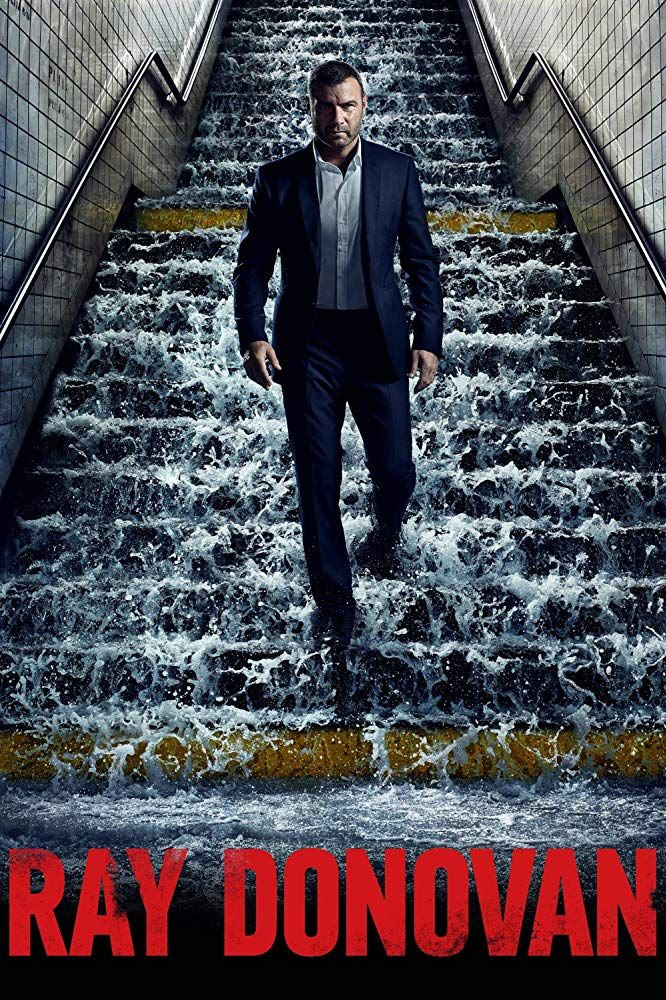
Ray Donovan Season 6 Finale: Snowfall and Mick


An outstanding season 6 finale tonight for Ray Donovan, in which just about everybody gets their just deserts, except, maybe, one.

I won't go over the body toll, in case you haven't seen this episode yet.  I will say it was good to see them go.

The one ambiguous note was a biggie.  After Ray gets Bunch out of custody, Bunch tells Mick that although Ray made some deal to get Bunch free, Ray couldn't make that deal for both of them.  The big implication is that Mick will have to turn himself in, after all.

But there's also a big question mark hanging over that.  Why didn't Ray tell Mick that Mick had to turn himself in?  Why didn't Ray take Mick to the police himself?   Why did they let Ray take Bunch away, without Mick right there for the exchange?

All of which leads me to think there's something more going on.  I think we haven't seen the last of Mick, and we're not going to see him in prison again.   The snow falling, the remembrance of James Joyce past, all speak to something else. 

Whatever that is, we should be in for another excellent season next time around.  Ray's seeking help.  Lena has gotten her revenge and should be up for working for Ray again.  Bridge has really come into her own.  And as I've been saying for weeks, Mick has come into his own in this story, too - with an astonishingly good performance by Jon Voight.   Mick's finally acting like a father - to all of his children.  He says all the right things, and they're truthful, to his kids.   There's nothing in this show like seeing all of the Donovans together.   Even if Ray intended to bring Mick in, I'm thinking that snow changed his mind.

Yeah, there's nothing like the Donovans all together, and I'm looking forward to seeing more of that next season.

See Ray Donovan 6.1: The New Friend ... Ray Donovan 6.2: Father and Sons ... Ray Donovan 6.4: Politics in the Ray Style ... Ray Donovan 6.6: The Mayor Strikes Back ... Ray Donovan 6.7: Switching Sides ... Ray Donovan 6.8: Down ... Ray Donovan 6.9: Violence and Storyline ... Ray Donovan 6.10: Working Together ... Ray Donovan 6.11: Settled Scores and Open Questions

See also Ray Donovan 5.1: Big Change  ... Ray Donovan 5.4: How To Sell A Script ... Ray Donovan 5.7: Reckonings ... Ray Donovan 5.8: Paging John Stuart Mill ... Ray Donovan 5.9: Congas ... Ray Donovan 5.10: Bunchy's Money ... Ray Donovan 5.11: I'm With Mickey ... Ray Donovan 5.12: New York

See also Ray Donovan 4.1: Good to Be Back ... Ray Donovan 4.2: Settling In ... Ray Donovan 4.4: Bob Seger ... Ray Donovan 4.7: Easybeats ... Ray Donovan 4.9: The Ultimate Fix ... Ray Donovan Season 4 Finale: Roses

And see also Ray Donovan 3.1: New, Cloudy Ray ... Ray Donovan 3.2: Beat-downs ... Ray Donovan 3.7: Excommunication!

And see also Ray Donovan 2.1: Back in Business ... Ray Donovan 2.4: The Bad Guy ... Ray Donovan 2.5: Wool Over Eyes ... Ray Donovan 2.7: The Party from Hell ... Ray Donovan 2.10: Scorching ... Ray Donovan 2.11: Out of Control ... Ray Donovan Season 2 Finale: Most Happy Ending

And see also Ray Donovan Debuts with Originality and Flair ... Ray Donovan 1.2: His Assistants and his Family ... Ray Donovan 1.3: Mickey ... Ray Donovan 1.7 and Whitey Bulger ... Ray Donovan 1.8: Poetry and Death ... Ray Donovan Season 1 Finale: The Beginning of Redemption


It started in the hot summer of 1960, when Marilyn Monroe walked off the set of The Misfits and began to hear a haunting song in her head, "Goodbye Norma Jean" ...

Thursday, October 13, 2016

Why Bob Dylan Deserved the Nobel Prize for Literature

With so much wrong and out of control in this world, it was a tonic indeed to learn that Bob Dylan is being awarded the Nobel Prize for Literature for his lifetime of song writing.

Who are the other great American songwriters in the past few hundred years?  Stephen Foster wrote eternally beautiful songs, with haunting music and gossamer lyrics, in the 19th century.  Cole Porter was an unsurpassed master of wordplay in the first half of the 20th century.   Lennon & McCartney wrote a ton of incredibly catchy and some songs very profound of lyric and music a little later.

All of these songwriters occasionally reached heights that Bob Dylan attained over and over, many dozens of times, in the 1960s.  His protest songs, like "Masters of War," are just peerless.  His commentaries on the human condition, like "A Hard Rain's A-Gonna Fall," devastating and unforgettable. His love songs, like "Just Like A Woman," are right up there with the best of Romantic poetry - and for that matter, Shakespeare and the Greek poets, too.  And Dylan did this, countless times.

Someone asked me today if Dylan really deserved the award, since songs aren't books, and thus not really a form of literature.  But what is literature?  Words put together to tell a story - or exactly what Dylan did with his words in his songs.  And he molded those words, sculpted them and strung them together, mined their metaphoric depths and extended them to surprising, stunning, breathtaking places, in a way that only James Joyce in fiction, Marshall McLuhan in nonfiction, and few other soaring writers have done.

Dylan's songs would've been heard 10, 000 years from now, even without this Nobel Prize. But the Prize is a worthy recognition of this work.


Thursday, June 19, 2008

First Amendment Watch: James Joyce's Ulysses Once Again Under Gun

Most people know something of the story of Ulysses's reception, the 1922 novel by James Joyce, judged by many to be the greatest novel of the 20th century. U.S., British, and Irish officials promptly called for the novel to be banned, owing to its language, judged by those officials to be unacceptable for public consumption. Fortunately for the world, a real judge, Federal Judge John M. Woolsey, Jr. in New York City, ruled in 1933 that banning the novel for alleged obscenity would be inconsistent with the First Amendment.

Ironically, the Federal Communications Commission was created a mere year later. Although the Federal Communications Act of 1934 specifically said the FCC was not to engage in censorship, that same act also had contradictory language about keeping obscene and "indecent" language off of the public airways.

Unsurprisingly, the FCC has given more emphasis to the second (fining broadcasters for obscene and/or indecent language on their airways) than to the first (prohibition of censorship). In the past few years, in fact, Congress has authorized the FCC to increase its fines to millions of dollars for television or radio stations that digress from the FCC's unstated puritanical standards.

WBAI radio was a celebrated victim, not of FCC fines, but of an FCC "censure" (condemnation) back in the 1970s. WBAI's wrongdoing back then was broadcasting comedian George Carlin's "seven dirty words" routine. The ACLU and WBAI objected to the FCC censure, took their case all the way to the Supreme Court, and lost.

And WBAI is now in the news again. This past Monday, June 16, WBAI Radio and Symphony Space, for the first time since 1981, decided to not do a joint presentation of their "Bloomsday" celebration - readings of some of the best of James Joyce. The reason for this decision, according to a New York Times article, was "apprehension about obscenity and government regulation" - meaning, some people at WBAI were apparently worried about the millions of dollars of FCC fines that could well have come its way.

And thus we slip ever more into a state much like the Soviet Union and Nazi Germany. The FCC, of course, still does not explicitly censor - it doesn't need to. Intimidation by huge fines has the same chilling effect.

Judge Woolsey's brave and perceptive decision in 1933 could not have foreseen an unconstitutional FCC which would be created just a year later, and by the 21st century would be exerting ever greater control over what Americans can see and hear.

But that's our reality. And unless we do something about this governmental agency gone out of control, we'll lose a lot more than James Joyce's prose, as wonderful as it is. For what the Soviet Union and Nazi Germany show is that, what starts out as censorship of "obscenity" in short order moves into censorship of political views and everything else in society.

See also my 2005 Keynote Address delivered at Fordham University: The Flouting of the First Amendment
InfiniteRegress.tv