Chuck Todd interviews me about alternate histories
Showing posts with label Thomas Edison. Show all posts

Saturday, November 8, 2025

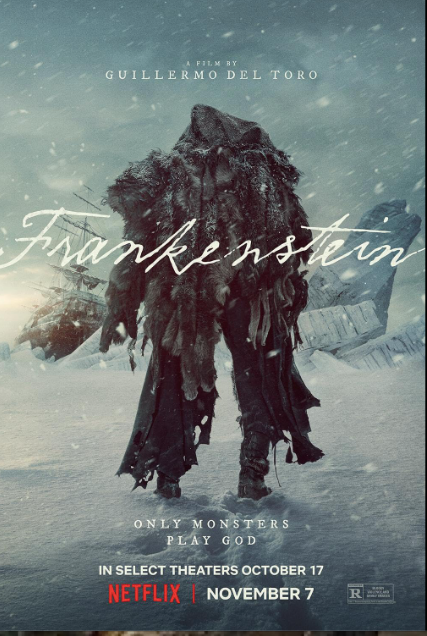
Frankenstein 2025: Unveiling the Real Monster


I just watched Guillermo del Toro's 2025 two-and-a-half hour take on Mary Shelley's 1818 Frankenstein on Netflix.  This year has been a great one for movies, and del Toro's Frankenstein continues that trend. 

Just about everyone knows something about this story, even if their main source of reference are the series of movies and remakes that were made in the 20th and 21st centuries, beginning in 1910 with Thomas Edison's 16-minute silent film .  Movie-making, of course, was primitive then, even in the one-hour talkie that really got the ball rolling in 1931, and these early Frankenstein movies almost seem cartoonish and comical. (There even was a 1948 Abbott and Costello Meet Frankenstein movie.)  After the first two talkies -- Frankenstein (1931) and The Bride of Frankenstein (1935) --  there was a very mixed resemblance to Shelley's novel in the thousand or so feature films, shorts, and TV appearances of Frankenstein's creation that followed, and to add insult to injury Mary Shelley's 75,000-word narrative has often been called a novella.  (I was President of the Science Fiction Writers of America 1998-2001, and SFWA has long defined a novella as 17,500-40,000 words).

The 2025 movie is masterfully filmed, making the movie both far more frightening and tender, at the same and different times, than any of the predecessors I've seen.  At times, the so-called monster seems more intensely human than most of the people around him, including the man who created him, and that makes his (the monster's) tale all the more memorable.  Although del Toro's movie has some differences with Shelley's novel, most notably in the ending, it feels as if Shelley was a consultant in the making of this movie.

One of the most impressive and important characteristics of Frankenstein's creation in Shelley's novel are the creation's nearly superpowers.  The exact reason for this is never quite explained, and the same is the case for the 2025 movie.  I'd always assumed it was the lightning, which not only jolted the stitched-together body parts into life, but literally energized the cells in the creation's body (actually, I really don't like calling him a monster) into a kind of durability verging on indestructibility.   I'm not sure if anyone else has made this point, but looked at in this way, Frankenstein's creation may well have inspired the creation of Superman.  Chances are the Jewish Golem inspired both.

The other aspect I really liked about the movie was the way it depicted the kindness and affinity Frankenstein's creation had for animals.  In Mary Shelley's novel he's an avowed vegetarian, and in del Toro's movie he's gentle with the creatures around him (unless they're wolves who are attacking him or the blind man).  The lesson here is that although he was created artificially (though the body parts and the lightning are certainly natural) he is indisputably a bonafide part of the greater natural world, maybe more so than his creator and his creator's (our) ilk.  We humans have to work hard at being a reliable citizen of the natural world.

And that may be the ultimate upshot of the novel and this movie, consistent with what has been remarked upon by readers and viewers for two centuries: the monster in this story -- if there is a monster -- is the creator not the creation.

===

Dedicated to the late Lisa Nocks, my student in the MA in Media Studies program at the New School for Social Research, then my teaching assistant at Fordham University, who wrote her Master's thesis on Frankenstein and a variety of articles on the subject including Frankenstein: in a Better Light. 


The novel is an expansion of the short story that won the Mary Shelley Award for Outstanding Fiction, 2023.  Get the novel here. Read the short story here, FREE.

Wednesday, June 14, 2023

Why the Final Beatles Record via AI Will Be Great, But Not So Revolutionary


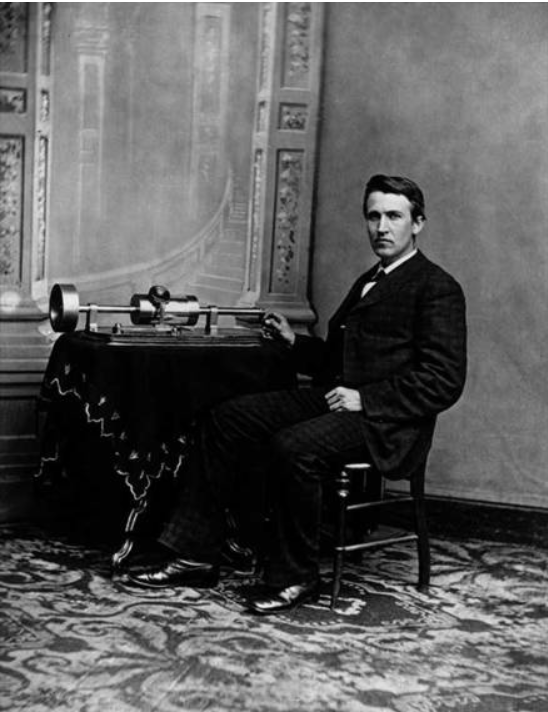
Edison and his first phonograph

Everybody's talking about Paul McCartney's comment in a BBC interview that AI was used in the creation of the "last" Beatles record, based on a demo John Lennon made in the 1970s, and already worked on by the surviving Beatles -- Paul, George, and Ringo -- in the 1990s, when The Beatles released two other Lennon demos they recrafted, "Real Love" and "Free As A Bird".   I'm really looking forward to this new record, to be released last this year, but I expect it won't be very much different in production and outcome than any other Beatles recordings released in the past few years, including the beautiful things Peter Jackson did to the Beatles recordings from their 1969 rooftop concert and a little before in Jackson's 2021 documentary, "The Beatles: Get Back."

Let's go back to the history of recording to understand why AI use in these recordings is not such a big deal.  If Frank Sinatra hit a bad note, or wanted to change anything in his studio recording of "That Old Black Magic," which would appear on his second studio album, released on Columbia Records in 1947, he would have needed to go back into the studio and record the whole song again.  By the 1960s, when The Beatles began recording, that already was not necessary.  Splices could easily be made in the recording tape, so the correct note could replace the off-key note, and by the end of the decade and the beginning of the 1970s even that was not necessary.  All splicing could be done electronically, and as the number of "tracks" that were used in a recording quickly expanded from 4 to 8 to 16 and more, doing harmony to your own voice became easy and commonplace.  None of that was called or even considered to be recordings made by AI.  The were recordings made by human beings, using ever more sophisticated technology,

By the 21st century and increasing in the past two decades, digital correction of flat notes via Autotune and production of harmonies without the singer needing to put down another track became ubiquitous in recording.  Even in the 1990s, producer Jeff Lynne did all kinds of electronic magic on Lennon's vocals to make them compatible with the new voices Paul and George were putting on "Real Love" and "Free As A Bird".  None of that was thought or said to be the least bit worrisome.  These developments were just more of the same tech advances which had been foreseen almost since the day Thomas Edison rolled out his first phonograph -- which recorded on tin foil -- back in 1877.  He'd intended that to be used as a recording device for the telephone (invented by Alexander Graham Bell a year earlier in 1876) and didn't foresee its mass adoption as a music recording player.  But the world soon did, and gave Edison the name of "The Wizard of Menlo Park" (New Jersey, where Edison invented the record player).

History is always worth consulting, and especially useful in putting new developments into perspective.  It may be exciting to be concerned about our increasing use of AI in so much that we do, but the Greek chorus of criticism that we hear about every new use of AI these days is misplaced. In reality, it's actually about things that AI does in science fiction, and is itself a kind of science fiction.

I'll sit back and listen to this new Beatles recording with no concern at all, and nothing but pleasure, grateful that Yoko sent cassette recording by John to Paul in the 1980s, and we now have the technology to make it sound fully alive.

It's Real Life

"It's Real Life" -- an alternate history about
The Beatles -- read it for FREE here


Saturday, October 26, 2019

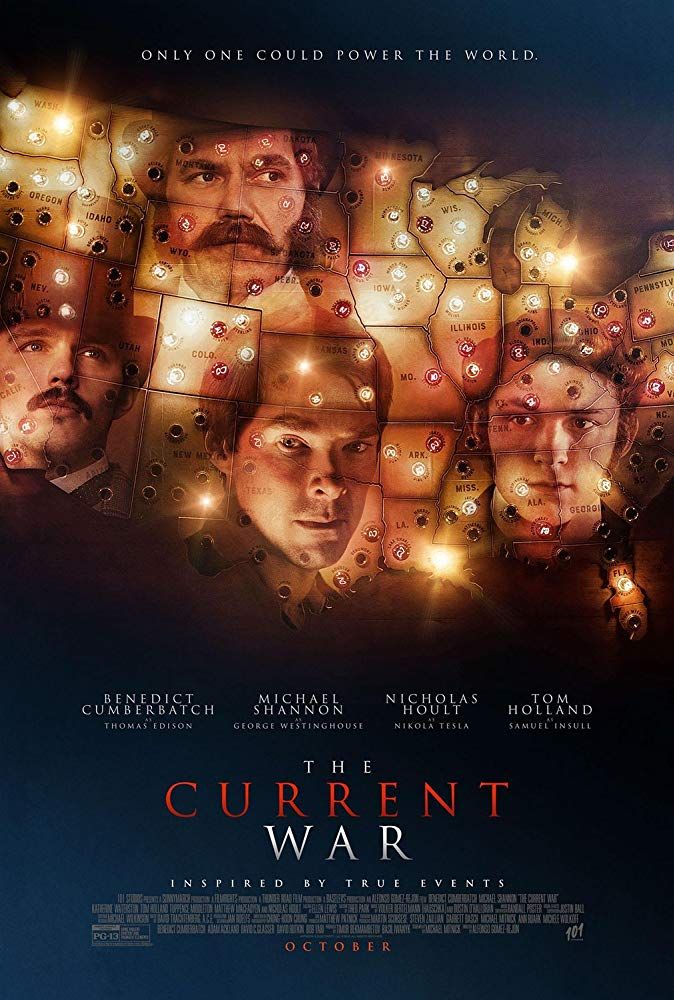
The Current War: "A Lovely Little Movie"


My wife and I just saw The Current War.  She said, as we were leaving the theater, that it was "a lovely little movie".  I agree completely.

The subject was about as big and momentous as you can get: whose brand/kind of electricity, Edison's or Westinghouse's, would become the national standard?  This "war" was fought in the 1880s and 90s.  The winner was George Westinghouse, and his AC (alternate current) indeed became the standard for delivery of electricity that we still use.

The loser, Thomas Edison, was a far more important person in history, having harnessed not only electricity in his electric light, but invented the phonograph and motion pictures (the latter also invented at pretty much the same time by the Lumière brothers in France and William Friese-Greene in England).  But Edison and his team rightly get the credit in the United States.

So what made this movie "lovely".  Edison is usually portrayed in straight-up history books as ruthless and obsessed with success.  Benedict Cumberbatch's Edison has these traits, but they're tempered by a real humanity.  Edison doesn't want to use electricity to take human lives, including in the electric chair, thought to be more humane than hanging.  Yet he gives one of the electric chair champions explicit instructions, in a brazen attempt to stain Westinghouse (also perfectly by portrayed by Michael Shannon, who, like Cumberbatch, is outstanding in everything he does).  And when the electrocution is applied, it turns out to be a very inefficient, cruel method of meting out death.  Question: Did Edison deliberately give poor instructions, because he was steadfast in his desire not to see electricity employed to kill human beings, including those convicted of murder?

The history, as far as I know it, was right on the major details, but perhaps not in every conversation portrayed.  At one point, Edison characterizes his motion pictures as doing for the eye what his invention the phonograph does for the ear.  As I always heard it, it was the phonograph does for the ear what the camera (not Edison's invention, having been invented nearly half a century earlier) does for the ear.   But who really knows.

My wife and I also really enjoyed the movie because we've long been fans of late Victorian culture.  There was something truly heady about the first use of telephones, phonographs, and electric lights,  and this was sensitively and satisfying portrayed in The Current War.  It was also instructive to see the beginning of almost no holds-barred corporate rivalry, and the manipulation of the media to win these battles.

One thing you won't find in this movie, however, is a satisfying portrait of Nikola Tesla, who is suggested as a major character but actually isn't in this narrative.  No matter, there were and will be other movies which focus more primarily on Tesla.

See the movie and enjoy the lights, the tenderness, and the struggling to set up the future, all so well shown on the screen.


Edison has a major role in this novel

Sunday, October 8, 2017

Review of Doug Hill's Not So Fast: Worth Reading, Not Too Quicky

 photo Not So Fast_zpsdbrxn5pv.jpgI've had an advance reading copy on hand for quite some time of Doug Hill's Not So Fast: Thinking Twice about Technology, and I guess, given the title, who could object to my taking so long to read and review it?  But I've slowly been reading and reviewing two other books - Grant Wythoff's The Perversity of Things and Rob Sheffield's Dreaming the Beatles - and, anyway, now that I've finished Not So Fast, I can tell you two things about it:  I strongly disagree with its premise and just about every argument Hill makes in the book, and I recommend it.

Now, it's rare that I would recommend a book with which I disagree, but it happens.  Before I tell you why, let me tell you why I disagree with this book.   I'm a technological optimist.  Not because I'm ignorant of the many critics of technology Hill cites in his book, but because I've read them all and found them wanting.   The critic often thinks the optimist is ignorant, but the optimist can just as often be a critic of the critic.  In my case, though I don't preach the singularity or any kind of technological utopia, I think technologies help us fulfill our human goals on multiple levels.  I've been saying this since my doctoral dissertation, Human Replay: A Theory of the Evolution of Media (New York University, 1979), which was recently put up on Amazon.

Unfortunately, Hill overlooks the most reasonable pro-technological arguments, and relies instead on quasi-mystical futurists as his opponents.  And sometimes he misrepresents a seminal thinker such as Marshall McLuhan, for example, who didn't turn from pro-technology with the global village to critic of technology with discarnate man as Hill says.  McLuhan instead insisted that he never made value judgements, and indeed his global village had beds of roses with plenty of thorns.

So, why, then, am I recommending Hill's book?  Because I think it's important that we continue to discuss and strive to understand the nature and impact of technology, which is what Hill does in Not So Fast.  I also think it's important to draw into the discussion ancient philosophers such as Plato and Aristotle, and modern practitioners ranging from Edison and Ford to Steve Jobs.  (Indeed, I think touching base with such minds is so important that I frequently include them in my science fiction.)  It's also good to see outright critics of technology ranging from Jacques Ellul to Langdon Winner given such play, if only to offer avenues to students of all ages who are new to the game of fathoming technology.

But in the end, as the Nobel laureate biologist Sir Peter Medawar liked to say, what's most human about us is our technology, which means that to oppose it with a tone or implication of apocalypse amounts to despairing of the human condition itself.


Monday, January 16, 2017

Timeless 1.11: Edison, Ford, Morgan, Houdini, and Holmes (No, Not Sherlock)!

A crackerjack return of Timeless with episode 1.11 tonight, featuring our team at work at the 1893 Chicago World's Fair, and running into (in one way or another) Thomas Edison, Henry Ford, J. P. Morgan, Harry Houdini, and serial killer (though as is made clear several times, not known by that label then) H. H. Holmes.  And just for good measure there's a famous women from MIT, but I didn't catch her name.

Houdini has the most screen time, and it's put to good use, as he uses his budding talents to unlock a door to a room where two of our heroes are in peril, and lift a gun from the pocket of Flynn, now thoroughly a bad guy again, but at least consistent in his reasons.

There are lots of good scenes and glances, including the slight look from Lucy when Wyatt says goodbye to the MIT woman, with whom there is definitely a touch a chemistry.   The famous characters all look as they should, including Henry Ford, who looks much younger than we think of him, because he was indeed much younger back then, when he was working for Edison, and hadn't yet invented his first Ford.   (I'd show you some photos, but I have more television to watch tonight, and don't have the time to find and insert them.)

So our team, rent asunder back in ancient 2016, is now back together in 2017, though the ever-resourceful Flynn is tempting Wyatt to leave the fold.  And as we're just days away from Inauguration Day here in the United States, I can't help thinking, where is a time-travel team from the future when we need them?  Or who knows, maybe they were already here, and we're seeing the result...

See you here next week!

See also Timeless 1.1: Threading the Needle ... Timeless 1.2: Small Change, Big Payoffs ... Timeless 1.3: Judith Campbell ... Timeless 1.4: Skyfall and Weapon of Choice ... Timeless 1.5: and Quantum Leap ... Timeless 1.6: Watergate and Rittenhouse ... Timeless 1.7: Stranded! ... Timeless 1.8: Time and Space ... Timeless 1.9: The Kiss and The Key ... Timeless 1.10: The End in the Middle


Edison, Ford, and J. P Morgan play big roles in Chronica,
third novel in this time-travel trilogy

Sunday, May 11, 2014

Da Vinci's Demons 2.8: The Talking Head

Another excellent Da Vinci's Demons last night - 2.8 - with not one but two scientific wonders.

One was a parachute, sketched but not actually constructed by the real Da Vinci.   But when it was eventually made and tested hundreds of years later - in the year 2000, by Adrian Nichols - it worked! And, as this Da Vinci page notes, "Despite skepticism from experts, da Vinci’s design worked as intended and Nichols even noted that it had a smoother ride than the modern parachute."  The man was a transcendent genius no doubt, in our reality as well in this fine television series, where Da Vinci's parachutes enable him and his party to escape their Inca-like captors via a jump off a sheer, very high cliff, aka the vault of heaven.

The second marvelous invention which plays a pivotal role in this episode was a talking head, of Da Vinci's mother.  Da Vinci neither in reality or in Da Vinci's Demons sketched or invented this device, but, as I point out in my Soft Edge: A Natural History and Future of the Information Revolution (1997), the phonograph in our reality was a mechanical invention (Edison was its inventor, in 1877), meaning it did not need electricity.  Therefore, it indeed could have been invented at any time in history, and there is even some speculation that potters in the ancient world may have captured sound waves as imprints on their pottery, analogous to the grooves on vinyl records.  (My novel, The Silk Code, explores this possibility.)

Significantly not discovered in this episode was the Book of Leaves, but Da Vinci is of course not discouraged but inspired to search further for it.   Da Vinci and company are thus left on the shore, waiting for Amerigo Vespucci to arrive, which he does.   This  could have been a good final episode of this season, but there are important matters coming to the boil back in Europe.

The evil Pope treats the Turkish envoy poorly (and did I hear the Pope call one of his cardinals "Rodrigo," as in Rodrigo Borgia?), Lorenzo has increased his strength, and Lucrezia is still in Istanbul. Lots of clashes to be resolved in the next two episodes - and with Da Vinci and Giralamo now allied, their return to Europe and their impact on these clashes should be fun to see indeed.

See also Da Vinci's Demon's 2.1: Science Fiction v Fantasy ... Da Vinci's Demons 2.2: Renaissance Radio ... Da Vinci's Demons 2.3: Submarine ... Da Vinci's Demon's 2.4: Copernican Revelation ... Da Vinci's Demons 2.5: Corn ... Da Vinci's Demons 2.6: Meets Charles Dickens ... Da Vinci's Demons 2.7: Four Stories

And see also Da Vinci's Demons:  History, Science, and Science Fiction ... Da Vinci's Demons 1.7: Leonardo Under Water with a Twist ... Da Vinci's Demons Season 1 Finale: History, Science Fiction, Time Travel 


a phonograph in ancient India in The Silk Code


Friday, December 21, 2012

Fringe 5.10: Montage Revelation

A spectacular and spectacularly informative montage at the end of Fringe 5.10 tonight - the 4th last hour of Fringe we'll ever see.   A precis of crucial moments in Walter's life, conveyed by the boy Observer (who we learn is not a child but a genetic anomaly) to Walter, with the crucial information that Donald is ... September.   I had been wondering what had happened to September, and if he would play some crucial role in the liberation of humanity from the Observer overloads - overlords with whom he disagreed increasingly in season 4 - play some crucial role even after he disappeared back in season 4, which now seems more like an eon than a season ago on Fringe.  And now we know he will.  And via some kind of time reset - as per Olivia in the coming attractions - which means all things are possible, including the return of even Etta in some fashion.  For all things are possible in time resets, except perhaps the paradoxical removal of that which caused, triggered, or was otherwise necessary for the reset.

Nina could come back, too.  But just as Etta's death seemed so wrong, unfair, several weeks ago, so Nina's tonight seemed nobly appropriate.  Her time had come, and she used it to defeat Windmark's attempt to get what was in her head - the saving montage which the good Observer, the child who is no child and has no chip implanted, later conveyed to Walter.  Nina's death may also mean that Walter may not be able to get the troublesome parts of his brain removed - if Nina is the only one who could perform such surgery.   I'm hoping he doesn't get the surgery - he has more potential with his brain intact, even in whatever unseen universe Fringe continues in after the end of the show on Earth in January.   But certainly Observers have technology sufficient to such a task - their technologies are impressive indeed.

We got another cool example at the beginning of tonight's show, as Windmark and crew recover sound from whatever tiny impacts it made on the glass in Nina's office.  I explored a related possibility in The Silk Code - recovering sound from ancient pottery - and it's an intriguing gambit indeed.  Edison's phonograph was based on this very approach - not digital, of course, but not even electric, just the impact of sound upon some Victorian composite material which would later yield the sound when the recording was submitted to the proper stylus.   This kind of classic science fiction mein has always been one of Fringe's strong suits.

And tonight's episode even had a nice little piece of humor, at least by my lights.  Hastings corrects Windmark when the Observer calls Hastings "Mr" - it's "Dr." Hastings,  the scientist replies, and Windmark complies.   Why did I find that funny?  I've been known to utter similar corrections, when someone I don't like, especially an authoritarian, calls me "Mr."

Just three episodes left - all in January - and now that we have a glimpse of a younger, more human September with hair, there's hope in the air.


See also Fringe 5.1: Paved Park and Shattered Memories ... Fringe 5.2: Saving Our Humanity ...Fringe 5.4: Ghosts of Fringes Past ... Fringe 5.5: "You Don't Even Know What You Don't Know ... Fringe 5.6: "Dad" ... Fringe 5.7: Father and Son ... Fringe 5.8: Love Triumphant ... Fringe 5.9: The Boy Observer in the Age of Aquarius

See also Fringe Returns for Season 4: Almost with Peter ... Fringe 4.2: Better and Worse Selves... Fringe 4.3: Sanity and Son ... Fringe 4.4: Peter's Back, Ectoplasm, and McLuhan ... Fringe 4.5: Double Return ... Fringe 4.6: Time Slips ... Fringe 4.7: The Invisible Man ... Fringe 4.8: The Ramifications of Transformed Alternate Realities ... Fringe 4.9: Elizabeth ... Fringe 4.10: Deceit and Future Vision ... Fringe 4.11: Alternate Astrid ... Fringe 4.12: Double Westfield / Single Olivia... Fringe 4.13: Tea and Telepathy ... Fringe 4.14: Palimpsest ... Fringe 4.15: I Knew It! ... Fringe 4.16: Walter Likes Yiddish ... Fringe 4.17:  Second Chances ... Fringe 4.18: Broyled on Both Sides ... Future Fringe 4.19 ... Fringe 4.20: Bridge ... Fringe 4.21: Shocks ... Fringe Season 4 Finale: Death and Life

See also
 Fringe 3.1: The Other Olivia ... Fringe 3.2: Bad Olivia and Peter ... Fringe 3.3: Our/Their Olivia on the Other Side ... Fringe 3.5: Back from Hiatus, Back from the Amber ... Fringe 3.7: Two Universes Still Nearing Collision ... Fringe 3.8: Long Voyages Home ... Fringe 3.10: The Return of the Eternal Bald Observers ... Flowers for Fringenon in Fringe 3.11 ... Fringe 3.12: The Wrong Coffee  ... Fringe 3.13: Alternate Fringe ... Fringe 3.14: Amber Here ... Fringe 3.15: Young Peter and Olivia ... Fringe 3.16: Walter and Yoko ... Fringe 3.17: Bell, Olivia, Lee, and the Cow ... Fringe 3.18: Clever Walternate ... Fringe 3.19 meets Inception, The Walking Dead, Tron ... Fringe 3.20: Countdown to Season 3 Finale 1 of 3 ... Fringe 3.21:  Ben Frankin, Rimbaldi, and the Future ...Fringe Season 3 Finale: Here's What Happened
 ... Death Not Death in Fringe  


See also reviews of Season 2: Top Notch Return of Fringe Second Season ... Fringe 2.2 and The Mole People ... Fringe 2.3 and the Human Body as Bomb ... Fringe 2.4 Unfolds and Takes Wing... Fringe 2.5: Peter in Alternate Reality and Wi-Fi for the Mind ... A Different Stripe of Fringe in 2.6... The Kid Who Changed Minds in Fringe 2.7 ... Fringe 2.8: The Eternal Bald Observers ... Fringe 2.9: Walter's Journey ... Fringe 2.10: Walter's Brain, Harry Potter, and Flowers for Algernon ... New Fringe on Monday Night: In Alternate Universe? ... Fringe 2.12: Classic Science Fiction Chiante ... Fringe 2.13: "I Can't Let Peter Die Again" ... Fringe 2.14: Walter's Health, Books, and Father ... Fringe 2.15: I'll Take 'Manhatan' ... Fringe 2.16: Peter's Story ... Fringe 2.17: Will Olivia Tell Peter? ... Fringe 2.18: Strangeness on a Train ... Fringe 2.19: Two Plus Infinity ... Fringe the Noir Musical ... Fringe 2.21: Bring on the Alternates ... Fringe 2.22:  Tin Soldiers and Nixon Coming ... Fringe Season 2 Finale: The Switch

See also reviews of Season One Fringe Begins ... Fringe 2 and 3: The Anthology Tightrope ... 4: The Eternal Bald Observer ... 7: A Bullet Can Scramble a Dead Brain's Transmission ... 8. Heroic Walter and Apple Through Steel ... 9. Razor-Tipped Butterflies of the Mind ... 10. Shattered Pieces Come Together Through Space and Times ... 11. A Traitor, a Crimimal, and a Lunatic ... 12, 13, 14: Fringe and Teleportation ... 15: Fringe is Back with Feral Child, Pheromones, and Bald Men ...17. Fringe in New York, with Oliva as Her Suspect ... 18. Heroes and Villains across Fringe ...Stephen King, Arthur C. Clarke, and Star Trek in Penultimate Fringe ... Fringe Alternate Reality Finale: Science Fiction At Its Best


Monday, October 10, 2011

Boardwalk Empire 2.3: Frankenstein and Victrola

Nucky finally confronts Jimmy in Boardwalk Empire 4.3 - in Babbette's restaurant, where Nucky goes out to dinner with Margaret and another couple, and Jimmy is dining with the Commodore and the Governor.   The immediate cause of the confrontation - what gets Nucky to walk over to Jimmy's table, and throw the Commodore's plate of lobster thermidor on the floor - is Nucky's frustration at Margaret's ordering of the lobster, only to be told that the last dish with lobster had just been served a few minutes ago.  There ensues a great scene in which Nucky calls Jimmy on his shift in loyalties and Jimmy has to be restrained by the Commodore from getting physical.

The real source of Nucky's fury, of course, is the systematic attack on his livelihood being mounted by the Commodore and Jimmy.   Not only has he been thrown in jail and subject to investigation by the authorities, but his booze trade is in serious peril as the Coast Guard, now in the Commodore's pocket, is blocking Nucky's shipments from the sea.   Nucky even calls the Federal Attorney General - appointed by the corrupt President Harding whom Nucky helped get in office - only to be told that the Feds have no jurisdiction in state matters.

About the only bright spot for Nucky - other than Margaret - is the IRA leader's man Owen who is staying behind in America, and is eager to help Nucky.   Owen goes gun to gun with Richard, to stop a delivery of the Commodore's liquor, in another fine scene, in which neither man fires.  The two have a mutual respect, and it will be interesting to see how that plays out. 

Speaking of Richard, he's earlier referred to as "Frankenstein" by Al Capone, in town to give Nucky yet more bad news.  The reference was a bit of an anachronism - although the Mary Shelley novel was published a century before, and the character certainly famous in a literary sense, the movie that put the name of the Doctor and the face of the monster on the map was not made until 1931.  Thomas Edison had made a Frankenstein movie in 1910, and it was indeed made in his New Jersey studios, but it is highly unlike that Al Capone in the 1920s would have known anything about it.

Eddie Cantor and his rolling eyes were certainly around in the 1920s, and his visit to pregnant Lucy was a pleasure to see (and hear - great Eddie Cantor accent by Stephen DeRosa).  Lucy's story in this episode at least had something of a happy ending, as Van Alden buys her the VV-80 Victrola she's been yearning for.

And I'm yearning for the next episode of this fine period drama.

See also Boardwalk Empire 2.1: Politics in an Age Before YouTube  ... Boardwalk Empire 2.2: The Woman Behind the Throne

And see also Boardwalk Emipre on HBO ... Boardwalk Empire 1.2: Lines and Centers Power ... Boardwalk Empire 1.10: Arnold Rothstein, Media Theorist  ... Season One Finale of Boardwalk Empire


                 Special Discount Coupons for Angie's List, Avis, Budget Car, Garden.com, eMusic 


The Plot to Save Socrates


"challenging fun" - Entertainment Weekly

"a Da Vinci-esque thriller" - New York Daily News

"Sierra Waters is sexy as hell" - curled up with a good book


Enjoy listening to audio books? Get a free audio book copy of The Plot to Save Socrates - or any one of 85,000 other titles - with a 14-day trial membership at Audible.com ...


InfiniteRegress.tv