Chuck Todd interviews me about alternate histories
Showing posts with label utilitarian philosophy. Show all posts

Friday, January 23, 2026

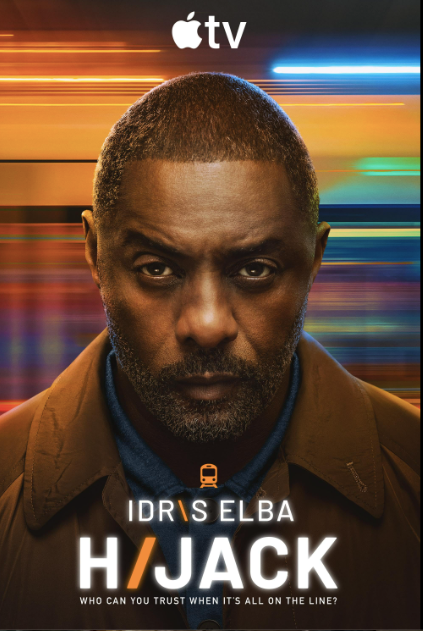
Hijack 2.2: What Is Sam Nelson Really Up To?


Hijack 2.2 on Apple TV+ intensified and deepened a mystery which, at least thus far, is becoming central to this second season:  What is Idris Elba's Sam Nelson really up to?

[Spoilers ahead ... ]

In the previous episode -- 2.1 -- we learn at the end of the hour that Sam has hijacked a train in Berlin, in his quest to punish the person or people ultimately responsible for hijacking the plane in the first season, presumably because they have done something horrendous to Sam since he got back on the ground after stopping the hijacked plane from crashing into a populated area in London and killing lots of people.

The hijacking of the train is confirmed in episode 2.2, which ends with Sam about to do something much worse than the train being hijacked: he's apparently ok with, though not happy about, someone being killed due to his hijacking.  He makes it clear that he doesn't want this to happen, but he's willing to accept it, if that's what it takes for Sam to continue with his new mission.

I have trouble completely believing this.  Maybe it's because I can't quite see Idris Elba playing a character who can accept that his actions were causing the death of an innocent person.  I guess, if we follow the utilitarian principle of the greatest good for the greatest number, that allowing one person to die is the ethical choice if that was the only way of stopping the death of many people, but if that's the case in this narrative, it would be helpful to see some indication that this is what Sam was trying to prevent.

At this point, we're still not clear about Sam's motive.  If it's personal retribution, that would not be a case of the greatest good for the greatest number of people.  Perhaps Sam's motive is both personal and utilitarian.  Or perhaps Sam knows for whatever reason that the individual will not be killed. I'm looking forward to seeing how this all plays out.

See also Hijack 1: Don't Miss It! ... Hijack 2.1: A Tale of Two Vehicles

Friday, August 25, 2023

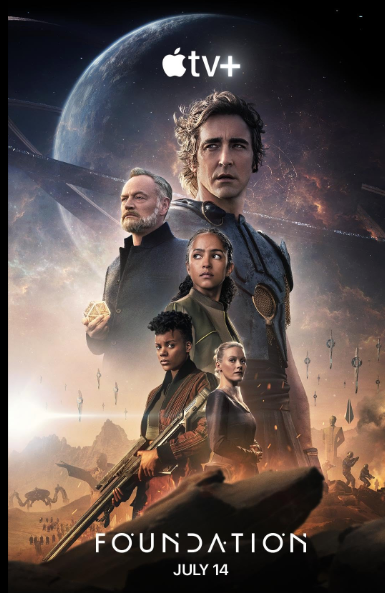
Foundation 2.7: Is Demerzel Telling the Truth?


Another excellent episode of Foundation -- 2.7 -- which may be the best episode so far this second season, which means maybe the best episode so far in the series.

I'll address three issues here:

[Spoilers follow ... ]

1. Demerzel tells Sareth she's the last surviving robot, that once upon a time robots were bound to follow three laws which makes them bound to prevent any harm from befalling a human, by action or inaction (actually, just the first law of Asimov's Three Laws) but that changed and now she's bound by only one law, to "serve Empire".

Ok, but is Demerzel telling Sareth the truth?  Is she bound by any robotic law to never lie to any human?  Or never lie to Day's betrothed?  Not likely.  And why did she mention the three laws to Sareth, and then only recite to her the first law?  Was that just inexact writing, or is there some meaning in that omission?  And is Demerzel telling the truth about being the last surviving humanoid robot, aka android? How exactly could she know such a thing across the vast expanses of the galaxy? Are robots in some sort of telepathic touch across the galaxy? (And, while we're at it, what happened to Asimov's Zeroth Law, which says that more important than never letting any harm to befall a human, a robot should give priority to humanity as a whole? A nice enactment of the utilitarian principle of the greatest good for greatest number.)

2.  The Cleons had quite a night.  Day had Demerzel kill Sareth's family. (a stark example of the overthrow of Asimov's first law). She understandably hates him.  Day and Demerzel know this, so why are they going ahead with the marriage?  And Sareth beginning to seduce Dawn is a risky and exciting venture indeed.  I don't see how they'll be able to hide that from Demerzel.  Also notable is Brother Constant conveying the holographic Hari in the meeting with the Cleonic clones and Demerzel in a very strong scene -- actually, any scene with the Cleonic clonic triumvirate and Demerzel is good to see, let alone one with any version of Hari.

3. But speaking of Hari -- it looks like he's also alive in the flesh, with his head above water, just as I said I thought was likely the case last week.  And now Salvor has joined him?  Well, not exactly, her face is down in the water, but if Hari survived why can't she?   On the other hand, this episode is entitled "A Necessary Death," and whose death is that?  Sareth's family? Not likely, especially since that happened off-camera. 

Tellem Bond does say something about a "little death" being necessary, so what does she mean by that? Optimist that I am, I'd say that that could mean that maybe Salvor and Hari are in some sort of coma, deep-sleep state -- which would be in accord with Hari's head above water -- and Tellem might be thinking and plotting it might be a good or necessary idea to revive them someday.

Lots of information and lots of questions, which is why I much enjoyed this episode.

See also Foundation 2.1: Once Again, A Tale of Two Stories ... 2.2: Major Players ... 2.3: Bel Riose and Hari ... 2.5: The Original Cleon and the Robot ... 2.6: Hari and Evita

And see also Foundation 1.1-2: Mathematician, Man of the People, and Cleon's Clones ... Foundation 1.3: Clonal Science Fiction, Hari Seldon as V. I. Lenin ... Foundation 1.4: Slow Hand, Long Half-Life, Flipped Coin ... Foundation 1.5: What We Learned in that Final Scene ... Foundation 1.6: Folded Variations ... Foundation 1.7: Alternate History/Future ... Foundation 1.8: Divergences and Convergences ... Foundation 1.9: Vindication and Questions ... Foundation Season 1 Finale: Right Up There


Monday, March 13, 2023

The Last of Us Season One Finale: The Limits of Utilitarianism


Well, the season one finale of The Last of Us, just up on HBO Max tonight, was everything it could be and even more.

[And there will be spoilers ahead ... ]

So, first, here's what happened.  Turns out, at least as far as the docs in the hospital that Joel and Ellie finally get to, think: only by destroying Ellie's brain can her immunity to the fungi be disseminated to the rest of humanity.  We never find out if they're scientifically right or wrong, because Joel, once he finds out what the docs plan to do with Ellie, kills the doc about to perform the surgery and everyone else in his way so he can make good his escape with Ellie.

But here, then, is the question: was Joel right to do this?  Was he right to go against the fundamental principle of utilitarianism of the greatest good for the the greatest number, and deprive humanity of its rescue from death, all so one person, Ellie, can survive?  I tend to be utilitarian in many things, but ...

I would have done exactly what Joel did, had I the lethal prowess, to save Ellie.  Does that mean I'm weak?  Did Joel ignore logic and give into his emotions? Well, he did follow his emotions, but that doesn't mean he was weak or even illogical. Maybe there's a higher logic at work here.  The logic of going with your deepest emotion, if that emotion is love.

Joel acted on that principle, but he's not a philosopher.   He unconsciously refuted the utilitarian principle, and then he compounded that ethically dangerous action by lying.   Parents often lie to their kids -- the younger the kids are, the more often they're not told the truth, presumably for their own good.  I said Joel was right to save Ellie.  The docs could have been wrong.  Even if not, he was right to save her.  But was he right to lie to Ellie at the end of the episode when she asked him if he had told her the entire story of what had happened back at the hospital? Here I'd say, probably not.  I'm pretty sure I think he owed Ellie the truth.

On the other side of both of these issues, we have Marlene. She kills Ellie's mother Anna, her friend, after she'd given birth to Ellie, after Anna had been bitten, on Anna's instruction. She saved baby Ellie's life. Marlene is able to think clearly, rise above her emotions, and make tough decisions. The decision to kill Ellie, the baby she saved, years later, was an even tougher decision. She went with her head, not her heart. John Stuart Mill would have approved. It's tough to hate or even dislike her, because she was really trying to do the right thing. Unlike Joel, she told the truth. But Joel had to kill her -- fittingly, the last person he killed -- to escape with Ellie. I think he made the right decision here, too. 

Being right two out of three times in these hellish circumstances ain't bad.  And The Last of Us was 100% right to give us such an ethically wrenching season finale.  I'll certainly be back here with more reviews when the series resumes.

See also The Last of Us 1.1-1.2: The Fungus Among Us ... 1.3: Bill and Frank ... 1.4: Gun and Pun ... 1.5: Tunnels ... 1.6: Joel ... 1.7: Riley's Wise Advice ... 1.8: Ellie vs. the Resort


I talk about The Last of Us, beginning at 40mins 40secs


Thursday, August 2, 2018

Mission Impossible 6: Fallout: Better (These Days) Than Bond


Just saw the 6th Mission Impossible movie - Fallout - with Tom Cruise in the lead role as Ethan Hunt.  I thought it was outstanding - the best of the movies so far - and, yes, better than the Bond movies these days.

The dominant philosophic theme was a refutation of the utilitarian principle that the good of the many outweigh, or should outweigh, the good of the few as a motive for action.   We see this refuted at least three times in the movie, which begins with Hunt blowing a mission to save one of his team.  He later takes precious time to make sure that a French woman police officer survives a deadly encounter.  And in the one of the scenes in the movie, Ilsa struggles with whether to thoroughly choke out an arch villain while Benji dangles from a nearby noose and looses consciousness.

There's some excellent double-agent moves in which good guys turn out to be bad guys and vice versa.  And the action scenes - in bathrooms in Paris to cliffs in Kashmir - are top-notch and in some ways better than usual.   In the bathroom, a single bad guy gets the better of both Hunt and another agent, until - well, I don't want to give too much away.  But that's more realistic than we often see in scenes like this.

There's the best balance of tongue-in-cheekness about Mission Impossible tropes and using them to effective purpose in the narrative.   An early scene features Wolf Blitzer delivering a news report on CNN.  I had a feeling he was making up the report for MI purposes, but didn't guess that he was actually one of the MI team wearing a Wolf Blitzer mask.  After that, the cracks by disbelievers that the MI strategy of masks which just Halloween had an especially delicious irony.

Tom Cruise, I have to say,  did another fine job.  I never got the criticism of Cruise in this or any other role.  He delivers his Ethan Hunt character with just the right mix of grit, determination, self-awareness, and even self-deprecation.    I guess comparing these MI movies to Bond is apples and oranges.   But I will say that I liked Fallout more than last few Bond moves, which were certainly good cinema.

See alsoMission Impossible 4: Ghost Protocol


the Sierra Waters time-travel trilogy

Monday, June 9, 2014

24 Season 9.7: Silent Clock in President Heller's Future?

Another powerhouse episode of 24 tonight - 9.7 - featuring a wild car chase, with Jack behind the fleeing wheel, that would have made James Bond proud.  What made this car chase different - what gave it a special edge - was that Jack (with Kate and Simone in the car) - was fleeing a drone missile launched on order of Margot.   And he in fact successfully evades several missiles, by not only daring driving but setting forth a car with no driver or passenger, propelled by a big rock on the gas pedal.

Jack was also in peak form in the hospital scene, in which his quick action gets Kate, Simone, and Kate's niece out alive.   As I've noted several times in this new season, Jack has grown, at least a bit, as a human being.  He can't resist applying pain to Simone to get some crucial information (which he fails to get), but he apologizes for that to Kate, explaining that he "hates those people" (i.e., terrorists bent on killing innocent people).

Of course, Jack is not above punching an innocent person out, or applying a gun to an innocent person's head, when thousands or more other innocent lives hang in the balance.  This makes Jack's philosophy solidly utilitarian - the good of the many outweigh the good of the few - which is especially appropriate this season, with the action taking place in England, 19th-century home of the utilitarians James and son John Stuart Mill.

Elsewhere, the voice on the phone to Steve indeed turns out to be the ersatz Julian Assange (Adrian), as I predicted in my review last week.   With his sending out an assassin to kill Jordan, I can only hope now that Steve as well as Adrian get their just deserts, with Steve maybe getting a chance to perform more nobly as he departs.

Which brings us to President Heller, who's positioning himself to give himself up to Margot, since he knows he'll soon have to resign because of his mental condition anyway.  I'm predicting Jack won't allow it - out of love for Audrey.  There may be a silent clock on 24 before this season is over - as there was for Buchanan, Renee, Teri, and eight others in the history of 24 - but it won't be for Heller, at least, not by Margot's hand.

See also 24 Season 9 Hours 1 and 2: The Sheer Intelligent Adrenalin Is Bac... 24 Season 9.3: Shades of Disloyalties ... 24 Season 9.4: Brass Tacks and Strong Women ... 24 Season 9.5: Jack and Audrey .. 24 Season 9.6: Expendable In-Laws

And see also Season 8 reviews: Hours 1 and 2 ... Hours 3 and 4 ... Hour 5 ...Hour 6 ... Hour 7 ... Hour 8 ... Hour 9 ... Hour 10 ... Hour 11 ... Hour 12... Hour 13 ... Hour 14 ... Hours 15-16 ... Hour 17 ... Hour 18 ... Hour 19... Hour 20 ... Hour 21 ... Hour 22 ... 24 Forever!

And see also Season 7 reviewsHours 1 and 2 ... Hours 3 and 4 ... Hour 5... Hour 6 ... Hour 7 ... Hour 8 ... Hour 9 ... Hour 10 ... Hours 11-12 ...Hour 13 ... Hour 14 ... Hour 15 ... Hour 16 ... Hour 17 ... Hour 18 ... Hour 19 ... Hour 20 ... Hour 21 ... Hour 22  ... Hours 23-24  

And see also Season 6 reviews: Hours 1 and 2 ... Hours 3 and 4 ... Hour 5 ... Hour 6 ... Hour 7 ... Hours 8 and 9 ... Hour 10 ... Hour 11 ... Hour 12 ... Hour 13 ... Hour 14 ... Hour 15 ... Hour 16 ... Hour 17 ... Hour 18... Hour 19 ... Hour 20 ... Hour 21 ... Hour 22 ... Hours 23-24


#SFWApro


  Enjoy a little high-tech espionage?  Try The Pixel Eye


Tuesday, October 2, 2012

Person of Interest 2.1: The Machine and the Nemesis

Person of Interest came back for its second season last week firing on all cylinders, offering crucial history, investing in a great central arc, and throwing in a good standalone story to boot.

The history:  In a series of flashbacks, we see Finch teaching the computer program that we know so well, aka the Machine, much as a parent would a genius child.  The modus operandi, which we saw touches of last season, is now fully spelled out.  The Machine uses any available lens to see what's happening in the world, and a variety of phones - landlines in phone booths, cell phones, smart phones (and sometimes a flash on an available screen) - to "talk" to Finch and later Reese. The key point in the teaching of the Machine is Finch's insistence that it not operate as Finch's guardian, but as a guardian of the greater good for all humanity.  This utilitarian principle - the good of the many outweighs the good of the few (in this case, of the one, Finch) - is pivotal in the central arc which Person of Interest is now in the heat of following.

The central arc:  Finch has been kidnapped by Caroline Turing aka Root - the finale of the 1st season's person of interest - and she's even more formidable that we might have realized last season.  In fact, she may as much a mastermind as Finch, except she uses her talent for evil.  Reese will have his hands full tracking her down, which he'll need to do to find and liberate Finch.  "Liberate" is what Root says she wants to do to the living Machine - by which, I assume she means, liberate it from Finch's control, to the degree that Finch does exercise control.  Reese, in any case, scores a good scene and move with the Machine, when he tells it that he has no intention continuing to save persons of interest in need, unless and until the Machine helps him rescue Finch.  It's a great Asimovian laws of robotics moment, in which Reese is asking the Machine to override its most fundamental programming, instilled by Finch, on behalf of saving Finch.  And the Machine agrees.

The standalone story:  Ken Leung, of Lost fame, plays the victim, on the verge of being murdered by white supremacists.  Reese has his customary great moves, and in the process of saving the victim picks up a dog - savage to enemies, docile to Reese - which will make a good addition to the cast.  Carter and Fusco are also on hand, with Carter once again saving Reese, and Fusco noticing that Reese is not invulnerable - a recognition which will likely have greater significance later this season.

So Person of Interest is off to fine, taut start, with a nemesis in Caroline, a provocative continuing story with Finch still under her control, and some much needed information about how the Machine came to be what it is now is.

See also Person of Interest of Interest  ... Person of Interest 1.2:  Reese and Finch ... Person of Interest 1.5: Potentials ... Person of Interest 1.7: Meets Flashpoint and The Usual Suspects ... Person of Interest 1.8:  Widmore and Ben, At It Again ... Person of Interest 1.9: Evolution of a Series ... Person of Interest: 1.10: Carter Returns the Favor ... Person of Interest 1.11-1.12: Realignment and Revelation  ... Person of Interest 1.14: Reese as Ronin  ... Person of Interest 1.16: Meets Wall Street ... Person of Interest 1.17: Hearts and Places ... Person of Interest 1.17: Double Ecstasy


"As a genre-bending blend of police procedural and science fiction, The Silk Code delivers on its promises." -- Gerald Jonas, The New York Times Book Review

"Daddy, this is the best book I ever read!" - Molly Vozick-Levinson, age 12 at the time

Monday, February 27, 2012

After the Oscars, The Walking Dead 2.10 Meets John Stuart Mill

After an excellent Oscars with Billy Crystal - except for the cowardly ABC bleeping - it was pleasing jolt to see The Walking Dead 2.10, which was all about rules.

Rick vs. Shane: whose rules?  We've seen that before, lots of it, but this time their argument over what to do with the kid who lost his leg in town is interrupted by one of the best walker scenes all season. Shane in the bus with walkers breaking into the door, and the way he handles two of them, and the way Rick rescues him (I know he wouldn't leave him there), was itself worth the price of admish.

Meanwhile, back at the ranch (farm), there's also a clash of rules also going on, between Lori and Andrea, over what to do about Beth, who wants to commit suicide.  Andrea says let her make her own choice.  Lori (and Maggie) want to do everything in their power to stop her.

Philosophy question: what would a utilitarian philosopher like John Stuart Mill, who held that you could swing your arm, anytime any way you want to, as long as you don't hit someone else's nose, have said about suicide?  No easy answer.  One way of dealing with this is to say that anyone who wants to commit suicide is not in his or her right mind, so the usual utilitarian principle doesn't apply.  But that could be a slippery slope ...

Anyway, back on the farm, Andrea gets to give Beth a choice - who slashes her wrist, but regrets it.  And since the cut is not deep enough to kill, she'll get to live.   And now she's empowered, becauses she made the choice to live, not someone else.  So she's likely to stand by that decision.

Was Andrea therefore right?  Well ....  I still say not ...  What if Beth had killed herself?  Had that happened, she'd have lost the opportunity to change her mind.

And this is what makes The Walking Dead so good - it's not just horror, it's intelligent horror, the kind John Stuart Mill might well have enjoyed.


                 Special Discount Coupons for Angie's List, Avis, Budget Car, Garden.com, eMusic


The Plot to Save Socrates

"challenging fun" - Entertainment Weekly

"a Da Vinci-esque thriller" - New York Daily News

"Sierra Waters is sexy as hell" - curled up with a good book


Enjoy listening to audio books? Get a free audio book copy of The Plot to Save Socrates - or any one of 85,000 other titles - with a 14-day trial membership at Audible.com ...
InfiniteRegress.tv