Chuck Todd interviews me about alternate histories
Showing posts with label Lior Raz. Show all posts

Monday, September 14, 2026

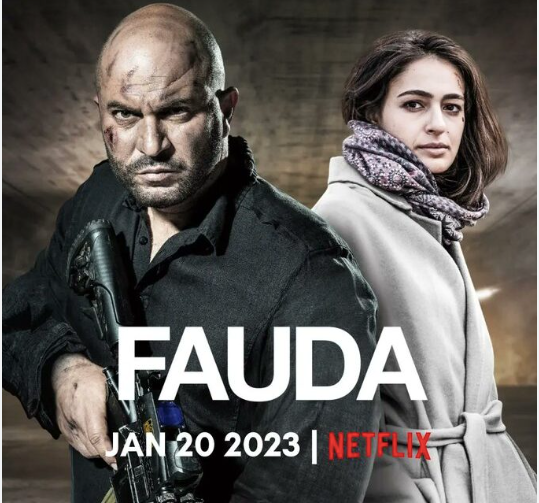
Fauda 5: Powerful, Necessary, Unforgettable


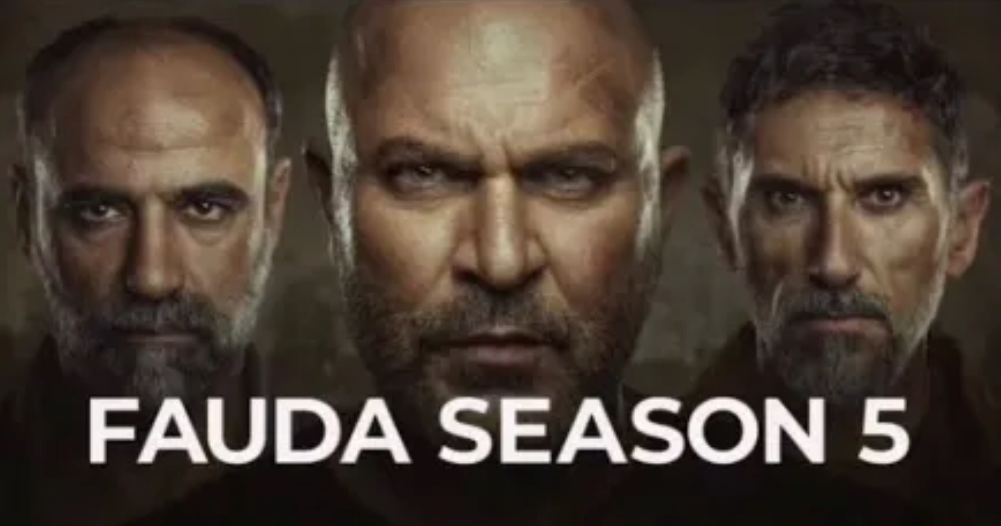
I binged the fifth season of Fauda on Netflix the past two nights.  As is well-known, the script for this season was substantially re-written after the savage Hamas attack on October 7, 2023.  The result was the story of an increasingly desperate attempt to stop a new terrorist attack -- an attempt by three members of the original Fauda team, Doron, Eli, and Steve -- each of them with a direct involvement in the Israeli attempt to stem the Hamas slaughter of unarmed Israelis in 2023.

In fact, the most effective two episodes in this 11-part season -- episodes 7 and 8 -- tell the harrowing stories of Doron, Eli, and Steve on that October day, an emotionally explosive account that made a highly effective, two-part movie in itself.  With all the anti-semitism rising around the world, it's more important than ever for the terrible story of October 7 to get out to the world.

This explicit connection to and depiction of such a vile real life event makes this fifth season of Fauda in significant part a docu-drama, an evocative, unforgettable depiction of fictitious characters in an all-too-real situation.  That reason alone makes this fifth season uniquely important and memorable.

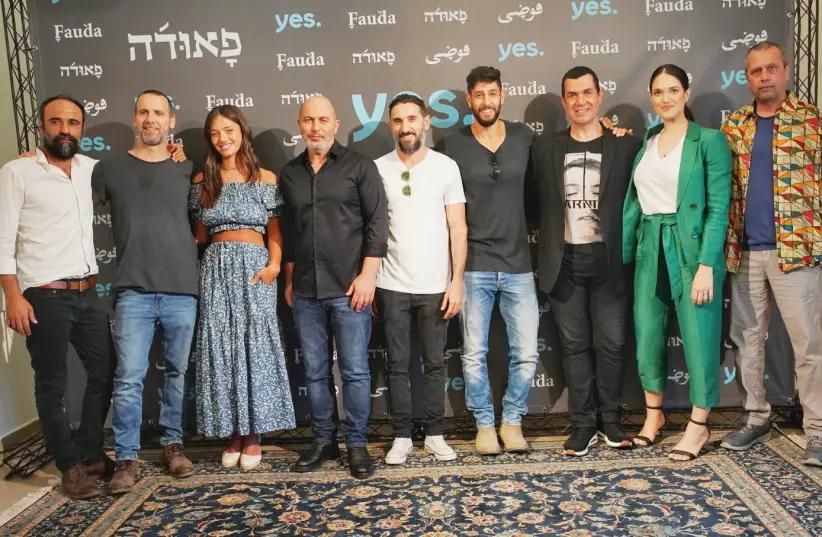
But the fiction was significant, too.  Mélanie Laurent's Anne, the wife of someone who may be a Hamas operative in Marseilles, is an excellent addition to the story and cast, and plays a crucial part in the narrative.  Lior Raz as Doron (co-creator of the series with Avi Issacharoff), Yaakov Zada-Daniel as Eli, Doron Ben-David as Steve, and Itzik Cohen as Gabi are always welcome on the screen -- Gabi frequently has the best lines, like "I'm getting too old for this" -- and as always, the Yiddishkeit is good to hear and see.

Indeed, last night was the final night of Rosh Hashanah, so seeing Fauda over the past two nights felt especially right.  But its story, especially the story this season, is especially appropriate, any time, and any year.

Wars always have unforeseen wretched consequences.  World War I spawned fighting from the sky, World War II gave us nuclear weapons, the October 7 Hamas attack led to the decimation of Gaza.  Fauda 5 doesn't tell us that story, but it vividly reminds us why it happened.  It will be an essential marker of an unspeakably inhuman part of history.

See also Fauda: Beyond Homeland ... Fauda 2: Another Unforgettable Visit ... Fauda 3: Blood, Tears, Humanity ... Fauda 4: Very Much Alive and Wounded ... 


Sunday, January 22, 2023

Fauda 4: Very Much Alive and Wounded


Fauda is like no other military, espionage series I've ever seen, showing so many sides of a story in so much life and death and depth, in this case, Israelis, Palestinians, and other peoples in the area and further away.  Watching a season is an immersion in these cultures, and an exploration of complex personal relationships under pressure, interspersed with breakneck military battles and operations.

[And that's the most I'll say before I alert you to spoilers ahead.]

Fauda 4 opens up with Doron and other members of his team in various stages of wanting to retire.  This only progresses as the 12 episodes unfold.

The kidnapping of Gabi, and the plan of the Palestinian team that kidnapped him to launch missiles against Israel, are the main objects of our team's focus on stopping.   As in previous seasons, let's just say that they don't succeed as quickly and as entirely as they would like, if they succeed at all.  Again, this reflects Fauda's uncompromising mirror of reality, however painful that may be.

Lior Raz, star of the series as Doron, and co-creator with Avi Issacharoff, once again puts in a powerhouse performance, as does everyone else in Fauda 4, in all sides of the physical and psychological battles.  As Gabi points out to Doron, he has a tendency to start to fall in love with women who are good human beings, whether Arab or Israeli, because he has such a big heart.  This time, that's Maya (very well played by Lucy Ayoub), a Palestinian whose brother is behind Gabi's kidnapping, whose Israeli husband is in the Israeli military, and she herself is an Israeli cop -- this is what I mean about the personal relationships in Fauda being complex.  But not so complex as to get in the way of the riveting narrative, which will keep you glued to the screen (I haven't used that old metaphor in years, if ever).

The ending is about as wild as it gets.  Just about everyone on the team lying on the ground, badly wounded but alive -- and speaking of metaphors, that pretty much is the story of life that Fauda continues to tell: badly wounded but very much alive.  I'm very much looking forward to a season 5 and more.


See also Fauda: Beyond Homeland ... Fauda 2: Another Unforgettable Visit ... Fauda 3: Blood, Tears, Humanity


Friday, August 13, 2021

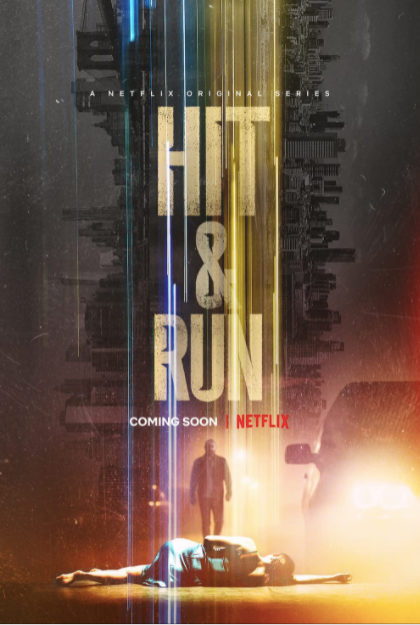
Hit and Run: Lior Raz and Silvercup


I've come to know Lior Raz as one of the creative powerhouses (along with  Avi Issacharoff) of three seasons and a fourth forthcoming of Fauda, about the best depiction I've ever seen of the Israeli-Palestinian conflict, viewed through the eyes of an Israeli undercover unit, in which Raz plays Doron, and therein stars in the series as well.

So of course I was going to see Hit and Run, a new series which debuted on Netflix, which also was co-created by Raz and Issacharoff, and also stars Raz.  This time he's an Israeli tour-guide, married to American ballet dancer, who is killed in a hit-and-run before the first episode is over.  Before the nine episodes of this first season are over, we see Raz's Segev as much in New York as in Tel Aviv, and a narrative seething with action and a cast who promise to become memorable in their first scene and usually do.

My favorites this time, in addition to Segev, are Tali (played by Moran Rosenblatt, also in Fauda), a resourceful, pregnant Israeli police detective who is Segev's staunchest ally in Tel Aviv, and Naomi (played by Sanaa Lathan, not in Fauda, but in The Affair), who's an investigative reporter with New York Magazine, was once in some kind of commando unit with Segev, and is now his staunchest ally in New York.

In addition to the non-stop action and complex fast-twisting plot, there's also more than a fair share of death meted out to all kinds of characters, which I consider a plus in this kind of series, because you begin to realize you never will know who will survive a given episode, because in fact you don't.  The scenery was also good.  As a life-long New Yorker, I was happy to see Silvercup Bakery -- or what was Silvercup Bakery -- in one of the many chases on the highway scenes.  Hey, the bread itself was white bread, probably the worst thing to give a kid, but it sure made a tasty sandwich.

Hit and Run was better than tasty, and I'd be stunned if there wasn't a second season, but I know less about the inner workings of television series than I do about bread, so who knows.  But I'll be back here as soon as I finish bingeing it, if there is a second season of Hit and Run, so see you back here.


getting an education about the workings of television from someone who knows


Friday, April 24, 2020

Fauda 3: Blood, Tears, Humanity


Fauda 3 was somewhat different from the first two seasons, which were superb.  The new season shows us far less success from Doron's team.  Missions go wrong, lives are lost.  Blood and tears are shed, which make for some very memorable scenes.  The setbacks make for a more surprising, more realistic narrative.  I think I like this third season even more than the first two.

The scale, in terms of the terror the team combats, the foes they face and the victims they endeavor to save, is more personal and focused.  Lior Raz, the co-creator and writer has created a narrative that starts off on the razor's edge and never leaves it.  When you run a course like that, you're bound to get hurt, badly.  Raz plays the team leader and lead character Doron, with his customary of blend of power, passion, and, when needed, subtlety.  When Hila, a fine-looking high-powered intelligence officer, walks in the room, all the guys around the table hoot and applaud.  Doron eventually manages a small smile.  Of course, he's the one who gets to sleep with her.  (Ok, I promise no more spoilers.)

Doron's Achilles's heel is that, in addition to being a great fighter and strategist, he fancies himself a good psychologist or understander of human nature.  He truly believes he can develop rapport with people who, if they knew who he was, would see him as their mortal enemy.  Late in the season, Doron and Steve have a conversation, in which they both acknowledge that their weakness is rushing into dangerous situations.   They certainly both do this.  But Doron's deeper weakness is that he thinks he can manage people and situations which are far more beyond his control than he realizes.  Most of things that go wrong for the team in this breathtaking season are due to one version or another of that problem.

As indicated in the Hila introduction scene, there's humor of all kinds in this third season, just as there was in the first two.  In at least one scene with Gabi, it likely was unintentional.  I'm pretty sure I saw the same exact scene, with a guy on double crutches in back of Gabi in a hospital corridor, twice.  But, hey, you gotta save an expense whenever you can in a production these days.

The acting, as always, was outstanding. In addition to Raz as Doron, Doron Ben-David as Steve, Itzik Cohen as Gabi, Ala Dakka as Bashar, Khalifa Natour as Jihad, Boaz Konforty as Avichay, Yaakov Zada Daniel as Eli, Marina Maximilian Blumin as Hila, and Reef Neeman as Yaara were all excellent.   Fauda continues to be one of my favorite series, combining the flash danger of 24 with the kind of depth and humanity you don't see in many places on the screen.

See also Fauda: Beyond Homeland ... Fauda 2: Another Unforgettable Visit


Friday, June 1, 2018

Fauda 2: Another Unforgettable Visit


I just finished the second season of Fauda on Netflix.  It's every bit as good and even better than the first, which means a powerful mix of multi-level adversaries with subtle but significant differences and edge-of-your-seat battles in a portrait of an Israeli special forces team, this time mainly in Nablas, since 1995 under the Palestinian National Authority on the West Bank.

The most vividly rendered differences are among the Palestinians, which consist of at least three groups, those loyal to the Palestinian Authority, those loyal to Hamas, and those loyal to ISIS.   These groups certainly don't like one another, and in the case Hamas and ISIS, are more than willing to kill any of the other two who get in their way.  ISIS is the new and most dangerous ingredient in this simmering brew, ever on the verge of going deadly (though, ironically, the recent decline of ISIS in our real world may have made its depiction in Fauda 2 no longer completely valid).

The arch-enemy in Fauda 2 is connected to an enemy in Fauda 1, but I won't say anything more about El Makdessi in case you've not yet seen the first season.  Suffice to say he's brilliant, charismatic, and ruthless, very well played by Firas Nassar.  Walid, back from the first season and second-in-command at Hamas, is also a compelling character, hauntingly rendered by Shadi Mar'i.

The Israeli team begins much as it did in the first season, but there are sudden changes and near-changes throughout, so keep your eyes peeled.  Lior Raz (also one of the creators of the series) was powerful again in the lead role of Doron, and I also especially liked the sensitive performances of Itzik Cohen as Captain Gabi and Doron Ben-David as Steve. 

Other than El Makdessi, the most compelling new character is Anat Moreno (Mickey's niece), played by Moran Rosenblatt, who lights up every scene she's in.   Gali (Neta Garty) and Shirin (Laëtitia Eïdo) are back with memorable performances.

Thinking back on Fauda 2, I feel the same way I felt after watching the first season: there's something indelibly real about it.  The Hebrew and Arabic dialog, the at-once over-the-top but nuanced and detailed portrayals, make you feel like you're really there, in the streets and indoors, in the action -- with the saving grace that you can't be literally hit by any of the bullets.   I'm much looking forward to another visit.

See also Fauda: Beyond Homeland


Monday, January 9, 2017

Fauda: Beyond Homeland

The new season of Homeland will debut next Sunday - here's my review of the first episode - but if you want to see a series that makes Homeland look like, well, not a walk in the park, but is better than Homeland in just about everything it does so well, then see Fauda.

It's posted one season so far - 12 episodes, each only a half an hour in length - from 2015 in Israel, and it's now streaming on Netflix, and those episodes pack more of a punch than anything similar I've seen on television.   It's the story of an Israeli special forces undercover team, battling terrorists in the Palestinian territory, with dialog in Hebrew and Arabic, and English subtitles.

There are all kinds of twists and turns in the plot, and I don't want to spoil any of that for you, so I'll focus on the other highlights.   Characters on both sides are complex, multi-faceted, and believable. Family life and love affairs play significant roles, with especially astute portrayal of children in both Israeli and Palestinian families.  There's room for humor, as when an agent on a crucial mission has all he can do not to kill a taxi driver droning on about why he gave up cigarettes (with a punchline of the cabbie bumming a smoke off the agent at the end). The hierarchies of political and operational command unfold with subtlety and power.

As is always the case with these kinds of dramas, which are as thoughtful as they are violent, the question is to what extent a tough undercover unit can oppose and extinguish a terrorist operation without becoming terrorists, or adopting some of the terrorists tactics, themselves.   With death literally at hand in just about every scene, the stakes couldn't be higher.

Lior Raz is both co-creator and plays a lead role, and his performance is superb.  So is every other performance in Fauda.   Strap yourself in for a six-hour ride that will open your eyes and give you new understanding of a conflict that so desperately needs resolution, yearned for by almost everyone, or indeed by everyone but in different ways.


InfiniteRegress.tv