Chuck Todd interviews me about alternate histories
Showing posts with label Harry Potter. Show all posts

Monday, January 3, 2022

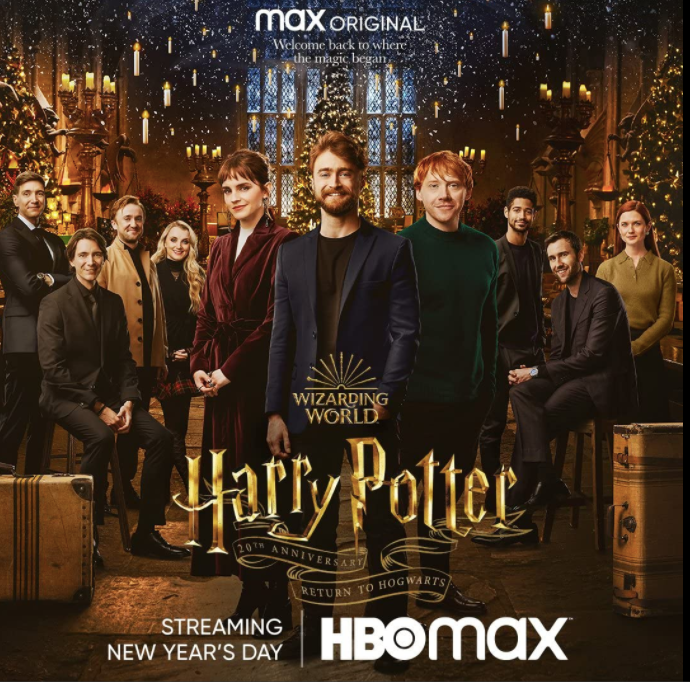
Harry Potter 20th Anniversary: Return to Hogwarts: "I Love You"


Checking in with a review of Harry Potter 20th Anniversary: Return to Hogwarts, just up on HBO Max.  I loved it.  Here's why:

I've always vastly preferred science fiction to fantasy, but you'd have to be insenseate to not immensely enjoy Lord of the Rings and Harry Potter.  I'm also a father who happily drove a few blocks at the stroke of midnight to the Barnes & Noble to get a copy of whatever Harry Potter novel for my daughter Molly.  The only other time I did anything like that in my life was rushing out to a Barnes and Noble to get s copy of Foundation's Edge, fourth novel in the best science fiction series ever written, as soon as I saw it had been published.  (Jared Harris plays Foundation protagonist Hari Seldon in the TV series on Apple TV+, making it especially good to see his father Richard Harris again as Dumbledore in Return to Hogwarts.)

Molly also encouraged me -- everyone in the family -- to read all the Potter novels, which I did.  She was a good influence. I not only devoured the novels at record binge-worthy speed, but I immediately began citing the Harry Potter phenomenon as powerful proof that literacy wasn't dying due to the Internet.  I'm always happy to refute the glum prophets of doom that populate academe and the cultural world at large.

Now as to the reunion movie, it was just bursting with joy, energy, and tears, happy and sad.  As Daniel Radcliffe, Emma Watson, and Rupert Grint were crystal clear about, they literally grew up making those movies (which I also saw with my family as soon as they were released).  That experience not only changed Radcliffe, Watson, and Grint's lives.  It made their lives.  And these three actors and everyone in the documentary had a beacon of insight into how that happened. Return to Hogwarts could be the basis of a doctoral dissertation about children who become adults in the carnival of fame and work that spanned eight blockbuster movies and ten crucial years.

One of the ways that the making of these movies changed the lives of the actors and crew-- actually, the main way -- is that they increasingly became a family, and far more than in a metaphoric sense.  I think my favorite part of Return to Hogwarts is near the end, when Grint blurts out to Watson, "I love you!".  She's overwhelmed with emotion.  Both are.  And although Grint quickly clarifies that it's "as friends," we all can clearly see that it's more than that.  It may not be romantic love -- who really knows -- but it's something deeper, more profound, more magical than the love we might feel for even a close friend.

Which pretty well sums up the way I feel about the Harry Potter novels and movies and their wonderful impact on our culture, and this now classic documentary.


Thursday, August 28, 2014

Murder in the First: A Review

Catching up at summer's end with a review of  a series that I watched and liked a lot, but didn't have time to write about, finishing my latest novel, swimming as much as possible, and everything else: Murder in the First.

In a way, all ten episodes were like a top-notch Law and Order story, with a murder, arrest, trial, and then police work again, except presented over ten hours rather than one.   Did it work?  Yes, it did. Murder in the First was always enjoyable, sometimes outstanding, and memorably surprising at times.

My favorite part was the lawyerly action, with superb work by James Cromwell as Defense Attorney Daniels and excellent work by Richard Schiff as Hertzeberg, the defendant's personal attorney. Meanwhile, Tom Felton - best known for his performance as Draco Malfoy in the Harry Potter movies - put in a chillingly effective performance as Erich Blunt, a character who could be described as Mark Zuckerberg, if he were a sociopath.

Taye Diggs and Kathleen Robertson (who was fabulous in the first season of Boss) did a serviceable job as the detective team, Terry and Hildy, investigating the murder.   This creates an interesting issue as far as renewal, with one of the best characters, Blunt, no longer on the show, and Hertzberg not likely to be around, either.

But if Daniels is back as defense attorney with another good murder mystery, a second season of the Murder in the First could be excellent.   Indeed, it could be better than the first, if Terry and Hildy are pushed to take more chances, not only professionally but personally.   Their kiss made some critics uncomfortable, but I would've liked to see them go all out with a continuing liaison nibbling at the edges.

I do hope the series is renewed - I promise to be a more diligent reviewer if it is.


 another kind of crime story

#SFWApro

Tuesday, February 14, 2012

NCIS 9.15: DiNozzo and the Word-Slinger

He's DiNozzo.  She's a reporter - a "word-slinger" as DiNozzo puts.  There were engaged, on the verge of getting married, nine years ago.  And she called it off.  And Gibbs puts them together on the case in NCIS 9.15, in a funny Valentine's episode indeed.

Better than usual fine lines throughout, as the team investigate a team of semi-playful vigilante superheroes, one of whom may be killing some of the others, who have in fact been murdered.  DiNozzo admires "Spandaxia" - she's dressed in a tight, gold outfit.  He reminds everyone, "this [any of the costumed super heroes] could have been Magee."  Abbs also gets dinged by this in another scene, when the superheroes mistake her regular garb for a costume.

Over at the word-slinger's house, she and DiNozzo kiss - but are interrupted by her son.  DiNozzo tries to make small talk.  Which Harry Potter movie did you like best, he asks the kid.  "The one where Harry wasn't kissing my Mom," the kid wisely cracks.  A DiNozzo in training?

Turns out that the rapacious father of one of the superheros, named ICU (because that's where he sends the villains), is behind the killings.  He using the killings to lower prices of property in the neighborhoods, which he can then buy up.  When the killer - the father's assistant - tries to escape, ICU levels him with a chop.  He bows to Gibbs - who returns the bow.  Good, again, the see how amiable Gibbs is this year.

And the last scene with DiNozzo and Wendy the Word-Slinger is suitably ambiguous.  She first tells DiNozzo to tell the woman that he loves - Ziva? - that he loves her.  But then she indicates that she, Wendy, is now ready for the kind of relationship she walked out on on DiNozzo nine years ago.

I bow to the future, always brightly opaque.

See also NCIS 9.1: Unpacking Partial Amnesia ... NCIS 9.2: Lying to Yourself ... NCIS 9.3: McGee's Grandmother ... NCIS 9.4: Turkey Vulture as Explained by DiNozzo ... NCIS 9.5: Behrooz's Mother ... NCIS 9.6: Too Good to be True ... NCIS 9.7: "You Were My Shannon, Leroy" ... NCIS 9.8: Intersections with Reality ... NCIS 9.9: Twists and History ... NCIS 9.10: Almost One Agent Short ... NCIS 200

And see also NCIS Back in Season 8 Action ... NCIS 8.2: Interns! ... NCIS 8.3: Tiff! ... NCIS 8.4: Gary Cooper not John Wayne ... NCIS 8.5: Dead DJ, DiNozzo Hoarse, and Baseball ... NCIS 8.6: The Written Woman ... NCIS 8.7: "James Bond Movie Directed by Fellini" ... NCIS 8.8: Ziva's Father ... NCIS 8.9: Leon's Story ... NCIS 8.10: DiNozzo In and Out ... NCIS 8.11: "The Sister Went Viral" ... Bob Newhart on NCIS 8.12 ... NCIS 8.13: The Wife or the Girlfriend ... NCIS 8.14: Kate ... NCIS 8.15: McGee and DiNozzo's Badges ... NCIS 8.16: Computer Games ... NCIS 8.17: Budget Cuts ... NCIS 8.18: Gibbs vs. the Kid ... NCIS 8.19: The Deadly Book ... NCIS 8.20: CIRay ... NCIS 8.21: Mask and Eye ... NCIS 8.22: "I'd Rather Have a Lead" ... NCIS 8.23: Answers and Questions ... NCIS Season 8 Finale

And see also NCIS  ... NCIS 7.16: Gibbs' Mother-in-Law Dilemma ... NCIS 7.17: Ducky's Ties ... NCIS 7.18: Bogus Treasure and Real Locker ... NCIS 7.21: NCIS Meets Laura ... NCIS Season 7 Finale: Retribution


                 Special Discount Coupons for Angie's List, Avis, Budget Car, Garden.com, eMusic


The Plot to Save Socrates


"challenging fun" - Entertainment Weekly

"a Da Vinci-esque thriller" - New York Daily News

"Sierra Waters is sexy as hell" - curled up with a good book


Enjoy listening to audio books? Get a free audio book copy of The Plot to Save Socrates - or any one of 85,000 other titles - with a 14-day trial membership at Audible.com ...

Wednesday, December 30, 2009

Ninja Steampunk 21st Century Sherlock Holmes

Robert Downey Jr.'s Sherlock Holmes on the screen in 2009 was not just the cerebral Holmes played by Basil Rathbone from 1939-1946, or the hipper Holmes of Nicholas Meyer's The Seven Percent Solution novel made into a movie in 1976. Downey's Holmes in Guy Ritche's movie had all of this - a brilliant mind and far more than a droll sense of humor - in a ninja, James Bondian warrior who could take out the most physically intimidating bad guys with the best of them.

This Sherlock actually did have an opponent who could have come straight out of Bond - a giant French guy, who reminded me of Jaws, the Bond bad guy with the teeth - as well a proximate master villain (Blackwell) whose extinction in the end by Holmes only cleared the way for the true master (that would be Professor Moriarty), just as Bond's vanquishing of Dr. No only led to Blofeld. Throw into this Lord Blackwell's evil magic - shades of you know who in Harry Potter - and you have an altogether satisfying, excellent adventure.

But Holmes' logic strips away the magic, and shows it be clever use of science, circa the late Victorian age, and this gets to the heart of this movie and its ambiance: a great steampunk movie, one of the best of its kind. Shot with a keen eye for the dawning of electrical power, for the industrial revolution flexing its keening, massive weight, Guy Ritchie's Sherlock Holmes takes us back to a world which movies made much closer to Sherlock's original time couldn't show us. In a way, Sherlock Holmes is this steampunk world is like the Avatar Garden of Eden world in space - two convincing, immersive, other-worldly creations.

The movie also provided palpable updates of women menaced by buzz saws that hearken back to silent movies, and the story was pretty good, as well. Sherlock is desired by sexy Irene Adler, who gets to kiss him only after she's drugged him. This continues the essentially asexual Holmes of Basil Rathbone, and obviously is decidedly unBondian. Dr. Watson, powerfully played by Jude Law, is also unlike the bumbling sidekick Watson of the 1940s, and can throw a mean punch of his own (including once at Holmes). This Dr. Watson also reminded me for some reason of Bones McCoy in Star Trek - "I'm a doctor, Jim!" - which is all to the good.

It's no easy feat to bring back of cast of characters from so long ago with so many incarnations. With little more than a voice for Professor Moriarity in this movie, it's clear that the adventures of this new Sherlock Holmes have just begun.


6-min podcast review of Sherlock Holmes


The Plot to Save Socrates


"challenging fun" - Entertainment Weekly

"a Da Vinci-esque thriller" - New York Daily News

"Sierra Waters is sexy as hell" - curled up with a good book


more about The Plot to Save Socrates...

Get your own at Profile Pitstop.com


Read the first chapter of The Plot to Save Socrates
.... FREE!

Wednesday, December 23, 2009

Avatar in Science Fiction Perspective

My wife and I just came back from Avatar in iMax-3D. I guess I'm partial to any stories about Alpha Centauri - my second novel, Borrowed Tides, is about a one-way trip there, and Pandora in Avatar is a moon thriving with life around a gas giant planet circling Alpha Centauri A - but I think Avatar sets the gold standard for sheer beauty, visual imagery, and excitement in a science fiction or fantasy movie, standards previously held by the Star Wars and Lord of the Rings sagas. The attention to botanic detail, and for that matter all the beings, sentient and nearly so on  Pandora, was a breathtaking sight to behold.

Avatar's story has a lot in common with Star Wars and Lord of the Rings, too. Good people or beings, in tune with nature, beset by a cruel, military force bent on taming, and if not, destroying the gentler souls. Indeed, many of the best battle scenes in Avatar come right out of Star Wars, and the single star fighters taking on huger cruisers, and Lord of the Rings, with Frodo and allies fighting the bruisers and monsters hurled against them by the evil lords, and the good beings all rallying in the end. There are echoes of Harry Potter as well as Lord of the Rings, too, with heroes flying great winged creatures, and of Terminator, with killing machines which also recall what the Empire used to attack the Ewoks in Star Wars.

In Star Wars, humans are pretty much equally distributed between heroes and villains, and the same is true of magical beings in Lord of the Rings. In Avatar, the humans are mostly bad, and the in-tune alien Navi on Pandora are all good.

This has led some critics to characterize the movie as an attack on humanity, and, because the ugliest Marines in the movie all have American accents, as an attack on America and American values. If this is so, it would be an attack on America in the 19th century, when Americans of European descent subjugated and wiped out most of the Native Americans on behalf of our selfish commercial interests. In that sense, Avatar was in many ways more like a Western, a cowboy and Indian movie, than a science fiction story - though the two genres are closely related. But seeing as how America in the 20th and 21st centuries has for the most part only gone to war when first attacked, or in attempt to preempt an attack, rightly or wrongly foreseen, the bad guys in Avatar bear little resemblance to us, and certainly not much to our current, professed ideals.

The most original part of the story concerned humans taking alien form, itself a science fiction chestnut in many a story, novel, and Star Trek episode. In fact, the story told in Avatar seemed more like an extended Star Trek episode than any of the individual Star Wars or Lord of the Rings movies. The human dynamics were also reminiscent of Star Trek, with Jake (the human hero) disobeying orders much like Kirk, and also falling in love with an alien.

But the women in Avatar were stronger than the women in Star Trek, and the heroine reminded me of Padme in Star Wars, especially when she literally lent a hand to killing the vicious Marine colonel. Speaking of Marines, that aspect of Avatar was reminiscent of Starship Troopers, though in that movie our Marines were all good guys, fighting marauding tank-sized and bigger bugs that attacked humanity.

So, all in all, James Cameron's Avatar was a splendidly rendered, multi-derivative science fiction movie - well worth seeing, in iMax-3D if you can, if your eyes and soul delight in visual magic, and/or if you just like science fiction. And, hey, Lost fans - you'll love seeing Ana Lucia in action again.


6-min podcast review of Avatar

*Note added January 17, 2009:  Delighted that Avatar just won the Golden Globe!

**Note added January 18, 2009:  See The Planets of Alpha Centauri: The Hunt for Pandora for a good summary of current attempts to find real worlds there. 


Special Discount Coupons for Angie's List, Avis, Budget Rent-a-Car, eBags, eHarmony, eMusic, Nutrisystem


Saturday, December 12, 2009

Fringe 2.10: Walter's Brain, Harry Potter, and Flowers for Algernon

Fringe 2.10 went Harry Potter's "pensieve" one big, science fictional step better this week, with a story about crucial pieces of Walter's memory being literally sliced out of his brain, and placed for safekeeping in the brains of others.

One part of this excellent story featured the impact of the implanted slivers of brain on the recipients: they went crazy. This impelled the people who did the extracts and the implants - our "friends" from the alternate reality that was once our Peter's home, and is now William Bell's - to remove the slivers from the hosts, and put them back in Walter's brain.

Like any fine piece of science fiction, this story followed through with logical results. The hosts became cured as soon as the piece of Walter's brain was removed. And Walter became complete, sane, when the missing pieces were hooked up again (not reinserted - there wasn't time) to his brain.

And, like Charlie in Daniel Keyes' masterpiece Flowers for Algernon, Walter of course becomes a little crazy once more - the Walter we have come to know and love - when the connections to the missing pieces of his brain are removed. A tour de force sensitive performance by John Noble - a little crazy, clear and sane, a little crazy again - brought this all home.

Interestingly, this is the second time in this Fall 2009 television season that I've noticed a powerful connection to Flowers for Algernoon - see my House 6.8 and the Reverse of Flowers for Algernon. It's a real pleasure to see good television resonate with such a science fictional and deeply moving classic.

The people from Bell's world wanted Walter's knowledge of how he built a doorway to their world. They're getting ever closer to building the portal that could leave our world in ruins - we should at least be ok until the series resumes in 2010.

See also Top Notch Return of Fringe Second Season ... Fringe 2.2 and The Mole People ... Fringe 2.3 and the Human Body as Bomb ... Fringe 2.4 Unfolds and Takes Wing ... Fringe 2.5: Peter in Alternate Reality and Wi-Fi for the Mind ... A Different Stripe of Fringe in 2.6 ... The Kid Who Changed Minds in Fringe 2.7 ... Fringe 2.8: The Eternal Bald Observers ... Fringe 2.9: Walter's Journey


See also reviews of Season One Fringe Begins ... Fringe 2 and 3: The Anthology Tightrope ... 4: The Eternal Bald Observer ... 7: A Bullet Can Scramble a Dead Brain's Transmission ... 8. Heroic Walter and Apple Through Steel ... 9. Razor-Tipped Butterflies of the Mind ... 10. Shattered Pieces Come Together Through Space and Times ... 11. A Traitor, a Crimimal, and a Lunatic ... 12, 13, 14: Fringe and Teleportation ... 15: Fringe is Back with Feral Child, Pheromones, and Bald Men ... 17. Fringe in New York, with Oliva as Her Suspect ... 18. Heroes and Villains across Fringe ... Stephen King, Arthur C. Clarke, and Star Trek in Penultimate Fringe ... Fringe Alternate Reality Finale: Science Fiction At Its Best


Sunday, November 9, 2008

Brotherhood is Back for Third Season - Better than Ever

Brotherhood is back for its third season on Showtime, and if the first two episodes are any indication, this will be a faster, sharper, more powerful Brotherhood than what we saw in the first two seasons - less talk, more conflict and payoff, which could make this the best season of Brotherhood so far.

My favorite character has always been "bad" brother Michael Caffee, harrowingly and reassuringly played by Jason Isaacs, probably best as known in his performance Lucius Malfoy in the Harry Potter movies. Taking nothing away from Lucius, I find Michael Caffee even more memorable. You can count on him to only be pushed so far, and, then, whatever the consequences, lash out without warning and kill the person who was doing the pushing. Last year it was that horrible hit man. This year, it's the Federal prosecutor. The killings are, as I say, harrowing yet satisfying, because they give just deserts in a world in which people usually get away with all kinds of things.

Michael was nearly beaten to death at the end of the first season, and this figured in the second and now the third season. The second season was weakened, in my view, but making Michael too much the possible basket case from the beating. But it ended with "good" brother Tommy, well played by Jason Clarke, surprisingly revealing to Michael that Tommy knew Michael was about to be attacked, but did nothing to warn him. This year, Michael's not talking to Tommy because of that - refuses to be in the same room with him - but the other reliable thing about Michael is the love he has for his family, so I'm thinking it's just a matter of time until most or all is forgiven.

Tommy has some neat political dealings in the first two episodes of Season 3. One of the real joys of Brotherhood is the backroom political wheelings and dealings we see - in one sense, like The West Wing, but much more gritty and closer to crime because it's taking place on a state and local level.

And, beginning in Season 2, Tommy wasn't the only family Michael needed to live and work with. His cousin Colin - well-played by Brian F. O'Byrne - has become Michael's right-hand man. But it's only a matter of time until Michael finds out that Colin and Kath are falling in love, and the big question about that land mine is whether Michael will view that as an attack on him or a blessing...

Declan (Ethan Embry), Freddie (Kevin Chapman), Eileen (Annabeth Gish), and Mary Rose (Fionnula Flanagan - now of Lost fame) are all back in fine form, and it was good seeing Freddie sell some cars.

The timing is perfect for a show about backroom politics, and I'm thinking this season will be the breakout for Brotherhood.

See also Checking in Brotherhood Season 2 Episode 6: The Simmering Stu and Episode 9: The Anti-Thanksgiving Gem ... Season 2 Finale


The Plot to Save Socrates


"challenging fun" - Entertainment Weekly

"a Da Vinci-esque thriller" - New York Daily News

"Sierra Waters is sexy as hell" - curled up with a good book


more about The Plot to Save Socrates...

Get your own at Profile Pitstop.com


Read the first chapter of The Plot to Save Socrates
.... FREE!

Saturday, September 29, 2007

Brotherhood's Back! Sneak Preview

BrotherhoodBrotherhood returns for its second season on Showtime Sunday night - right after Dexter. From Miami to Providence - a great sweep of the eastern seaboard, and a great sweep for Showtime.

I've seen an advance copy of the first four episodes. No spoilers below, except for what you have to know already: Brotherhood could never let Michael Caffee die.

So Michael's back. But he's not 100%, and the shake-up that his brain received makes for an important element in this year's story. Jason Isaacs gives a great performance - just as he did last year - of a slightly muted Michael. (Isaacs plays Lucius Malfoy in the Harry Potter movies, in case he looks familiar. Talk about an actor with range.)

Jason Clarke gives a fine performance as brother Tommy Kaffee, too. Brotherhood has good echoes of The Sopranos. But the great strength of the series for me has always been the Providence politics. It's not only Rich Man/Poor Man, brother who made good and brother who didn't. It's a show about getting things done - the hard mobster way as does Michael, and the hard political way, as does Tommy. The first ends in blood more than the second, but otherwise they're no less painful, no less easy as paths to success.

The women are also strong and appealing on Brotherhood. Tommy's wife Eileen played by Annabeth Gish is complex, intense, and, whatever her flaws, you'd want her brown eyes on your side. (Her relationship with Tommy is especially difficult now, because of what she told him at the wedding last year). Fionnula Flanagan as mother Rose Kaffee is a classic (if she looks familiar, you saw her in Desmond's UK flashback on Lost). Michael's girlfriend Kath (played by Tina Benko) has a much larger role, and that's welcome. And The West Wing's Janel Moloney is now on the show, as - well, I promised only one spoiler, above.

But I can say that I think the show is more thoughtful, even deeper than it was last year. Ethan Embry's giving a sterling performance as officer Giggs, and the complexity of his personal and professional life could support a series in itself. Brian F. O’Byrne joins Brotherhood as Caffee cousin Colin - from the other side of the Atlantic - and this adds an additional dimension to the family.

Brotherhood's on its way to making memorable television - among the best of the decade.

See also Episode 10: Finale


The Plot to Save Socrates


"challenging fun" - Entertainment Weekly

"a Da Vinci-esque thriller" - New York Daily News

"Sierra Waters is sexy as hell" - curled up with a good book

Tuesday, July 24, 2007

Harry Potter and Obama!

Yes, and speaking of Harry Potter and Barack Obama - as I've been doing here for the past few days - I just came across this YouTube clip (on Facebook) in which the Obamas talk about Harry ... (July 10)...


The Obama Girl videos, he reads Harry Potter with his kids ... getting big points in my book....

see also The Barely Political Revolution

and Harry Potter and the Refutation of Illiteracy

Monday, July 23, 2007

Harry Potter and the Deathly Hallows: A Review, for Starters (Mild Spoilers)

The final Harry Potter novel sold over 8.3 million copies in the United States in its first day of publication. It deserves every one of the sales, and many more.

My wife and I purchased our copies, and one for our daughter, a few minutes after midnight on Saturday, at a Barnes and Noble a few minutes from our house (our son and his girlfriend bought their copies around the same time, in the city). When we left the store, kids with their copies were sitting in front, eagerly reading. I should have taken a picture.

I finished the novel around 5 this morning. My family had finished about a day earlier (hey, I had to leave a little time for watching television - but I also like to read at a leisurely pace).

There were so many things I loved about the novel. I'll go over some of them here. But consider this review a work in progress - I'll be back with more.

The interactions among the magical species were better than in the any of the previous novels: The banking, swordmaking goblins, in particular, were fleshed out, and played a crucial role in this story. So did house elves, and the giants and centaurs put in good appearances, too. Harry, Hermione, and Ron even got a chance to fly on another dragon.

All the beloved elements of the series got a great workout: Whether you like Patronuses or Nearly-Headless Nick or the magic of wizardry painting (enabling the people in portraits to talk to viewers, move to other frames in their vicinity, or even migrate to other portraits of themselves, wherever they may be - as a media theorist, I especially enjoy that) - they're all here.

It was good to see radio in the picture: Harry, Hermione, and Ron spend an amount of time on the run, cut off from knowledge of what is happening to their friends and enemies. As I was reading a heart-warming, riveting section in which Ron is able to tune in a pirate radio station - Potterwatch - I realized that only someone from Britain could write this so effectively. When that country teetered on the edge of falling to the Nazis at the beginning of World War II, it was Winston Churchill's voice on the radio that kept it going. Harry Potter is in many ways a uniquely British contribution to the world - at once British and universal. Much like the Beatles, it reflects the special genius on the other side of the Atlantic for entertaining and educating the world.

Lots of good details that explain oddities in our world: For example, why you sometimes walk or drive down a street, and notice the numbering on the houses has missed a beat - as if a number was accidentally skipped or left out. (This was probably in earlier novels, too, but it was good to get that little insight again. One of the best things about science fiction and fantasy is their offering exotic but logical explanations for everyday oddities.)

My favorite line: Molly Weasley, dueling with Bellatrix: "NOT MY DAUGHTER, YOU BITCH!" Yeah, all caps, and deservedly so.

Life and deaths: With a few exceptions, all warranted, and deeply satisfying.

Quibbles? Inevitable - no story, even the one J. K. Rowling has given us, can be perfect for every reader. But they're so few - indeed, just three, really - that I can put them here in one little paragraph: (i) Several good people died at the end, who didn't need to, or whose deaths were too off-scene and therefore didn't seem motivated. (ii) I don't get why Harry, Hermione, and Ron refrain from using killing curses on the villains, and confine themselves to stuns, etc. (iii) There was an unnecessary Epilogue.

But these are small reservations to an extraordinary ending to an extraordinary series.

And I'll be back here with more in the days, months, and years to come...


Enjoy a 15-minute (free) podcast: Harry Potter and the Deathly Hallows: The View from New York

See also about Harry Potter:

Harry Potter and Obama

The New York Times Spoils Harry Potter - A Little, But Still Too Much

The Elite Attack on Harry Potter

Harry Potter and the 3-D Phoenix movie review

Harry Potter and Spoilers: An Occasion for Basking

Harry Potter and the Refutation of Illiteracy

Friday, July 20, 2007

Harry Potter and iPhone


Blackfriar's Marketing reports that buzz about Harry is not quite as much as the continuing buzz about iPhones, as of earlier today.

What's more significant is the enormous amount of buzz for each, which is no coincidence. What is iPhone, after all, if not an embodiment of some of the magic of Harry Potter, that any muggle with half a grand can carry right in hand?

The two, in other words, go hand in hand, as expressions of our yearnings for magical powers over time and space - in fiction and our everyday lives.

More about this in the latest episode of my Light On Light Through podcast - Harry Potter and the iPhone ...

And as soon as I finish Harry Potter and the Deathly Hallows - I should have the novel in hand in less than two hours - I'll be back here with a review...

See also about iPhones: Hats off to George Hotz ... iPhone Arrives - I Predicted It in 1979 and iPhone Boosts Literacy and History Lesson: iPhone Sales Will Exceed Expectations and New York Times' David Pogue Sings "I Want An iPhone" to "My Way" and iPhone: Not Better iPod but New Species Media ... Mouth-Watering iPhone Commercial and the Real World ... Nano-iPhone and the Dymaxion Principle ...

See also about Harry Potter:

The New York Times Spoils Harry Potter - A Little, But Still Too Much

The Elite Attack on Harry Potter

Harry Potter and the 3-D Phoenix movie review

Harry Potter and Spoilers: An Occasion for Basking

Harry Potter and the Refutation of Illiteracy


The Plot to Save Socrates


"challenging fun" - Entertainment Weekly

"a Da Vinci-esque thriller" - New York Daily News

"Sierra Waters is sexy as hell" - curled up with a good book

Thursday, July 19, 2007

The New York Times Spoils Harry Potter - A Little, But Still Too Much

The Evening Standard in London asked me to write a small piece with my reactions to The New York Times' publication of a review, this morning, of the 7th and final Harry Potter novel. That piece, which will be a shorter version of what follows, is being published in the Evening Standard even as we speak (actually, as I'm now writing).

For anyone who hasn't been living on Alpha Centauri (since I'm a science fiction writer, I usually use that as an example, rather than "under a rock"), J. K. Rowling and the Potter publishers have been taking great pains to prevent leakage of any story details. Now, I usually do not get all that upset about spoilers - see my other pieces on spoilers listed below - especially when the spoilers are little more than what any reasonably creative person could predict.

But this Harry Potter business in
The New York Times is something else, and much worse, and I think ... well, here's what I wrote about an hour ago for the Evening Standard...


We live in a spoiler-crazed culture – whether for a television show, movie, or novel, everyone wants to know the ending as soon as possible, before anyone else. The problem with this, however, is that once I know something of interest about a story beforehand, you may end up knowing it, too – whether you want that or not.

The New York Times’ publication of Michiko Kakutani’s review today of the final Harry Potter novel has taken this media abuse to a new level. It is one thing when some private citizen publishes a spoiler on the Web, and it goes viral. It is quite another when the American "newspaper of record" publishes a review with spoilers two days before the public release of the work.

True, The New York Times’ review did not include any major spoilers – I guess we can be grateful for that. But the publication of any review of a novel as significant as the final Harry Potter – a review which contains even the slightest giveaways of plot, which this one does – is ethically unacceptable, and only feeds the taste for more.

Because a spoiler published anywhere is inherently viral. People read it, talk about it, write about it, in an escalating cycle which has the inevitable effect of getting spoiler information to people who do not want it – readers who, in the case of this final Harry Potter novel, were looking forward to finding out each detail, in the order J. K. Rowling intended, on a sofa or hammock this weekend.

John Stuart Mill is famous for saying that people should have absolute freedom to swing their arms, as long as they don’t hit anyone’s nose. Publication of spoilers endangers everyone’s nose – it threatens the narrative satisfaction of every reader and viewer.

In the end, I don’t know what can be done about this. Certainly publication of spoilers is not a criminal offense, and the last thing we want is any government involvement in matters of the press and the media.

But in the case of The New York Times and Harry Potter we have a major insult to public taste and trust. I'd be happy to see the New York Times and every purveyor of spoiler unhappiness publicly condemned. The scoop on this story is that they owe the world an apology.

PS - I'll be posting a review of the Deathly Hallows as soon as I finish the novel - which I expect will be at some wee hour of this weekend...

More on spoilers and the enjoyment of narrative:

Harry Potter and Spoilers: Am Occasion for Basking

Spoilers for 24: Did They Lead the Producers to Change the Ending?

Lost Spoilers vs. Passions of Curiosity

More on Harry Potter:

Harry Potter and the Deathly Hallows: A Review, for Starters (Mild Spoilers)

Harry Potter and iPhone

The Elite Attack on Harry Potter

Harry Potter and the 3-D Phoenix movie review

Harry Potter and the Refutation of Illiteracy

Monday, July 16, 2007

The Elite Attack Harry Potter

With the publication of what is said to be the final Harry Potter novel just a few days away, the self-appointed experts on the future of literacy have their knives out for him.

The New York Times, for example, published Potter Magic Has Limited Effect On Youngsters' Readings Habits on its front page last week.

The "evidence"?

A few surveys report that a majority of kids are saying they don't read too much for "fun" (presumably they read for school). In other words, "proof" that Harry Potter is not having an enduring effect is based not on sales of novels in the future - which of course has not happened as yet - but on what kids say they are or will be doing. Anyone with even a preliminary knowledge of surveying and statistics knows that it is the weakest kind of evidence - all but meaningless.

Meanwhile, buried two-thirds into the article is this: "In a study commissioned last year by Scholastic, Yankelovich, a market research firm, reported that 51 percent of the 500 kids aged 5 to 17 polled said they did not read books for fun before they started reading the series. A little over three-quarters of them said Harry Potter had made them interested in reading other books."

So, even in the reporting of inclinations, the results of the the surveys are mixed.

Why, then, the misleading headline from The New York Times? (If a student came in with a story like this for a university newspaper I was advising, we would have a long talk.)

Maybe the Times was basing its headline on an interview reported in the story with an avid Harry Potter reader, Kara, who concluded, "I probably won’t read as much when Harry Potter is over."

Well, that's rock hard evidence that Potter magic is having a "limited effect," isn't it...

Here are the facts:

Academics and guardians of our literacy have been unhappy about the course of our popular culture for more than a hundred years (see Harry Potter and the Refutation of Illiteracy for references). They started their attack on motion pictures, then moved on to television, and most recently the Web.

Harry Potter came along and knocked their unfounded fears for a loop - as The New York Times correctly reports, "the series has sold 325 million copies worldwide, with 121.5 million in print in the United States alone."

In the process of providing highly enjoyable reading for hundreds of millions of people, J. K. Rowling has written in letters across the sky: literacy is alive and well and thriving.

All you have to do is write a story that people enjoy.

Enjoy a 15-minute (free) podcast: Harry Potter and the Deathly Hallows: The View from New York

See also about Harry Potter:

Harry Potter and the Deathly Hallows: A Review, for Starters (Mild Spoilers)

Harry Potter and iPhone

The New York Times Spoils Harry Potter - A Little, But Still Too Much

Harry Potter and the 3-D Phoenix movie review

Harry Potter and Spoilers: An Occasion for Basking

Harry Potter and the Refutation of Illiteracy

Friday, July 13, 2007

Harry Potter and the 3-D Phoenix

I loved Harry Potter and the Order of the Phoenix - in fact, it's my favorite Harry Potter movie (so far). But this was at least as much because it's my favorite novel (so far), as because the movie was great. And there were a few things things I didn't love about the movie.

What I loved:

My wife and I saw the movie in an IMAX theater in White Plains, where all the action in the Department of Mysteries and slightly before was in 3-D - old fashioned glasses that were distributed and all. And it was marvelous. Characters and flashes and all kinds of stuff leapt right off the screen.

Gary Oldman was superb as Sirius. The guy can't miss. One of my top-ten favorite scenes in all movies is Oldman's bit as Drexl in True Romance. And Oldman was true to his uniquely intense presence in The Order of the Phoenix. His death was indelible.

Imelda Stanton was perfectly infuriating as Umbridge, Evanna Lynch was excellent as the spacy Luna, and even Fiona Shaw as Harry's aunt looked good. And all three of the top characters - Daniel Radcliffe as Harry, Rupert Grint as Ron, and Emma Watson as Hermione were just fine. Right, I don't know why some critics keep picking on poor Emma - I've liked her in every Harry Potter movie including this one.

But here's what I didn't like that much in this movie:

It was too short - or, to be more precise, too long and too short. There was a bit too much of little consequence in Hogwarts in the first part. And I would have liked to have seen more harrowing, surprising ins-and-outs leading up to the final showdown in the Department of Mysteries - as there were in the novel.

And ... I thought the much heralded kiss between Harry and Cho was no great shakes, either. Not bad, not spectacular, just ok. But, hey, what do I know about the way young wizards and witches snog in England...

Still, it was a great movie. I'll see it again.

But up next: 12:01 am next Saturday, when I hope to be tearing through the pages of that new novel...

Enjoy a 15-minute (free) podcast: Harry Potter and the Deathly Hallows: The View from New York

Further reading:

Harry Potter and the Deathly Hallows: A Review, for Starters (Mild Spoilers)

Harry Potter and iPhone

The Elite Attack on Harry Potter

Harry Potter and the Refutation of Illiteracy

Harry Potter and Spoilers: An Occasion for Basking


Sunday, June 24, 2007

Harry Potter and Spoilers: An Occasion for Basking


The huge world of Harry Potter fans has been understandably ruffled by the likely fraudulent claims of "Gabriel" to have hacked the final novel...

I agree completely with the denunciations of this attention-seeking loser - see, for example, Dan Flanagan's fine piece in blogcritics.org - but I also see this as a left-handed compliment to the extraordinary impact of Harry Potter in our culture.

Not that J. K. Rowling needs any further validation - hundreds of millions of books sold, worldwide, soundly refuting the notion that movies and television have sapped us our our literacy, our taste for captivating reading - but I do find it significant, and even a good thing, that spoilers are afflicting novels in this day and age.

The spectre of spoilers, after all, has haunted television and movies for quite some time. Hit series such as 24 have even been rumored to change their story lines to defeat the deflating impact of spoilers.

It's oddly nice to see spoilers yapping at the heels of novels now, too.

It's no doubt way too late for Rowling to change anything in the final Harry novel, so I propose (a) continuing to keep the goods as secret as possible, (b) vigorously checking out any claims to spoilers that may appear (as has been done with Gabriel), and (c) - most of all - basking in the sunlight that being targeted for spoilers bestows upon the magnificent series...


Useful links:

Harry Potter and the Refutation of Illiteracy

Harry Potter and iPhone

Harry Potter and the 3-D Phoenix movie review

Did Spoilers for 24 Lead Producers to Change the Finale?

Saturday, June 2, 2007

Preparing for the Last Two Sopranos...

This is a season for bitter-sweet endings to extraordinary stories. Harry Potter makes his seventh and final appearance in J. K. Rowling's novels this July. Tony Soprano makes his final two appearances this month on HBO. You don't have to go any further than that.

I'll be writing more about Harry in July.

But now about Tony. The Sopranos changed television in so many ways it's difficult to fathom what it was like before the 1999 debut. There were no startling, original series on cable - just movies, by and large. The cutting-edge shows on network TV back then were NYPD Blue, with an occasional naked backside, and Law and Order, with an innovative formulaic plot structure. The Sopranos gave us not only real language and nudity, but a story that broke every expectation. Only in the Godfather saga, justly recognized as one of the best series of movies ever made, did we come to identify so strongly with patent murderers.

And that's where we are on the doorstep of the final two episodes, to play out this coming Sunday and next, the end of the second part of the Sixth Season, the end of the beginning of the New Golden Age of Television. Who in his or her right mind could want Tony to die, or any of his family and people? On one level, very true and convincing, they are just like most of us - upper middle class people, struggling to make it and stay afloat in a hostile world. On another level, equally true and undeniable, certainly Tony and his associates are brutal and savage - we see them maim and murder just about every week.

Probably because of these conflicting tides, it's not easy to venture predictions about how The Sopranos will end, about who will be left alive in just a little over a week. I'll offer mine here in my review of the next-to-last episode, tomorrow evening...

Useful links:

The Sopranos as a Nuts-and-Bolts Triumph of Non-Network TV

Only Idiots Don't Watch Television

Saturday, May 12, 2007

Harry Potter and the Refutation of Illiteracy

As we move into the two-months-and-counting phase of the time in July when the final Harry Potter novel will be published, I thought it time to once again proclaim what I've been saying ever since the first Harry Potter book broke huge some ten years ago: the extraordinary success of Rowling's books should shut down, once and for all, the claim that we live in an illiterate age.

The sales of these six novels have been extraordinary - nearly 90 million in the United States alone, another 36 million in the U.K., for a total of 270 million copies in 62 languages worldwide, including Latin and Ancient Greek. (Hey, maybe I'll write a scene in my sequel to The Plot to Save Socrates, in which a time-traveller brings Plato a copy of Harry Potter and the Philosopoher's Stone, translated into ancient Greek!)


And these novels have been more than bought and skimmed - anyone I've ever seen with a Harry Potter novel has been totally engrossed, bubbling and eager to discuss the most minute and profound points in the book. Harry Potter's readers are not only legion, but far more literate than many people decades their elder.

Not that this will convince the ghosts of critics who lashed out at motion pictures nearly a century ago, and their descendants who did and are doing the same about television, the Internet, and even texting on cell phones: all of which are said to be dishing out a "vast goo of meaningless stimulation" (this from Harper's editor Thomas Zengotita), which renders us callous, senseless, dumb, illiterate, and, for the worst of the quacks like Jack Thompson about video games, even violent.

Never mind that, even before Harry Potter and his magic, literacy rates had been holding steady in the age of television, and book sales had even been increasing. The proposition that photochemical, electronic, and now digital media are eroding our minds has always been an article of faith, subject to refutation by neither common sense nor hard evidence.

But, oh, I'm looking forward to the beach this July. To the copies of Harry Potter and the Deathly Hallows that will be on so many blankets, in so many hands. Each will whisper, to any fool who ever underestimated the power of the human intellect, to anyone who ever doubted the thirst for good narrative in every generation ... in a chorus of millions and millions ... you're wrong, you're wrong, you're wrong.

Enjoy a 20-minute (free) podcast on this subject: Light On Light Through

And a 15-minute (free) podcast: Harry Potter and the Deathly Hallows: The View from New York

Further reading:

Harry Potter and the Deathly Hallows: A Review, for Starters (Mild Spoilers)

Harry Potter and Obama

Harry Potter and iPhone

The Elite Attack on Harry Potter

Harry Potter and the 3-D Phoenix movie review

Short History of Ludicrous Claims About Violent Media my 2007 blog post

Harry Potter Spoilers as Occasion for Basking

Only Idiots Don't Watch Television my 2006 Newsday op-ed

The Soft Edge: A Natural History and Future of the Information Revolution my 1998 book

InfiniteRegress.tv