Chuck Todd interviews me about alternate histories
Showing posts with label Vietnam War. Show all posts

Saturday, June 27, 2026

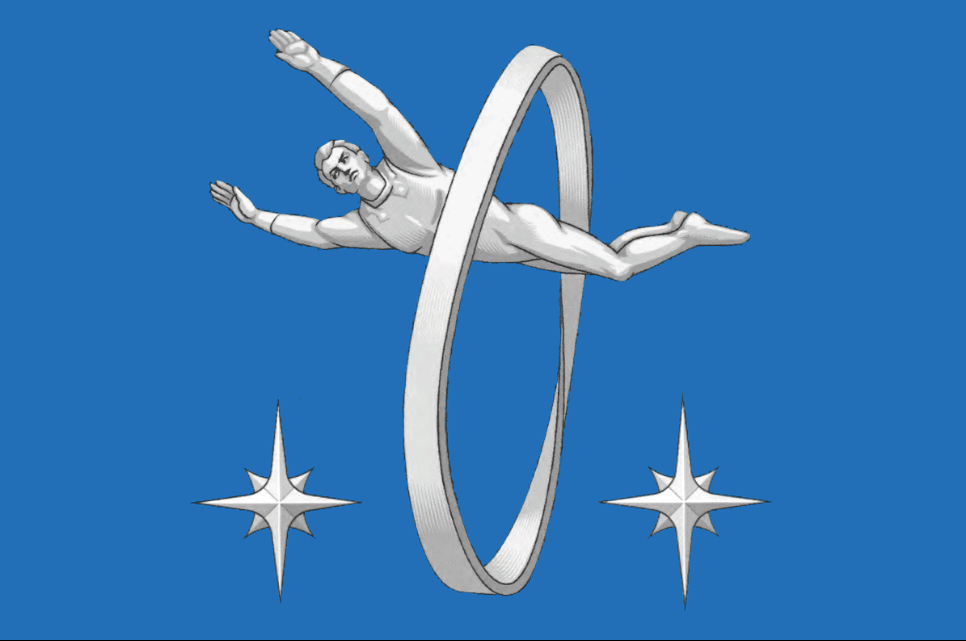
Star City 1.6: "You're A Monster"


We come again in Star City 1.6 to the paradoxical collision of fascism and space travel so brilliantly and harrowingly portrayed in this at once triumphant and tragic series.  Triumphant because in this alternate history, the Soviet Union has managed to send a spacecraft with three humans on its way to circle around Venus.  Something the fascist Communist regime has managed to do.  And yet, paradoxical, because ...

[And there will be spoilers ahead.]

It looks, at the end of episode, that this paranoid government is very likely killing these three cosmonauts in mid-flight.  We'll see next week if that's what happens.  But even if it doesn't, the point is made.  On the one hand, we have geniuses like Korolev, the Chief Engineer, who got us humans to the Moon before the United States, and now in a momentous world-changing accomplishment is sending three humans to Venus.  On the other hand, we have KGB Colonel Lyudmilla Raskova ordering the three cosmonauts' death as their ship makes its way from Earth to our sister planet.  Korolev speaks plain, transcendent truth, when Raskova puts him under arrest, after he refuses to follow her insane order. He tells her, "you're a monster".

For all we know, in our offscreen reality, this could be why the Soviet attempt to beat the US to the Moon failed so grandly in the 1960s.  But we in the US were no angels then either.  Nearly 4 million people died on both sides of the US war against Vietnam, at the same time the US was preparing to land on the Moon and successfully retrieve six Apollo crewed spaceships there.  The Vietnam War was undeclared, a blatant violation of our Constitution.  Maybe one of the reasons we humans have not gone further into space is too many countries have monsters in too much power.  (Our current President and Federal government are defying the Constitution in multiple ways every day.) Maybe, until we rid ourselves of this human perversion, or learn to curb by it by not giving these monsters such power,  we'll never really get very out into the huge cosmos.

I'm an optimist, as you know, so I still fervently hope that we do.  In the meantime, watching Star City is as much a soul-searing, crushing experience as it is an inspiration for what our better selves can do.

See also Star City 1.1-1.2: Fascism and Space ... 1.3: Sadness and Joy ... 1.4: Venus in Blue Genes ... 1.5: The Spy Who Went to Venus
in Kindle, paperback, and hardcover


Monday, October 19, 2020

The Trial of the Chicago Seven: A Little Too Much Fiction in this Docudrama


My wife and I saw The Trial of the Chicago Seven on Netflix on Saturday. Having lived through the real trial of the Chicago Seven (originally Eight) in 1969-1970, we thought there was a little too much fiction in this docu-drama to be 100% successful and effective.  Nonetheless, it was powerful viewing.

To back up a little, as I alway tell my classes, docu-dramas are by definition never 100% truth or exactly as the events in the movie actually happened.  Hey, even straight-up documentaries are never 100% true, because the film-maker inevitably has to leave some events, one hopes inconsequential, out of the film.  Real life is too sloppy and inexact to fit in just as it is or was in a documentary.

But docu-dramas go a big step further away from truth.  At the very least, they rewrite or make-up dialogue.   Worse, they often make up characters and/or endow characters who existed in real life with deeds they never did.   This works best the further back in history the docu-drama goes.  I couldn't possibly have any personal recollection of what Lincoln said and did.  So I was able to enjoy Spielberg's Lincoln with zero quibbles.   But 1969-1970 is a lot closer than are the early 1860s to our time.

So, lots of people noticed that Tom Hayden's closing statement in the Aaron Sorkin docu-drama wasn't made by Hayden in reality, and was not a closing statement.  Or that the pacifist Dellinger -- who did in fact earlier read the names of some of the American fallen in Vietnam during the trial-- never hauled off and punched a guard who was trying to escort Dellinger out of the courtroom, as so dramatically depicted in the movie.  To be honest with you, neither my wife or I jumped up and shouted during the movie that those events never happened.  But my wife had a vague sense of irritation throughout the film, and I was annoyed after the movie to have been brought to tears by that closing scene, so effective, that didn't happen in real life.

I suppose Sorkin might say that such a reaction is my problem, not his, and if I was brought  to tears by the ending that didn't happen in reality that shows that Sorkin succeeded, doesn't it.  I'm not so sure.  I think that, even in a docu-drama, or maybe especially in a docu-drama, the film maker has an obligation to present a greater quotient of truth.  Again, especially if the docu-drama is so close to home in time.  I'm sure Marc Anthony never said "Friends, Romans, countrymen, lend me your ears;  I come to bury Caesar, not to praise him," but that didn't in the least get in my way of really enjoying Shakespeare's Julius Caesar, from the moment I first read it, so many decades ago, and for that matter thinking about that play right now.

Maybe the answer is Sorkin's movie is meant for a younger generation than mine.  It has lots of assets, including boiling down the differences between the protestors on trial to Hayden vs. Abby Hoffman.  I don't know if that's true, either.  But since I don't know for sure that it isn't, I'm ok with thinking back on that crucial aspect of The Trial of the Chicago Seven, and enjoying the recollection and contemplation of that fundamental conflict between political revolution (Hayden) and cultural revolution (Abby Hoffman). And I should say the acting in this movie, including Eddie Redmayne as Hayden and Sacha Baron Cohen as Abby Hoffman, was just superb.   Regarding those two, special kudos to two Englishmen talking at each at some length in passable American accents.

So, see the docu-drama - with no reservations if you weren't around the first time this trial happened, back in the 1969-1970.  And see Medium Cool made in 1969 if you'd like to see a documentary about the protests around the Democratic National Convention which ignited the trial.


Sunday, January 22, 2017

Ending the Electoral College

Yesterday as an extraordinary day, the likes I which I haven't seen since I rallied against the Vietnam War at the Pentagon in 1969, and my wife (then girlfriend) and I marched against that same immoral, unconstitutional war that same year in New York City.   Yesterday, my son and daughter and nephew marched in New York City against Trump and everything he espouses.  My daughter-in-law and mother-in-law marched against the new President and his polices in Washington, DC.  Another nephew was at a similar rally for decency in Barcelona.   My wife was taking care of our grandson, and I helped out a little with that, too.

The marches against Trump were also rallies against immorality.  But not against a violation of the Constitution.  Because, unlike the Vietnam War, which occurred without the Declaration of War mandated by our Constitution, Donald Trump was elected President in accordance with our Constitution.  He received more than the required majority of votes in the Electoral College.

We'll never be able to precisely identify all the factors that led to this miscarriage of democracy - miscarriage not only figuratively, but literally, since Trump lost the popular vote.   If I had to identify the single most important factor, I would certainly put James Comey's public statements about possible Hillary Clinton email on her assistant's computer, so close to the election, in stark violation of FBI precedent and policy, right up there as a grievously significant factor.  But it's obviously not the single most important factor.  Because that would have to be the Electoral College.

Because, look, even with Comey's statements, Hillary Clinton won the popular vote by nearly three million.  Which means that the only absolutely knowable reason Trump not Hillary is now President is  Electoral College.

Yeah, I know that Trump's campaign would have been deployed differently if winning depended on the popular vote.   But Trump only won because he won very narrowly in a lot of states.  How could those narrow margins possibly have added up to a victory for Trump in popular vote, however differently he might have campaigned?

And, this is not the first time in recent history the Electoral College has defeated democracy.  The Supreme Court wouldn't have been called on to make a decision in Bush v. Gore over the Florida vote in 2000 - and awarded the election to Bush - if there had been no Electoral College - because in that year, Gore won the national vote, and no one objected to the national vote count.

The rallies yesterday are aptly focused on winning elections in two years, and after.  That's the only way to stop Trump and Republicans who support him.   But that impressive power - correctly identified in the media as the most powerful demonstrations since the Vietnam War - needs to go further.   We need to once and for all retire the Electoral College.  We need to insist that a vote in California or New York counts exactly the same as a vote cast in Michigan or Wisconsin.

This doesn't guarantee that someone like Trump would not be elected again.  But it will mean that an occupant of the White House will never again be a product of an antiquated system designed to protect the nation from democracy, rather than directly express the will of the people, which is democracy itself.

Thursday, June 2, 2016

Hillary Clinton's Foreign Policy Speech and JFK

I thought, as I was watching Hillary Clinton's superb speech about foreign policy in San Diego on television today, that she reminded me of JFK, his optimism for America and its engagement with the world. Later on MSNBC, Chris Matthews also said he saw a connection between Clinton's speech and JFK.

More specifically, Matthews said Clinton's speech reminded him of America's unapologetic approach to foreign policy before the Vietnam War, which can indeed be equated, at least in part, to JFK.

I was a fierce opponent of the Vietnam War.  It not only was unconstitutional but unwarranted, and it nearly tore the country apart.  I got teargassed in Washington protesting that war, and was barely able to bring myself to vote for Hubert Humphrey over Richard Nixon in 1968 because of it.   Matthews is right that among its many casualties was the bright, bold view of America as the leader of the world, and the best it has to offer.

Significantly, although JFK indeed got us far more involved in Vietnam than we should have been, it was LBJ who expanded this into the all-out war and disaster it became.   It was therefore JFK's assassination, more than JFK himself, that tragically set this in motion.

Although we've had our great moments in foreign policy and world affairs since then - including, in different ways, from Nixon (opening relations with China), Reagan (end of Soviet Union) and Obama (better relations with Iran and Cuba) - we've yet to regain that sense of confidence and moral leadership that we had under JFK.

Hillary Clinton's speech this afternoon was the first I've really heard or seen of that since the early 1960s, when I was just a kid.   Not only is it an inspiring tonic for the insanity of Trump and the dangerous isolationism of saner people on both sides of the isle, it is a blueprint for a better America and a better world, which as the speech made clear, is increasingly one and the same.

I don't know who wrote this speech, but I'm sure Ted Sorenson would've been proud.


Tuesday, November 25, 2014

The Prosecutor Attacks the Media

Among the disturbing aspects of St. Louis Prosecutor Robert McCulloch's announcement last night of no indictment of Darren Wilson for his killing of Michael Brown - aside from that appalling no indictment itself - was McCulloch's lashing out at the media, social and cable, for stirring people up and spreading falsehoods about the shooting of Michael Brown.

If McCulloch had any familiarity with history, he'd know that blaming the media is a time-honored dishonorable tactic of demagogues, politicians, and public officials unhappy with the public's reaction to their policies.  It's the reason totalitarian societies are quick to keep the media on a short leash, and why even the world's leading democracies castigate the media which are not under government control.   Democratic and Republican Presidents both blamed the media and its reporting for the growing public opposition to the Vietnam War, when in fact the opposition was based on an increasing number of Americans not wanting a war with a country which never attacked us. Margaret Thatcher was so unhappy with the BBC's coverage of the Falkland War, that she not only criticized the channel but put it under closer government control.

Social media have indeed added a new kind of headache for the public official who wants the world to see things his or her way, that is, maintain the monopoly of knowledge which the public official is able to wield to make the official look good or get what the official wants.    Government officials can and do appeal to traditional media to delay reporting on certain stories, for the public's so-called good.   But there's no executive to appeal to when it comes to social media.

And that's what makes Twitter, Facebook, YouTube, and Tumblr so crucial to our continuing democracy.   McCulloch can impugn the witnesses to Michael Brown's killing all he wants.  And, indeed, since his speech didn't take place in a court of law, where opposing arguments and cross-examinations could have been offered, he could dominate the stage as he did for half an hour last night.

But he cannot dominate or dictate to the world at the large, and the way people now communicate in this world.  As John Milton once observed, people are rational, and when given presentations of truth and falsity, people are sooner or later able to discern the truth.   Social media now play a critical part in that presentation.   And with their help - which is none other than the help of the people - and traditional media as well, I think there's a good chance that the truth will come out in the killing of Michael Brown, before the books are closed on his terrible death.


Friday, July 4, 2014

The City of Conversation at Lincoln Center

My wife and I saw "The City of Conversation" at Lincoln Center last night - beautifully staged in a small theater in the round, and telling a powerful political and personal story.

We see a family, already a bit dysfunctional but what family isn't, at three crucial points in American political history:  September 1979, October 1987, and January 2009.

The 1979 segment is about the final sunset on the progressive 1960s.   The heroine, Hester Ferris, has to defend her Kennedy-esque views against her son and his fiance, who surprisingly turn out to be Reagan conservatives.   Hester is still hoping that Teddy can save the day.   I thought so, too, in those days, but history said otherwise.

The Vietnam War and the damage it did to the American spirit was still very much in the air.   On that subject, my wife picked up this brief rendition about the Vietnam War from a gentleman explaining it to someone sitting in the row behind her.   "JFK started it, LBJ expanded it, and Nixon tried to get us out it." I guess two out of three ain't bad - Nixon's way of "trying" was to bomb North Vietnam and extend the bombing to Cambodia.  (If you'd like see to a truthful hour on the Vietnam War, watch the CNN episode of the "The Sixties".)

Back to the play on the stage, the other really powerful character is the son's fiance, Anna Fitzgerald, who provides an eloquent defense of Reagan and the hard-hat everyday American whom, she is sure, was bypassed in civil rights progress of the 1960s.   In the second era of the play, 1987, she has moved to an even more provocative position:  she prefers Republican men, she says, because they don't apologize for looking at her "ass".   What's at stake in this segment of the play is the end of Reagan era, as epitomized in the impending failure of his Bork nomination to the Supreme Court.

This part of the play was astonishingly relevant last night, given the Hobby Lobby decision, in which the swing voter Anthony Kennedy went with conservatives on the Court.  Kennedy was the nominee after Bork failed to attain Senate confirmation, and although he has been better than Bork on some decisions, his decisions on Bush v. Gore and now Hobby Lobby have been egregious.

In the play, Anna wants Hester to not publicly attack Bork, lest it hurt Hester's son, now working for a Republican Senator, and of course Anna, who is working for the Reagan Justice Department.   Anna eventually plays the ultimate card: she will not let Hester see her grandson, Ethan, if Hester continues with her plan to denounce Bork in the newspapers.   It's an exquisite moment in the play, as Hester refuses to be blackmailed by her daughter-in-law.

In the last segment, on the night of Obama's first inauguration, Ethan, now grown and gay, comes to visit his grandmother, with his partner - an African-American man who is a graduate student at Columbia. Ethan campaigned for Obama, and is going with his partner to the inaugural balls, so the tension we see with his grandmother is not political, but comes from his belief, stoked by his parents, that his grandmother didn't want to see him all of these years.   Their rapprochement was another emotional highpoint of this excellent play.

Written by Anthony Giardina (who has touches of Arthur Miller and David Mamet), well acted all around - with tour-de-force performances by Jan Maxwell as Hester and Kristen Bush as Anna - "The City of Conversation" was a perfect play to see in the eve of July 4, and indeed any time.


Friday, March 18, 2011

On the Road to Another Unconstitutional War?

Korea, Vietnam, Iraq1, Serbia, Afghanistan, Iraq2 all have something in common:  wars the US pursued without the Declaration of War explicitly required in our Constitution by both houses of Congress.   Call them military actions, joint efforts pursuant to UN resolutions, whatever.   Grant that they were justified, for security or ethical reasons, or not.   What they all have in common is that they were (and are) illegal.

And they by and large have not been very successful, with Vietnam the least, and Iraq and Afghanistan not very far behind.   Some of these started with small commitments of our military, others with massive "shock and awe".   But unlike World Wars 1 and 2 - the last two wars which we did declare and therefore pursued legally - we achieved no clear-cut victories.  Korea is still split, Vietnam went totally over to the adversary, and the fates of Iraq and Afghanistan are still in contention.  Only Serbia can be counted as the one sort-of success.

And now, President Obama has told us that we've moved to the verge of another unconstitutional war.  The US will help enforce a no-fly zone in Libya.  That means taking out Libyan air defenses and shooting down their planes, if necessary.  Very close to war - indeed, actually in a phase a war, by any reasonable standard.

Once again we'll be gambling - that his action turns out more like Serbia than Vietnam.

But we'd be better off not going down that road again at all.

*Noted added 19 March 2011:  And the US has just launched its first missile against Libya - so much for staying out of the action ...


10-min podcast on this subject

Friday, January 11, 2008

Spirited Republican Debate on Fox in South Carolina Tonight: Fred Thompson, Mike Huckabee, Ron Paul Come Out Best

A crisp, spirited Republican debate in South Carolina earlier tonight - one of the best so far, as good the Republican debate on ABC on Saturday - and Fox included Ron Paul, which it didn't do on Sunday.

Fred Thompson was the best he's been so far, responding with a sharp mix of passion, clarity, and humor. He took Mike Huckabee to task for being a Democrat in Republican clothing. Even though I agree with Huckabee's "Democratic" positions about education, etc., I had to admire Thompson's performance.

Huckabee, for his part, however, was also excellent. He came through again as likable and sincere, as well as vivid and saber-rattling in his response to the Iranian gunboat incident - warning Iranians and anyone that if they attack American boats, the next thing they'll be seeing are the gates of hell. (Thompson got in a good line about the Iranians being close to seeing the virgins they think await their heroes in the afterlife.) Again, I don't agree at all with this jingoism, but it was good Republican television.

As for what I do agree with, Ron Paul was incisive and right on target in his comparison of the Iranian gunboat incident with the Gulf on Tonkin incident off the coast of North Vietnam in the 1960s. Lyndon Johnson used it to push the US into an escalated (undeclared) war in Vietnam. But, as Ron Paul correctly alluded to, it turned out later that this incident had been set up and provoked by Johnson precisely for the purpose of increasing US military action in Vietnam - or, starting up a full-fledged (undeclared) war.

Ron Paul was also clear in disassociating himself and his candidacy from the 9/11 "truthers" - those who think that the U.S. brought down the Twin Towers on September 11, 2001.

Likely Ron Paul was so effective tonight because he was finally given some time to speak and make his points.

But the Southern weather agreed with all of the candidates. Guiliani was forceful in his defense of his immigration policy in NYC - how can you question the immigration status, he asked, of someone who is giving the police information a rape or a murder? You don't need a green card to commit those crimes, he added.

Romney sparred well, but once again came up with a science fictional, computational metaphor - making some point about three-dimensional chess (the first I ever saw of three-dimensional chess was when Spock was playing it on Star Trek). I don't know, it's a different series, but I'm still thinking Cylon...

And McCain was pretty good, too - though, in general, he seemed to assume the position as the most tired candidate, held until tonight by Fred Thompson.

***
After the debate: Ron Paul won the telephone poll, and of course Hannity didn't believe it. At least, this time, he knew better than to come up some story about Ron Paul's supporters voting multiple times.

A lot more debates in both parties coming up this month. It's good to see that they're getting sharper and more focused as the campaigns progress.

Thursday, August 30, 2007

Democracy Direct: At the Village Pourhouse in NYC Last Night with Ron Paul Supporters

I spoke to Ron Paul supporters at the Village Pourhouse in New York City last night. The NYC Ron Paul Meet-Up group had invited me to talk about the mainstream media's misreporting of Ron Paul's burgeoning campaign for the Presidency - to elaborate on what I've been writing about here in this blog and talking about on the radio, and what could be done about it.

I was impressed. It's always good meeting people with whom you have conversed online - in this case, Ryan Cowles and Avery Knapp and Kevin Leslie. But there was something else.

Here was a group of people, assembled in the back room of a noisy bar on a warm summer evening. Men and women, different ages, different accents.

They could have been doing many other things on an August evening - dining, movies, enjoying the city streets, relaxing at home.

But they were brought together by a desire to get this country back on track by electing a candidate with an old-fashioned idea: follow the Constitution of the United States. Don't go to war without a Declaration. Don't muzzle the media in contradiction of the First Amendment. Clear, straightforward points, really, that almost every other politician and public official seem to have forgotten these days. Actually, for decades.

I was impressed. The questions I received were perceptive. I got enthusiastic nods when I mentioned Thomas Jefferson.

There was something in the air, and it was more than the fine spirits wafting in from the other room.

It was a different spirit. Democracy. Yeah, I know that sounds like something from a speech, but it was there. I've seen it a few times in my life, first hand like this. I saw it in Eugene McCarthy challenging Lyndon Johnson to stop the Vietnam War in 1968. I worked in his campaign on the streets of New York. I saw it when I worked for John Lindsay, running for a second term as Mayor in New York, a year later.

It's rare to see democracy so directly. It was there in the Village Pourhouse last night. Not like on the television screen. Right there in the room.

It was good to see again.

Stay tuned.

complete YouTube video of my talk


Digg!
InfiniteRegress.tv