Chuck Todd interviews me about alternate histories
Showing posts with label New York Times. Show all posts

Wednesday, December 18, 2024

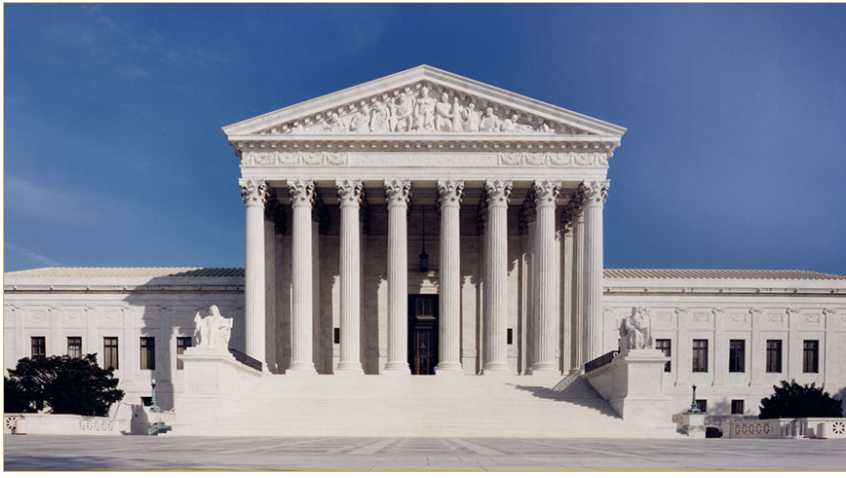
US Supreme Court Completely Right to Take Up the Tik Tok Banning Case


The New York Times just reported that the US Supreme Court has decided to hear TikTok's challenge to the law that would ban TikTok from the USA on January 19, 2025 unless its Chinese owners sold it to a non-Chinese company.   I've been very critical of our current Supreme Court for all kinds of important reasons, but I think it is doing the right thing to take up this case.  I applaud its decision to take up this case, and I further hope that it strikes down the law that would ban TikTok as blatantly unconstitutional -- because it is -- a clear violation of the First Amendment.

As everyone knows, including the bipartisan Congress that passed the law, and President Biden who signed it into law, earlier this year, the First Amendment to our Constitution says "Congress shall make no law abridging the freedom of speech or of the press." The only exception is speech or any communication that contributes to a criminal act.  So, to use an obvious example, you can't put an ad in a newspaper or on a social media site saying you're looking to hire a hitman as competent as the Jackal.  Now, I get that China is our adversary in the habit of spying on us in all kinds of ways, but I haven't seen any evidence or proof that such spying, which would be a crime, is actually happening via TikTok. Have you?

I've also heard, by people who should know better, that the First Amendment applies to the United States and its citizens, not its Chinese owners who are bringing the case to the Supreme Court.  That argument either accidentally or deliberately misses the crucial fact that it is Americans, people who are living in the United States, more than 160 million of us, whose First Amendment rights will be violated the moment we're no longer able to post videos on TikTok, talk to people on the site, etc.  How anyone could miss that point is beyond me.

Congress and the President have been muddled about the First Amendment and it how it applies to the Internet since Congress passed and Bill Clinton signed into law the Communications Decency Act in the 1990s.  It was left to the US Supreme Court to strike down that unconstitutional law, which made it a crime punishable not only by hefty fines but a few years in prison for anyone to post anything on the Internet that was "objectionable" and potentially viewable by minors.  I hope the current Supreme Court once again rises to the occasion, and lets the well-meaning but muddled members of both political parties that they need to take the First Amendment, and the rights it guarantees, which are fundamental to our democracy, a little more seriously.


Here is what I had to say about this impending ban, shortly after the law was enacted this past Spring


Friday, June 28, 2024

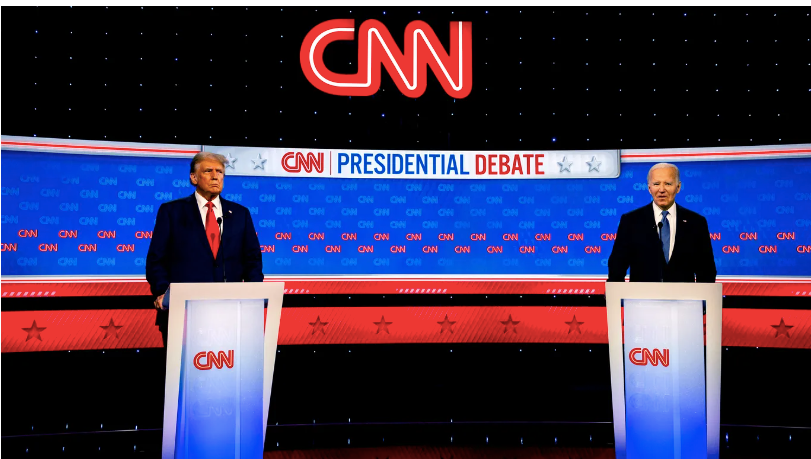
It's the Debate that Failed Last Night, Not Biden


Biden tried to say decent, ethical things but delivered most of his words poorly in last night's Presidential debate; Trump spoke much more clearly but said vile things and lied just about every time he opened his mouth (lies which the CNN moderators failed to call out).

What are we to think about this?

I would say it's that debates shouldn't matter as much as they seem to.  JFK looked better on TV than did Nixon, and a majority of people who saw the two on TV thought Kennedy won.  A much smaller number of people heard the same debate on radio, and thought Nixon won.  That event certainly demonstrated the importance of debates.  But though JFK proved to be an excellent President, the fact that he won the debate was really no indication that JFK would do so well in office.   The debates, in other words, were very valuable windows into the effects of media in politics, not indicators of the political character and acumen of the candidates.

It's plain logic that what a President does in office has nothing to do with the President's voice quality or appearance.  FDR was in a wheelchair throughout his presidency.  He connected to the American people in an age before television via his fireside chats on radios.  Few people knew he was in a wheelchair.  Most historians agree he was our very best President, getting the United States out of the Great Depression, and guiding us and our allies to victory in the Second World War.

I've spent my professional life as a professor of media and an author talking about the importance of televised debates, how candidates look and sound on television. JFK won the debate with Nixon because because by 1960 more than 90-percent of Americans had television in their homes. Reagan prevailed over Mondale by making a savvy joke about not making the younger age of his opponent an issue. Obama faltered in his first debate with Romney but came back strong in their second nationally televized conversation. But maybe it's time to focus on what debates really are: a 90-minute performance that has little to do with what the candidate did, is doing, or will do in office.   The truth is that the skills needed to be an effective debater have nothing to do with the skills needed to be an effective President.  Never did, never will.  Maybe it's long since time that we recognized that.

Marshall McLuhan was the first to point out that JFK won the 1960 debates and then the election because he performed so well on television, in contrast to Nixon who was judged as winning the debates on their radio broadcasts that so few people listened to. McLuhan made this observation in Understanding Media (1964), whose breakthrough message was "the medium is the message". The view that Biden's poor performance in Thursday's debate means he's no longer fit to be President strikes me as an egregious case of mistaking the medium (the debate) for the message (Biden's been doing a superb job as President).

Or, to paraphrase Shelley, maybe it's the debate that failed last night, not Biden.

***

Note added Friday, June 28th, afternoon:  And Biden amply demonstrated his power to effectively communicate in a rip-roaring speech in North Carolina.  Again, a debate is a unique mode of communication, which not only has nothing to do with Presidential decision-making and other Presidential activity, but not much in common with speech-making, interviews, and other kinds of communication, either. 

Note added Saturday, June 29:  The New York Times' editorial board called on Joe Biden to leave the race. They didn't say a word about Biden's speech in North Carolina. What are we to make about such an unprecedented call from the editors of what used to be known as the newspaper of record? I would say this is just more evidence of the decline of a once-great newspaper.  See my What's Wrong with The New York Times for an example this past Fall of what I'm talking about.


Wednesday, October 18, 2023

What's Wrong with The New York Times

I'm really getting sick and tired of The New York Times.  I first began getting more than irritated with the newspaper of record when it over-reported the non-story about Hillary Clinton's emails, on the eve of the 2016 election.   I won't go into all the poor reporting I've noticed in their pages since then.

But now there's something much worse than all of that.  When word first came in about the terrible loss of human life caused by the rocket or bomb exploding in the courtyard of the Palestinian hospital yesterday, the NY Times ran a headline that there was massive outrage in the Middle East (correct) about the attack made by Israel, according to the Palestinians.  The second part of that headline was technically correct -- the Palestinians thought and still think that an Israeli bomb caused the damage -- but it was very misleading, for two reasons.  First, the "according to the Palestinians" came at the end of the headline, and it's a well-known fact that readers of news often don't get to the end of a long headline.  Further, there should have been a prominent indication in the headline that Israel was denying that they were responsible for the horror in the courtyard, and indeed an Hamas-related terrorist group launched the rocket.  The Times has since removed the misleading headline, but the damage was already done.

And today, we have news that US intelligence has independently confirmed the Israeli explanation, based in large part on US infrared sensors that show where the rocket that caused the deadly damage originated.  Jeremy Bash on MSNBC has justly lambasted the lame headlines that stirred so much anger at Israel.  Accurate reporting, including accurately descriptive headlines, is always important.  But never more so than in the tinderbox that the Middle East has become in the aftermath of the monstrous Hamas attacks, and the increasing number of human lives at stake.


Monday, May 25, 2020

Joker: Fantasy and Canon


Checking in with a late review of Joker (2019), which the wife and I saw on HBO last night.

Let me stipulate several things:
  • Joaquin Phoenix was brilliant, inspired, incandescent, whatever superlatives you can find, in the title role.  He eminently deserved the Oscar he won for that.
  • I know a middling amount of Batman canon, but am no expert.
  • I thought the movie held together very well as movie, which means I disagree with, for example, the inanely critical review in the New York Times, as I often do.
I do have question about the ending, though.  And the fact that I have questions makes me think that maybe the movie would have been better ending before this ending.
Arthur Fleck, having actualized his impulses and become the Joker, is seen talking to his state-appointed shrink or social worker, but in a less dingy setting than at the beginning of the movie.  One explanation of this scene, which I'd like to think is correct, is that Fleck, after escaping the cops in what I was wish was the closing scene, is nonetheless apprehended at some time in the future, and is now in some kind of penitentiary serving a life sentence for his crimes (or is he maybe on death row?).

But there's an alternate explanation (which my wife wondered about, and now I'm thinking about it too).  We already saw, in the movie, that Fleck imagined making love and all the good things he did with his neighbor down the hall, Sophie.  This establishes that Fleck's fantasies played a major part in the narrative we see on the screen.  Is it possible that everything else we saw in the movie - Fleck's killing of De Niro's Murray Franklin (who, to me, is just as much Joe Franklin - believe it or not, I was once on his show, talking about my album, Twice Upon A Rhyme - as Murray is Johnny Carson), etc - were also just in Fleck's mind?   Or, at least more of the major sequences than just Sophie as girlfriend?

In at least one Batman movie, if memory serves, the Joker kills Bruce Wayne's parents.  In Joker, one of the myriad angry people with a clown face does the deed.   This suggests that Fleck did not make all of this up - another clown killing Bruce Wayne's parents is consistent with the historical Batman canon of his parents being killed.

In any case, I rate this movie as maybe a masterpiece, and, the more I think about it, the more I think that's right.


Tuesday, December 24, 2019

The Marvelous Mrs. Maisel 3: Op-ed, Closet, and Lenny


What better night to review the third season of Mrs. Maisel (on Amazon Prime Video) - the third night of Chanukah - and, at the same time, Christmas Eve!  I loved all three seasons, and it may be because my wife and I just finished watching this, but I loved this season the best.  The acting was brilliant, hilarious, and better than ever!

Just some story highlights, and some analyses and questions below -


  • Mrs. Maisel and Lenny Bruce- why didn't she sleep with him?  It looked like he wanted to.  She's definitely attracted to him.  So ... she didn't want to do anything that might somehow throw her career off-course?   (I won't say of course, just off-course, because of course I'm not sure.) But it is ironic, given what happened at the end.
  • Fact-checking and continuity:  Abe talks about an op-ed in The New York Times - but it's 1960 or 1961, and, hey, even if was 1965 that would be wrong.  The first New York Times op-ed didn't appear until 1970.  (Ok, I'm a Professor of Communication and Media Studies - at Fordham University - so I would know this.  But, memo to Mrs. Maisel production - get your details right.)
  • I'm still trying to decide what ratio of Johnny Mathis and Jackie Wilson best describes Shy Baldwin?  I'm thinking maybe 80% Mathis?  Not 100%, because, on occasion, Shy has a nice burst of rock in his singing.
  • Regarding Shy, my wife called it that Midge went over the top with her jokes which came too close to outing Shy.  I was thinking if you didn't already know it, you might just think she was riffing on his effeminate elan (didn't Saturday Night Live once have an hilarious skit on the effeminate heterosexual?).  In any case, what happened was Susie's fault for not being there to calm Midge down.  And once she's up on stage, a different part of her brain takes over - a part that bounces ideas around like basketballs, and makes her brilliant, but which doesn't think of consequences.
  • Susie at least came through for Midge with Midge's money.  But now that Shy's contract is gone, what she will use as collateral?
All of this has the makings for a great fourth season, which I'll 100% be reviewing!  Happy Chanukah, Merry Christmas, and Happy New Year!   


It all started in the hot summer of 1960, when Marilyn Monroe walked off the set of The Misfits and began to hear a haunting song in her head, "Goodbye Norma Jean" ...  Marilyn and Monet

Sunday, September 15, 2019

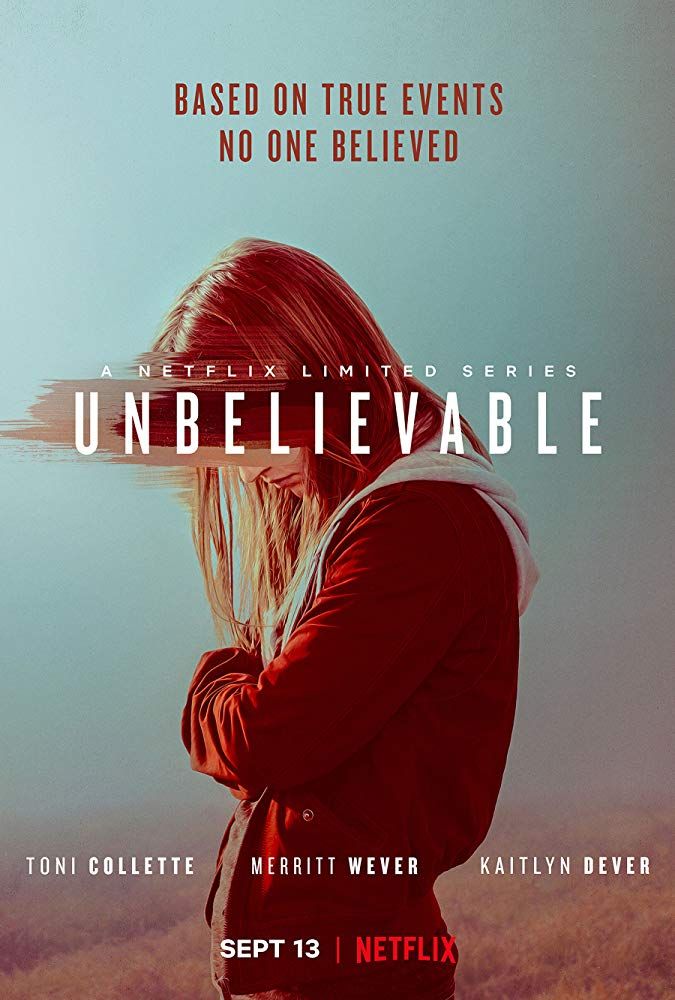
Unbelievable: The All-Too-True Docudrama and its Resonance to Brett Kavanaugh


My wife and I finished watching Unbelievable on Netflix, just as the NY Times story broke about a second sexual misconduct incident involving now Supreme Court Justice Kavanaugh in his freshman year at Yale, in addition to the one involving Deborah Ramirez, a second incident that the FBI was informed about but neglected or refused to fully investigate.

Unbelievable is about a serial rapist, who committed acts more egregious than sexual assault, but the all-too-true story is the same: the callous disregard of women and girls who are victims of sexual assault, combined with psychological bullying by authorities.  In the Unbelievable case, the result was a rapist who went on to rape numerous other woman.  In the Kavanaugh case, the result is a man accused of attempted rape and sexual assault, not adequately investigated, now sitting on the U. S. Supreme Court.

The docudrama was brilliantly acted, and had as happy an ending as could result in these circumstances: the rapist was sent to prison for more than 300 years.  The Kavanaugh hearings, in particular the Republican defense of Kavanaugh, was a shambles, and the result a travesty of justice.

On the brilliantly acted Unbelievable -  Kaitlyn Dever as Marie Adler the first victim, and Merritt Wever as Det. Karen Duvall and Toni Collette as Det. Grace Rasmussen, the detectives whose focused, unrelenting, perceptive work brought the rapist down, all deserve Emmys.  Eric Lange, who played the cuckolded husband in Escape from Dannemora, put in another memorable performance as the first detective, who had a heart but not enough strength to do the right thing for Marie.  The pacing and counterpoint of the story in two different places and times - Washington State and Colorado - and the way they unify in the end was masterful.

As for Kavanugh, he deserves not to judge but to be investigated further and judged.  But politics, especially these days, seems to often get in the way of justice, so we'll have to wait and see.

Tuesday, October 4, 2016

The Most Traditional of Traditional Media Lead in 2016 Presidential Campaign Reporting

The New York Times publication of Donald Trump's 1995 tax return a few days ago underlines the heroic work that the most traditional of traditional media - the paper press, and its reflection online - has been doing in the U. S. 2016 Presidential campaign.

The actual tax returns were of course dropped off in a reporter's mailbox at the Times, so it didn't take much work to retrieve them.  But it took acumen and shoe leather to track down the retired accountant in Florida who prepared the tax returns, and confirm that they were the real thing.  Even the excellent New York Daily News tabloid couldn't do that - the returns were left in their mailbox, too, but they lacked the depth and reach of a classic full-throttle newspaper like The New York Times and its reporting team of David Barstow, Susanne Craig, Russ Buettner, and Megan Twohey.

Over at Newsweek, one of the two historical titans (with Time magazine) of news magazines, Kurt Eichenwald has published top-notch investigative reporting on Trump's overseas business entanglements and his dealings with Cuba in violation of the US embargo.   These stories were so important that Rachel Maddow at MSNBC previewed each of them on her show the night before their publication in Newsweek, providing a rare occasion in which the traditional paper press not Twitter served as the primary source of a cable news hour.

Meanwhile, David Fahrenthold at the Washington Post has been publishing stories for months that expose the truth of the Trump "charitable" Foundation, and the way it has been used in unethical and illegal ways to suit and further Trump's interests.    A course could be offered at any university about investigative reporting based just on Fahrenthold's relentless pursuit of this story.

I've been saying for years now that traditional print media have had their day, and certainly are not now what they once were.  Newsweek even paused its print edition for a little over a year, and the readership of The New York Times and the Washington Post has plummeted since their heydays.  But after the reporting they've provided in the past months, I'll make no mistake about it:  even in their diminished form, traditional print journalism has been providing unique and extraordinary service to our democracy.


Thursday, July 14, 2016

The Heroism of Ruth Bader Ginsburg and the Abdication of the Media

I was disappointed but not really surprised that The New York Times called out Supreme Court Justice Ruth Bader Ginsburg yesterday for her apt and heroic criticism of Donald Trump, worrying that "Washington is more than partisan enough without the spectacle of a Supreme Court justice flinging herself into the mosh pit".  The Times has sunk a long way, both in its reporting and editorials, since I read it every day in my high school cafeteria in the 1960s.   Come to think of it, it was painfully slow in getting it right about how wrong the Vietnam War was back then, too, but at least it had its moments with its publication of The Pentagon Papers.   The same can be said about the Washington Post, its publication of The Pentagon Papers, and its criticism of Ginsburg, calling her comments about Trump "inappropriate" and "much, much better left unsaid by a member of the Supreme Court".

"Better left unsaid?"  If either editorial board had more than a superficial knowledge of the US Supreme Court and its history, they might have come across the following from Associate Justice Louis Brandeis:
If there be time to expose through discussion the falsehood and fallacies, to avert the evil by the processes of education, the remedy to be applied is more speech, not enforced silence.  Concurring opinion, Whitney v. California, 274 U.S. 357 (1927).
But Trump has risen and thrived due to ignorance of history and the lessons of what can happen in a democracy when it elects someone like Adolf Hitler Chancellor of Germany.   No, I don't think Trump is exactly the same as Hitler, but Trump is as bad as it gets these days as a major party candidate.   And while the media fidget and express concern that Trump's critics have gone too far - including Chris Matthews, who on MSNBC yesterday afternoon expressed concern that Hillary Clinton may have gone over the line in her speech in Springfield, Illinois yesterday, in which she wondered if Trump might use the military to silence his critics - Trump continues to threaten many of the very foundations of our democracy, including the press itself.

The media, and especially The New York Times, made things worse in the build-up to the Iraq War, uncritically supporting the US and British claim that Saddam had weapons of mass destruction. They did it again with Trump in the early days of his campaign, treating it as a source of humor and a magnet for higher ratings and ad sales, rather than denouncing him for what he is and has done, and backing that up with relentless investigative reporting.

So we have the media to blame, at least in part, for where we are today with Trump about to get the Republican nomination for President, and they attack Ruth Bader Ginsburg for bravely shouting fire in the crowded theater of our democracy?   I've got some news and a little more history for The Times and the media: shouting fire when there really is a fire is exactly what a responsible citizen is supposed to do (it's falsely shouting fire that Oliver Wendell Holmes Jr. warned about in his famous 1919 Supreme Court opinion).  

We live in a country in which the Republicans daily flout the Constitution by refusing to hold hearings on Obama's Supreme Court nominee, media such as The New York Times abdicate their responsibility, and both unsurprisingly are roused to come out and attack Ginsburg for doing her job as a citizen.   With any luck and a lot of hard work, Trump will lose and the Republicans in Congress will be voted out of office.   As for the traditional media - well, they'll likely continue to wither and be replaced by the Internet, which has already become the bedrock of our democracy.

PS - News just broke that Ginsburg expressed regret regarding her comments about Trump - doesn't change in the slightest that what she said about Trump was right and she was right to say it.

Sunday, December 6, 2015

The Front-Page Editorial in The New York Times

I was just interviewed on "Breakfast," New Zealand's top morning radio program, about the context and impact of The New York Times' front-page editorial - first since 1920 - urging gun control.

Marshall McLuhan, as his work does so often in our age, captured the importance of the front page of a newspaper when he observed, in The Mechanical Bride in 1951, that you can get a sense of the world just by looking at the front page, as if it were a picture, before and without even reading any of the content.  The front page in effect is a figurative landscape of what's going on, which can be grasped at a glance.

The content of the editorial - which the layout calls such justifiably dramatic attention to - is crucial.   I would like to see, as starters, the government start a buy-out program of all semi-automatic weapons, paying twice their purchase price, after declaring these weapons illegal.  Yes, terrorists and psychopaths can still do plenty of damage with hand-guns and knives, but getting rid of a semi-automatic killing machines would be a good way to save some lives.

So the content of the editorial matters, big time.  But placing it on the front page was a masterstroke. Just glancing at the front page shows that there is a sombre, stark importance to what the words are saying.

Lots has been written, including by me, about how paper newspapers are fading away.  But anything on paper still has advantages not seen on any screen, especially the little ones on our phones. Newspapers left on tables and desks can be seen by anyone who passes by.  The editorial on the front page of a newspaper is thus an intrinsically powerful public statement.

It's good to see The New York Times leading the fight on finally getting something done to limit the deaths by guns which are the scourge of this country.

Friday, December 5, 2014

Bill Keller and the New York Times: Heal Thyself

I saw Bill Keller, former editor of The New York Times (now one of its writers), on MSNBC a little while ago, roundly criticizing Rolling Stone for not checking out its sources more carefully before publication of its enormously important rape on college campus story, which has finally gotten America to pay some attention to this endemic and awful part of frat culture.

Rolling Stone no doubt should have checked its sources more throughly before going to press, and it could have handled its apology issued today a little better, and not blamed the source by saying Rolling Stone's "trust in her was misplaced".   When issuing an apology, it's best to just stay with what you didn't do right.

But Bill Keller of all people attacks Rolling Stone about this?  He was at The New York Times during the years of probably the worst journalistic travesty in history, when Jayson Blair regularly faked stories, plagiarized, made up sources, and in general made The New York Times a laughing stock, a sad position for the once "newspaper of record".

Further, where have The New York Times and Bill Keller been all these years in which rapes have taking place on campuses such as the University of Virginia?   Rather than getting on his high horse, Keller should encourage his own newspaper to do more reporting on this grievous problem.

And Rolling Stone, let us not forget, deserves eminent credit for breaking this story wide open, and bringing it to public scrutiny.   They erred, but on behalf of a noble and critically important goal, and deserve every decent person's thanks not attack for this.


Thursday, August 14, 2014

Obama Weak in Protecting Citizens and Journalists in Ferguson

Obama's words an hour ago about what has been going on in Ferguson, Missouri were better than nothing, but a little late and, typically, a little weak.

The situation in Ferguson could not be more clearcut:  Under the First Amendment, people have the right to peaceably assemble to protest, which means not being teargassed, and not have police who look like an invading force in Iraq point all kinds of military weapons at you.   Under the First Amendment, reporters have the right - the obligation - to convey what is happening before them to the American people, and not be arrested as happened to two reporters (one of whom works for the Washington Post - African-American, perhaps not coincidentally).   When citizens and journalists are threatened and arrested by local police, it is the duty of the President to send in the National Guard to protect the people and physically restrain the police when necessary.

All of this, of course, in addition to the apparent murder of Michael Brown requiring justice.

It's unfortunately not surprising that Obama has done so little to protect the people in Ferguson.   He said little or nothing when the out of control cop pepper sprayed an innocent student in California during the Occupy Wall Street demonstrations.   He said nothing against Michael Bloomberg's consistent use of New York police to trample on the rights of citizens, journalists, and citizen journalists during Occupy Wall Street.   As I described at length in New New Media, it's a good thing that courageous people recorded some of this police misconduct on their phones.

MSNBC did a great job last night in providing live, ongoing coverage of the events in Ferguson.  Not so much the New York Times, which put the Ferguson story below the fold in today's edition, with Iraq on top (fair enough, maybe), accompanied by stories about the Bloomberg era at Rikers, poverty in America, and college sports (totally ridiculous!).   Perhaps if the arrested reporter had been working for the New York Times, the events in Ferguson would have received better coverage from the newspaper of record.

This is not the first time in American history that the Federal government has been required to step in when the local authorities have been violating the law to the peril of its citizens.   Eisenhower did it in the 1950s, and Kennedy in the 1960s, to protect citizens who were being blocked by local authorities from attending their schools.   In both cases, the National Guard was sent in to literally push the local authorities aside.

As Obama concludes his second term, he might want to think about this.   At this point, regarding the protection of the constitutional rights of American citizens, he not only has been no JFK, he's been no Eisenhower.   But there's still time for Obama to do the right thing.   I urge him to do so - as Representative John Lewis and others in the legislative branch have requested - before further damage is done to the American people.


Saturday, May 31, 2014

Amazon vs. Hachette: I Side with Amazon

The dispute between Amazon and publisher Hachette has dominated book talk on and off the Web this past month, as indicated in this biased anti-Amazon piece in the New York Times.

The gist of the dispute is that Amazon wants a better deal from big publishers, in terms of how much of a cut Amazon gets from its online retail sales of books.   The big publishers are resisting.  Amazon retaliated by making it more difficult for one of the big publishers, Hachette, to sell its books on Amazon.   Searches for Hachette books on Amazon result in advisories that best-selling books, which normally ship immediately, can be subject to a several week wait.   Among such best selling authors are J. K. Rowling and James Patterson.

Let me first say that I can well understand the frustration of would-be buyers and readers of Hachette titles.   No one likes delays, especially those that arise from a contract negotiation.  But I nonetheless side completely with Amazon on this one, and I say this an author published by major world-wide publishers as well as small presses, the latter of which has given me direct knowledge of how Amazon treats authors.

And that treatment by Amazon of me has been good - indeed, about as good as it can get.   I receive nearly instant reports of sales of my Kindle books, crystal clear earning statements, and monthly payments of my earnings that have been accurate to the penny.   I can't say the same about my experience as an author with traditional publishers, who are accustomed to paying once a year, twice if you're lucky, and whose royalty statements would give an accountant a headache, and certainly often give me one.   And the royalty statements are not always accurate.   I believe I have eventually received every cent that was due to me from my traditional publishers, but I don't appreciate the errors in the first place and the effort it took to correct them.

Maybe best-selling authors get better treatment from their publishers than a midlist author like me - I couldn't say.  But I do know that traditional publishers come from a tradition in which they think the author should be thrilled that her or his book is being published, and be happy for the fractional part of the sales received as a royalty.   In other words, the better deal that Hachette is trying to get from Amazon will likely not make much difference to most authors with traditional publishers.

Amazon has revolutionized the book world with its Kindle editions and the new relationships made with authors.   Understandably, the old guard may be less than comfortable with this.  But I'm convinced that the Amazon way is the road to the future, and I'm happy to be on it.

Further reading:  Here are three articles with analyses which, unlike the NY Times story, are not biased against Amazon.   Thanks to Mike Spinak for reminding me about them / bringing them to my attention:   Amazon v. Hachette: Don't Believe the Spin by David Gaughran,  More Thoughts on Hachette / Amazon  by Hugh Howey,  Updated: 'Amazon Derangement Syndrome' Characterizes Dispute Between Amazon and Hachette by Chris Meadows

#SFWApro

Monday, May 14, 2012

Mad Men 5.9: Don's Creativity

The biggest deal in Mad Men 5.9 last night was the pair of ads that our band of merry mad men and woman were working up for another new client, Snoball - the coconut pink marshmallow chocolate cake whipped cream (from outside to inside) concoction that you could bliss you out with on sugar with a just few bites if you weren't careful.

Anyway, Peggy's idea of three men lost in the desert, two dreaming of water, the third dreaming of the dessert, is knocked out in the first meeting.  I actually like that better than Ginsberg's idea of throwing a snoball in an authority's face, but that gambit as well as Don's snoball's chance in hell make it to the all-important client presentation.

Or, actually, not.  Don deliberately leaves the artwork for both his and Ginsberg's candidates in the taxi.  Since Don of course is at the client meeting, but Ginsberg is not, Don's presentation makes the sale.  I thought Don's was the best, and Ginsberg's the worst (of the three), but of course Ginsberg doesn't see things that way.  He complains to Don, who disses Ginsberg with a retort that Ginsberg and his talent or lack of never even enter Don's thoughts.

The whole incident gives us good insight into Don's current personality: he's still competitive enough that he wants to his creativity to win, and will use any method to so, though I suppose there was some merit to his point to Ginsberg that coming in with more than one candidate is "weak".

Otherwise, Betty's back and as nasty as ever, and Roger continues his destruction of Jane.  Roger won't be even a semblance of a human being until he gets together with Joan, and I'd say there's almost no hope for Betty.

Meanwhile, Pete fantasizes about his paramour, and is furious when the New York Times Sunday Magazine section neglects to mention him in a major article after a long interview.   Welcome to the club - this happens with interviews all the time.   One anachronism alert: my wife, who reads the Times Magazine section more than do I, noticed that the 1966 copy of the magazine depicted on the show sure looked like a more current size and layout. I'm not 100% sure, but she may well be right.

See also Mad Men Season 5 Debut: It's Don's Party  ... Mad Men 5.3: Heinz Is On My Side ... Mad Men 5.4: Volunteer, Dream, Trust ... Mad Men 5.5: Ben Hargrove ... Mad Men 5.6: LSD Orange ... Mad Men 5.7: People of High Degree ... Mad Men 5.8: Mad Man and Gilmore Girl 

And from Season 4: Mad Men 4.1: Chicken Kiev, Lethal Interview, Ham Fight ... 4.2: "Good Time, Bad Time?" "Yes." ... 4.3: Both Coasts ... 4.4: "The following program contains brief nudity ..."  4.5: Fake Out and Neurosis ... 4.6: Emmys, Clio, Blackout, Flashback  ... 4.7: 'No Credits on Commercials' ... 4.8: A Tale of Two Women ... 4.9: "Business of Sadists and Masochists" ... 4.10: Grim Tidings ... 4.11: "Look at that Punim" ... 4.12: No Smoking!  ... Mad Men Season 4 Finale: Don and -

And from Season 3: Mad Men Back for 3 and 3.2: Carvel, Penn Station, and Diet Soda and 3.3: Gibbon, Blackface, and Eliot and 3.4: Caned Seats and a Multiple Choice about Sal's Patio Furniture and 3.5: Admiral TV, MLK, and a Baby Boy and 3.6: A Saving John Deere and 3.7: Brutal Edges ... August Flights in 3.8 ... Unlucky Strikes and To the Moon Don in 3.9 ... 3.10: The Faintest Ink, The Strongest Television ... Don's Day of Reckoning in Mad Men 3.11 ... Mad Men 3.12: The End of the World in Mad Men ... Mad Men Season 3 Finale: The End of the World

And from Season Two: Mad Men Returns with a Xerox and a Call Girl ... 2.2: The Advertising Devil and the Deep Blue Sea ... 2.3 Double-Barreled Power ... 2.4: Betty and Don's Son ... 2.5: Best Montage Since Hitchcock ... 2.6: Jackie, Marilyn, and Liberty Valance ... 2.7: Double Dons ... 2.8: Did Don Get What He Deserved? ... 2.9: Don and Roger ... 2.10: Between Ray Bradbury and Telstar ... 2.11: Welcome to the Hotel California ... 2.12 The Day the Earth Stood Still on Mad Men ... 2.13 Saving the Best for Last on Mad Men

And from Season One: Mad Men Debuts on AMC: Cigarette Companies and Nixon ... Mad Men 2: Smoke and Television ... Mad Men 3: Hot 1960 Kiss ... Mad Men 4 and 5: Double Mad Men ... Mad Men 6: The Medium is the Message! ... Mad Men 7: Revenge of the Mollusk ... Mad Men 8: Weed, Twist, Hobo ... Mad Man 9: Betty Grace Kelly ... Mad men 10: Life, Death, and Politics ... Mad Men 11: Heat! ... Mad Men 12: Admirable Don ... Mad 13: Double-Endings, Lascaux, and Holes

20-minute interview with Rich Sommer (Harry Crane) at Light On Light Through


                 Special Discount Coupons for Angie's List, Avis, Budget Car, Garden.com, eMusic


The Plot to Save Socrates

"challenging fun" - Entertainment Weekly

"a Da Vinci-esque thriller" - New York Daily News

"Sierra Waters is sexy as hell" - curled up with a good book


Enjoy listening to audio books? Get a free audio book copy of The Plot to Save Socrates - or any one of 85,000 other titles - with a 14-day trial membership at Audible.com ...
 

Tuesday, March 20, 2012

New York Times Tightens Digital Paywall

So, as I've been saying ever since The New York Times announced its digital paywall more than a year ago, the newspaper of record today announced that it was raising the wall even higher, cutting the number of articles than can be read on its site for free from 20 to 10.

This was no doubt done to increase its number of paying customers online, which is now about half a million, or half of its offline, paper subscribers.  And that's certainly a good start.  But where will it lead?

Today's announcement suggests that a time will soon come when nothing of The New York Times will be available for free online.   This newspaper, in other words, will have thoroughly rejected the model of broadcast media, which made radio and then television the media with the biggest audiences and impact in the 20th century.  Free content has already propelled The Huffington Post to an Alexa rank of 84 (based on number of hits and incoming links), surpassing The New York Times at 98, as free online media continue to surge in impact in the 21st century.

If The New York Times  continues on this path of requiring payment for its content, rather than devising ways of earning revenue through its advertising, it will continue to move from being the newspaper of record to the newspaper of the past. 

Which is not the worst thing in the world.  Legitimate theater continues in an age of movies and television, but the stage has long since lost the audiences it commanded in 1900.

Monday, November 15, 2010

Olbermann vs. Koppel: I Mostly Agree with Olbermann

So, we were just treated to one of Olbermann's "Special Comments".  It was advertised as about Ted Koppel, which indeed it was.  I consider Koppel one of the greats of TV news people - successor with his Nightline (which I watched raptly for more than 25 years) to Murrow and Cronkite.   I was prepared to say in this blog post, well, I came to Olbermann's defense over MSNBC's inane suspension of him last week, but now I'm back to disliking his tone and even the content of many of his "Special Comments".  Except - I think Olbermann is mostly right in what he just said about Koppel.

Ted Koppel's op-ed in the Washington Post - Olbermann, O'Reilly, and the death of real news - is what, understandably, attracted Olbermann's attention and ire.   You all know the points that Koppel makes - that Fox and MSNBC are conservative and progressive equivalents,  presenting opinions not news, and their success has destroyed "objective" i. e., "real" news.

I agree completely with Koppel on the first point - the style and partisan equivalence of Fox and MSNBC - and that's in fact the one big point Olbermann made with which I flatly disagree.  I don't know why Olbermann and Rachel Maddow and others on MSNBC insist that they are more factual and less partisan than Fox.  Maddow made this same point to John Stewart, in her superb interview with him last week. 

But otherwise - neither Fox nor MSNBC are newsless.  Indeed, the news reporting of Bret Baier and Shep Smith on Fox is every bit  the factual equivalent of actual news that is reported on MSNBC throughout the day and night.   On that point, then, Koppel is point blank wrong, and Olbermann is wrong in saying that MSNBC has more respect for facts than does Fox.

Were this where Olbermann vs. Koppel ended, I might give the match to Koppel - right where Olbermann was wrong on the first point (Fox and MSNBC are indeed equivalent), then both wrong on second (Koppel that neither Fox and MSNBC present facts, Olbermann that Fox does not but MSNNC does).

But Olbermann showed his mettle and rose to the occasion with as lucid an analysis as ever I've seen about the myth of objectivity in news.  It was never true and therefore, of course, is not today.

I often make the point to my classes that when The New York Times says "all the news that fit to print" - who are they kidding?  What we're really getting is all the news that the Times deems fit to print - i.e., selects for us to read.  And the same for Walter Cronkite, "and that's the way it was".  Not really.   A more truthful tag line might have been "and that's what the editors here at CBS thought you should think it was".  This is called gate keeping, and it's one of the things the Internet, and what I call new new media, have reduced and in some cases eliminated.

Olbermann correctly cited the finest moments of Murrow and Cronkite as not being objective, but partisan - as when Murrow called out Joe McCarthy and Cronkite spoke out against the Vietnam War.   The fact is that the public is best served not just by blind reporting of the facts, but by strong opinions and keen analyses right along with the facts.  That's what op-eds in newspapers - such as Koppel's about the death of news - are all about.  That, as Olbermann correctly noted, is what Koppel and the news media did not do during the build-up to the Iraq War, when all that was reported was the "fact" that Saddam had weapons of mass destruction.

Olbermann's  point - that the pursuit of the illusion of objectivity in journalism may hurt the democracy that journalism serves - may just be the important point Olbermann ever made.  It's certainly not made clearly or often enough.

Monday, October 11, 2010

Mad Men 4.12: No Smoking!

So how can Mad Men manage to surprise in this season in which every week has delivered an unexpected punch?   By Don publicly denouncing smoking in episode 4.12!  Smoke will no longer be getting in SCDP's eyes, at least if Don has his way.

Indeed, Don's act - going for a full-page ad in The New York Times, in which he declares war on smoking, all the damage it's done to the health of Americans, and the health of his company - is roundly attacked by every one of his partners.  Pete's concerned that clients will lose faith in SCDP's loyalty (indeed!), Cooper's furious that Don did not include the partners in the ad (!), Lane's angry that Don did not consult the partners beforehand, and Roger's just angry.  (I thought Roger's best line, though, came when he called a consultant who failed to deliver a promised presentation to a possible client, an "asshole".  Roger has consistently had the best lines for the past few shows.)  The responses of the partners - the reasons for their anger - reflect their inner demons and personalities, what really motivates them.   Cooper, at this stage in his life, is in it for his reputation.  He's so wounded that his name does not appear on this declaration of war that he takes his leave of his partners and the company - apparently, at this point, for good.

Who approved of what Don did?   Megan liked it and tells him so - though for what combination of wanting to curry favor with Don vs. her admiring Don's courage/honesty, whatever, is not clear.  Don tells her it had nothing to do with standing up for what's right - it was the best move for SCDP given its plummeting client list - this at least gets them in the public eye, and turns the vice of Lucky Strike leaving into a virtue.

Peggy, unsurprisingly, approves for the right reasons.   She jokes about Don's chiding her about pulling stunts - because, if we believe what Don says (who knows what he really thinks), his ad in the New York Times was a high-profile, high-principled gimmick - a stunt wrapped in a public ethic.

Ready for next week's season finale?

See also Mad Men 4.1: Chicken Kiev, Lethal Interview, Ham Fight ... 4.2: "Good Time, Bad Time?" "Yes." ... 4.3: Both Coasts ... 4.4: "The following program contains brief nudity ..."  4.5: Fake Out and Neurosis ... 4.6: Emmys, Clio, Blackout, Flashback  ... 4.7: 'No Credits on Commercials' ... 4.8: A Tale of Two Women ... 4.9: "Business of Sadists and Masochists" ... 4.10: Grim Tidings ... 4.11: "Look at that Punim"

And from Season 3: Mad Men Back for 3 and 3.2: Carvel, Penn Station, and Diet Soda and 3.3: Gibbon, Blackface, and Eliot and 3.4: Caned Seats and a Multiple Choice about Sal's Patio Furniture and 3.5: Admiral TV, MLK, and a Baby Boy and 3.6: A Saving John Deere and 3.7: Brutal Edges ... August Flights in 3.8 ... Unlucky Strikes and To the Moon Don in 3.9 ... 3.10: The Faintest Ink, The Strongest Television ... Don's Day of Reckoning in Mad Men 3.11 ... Mad Men 3.12: The End of the World in Mad Men ... Mad Men Season 3 Finale: The End of the World

And from Season Two: Mad Men Returns with a Xerox and a Call Girl ... 2.2: The Advertising Devil and the Deep Blue Sea ... 2.3 Double-Barreled Power ... 2.4: Betty and Don's Son ... 2.5: Best Montage Since Hitchcock ... 2.6: Jackie, Marilyn, and Liberty Valance ... 2.7: Double Dons ... 2.8: Did Don Get What He Deserved? ... 2.9: Don and Roger ... 2.10: Between Ray Bradbury and Telstar ... 2.11: Welcome to the Hotel California ... 2.12 The Day the Earth Stood Still on Mad Men ... 2.13 Saving the Best for Last on Mad Men

And from Season One: Mad Men Debuts on AMC: Cigarette Companies and Nixon ... Mad Men 2: Smoke and Television ... Mad Men 3: Hot 1960 Kiss ... Mad Men 4 and 5: Double Mad Men ... Mad Men 6: The Medium is the Message! ... Mad Men 7: Revenge of the Mollusk ... Mad Men 8: Weed, Twist, Hobo ... Mad Man 9: Betty Grace Kelly ... Mad men 10: Life, Death, and Politics ... Mad Men 11: Heat! ... Mad Men 12: Admirable Don ... Mad 13: Double-Endings, Lascaux, and Holes

20-minute interview with Rich Sommer (Harry Crane) at Light On Light Through


                 Special Discount Coupons for Angie's List, Avis, Budget Car, eHarmony, eMusic, Mozy, Zazzle


The Plot to Save Socrates


"challenging fun" - Entertainment Weekly

"a Da Vinci-esque thriller" - New York Daily News

"Sierra Waters is sexy as hell" - curled up with a good book


Monday, December 22, 2008

New York Times Publishes Fake Letter Criticizing Caroline Kennedy

The New York Times just apologized for publishing a letter purported to be from Bertrand Delanoë, Mayor of Paris, who wrote about Caroline Kennedy that "in my opinion she has no qualification whatsoever to bid for Senator Clinton’s seat" and her bid was "appalling".

The letter was published this morning, and now, after a day of damage, the Times says "we have already expressed our regrets to Mr. Delanoë's office and we are now doing the same to you, our readers." The letter was not written by Mr. Delanoë.

This isn't as bad as Jayson Blair, and his fictional and plagiarized reporting that went on for several years at the New York Times, but it's still plenty appalling. The Times says it is their "procedure to verify the authenticity of every letter. In this case, our staff sent an edited version of the letter to the sender of the email and did not hear back." And they published the letter, anyway.

This is the kind of error that could happen at a college newspaper - which, if it did, would become an important object lesson about what not to do when editing and publishing a newspaper. But at The New York Times, the newspaper of record?

The Times can't go back a day in history, and undo its publication of this letter. But with every day that passes, it is increasingly clear that newspapers are no more immune to errors than blogs or any other form of communication, and should not be treated with any greater respect. Everything anyone reads, in any venue, should be taken with a healthy grain of salt.

Thursday, November 13, 2008

A Peek at my Graduate Class at Fordham Last Night, Talking about the New York Times Spoof

CW-11 Television came by my class graduate class in "Media Research Methods" last night at Fordham University, to interview me about the New York Times spoof. The clip played at the top of CW-11's News at 10pm on Channel 11 last night.

The class looks great. Raylene Robinson , a student, makes a very astute point.

And now, through the magic of the Internet, you can be right there ...

Sunday, September 28, 2008

Critics of Joe Biden's FDR-TV Gaffe Are Ignorant of History Themselves

Republicans, the media, and John Stewart have been yukking it up about what Joe Biden said to Katie Couric, "When the stock market crashed, Franklin D. Roosevelt got on the television and didn't just talk about the, you know, the princes of greed. He said, 'Look, here's what happened.'"

John Stewart sagely informs us that (1) "Roosevelt wasn't President when the stock market crashed" (in 1929), and (2) "no one had televisions". And The New York Times helpfully offers that "Herbert Hoover was president when the stock market crashed, in 1929. Roosevelt did not take office until March of 1933. When he did, Roosevelt communicated to the people over radio — not television."

Well ... apparently neither Stewart nor the Editorial Board of The New York Times are media historians.

Here's a little history for them:

1. Herbert Hoover (then Secretary of Commerce) and Walter S. Gifford (President of AT&T) participated in a conversation via television hook-up between Washington and New York in .... tada tada ... 1927!

2. FDR gave a televised address from the 1939 World's Fair in New York ... thereby becoming the first U.S. President to be televised.

3. FDR was televised from a Democratic Rally in Madison Square Garden in October, 1940.

So, here is what is TRUE about what Stewart, the New York Times, et al have been saying about Biden's gaffe: (1) FDR was indeed not President when the stock market crashed in 1929.

And, here is what is FALSE about what Stewart, the New York Times, et al have been saying about Biden's gaffe: (1) Contrary to what Stewart said, there was indeed television in 1927. (2) Contrary to what The New York Times said, although FDR was known for his fireside radio chats (see my The Soft Edge: A Natural History and Future of the Information Revolution for details), he indeed also communicated to Americans via television.

Now, television service was indeed much less common in the late 20s and the 30s and early 40s than it would soon after become, and Biden indeed was mostly in error in his statement to Couric ... But, media, next time you publicly take potshots at a VP candidate, open a book, look around a little on the Web, get your facts right ... It's not that hard.

Thursday, February 21, 2008

New York Times Needs Named Sources for McCain Lobbyist Story

I'm supporting Barack Obama for President, and wouldn't vote for John McCain if he was squeakiest clean candidate in history. But I'm also a Professor of Communication and Media Studies at Fordham University in New York City, with a keen interest in wanting journalists to report with the highest ethical and professional standards to Americans, and I want those standards to apply to reporting about all candidates - whether I agree with their politics or not.

With that goal as my guide, I have to say that The New York Times needs named, on-the-record sources for its front-page story about John McCain possibly having a romantic entanglement with a lobbyist that caused his aides in 2000 to take action.

Unnamed sources have their role in journalism. But in a story of this magnitude, concerning someone who has all but received the Republican nomination for President, and whom the Times endorsed, the public interest requires real names of real sources. In their absence, the public is forced to rely on The New York Times' judgment, and, in a matter of this importance, the judgment of any news operation can never be good enough.

Why do Americans need to know the names of the Times' sources? Because the American people need to decide, based upon all possible evidence, whether the sources were telling the truth to The New York Times. Even if the sources weren't lying, we might learn, based on their position in the campaign, that they were not really in a position to know what was going on. Media other than the New York Times need to be able to look into what happened in 2000, and report their findings.

There is also a point to be made about the allegations themselves being unclear - or, if they are clear, not really indicative of any ethical breach. Did McCain actually have an affair with the lobbyist, or were the aides acting to make sure this didn't happen?

In a Presidential election, reporting should, if anything, be held to higher standards than usual. Although this story is certainly of great interest, it appears that The New York Times, if anything, adhered to lower standards than we might want it to bring to bear regarding sources and details.
InfiniteRegress.tv