Chuck Todd interviews me about alternate histories
Showing posts with label Roy Orbison. Show all posts

Thursday, January 20, 2022

The Lip-Synching Scene in David Lynch's Blue Velvet as a Touchstone Transcendent Moment


David Lynch is 76 years old today -- happy birthday!  That made me think about my favorite scene in all of David Lynch's great work, and, for that matter, probably in any movie I've ever scene: Dean Stockwell lip synching Roy Orbison's "In Dreams" in Blue Velvet back in 1986, with Dennis Hopper doing a fine job as that deeply sick guy, who tries to join in the lip-synching, but whose demons won't allow him the succor of dreams.


That scene also represents what I think of as a nexus in popular culture, with several different careers revived and propelled in that one scene.  Dean Stockwell had been a moderately important star, playing angry and sensitive young men, in the 1950s and 1960s.   Lynch had begun using him in Dune in 1984, but his performance in that Blue Velvet lip synching was incandescent and brought him to everyone's attention, including the people who cast him in a co-starring role in Quantum Leap.  Blue Velvet had nothing to do with science fiction, but that Roy Orbison moment would forever and anon and make Stockwell a science fiction icon.

Meanwhile, Orbison's career, which also had been flagging, suddenly skyrocketed in the next few years. His voice in The Traveling Wilburys was one of the most prominent parts of their signature sound, and made them the best supergroup ever, surpassing Crosby, Still, and Nash, the previous holders of that position, in my humble opinion.  Orbison's solo 1989 "You Got It" was also at least a minor masterpiece. And here I always mention Anne Reburn (and her clones)' cover of "You Got It" as a high water mark of music video production.

Science fiction and rock music have been my life's two cultural passions.  Blue Velvet the movie was neither, but it gave rebirth to careers and soaring performances in both,  and made David Lynch an enduring hero well before Twin Peaks and all the rest.

The Kid in the Video Store - science fiction about the 1988 

Roy Orbison and Friends, A Black and White Night concert


Thursday, August 13, 2020

Anne Reburn and Her Clones


No, this is not a review of a new science movie I just caught on Netflix, though it could have been, a few years ago, before the explosion in video technology and savvy which has created on whole new genre of music video now lighting up YouTube.  Covers have been a staple of YouTube since it came into our lives in 2006, but now they're being done, of Beatles and Beachboy songs and records by slightly lesser known artists, by just one person, singing all the parts and sometimes even playing all the instruments.  They're all always fun to see and listen to, but Anne Reburn's, with what she refers to as her "clones," are in a class by themselves.  The handful that I've seen so far are just fabulous, on all kinds of levels.

Reburn has a nice voice and a keen sense of harmony.  But she and her clones (i.e., different takes of her) invest the videos with an infectious sensual energy, a sense of humor ranging from cute to delightful, and a series of facial expressions which are irresistible.  More than that, the different versions of herself, singing different parts, show off these expressions at different and just the right times in the performance.  In addition, she makes sure that she is always connected to the audience.  In her cover (which already has well over a million views) at the top of this post of Roy Orbison's final hit, "You Got It," Anne or one of her clones -- whatever the others may be doing -- always manages, sweetly and seductively, to look at the camera, i.e, the audience.  No wonder you can't take your eyes off the screen.  

Years ago, my first published article in a scholarly journal, Toy, Mirror, and Art: The Metamorphosis of Technological Culture in 1977, observed that as a given technology develops, it moves from being a toy (people like to play with it, just for the kick of seeing what the new technology does) to being a mirror (reflecting some art or whatever already out there), to creating art in itself.  YouTube has long been in the mirror phase -- a great place to watch and listen to your favorite recording artists.  Anne Reburn's work -- and props are due to Luke Manning, who produced the brilliant video of Anne's ELO cover, "Don't Bring Me Down," which you can watch right after this text -- is a joyous proclamation that YouTube has ascended to the art level, in singers and musicians covering other artists.

Anne already has more than sixty covers up on YouTube, and I'm looking forward to watching all of them.  She's also starting to post some good original material on Spotify.  I expect we'll be seeing and hearing a lot more of her exuberant, angelic work in the future.


Wednesday, July 17, 2019

Jeff Lynne's ELO at the Prudential Center


There are few groups who are almost as good as The Beatles (none are as good as them).  Jeff Lynne's ELO (Electric Light Orchestra) is one of those few. (I'm reminded of what John Lennon said about ELO in his 1974 interview by Dennis Elsas: "Son of Beatles"). Their string of hits through the 1970s into 1981 - "Can't Get It Out of My Head," "Evil Woman," "Strange Magic," "Livin' Thing," "Telephone Line," "Turn to Stone," "Sweet Talkin' Woman," "Don't Bring Me Down," and "Hold On Tight" are my favorites - are every bit as a good as part of the Beatles output (e.g., "Golden Slumbers," "You Never Give Your Money," etc), and this puts ELO in the rarefied company of the Beach Boys and the Rolling Stones.

But Lynne after he left ELO also went on to do some extraordinary work.  He was a member of the Traveling Willburys supergroup with George Harrison, Bob Dylan, Roy Orbison, and Tom Petty.  He produced and co-wrote (along with Petty) Orbison's "You Got It" (last record before his death).  He did the same for Petty's huge hits "I Won't Back Down" and "Free Falling".  And just to top it off, he produced Lennon's posthumous beauties with the Beatles, "Free as a Bird" and "Real Love" (hey, here's the beginning of a reading I did at Readercon just this past Sunday of a new story I wrote about that song that's an alternate history Beatles tale).

Indeed, there was always something science fictional about ELO, with their other-worldly sounds, which is another reason I love their music.   Add to that Lynne's integration of media-theory themes into his lyrics - in "Telephone Line" and "Sweet Talkin' Woman" ("insufficient data coming through") - and how could I not be crazy their music?  It connects to my three greatest interests in popular culture - the Beatles, science fiction, and the impact of media.

I was really looking forward to Lynne's ELO concert last night, and my wife and I were not disappointed.  They played everyone of my favorite songs except "Strange Magic" and "Hold On Tight," and that's a pretty good hit list.  Lynne's still in fine voice - indeed, better than ever in "Can't Get It Out of My Head" and "Sweet Talkin' Woman" - and the performances and arrangements were top-notch.  "Sweet Talkin' Woman" (yeah, I've always especially loved that song) was replete with a cool electronically modulated "sweet talkin' woman" interspersed throughout the song, and Dhani Harrison (who did a good nine song opening set) singing his father's lead part in "Handle With Care," and Ian Hornal doing a fine rendition of the Orbison part.  (I did miss Rosie Vela, though, who was good in those year 2000 concerts.)

Few of the greats of the 60s, 70s, and even the 80s can put on a show like this any more.  Paul McCartney is a remarkable and unsurprising exception.  I would say that Jeff Lynne, in terms of the great songs he wrote, produced, and still performs in fine voice, is a very close second.  Right up where he belongs.   Catch him if you can.


Sunday, July 14, 2019

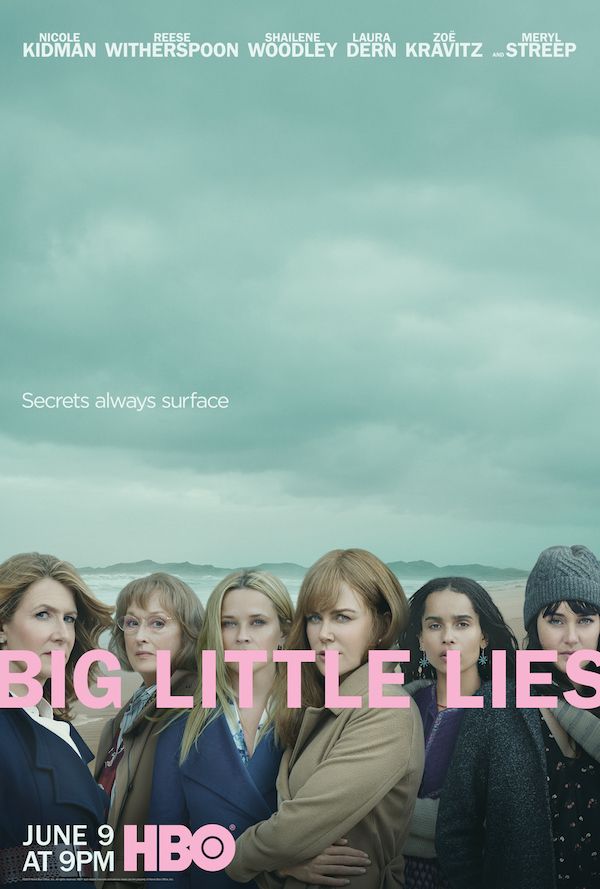
Big Little Lies 2.6: It (Isn't) Over


First, let me say about Big Littles Lies 2.6, just on HB0: wasn't it sublime to hear Roy Orbison's "It's Over," played in its entirety, over the closing credits?  You don't hear that every day, or every year or decade, on television.  And it befits a show as special as Big Little Lies.

This episode was creme de la creme, especially the court scenes.  Celeste's cross-examination by Mary Louise's lawyer laid it all out.  The only thing he was wrong about was who pushed Perry down the stairs.  But, even so, Celeste still deserves custody of her kids.  And her move at the end, to get Mary Louise on the stand, and personally question her, was a moment of brilliance.

Meanwhile, we finally get Bonnie confessing to pushing Perry - to her comatose mother.  And the confession finally tells us exactly why she pushed him: she was pushing her abusive mother down the stairs.  Unfortunately for Celeste and Jane, who have most motive for killing Perry, Detective Quinlan was not on hand for that confession.   But she's never too far behind.

And the alliance continues to crack, with Madeline this time being the one to publicly doubt why they're protecting Bonnie.   There's a lot to be worked out in this story, and there's only one episode left this season.

Unlike Orbison's finale song, this series definitely isn't over.   And I'm not talking about just next week's finale.  Here's a strong vote for it not being the series finale - contra to what HBO boss Casey Bloys says.  We'll see.  And I'll definitely see you all here next week.

See also Big Lies 2.1: Grandma On a Mission ... Big Little Lies 2.2: Perry's Progeny ... Big Little Lies 2.3: Together ... Big Little Lies 2.4: Bonnie's Deepest Motives ... Big Little Lies 2.5: Little Red Riding Hood

And see also Big Little Lies: Big Good, Truly ... Big Little Lies 1.5: Multivalent Whodunnit ... Big Little Lies: Elvis and Answers


Sunday, February 25, 2018

Peter Brown Called

just published ...


Writing science fiction and songs have been two of my lifelong passions. This anthology combines them, with a selection of my science fiction and fantasy stories that has music as a theme, and my lyrics that deal with far-off suns, robots, and time travel.


Table of Contents 

Prologue 

 =stories= 

Marilyn and Monet 
The Harmony 
The Kid in the Video Store 
Ian, Isaac, and John 
Saving Lennon (from The Loose Ends Saga) 
The Suspended Fourth 
Sam’s Requests 
The Singing Pottery (from The Silk Code) 

 =songs= 

Evening's Evergreen Morning 
A Piece of the Rainbow 
The Lama Will Be Late This Year 
Alpha Centauri 
Lime Streets 
Tau Ceti 
If I Traveled to The Past 
 I Fell in Love with a Robot 
The First House on Mars

 =alternate equation #1=

Elvis, Ed, and Einstein

read an excerpt you won't find any place else on Speculative Fiction Showcase

Monday, May 29, 2017

Twin Peaks: The Return 1.3.-4: Coffee and Cole

The second installment of Twin Peaks: The Return - aka episodes 3 and 4 - continued tonight in the unmitigated gonzo, steampunk, B-movie style to which we became accustomed last week.

Let me also say that one of the high points - perhaps the highest points - of David Lynch's work have been the singers on stage at one point or another in the narrative.  The Dean Stockwell character lip synching Roy Orbison's "In Dreams" in Blue Velvet, with Dennis Hopper's self-tortured character trying to sing along but taking the needle off the record, and Kyle MacLachlan's character in shock in the small, standing audience in the room, was so powerful that I've wanted to write a book about that scene as a transcendent moment in popular culture for years.  As it is, it's easily one of the best scenes in any movie.

Performances of original songs by unknown (to me) musicians and singers have ended every episode of Twin Peaks: The Return so far, and they've all been excellent.  But that Everly Brothers-like performance at the end of 1.3 was superb and to my ears and eyes already a classic.

Back to Kyle MacLachlan, the central story in episodes 1.3-4 was Agent Cooper's return to this planet.  It's unsurprisingly no easy return.  Part of the difficulty makes sense.  Cooper can't talk or think normally because he's been in that insane, other-dimensional room for 25 years.  Part of it, like all Lynch works, doesn't - or doesn't quite make sense.  Apparently, Cooper was "tricked," and his doppelgänger is still out and about on Earth, though soon locked up.  But the real Cooper seems to be making at least a little bit of progress, responding well to a cup of coffee in the morning, put on his breakfast table by his doppelgänger's wife (played by Naomi Watts, who starred in Mulholland Drive, generally recognized as David Lynch's second-best work - high praise - and I agree).

And speaking of Lynch, it was good to see him return as FBI Deputy Director Cole these two episodes (he was actually an FBI Regional Bureau Chief in the original), which got me thinking: how about Cole as Comey's replacement, now that Lieberman has bowed out?

Hey, if that actually happened, it would be a lot less strange than some of the developments in Twin Peaks: The Return, which I'll be back to offer a few more paragraphs about next week.

See also Twin Peaks: The Return 1.1-2: Superluminal Sans Cherry Pie

FREE on Amazon Prime

Available on Prime

Wednesday, May 24, 2017

Review of Rob Sheffield's Dreaming the Beatles 2 of X: The Heroine with a Thousand Faces

Among Rob Sheffield's many talents as a Beatles journalist - not historian, because, as Sheffield convincingly demonstrates, the Beatles are far more important today then when they were writing and recording as a band, which back then was extraordinarily important indeed - but among the delightful ways Sheffield makes his case is by fashioning his arguments from the Beatles' lyrics, so deftly that you don't even want a quote.  Talking about John Lennon's unquenchable need to make a girl care, to make her "feel something," Sheffield concludes "Because if he doesn't reach her, the song is worthless and so is he.  It's a love that lasts forever, it's a love that has no past".

And what that does, of course, is bring in the music and Lennon's voice in "Don't Let Me Down" as irresistible and utterly convincing accompaniment to Sheffield's point.

And that's just one example of many.  And I've only just finished the first chapter (or perhaps the second, if you count a Prelude as a proper chapter).

But what Sheffield's literally lyrical mode of discourse also does is support the very thesis he's making in this remarkable book as a whole: that the Beatles, like the love Lennon is singing about, will indeed last forever.   Evidence of this ticket to eternity is that the words of the Beatles are now so fully in our psyches that they don't require quotes.

But they do have a past.   As Sheffield explains, the Beatles invented all kinds of things - the totally self-contained band,  or one that not only plays its own instruments and sings, but writes its own songs, and the band that constantly re-invented itself, using its success as a platform to create new kinds of music which all but replaced rather than built upon their earlier successes.

We (I was born in 1947) knew this at the time - we were well aware of what rock music was like before the Beatles, when groups stayed with the genre that propelled them to fame, and most singers did not write their own songs.  (Roy Orbison did, but his music, though sublime, barely evolved. Buddy Holly sometimes did, but tragically didn't live long enough to evolve.)

The other theme in this first chapter is the preeminence of girls in the Beatles' story - not just as the essence of whom the Beatles most wanted to impress (or, Paul and John, anyway), but in the sheer variety of girls/women who appear in Beatles' songs.  "Does the 'Martha My Dear' girl fall in love with the boy?  Or does she leave him like the 'For No One' girl does?  Does the 'Ticket to Ride' boy ever get her back?" (Or maybe they're all the same girl, a heroine with a thousand faces - it amounts to the same.)  (To matters even more interesting, Paul at some point famously said Martha was a canine, but when people first heard the song, no one knew that.)

Well, you get the picture - and not only that.  Sheffield also sees part of the very persona of The Beatles as feminine - after all, look at their long hair.

Hey, I gotta end this now.  We'll be off to the Cape tomorrow.  But I'll be driving with The Beatles channel on.   And the next part of this review will be written just a few feet from the shoreline. Which should work out well, seeing as I heard the Beachboy-Chuck Berry-inspired "Back in the USSR" for the first time in years today.

See also Review of Rob Sheffield's Dreaming the Beatles 1 of X: The Love Affair ... 3 of X: Dear Beatles ... 4 of X: Paradox George ...  5 of X: The Power of Yeah   ... 6 of X: The Case for Ringo ... 7 of X: Anatomy of a Ride ... 8 of X: Rubber Soul on July 4 ... 9 of X: Covers ... 10 of X: I. A. Richards ... 11 of X: Underrated Revolver ... 12 of X: Sgt. Pepper ... 13 of X: Beatles vs. Stones ... 14 of X: Unending 60s ... 15 of X: Voting for McCartney, Again ... 16 of X: "I'm A Loser" ... 17 of X: The Split ... 18 of X: "Absolute Elsewhere" ... 19 of X: (Unnecessary but Brilliant) Defense of McCartney ... 20 of X: "All Things Must Pass" ... 21 of X: Resistance ... 22: The 70s Till the End ... 23: Near the Science Fiction Shop ... 24 of 24: The Last Two

And here's "It's Real Life" -- free alternate history short story about The Beatles, made into a radio play and audiobook and winner of The Mary Shelley Award 2023


Monday, July 6, 2015

True Detective 2.3: Buckshot and Twitty

Well, as I was saying last week, True Detective couldn't be crazy enough to kill one of its leading men in the very second episode, could it, as wild and iconoclastic as such a move might have been.  But we discovered in True Detective 2.3 last night - after a fabulous opening sequence with a bizarre but compelling Elvis-like impersonator singing "The Rose" (reminiscent of one of the best scenes in any movie, Dean Stockwell delivering Roy Orbison's "In Dreams" in Blue Velvet) - that Ray survived!  Because Ray was hit with two shotgun blasts, alright - but loaded with buckshot not lead.

Ok, first, I'm no weapons expert, and I wouldn't know buckshot from grape nuts cereal, or birdshot, either, but the point is that kudos to True Detective, that was an excellent feint. And while we're at it, the impersonator was apparently of Conway Twitty - not Elvis - but the two are pretty similar, anyway, and throw in Conrad Birdie there, too.  And one of other thing: the scene in Blue Velvet was a lip synch (not technically an impersonation) - Roy Orbison's voice coming out of Dean Stockwell's mouth - and so, it maybe seems, was "The Rose" in TD.

Interestingly, Blue Velvet's David Lynch was supposed, until recently, to be producing a new slew of Twin Peaks episodes, until he bowed out, so it was especially gratifying to see this Lynchian bow to his work at the beginning of last night's True Detective.  As was the case last year, part of what makes True Detective so appealing is not the storyline per se, but the ambience via which it is presented.   Hey, let's be honest.  It is the shimmering water color ambiguous ambience that truly makes True Detective what it is - like no other show on television, by a long shot, in the combination of its searingly misty imagery and mix of sound and music.

But the story's developing well, particularly at this point with Frank, who is a suitably complex racketeer, able to dish out a beat-down to an associate who foolishly bad mouths him, and take note that Ray is off his booze, drinking just water.  Frank is the too obvious source of the shotgun blasts on Ray - putting someone up to it - but why do that, to frighten Ray?  And the rounds are police issue, which presumably Frank could acquire, but why, to distance Ray further from the police? More likely the shooter is connected more directly to the police, or to Ray's paternity, or some combination.

Frank is not yet as interesting as Tony Soprano, but he's off to a good start, as is True Detective this second season.

See also Season Two: True Detective: All New ... True Detective 2.2: Pulling a Game of Thrones

And see also Season One: True Detective: Socrates in Louisiana ... True Detective Season One Finale: Light above Darkness

 
Like philosophic crime fiction?   Try The Plot to Save Socrates ...

#SFWApro


Thursday, January 15, 2015

Science Fiction and Music: A Personal Account

Science fiction and music have been two of my passions every since I was kid in the 1950s, when stories about space and time travel, and rock 'n' roll, were in their first, separate golden ages.   But, for me, they were intertwined.  I'd hear Roy Orbison's "Only the the Lonely" playing on someone's transistor radio as I walked to the Allerton Avenue branch of the New York Public Library to nab a copy of Isaac Asimov's The End of Eternity.   I loved them - still love them - both.   The music and the stories somehow both speak to unlimited, soaring possibilities.

In the years that followed, I've written a lot of science fiction, and a lot of songs.  But rarely have the two been interconnected.  Last year, though, I wrote a the lyrics to "If I Traveled to the Past," a time travel love song, for which John Anealio wrote the music and recorded this demo.


And, also last year, I wrote a story that I had come with just the title of nearly 20 years ago:  "Sam's Requests".   It's like nothing else I've ever written - a story about a battle in deep space in the distant future, connected to music here on Earth in the early 1960s.    The 15-year old in me and my present self were  delighted when Buzzy Mag accepted it for publication, where you can read it, here, any time, for free.  You've heard of space opera?  I think of "Sam's Requests" as space rock 'n' roll.

Enjoy ... and I think I'm going to listen to David Bowie's "Space Oddity" now.


Thursday, December 2, 2010

Fringe 3.8: The Long Voyages Home

Whew,  Fringe 3.8 came through with all the goods tonight, in a superb episode that fired on all cylinders and was just brimming with great touches, large and small.

Great alternate universe strokes.  My favorite were Springsteen Station for our Penn Station, Newark - hey, we ought to change the name of ours to theirs - and, along with the music, a version of late Roy Orbison's "You Got It," sung by either a different Big O, or a different singer with a Big O-like voice.  Evocative to hear in either case.   There was also a picture of aged JFK on Walternate's desk - gives me chills every time I see it.

Last week, our Olivia got a message to Peter in our universe, in bed with their Olivia (but thinking she was ours) - "I'm trapped on the other side."  Peter acts on that message tonight, tracking their Olivia - who quickly realizes Peter is on to her - and she tries to make it back home, too.   Peter thinks she can help in getting our Olivia home.

But our Olivia, still trapped on the other side, and now on the verge of being sliced and diced for their science, cannot get back home without the help of someone on the other side.  That would be alt-Broyles, who in the most emotional moments of the show, decides to help Olivia (he's primed to do that Olivia' helping his son, last week).

It turns out, in the end, that only one Broyles will survive, and I'll miss alt-Broyles - he was a more appealing character than our Broyles in some ways.

But a scene takes place in the Bronx - yay! - in an old typewriter shop which the "quantum entangled telegraph" (as Walter calls it), that is, a typewriter that types between universe, and you can't get much better than that in cool retro-science fiction, too!

And here's a little taste of Roy Orbison's You Got It ...

See also Fringe 3.1: The Other Olivia ... Fringe 3.2: Bad Olivia and Peter ... Fringe 3.3: Our/Their Olivia on the Other Side ... Fringe 3.5: Back from Hiatus, Back from the Amber ... Fringe 3.7: Two Universes Still Nearing Collision

See also reviews of Season 2: Top Notch Return of Fringe Second Season ... Fringe 2.2 and The Mole People ... Fringe 2.3 and the Human Body as Bomb ... Fringe 2.4 Unfolds and Takes Wing ... Fringe 2.5: Peter in Alternate Reality and Wi-Fi for the Mind ... A Different Stripe of Fringe in 2.6 ... The Kid Who Changed Minds in Fringe 2.7 ... Fringe 2.8: The Eternal Bald Observers ... Fringe 2.9: Walter's Journey ... Fringe 2.10: Walter's Brain, Harry Potter, and Flowers for Algernon ...  New Fringe on Monday Night: In Alternate Universe? ... Fringe 2.12: Classic Science Fiction Chiante ... Fringe 2.13: "I Can't Let Peter Die Again" ... Fringe 2.14: Walter's Health, Books, and Father ... Fringe 2.15: I'll Take 'Manhatan' ... Fringe 2.16: Peter's Story ... Fringe 2.17: Will Olivia Tell Peter? ... Fringe 2.18: Strangeness on a Train ... Fringe 2.19: Two Plus Infinity ... Fringe the Noir Musical ... Fringe 2.21: Bring on the Alternates ... Fringe 2.22:  Tin Soldiers and Nixon Coming ... Fringe Season 2 Finale: The Switch

See also reviews of Season One Fringe Begins ... Fringe 2 and 3: The Anthology Tightrope ... 4: The Eternal Bald Observer ... 7: A Bullet Can Scramble a Dead Brain's Transmission ... 8. Heroic Walter and Apple Through Steel ... 9. Razor-Tipped Butterflies of the Mind ... 10. Shattered Pieces Come Together Through Space and Times ... 11. A Traitor, a Crimimal, and a Lunatic ... 12, 13, 14: Fringe and Teleportation ... 15: Fringe is Back with Feral Child, Pheromones, and Bald Men ... 17. Fringe in New York, with Oliva as Her Suspect ... 18. Heroes and Villains across Fringe ... Stephen King, Arthur C. Clarke, and Star Trek in Penultimate Fringe ... Fringe Alternate Reality Finale: Science Fiction At Its Best


                 Special Discount Coupons for Angie's List, Avis, Budget Car, eHarmony, eMusic, Mozy, Zazzle


The Plot to Save Socrates


"challenging fun" - Entertainment Weekly

"a Da Vinci-esque thriller" - New York Daily News

"Sierra Waters is sexy as hell" - curled up with a good book

Wednesday, June 11, 2008

Roy Orbison's Guitar

Know what I’m talking about?

The Traveling Wilburys were – in my opinion, and that of many critics and fans – the best rock supergroup to ever have existed. Bob Dylan, George Harrison, Jeff Lynne, Tom Petty, and Rob Orbison recorded under that name from 1988-1990. Their best-known songs – and justifiably so – were “Handle with Care” and “End of the Line”.

Roy Orbison died at the age of 52 in December, 1988. When the time came to record a video of that song, the Wilburys put Orbison’s rocking guitar in a rocking rocking chair in the part of the song, starting at 1 minute 44 seconds, where Orbison carried the lead. You can also see the rocking guitar at the very end of “End of Line”.

You can read all about that on the Wikipedia entry on The Traveling Wilburys.

You can see the video, and this moving tribute to Orbison, any time you like on YouTube – in your home, office, or, if you have mobile device such an iPhone that connects to YouTube, from any place you like.

Here it is, right here:


That’s what I’m talking about when I say YouTube is increasingly making every part of our popular culture ever recorded in any form available to anyone, anytime, anywhere in the world.

YouTube, in other words, has robbed death of some of its meaning – at least insofar as it pertains to popular culture. And that’s pretty far, indeed. The end of line for audio-visual popular culture is immortality on YouTube. Roy Orbison and his ever-rocking guitar proves it.
InfiniteRegress.tv