Chuck Todd interviews me about alternate histories
Showing posts with label Harrison Ford. Show all posts

Thursday, June 13, 2024

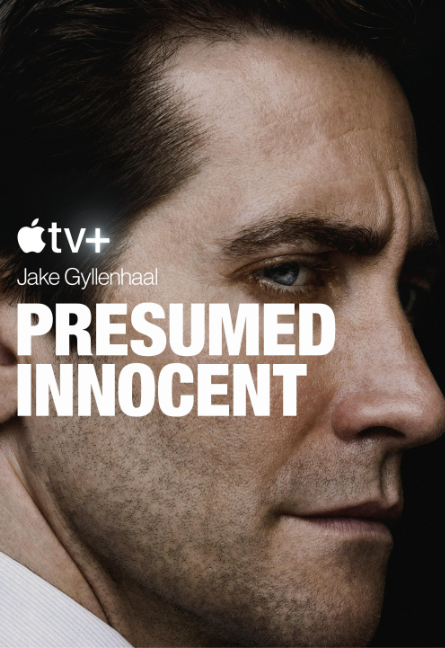
Presumed Innocent 1.1-1.2: Presumed Excellent, and So Far Is


I saw Presumed Innocent -- the movie with Harrison Ford in the lead role -- in 1990.  I shortly after read the Scott Turow 1987 novel from which the movie was adapted.  That was a long time ago, no blogging, and I was a devoted possessor of a Radio Shack M100.  I thought the movie and book were brilliant, with one of the cleverest endings, one of the most unexpected twists, I'd ever come across in a fictitious murder story.   I still feel that way right now.

So I was tempted not to see the series that just went up -- more precisely, the first two episodes -- on Apple TV+ yesterday.   But of course I did.  And as I was watching these episodes, I realized I had no idea if this new series would tell the same story as the novel and the movie.   And I realized that I didn't want to know beforehand, because not knowing that added its own level of suspense.

So far, if my memory from 23 years ago is ago is accurate, the story seems essentially the same.  Jake Gyllenhaal is excellent in the lead role -- Rusty Sabich, an ADA in Chicago, whose colleague and lover Carolyn Polhemus is found murdered.  Rusty is married, so he has some reason to want Carolyn eliminated -- to save his marriage.  

Movies and TV series of course are two very different media -- 120+ minutes vs. 8 episodes of around 50 minutes each to tell a story.  So I think there could be some riveting viewing ahead in the series.  Also, as of the first two episodes, I really liked Bill Camp, Peter Sarsgaard, and Renate Reinsve.  I'm going to review the series episode by episode, and I'll try my very best not to divulge any spoilers.


Friday, December 20, 2019

Star Wars: The Rise of Skywalker: Tipping into the Mystic


So here's where I am regarding the nine episodes of Star Wars: I thought the first trilogy, by George Lucas, was fabulous - every bit as good, and maybe even better, than the other trilogy of that era, The Godfather (the third part of which, coming along almost 20 years later in 1990, not as good as the first two).  And I thought, contrary to a lot of critics, that the second Star Wars trilogy, also by George Lucas, in the movie theaters at the turn of the 20th into our 21st century and a little after, was every bit as good as the first trilogy, and at times even better.

And then there's the third trilogy (episodes VII-IX), of which The Rise of Skywalker is the third and final installment (episode IX), the creation of J. J. Abrams.  It takes place after the first trilogy (episodes IV-VI), which took place after the second trilogy (episodes I-III).  The second trilogy was thus a prequel, usually more difficult to do in a narrative than a sequel.  Which meant Abrams had a somewhat easier job than Lucas.   And, though I enjoyed this final trilogy ... now that it's concluded, I just think all of it just wasn't quite on the level of the first two.

This was a result of both the acting and the storylines.   In the first Star Wars trilogy (that is, the middle three episodes in terms of the time the story takes place), the acting was mostly campy, but lit up by some really high quality acting by Alec Guinness.  In the second Star Wars trilogy (the prequel), the acting by Natalie Portman, Ewen McGregor, Liam Neeson, and Samuel L. Jackson was downright excellent, and often incandescent.  In the third trilogy, just concluded, the acting returned to mostly campy, and the non-campy acting by Adam Driver and Daisy Ridley, especially in the finale, was strong and effective enough but not on the level of Portman and McGregor.

Indeed, the most appealing part of this third trilogy was the return of Harrison Ford, Carrie Fisher, Mark Hamill, and Billy Dee Williams in their original roles.   This was done well in terms of the acting.  But, in the final episode, the storylines in which they returned were a little ham-handed and under-explained.  In the first trilogy (episodes IV-VI) shown in theaters, one character, Obi-Wan, returns in a major way after he dies, and that worked very well in the narrative.  In third episode (IX) of the third trilogy, which debuted in theaters tonight, Ford, Fisher, and Hamill each return, and that was too much. And there were parts that were more muddled than need be in the part of the plot that centered around transitions from life to death and back again.  In the powerful scene in which Kylo brings Rey back to life, it wasn't clear if she was really dead, or if Kylo was dead and his appearance was an expression of Rey's unconscious.  It wasn't even completely clear whether Palpatine was dead or alive.  I know all nine movies were more mythic than literal, but the ratio of the final trilogy went a little too far towards the mythic, especially in this final episode.

All of that said, The Rise of Skywalker was enjoyable enough, and my wife and I will no doubt see whatever comes next on its opening day, whenever that arrives.   Our kids, who weren't born when my wife and I saw the first trilogy, were with us when we saw the second trilogy, and tomorrow are seeing the end of the third trilogy with their families. I'll be interested in finding out how they liked it.

See also Star Wars: The Force Awakens: Shakespearean and Fun ... Star Wars: The Last Jedi: Enjoyable Birds and Storylines

And see also Ten Reasons to Like the Clones

Wednesday, September 5, 2018

Jack Ryan on Amazon Prime: Right Up There


You've got to give Amazon credit, doing a new, rebooted Jack Ryan series, starring John Krasinski in the title role, after the likes of Harrison Ford, Alex Baldwin, Ben Affleck had knocked the role out the ballpark - well, certainly Harrison Ford - in a series of riveting movies from 1984 through 1996.  Sort of like what Amazon attempted when it brought Philip K. Dick's alternate history masterpiece novel The Man in the High Castle to the streaming television series screen with little-known actors.   And with the same result: both succeeded splendidly.

I haven't read any of Tom Clancy's novels, which I think is actually good when judging a movie or a television series based on the novels, because it allows appreciation of the movie or TV series on its own terms.   And my wife and I, binge-watching the eight Jack Ryan episodes in just two nights, really enjoyed this first season of this classic American spy-action story.

The trapping are familiar and updated - ISIS in Syria, attacking a church in Paris, and before the end of these episodes, bringing the fight to the U. S. homeland, with an ebola virus and a dirty bomb designed to wreak havoc.   But although this new Jack Ryan is reminiscent of both Jack Bauer and Homeland, with some Doron from Fauda thrown in, it has a pace and a heart all its own.

Jack is determined to not only save the day but do the right thing - as in trying to come through for the people around him on his commitments - for not only his friends but relative innocents caught up in the struggle.  His immediate boss, James Greer, is played by Wendell Pierce, who gives the best performance of his long career since The Wire.  Abbie Cornish is good as Dr. Cathy Mueller, who we know in a subsequent story will become Cathy Ryan or Mrs. Jack Ryan (Jack, by the way, is a Dr., too - a PhD in economics).  Ali Suliman as Suleiman is scathing, sensitive, and memorable as the terrorist mastermind.

There's humor, surprises, interludes of non-stop action and deaths - expected and unexpected - in just about every episode.  I'm ready for the second season, which I'll review here as soon as it's up on Amazon.

Saturday, October 28, 2017

Bladerunner 2049: The Only Better Movie of this Kind is Bladerunner, and Hey


I loved it.  So did my son Simon, who's now a father of his own.  We loved it almost as much as the original Bladerunner, which we saw more than once on videotape, before there even were DVDs for rent, back in the early 1990s.   That's high praise.  The only reason Bladerunner 2049 wasn't as good as Bladerunner circa 1982 was that the 1982 movie broke so much new ground.  Back in the mid-80s, when I was teaching in the MA in Media Studies Program at the New School, I asked Stephen Jacobs (who then was my student, and has long since become a professor himself, at the Rochester Institute of Technology) to give me an example of cyberpunk.  "Bladerunner" he replied.  It defined the field, at least in the movies.  It was and still is that good.  Not only that, it began Philip K Dick's run of stories made into great movies and TV series, with the current example of The Man in the High Castle on Amazon.  And it inspired me to write The Civil Right of Robots.

But Bladerunner 2049 did as outstanding a job as could be done in a sequel for that kind of movie - moreover, a sequel on the screen some 35 years later.  Rather than reviewing the plot, or even the acting - other than mentioning that both were excellent, and Ryan Gosling as "K" and Harrison Ford reprising his Deckard role were especially excellent - I'll go over certain points and questions which capture this visually and intellectually stunning film (and there will be spoilers):

  • Did you catch that "CCCP Soviet" sign on the building in LA?  How could the Soviets still have a sign on a building in 2049?  Maybe Putin managed to restore the Soviet Union?  Possibly.  But I think a better explanation is that Bladerunner 2049 and in turn Bladerunner are and were alternate realities from the outset.  Or, at least they are now.  The Bladerunner of 1982 took place in 2019, in a world that doesn't look much like our world does now, in 2017 (except insofar as Times Square has seemed increasingly Bladerunner-inspired in the past decade). So the makers of Bladerunner 2049 had to make a sequel in a world that looked 30 years later than the world of 2019 and how it was depicted in 1982.  That world has Japan much on its mind - Japan looked like it could become the dominant computer power back then - and, of course, the Soviet Union and Russian were in everyone's head, too.  Bladerunner 2049 has both Russian and Japanese all over the scenes. It could have not flashed Soviet at all,  and benefitted from the unexpected prominence of Russia in our popular culture in the past year.  But instead the sign says CCCP and Soviet - as a shorthand for saying this is the future of Bladerunner 1982/2019, not our future.  Very nice touch.
  • Did "K" die at the end?  The convention in movie-making is that if (a) you're very badly wounded, and (b) you're lying motionless with your eyes open, then (c) you're dead.  On the other hand, we've learned that the replicants can only be killed when their brains are destroyed, by a bullet, or, in the case of Niander's evil, powerful, beautiful replicant apprentice, by deprivation of oxygen because K drowned her.  But nothing like that happened to K.  He's been badly wounded - but I'd put my money on his not dying.
  • So, is Deckard a replicant or not?  On the yes side, he has a pretty high survival quotient, too.  And he did father a replicant with Rachel, who definitely was a replicant.  But, wait, that's also evidence that he isn't a replicant, right?  I mean, isn't it more likely that human sperm and replicant ovum created a living being, than replicant sperm and replicant ovum?  I think so.  I am a little less sure that Deckard is human than K is alive, but I'd go with Deckard as human if push came to shove.
  • I enjoyed the Elvis in what's left of Las Vegas hologram, with a quick shot of Marilyn Monroe thrown in.   (I just published Marilyn and Monet, so I'm always glad to see her given screen time, or for that matter, stage time, as in Anthony Marinelli's Max & Domino which I reviewed here just last week.)  But Elvis belting it out on a stage is a fine homage to David Lynch, and there was a touch of Twin Peaks, somehow, in Bladerunner 2049.
Highly recommend, for the senses and brain.  Bladerunner 2049 is 2017 movie-making at top of its game.  Kudos to Ridley Scott and everyone involved in this movie.


It all started in the hot summer of 1960, when Marilyn Monroe walked off the set of The Misfits and began to hear a haunting song in her head, "Goodbye Norma Jean" ...

Tuesday, December 22, 2015

Star Wars: The Force Awakens: Shakespearean and Fun

So here, at long last, is my review of Star Wars: The Force Awakens: fabulous!

Further, J. J. Abrams made a brilliant move in bringing back the father/son Greek drama conflict that animated the original trilogy, except reversing who was good and who was bad, that is, making the father good and the son bad.  That was brilliant.

And though I just hated Han Solo being killed by his son, I would have hated Han Solo killed by just about anyone else even more, because the son killing the father is also perfect classic Greek tragedy, and Shakespearean too, while we're on it.

J. J. Abrams had already shown in his Star Trek reboot that he knows how to weave in iconic, central characters from the original series.  Indeed, Han in The Force Awakens had an even more crucial role than the older Spock in Abrams' 2009 Star Trek, and that's saying a lot.  Harrison Ford is a powerful and subtle actor - a rare combination - and he brought that to this swan song in Star Wars, bringing Han's swagger, sense of humor, and soul in fine proportion to the role.

Women played a much bigger and better role than in the original trilogy, especially Rey (well played by Daisy Ridley) and her wielding of the light saber and keen sense of right and wrong, and Leia, who I actually thought was a lot better in The Force Awakens than in the original trilogy. And/or, maybe Carrie Fisher is a much better actress now.   The combination of Leia and Rey set up - what, an aunt and niece dynamic? - that compliments the father and son motif, and has the saving grace of both being on the side of light.  (I think it likely that Rey is Luke's daughter, almost certainly not Leia's.  Leia doesn't hug Rey in the way a mother would hug a daughter, certainly not one she hadn't seen in years. And Rey starting out on that backwater world reprises the way we first found Luke, in the very first Star Wars move.  For that same reason, though, I'd say there's an outside chance that Rey is Obi wan Kenobi's progeny.)

By the way, though I've been talking about the original trilogy, let me point out that unlike many dyspeptic critics, I loved the second, prequel trilogy, too, and I recommend anyone starting out on these movies should see all six, in the order in which they were originally released, before seeing The Force Awakens.

Other things: the new robot was great, it was fun to see the old ones again, and I would have liked to hear Luke at least say a word when he meets Rey at the end. Max von Sydow could have been on the screen longer, as an Obi wan Kenobi kind of character - he was on so briefly that I can't even recall his name.

This movie was so good that I wish it was twice as long.  I was glad to see Hillary Clinton say "the force be with you" at the end of the Democratic debate on Saturday, because you could say she's Leia and Trump was Snoke or maybe General Hux, or someone in between in age.   Right, I'm mixing politics into this, and if you don't like it, too bad, it's definitely something Han Solo would have done, may he rest in peace.

Star Wars, when first movie came out, brought science fiction out of the cult and into the mainstream, as I told AM New York and AP and Roy Green on his radio show.  The Force Awakens continues this grand tradition of science fiction as a Shakespearean form of our time, and hey those special effects and aliens in Maz's cantina's were a real treat, too.

See also this thoughtful review by James F. McGrath ... and here's my defense of Star Wars 2: Attack of the Clones, published back in 2002 in Locus Online ...


the force in our reality
InfiniteRegress.tv