Chuck Todd interviews me about alternate histories
Showing posts with label doo wop. Show all posts

Friday, October 2, 2026

Dark Matter 2.6: The Harptones in the Multiverse

The Harptones, 1956


It was so good to hear The Harptones' "My Memories of You" in Dark Matter 2.6.  I love doo-wop.  I sang it with my group The Transits (I'm doing first tenure falsetto in this rough demo we did of The Passions' "I Only Want You").  I've written science fiction stories about doo-wop (check out "The Harmony" in my anthology Peter Brown Called). I even got my family to do a little of the Five Satins' "In the Still of the Night" in the early Covid days.


Now the Harptones song The Transits always sang was "Sunday Kind of Love" -- to this day, one of my favorite songs -- but "My Memories of You" certainly fits better in this episode of Dark Matter, and in Dark Matter overall.

Every time Jason-1 in his travels in interreality runs into someone that he knew in his original world (I suppose our world, yours and mine, too), he wonders if that person knows him, and if so, how much and what that person knows of him.  Jason wants to know the nature of their memories of him, or, from their perspective looking at Jason, my memories of you.

It's comforting to think that the same music exists, at least to some extent, across multiple realities.  But now that I'm thinking about it, where does that music really exist?  If we hear it on a jukebox in a bar in an alternate reality, it exists in that reality.  But lots of the music, including "My Memories of You", are part of the background soundtrack.  When the Harptones play in the background of a scene with Daniela, with her father, and then thinking of her father, are we to assume that she's hearing that song in her head?Maybe ... but unless it's playing in the car she's driving, or she tells someone she loves that song, we can't be sure.  Maybe that song is just something Blake Crouch or Jen Malone (music supervisor) or one of the other people in the 15-person music department put into those scenes to sharpen and enhance our understanding of what's going on.

Whoever chose it -- it was a great choice.  The other thing I especially liked in this episode is this alternate version of Amanda (Alice Braga) and her incandescent smile.  (I don't recall her ever smiling so vividly in the earlier realities she was in.)  And the hooded person who turned out to be Charlie taking a turn towards another reality, after Jason tells him that his lost twin Max is alive in one of them somewhere, promises a new story of some kind for him and us straight ahead.

See also Dark Matter 2.1: Who's Who in the Infinite Bucket ... 2.2: Sam Spade Back in Action ... 2.3: Can Two Couples Be in Two Different Places at the Same Time? ... 2.4: "There's No Entrance to the Diner" ... 2.5: Canterbury Realities and Proust

And see also Dark Matter 1.1-1.2: Break-Neck Action and Philosophic Contemplation ... 1.3 Missing Fingers ... 1.4 The Multiverse Unveiled ... 1.5: The Lesson ... 1.6 "A Bunch of Chicagos" ... 1.7: Obama Tower ... 1.8: A Bevy Of Jasons ... 1.9: Science Fiction and Horror
  

Wednesday, June 11, 2025

Brian Wilson: What He and His Music Mean to Me


I grew up listening to rock 'n' roll, which was half doo-wop, and half Chuck Berry, Buddy Holly, and Elvis.  As the 1960s began to emerge, the Four Seasons in 1962 and the Beach Boys in 1963 carried on with a modernized, popified doo-wop sound.  The Beatles were closer than just around the next corner.  And that was the milieu in which I formed my first group, The Transits, slightly more old-fashioned than the Four Seasons and the Beach Boys, but covering their best songs.

The Transits sang at the YMHA on the Grand Concourse in the Bronx, a stone's throw from Yankee Stadium in early 1964.   "Dawn" and "Rag Doll" by the Four Seasons and "Surfer Girl" by the Beach Boys were at the top of the list of the songs we covered.  As I walked a girl home whom I'd met at the concert, I told her I was tired of being in a group that sang those kinds of songs -- I wanted to be in a group that sounded more like The Beatles.

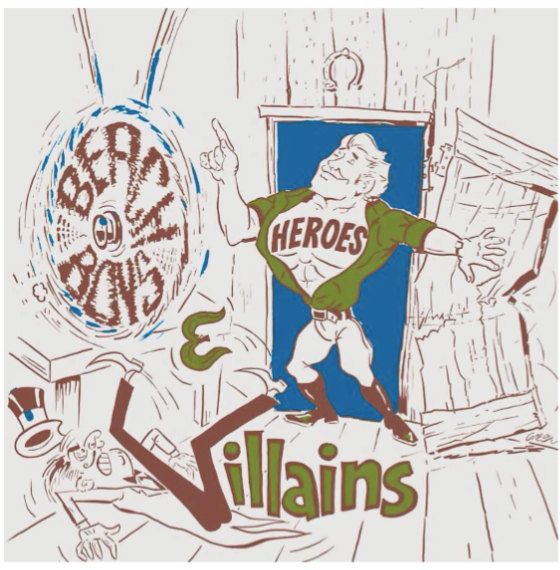
The Four Seasons would never progress very far beyond their pop doo-wop origins.  But the Beach Boys under Brian Wilson's leadership sure did.  As is well known, The Beatles' Rubber Soul in 1965 inspired the Beach Boys' Pet Sounds in 1966 which in turn inspired The Beatles' Sgt. Pepper's Lonely Hearts Club Band in 1967.  While The Beatles were recording and releasing Sgt. Pepper, the Beach Boys were doing the same with their Smiley Smile album featuring "Heroes and Villains" (also released as a single).  So the two groups were not only inspiring one another, they in effect were co-creating across the continents, a musical incarnation of Marshall McLuhan's global village, which he prophetically wrote about in The Gutenberg Galaxy back in 1962.

For a variety of reasons, however, "Heroes and Villains" didn't get the immediate acclaim it so eminently deserved.  It has been one of my all-time favorite recordings since the moment I first heard it, though I can't quite recall where that was.  The harmony in that recording -- like the harmony in the Beach Boys' "Sloop John B" adaptation on Pet Sounds -- is in the stratosphere, the ultimate evolution, at least as of now, of multi-dimensional doo-wop.

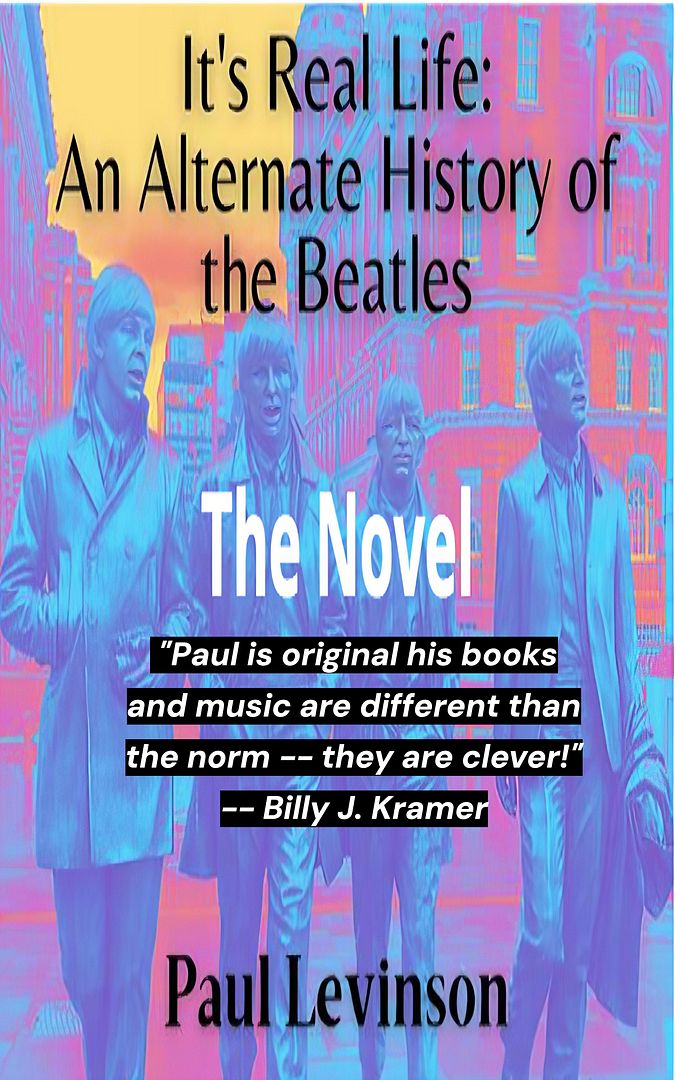
Brian Wilson did not get the adulation at first hearing that "Heroes and Villains" amply merited.  But I touted it everywhere I could.  My wife Tina and I were thrilled to hear Brian sing it in the Beach Boys reunion tour, at their performance in 2012 in White Plains, NY.  It was a sad night, not only because of course Dennis and Carl Wilson weren't there, but because WFUV disc jockey Pete Fornatale, who had been one of the champions of everything Beach Boys and Beatles on his Mixed Bag shows, had recently unexpectedly passed away.  (Come to think of it, I may have first heard "Heroes and Villains" on Pete's original "Mixed Bag" show on  WFUV back in the 1960s.   Pete, by the way, is the hero of my 2024 novel, It's Real Life: An Alternate History of The Beatles.)  But it was wonderful indeed to see and hear Brian in person.

I still think The Beatles are the best rock group to ever have written and recorded myriad forms of rock music.  Over the years, I've switched back and forth between the Beach Boys and the Rolling Stones as to which is the second greatest rock group in history.  But I think I'm content now to leave it with both of them tied for second place, and every other great group vast caverns below them.

Thank you Brian Wilson, rest in peace.  Your "Heroes and Villains" will always be playing somewhere, and you are its hero.


Wednesday, November 27, 2019

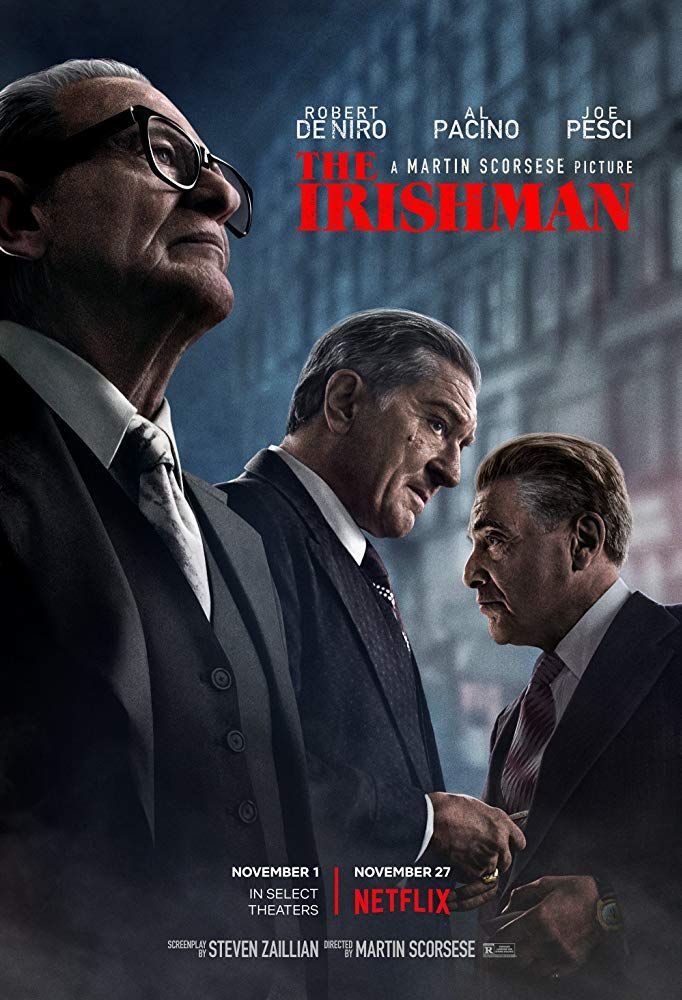
The Irishman: "It's What It Is"


"It's what it is" was an oft-repeated phrase in this three-and-a-half movie about who killed Jimmy Hoffa, and how.  And what this movie by Martin Scorsese certainly is, is something extraordinary, in the story it tells, and in the way it was directed by Scorsese, and acted by Robert De Niro, Al Pacino, Joe Pesci, and, for that matter, everyone else in the movie.

One big question is how true is the story Frank Sheeran tells us in the last days of his life.  Part of this story is how Sheeran killed Joey Gallo in 1972 in Umberto's Clam House in New York City.  Up until this movie, based on  Charles Brandt's 2004 book, I Heard You Paint Houses (which I haven't read), I had thought that four other gunmen (not Sheeran) had killed Gallo (see the Wikipedia entry on this). Since I wasn't there, I can't with certainty know who killed Gallo.  But if Sheeran did not kill Gallo, why should we believe that he killed Hoffa?

A somewhat lesser but still significant question is why Sheeran's daughter Peggy had such deep misgivings about her father, to the point of never talking to him again after Sheeran (presumably) killed Hoffa?  Why did she have those misgiving all those years?   Why her and not her sisters?  Based on the movie, the only answer I can think of is that Peggy had almost a sixth sense about her father, which is not very satisfying as even a component of such a momentous story.  (There was the scene of Sheeran crushing the hand of the man who pushed her in the grocery store - with Peggy looking on - but this doesn't seem sufficient for her life-long, growing abhorrence of her father.)

But there's an old saying to the effect of, though it may not be true, it's still a great story.  And that is manifestly the case for The Irishman.  And a lot of the story does make a perfect kind of sense.  Why did Russ (played by Pesci) talk Sheeran into killing Hoffa?  It was to protect both Sheeran and Russ, as Russ later explains to Sheeran.  If someone else had killed Hoffa, the mob would have been concerned, very concerned, that Sheeran might seek some vengeance.  As we heard early in the movie, being very concerned is a state that everyone takes very seriously.  With Sheeran pulling the trigger on Hoffa, the mob didn't have to be concerned about vengeance because, who could Sheeran take vengeance on, himself?

As for the acting, tour de force doesn't do justice to the three main players.  De Niro was absolutely masterful in voice and expression.  Pacino was the same - the way he says "phone" in his first conversation as Hoffa with Sheeran is just the right tone to establish Hoffa as a character in a world of his own.  And the same for Pacino's expression when Russ (Pesci) tells Hoffa that he may not be showing proper "appreciation".  Pesci delivers that line with a quiet strength and mob wisdom that typifies his character.  All three acted their characters over decades - the "de-aging" process enhanced this, but their acting brought the ages home.  My recommendation: all three actors should split the Oscar for best performance this year.  The supporting roles in the movie might be too short for supporting Oscars, but they were all memorable, ranging from Jesse Plemons as Hoffa's son Chuckie to Harvey Keitel as mobster Angelo Bruno.  (And shoutout to the inimitable Logan Crawford who plays a reporter.)

I have to also talk about the music.  I used to sing "In the Still of the Night" by The Five Satins with my doo-wop group in the late 50s/early 60s (I was just a kid), and it was great to hear that song at least three times in The Irishman.  The other music was right on key for the movie, too.

Scorsese is already lauded for Goodfellas and Casino, movies about the mob that were so good they come in just below The Godfather trilogy.  I'd put The Irishman just above those two, and I'm going to keep thinking about it.

I should also mention - it's one thing to see a movie on Netflix that would never be in a movie theater.  It's quite another to see a movie on Netflix, by one of the world's leading directors, with all-time great actors, that is playing in theaters in New York City right now.  The streaming revolution continues apace.


It started in the hot summer of 1960, when Marilyn Monroe walked off the set of The Misfits and began to hear a haunting song in her head, "Goodbye Norma Jean" ...


Friday, June 2, 2017

Review of Rob Sheffield's Dreaming The Beatles 5 of X: The Power of Yeah

Rob Sheffield's short chapter in his Dreaming the Beatles (actually, they're all short, which is good) is about "It Won't Be Long," and is about as fine a piece of music journalism, or rock 'n' roll analysis, or whatever you want to call it, as you can find. It's a holographic sample of why the book as a whole is so enjoyable and important.

The mini-essay begins with a meditation or disquisition on the role of yeahs in this song in particular and the Beatles music in general, replete with a count of the number of yeahs in this song, and which one is Sheffield's favorite (I've long agreed with his choice).

But it quickly turns out that this chapter is not about yeahs but about the Beatle's love of American girl groups, ranging from Rosie and the Originals (I love their "Angel Baby" so much I from time to time listen to the dozen or more excellent covers on YouTube) through the Shirelles, the Motown girl groups, and of course the Ronettes.  (The first piece of music journalism I remember ever being impressed with was a review - maybe in one of the student newspapers - of the Ronettes' appearance at CCNY, where I was a student,  around 1964, and how the jeans of every guy in the audience tightened as Ronnie began singing and moving.)

The Beatles expressed their admiration of these groups by injecting the girl groups' vitality into their (the Beatles') yeahs.  And in a brilliant analysis of a single line - one of Sheffield's specialities - he explains why the Beatles concluded "It Won't Be Long" with the line "Till I belong to you" rather than the more expected "Till you belong to me":  it's because the former is what a girl group would sing.

There's Brill Building, Ellie Greenwich (I mentioned my connection to her in my first review of this book), and all kinds of things that show Sheffield is adept not only in understanding the Beatles but the music that inspired them, and which they incorporated and ultimately built upon rather (than is often wrongly said) they replaced.

The next chapter is about why Ringo was crucial - and that deserves a review of its own, to come as soon as I've read the chapter, which won't be long, yeah.

See also Review of Rob Sheffield's Dreaming the Beatles 1 of X: The Love Affair ... 2 of X: The Heroine with a Thousand Faces ... 3 of X: Dear Beatles ... 4 of X: Paradox George ... 6 of X: The Case for Ringo ... 7 of X: Anatomy of a Ride ... 8 of X: Rubber Soul on July 4 ... 9 of X: Covers ... 10 of X: I. A. Richards ... 11 of X: Underrated Revolver ... 12 of X: Sgt. Pepper ... 13 of X: Beatles vs. Stones ... 14 of X: Unending 60s ... 15 of X: Voting for McCartney, Again ... 16 of X: "I'm A Loser" ... 17 of X: The Split ... 18 of X: "Absolute Elsewhere" ... 19 of X: (Unnecessary but Brilliant) Defense of McCartney ... 20 of X: "All Things Must Pass" ... 21 of X: Resistance ... 22: The 70s Till the End ... 23: Near the Science Fiction Shop ... 24 of 24: The Last Two

And here's "It's Real Life" -- free alternate history short story about The Beatles, made into a radio play and audiobook and winner of The Mary Shelley Award 2023


Sunday, April 21, 2013

Jersey Boys: Transcending Musical

My wife and I finally got to see Jersey Boys at the August Wilson Theater on Broadway last night, thanks to the tickets daughter Molly gave us as my birthday present.  I say "finally" because The Four Seasons were among my all-time favorite groups.   And a wonderful, one-of-a-kind birthday present it was.

The Four Seasons were a pivotal group in my life - my own group, The Transits, regularly sung "Dawn" and "Rag Doll" in our performances at various spots in the Bronx in the early 1960s, including Poe Park and the corner of Allerton Avenue and White Plains Road under the el.  Their harmony and Franki Valli's falsetto were second to none, and I modeled my own falsetto after his. For a few years, The Four Seasons were right up there with the Beachboys, matching them hit for hit.  But the two groups were soon surpassed by the Beatles, which had easy superiority in lyrics, inventive chord progressions, and even harmony.   And while the Beachboys managed to make their own signal contributions to the psychedelic era, thanks to Brian Wilson, and "Good Vibrations" and "Heroes and Villains," The Four Seasons and Franki Valli veered off into a kind of pop with songs like "Can't Take My Eyes Off You," which sounded more like Andy Williams than the Four Seasons I loved, which is to say, hopelessly old-fashioned to me.   But "Candy Girl," "Dawn," "Rag Doll" (breathtakingly glorious harmonies), "Big Man in Town," "Marlena," "Silence is Golden," and "Tell it to the Rain," and their transcendence of the doo wop genre have never been far from my ears in my brain since then.

Jersey Boys was fabulous, not only because it provided superb renditions of many of these songs, but because it told a story - researched and written by Marshall Brickman - which I hadn't known before.  Frank Valli and two of the other Seasons (Tommy DeVito and Nick Massi) had served a little time in prison - they came from a much grittier culture than their polished harmony suggested.   Each member of the group had a strong personality and set of opinions, which often conflicted.   I'd known that Bob Gaudio was the creative writing genius of the group - and had loved his "Short Shorts" with the Royal Teens when I was kid - but I hadn't known he had to fight so hard at first to get into The Four Seasons.  I would have liked to have seen a little more in Jersey Boys about Bob Crewe's creative input as producer of The Four Seasons - I met Crewe one or two times in the 1960s - but overall the play gave due shrift to all the important players in their success.

And the performances were wonderful - especially of the players of each of The Four Seasons, who spoke and sang powerfully.   Especially noteworthy last night was Russell Fischer, understudy for the Franki Vallie role, who rose to the occasion with a stunning portrayal and a full-voiced and falsetto'd splendid rendition of the songs - it's hard to image that anyone could do better in the singing, dancing, and acting.   Andy Karl as Tommy DeVito, bass-man Matt Bogart (who appears as JFK on "Smash" on NBC) as Nick Massi, and especially Drew Gehling as Bob Gaudi were also superb.

The combination of songs and story - highs and lows, personal and professional - make Jersey Boys a musical masterpiece for the ages.


Sunday, March 4, 2012

Doo Wop Forever

Not the most important topic in the world,  but I couldn't help shaking my head and laughing about this article in yesterday's New York Times -  "A Doo-Wop Shop Prepares to Close, Signaling the End of a Fading Genre" - not only needlessly apocalyptic about this music, but illogical and ignorant.

Illogical, because to support the point that devotees of the doo-wop sound are "old or dying," the article cites Christine Vitale, a fan in her 40s who broadcasts a doo wop show on WFDU-FM Radio (I used to have a radio show, "Seminar on the Air," on WFDU when I taught at Fairleigh Dickinson University in the late 1970s).   Willie Winfield, the 89-year old lead singer of the Harptones ("Sunday Kind of Love," the first song I sang with my group, The Transits, in the early 1960s - hey, we were a little retro), is quoted as saying, “Just like rock ’n’ roll is here to stay, doo-wop will be here forever," but is dismissed as an "optimist".

The facts are that Mr. Winfield is right to be optimistic.   I just searched on "doo wop" on YouTube, and got "about 34,000 results".  Not quite dying, not by a long shot.  If Peter Applebome, author of the article, had been paying any attention to what's been going on in our popular culture, he'd know that YouTube bestows immortality to all music upon it, making it easily available to anyone of any age.   (See my 2009 book, New New Media, for more.)

Applebome distinguishes doo wop from jazz, which did indeed manage to survive the fabulous onslaught of rock 'n' roll.   Jazz of course did this, handsomely, in a age before YouTube.  There's no doubt that doo wop will not take the same path to survival.  But here's betting that those 34,000 YouTube doo-wop results will only expand in the years to come.

In the meantime, though I haven't had a chance to put this up yet on YouTube, here's a reel-to-reel tape recording of The Transits singing "I Only Want You" in Paul Gorman's basement (he sang bass, I sang first tenor) in the Bronx in 1963 ....

I Only Want You (sung by The Transits) by Paul Levinson


InfiniteRegress.tv